Trump, Modi Seal India‑U.S. Trade Framework Cutting Tariffs to 18% and Pledging $500 Billion Imports
Updated (15 articles)

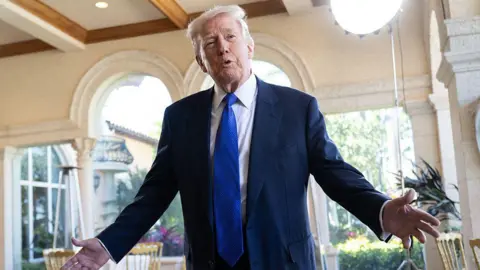
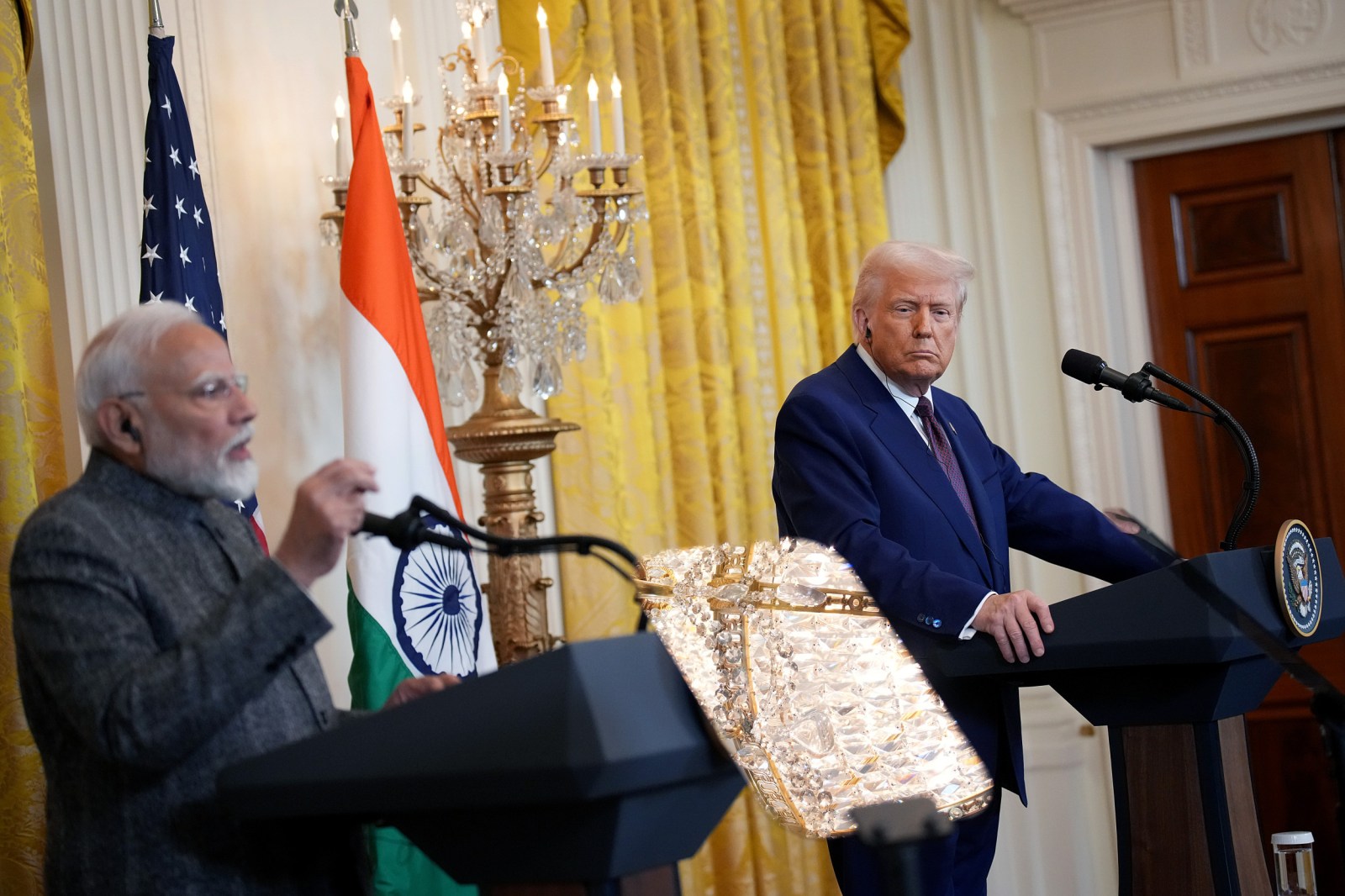
Tariff Cut to 18% Forms Deal’s Core The United States reduced the duty on Indian goods from a 25‑50% range to a flat 18% and India eliminated tariffs and non‑tariff barriers on U.S. products, a reciprocal move announced by President Donald Trump on Feb 2 2026 via Truth Social and confirmed by Prime Minister Narendra Modi on X [1][3][7][8][9][10][11]. The reduction applies to a broad basket of manufactured items, while agricultural and dairy sectors remain excluded from immediate concessions [5][8]. No implementation timetable was provided, but Commerce Minister Piyush Goyal said detailed rules would be released “soon” [5].
India Promises $500 Billion of U.S. Purchases Trump and White House Press Secretary Karoline Leavitt asserted that India will import more than $500 billion of American goods across energy, technology, agriculture and coal, a ten‑fold rise from the current $50 billion level [1][2][3][8][10][11]. The pledge was framed as a “Buy American” commitment tied to the tariff concession, though the Ministry of External Affairs has not formally verified the figure [8][11]. Analysts note that existing bilateral trade in goods is about $131 billion, implying the target would span several years and multiple sectors [8].
Russian Oil Purchase Halt Claimed, Yet Confirmation Lacks Trump and Leavitt claimed India would cease buying Russian crude, replacing it with U.S. (and possibly Venezuelan) supplies [3][5][9][10][11]. The Indian foreign ministry did not comment, and data from CREA showed a 29% month‑on‑month drop in Russian oil imports in early 2026, while Reliance Industries reported no Russian crude in January 2026, suggesting a de‑facto reduction but not an official policy shift [8]. The discrepancy between the U.S. narrative and India’s muted response creates uncertainty over the long‑term energy realignment [5][8].
Exporters Celebrate While Farmers Mobilise Against Agricultural Imports The Seafood Exporters Association and the Gem & Jewellery sector hailed the tariff relief as a revival of export volumes that had fallen sharply in 2025 [4][7]. Conversely, farmer coalitions such as the Samyukt Kisan Morcha and All India Kisan Sabha warned that zero‑percent duties on U.S. farm products could flood the market with subsidised soybeans, cotton, maize and wheat, threatening the livelihoods of roughly 48% of India’s workforce [4][2]. Sharad Pawar publicly labeled the agreement a betrayal of farmer interests and called for a strike on Feb 12 2026 [2][4].
Indian Markets React Positively Amid Policy Ambiguity The Nifty 50 opened at 26,308.05, up 4.86%, and the BSE Sensex rose 4.48% following the announcement, with gems, textiles and leather stocks jumping 15‑20% [7]. The rupee’s forward rates tightened to the 90.15‑90.25 range against the dollar, reflecting expectations of renewed foreign inflows [7][5]. Nonetheless, analysts caution that the 18% tariff remains above rates granted to regional competitors such as Bangladesh and Vietnam, limiting the full competitive advantage [8].
Sources
-
1.
The Hindu: India‑US Trade Deal Promises Tariff Cuts and $500 Billion Imports: Highlights Trump’s social‑media announcement, 18% tariff cut, $500 billion import pledge, and farm‑product import benefits, emphasizing economic impact and job‑growth debate .
-
2.
The Hindu: India’s Sharad Pawar Flags Farmer Concerns Over New U.S. Tariff Policy: Focuses on farmer leader Sharad Pawar’s alarm over U.S. agricultural imports, his demand for a detailed deal picture, and political context of the tariff change .
-
3.
The Hindu: India to End Russian Oil Purchases and Commit $500 Billion to U.S. Investment, Trump Announces: Reports the claimed cessation of Russian oil imports, the $500 billion investment pledge, and reciprocal tariff reductions .
-
4.
The Hindu: India‑U.S. Trade Deal Relieves Exporters, Sparks Farmer Opposition: Details exporter optimism, farmer protests, and calls for strikes, linking the deal to broader agrarian discontent .
-
5.
The Hindu: India‑US Trade Deal Cuts Tariffs, Yet Details Remain Unclear: Notes the lack of an implementation timetable, ambiguity over the deal’s scope, and mixed messages about the Russian oil clause .
-
6.
Newsweek: Trump Announces Surprise US‑India Trade Deal Reducing Tariffs to 18%: Provides a U.S.‑centric view, emphasizing the surprise announcement, geopolitical timing after the EU‑India FTA, and strategic supply‑chain goals .
-
7.
The Hindu: India‑U.S. Trade Deal Cuts Tariffs to 18%, Sparks Market Rally and Industry Praise: Highlights market rally, sector‑specific praise from diamonds and textiles, and political commendations on both sides .
-
8.
The Hindu: U.S. Cuts Tariffs on Indian Goods to 18% Amid Unresolved Trade Deal Details: Stresses unresolved broader agreement details, competitive tariff context, and mixed evidence on the Russian oil commitment .
-
9.
AP: Trump Announces 18% Tariff Cut for India After Russian Oil Deal: Frames the tariff cut as linked to ending the Ukraine war, mentions the 25% penalty removal, and quotes Modi’s gratitude .
-
10.
BBC: US‑India Trade Deal Cuts Tariffs to 18% After India Halts Russian Oil Purchases: Reports the tariff reduction, the $500 billion import pledge, and the backdrop of the EU‑India free‑trade pact, while noting U.S. small‑business coalition criticism .
Timeline
Dec 2024 – India holds national elections, re‑elects Prime Minister Narendra Modi and sets an ambitious diplomatic agenda for 2025, targeting new bilateral trade agreements with the United States, the United Kingdom, Australia, New Zealand and the European Union[14].
Jul 30, 2025 – President Donald Trump announces a 25 % tariff on Indian imports, to take effect Aug 1, linking the duty to India’s purchases of Russian oil and its military procurement choices[15].
Aug 27, 2025 – Trump expands the tariff to 50 % via an executive order, intensifying economic pressure on India amid stalled trade talks[15].
Nov 21, 2025 – India notifies its four Labour Codes, consolidating 13 labour statutes into a unified framework that will become operational on 1 Apr 2026, signalling major regulatory reform[15].
Dec 16, 2025 – The Lok Sabha passes legislation raising the foreign‑direct‑investment cap in the insurance sector from 74 % to 100 %, aiming to attract capital and technology[15].
Dec 24, 2025 – India implements GST slab reductions, records a historic ₹2.37 lakh crore monthly revenue, the RBI cuts the repo rate cumulatively to 5.25 % and the Digital Personal Data Protection Act is partially notified, marking a broad reform push[15].
Dec 25, 2025 – Analysts note that India enters 2025 with high diplomatic expectations, but U.S. tariffs on Indian labour‑intensive goods and a 25 % surcharge on Russian‑oil imports erode trust and complicate regional security calculations[14].
Jan 5, 2026 – Trump claims U.S. tariff receipts will exceed $600 billion, arguing that the levies strengthen national security and financial standing[13].
Jan 6, 2026 – At a GOP retreat, Trump says Modi is “not that happy” with U.S. tariffs tied to Russian oil, recalls Modi’s request for a private meeting and warns of changes to the pending delivery of 68 Apache helicopters[12].
Feb 1, 2026 – India’s Union Budget omits any allocation for the Chabahar port project, reflecting U.S. pressure on Indian trade with Iran and Venezuela[10].
Feb 2, 2026 – Trump announces a surprise U.S.–India trade deal that cuts U.S. tariffs on Indian goods to 18 % after Modi agrees to halt Russian oil purchases; Modi thanks him on X, calling the move a win for 1.4 billion Indians[2][11].
Feb 2, 2026 – In a Truth Social post, Trump states India will cease buying Russian crude, may source oil from the United States or Venezuela, and pledges a $500 billion purchase commitment for U.S. energy, technology, agriculture and coal products[1][11].
Feb 2, 2026 – The European Union and India sign a free‑trade agreement expected to double EU exports to India by 2032, with EU Commission President Ursula von der Leyen dubbing it “the mother of all deals”[1].
Feb 3, 2026 – White House Press Secretary Karoline Leavitt confirms India will stop importing Russian oil, commit $500 billion to U.S. investment, and that the U.S. tariff on Indian goods falls to 18 % while India eliminates all duties on U.S. products[6].
Feb 3, 2026 – Treasury Secretary Scott Bessent notes that India’s Russian‑oil purchases have “collapsed,” and that the tariff cut creates a pathway to curb Kremlin war‑funding[2].
Feb 3, 2026 – Indian equities surge (Nifty 50 up 4.86 %, Sensex up 4.48 %); the rupee tightens to the 90.15‑90.25 range, and the diamond‑jewellery sector hails “immense relief” from the tariff cut[9].
Feb 3, 2026 – Commerce Minister Piyush Goyal says the exact implementation timetable for the 18 % tariff will be released “soon,” while officials stress that the broader trade‑agreement details remain unclear[7].
Feb 4, 2026 – Sharad Pawar warns that the new U.S. tariff framework, which permits subsidised U.S. farm products into India, could threaten Indian farmers and pledges a detailed trade‑deal picture within the next 48 hours[5].
Feb 4, 2026 – The Samyukt Kisan Morcha (SKM) calls for a nationwide general strike on Feb 12 to protest the agreement, accusing Modi of bowing to U.S. pressure after his Aug 15 2025 pledge to protect farmers[8].
Feb 5, 2026 – Trump declares a historic India‑U.S. trade framework, with India committing $500 billion of U.S. imports and the United States lowering tariffs to 18 %; USDA Secretary Brooke Rollins touts massive farm‑product imports that will “pump cash into rural America”[4].
Feb 2026 (expected) – The Critical Minerals Ministerial in Washington, running Feb 2‑5, aims to produce a non‑binding document on supply‑chain resilience and clean‑energy cooperation, laying groundwork for future phases of the bilateral trade pact[11].
Dive deeper (13 sub-stories)
-
The Hindu: India‑US Trade Deal Promises Tariff Cuts and $500 Billion Imports
-
The Hindu: India’s Sharad Pawar Flags Farmer Concerns Over New U.S. Tariff Policy
-
India Halts Russian Oil Imports, Cuts U.S. Tariffs and Promises $500 Billion Investment
(3 articles)
-
The Hindu: India‑U.S. Trade Deal Relieves Exporters, Sparks Farmer Opposition
-
The Hindu: India‑US Trade Deal Cuts Tariffs, Yet Details Remain Unclear
-
Newsweek: Trump Announces Surprise US‑India Trade Deal Reducing Tariffs to 18%
-
The Hindu: India‑U.S. Trade Deal Cuts Tariffs to 18%, Sparks Market Rally and Industry Praise
-
The Hindu: U.S. Cuts Tariffs on Indian Goods to 18% Amid Unresolved Trade Deal Details
-
AP: Trump Announces 18% Tariff Cut for India After Russian Oil Deal
-
The Hindu: Trump says PM Modi is “not that happy” over US tariffs, cites cuts to Russian oil and Apache deliveries
-
The Hindu: Trump says U.S. tariff receipts will top $600B, touts national strength
-
The Hindu: India enters 2025 with high diplomatic expectations, then faces U.S. tariffs and regional strain
-
The Hindu: Tariffs, reforms, and EV entries shape India's 2025 business year
All related articles (15 articles)
-
The Hindu: India‑US Trade Deal Promises Tariff Cuts and $500 Billion Imports
-
The Hindu: India’s Sharad Pawar Flags Farmer Concerns Over New U.S. Tariff Policy
-
The Hindu: India to End Russian Oil Purchases and Commit $500 Billion to U.S. Investment, Trump Announces
-
The Hindu: India‑U.S. Trade Deal Relieves Exporters, Sparks Farmer Opposition
-
The Hindu: India‑US Trade Deal Cuts Tariffs, Yet Details Remain Unclear
-
Newsweek: Trump Announces Surprise US‑India Trade Deal Reducing Tariffs to 18%
-
The Hindu: India‑U.S. Trade Deal Cuts Tariffs to 18%, Sparks Market Rally and Industry Praise
-
The Hindu: U.S. Cuts Tariffs on Indian Goods to 18% Amid Unresolved Trade Deal Details
-
AP: Trump Announces 18% Tariff Cut for India After Russian Oil Deal
-
BBC: US‑India Trade Deal Cuts Tariffs to 18% After India Halts Russian Oil Purchases
-
The Hindu: Modi and Trump announce 18% U.S. tariff on “Made in India” goods
-
The Hindu: Trump says PM Modi is “not that happy” over US tariffs, cites cuts to Russian oil and Apache deliveries
-
The Hindu: Trump says U.S. tariff receipts will top $600B, touts national strength
-
The Hindu: India enters 2025 with high diplomatic expectations, then faces U.S. tariffs and regional strain
-
The Hindu: Tariffs, reforms, and EV entries shape India's 2025 business year
External resources (2 links)
- https://www.mea.gov.in/Speeches-Statements.htm?dtl%2F39945%2FStatement_by_Official_Spokesperson (cited 1 times)
- https://t.co/gPz6rWtrxj (cited 1 times)