Orban’s Veto Threat Puts €90 Billion Ukraine Aid and EU Sanctions in Jeopardy
Updated (16 articles)
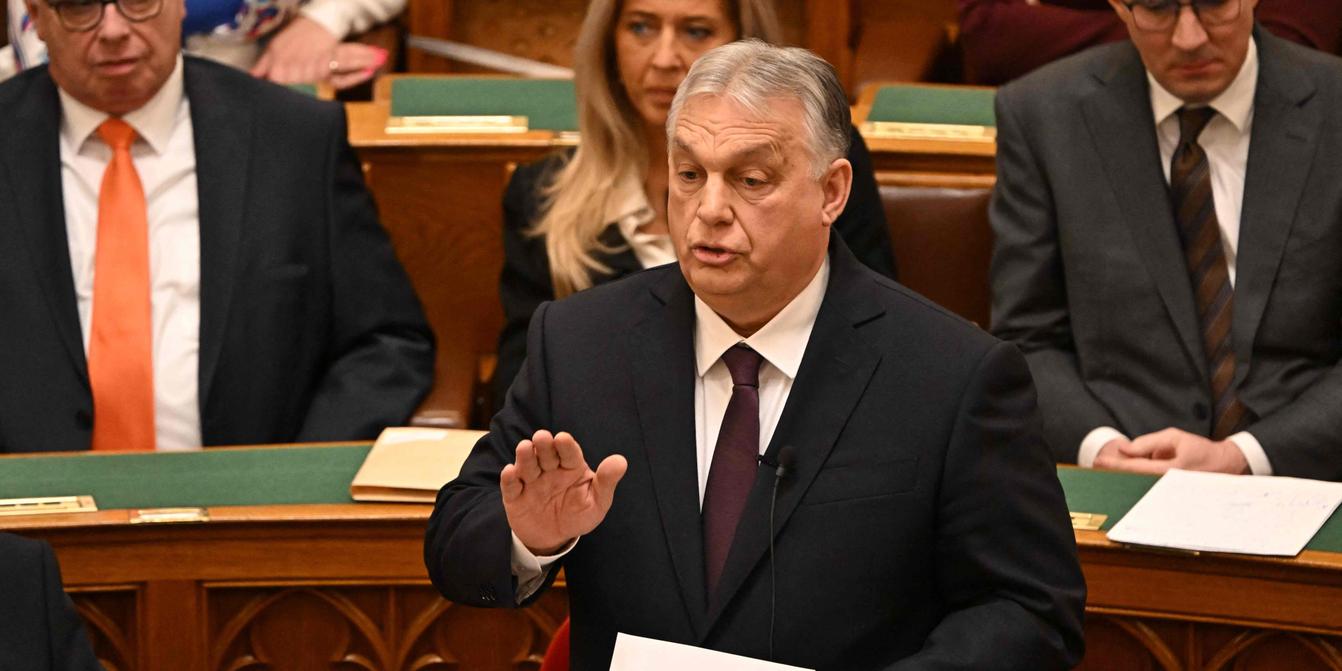
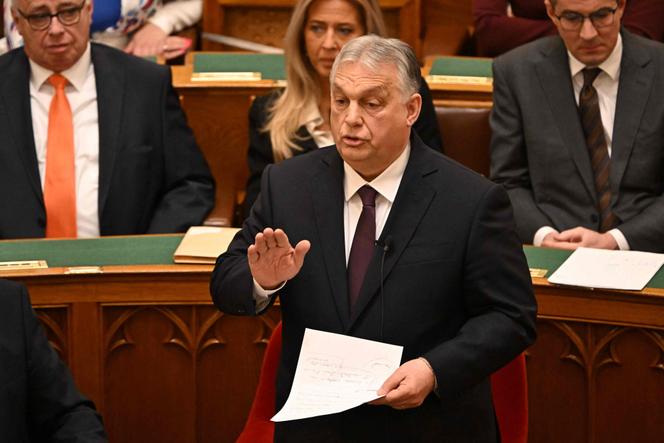
Hungary’s Veto Threat Targets EU’s 20th Sanctions Package On 24 Feb 2026 Budapest announced it will veto the EU’s twentieth sanctions package aimed at Russia’s shadow fleet and energy revenues, linking the move to a €90 billion loan and aid plan for Ukraine [1][2]. The threat emerged just before the fourth anniversary of the invasion, prompting EU foreign policy chief Kaja Kallas to label the outcome a “setback” [2]. Hungary’s stance also endangers the coordinated European response to Moscow, as the veto could block the entire sanctions package [1][2].
Oil Supply Dispute Fuels Hungary’s Leverage Over Kyiv Hungary and Slovakia claim Russian oil deliveries through the Druzhba pipeline stopped on 27 Jan 2026 after a Ukrainian‑reported drone attack damaged the line [2][3]. Both countries maintain a temporary exemption from the EU ban on Russian oil, and Budapest warned it will withhold the €90 billion loan until those shipments resume [2][3][1]. Foreign Minister Péter Szijjártó accused Ukraine of “blackmail” and said Hungary will not “pay for Ukraine’s war” while oil flows remain halted [3][1].
Ukraine Faces Funding Gap as US Aid Declines Kyiv has already received €195 billion from the EU since 2022, but projections show Ukraine will run out of money by April 2026 as American assistance wanes [1]. The looming shortfall heightens the urgency of the pending €90 billion package, which EU officials say must be approved quickly to avoid a financing crisis [1]. A European diplomat warned that “we still have a little time, but not much,” underscoring the narrow window for securing the aid [1].
December 2025 Loan Agreement Excludes Repayment by Three States In December 2025 Hungary, Slovakia and the Czech Republic secured a zero‑interest loan for Ukraine on the condition that they would not participate in any future repayment once the war ends and Russia pays reparations [1]. This arrangement was intended to protect the three states from financial fallout, but Hungary now threatens to block the loan despite the prior compromise [1][3]. The loan’s interest‑free status was a key factor in the original agreement, making Hungary’s current obstruction particularly consequential [1].
EU Leaders’ Kyiv Visit Stalled by Hungarian Opposition On the day of the veto announcement, Commission President Ursula von der Leyen and European Council President Antonio Costa arrived in Kyiv to reaffirm “unconditional” support for Ukraine [1]. Their diplomatic push was effectively stalled by Hungary’s threat, preventing a unified EU front on both sanctions and the aid package [1]. The visit highlighted the growing rift within the bloc as member states diverge over energy dependencies and financial commitments [1][2].
Sources
-
1.
Le Monde: Orban threatens veto of EU sanctions, jeopardizing €90 bn Ukraine aid: reports Hungary’s announced veto of the 20th sanctions package, ties to €90 bn aid, notes Kyiv visit and funding gap.
-
2.
AP: EU sanctions stall as Hungary blocks vote on eve of war anniversary: details surprise objection halting vote, links to oil pipeline issue, mentions Kaja Kallas comment and US aid context.
-
3.
The Hindu: Hungary to Block EU Loan to Ukraine Until Russian Oil Flows Resume: focuses on Szijjártó’s statement that loan blocked until Druzhba pipeline resumes, accuses Ukraine of blackmail, notes suspension of diesel shipments.
Related Tickers
Timeline
Oct 2025 – EU leaders pledge to keep Russian central‑bank assets immobilised until Russia ends its war and pays reparations, creating a legal basis for future Ukraine financing [12].
Dec 3, 2025 – The European Commission proposes using about €90 billion of the €210 billion frozen Russian assets as collateral for a “reparations loan” that would cover two‑thirds of Ukraine’s 2026‑27 budget, noting that roughly €194 billion of the assets sit in Belgium [14].
Dec 9, 2025 – At a preparatory summit, EU heads agree to a two‑year funding package for Ukraine, earmarking two‑thirds of the estimated €90 billion need and weighing a reparations‑loan backed by frozen assets against a market‑borrowing alternative [13].
Dec 12, 2025 – The EU invokes an emergency procedure to freeze about €210 billion of Russian central‑bank assets indefinitely, preventing Hungary and Slovakia from vetoing future aid and signalling that the assets will underwrite a loan to be discussed at the Dec 18 summit [5][12].
Dec 17, 2025 – The European Council convenes in Brussels to debate the reparations‑loan proposal; Hungary and Slovakia signal opposition, Belgium warns of legal risk to Euroclear, and the plan requires a qualified‑majority (65 % of the EU population) to pass [11][4].
Dec 17‑18, 2025 – EU leaders hold late‑night talks to craft guarantees for Belgium against possible Russian retaliation, while Belgium insists the loan include frozen assets held elsewhere and rejects the reparations‑loan without binding safeguards [10][2].
Dec 18, 2025 – After the asset‑based plan stalls, EU leaders approve a zero‑interest loan of roughly €90‑€106 billion by borrowing on capital markets, retaining the right to use immobilised Russian assets for repayment only after Russia pays war reparations [3][8][9].
Dec 19, 2025 – The summit concludes after 17 hours of debate with a unanimous decision to raise a €90 billion zero‑interest loan guaranteed by the EU budget; Hungary, Slovakia and the Czech Republic abstain but do not veto, and the EU keeps the option to tap frozen assets later [1][8].
Jan 27, 2026 – A Russian drone strike damages the Druzhba pipeline, halting Russian oil deliveries to Hungary and Slovakia and prompting Budapest to accuse Kyiv of “blackmail” [7].
Jan 28, 2026 – Hungarian Prime Minister Viktor Orbán posts on X that “the Ukrainian leadership crossed a line,” declares Hungary will not fund Ukraine’s war effort, refuses to ban Russian energy, and vows to block fast‑track EU accession for Kyiv [6].
Jan 2026 (Davos) – At the World Economic Forum, President Volodymyr Zelensky mocks Orbán, saying “Every Viktor who lives off European money while trying to sell out European interests deserves a smack upside the head” [6].
Feb 21, 2026 – Foreign Minister Péter Szijjártó announces Hungary will block the €90 billion interest‑free loan until Russian oil flows through the Druzhba pipeline resume, linking the loan to energy deliveries [15].
Feb 23, 2026 – The EU’s “20th sanctions package” targeting Russia’s shadow fleet fails to pass after Hungary objects, and Budapest threatens to withhold the €90 billion loan unless oil shipments restart [7].
Feb 24, 2026 – Hungary signals it will veto the sanctions proposal, jeopardising the €90 billion Ukraine aid plan; EU leaders’ Kyiv visit is stalled, and diplomats warn Ukraine faces a funding gap in April 2026 as U.S. aid wanes [16].
2026‑2027 (future) – The EU reserves the right to draw on frozen Russian assets to repay the loan if Russia does not meet reparations after a peace deal, while non‑EU partners such as the UK, Japan and Canada are expected to help close the financing gap and the bloc plans to enforce an EU‑wide ban on Russian oil and gas imports by 2027 [1][6][2].
Dive deeper (3 sub-stories)
All related articles (16 articles)
-
Le Monde: Orban threatens veto of EU sanctions, jeopardizing €90 bn Ukraine aid
-
AP: EU sanctions stall as Hungary blocks vote on eve of war anniversary
-
The Hindu: Hungary to Block EU Loan to Ukraine Until Russian Oil Flows Resume
-
Newsweek: Hungarian Prime Minister Orbán Accuses Ukraine of Crossing a Line Amid EU Tensions
-
AP: EU approves 106 billion loan to Ukraine after frozen-asset plan stalls
-
CNN: EU approves $105 billion loan to Ukraine, shelves plan to tap frozen Russian assets
-
BBC: EU summit approves €90bn loan for Ukraine amid divisions
-
AP: EU leaders approve a 90 billion euro zero-interest loan to Ukraine after plan to use frozen Russian assets unravels
-
AP: EU Leaders Push Late‑Night Deal to Shield Belgium from Russian Retaliation Over Ukraine Loan
-
BBC: EU weighs using frozen Russian assets to fund Ukraine as Zelensky pushes loan
-
CNN: EU faces split over plan to tap frozen Russian assets for Ukraine loan
-
AP: EU leaders convene to decide on using frozen Russian assets for Ukraine
-
AP: EU Indefinitely Freezes Russian Assets to Prevent Hungary, Slovakia from Blocking Ukraine Aid
-
CNN: EU freezes Russian assets to prevent Hungary and Slovakia from vetoing Ukraine aid
-
AP: EU Leaders Commit to 2‑Year Ukraine Funding, Controversy Over Using Frozen Russian Assets
-
AP: EU Plans to Use Frozen Russian Assets for Ukraine; Belgium Rejects
External resources (7 links)
- https://cbr.ru/eng/press/pr/?file=639011471958138173OBAUT_E.htm (cited 1 times)
- https://commission.europa.eu/document/download/ceae8dde-0291-4ee3-8519-80b30317bf35_en (cited 1 times)
- https://commission.europa.eu/topics/eu-solidarity-ukraine/eu-assistance-ukraine_en (cited 1 times)
- https://newlinesinstitute.org/wp-content/uploads/2025116-Ukraine-Reparations-NLISAP-1.pdf (cited 1 times)
- https://www.europarl.europa.eu/RegData/etudes/BRIE/2025/775908/EPRS_BRI(2025)775908_EN.pdf (cited 1 times)
- https://www.europarl.europa.eu/RegData/etudes/STUD/2025/754487/EXPO_STU(2025)754487_EN.pdf (cited 1 times)
- https://www.kielinstitut.de/topics/war-against-ukraine/ukraine-support-tracker/ (cited 1 times)