Bodies Arrive at Gaza Hospitals as Cease‑Fire Remains Stalled and Rafah Crossing Reopens for Limited Travel
Updated (27 articles)
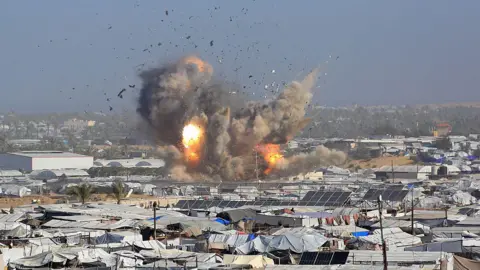
Cease‑fire casualties climb despite truce since October 10 The Gaza Health Ministry reports at least 556 Palestinians killed by Israeli strikes since the U.S.‑brokered cease‑fire began, while Israel acknowledges four of its soldiers dead in Gaza [1][3][4][5]. Overall war death tolls exceed 70,000, a figure now cited by the Israeli military and echoed by the health ministry’s latest count of 71,667 [6][5]. Both civilian and combatant deaths are included, with children and women comprising a significant share of the casualties [5][4]. The high death toll fuels international pressure on both sides to enforce the truce [4][1].
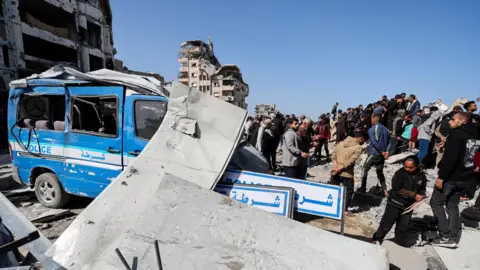
Twenty‑four bodies reach Shifa Hospital, prompting cease‑fire query On February 6, Shifa Hospital director Mohamed Abu Selmiya posted on Facebook demanding “Where is the ceasefire? Where are the mediators?” after 24 bodies were delivered to Gaza hospitals [1]. Israel retrieved the final hostage’s body only a week earlier, while Hamas claims difficulty locating other remains due to extensive destruction [1]. The arrival of the bodies underscores the humanitarian crisis and the stalled negotiations over missing persons [1].
Rafah crossing reopens partially, allowing limited movement Following U.S. pressure, Israel partially reopened the Rafah crossing for patients and relatives; 45 people crossed into Egypt on February 3 and a bus of returnees arrived in Gaza on February 4 [3][4]. Despite the reopening, fewer than 50 individuals were permitted to cross on Monday, highlighting the crossing’s constrained capacity [1]. Families expressed relief at reunions, but the limited flow does little to alleviate the broader humanitarian squeeze [3].
Key elements of the October agreement remain stalled The deployment of an international security force, Hamas disarmament, and Gaza reconstruction have not progressed since the cease‑fire [1]. President Trump’s 20‑point plan, accepted by Israel and Hamas in October, secured the release of all living hostages in exchange for thousands of Palestinian prisoners and the return of remains [1]. However, implementation gaps persist, and Israel’s coordinating body COGAT disputes UN claims of aid delivery shortfalls [1].
Sources
-
1.
AP: Gaza Violence Persists Months After Ceasefire Takes Effect: Reports 24 bodies arriving at Gaza hospitals, 556 Palestinian deaths since the October truce, stalled security‑force deployment, and limited Rafah crossing usage .
-
2.
Le Monde: Former Hamas Official Says Armed Struggle Failed as Gaza Lies in Ruins: Features 76‑year‑old ex‑Hamas adviser Ahmed Youssef condemning the Oct 7 attack, describing the armed struggle as failed, and noting Israel’s ban on foreign journalists .
-
3.
The Hindu: Israeli strikes kill 23 in Gaza as Rafah crossing reopens for limited travel: Details February 4 air strikes killing 23, targeting Hamas commander Bilal Abu Assi, partial Rafah reopening for patients, and hospital medicine shortages .
-
4.
BBC: Israeli Air Strikes Kill at Least 32 in Gaza as Ceasefire Tensions Rise: Covers Saturday’s 32‑person death toll, Israeli claim of targeting Hamas truce violations, and upcoming Rafah crossing reopening after hostage body recovery .
-
5.
CNN (Jan 31): Israeli strikes kill over 30 in Gaza, health ministry says: Notes 31 deaths in the highest daily toll since November, women and children heavily affected, and IDF retaliation for a Rafah breach .
-
6.
CNN (Jan 30): Israeli Military Acknowledges Approx. 70,000 Gaza Deaths, Aligning With Health Ministry Figures: Announces Israeli officials’ new estimate of ~70,000 Palestinian deaths, matching health ministry numbers, and recounts earlier denials of casualty figures .
Timeline
Oct 7, 2023 – Hamas launches a coordinated assault on southern Israel, killing about 1,200 civilians and seizing 251 hostages, which triggers Israel’s full‑scale war in Gaza[24].
Jul 16, 2024 – An Israeli air strike hits a school in Nuseirat, badly wounding 11‑year‑old Abdelrahman; doctors amputate his leg and his family later describes his severe psychological trauma[6].
Mar 2024 – Israeli forces attempt to arrest senior Hamas weapons chief Raed Saad in Gaza City, but he escapes moments before the raid is carried out[7].
Oct 10, 2025 – A U.S.‑brokered cease‑fire (the “pause”) takes effect, halting large‑scale combat and launching a phased plan that includes a hostage‑prisoner exchange, partial Israeli withdrawal and an aid surge[1][4][8][24].
Dec 3, 2025 – Israeli jets strike tents in al‑Mawasi west of Khan Younis, killing five Palestinians—including two children—after the IDF says a Hamas terrorist wounded soldiers earlier that day[10].
Dec 4, 2025 – Yasser Abu Shabab, head of the Popular Forces militia, is shot dead in Rafah while trying to mediate a family dispute; Israeli officials attempt, but fail, to evacuate him to a southern hospital[14][9].
Dec 8, 2025 – The Israel Defense Forces announce a review of the reported killing of three‑year‑old Ahed Tareq al‑Bayouk near Rafah, saying they were unaware of any strike at the time[8].
Dec 13, 2025 – Prime Minister Benjamin Netanyahu and Defense Minister Yoav Katz order the assassination of Hamas weapons chief Raed Saad; an Israeli vehicle strike in Gaza City kills Saad and three other civilians[15][22][7].
Dec 14, 2025 – Hamas confirms that Raed Saad was killed in the Israeli strike, labeling him a chief architect of the Oct 7 attack[21].
Dec 24, 2025 – Netanyahu accuses Hamas of breaching the cease‑fire after an explosive device wounds an Israeli officer in Rafah, warning that Israel will respond accordingly[26].
Jan 8, 2026 – Israeli air strikes kill eight Palestinians, including four children, when a drone hits a tent shelter and a school is struck in southern Gaza[4].
Jan 9, 2026 – Israeli attacks kill 13 people across Gaza; a U.S. official says President Trump will announce a “Board of Peace” next week, naming Bulgarian diplomat Nickolay Mladenov as director‑general[20].
Jan 13, 2026 – An Israeli drone strike near the Morag corridor kills three Palestinians who approached troops, occurring as Gaza awaits the formal announcement of a technocratic Board of Peace to replace Hamas’s government[19].
Jan 21, 2026 – Israeli forces kill at least 11 Palestinians, including three journalists and two 13‑year‑old boys, in central Gaza and near displacement camps, marking one of the deadliest days since the cease‑fire began[18][3].
Jan 24, 2026 – Father Yusuf Zawara kneels over his dead 15‑year‑old son Mohammad in Shifa Hospital’s morgue, pleading “He’s sleeping… He’ll wake up now,” after an Israeli missile hits the boys gathering firewood near the Yellow Line[17].
Jan 29, 2026 – A senior Israeli security source tells journalists that the military now accepts the Hamas‑run health ministry’s death toll of over 70,000 Palestinians as largely accurate[2].
Jan 30, 2026 – Israeli officials publicly cite approximately 70,000 Gaza deaths, aligning with the health ministry’s count of 71,667 killed and 171,343 injured[12].
Jan 31, 2026 – Israeli air and artillery attacks across Gaza kill at least 31 people, the highest daily toll since early November, and the IDF says the strikes respond to a Hamas breach in eastern Rafah[11].
Feb 1, 2026 – Israeli air strikes kill at least 32 Palestinians, including children and women, after the IDF says Hamas violated the cease‑fire by moving terrorists from underground tunnels in Rafah; U.S. envoy Steve Witkoff announces the start of phase two of the cease‑fire plan[1].
Feb 4, 2026 – Israeli strikes kill 23 Palestinians, targeting Hamas commander Bilal Abu Assi; the Rafah crossing partially reopens for limited patient travel, with 45 people crossing on Feb 3[25].
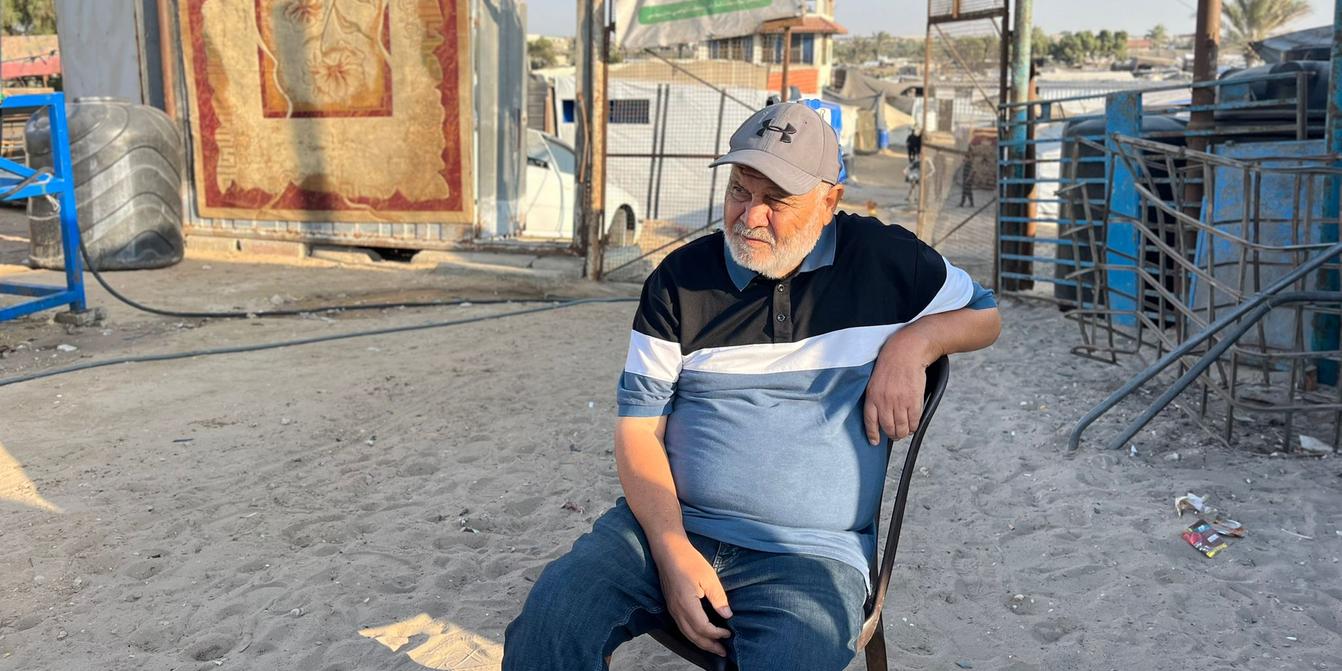
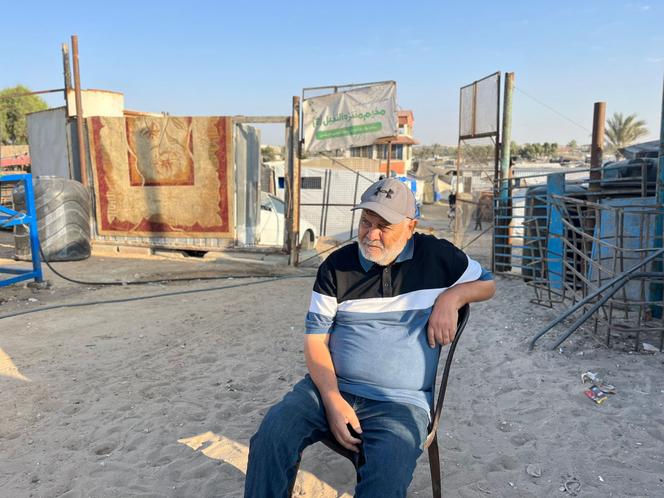
Feb 5, 2026 – Former senior Hamas cadre Ahmed Youssef, now living in a tent on Al‑Mawassi beach, declares the Oct 7 attack a “fatal error” and says the armed struggle has failed[27].
Feb 6, 2026 – Gaza’s health ministry reports 556 Palestinians killed since the October cease‑fire, while the Rafah crossing remains open but sees fewer than 50 crossings daily; Trump’s 20‑point plan is accepted and Hamas releases all living hostages in exchange for prisoners[16].
Dive deeper (7 sub-stories)
-
Bodies of 24 Palestinians Reach Gaza Hospitals as Cease‑Fire Tensions Escalate
(17 articles)
-
Le Monde: Former Hamas Official Says Armed Struggle Failed as Gaza Lies in Ruins
-
BBC: BBC reaches settlement with Israeli family over filming without consent after Oct 7 attack
-
BBC: Gaza school strike injures 11-year-old, leading to amputation and ongoing trauma
-
CNN: Israeli-backed militias seek to govern Gaza as Hamas consolidates control
-
Hamas Commander Raed Saad Confirmed Dead After Israeli Strike, Ceasefire Tensions Rise
(4 articles)
-
Yasser Abu Shabab, Leader of Israeli‑Backed Popular Forces, Killed in Rafah on Dec 4, 2025
(2 articles)
All related articles (27 articles)
-
AP: Gaza Violence Persists Months After Ceasefire Takes Effect
-
Le Monde: Former Hamas Official Says Armed Struggle Failed as Gaza Lies in Ruins
-
The Hindu: Israeli strikes kill 23 in Gaza as Rafah crossing reopens for limited travel
-
BBC: Israeli Air Strikes Kill at Least 32 in Gaza as Ceasefire Tensions Rise
-
CNN: Israeli strikes kill over 30 in Gaza, health ministry says
-
CNN: Israeli Military Acknowledges Approx. 70,000 Gaza Deaths, Aligning With Health Ministry Figures
-
BBC: Israeli Military Acknowledges Hamas‑Reported Gaza Death Toll
-
AP: Gaza father’s desperate attempt to revive son after Israeli strike
-
AP: Israeli fire in Gaza kills at least 11, including journalists and two 13-year-olds on deadly day
-
BBC: Israeli strike in central Gaza kills three journalists, first responders say
-
AP: Drone strike kills 3 in Gaza as Hamas prepares to transfer governance to new committee
-
AP: Israeli strikes kill at least 13 across Gaza as Trump plans Board of Peace
-
BBC: Eight killed in Israeli air strikes in Gaza, civil defence agency says
-
BBC: BBC reaches settlement with Israeli family over filming without consent after Oct 7 attack
-
BBC: Gaza school strike injures 11-year-old, leading to amputation and ongoing trauma
-
The Hindu: Israel says Hamas violated Gaza ceasefire after officer wounded in Rafah, vows retaliation
-
CNN: Israeli-backed militias seek to govern Gaza as Hamas consolidates control
-
AP: Hamas Confirms Death of Top Commander Raed Saad After Israeli Strike
-
AP: Israel Claims Killing of Hamas Commander Raed Saad Amid Ceasefire Tensions
-
Newsweek: Israel Ordered Assassination of Hamas Leader in Gaza Strike, Netanyahu Says
-
BBC: Israel kills senior Hamas weapons chief in Gaza vehicle strike
-
BBC: Israel to review reports that troops killed three-year-old in Gaza
-
CNN: Leader of Israeli‑backed Gaza militia killed in Rafah
-
BBC: Anti‑Hamas Militia Leader Yasser Abu Shabab Killed in Gaza
-
AP: Israel Strikes Hamas Militant in Southern Gaza After Soldier Attack
-
BBC: Five Palestinians Killed in Israeli Air Strike on Tents Near Khan Younis
-
AP: Palestinian death toll surpasses 70,000 amid ongoing Israeli strikes
External resources (4 links)
- https://t.co/r7wAr2qewU (cited 1 times)
- https://twitter.com/hashtag/Watch?src=hash&ref_src=twsrc%5Etfw (cited 1 times)