U.S. Kinetic Strikes Kill Six More Narco‑Terrorists, Death Toll Reaches 150
Updated (101 articles)
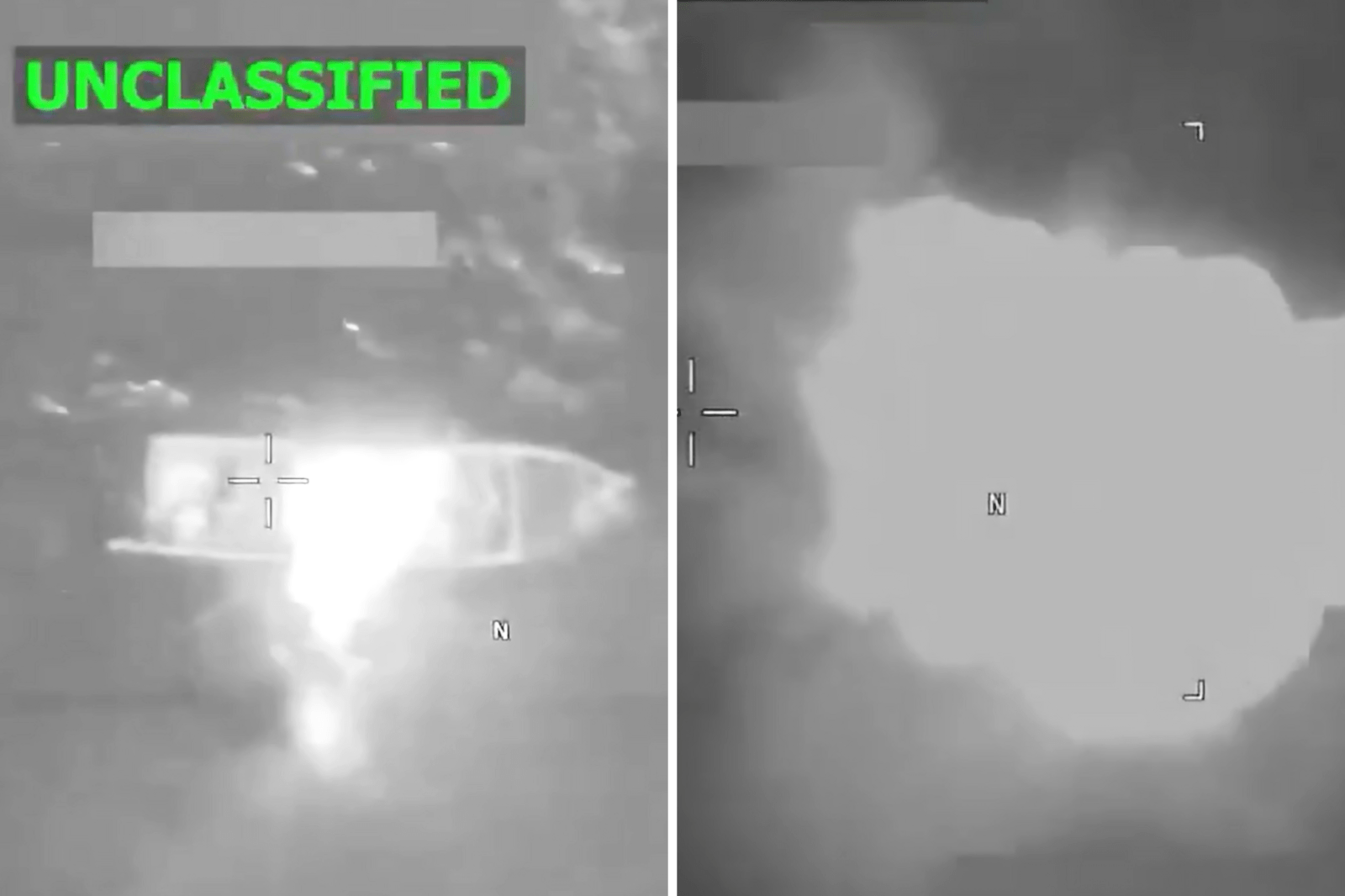
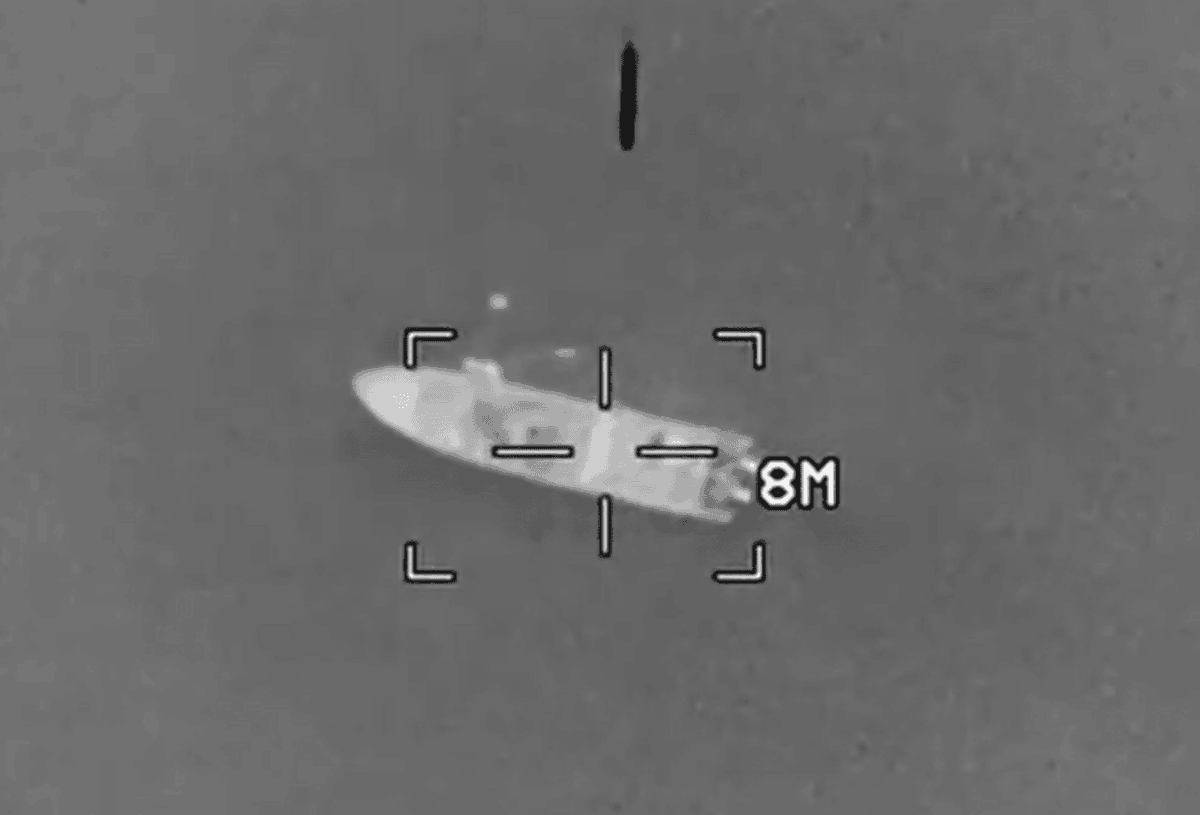
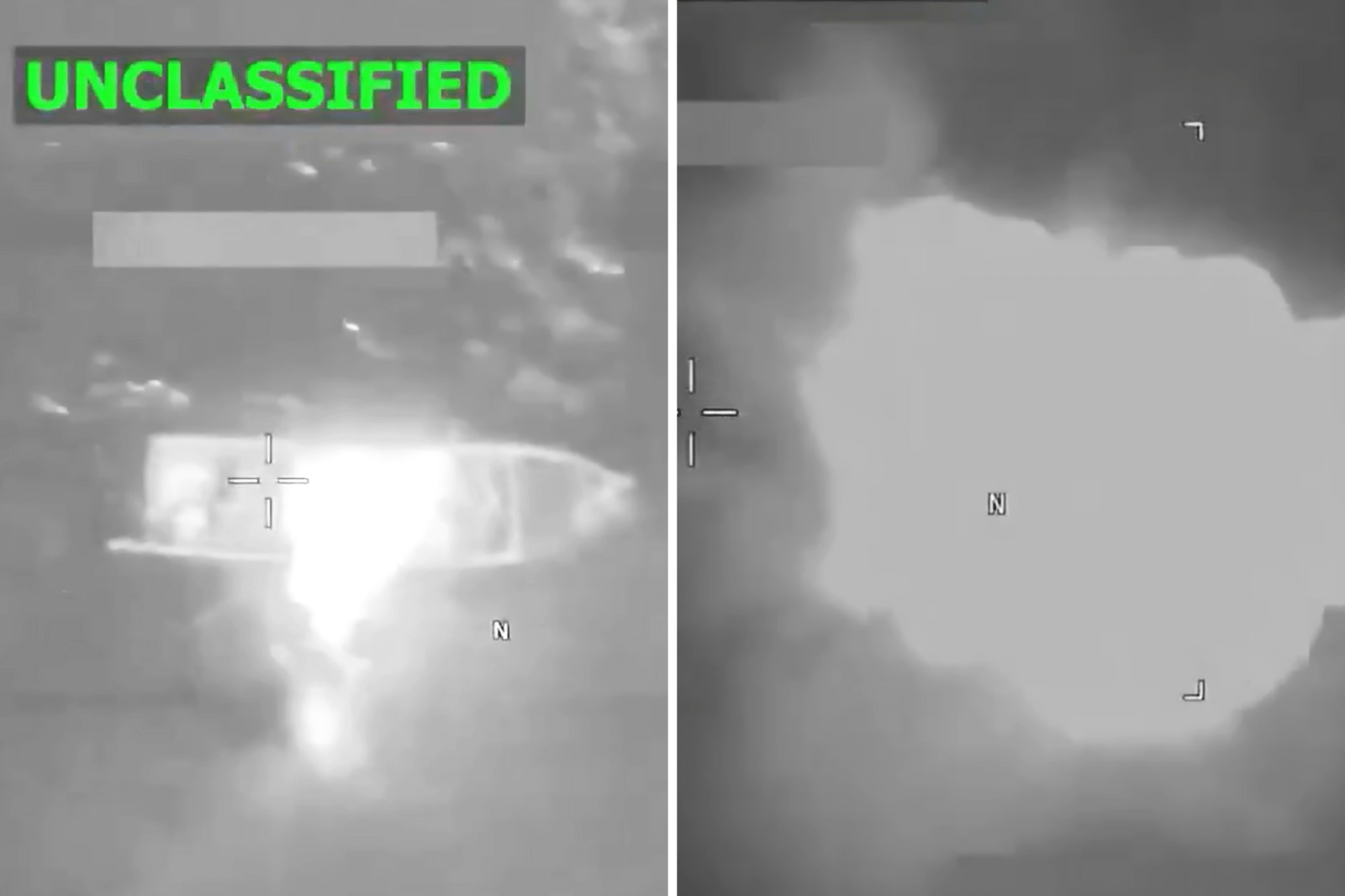
New Caribbean Strike Adds Three Fatalities, Raising Toll to 150 On Feb. 23 2026 a U.S. kinetic strike hit an alleged drug‑smuggling boat in the Caribbean, killing three people and prompting Southern Command to label the vessel a narco‑terrorist target; the administration now reports at least 150 deaths since the campaign began in September 2023 [1]. The Associated Press and CNN, citing the same strike, put the cumulative death count at 148, highlighting a slight discrepancy in reported totals [3][4]. Video released by Southern Command shows the vessel exploding after the attack, providing visual confirmation of the lethal action [1][3].
Pacific Strike on Feb 20 Killed Three, Part of Accelerating Tempo A second lethal kinetic strike on Feb. 20 2026 in the eastern Pacific killed three male suspects, with Southern Command posting footage of the blast on social media [2]. The operation, ordered by Gen. Francis L. Donovan, was part of Op Southern Spear and followed earlier strikes that week that killed 11 people across the Caribbean and Pacific [2][4]. Intelligence assessments cited the vessel’s transit on known narco‑trafficking routes as justification, though details on vessel type and identities remain classified [2].
Gen. Francis L. Donovan Directs All Reported Kinetic Attacks Every strike reported by the six outlets attributes command authority to SOUTHCOM commander Gen. Francis L. Donovan, who ordered Joint Task Force Southern Spear to execute the lethal engagements [1][2][3][4][5][6]. Donovan’s orders are presented as responses to “Designated Terrorist Organizations” operating on established drug routes, and the strikes are framed as lawful under a classified legal opinion authorizing lethal force against a secret list of cartel targets [6].
Administration Frames Campaign as War on Narco‑Terrorists, Critics Call Extrajudicial President Donald Trump’s administration describes the series of strikes as an “armed conflict” with Latin American drug cartels, asserting that kinetic action is necessary to curb fentanyl flows despite limited evidence linking the targeted boats to trafficking [1][3][4]. Legal scholars and human‑rights groups argue the attacks constitute extrajudicial killings and potentially war crimes, especially after reports that survivors of earlier strikes were later targeted [1][3][6]. Congressional scrutiny has intensified, with lawmakers questioning the legality and strategic efficacy of lethal force in maritime drug interdiction [4][6].
Sources
-
1.
The Hindu: U.S. Caribbean Boat Strike Kills Three, Raising Campaign Death Toll to 150 – Reports the Feb 23 Caribbean strike, three deaths, total toll ≥150, and cites Gen. Donovan’s order and legal criticism .
-
2.
Newsweek: U.S. Southern Command Releases Video of Second Fatal Pacific Strike on Suspected Narco‑Terrorists – Details the Feb 20 Pacific strike, three deaths, video release, and notes earlier 11‑person kill count .
-
3.
AP: U.S. Military Conducts Latest Deadly Strike on Pacific Drug Boat – Confirms the Feb 20 Pacific strike, three deaths, total deaths ≥148, and highlights Trump’s war framing and legal concerns .
-
4.
CNN: US Military Strike on Alleged Drug Boat Kills Three in Eastern Pacific – Covers the Feb 20 Pacific strike, three deaths, total deaths 148, and mentions congressional scrutiny .
-
5.
Newsweek: U.S. Military Strikes Kill 11 Alleged Narco‑Terrorists in Pacific and Caribbean – Describes Feb 18 strikes killing 11, cumulative deaths ≥145, and links to Maduro capture and legal backlash .
-
6.
CNN: US Military Strikes Kill 11 on Three Alleged Drug Boats – Reports Feb 17 strikes killing 11, death toll ≥135, and cites a classified memo authorizing lethal force .
Related Tickers
Videos (2)
Timeline
July 2024 – The U.S. Supreme Court rules that former President Donald Trump enjoys broad presidential immunity for official acts, shielding him from prosecution over the 2025 Caribbean boat strikes[14].
September 2, 2025 – The U.S. Navy conducts an initial kinetic strike on a suspected drug‑smuggling vessel off Venezuela, killing nine crew members and splitting the boat; the administration calls the target a “designated terrorist organization” and part of an “armed conflict” with narco‑terrorists[25][23].
September 2, 2025 – A follow‑up strike 41 minutes later, ordered by Vice Admiral Frank “Mitch” Bradley, sinks the remaining hull and kills two survivors who were clinging to the wreck, prompting legal experts to label the action a potential war crime[25][18].
September 2, 2025 – Defense Secretary Pete Hegseth later says he “did not see survivors in the water” and cites “fog of war” as justification for the second strike[24].
September 2, 2025 – President Trump posts video of the first strike on Truth Social, describing the operation as targeting “Tren de Aragua narcoterrorists” and asserting it will save “25,000 American lives”[22].
September 2, 2025 – In a White House cabinet meeting, Hegseth defends the second strike, stating “I didn’t see anyone on the water because the vessel was on fire” and that the decision was lawful under U.S. law[23].
September 2, 2025 – Admiral Bradley testifies that the two men who survived the first blast “had no radio or other communications devices,” contradicting earlier claims they were calling for help[18].
December 2, 2025 – The White House affirms that Vice Admiral Bradley acted within his authority and U.S. law when he ordered the September 2 follow‑up strike, while President Trump says he “would not have wanted a second strike”[30].
December 3, 2025 – President Trump tells reporters the administration will “certainly” release video of the September 2 follow‑up strike, responding to congressional demands for transparency[22].
December 5, 2025 – Admiral Bradley confirms survivors could not radio for assistance, reinforcing his legal justification for the second strike[18].
December 6, 2025 – At the Reagan National Defense Forum, Hegseth defends the Caribbean strikes as “the strength of American resolve,” while also declining to commit to releasing the second‑strike video, citing protection of sources and methods[15][16].
December 9, 2025 – A defense‑spending bill ties 25 % of Hegseth’s travel budget to the provision of unedited video of the September 2 strikes to congressional armed‑services committees, intensifying legislative pressure[5].
December 10, 2025 – Lawmakers learn that some survivors from earlier Caribbean attacks were taken to Ecuador and Colombia, raising questions about the U.S. handling of rescued crew members[13].
December 15, 2025 – The U.S. military strikes three Pacific vessels, killing eight people; President Trump calls the operation a necessary escalation in the “armed conflict” with drug cartels[12].
December 16, 2025 – Defense Secretary Hegseth, Secretary of State Marco Rubio, and other officials brief the House and Senate on the boat‑strike campaign, fielding questions about the legality of the September 2 follow‑up strike[11].
December 16, 2025 – The death toll from Southern Spear operations surpasses 100 after a strike kills five people on two vessels, prompting Amnesty International’s Daphne Eviatar to condemn the campaign as “disregard for the law”[10].
December 17, 2025 – House Republicans reject Democratic resolutions demanding prior congressional authorization for the strikes, while Defense Secretary Hegseth announces a lethal kinetic strike that killed four people earlier that day[10].
December 18, 2025 – The U.S. imposes a blockade on all sanctioned Venezuelan oil tankers, accusing Caracas of using oil revenues to fund drug trafficking, further heightening tensions with Maduro’s government[10].
December 22, 2025 – A low‑profile vessel in the eastern Pacific is struck, killing one person; Southern Command again frames the target as a “designated terrorist organization” operating on known narco‑trafficking routes[9].
December 29, 2025 – A second Pacific strike kills two men on a suspected drug vessel; the operation is directed by Secretary of War Pete Hegseth and described as a lethal kinetic action against Designated Terrorist Organizations[8][27].
January 1, 2026 – The U.S. military reports a strike on two drug‑carrying boats that kills five people, following a convoy attack the previous day; the campaign now exceeds 30 strikes and 110 deaths since September 2025[3].
January 3, 2026 – The U.S. Coast Guard suspends a 65‑hour search for missing crew after a convoy of three drug boats is hit, noting at least ten people killed and six vessels sunk in the week’s operations[7].
January 2026 (early) – U.S. forces capture Venezuelan President Nicolás Maduro, a move the administration says curtails his alleged collusion with drug traffickers and leads to a slowdown in strike tempo[1].
January 27, 2026 – Relatives of two Trinidadian men killed on 14 October 2025 file a lawsuit in Boston federal court invoking the Death on the High Seas Act, alleging “lawless killings in cold blood” by the U.S. campaign[2].
February 6, 2026 – Southern Command announces a strike on an alleged drug boat in the Eastern Pacific that kills two people, marking the second strike of the year and bringing the campaign’s total to at least 38 lethal hits and 128 deaths since September 2025[1].
February 21, 2026 – A Southern Command video shows a Pacific drug boat exploding after a strike that kills three, raising the cumulative death toll to at least 148 across 43 attacks; critics label the follow‑up killings of survivors as potential war crimes[6].
February 23, 2026 – Joint Task Force Southern Spear, directed by Gen. Francis L. Donovan, conducts a kinetic strike on a Caribbean drug‑smuggling boat, killing three and pushing the overall campaign death count to a minimum of 150; legal scholars call the attacks “extrajudicial killings”[26].
Dive deeper (14 sub-stories)
-
U.S. Military Kinetic Strikes on Caribbean and Pacific Boats Push Death Toll to At Least 150
(38 articles)
-
Trinidadian Families File Boston Lawsuit Over 2025 U.S. Boat Strike
(3 articles)
-
Pentagon Refuses Full Release of September Drug‑Boat Strike Video Amid Congressional Pressure
(8 articles)
-
Congress Holds Classified Briefing on Pacific Boat Strikes While Subsidy Vote Delayed
(3 articles)
-
U.S. Defense and State Secretaries to Testify on Controversial Caribbean Boat Strikes
(30 articles)
-
Newsweek: Impeachment Articles Filed Against Secretary of Defense Pete Hegseth
-
Congress Ties Travel Funds to Release of Contested Boat‑Strike Video
(5 articles)
-
CNN: Supreme Court Hears Trump FTC Firing Case; Boat Strike Video Release Pending; Farm Aid Package Announced
-
Newsweek: SNL parodies Hegseth, Trump in wake of Venezuela strikes
-
U.S. Military Strike on Caribbean Drug Boat Triggers Congressional Oversight and Legal Scrutiny
(2 articles)
-
Newsweek: Coast Guard Sniper Highlights Record Cocaine Seizure in Eastern Pacific
-
Admiral Denies ‘Kill Them All’ Order as Video Shows Survivors Killed in Caribbean Strike
(3 articles)
-
IG Report Finds No Classified Leak, Yet Hegseth Faces Congressional Push for Removal
(3 articles)
-
Trump Calls Dec 3 Cabinet Meeting to Address Navy Boat Strike Controversy
(2 articles)
All related articles (101 articles)
-
The Hindu: U.S. Caribbean Boat Strike Kills Three, Raising Campaign Death Toll to 150
-
Newsweek: U.S. Southern Command Releases Video of Second Fatal Pacific Strike on Suspected Narco‑Terrorists
-
AP: U.S. Military Conducts Latest Deadly Strike on Pacific Drug Boat
-
CNN: US Military Strike on Alleged Drug Boat Kills Three in Eastern Pacific
-
Newsweek: U.S. Military Strikes Kill 11 Alleged Narco‑Terrorists in Pacific and Caribbean
-
CNN: US Military Strikes Kill 11 on Three Alleged Drug Boats
-
CNN: US Military Boat Strikes Kill 124, Prompt Ongoing Search Efforts
-
AP: U.S. Military Strikes Another Alleged Drug Boat, Raising Death Toll to 128
-
BBC: US Military Strikes Alleged Drug Boat, Killing Two Amid Growing Controversy
-
CNN: US Southern Command conducts second lethal boat strike in Pacific, killing two
-
BBC: Families of Trinidadian Victims Sue U.S. Over 2025 Boat Strike
-
CNN: Families of Two Trinidadian Men Sue U.S. Over 2025 Boat Strike
-
Newsweek: U.S. Military Kinetic Strike on Eastern Pacific Narco Vessel – Jan. 23 Update
-
CNN: US military strike on Pacific drug boat kills two, leaves one survivor (Jan 23)
-
AP: U.S. Military Strikes First Drug Boat Since Maduro Raid
-
CNN: Coast Guard suspends search after US strikes on alleged drug boats
-
AP: Coast Guard hunts survivors as boat-strike campaign widens search
-
Newsweek: Petro says survivors jumped into Pacific to escape U.S. attack on drug boats
-
BBC: US says five killed in strike on two drug-carrying boats
-
CNN: U.S. strikes on alleged drug boats kill at least eight over two days, with survivors abandoning ship
-
AP: U.S. military strikes five more alleged drug boats, eight killed, survivors possibly left
-
CNN: US strikes vessel in eastern Pacific, killing 2
-
The Hindu: U.S. Military says two men killed in strike on suspected drug vessel in Pacific
-
AP: US conducts 30th strike against drug-boat in eastern Pacific
-
The Hindu: U.S. strikes another alleged drug boat in eastern Pacific, killing one
-
CNN: US strikes low-profile vessel in eastern Pacific, killing one
-
AP: US strikes another drug-smuggling boat in the eastern Pacific, one killed
-
CNN: US strikes two alleged drug-trafficking boats in the eastern Pacific, five killed
-
Newsweek: Death toll from U.S. strikes on alleged drug boats passes 100
-
AP: U.S. conducts two more strikes on drug boats in the eastern Pacific, killing five
-
Newsweek: Four Men Killed in U.S. Eastern Pacific Drug‑Boat Strike on Dec 17
-
CNN: US strike on alleged drug boat kills four in eastern Pacific
-
AP: U.S. Military Boat Strike Kills Four, Raises Congressional Scrutiny
-
CNN: Pentagon refuses public release of full Sep 2 drug‑boat strike video
-
CNN: Trump Administration Briefings and Policy Standoff on Boat Strikes and Health‑Care Subsidies
-
BBC: Eight killed in latest strikes on alleged drug boats, US military says
-
AP: U.S. Officials to Testify on Controversial Boat Strikes Amid Legal Scrutiny
-
Newsweek: U.S. Southern Command Strikes Three Drug Vessels, Killing Eight
-
AP: U.S. Military Strikes Three Pacific Boats, Killing Eight
-
CNN: House Passes NDAA, Adds Provision for Boat‑Strike Video
-
Newsweek: Impeachment Articles Filed Against Secretary of Defense Pete Hegseth
-
CNN: US strikes on drug boats yield survivors treated differently
-
AP: Hegseth Weighs Release of Boat Strike Video Amid Congressional Demand
-
CNN: Trump boat-strike video: White House delays release as Congress seeks unedited footage
-
BBC: Congress ups pressure to release boat strike video with threat to Hegseth's travel budget
-
Newsweek: NDAA Provision Requires Pentagon to Release Unedited Strike Footage
-
CNN: Supreme Court Hears Trump FTC Firing Case; Boat Strike Video Release Pending; Farm Aid Package Announced
-
CNN: Trump Denies Saying He Would Release Video of Second Boat Strike
-
CNN: Trump Administration Revises Narrative on Second Drug Vessel Strike
-
CNN: Top bipartisan lawmakers back release of video from Caribbean boat strike
-
AP: GOP senator says he has no objection to releasing video of strike that killed two survivors
-
Newsweek: SNL parodies Hegseth, Trump in wake of Venezuela strikes
-
CNN: Trump’s Immunity Shields Those Behind 2025 Caribbean Boat Strikes
-
AP: Hegseth defends strikes on alleged cartel boats, says Trump can order use of force ‘as he sees fit’
-
CNN: Hegseth defends Caribbean counter-drug strikes amid scrutiny
-
Newsweek: Hegseth stops short of promising release of second-strike video
-
King5 (Seattle, WA): Hegseth defends strikes on cartel boats; Trump empowered to order force
-
CNN: US Boat Strike Linked to Suriname Trafficking Route
-
Newsweek: Coast Guard Sniper Highlights Record Cocaine Seizure in Eastern Pacific
-
AP: US Military Strikes Drug Boat Near Venezuela, Killing 87 People
-
Newsweek: U.S. Double‑Strike Vessel Not Bound for U.S.; Targeted Boat Heading to Suriname, CNN Reports
-
CNN: Admiral Bradley Confirms Survivors Unable to Call for Help in September 2 Drug Vessel Strike
-
AP: Admiral denies “kill them all” order after U.S. Navy boat attack video circulates
-
BBC: US Continues Drone and Naval Strikes on Alleged Drug Boats, Expands Covert Operations in Venezuela
-
Newsweek: Hegseth Stands Firm Amid 22nd Drug‑Boat Strike and Growing Scrutiny
-
AP: Admiral Denies “Kill Them All” Order Amid Video‑Alarming Congressional Briefing
-
CNN: US Military Strikes Suspected Drug Boat in Eastern Pacific, Killing Four
-
Newsweek: US Military Conducts 22nd Drug‑Boat Strike in Eastern Pacific Amid Ongoing Controversy
-
BBC: Congressional Review of US Boat Strike in Caribbean Raises Questions for Hegseth
-
CNN: Congressional Split Over Second Strike on Alleged Drug Vessel
-
CNN: Admiral Briefs Congress on Controversial Drug Boat Strikes as Trump Defends Hegseth
-
Newsweek: U.S. Congress Seeks Full Account of Caribbean Boat Strike
-
CNN: Trump’s Second Caribbean Boat Strike Sparks Legal and Public Opinion Debate
-
AP: Navy Admiral Briefs Lawmakers on Boat Strike Attack
-
CNN: Admiral Bradley to Brief Congress on September 2 Drug‑Boat Strike
-
AP: Pentagon Knew Survivors After September Drug Boat Strike, Still Ordered Follow‑On Attack
-
CNN: Hegseth Faces IG Report Over Signal Leak and Caribbean Strike
-
Newsweek: Pentagon Knew Survivors After First Strike, Yet Second Attack Occurred
-
AP: Pete Hegseth Faces Congressional Scrutiny Over Venezuelan Strike
-
CNN: Trump promises release of video from second Caribbean strike
-
CNN: Hegseth Denies Direct Order for Second Caribbean Strike
-
CNN: Trump Administration Clarifies No Involvement in Second Strike on Alleged Drug Boat
-
AP: Hegseth Defends Second Strike on Alleged Drug Boat, Citing “Fog of War”
-
CNN: Republicans Split on U.S. Double‑Tap Strike on Drug Vessel
-
BBC: US Defence Secretary Clarifies Role in 2 September Drug‑Boat Strike
-
AP: Trump to Convene Cabinet Meeting Amid Boat Strike Scrutiny
-
BBC: White House Confirms Admiral Ordered Second Strike on Venezuelan Drug Boat
-
CNN: US Military Boat Strike Raises War‑Crime Questions
-
Newsweek: Admiral Frank Bradley Endorsed by Hegseth Amid Venezuela‑Related Strike Controversy
-
AP: White House Defends Admiral’s Follow‑Up Strike on Alleged Drug Boat as Lawful
-
AP: Second U.S. Boat Strike in September Raises Legal Questions
-
CNN: Congress Seeks Audio‑Video Evidence of Second U.S. Strike on Alleged Drug Boat
-
Newsweek: Defense Secretary Hegseth Defends Admiral Bradley Amid Second Boat Strike Controversy
-
CNN: White House Confirms Second U.S. Boat Strike, Hegseth Defends Actions
-
AP: Trump to Convene National Security Meeting Over September Boat Strike
-
CNN: Hegseth’s Pentagon Press Restrictions and the Controversial Drug‑Boat Strikes
-
King5 (Seattle, WA): White House Defends Admiral's Follow‑Up Strike on Alleged Drug Boat
-
Newsweek: Republicans Demand Probe into Pete Hegseth’s Boat Strikes
-
Newsweek: Defense Secretary Hegseth Responds to Criticism Over Alleged Second Strike on Drug Boat
-
CNN: Congress Questions Legality of Second Strike on Alleged Drug Vessel
-
CNN: US Military Conducts Second Strike Killing Survivors on Suspected Drug Vessel
External resources (71 links)
- https://www.youtube.com/live/U0xA3_FO7u4?si=gZk2LbIGMDAK1DJF&t=2538 (cited 1 times)
- https://www.youtube.com/watch?v=k0XDJjisTh0 (cited 1 times)
- https://www.youtube.com/watch?v=mSMcTTiRam8 (cited 1 times)
- https://rules.house.gov/sites/evo-subsites/rules.house.gov/files/documents/rcp_xml-2.pdf (cited 1 times)
- https://uscode.house.gov/view.xhtml?req=granuleid:USC-prelim-title10-section824a&num=0&edition=prelim (cited 1 times)
- https://www.state.gov/designation-of-international-cartels (cited 1 times)
- https://www.state.gov/releases/office-of-the-spokesperson/2025/09/secretary-of-state-marco-rubio-and-mexican-foreign-secretary-juan-ramon-de-la-fuente-at-a-joint-press-availability (cited 1 times)
- https://www.state.gov/releases/office-of-the-spokesperson/2025/09/secretary-of-state-marco-rubio-remarks-to-press (cited 1 times)
- https://www.state.gov/wp-content/uploads/2025/03/2025-International-Narcotics-Control-Strategy-Volume-1-Accessible.pdf (cited 1 times)
- https://www.washingtonpost.com/national-security/2025/11/28/hegseth-kill-them-all-survivors-boat-strike/ (cited 6 times)
- https://www.politico.com/news/2025/12/08/ndaa-boat-strikes-congress-hegseth-without-funds-00680679 (cited 2 times)
- https://www.vanityfair.com/news/story/trump-susie-wiles-interview-exclusive-part-1 (cited 2 times)
- https://www.ap.org/news-highlights/spotlights/2024/john-thune-is-striving-to-be-the-next-republican-senate-leader-but-can-he-rise-in-trumps-gop/ (cited 1 times)
- https://www.ap.org/news-highlights/spotlights/2025/the-atlantic-releases-the-signal-chat-showing-hegseths-detailed-attack-plans-against-the-houthis/ (cited 1 times)
- https://www.nationalreview.com/corner/this-might-be-the-worst-argument-ive-ever-read/ (cited 1 times)
- https://www.nytimes.com/2025/12/06/us/politics/pete-hegseth-boat-attack-video.html (cited 1 times)
- https://www.nytimes.com/2025/12/09/us/politics/pentagon-boat-strike-survivors.html (cited 1 times)
- https://www.politico.com/news/2025/10/28/trump-counts-on-public-support-for-drug-boat-strikes-without-congressional-approval-00626065 (cited 1 times)
- https://www.politico.com/news/2025/12/09/donald-trump-full-interview-transcript-00681693 (cited 1 times)
- https://www.reuters.com/world/us/just-29-americans-support-us-military-killing-drug-suspects-reutersipsos-poll-2025-11-14/ (cited 1 times)
- https://www.documentcloud.org/documents/26336195-unclassified-inspector-general-report-on-hegseth-use-of-signal/ (cited 2 times)
- https://www.documentcloud.org/documents/26341039-national-security-strategy/ (cited 2 times)
- https://www.documentcloud.org/documents/26378920-law-of-war-manual/ (cited 1 times)
- https://x.com/SecWar/status/1994552598142038358 (cited 4 times)
- https://truthsocial.com/@realDonaldTrump/posts/115136798909755892 (cited 2 times)
- https://truthsocial.com/@realDonaldTrump/posts/115686072737425841 (cited 2 times)
- https://x.com/SecWar (cited 2 times)
- https://x.com/SecWar/status/1994552598142038358?s=20 (cited 2 times)
- https://x.com/Southcom/status/1996726797086457886?s=20 (cited 2 times)
- https://x.com/SusieWiles/status/2000943061627548148?s=20 (cited 2 times)
- https://x.com/jonkarl/status/1998128887180472659 (cited 2 times)
- https://x.com/susiewiles/status/2000943061627548148?s=46&t=LIC6EJperuKtSHHmaxh_IQ (cited 2 times)
- https://t.co/69ywxXk30N (cited 1 times)
- https://t.co/XUHImPAZik (cited 1 times)
- https://twitter.com/SecWar?ref_src=twsrc%5Etfw (cited 1 times)
- https://twitter.com/hashtag/SOUTHCOM?src=hash&ref_src=twsrc%5Etfw (cited 1 times)
- https://x.com/AndrewKolvet/status/1996706611029532744 (cited 1 times)
- https://x.com/DeptofWar (cited 1 times)
- https://x.com/PeteHegseth/status/1995291042346852861 (cited 1 times)
- https://x.com/PeteHegseth/status/1996757617427824861?s=20 (cited 1 times)
- https://x.com/SeanParnellUSA/status/1994556986768155105 (cited 1 times)
- https://x.com/SenSchumer/status/1996669529267884292 (cited 1 times)
- https://x.com/Southcom/status/1996726797086457886 (cited 1 times)
- https://x.com/Southcom/status/2001464448750621120 (cited 1 times)
- https://x.com/Southcom/status/2001840669313135099 (cited 1 times)
- https://x.com/Southcom/status/2003303616963133694 (cited 1 times)
- https://x.com/Southcom/status/2005776276100207032?s=20 (cited 1 times)
- https://x.com/Southcom/status/2006474817076330557?s=20 (cited 1 times)
- https://x.com/Southcom/status/2006531145844867143?s=20 (cited 1 times)
- https://x.com/Southcom/status/2019599912107712962?s=20 (cited 1 times)
- https://x.com/Southcom/status/2025006036776878463?s=20 (cited 1 times)
- https://x.com/StevenCheung47/status/1995221152910991566 (cited 1 times)
- https://x.com/mkraju/status/1995637021956866231 (cited 1 times)
- https://x.com/selinawangtv/status/1998129632500183307?s=20 (cited 1 times)
- https://www.oyez.org/cases/1900-1940/295us602 (cited 4 times)
- http://bloomberg.com/news/articles/2025-12-08/trump-set-to-unveil-12-billion-aid-for-farmers-hit-by-trade-war (cited 2 times)
- https://supreme.justia.com/cases/federal/us/295/602/ (cited 2 times)
- https://theintercept.com/2025/09/10/u-s-attacked-boat-near-venezuela-multiple-times-to-kill-survivors/ (cited 2 times)
- https://www.justsecurity.org/125948/illegal-orders-shipwrecked-boat-strike-survivors/ (cited 2 times)
- https://www.news.uscg.mil/Press-Releases/Article/4406849/coast-guard-offloads-over-1335-million-in-illicit-drugs-interdicted-in-eastern/ (cited 2 times)
- https://casebook.icrc.org/a_to_z/glossary/hors-de-combat (cited 1 times)
- https://ogc.osd.mil/Portals/99/department_of_defense_law_of_war_manual.pdf (cited 1 times)
- https://rollcall.com/factbase/trump/transcript/donald-trump-remarks-fuel-standards-environment-december-3-2025/#220 (cited 1 times)
- https://www.aclu.org/cases/burnley-v-united-states?document=Complaint#legal-documents (cited 1 times)
- https://www.execfunctions.org/p/a-dishonorable-strike?r=4xo6yq&utm_campaign=post&utm_medium=web (cited 1 times)
- https://www.hpcrresearch.org/blog/ofilio-mayorga/2013-05-08/double-tap-drone-strikes-and-denial-quarter-ihl/ (cited 1 times)
- https://www.justsecurity.org/97455/ukraine-russia-double-tap-strikes/ (cited 1 times)
- https://www.natesilver.net/p/trump-approval-ratings-nate-silver-bulletin (cited 1 times)
- https://www.ohchr.org/en/press-releases/2025/11/unprovoked-lethal-strikes-united-states-against-vessels-sea-may-amount (cited 1 times)
- https://www.semafor.com/article/12/01/2025/trumps-push-against-venezuela-faces-republican-blowback-at-pivotal-moment (cited 1 times)