U.S.-India Trade Deal Cuts Tariffs, Halts Russian Oil, Triggers Farmer Protests
Updated (16 articles)
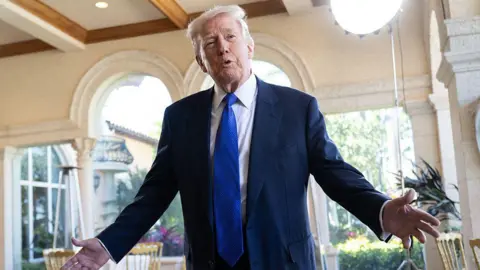
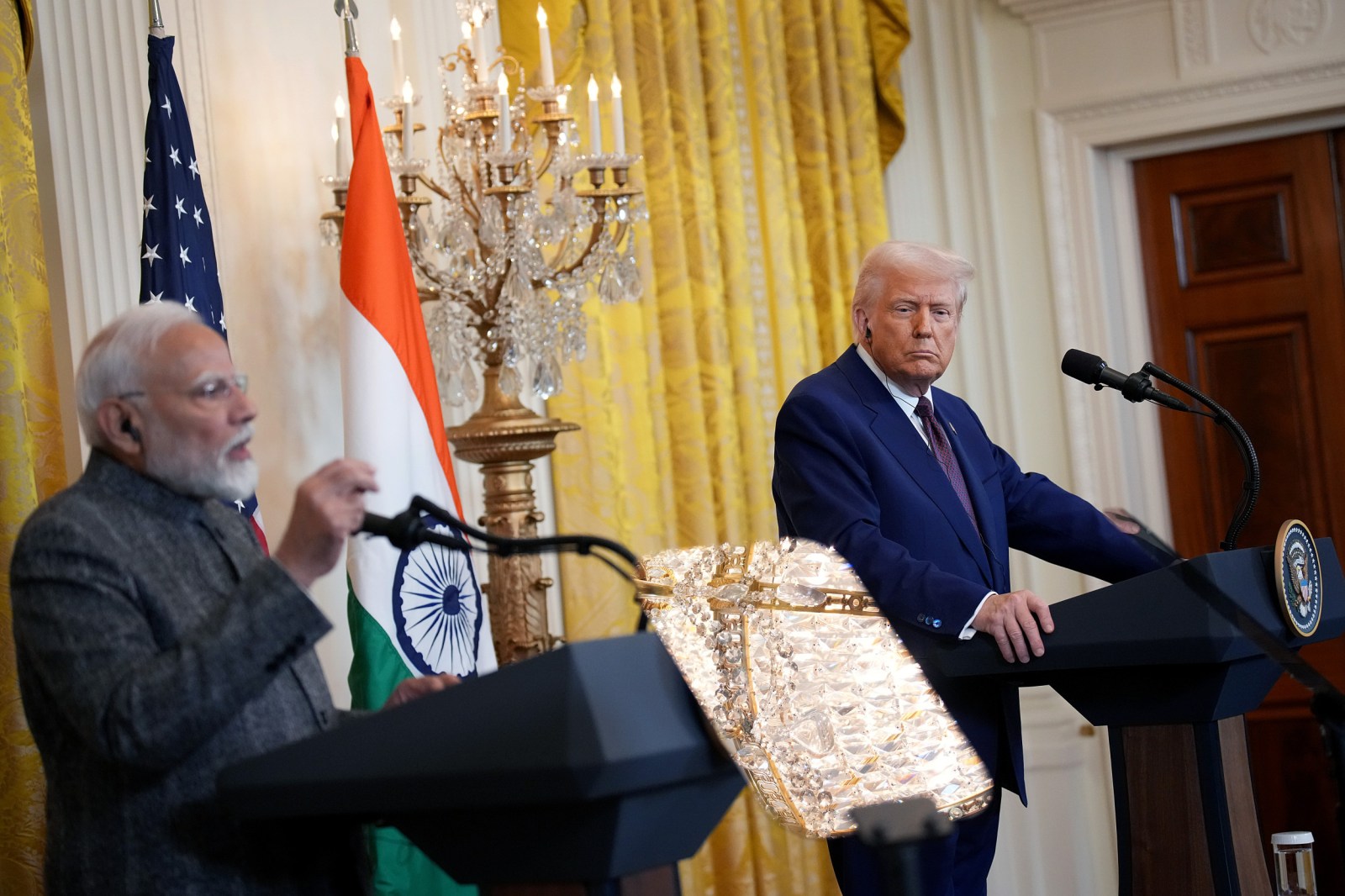

Tariff Cut Reduces U.S. Duties on Indian Exports to 18% President Donald Trump announced on Feb 2 via Truth Social that the United States will lower the tariff on Indian goods from the previous 25‑50 % range to 18 % effective immediately, and Indian exports will face zero duty in return [6][7][8][9][10][11][12]. Prime Minister Narendra Modi echoed the news on X, calling it a win for 1.4 billion Indians and thanking Trump for the “wonderful” decision [6][12]. The White House added that India will also eliminate its tariffs and non‑tariff barriers on U.S. products, completing a reciprocal reduction [8][11]. Indian equity markets responded sharply, with the Nifty 50 up 4.86 % and the Sensex rising 4.48 % on the announcement [7].
India Agrees to End Russian Oil Purchases and $500 Billion U.S. Investment Trump claimed that Modi consented to cease Russian crude imports and shift purchases to the United States, with possible supplemental supplies from Venezuela [2][6][11]. White House press secretary Karoline Leavitt confirmed a pledge by India to spend $500 billion on U.S. energy, transport and agricultural items [2][8]. Indian officials have not formally verified the oil cessation, but CREA data shows a 29 % month‑on‑month drop in Russian oil imports in early 2026, and Reliance Industries reported no Russian crude in January 2026 [10][11][1]. The $500 billion commitment far exceeds current bilateral trade of about $131 billion and would be spread across several years [2][8].
Exporters Applaud Deal While Farmers and Unions Launch Opposition Export groups such as the Seafood Exporters Association and the GJEPC hailed the tariff cut, expecting volumes of seafood, diamonds and textiles to rebound to pre‑2025 levels [4][7]. Farmer coalitions—including the Samyukt Kisan Morcha and All India Kisan Sabha—warned that zero‑percent U.S. duties will flood India with heavily subsidised soybeans, cotton, maize and wheat, threatening the 48 % of the workforce dependent on agriculture [4][1]. Opposition parties and trade unions, notably Congress leader Jairam Ramesh and the Centre of Indian Trade Unions, labeled the pact a capitulation to U.S. pressure and called for strikes [9][12]. Sharad Pawar, NCP chief, highlighted the clause allowing U.S. farm products into India as a direct threat to domestic agriculture [1].
Implementation Timeline, Sector Exemptions, and Critical Minerals Cooperation Remain Unclear Commerce Minister Piyush Goyal said detailed implementation schedules will be released “soon,” leaving the exact rollout date uncertain [5]. Sensitive sectors such as agriculture and dairy were excluded from tariff concessions, and the scope of non‑tariff‑barrier removal remains vague [5][8]. Parallel talks on critical minerals were held in Washington, where Secretary of State Marco Rubio and External Affairs Minister S. Jaishankar agreed to formalise joint exploration ahead of a ministerial on Feb 4 2026 [3][8]. Analysts note that even at 18 % the U.S. tariff remains higher than rates enjoyed by Bangladesh, Vietnam and Pakistan, preserving competitive pressure on Indian exporters [7][8].
Sources
-
1.
The Hindu: India’s Sharad Pawar Flags Farmer Concerns Over New U.S. Tariff Policy – Highlights farmer leader Sharad Pawar’s alarm over a clause permitting U.S. farm products into India and his demand for a detailed trade‑deal picture within 48 hours .
-
2.
The Hindu: India to End Russian Oil Purchases and Commit $500 Billion to U.S. Investment, Trump Announces – Reports Trump’s statement that India will stop buying Russian oil and pledge $500 billion of U.S. investments, plus reciprocal tariff cuts .
-
3.
The Hindu: India‑U.S. Talks Advance Trade Deal and Critical Minerals Cooperation – Details the Feb 3 meeting between Jaishankar and Rubio, covering trade, critical minerals and Quad cooperation .
-
4.
The Hindu: India‑U.S. Trade Deal Relieves Exporters, Sparks Farmer Opposition – Describes exporter optimism and farmer protests, including calls for a general strike on Feb 12 by Samyukt Kisan Morcha .
-
5.
The Hindu: India‑US Trade Deal Cuts Tariffs, Yet Details Remain Unclear – Notes the lack of an implementation timetable, ambiguous scope of the agreement, and exclusion of agriculture and dairy from concessions .
-
6.
Newsweek: Trump Announces Surprise US‑India Trade Deal Reducing Tariffs to 18% – Covers Trump’s surprise announcement on Truth Social, Modi’s praise, and the geopolitical context of the EU‑India FTA .
-
7.
The Hindu: India‑U.S. Trade Deal Cuts Tariffs to 18%, Sparks Market Rally and Industry Praise – Reports market gains, diamond sector relief, and political praise alongside opposition criticism .
-
8.
The Hindu: U.S. Cuts Tariffs on Indian Goods to 18% Amid Unresolved Trade Deal Details – Emphasises that broader agreement terms remain undisclosed and questions competitive positioning .
-
9.
The Hindu: India‑U.S. Trade Deal Lowers Indian Tariffs to 18% Amid Praise and Criticism – Provides statements from Jaishankar, Amit Shah, Ashwini Vaishnaw, Modi, and Congress critic Jairam Ramesh .
-
10.
AP: Trump Announces 18% Tariff Cut for India After Russian Oil Deal – Summarises the tariff cut tied to India’s pledge to halt Russian oil purchases and the $500 billion purchase commitment .
-
11.
BBC: US‑India Trade Deal Cuts Tariffs to 18% After India Halts Russian Oil Purchases – Highlights the tariff reduction, oil cessation, and $500 billion import pledge, plus EU‑India FTA context .
-
12.
The Hindu: Modi and Trump announce 18% U.S. tariff on “Made in India” goods – Details Modi’s announcement, Trump’s claims about Russian oil and investment, and the concurrent critical minerals ministerial .
Timeline
2025 – India enters the year after the 2024 elections with high diplomatic expectations, planning Bilateral Trade Agreements with the U.S., U.K., Australia, New Zealand and the EU, while anticipating a reset of ties with Washington [15].
June 2025 – The United States imposes a 25 % tariff on labor‑intensive Indian goods such as apparel, gems and jewellery, marking the first major trade penalty on Delhi [3].
July 30 2025 – President Trump announces a 25 % levy on Indian imports, linking the duty to India’s purchases of Russian oil and signalling a sharp turn in bilateral commerce [16].
August 27 2025 – The U.S. expands the tariff on Indian goods to 50 % via an executive order, intensifying pressure on New Delhi ahead of any trade accord [16].
Nov 21 2025 – India notifies its four Labour Codes, consolidating 13 central labour laws and setting a April 1 2026 operational date for unified wage, safety and social‑security standards [16].
Dec 16 2025 – Parliament passes a bill raising the foreign‑investment cap in the insurance sector from 74 % to 100 %, aiming to attract capital and technology [16].
Dec 24‑25 2025 – GST reforms narrow the tax structure to 5 % and 18 % slabs, record‑setting revenue of ₹2.37 lakh crore is reported, and the RBI cuts the repo rate by a cumulative 125 bps to 5.25 % [16].
Late Jan 2026 – The EU and India sign a free‑trade pact; EU Commission President Ursula von der Leyen calls it “the mother of all deals,” raising expectations for Indo‑European trade [1].
Jan 5 2026 – President Trump posts that U.S. tariff receipts will top $600 billion, claiming the levies “strengthen our security and finances” [14].
Jan 6 2026 – At a GOP retreat, Trump says Prime Minister Modi “is not that happy with me” over U.S. tariffs tied to Russian‑oil purchases [13].
Jan 6 2026 – Trump asserts India “has reduced it very substantially” regarding Russian oil imports, using the decline as evidence of tariff effectiveness [13].
Jan 6 2026 – Trump notes India has waited five years for 68 Apache helicopters and declares “We’re changing it,” hinting at a shift in defense deliveries [13].
Feb 1 2026 – India’s Union budget contains no allocation for the Chabahar port, reflecting a pause in the project amid U.S. pressure on Iran‑related trade [11].
Feb 2 2026 – Trump announces on Truth Social that the U.S. will cut tariffs on Indian goods to 18 % and that India will cease Russian oil purchases; Modi posts on X “Made‑in‑India products will now face a reduced tariff of 18 %” [2][12].
Feb 2 2026 – New U.S. ambassador to India Sergio Gor tweets “President Trump just spoke with Prime Minister Modi. STAY TUNED…” signalling top‑level coordination of the deal [2].
Feb 2 2026 – External Affairs Minister S. Jaishankar lands in Washington for a three‑day Critical Minerals Ministerial, saying the talks will “co‑create technologies and benefit citizens and industries” [12].
Feb 3 2026 – White House Press Secretary Karoline Leavitt states India “committed to no longer purchasing Russian oil” and will invest $500 billion in the United States across energy, transport and agriculture [5].
Feb 3 2026 – Treasury Secretary Scott Bessent notes India’s Russian‑oil purchases have “collapsed,” linking the tariff removal to cutting Russia’s war‑funding [2].
Feb 3 2026 – Secretary of State Marco Rubio and Indian External Affairs Minister Jaishankar meet at the State Department, agreeing to formalise joint critical‑minerals exploration before the ministerial on Feb 4 [7].
Feb 3 2026 – Indian equities rally; the Nifty 50 opens up 4.86 % and rupee forward rates tighten as traders anticipate revived demand for Indian exports after the tariff cut [9].
Feb 3 2026 – The Seafood Exporters Association of India says the 18 % tariff “will restore exports that fell 6.3 % in value and almost 15 % in volume from April‑Nov 2025” [8].
Feb 3 2026 – Commerce Minister Piyush Goyal tells reporters that detailed implementation timelines for the tariff reduction will be released “soon,” leaving the scope of the agreement ambiguous [6].
Feb 3 2026 – Vice President J.D. Vance, Secretary Rubio, Senior Director David Copley and Under Secretary Jacob Helberg are slated to deliver opening remarks at the Critical Minerals Ministerial, underscoring U.S. intent to diversify supply chains [7].
Feb 4 2026 – Sharad Pawar warns that the new U.S. tariff framework “allows U.S. farm products into India,” which could threaten Indian farmers and the domestic agriculture sector [4].
Feb 4 2026 – Leavitt reiterates that India will stop buying Russian oil, will “buy American oil, possibly also from Venezuela,” and confirms the $500 billion investment pledge [5].
Feb 4 2026 – The Critical Minerals Ministerial opens with opening remarks from Vice President Vance and Secretary Rubio, marking the first high‑level U.S.–India forum on minerals [7].
Feb 4 2026 – Sharad Pawar expects a clear picture of the India‑U.S. trade agreement within 48 hours, promising further comment after the details emerge [4].
Feb 12 2026 – The Samyukt Kisan Morcha calls a nationwide general strike to protest the trade deal, accusing Modi of “bowing to U.S. pressure” and warning of a flood of subsidised U.S. crops [8].
Apr 1 2026 – India’s Labour Codes become fully operational, standardising wages, safety and social‑security regulations for employers across the economy [16].
Dive deeper (14 sub-stories)
-
The Hindu: India’s Sharad Pawar Flags Farmer Concerns Over New U.S. Tariff Policy
-
India Halts Russian Oil Imports, Cuts U.S. Tariffs and Promises $500 Billion Investment
(3 articles)
-
The Hindu: India‑U.S. Talks Advance Trade Deal and Critical Minerals Cooperation
-
The Hindu: India‑U.S. Trade Deal Relieves Exporters, Sparks Farmer Opposition
-
The Hindu: India‑US Trade Deal Cuts Tariffs, Yet Details Remain Unclear
-
Newsweek: Trump Announces Surprise US‑India Trade Deal Reducing Tariffs to 18%
-
The Hindu: India‑U.S. Trade Deal Cuts Tariffs to 18%, Sparks Market Rally and Industry Praise
-
The Hindu: U.S. Cuts Tariffs on Indian Goods to 18% Amid Unresolved Trade Deal Details
-
The Hindu: India‑U.S. Trade Deal Lowers Indian Tariffs to 18% Amid Praise and Criticism
-
AP: Trump Announces 18% Tariff Cut for India After Russian Oil Deal
-
The Hindu: Trump says PM Modi is “not that happy” over US tariffs, cites cuts to Russian oil and Apache deliveries
-
The Hindu: Trump says U.S. tariff receipts will top $600B, touts national strength
-
The Hindu: India enters 2025 with high diplomatic expectations, then faces U.S. tariffs and regional strain
-
The Hindu: Tariffs, reforms, and EV entries shape India's 2025 business year
All related articles (16 articles)
-
The Hindu: India’s Sharad Pawar Flags Farmer Concerns Over New U.S. Tariff Policy
-
The Hindu: India to End Russian Oil Purchases and Commit $500 Billion to U.S. Investment, Trump Announces
-
The Hindu: India‑U.S. Talks Advance Trade Deal and Critical Minerals Cooperation
-
The Hindu: India‑U.S. Trade Deal Relieves Exporters, Sparks Farmer Opposition
-
The Hindu: India‑US Trade Deal Cuts Tariffs, Yet Details Remain Unclear
-
Newsweek: Trump Announces Surprise US‑India Trade Deal Reducing Tariffs to 18%
-
The Hindu: India‑U.S. Trade Deal Cuts Tariffs to 18%, Sparks Market Rally and Industry Praise
-
The Hindu: U.S. Cuts Tariffs on Indian Goods to 18% Amid Unresolved Trade Deal Details
-
The Hindu: India‑U.S. Trade Deal Lowers Indian Tariffs to 18% Amid Praise and Criticism
-
AP: Trump Announces 18% Tariff Cut for India After Russian Oil Deal
-
BBC: US‑India Trade Deal Cuts Tariffs to 18% After India Halts Russian Oil Purchases
-
The Hindu: Modi and Trump announce 18% U.S. tariff on “Made in India” goods
-
The Hindu: Trump says PM Modi is “not that happy” over US tariffs, cites cuts to Russian oil and Apache deliveries
-
The Hindu: Trump says U.S. tariff receipts will top $600B, touts national strength
-
The Hindu: India enters 2025 with high diplomatic expectations, then faces U.S. tariffs and regional strain
-
The Hindu: Tariffs, reforms, and EV entries shape India's 2025 business year
External resources (2 links)
- https://www.mea.gov.in/Speeches-Statements.htm?dtl%2F39945%2FStatement_by_Official_Spokesperson (cited 1 times)
- https://t.co/gPz6rWtrxj (cited 1 times)