Hamas Consolidates Governance in Gaza Four Months After Ceasefire
Updated (27 articles)
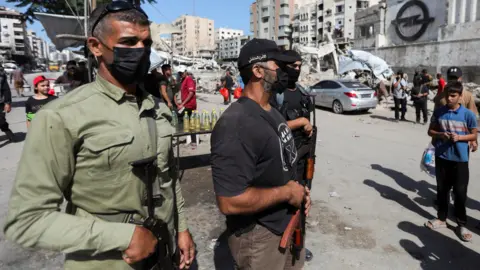
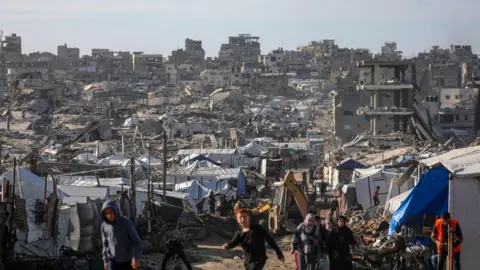
Post‑Ceasefire Shift to Internal Governance Hamas redirected its shattered military and decimated leadership toward re‑establishing authority inside Gaza after the U.S.‑backed ceasefire began in October 2025 [1]. The war left more than 72,000 Gazans dead, destroyed most infrastructure and displaced the population, according to the Hamas‑run health ministry [1]. With external combat largely halted, Hamas now prioritizes civil administration and public order [1].
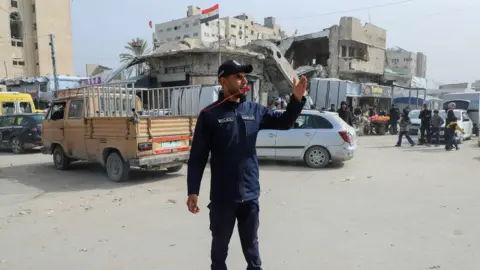
Hamas Controls Security, Courts, and Tax Collection By February 2026 activists report Hamas dominates over 90 % of Gaza’s neighborhoods, operating police forces, courts and tax offices on the streets [1]. Residents must obtain identity cards and pay fees such as 700 shekels for market stalls, under threat of force or confiscation [1]. This extensive bureaucratic reach signals a near‑complete takeover of everyday governance [1].
Coercive Tax Enforcement Targets Traders Licensed traders face new import taxes starting at 20,000 shekels on goods, with payments recorded in a centralized database [1]. Refusal to comply can result in kidnapping or other violent measures, according to reports from merchants [1]. The tax regime is enforced by Hamas‑linked security units, blurring the line between civil administration and armed intimidation [1].
Spokesman Frames Measures as Emergency Governance Hamas spokesman Hazem Qassem described the tax and identification policies as “exceptional measures” required by a state of emergency [1]. He insisted actions against non‑cooperating traders are governmental, not directly ordered by Hamas [1]. This narrative seeks to legitimize coercive tactics as routine state functions [1].
Israel Insists on Hamas Disarmament Under Trump Plan The Israeli Defense Forces warned that Hamas is regrouping and emphasized that the second stage of Donald Trump’s peace plan hinges on full disarmament [1]. Since the ceasefire, four Israeli soldiers have been killed and Israeli attacks have caused 603 Palestinian deaths [1]. Israel’s demand underscores the fragility of the ceasefire and the broader geopolitical stakes [1].
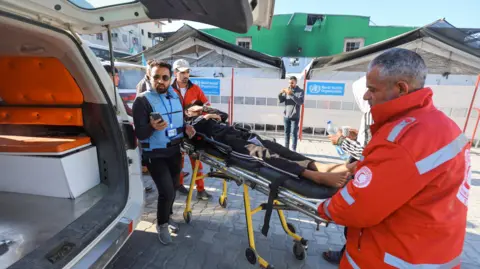
Political Transition Remains Stalled Amid Ongoing Authority technocratic Palestinian council slated to form in Egypt has not yet taken power, and an International Stabilisation Force remains undecided on deployment [1]. Meanwhile Hamas continues appointing officials and overseeing medical evacuations, indicating little intention to relinquish control [1]. The stalled transition suggests the ceasefire will not automatically lead to a power shift [1].
Related Tickers
Timeline
Oct 7, 2023 – Hamas launches a coordinated assault on southern Israel, killing about 1,200 civilians and seizing 251 hostages, igniting a two‑year war that reshapes the region’s security landscape [6][25].
Oct 10, 2025 – A U.S.–brokered cease‑fire (phase one) takes effect, delivering a hostage‑prisoner exchange, a partial Israeli pull‑out and a surge of humanitarian aid, while both sides pledge to honor the truce [2][5].
Dec 3, 2025 – Israeli airstrikes on tents in al‑Mawasi near Khan Younis kill five Palestinians, including two children; Prime Minister Benjamin Netanyahu vows Israel will “respond accordingly” [11].
Dec 4, 2025 – Yasser Abu Shabab, leader of the Israel‑backed Popular Forces militia, is shot dead while mediating a family dispute in Rafah; Hamas denounces him as a traitor [10][15].
Dec 8, 2025 – The IDF says it will review reports that troops killed three‑year‑old Ahed Tareq al‑Bayouk near Rafah; Amnesty International notes at least 370 Gaza deaths since the cease‑fire [9].
Dec 13, 2025 – Prime Minister Netanyahu and Defense Minister Katz order the assassination of senior Hamas weapons chief Raed Saad; Israel announces he is killed in a vehicle strike inside Gaza [16][23].
Dec 14, 2025 – Hamas confirms Raed Saad’s death, labeling him a chief architect of the Oct 7 attack; the strike also kills four civilians [22].
Dec 20, 2025 – Israeli‑backed militias, including Hussam Al‑Astal’s Counter‑Terrorism Strike Force, seize a village in the Israeli‑occupied sector of Khan Younis, signalling plans to help govern Gaza after the war [14].
Dec 24, 2025 – Netanyahu declares Hamas violated the cease‑fire after an explosive wounds an Israeli officer in Rafah, warning that Israel will “respond accordingly” [27].
Jan 8, 2026 – Israeli airstrikes kill eight Palestinians, four of them children, in tents and a school; both sides trade cease‑fire breach accusations and former President Trump warns Hamas will have “hell to pay” if disarmament stalls [5].
Jan 9, 2026 – Thirteen Palestinians die in Israeli strikes; a U.S. official says President Trump will name a “Board of Peace” next week, appointing Bulgarian diplomat Nickolay Mladenov as director‑general [21].
Jan 12‑13, 2026 – An Israeli drone strike near the Morag corridor kills three Palestinians as Gaza awaits the formal announcement of a technocratic Board of Peace that will replace Hamas’s government [20].
Jan 21, 2026 – Israeli artillery hits a vehicle marked by the Egyptian Relief Committee in central Gaza, killing three journalists; Hamas condemns the attack as a cease‑fire breach [4].
Jan 21, 2026 – Separate Israeli fire kills at least 11 Palestinians, including two 13‑year‑olds and three journalists; Shifa Hospital director Mohamed Abu Selmiya posts on Facebook, “Where is the ceasefire? Where are the mediators?” [19][17].
Jan 24, 2026 – Father Yusuf Zawara kneels over his 15‑year‑old son Mohammad in Shifa Hospital’s morgue, urging, “He’s sleeping… He’ll wake up now,” after an Israeli missile kills the boy and his cousin while they gather firewood [18].
Jan 31, 2026 – Israeli air and artillery attacks kill 31 Palestinians—the highest daily toll since early Nov—claiming retaliation for a Hamas breach in eastern Rafah [12].
Jan 31, 2026 – Israeli airstrikes kill at least 32 Palestinians across Gaza, damaging Shifa Hospital and prompting the scheduled reopening of the Rafah crossing for humanitarian aid [2].
Feb 4, 2026 – Israeli strikes kill 23 Palestinians, targeting Hamas commander Bilal Abu Assi; Israel partially reopens the Rafah crossing, allowing 45 people to cross on Feb 3 and a bus of returnees on Feb 4 [26].
Feb 6, 2026 – Gaza’s Health Ministry reports 556 Palestinian deaths since the October cease‑fire, while the Rafah crossing remains open but sees fewer than 50 crossings per day; Shifa Hospital director Mohamed Abu Selmiya again asks, “Where is the ceasefire? Where are the mediators?” [17].
Feb 19, 2026 – Hamas reasserts authority, controlling over 90 % of Gaza’s security, courts and tax collection; spokesman Hazem Qassem calls the measures “exceptional” emergency governance, while Israel insists full Hamas disarmament is required to trigger phase two of the Trump plan [1].
Planned/expected steps: Phase two of the Trump 20‑point plan—establishing a technocratic Palestinian government, disarming Hamas and deploying an international security force—remains pending pending full disarmament (articles 2, 5, 21, 20). The Board of Peace, announced in early January 2026, is slated to oversee reconstruction and security (articles 21, 20). An International Stabilisation Force and a technocratic council in Egypt are still undecided but are integral to the cease‑fire implementation (article 1).
Dive deeper (7 sub-stories)
-
BBC: Hamas Reasserts Authority in Gaza Amid Ceasefire Aftermath
-
Bodies of 24 Palestinians Reach Gaza Hospitals as Cease‑Fire Tensions Escalate
(17 articles)
-
BBC: BBC reaches settlement with Israeli family over filming without consent after Oct 7 attack
-
BBC: Gaza school strike injures 11-year-old, leading to amputation and ongoing trauma
-
CNN: Israeli-backed militias seek to govern Gaza as Hamas consolidates control
-
Hamas Commander Raed Saad Confirmed Dead After Israeli Strike, Ceasefire Tensions Rise
(4 articles)
-
Yasser Abu Shabab, Leader of Israeli‑Backed Popular Forces, Killed in Rafah on Dec 4, 2025
(2 articles)
All related articles (27 articles)
-
BBC: Hamas Reasserts Authority in Gaza Amid Ceasefire Aftermath
-
AP: Gaza Violence Persists Months After Ceasefire Takes Effect
-
The Hindu: Israeli strikes kill 23 in Gaza as Rafah crossing reopens for limited travel
-
BBC: Israeli Air Strikes Kill at Least 32 in Gaza as Ceasefire Tensions Rise
-
CNN: Israeli strikes kill over 30 in Gaza, health ministry says
-
CNN: Israeli Military Acknowledges Approx. 70,000 Gaza Deaths, Aligning With Health Ministry Figures
-
BBC: Israeli Military Acknowledges Hamas‑Reported Gaza Death Toll
-
AP: Gaza father’s desperate attempt to revive son after Israeli strike
-
AP: Israeli fire in Gaza kills at least 11, including journalists and two 13-year-olds on deadly day
-
BBC: Israeli strike in central Gaza kills three journalists, first responders say
-
AP: Drone strike kills 3 in Gaza as Hamas prepares to transfer governance to new committee
-
AP: Israeli strikes kill at least 13 across Gaza as Trump plans Board of Peace
-
BBC: Eight killed in Israeli air strikes in Gaza, civil defence agency says
-
BBC: BBC reaches settlement with Israeli family over filming without consent after Oct 7 attack
-
BBC: Gaza school strike injures 11-year-old, leading to amputation and ongoing trauma
-
The Hindu: Israel says Hamas violated Gaza ceasefire after officer wounded in Rafah, vows retaliation
-
CNN: Israeli-backed militias seek to govern Gaza as Hamas consolidates control
-
AP: Hamas Confirms Death of Top Commander Raed Saad After Israeli Strike
-
AP: Israel Claims Killing of Hamas Commander Raed Saad Amid Ceasefire Tensions
-
Newsweek: Israel Ordered Assassination of Hamas Leader in Gaza Strike, Netanyahu Says
-
BBC: Israel kills senior Hamas weapons chief in Gaza vehicle strike
-
BBC: Israel to review reports that troops killed three-year-old in Gaza
-
CNN: Leader of Israeli‑backed Gaza militia killed in Rafah
-
BBC: Anti‑Hamas Militia Leader Yasser Abu Shabab Killed in Gaza
-
AP: Israel Strikes Hamas Militant in Southern Gaza After Soldier Attack
-
BBC: Five Palestinians Killed in Israeli Air Strike on Tents Near Khan Younis
-
AP: Palestinian death toll surpasses 70,000 amid ongoing Israeli strikes
External resources (4 links)
- https://t.co/r7wAr2qewU (cited 1 times)
- https://twitter.com/hashtag/Watch?src=hash&ref_src=twsrc%5Etfw (cited 1 times)