India‑U.S. Trade Talks Delayed After Supreme Court Blocks Trump Tariffs, President Raises Global Duty to 15%
Updated (25 articles)
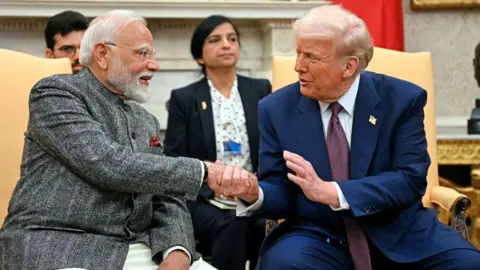
Supreme Court nullifies Trump’s emergency‑powers tariffs On 20 February 2026 the U.S. Supreme Court ruled 6‑3 that President Donald Trump exceeded authority under the International Emergency Economic Powers Act when imposing reciprocal tariffs, striking down the 50% duties on India and other nations [2][7][9][10]. The decision left the interim India‑U.S. trade agreement intact but removed the newly imposed reciprocal tariffs [1][6]. Analysts note the ruling creates legal uncertainty for the pending free‑trade negotiations [2][3].
Trump announces 15% worldwide import surcharge Following the Court’s rebuke, Trump first issued an executive order on 20 February imposing a 10% ad valorem surcharge for 150 days effective 24 February 2026 [5][6]. On 21 February he escalated the rate to 15%, calling the Court’s decision “ridiculous” and “anti‑American” [4][5][1]. The higher tariff applies to all imports, sitting atop existing most‑favoured‑nation duties, while sector‑specific tariffs under Sections 232 and 301 remain unchanged [7][8].
India‑U.S. delegation postpones chief negotiators’ meeting Both governments agreed on 22 February to delay the three‑day chief negotiators’ summit originally set for 23 February, citing the need to assess the Court’s ruling and the new 15% global tariff [3][1]. The Indian commerce ministry confirmed the delegation will reconvene on a mutually convenient date, with no new schedule announced [1][6]. The interim pact, announced in early February, still reduces U.S. tariffs on Indian goods to 18% on roughly 55% of exports [1][6][10].
Sector‑specific duties survive the ruling The Court’s decision did not affect tariffs imposed under the Trade Expansion Act’s Section 232, which continues to levy 50% duties on steel and aluminium imports [7][2]. Existing Section 301 investigations remain dormant for India, and other statutory regimes are expected to face legal scrutiny [2][8]. Consequently, Indian exporters of steel and aluminium saw a 66% drop in shipments to the U.S. in December 2025, underscoring the impact of those unchanged duties [7].
Indian ministries monitor trade fallout and farmer concerns The Commerce Ministry announced on 21 February it is reviewing the implications of the Supreme Court judgment and the President’s tariff announcements for Indian exporters [6]. Officials highlighted unresolved issues such as India’s pledge to halt Russian oil purchases, the $500 billion U.S. import target, and safeguards for domestic farmers against potential U.S. agricultural concessions [1][6]. Political leaders have criticized the interim deal as disadvantageous, arguing a longer delay could have protected sovereignty and farmer interests [9][4].
Sources
-
1.
BBC: India, U.S. postpone trade talks after Supreme Court blocks Trump tariffs: Reports the Indian commerce ministry’s decision to defer the Washington delegation pending impact assessment of the Court’s ruling and notes the interim deal’s 18% tariff cut .
-
2.
The Hindu: Supreme Court Strikes Down Trump’s IEEPA Tariff Authority: Details the 6‑3 Supreme Court decision, Trump’s vow to raise the global tariff to 15%, and the uncertainty it creates for India‑U.S. negotiations .
-
3.
The Hindu: India and U.S. Delay Chief Negotiators Meeting Amid New Tariffs: Announces the rescheduling of the chief negotiators’ meeting from 23 February to a later date after the Court’s ruling and mentions Trump’s 10% tariff announcement .
-
4.
The Hindu: Trump hikes tariff to 15% as Supreme Court rebukes his authority; voter rolls cut, security disputes and arrests dominate India’s headlines: Highlights Trump’s 15% tariff increase on 21 February, his criticism of the Court, and broader Indian domestic news .
-
5.
The Hindu: Trump raises U.S. global tariff rate from 10% to 15%: Covers the escalation from a 10% temporary surcharge to a 15% global tariff, citing the executive order and Trump’s justification .
-
6.
The Hindu: India’s Commerce Ministry reviews U.S. tariff fallout after Supreme Court ruling: States the ministry’s monitoring role, the 10% surcharge details, and the existing 25% tariff remnants on Indian goods .
-
7.
The Hindu: U.S. Tariff Landscape Shifts After Supreme Court Ruling: Explains that the Court nullified reciprocal tariffs, retains 50% steel/aluminium duties, and notes a 66% plunge in Indian steel/aluminium exports .
-
8.
The Hindu: Trump Mulls New Tariff Routes After Supreme Court Ruling: Describes Trump’s search for alternative legal bases, Treasury Secretary Bessent’s comments, and the potential use of Section 122 for a 10% global rate .
-
9.
The Hindu: Congress Accuses Modi of Compromise as US Court Dismantles Trump Tariffs: Relays political criticism in India, the Supreme Court’s 6‑3 decision, and the unchanged interim agreement cutting tariffs to 18% .
-
10.
The Hindu: Trump says U.S.–India trade deal unchanged after Supreme Court strikes tariffs: Quotes Trump asserting the February 2 interim deal remains intact, outlines the 10% global tariff plan, and includes his remarks on Modi and the deal’s fairness .
Related Tickers
Timeline
July 30, 2025 – President Trump imposes a 25 % tariff on Indian imports, the first major U.S. trade penalty against India and a signal that Washington will use tariffs to press geopolitical goals, especially over Russia. [25]
August 27, 2025 – The United States expands the tariff on Indian goods to 50 % and adds a 25 % surcharge tied to India’s purchases of Russian oil, creating a chaotic period for Indian exporters and straining bilateral trade. [1][25]
December 2025 – India enters the year with high diplomatic expectations, but the cumulative U.S. tariffs on Indian apparel, gems, seafood and the Russian‑oil penalty erode trust and complicate ongoing free‑trade talks with Washington and the EU. [24]
January 5, 2026 – President Trump claims on Truth Social that U.S. tariff receipts will top $600 billion, framing the levies as a source of national strength and security despite media criticism. [23]
January 6, 2026 – At a House GOP retreat, Trump says Prime Minister Modi is “not that happy with me” over tariffs linked to Russian‑oil purchases, while asserting that India has “reduced it very substantially.” [22]
February 2, 2026 – Trump announces a surprise U.S.–India trade deal that cuts U.S. tariffs on Indian goods from 50 % to 18 % and removes the 25 % Russian‑oil penalty, while claiming India will halt Russian oil imports and commit $500 billion of U.S. purchases. [3][4][14][21]
February 2, 2026 – Prime Minister Modi posts on X that the 18 % tariff “benefits 1.4 billion Indians,” thanking Trump and omitting any reference to the Russian‑oil clause, underscoring the political framing of the agreement. [21]
February 3, 2026 – Indian exporters celebrate the tariff cut; GJEPC chairman Kirit Bhansali says the relief “provides immense relief” to diamond manufacturers, while farmer groups warn that zero‑duty U.S. agricultural imports could flood the market and hurt domestic agriculture. [19][18]
February 4, 2026 – White House Press Secretary Karoline Leavitt announces that India will stop buying Russian oil and will invest $500 billion in the United States across energy, transport and agriculture, reinforcing the geopolitical bargain behind the tariff reduction. [16]
February 4, 2026 – Sharad Pawar warns that the new U.S. tariff framework allowing agricultural imports could jeopardise Indian farmers, demanding a detailed picture of the deal within 48 hours. [15]
February 5, 2026 – Trump calls the framework “historic,” noting that the United States lowers tariffs to 18 % and India pledges to eliminate all U.S. tariffs and non‑tariff barriers, aiming to boost bilateral trade to $500 billion. [14]
February 20, 2026 – The Supreme Court issues a 6‑3 ruling that the President exceeded authority under the International Emergency Economic Powers Act, striking down the global tariff regime but leaving the February 2 India‑U.S. deal “unchanged,” according to Trump. [13][5]
February 20, 2026 – Trump announces a 10 % worldwide ad valorem tariff under Section 122, to take effect in three days for 150 days, presenting it as a “work‑around” after the Court’s decision. [13][7]
February 21, 2026 – India’s Commerce Ministry says it is reviewing the Supreme Court judgment and the President’s 10 % surcharge, noting that the new levy sits atop existing Most‑Favoured‑Nation duties on Indian products. [8]
February 21, 2026 – Trump raises the global tariff to 15 % in a social‑media post, calling the Court’s decision “ridiculous” and defending the increase as a response to a “detailed review.” [7][9]
February 21, 2026 – Congress leader Rahul Gandhi brands the interim India‑U.S. deal an “ordeal” and accuses Modi of compromising India’s sovereignty in light of the Court’s ruling. [12]
February 22, 2026 – India and the United States postpone the scheduled three‑day chief‑negotiators meeting in Washington, pushing the February 23 delegation back to an unspecified “mutually convenient date.” [6]
February 23, 2026 – Both sides defer the Washington delegation to study the Supreme Court’s impact; officials say no new date is set and key issues such as the Russian‑oil pledge and the $500 billion import target remain unresolved. [1]
Dive deeper (22 sub-stories)
-
BBC: India, U.S. postpone trade talks after Supreme Court blocks Trump tariffs
-
The Hindu: Supreme Court Strikes Down Trump’s IEEPA Tariff Authority
-
The Hindu: India and U.S. Delay Chief Negotiators Meeting Amid New Tariffs
-
The Hindu: Trump hikes tariff to 15% as Supreme Court rebukes his authority; voter rolls cut, security disputes and arrests dominate India’s headlines
-
The Hindu: Trump raises U.S. global tariff rate from 10% to 15%
-
The Hindu: India’s Commerce Ministry reviews U.S. tariff fallout after Supreme Court ruling
-
The Hindu: U.S. Tariff Landscape Shifts After Supreme Court Ruling
-
The Hindu: Trump Mulls New Tariff Routes After Supreme Court Ruling
-
Congress Accuses Modi of Compromise After Supreme Court Strikes Trump Tariffs
(2 articles)
-
The Hindu: India‑US Trade Deal Promises Tariff Cuts and $500 Billion Imports
-
The Hindu: India’s Sharad Pawar Flags Farmer Concerns Over New U.S. Tariff Policy
-
India Halts Russian Oil Imports, Cuts U.S. Tariffs and Promises $500 Billion Investment
(3 articles)
-
The Hindu: India‑U.S. Trade Deal Relieves Exporters, Sparks Farmer Opposition
-
The Hindu: India‑US Trade Deal Cuts Tariffs, Yet Details Remain Unclear
-
Newsweek: Trump Announces Surprise US‑India Trade Deal Reducing Tariffs to 18%
-
The Hindu: India‑U.S. Trade Deal Cuts Tariffs to 18%, Sparks Market Rally and Industry Praise
-
The Hindu: U.S. Cuts Tariffs on Indian Goods to 18% Amid Unresolved Trade Deal Details
-
AP: Trump Announces 18% Tariff Cut for India After Russian Oil Deal
-
The Hindu: Trump says PM Modi is “not that happy” over US tariffs, cites cuts to Russian oil and Apache deliveries
-
The Hindu: Trump says U.S. tariff receipts will top $600B, touts national strength
-
The Hindu: India enters 2025 with high diplomatic expectations, then faces U.S. tariffs and regional strain
-
The Hindu: Tariffs, reforms, and EV entries shape India's 2025 business year
All related articles (25 articles)
-
BBC: India, U.S. postpone trade talks after Supreme Court blocks Trump tariffs
-
The Hindu: Supreme Court Strikes Down Trump’s IEEPA Tariff Authority
-
The Hindu: India and U.S. Delay Chief Negotiators Meeting Amid New Tariffs
-
The Hindu: Trump hikes tariff to 15% as Supreme Court rebukes his authority; voter rolls cut, security disputes and arrests dominate India’s headlines
-
The Hindu: Trump raises U.S. global tariff rate from 10% to 15%
-
The Hindu: India’s Commerce Ministry reviews U.S. tariff fallout after Supreme Court ruling
-
The Hindu: U.S. Tariff Landscape Shifts After Supreme Court Ruling
-
The Hindu: Trump Mulls New Tariff Routes After Supreme Court Ruling
-
The Hindu: Congress Accuses Modi of Compromise as US Court Dismantles Trump Tariffs
-
The Hindu: Trump says U.S.–India trade deal unchanged after Supreme Court strikes tariffs
-
The Hindu: India‑US Trade Deal Promises Tariff Cuts and $500 Billion Imports
-
The Hindu: India’s Sharad Pawar Flags Farmer Concerns Over New U.S. Tariff Policy
-
The Hindu: India to End Russian Oil Purchases and Commit $500 Billion to U.S. Investment, Trump Announces
-
The Hindu: India‑U.S. Trade Deal Relieves Exporters, Sparks Farmer Opposition
-
The Hindu: India‑US Trade Deal Cuts Tariffs, Yet Details Remain Unclear
-
Newsweek: Trump Announces Surprise US‑India Trade Deal Reducing Tariffs to 18%
-
The Hindu: India‑U.S. Trade Deal Cuts Tariffs to 18%, Sparks Market Rally and Industry Praise
-
The Hindu: U.S. Cuts Tariffs on Indian Goods to 18% Amid Unresolved Trade Deal Details
-
AP: Trump Announces 18% Tariff Cut for India After Russian Oil Deal
-
BBC: US‑India Trade Deal Cuts Tariffs to 18% After India Halts Russian Oil Purchases
-
The Hindu: Modi and Trump announce 18% U.S. tariff on “Made in India” goods
-
The Hindu: Trump says PM Modi is “not that happy” over US tariffs, cites cuts to Russian oil and Apache deliveries
-
The Hindu: Trump says U.S. tariff receipts will top $600B, touts national strength
-
The Hindu: India enters 2025 with high diplomatic expectations, then faces U.S. tariffs and regional strain
-
The Hindu: Tariffs, reforms, and EV entries shape India's 2025 business year
External resources (7 links)
- https://www.youtube.com/@bbcnewsindia/featured (cited 1 times)
- https://www.mea.gov.in/Speeches-Statements.htm?dtl%2F39945%2FStatement_by_Official_Spokesperson (cited 1 times)
- https://www.reuters.com/world/india/india-delays-us-trade-talks-after-supreme-court-rejects-trump-tariffs-source-2026-02-22/ (cited 1 times)
- https://t.co/gPz6rWtrxj (cited 1 times)
- https://www.facebook.com/bbcindia/ (cited 1 times)
- https://www.instagram.com/bbcnewsindia/ (cited 1 times)
- https://x.com/BBCIndia (cited 1 times)