Acting President Delcy Rodríguez Signs Privatization Law as U.S. Eases Sanctions and Announces $100 bn Oil Investment
Updated (63 articles)
-
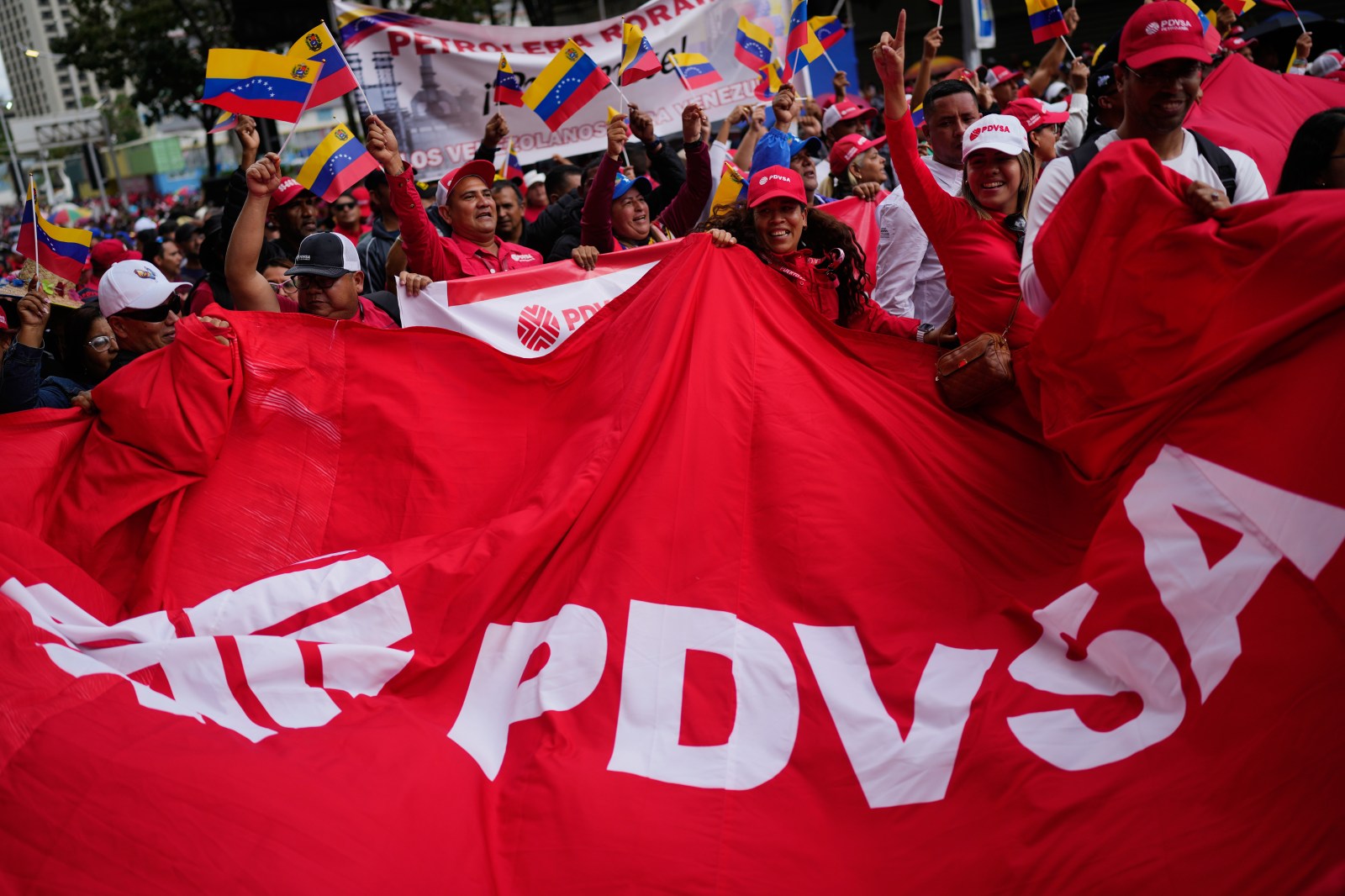 Image: NewsweekWorkers of Venezuela’s state-owned PDVSA oil company rally to back an oil reform bill proposed by acting President Delcy Rodriguez to loosen state control and open the industry to private and foreign investment in Caracas, Venezuela, Thursday, Jan. 29, 2026. (AP Photo/Ariana Cubillos) Source Full size
 -
Image: NewsweekWorkers of Venezuela’s state-owned PDVSA oil company rally to back an oil reform bill proposed by acting President Delcy Rodriguez to loosen state control and open the industry to private and foreign investment in Caracas, Venezuela, Thursday, Jan. 29, 2026. (AP Photo/Ariana Cubillos) Source Full size



Oil Reform Law Passes, Sets 30% Royalty Cap and Arbitration On 30 January 2026 Venezuela’s National Assembly approved a hydrocarbons reform that lets private, including foreign, firms manage oilfields at their own risk, removes PDVSA’s majority‑control requirement, caps royalties at 30 % and shifts dispute resolution to independent arbitration; the bill then awaited and was signed by acting President Delcy Rodríguez the same day, making it law pending publication [1][2][3][4][5].
U.S. Treasury Issues General License Excluding Rival Nations The U.S. Treasury Department released a new general license that authorizes American companies to export, purchase, sell, store and transport Venezuelan oil while prohibiting transactions with entities from China, Russia, Iran, North Korea and Cuba, aligning with Secretary of State Marco Rubio’s plan to channel oil revenues to a Qatar‑based account for Venezuelan public services [1][2][3][4][6].
Trump Orders Cuba Oil Tariffs and Opens Venezuelan Airspace President Donald Trump signed an executive order threatening additional tariffs on any country that supplies oil to Cuba and announced the reopening of commercial airspace over Venezuela, prompting the Transportation Department to lift the long‑standing flight ban and enabling American Airlines to resume service after a six‑year hiatus [1][2].
$100 bn U.S. Investment Proposal Coupled with Private‑Security Plan Trump unveiled a $100 billion investment initiative to rebuild Venezuela’s oil sector, while internal White House discussions revealed plans to employ private military contractors to protect oil assets, a strategy echoed in the administration’s “go‑in‑get‑oil” rhetoric; Exxon Mobil CEO Darren Woods nevertheless called Venezuela “uninvestible” without stronger legal safeguards [5][7][1].
Political Turbulence and Investor Caution Persist The reform follows a U.S. operation that captured former President Nicolás Maduro earlier in January, leaving Delcy Rodríguez as interim president; analysts warn that armed groups, lingering sanctions, and the need for transparent revenue tracking—highlighted by opposition deputy Antonio Ecarri—continue to deter major foreign capital despite the legal changes [2][4][6][7].
Sources
-
1.
CNN: Venezuela Approves Oil Reform as Trump Threatens Cuba Oil Tariffs – Details the unanimous legislative vote, Trump’s Cuba‑oil tariff order, new Treasury license, airspace opening, and Exxon’s “uninvestible” comment .
-
2.
BBC: Venezuela Approves Oil‑Sector Reform, Prompting U.S. Sanctions Relief – Highlights the reform’s private‑firm provisions, U.S. general licence, investment goals, Maduro’s capture, and American Airlines resuming flights .
-
3.
AP: Venezuela’s Acting President Signs Law to Privatize Oil Sector – Focuses on Rodríguez’s signature, 30 % royalty cap, arbitration shift, and opposition calls for transparency .
-
4.
Newsweek: Trump‑Backed Venezuela Oil Law Passes Amid U.S. Sanctions Shift – Emphasizes the law’s passage, U.S. military‑diplomatic backdrop, targeted sanctions relief, and political‑will uncertainties .
-
5.
BBC: US Investment Plan Revives Hope in Venezuela’s Maracaibo Oil Heartland – Reports Trump’s $100 bn investment proposal, Maracaibo’s decay, and local residents’ mixed hopes .
-
6.
CNN: Trump Team Looks to Iraq’s Oil Lessons While Targeting Venezuela’s Reserves – Describes Treasury licensing, $500 m oil sale proceeds to Qatar, and expert warnings about security‑driven distrust .
-
7.
CNN: Trump’s Venezuela Oil Plan Faces Iraq‑Era Lessons – Analyzes the “go‑in‑get‑oil” pitch, private‑contractor security plan, and parallels with Iraq’s post‑invasion oil reconstruction challenges .
Videos (3)
Timeline
1922 – The Los Barrosos‑2 well is drilled, producing a massive oil gush that launches Venezuela’s modern oil era and sets the stage for future nationalization [21].
1976 – Venezuela creates the state oil company PDVSA, cementing government control over its vast reserves and shaping decades of oil policy [21].
1970s – Venezuela peaks at about 3.5 million barrels per day, supplying over 7 % of global crude, a benchmark later eroded by mismanagement and sanctions [1].
1999 – Production again reaches 3.5 million barrels per day, underscoring the country’s capacity before the steep decline of the 2000s [30].
2025 (end‑year) – Output falls to roughly 860,000 bpd, less than 1 % of world crude, reflecting years of under‑investment, sanctions and political turmoil [1].
Late 2025 – The Trump administration reviews Iraq’s post‑invasion oil rollout, noting sabotage from local mistrust and using the lesson to shape its Venezuela strategy [6].
Jan 3, 2026 – U.S. forces capture President Nicolás Maduro in Caracas, charging him with narco‑terrorism and triggering a power vacuum filled by interim President Delcy Rodríguez [14][17][19].
Jan 4, 2026 – Trump declares the United States will “run” Venezuela and rebuild its oil infrastructure, framing the move as repayment for alleged Venezuelan damages [24].
Jan 5, 2026 – Trump announces U.S. control of Venezuela’s oil reserves and urges American firms to invest billions, while analysts warn the effort could cost ≈ $10 billion annually and PDVSA estimates $58 billion to modernize pipelines [25][21].
Jan 6, 2026 – Executives from ExxonMobil, ConocoPhillips and Chevron say the U.S. government never consulted them about the Maduro operation, contradicting Trump’s claim of prior industry talks [20].
Jan 7, 2026 – Trump posts that Venezuela will “turn over” 30‑50 million barrels of sanctioned oil to the United States, directing Energy Secretary Chris Wright to ship the crude to U.S. Gulf docks [16][18].
Jan 7, 2026 – The White House announces it will control Venezuelan oil sales “indefinitely,” planning an initial tranche of 30‑50 million barrels that could raise ≈ $2.8 billion for U.S.–controlled accounts [4][5].
Jan 7, 2026 – U.S. forces board Venezuela‑linked tankers in the Atlantic and Caribbean as the administration prepares to market the oil, while markets see only a modest ≈ 2 % dip in crude futures [18].
Jan 8, 2026 – Trump frames the oil transfer as a private “slush fund,” saying proceeds will be managed by his administration and used to buy American products for Venezuela [15].
Jan 9, 2026 – Trump claims $100 billion will flow from major oil firms into Venezuela’s sector, posting the pledge on social media ahead of a White House meeting with Exxon, Chevron and ConocoPhillips [14].
Jan 9, 2026 – Environmental groups warn that reviving Venezuela’s heavy‑crude production could exacerbate methane emissions, flaring and spills, noting IEA data that the country’s upstream intensity is six‑times the global average [13].
Jan 10, 2026 – At a White House roundtable, Trump urges U.S. majors to invest in Venezuela, while ExxonMobil CEO Darren Woods bluntly calls the country “uninvestable” under current legal frameworks [3][12].
Jan 10, 2026 – Trump tells executives that the U.S. will decide which firms can operate, hinting that Exxon may be sidelined if it does not show enthusiasm [11][12].
Jan 11, 2026 – Former national‑security adviser John Bolton warns that the aggressive oil push could backfire, scaring investors away and undermining U.S. energy goals [10].
Jan 12, 2026 – Trump says he is “inclined to keep ExxonMobil out” after Woods’ “uninvestable” comment, and signs an executive order to shield Venezuelan oil revenue from seizure [27].
Jan 15, 2026 – The United States completes its first Venezuelan oil sale, netting $500 million, and signals additional transactions in the coming weeks [8].
Jan 22, 2026 – Venezuela’s National Assembly advances a bill loosening state control, allowing private operators to market output, cut royalties to 15‑30 % and use international arbitration for disputes [7].
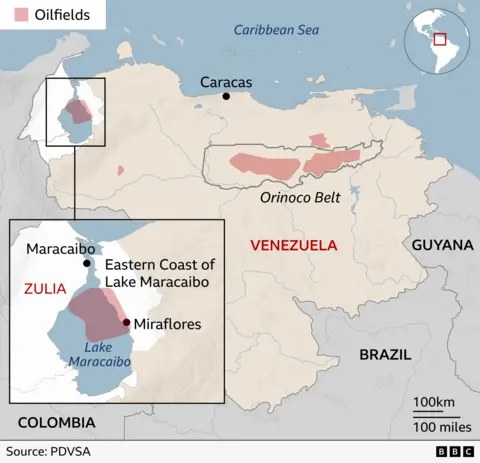
Jan 29, 2026 – A U.S. investment plan touts a $100 billion revival of the Maracaibo oil heartland, noting the region’s decay, the drop from 3.5 million to 860,000 bpd, and local hopes mixed with fears of foreign exploitation [1].
Jan 30, 2026 – Venezuela’s legislature approves the hydrocarbons reform, granting private firms greater autonomy and prompting the U.S. Treasury to issue a general licence that eases oil‑related sanctions [2].
Future (late Jan 2026) – The White House schedules a Friday meeting with Exxon, Chevron and ConocoPhillips to discuss U.S. access to Venezuelan oil and the logistics of the 30‑50 million‑barrel transfer [19].
Future (2026‑2040) – Analysts estimate that restoring Venezuela’s oil sector to historic levels will require ≈ $183 billion over the next 15 years, underscoring the long‑term nature of the proposed revival [10].
Dive deeper (47 sub-stories)
-
CNN: Venezuela Approves Oil Reform as Trump Threatens Cuba Oil Tariffs
-
BBC: Venezuela Approves Oil‑Sector Reform, Prompting U.S. Sanctions Relief
-
Venezuela’s Acting President Signs Oil Privatization Law as U.S. Eases Sanctions
(2 articles)
-
BBC: US Investment Plan Revives Hope in Venezuela’s Maracaibo Oil Heartland
-
CNN: Trump Team Looks to Iraq’s Oil Lessons While Targeting Venezuela’s Reserves
-
CNN: Trump’s Venezuela Oil Plan Faces Iraq‑Era Lessons
-
CNN: Venezuela backs hydrocarbons reform to let foreign firms manage oilfields
-
AP: Venezuela advances oil reform to invite private investment
-
AP: Rodríguez pushes opening of oil industry and warmer U.S. ties
-
CNN: US completes first Venezuelan oil sale amid push to tap reserves
-
Trump Calls for $100 B Private Investment to Rebuild Venezuela’s Oil Industry After Maduro’s Ouster
(4 articles)
-
Trump Pushes to Exclude Exxon From Venezuela While Shielding State Oil Revenue
(3 articles)
-
Newsweek: Trump Venezuela oil gamble could backfire, Bolton warns
-
Newsweek: Oil bosses tell Trump Venezuela oil is uninvestable without reforms
-
Trump Orders Private Oil Investment in Venezuela Amid Executive Skepticism and Political Tensions
(2 articles)
-
AP: Environmental risk grows as push to expand Venezuela oil faces climate concerns
-
Newsweek: Trump's Oil Gamble Ties Venezuela's Gold to Leverage Oil Revenue
-
Trump Promises $100 B Oil Investment as Interim Venezuela Government Prepares 30‑50 Million‑Barrel U.S. Delivery
(3 articles)
-
CNN: Oil CEOs to meet Trump Friday to discuss Venezuela investments
-
AP: Trump's Venezuela oil plan may clash with China debt
-
CNN: Oil executives propose conditional Venezuela output increase ahead of Trump meeting
-
Trump Administration Outlines Private Fund Plan to Sell 30‑50 Million Venezuelan Oil Barrels
(2 articles)
-
Newsweek: Trump vows U.S. oil companies will 'go in' to Venezuela after Maduro raid, as costs and risks temper industry enthusiasm
-
BBC: US will control Venezuelan oil sales indefinitely as it prepares to sell up to 50 million barrels
-
CNN: Trump administration tells Venezuela to cut ties with China, Iran, Russia and Cuba to restart oil sales
-
The Hindu: U.S. Energy Secretary says Washington will control Venezuelan oil sales indefinitely
-
Newsweek: Trump announces 30–50 million barrels of Venezuelan oil to be turned over to U.S.
-
CNN: Trump claims Venezuela’s oil — experts warn extraction would be dirtier, costlier, and climate-risky
-
CNN: Trump frames Venezuela operation as an oil-focused, private-equity style profit play
-
Trump Announces Transfer of 30–50 Million Venezuelan Barrels After Maduro’s Removal
(2 articles)
-
CNN: US capture of Nicolás Maduro triggers crackdown, oil transfer pledge and Greenland dispute
-
CNN: Trump says Venezuela will hand 30–50 million barrels of oil to U.S.; administration moves to sell proceeds
-
Trump Announces Venezuelan Oil Transfer as U.S. Raid Captures Maduro, Sparks Regional Fallout
(3 articles)
-
AP: Delcy Rodríguez’s 2017 outreach to Trump aides helped forge her path to interim presidency after Maduro’s capture
-
CNN: Five major changes US oil companies and Venezuela must make before Big Oil returns
-
Newsweek: Exxon, ConocoPhillips and Chevron say they were not consulted on Venezuela operation, contradicting Trump
-
CNN: Big Oil wary of Venezuelan revival under Trump amid low prices
-
CNN: Trump vows US control of Venezuela's oil after Maduro capture
-
Newsweek: Trump says he spoke with oil firms before Venezuela raid
-
BBC: Trump's plan to tap Venezuela's oil faces long odds and hurdles
-
The Hindu: U.S. pushes oil majors to invest big in Venezuela if they want to recover debts
-
Trump’s Plan to Seize Venezuelan Oil Meets Decade‑Long Investment and Legal Hurdles
(4 articles)
-
CNN: Trump urges US oil majors to revive Venezuela’s oil industry amid crisis
-
Newsweek: Trump vows to run Venezuela and fix its oil infrastructure after Maduro capture, but experts doubt quick price impact
-
Newsweek: Chevron Responds as Trump Venezuela Plan Unfolds
-
The Hindu: Trump demands Venezuela pay for seized U.S. oil assets after calling for 'blockade'
-
BBC: Trump’s Stance on Venezuelan Oil Remains Unclear Amid Sanctions and Low Production
All related articles (63 articles)
-
CNN: Venezuela Approves Oil Reform as Trump Threatens Cuba Oil Tariffs
-
BBC: Venezuela Approves Oil‑Sector Reform, Prompting U.S. Sanctions Relief
-
AP: Venezuela’s acting president signs law to privatize oil sector
-
Newsweek: Trump‑Backed Venezuela Oil Law Passes Amid U.S. Sanctions Shift
-
BBC: US Investment Plan Revives Hope in Venezuela’s Maracaibo Oil Heartland
-
CNN: Trump Team Looks to Iraq’s Oil Lessons While Targeting Venezuela’s Reserves
-
CNN: Trump’s Venezuela Oil Plan Faces Iraq‑Era Lessons
-
CNN: Venezuela backs hydrocarbons reform to let foreign firms manage oilfields
-
AP: Venezuela advances oil reform to invite private investment
-
AP: Rodríguez pushes opening of oil industry and warmer U.S. ties
-
CNN: US completes first Venezuelan oil sale amid push to tap reserves
-
Newsweek: Trump pushes US oil firms to rebuild Venezuela’s oil sector, hints Exxon may be sidelined
-
King5 (Seattle, WA): Trump inclined to keep ExxonMobil out of Venezuela after CEO skepticism
-
AP: Trump inclined to keep ExxonMobil out of Venezuela after White House meeting
-
Newsweek: Trump Venezuela oil gamble could backfire, Bolton warns
-
BBC: Trump seeks $100bn for Venezuela oil, but Exxon boss says country 'uninvestable'
-
AP: Trump signs executive order to shield Venezuelan oil revenue
-
Newsweek: Oil bosses tell Trump Venezuela oil is uninvestable without reforms
-
CNN: Trump presses oil executives on Venezuela plan as firms weigh deals and regional tensions rise
-
CNN: Trump's Venezuela oil push faces industry skepticism from Big Oil
-
AP: Trump urges oil executives to invest in Venezuela as U.S. seeks $100 billion
-
King5 (Seattle, WA): Trump seeks $100 billion Venezuela oil investment with safety pledge after Maduro ouster
-
AP: Environmental risk grows as push to expand Venezuela oil faces climate concerns
-
Newsweek: Trump's Oil Gamble Ties Venezuela's Gold to Leverage Oil Revenue
-
The Hindu: Trump says U.S. oil pledge of $100 billion for Venezuela ahead of White House meeting
-
CNN: Oil CEOs to meet Trump Friday to discuss Venezuela investments
-
AP: Trump's Venezuela oil plan may clash with China debt
-
CNN: Oil executives propose conditional Venezuela output increase ahead of Trump meeting
-
CNN: Trump’s Venezuela oil plan creates private fund through market sales and raises constitutional questions
-
Newsweek: Trump vows U.S. oil companies will 'go in' to Venezuela after Maduro raid, as costs and risks temper industry enthusiasm
-
CNN: Trump officials outline plan to seize and sell Venezuelan oil while courting US industry investment
-
AP: Trump's seizure of Venezuela's leader thrusts its vast oil reserves into U.S. strategy
-
BBC: US will control Venezuelan oil sales indefinitely as it prepares to sell up to 50 million barrels
-
CNN: Trump administration tells Venezuela to cut ties with China, Iran, Russia and Cuba to restart oil sales
-
The Hindu: U.S. Energy Secretary says Washington will control Venezuelan oil sales indefinitely
-
Newsweek: Trump announces 30–50 million barrels of Venezuelan oil to be turned over to U.S.
-
CNN: Trump claims Venezuela’s oil — experts warn extraction would be dirtier, costlier, and climate-risky
-
CNN: Trump frames Venezuela operation as an oil-focused, private-equity style profit play
-
BBC: Trump says Venezuela will hand 30–50 million barrels of oil to US after Maduro's removal
-
CNN: US capture of Nicolás Maduro triggers crackdown, oil transfer pledge and Greenland dispute
-
CNN: Trump says Venezuela will hand 30–50 million barrels of oil to U.S.; administration moves to sell proceeds
-
WBNS (Columbus, OH): Trump says Venezuela will provide 30–50 million barrels of oil, while U.S. raid that captured Maduro sparks deadly fallout
-
King5 (Seattle, WA): Trump says Venezuela will provide 30–50 million barrels of oil; White House meets U.S. oil executives as deadly raid that captured Maduro sparks global fallout
-
AP: Trump says Venezuela will provide 30–50 million barrels of oil to U.S., pledges proceeds to benefit both countries
-
AP: Delcy Rodríguez’s 2017 outreach to Trump aides helped forge her path to interim presidency after Maduro’s capture
-
CNN: Five major changes US oil companies and Venezuela must make before Big Oil returns
-
Newsweek: Exxon, ConocoPhillips and Chevron say they were not consulted on Venezuela operation, contradicting Trump
-
CNN: Big Oil wary of Venezuelan revival under Trump amid low prices
-
BBC: US seizure of Venezuela's Nicolás Maduro lifts US oil and defence stocks
-
CNN: Trump vows US control of Venezuela's oil after Maduro capture
-
Newsweek: Trump says he spoke with oil firms before Venezuela raid
-
BBC: Trump's plan to tap Venezuela's oil faces long odds and hurdles
-
AP: Trump’s bid to take control of Venezuela’s oil unlikely to move prices soon
-
The Hindu: U.S. pushes oil majors to invest big in Venezuela if they want to recover debts
-
King5 (Seattle, WA): Trump's plan to seize Venezuela's oil faces major hurdles
-
CNN: Trump urges US oil majors to revive Venezuela’s oil industry amid crisis
-
WBNS (Columbus, OH): Trump's plan to seize and revitalize Venezuela's oil industry faces major hurdles
-
Newsweek: Trump vows to run Venezuela and fix its oil infrastructure after Maduro capture, but experts doubt quick price impact
-
CNN: Trump says US will take control of Venezuela’s oil reserves
-
Newsweek: Chevron Responds as Trump Venezuela Plan Unfolds
-
The Hindu: Trump demands Venezuela pay for seized U.S. oil assets after calling for 'blockade'
-
BBC: Trump’s Stance on Venezuelan Oil Remains Unclear Amid Sanctions and Low Production
-
CNN: Trump Threatens Military Action Against Venezuela Over Oil Reserves
External resources (66 links)
- https://www.youtube.com/watch?v=SsdkClL2_bg (cited 2 times)
- https://www.youtube.com/watch?v=9XVjd3R2T3g (cited 1 times)
- https://www.youtube.com/watch?v=NczqLZ7aSIU (cited 1 times)
- https://www.eia.gov/international/analysis/country/VEN (cited 5 times)
- https://ofac.treasury.gov/recent-actions/20211201?utm_source=chatgpt.com (cited 4 times)
- https://home.treasury.gov/news/press-releases/jy0887 (cited 1 times)
- https://www.eia.gov/dnav/pet/pet_move_impcus_a2_nus_epc0_im0_mbblpd_m.htm (cited 1 times)
- https://www.eia.gov/international/content/analysis/countries_long/Venezuela/pdf/venezuela_2024.pdf?utm_source=chatgpt.com (cited 1 times)
- https://www.whitehouse.gov/wp-content/uploads/2025/12/2025-National-Security-Strategy.pdf?utm_cmp_rs=Nota%20Enlace%20Editorial (cited 1 times)
- https://pfiffner.schar.gmu.edu/files/pdfs/Articles/CPA%20Orders,%20Iraq%20PDF.pdf (cited 1 times)
- https://www.nam.ac.uk/explore/iraq-war-counter-insurgency (cited 1 times)
- https://cnnespanol.cnn.com/venezuela/live-news/noticias-maduro-detenido-venezuela-hoy-orix (cited 4 times)
- https://cnnespanol.cnn.com/2026/01/05/venezuela/32-cubanos-muertos-captura-maduro-orix (cited 2 times)
- https://cnnespanol.cnn.com/2026/01/06/venezuela/identidades-agentes-cubanos-muertos-venezuela-orix (cited 2 times)
- https://cnnespanol.cnn.com/2026/01/09/venezuela/perfil-nicolasito-maduro-guerra-hijo-presidente-orix (cited 2 times)
- https://www.nytimes.com/2026/01/03/us/politics/trump-venezuela-oil.html (cited 2 times)
- https://www.reuters.com/world/europe/trump-administration-mulls-payments-sway-greenlanders-join-us-2026-01-08/ (cited 2 times)
- https://abcnews.go.com/Politics/trump-demands-venezuela-kick-china-russia-partner-us/story?id=128963238 (cited 1 times)
- https://transcripts.cnn.com/show/ip/date/2026-01-07/segment/01 (cited 1 times)
- https://transcripts.cnn.com/show/sitroom/date/2026-01-07/segment/03 (cited 1 times)
- https://transcripts.cnn.com/show/sitroom/date/2026-01-07/segment/04 (cited 1 times)
- https://www.ap.org/about/standards-for-working-with-outside-groups/ (cited 1 times)
- https://www.ap.org/discover/Supporting-AP (cited 1 times)
- https://www.axios.com/2026/01/05/prediction-markets-nicolas-maduro-polymarket (cited 1 times)
- https://www.cnbc.com/2026/01/07/cnbc-exclusive-transcript-us-energy-secretary-chris-wright-speaks-with-cnbcs-brian-sullivan-on-power-lunch-today.html (cited 1 times)
- https://www.foxbusiness.com/video/6385537628112 (cited 1 times)
- https://www.politico.com/news/2026/01/05/trump-venezuela-oil-fields-00710893 (cited 1 times)
- https://www.politico.com/news/2026/01/08/oil-companies-pledge-to-spend-100b-in-venezuela-trump-says-00718452?nname=playbook&nid=0000014f-1646-d88f-a1cf-5f46b7bd0000&nrid=1ba4bde1-4c20-4108-875e-5e2fa3001af0 (cited 1 times)
- https://www.reuters.com/business/energy/trump-administration-has-not-consulted-us-oil-majors-about-venezuela-oil-execs-2026-01-05/ (cited 1 times)
- https://www.reuters.com/business/energy/us-pushes-oil-majors-invest-big-venezuela-if-they-want-recover-debts-2026-01-04/ (cited 1 times)
- https://www.reuters.com/business/energy/venezuela-needs-58-bln-restore-crude-output-1998-levels-document-2021-05-10/ (cited 1 times)
- https://www.reuters.com/business/energy/venezuelan-oil-priced-premium-competing-canadian-barrels-us-gulf-coast-refiners-2026-01-14/ (cited 1 times)
- https://www.wsj.com/business/energy-oil/venezuela-citgo-oil-elliott-management-f433bb8c?gaa_at=eafs&gaa_n=AWEtsqdcoOUec_mT9aU5WloG-dY7xfXhVUUSZR1E7gLAKhpeMjdlKOUzyu4QC3CjNXk%3D&gaa_ts=695d998f&gaa_sig=B338YWOObIuIB8-4zGgWSmwFVgBRwKdN0z5o-2vtGWPBtdb0jjg7cnaibZbNYqGWatF6lQePfjm7MMbmBOxkWQ%3D%3D (cited 1 times)
- https://www.wsj.com/world/americas/maduro-polymarket-bet-a2e5d100 (cited 1 times)
- https://truthsocial.com/@realDonaldTrump/posts/115850817778602689 (cited 2 times)
- https://x.com/FPWellman/status/2008035783106547935 (cited 2 times)
- https://x.com/rubengallego/status/2008584868368621888?s=46&t=0kSbRS3cR7LAmIrwwezTmQ (cited 2 times)
- https://michaeljburry.substack.com/p/short-thoughts-january-5-2025 (cited 1 times)
- https://truthsocial.com/@realDonaldTrump/posts/115856078669121098 (cited 1 times)
- https://x.com/BenjaminNorton/status/2007505294293905595 (cited 1 times)
- https://x.com/GasBuddyGuy (cited 1 times)
- https://x.com/GasBuddyGuy/status/2007471083482460555 (cited 1 times)
- https://x.com/GasBuddyGuy/status/2007514286000689193 (cited 1 times)
- https://x.com/GrantCardone/status/2007669710356467768 (cited 1 times)
- https://x.com/SenMarkey/status/2007528641924624547 (cited 1 times)
- https://x.com/SenSanders/status/2008300516699177343 (cited 1 times)
- https://x.com/jamestalarico/status/2007538422345539904 (cited 1 times)
- https://x.com/kadmitriev/status/2007458925692481716/photo/1 (cited 1 times)
- https://x.com/yassaminansari/status/2008028835850436812 (cited 1 times)
- https://constitutioncenter.org/the-constitution/full-text (cited 1 times)
- https://go.woodmac.com/l/131501/2026-01-06/357s6v/131501/1767698545QgpZC2k8/Wood_Mackenzie_Venezuela_regime_change_insight.pdf (cited 1 times)
- https://humvenezuela.com/wp-content/uploads/2022/04/Informe-Derrames-2016-2021-final20322-2.pdf (cited 1 times)
- https://ibw21.org/editors-choice/oil-history-in-venezuela/ (cited 1 times)
- https://iea.blob.core.windows.net/assets/b83c32dd-fc1b-4917-96e9-8cd918801cbf/GlobalMethaneTracker2025.pdf (cited 1 times)
- https://www.aapg.org/news-and-media/details/explorer/articleid/64481?srsltid=AfmBOooW8zKDE4Oj7Vxq6iiiaPu6iloOxuiMVlu7dlmgo4k8-c5stBcb (cited 1 times)
- https://www.bing.com/ck/a?!&&p=5e6480e0dcfc1f428d272f87f936b31413d9ce56e816a6e47a4c34e3b8ef4518JmltdHM9MTc2ODAwMzIwMA&ptn=3&ver=2&hsh=4&fclid=24c05a7b-dba0-6e8d-1f70-4e79da6b6f70&psq=Veneuzuela+oil+Newsweek&u=a1aHR0cHM6Ly93d3cubmV3c3dlZWsuY29tL3RydW1wLXBsYXlzLXZlbmV6dWVsYW4tb2lsLWNhcmQtYWdhaW5zdC1jaGluYS0xMTMxMzMyNA (cited 1 times)
- https://www.bing.com/ck/a?!&&p=9b50f0249d24fd0549f601f783b88de47d6040375ae1363934b1580de65ab2c9JmltdHM9MTc2ODAwMzIwMA&ptn=3&ver=2&hsh=4&fclid=24c05a7b-dba0-6e8d-1f70-4e79da6b6f70&psq=Maduro+Newsweek+COle&u=a1aHR0cHM6Ly93d3cubmV3c3dlZWsuY29tL2hhcnNoLXB1bmlzaG1lbnRzLW5pY29sYXMtbWFkdXJvLWNvdWxkLWZhY2UtZnJvbS11cy1jaGFyZ2VzLTExMzAyMTky (cited 1 times)
- https://www.bing.com/ck/a?!&&p=c711a170fa1050cdb3a36f316001d27c831716b778ab42cf84dd0a44d92713d3JmltdHM9MTc2ODAwMzIwMA&ptn=3&ver=2&hsh=4&fclid=24c05a7b-dba0-6e8d-1f70-4e79da6b6f70&psq=Veneuzuela+oil+Newsweek&u=a1aHR0cHM6Ly93d3cubmV3c3dlZWsuY29tL3doYXQtdmVuZXp1ZWxhLXNpdHVhdGlvbi1tZWFucy1mb3Itb2lsLXByaWNlcy0xMTMwNDQxNA (cited 1 times)
- https://www.cfr.org/backgrounder/venezuela-crisis (cited 1 times)
- https://www.cfr.org/backgrounders/iraq-debaathification (cited 1 times)
- https://www.csis.org/analysis/75-years-after-1943-agreements (cited 1 times)
- https://www.energyvoice.com/oilandgas/americas/589136/venezuela-needs-183bn-to-revive-oil-output-rystad-says/ (cited 1 times)
- https://www.euronews.com/business/2025/12/29/explainer-why-chevron-still-operates-in-venezuela-despite-us-sanctions (cited 1 times)
- https://www.houstonchronicle.com/opinion/outlook/article/oil-industry-venezuela-economy-21278159.php (cited 1 times)
- https://www.iea.org/reports/global-methane-tracker-2025/regional-insights (cited 1 times)
- https://www.woodmac.com/blogs/energy-pulse/what-could-change-in-venezuela-mean-for-oil-production/ (cited 1 times)