Trump Threatens Iran Strike as U.S. Deploys Two Carriers and Massive Buildup
Updated (27 articles)
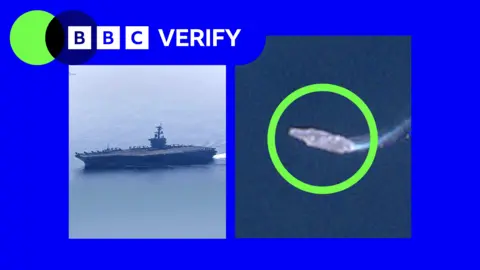


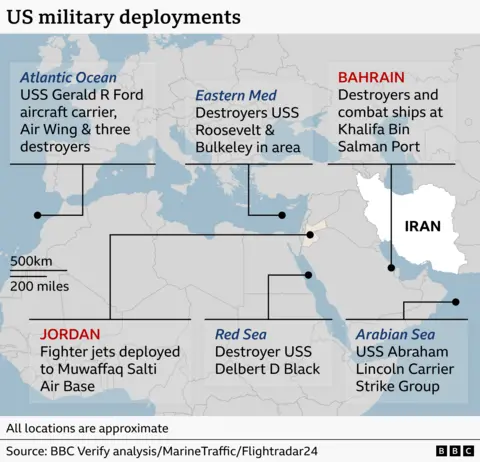
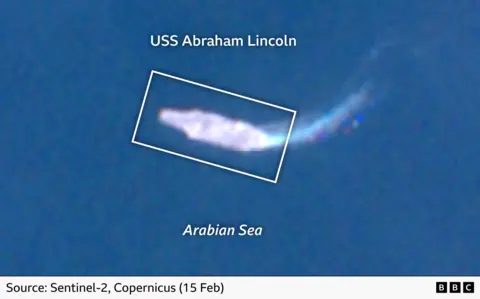
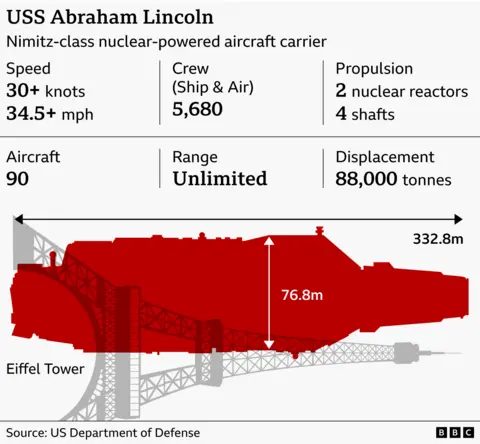
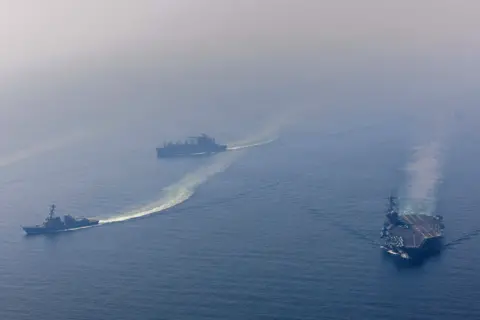
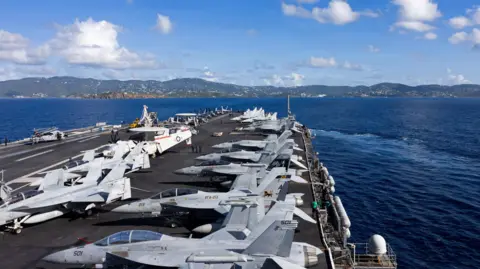
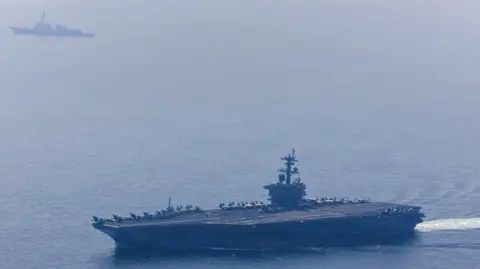
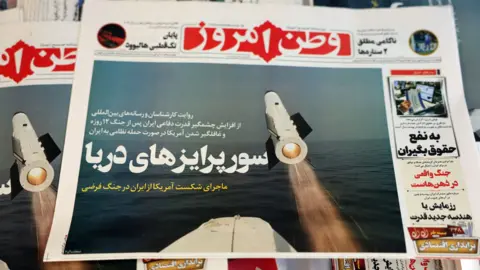
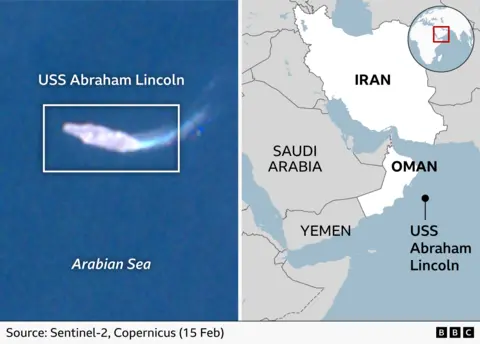
US naval and air buildup near Iran The United States has positioned two carrier strike groups, USS Gerald R. Ford and USS Abraham Lincoln, together with at least 12 warships, dozens of F‑35, F‑22, F‑15 and F‑16 fighters, six E‑3 early‑warning aircraft, more than 85 tankers and over 170 cargo planes, moving roughly 10,700 service members into the region [2][3][4][5]. Satellite and AIS data show the Abraham Lincoln group 700 km off Iran and the Gerald Ford heading from the Mediterranean toward the Gulf [4][5]. The deployment represents the largest U.S. Middle‑East force since the 2003 Iraq invasion, though it still lacks a large ground component [3][5].
Trump signals possible strike within days President Donald Trump warned Iran that a “meaningful” nuclear deal must be reached or “bad things” will happen, indicating a decision on military action could come within ten days and as early as Saturday [1][4][5][6][7]. Military planners have told Trump that strike options are ready, but the president has not committed to either extending talks or launching attacks [2]. The rhetoric follows a series of public statements that the United States may target Iran’s air defenses, leadership or nuclear facilities [1][6].
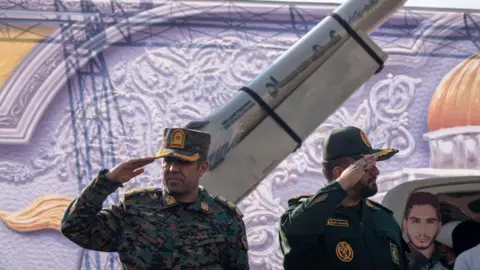
Iran’s asymmetric arsenal targets U.S. forces and shipping Tehran maintains thousands of short‑range ballistic missiles and one‑way Shahed suicide drones capable of striking the 30‑40 000 U.S. personnel stationed across eight regional bases [1]. Iran’s proxies—including Hezbollah, Kataeb Hezbollah, Harakat al‑Nujaba and the Houthis—have pledged support, though Hezbollah is weakened by disarmament pressure and Iraqi militias operate under U.S. constraints [1]. Control of the Strait of Hormuz allows Iran to threaten over a fifth of global oil flow, and experts warn that even partial closure would spike fuel prices and risk a worldwide recession [1][5].
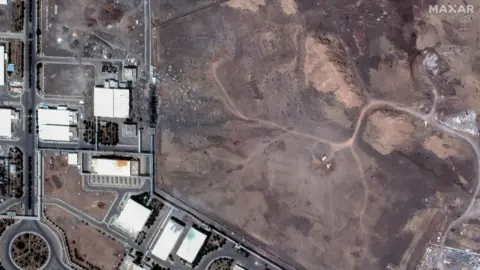
Diplomatic talks stall while Iran fortifies nuclear sites Geneva‑style negotiations have produced only limited agreement on “guiding principles,” with both sides still far apart on key issues [6]. Satellite imagery shows Iran burying key structures at several nuclear facilities under concrete and soil piles, a defensive move observed amid the U.S. buildup [2]. The United States continues to demand an end to uranium enrichment, missile‑range limits and support for regional armed groups, while warning that failure to reach a “meaningful deal” will trigger action [5][7].
Regional and domestic pressures heighten conflict risks Iran faces severe economic strain from sanctions, inflation and mass protests, while Supreme Leader Ayatollah Ali Khamenei warns that accepting U.S. terms could threaten the regime’s survival, preferring a limited war over surrender [1][5][7]. The IRGC has conducted missile drills in the Strait of Hormuz and a simulated rescue exercise with Russia, signaling readiness to respond to U.S. moves [4][6]. Analysts caution that any limited U.S. strike could provoke broader retaliation, potentially destabilizing the region and empowering fragmented or radicalized groups [1][3][5].
Sources
-
1.
CNN: Iran’s Retaliation Playbook as Trump Threatens Strike – Details Iran’s decades‑long asymmetric strategy, missile and drone capabilities, proxy commitments, and the economic shock risk of Hormuz closure, while noting Trump’s public strike warning .
-
2.
CNN: US Positions Massive Military Hardware Near Iran as Diplomatic Talks Continue – Describes the influx of ships, aircraft, carrier groups, F‑35s in Jordan, and Iran’s concrete fortifications of nuclear sites amid ongoing negotiations .
-
3.
AP: Pentagon Deploys Largest U.S. Naval and Air Force Buildup to Middle East Amid Iran Nuclear Tensions – Highlights the scale of the deployment, personnel numbers, carrier groups, and expert warnings about escalation from limited strikes .
-
4.
BBC: US Deploys Two Aircraft Carriers as Tensions Rise with Iran – Confirms carrier movements, total warship count, IRGC maritime drills, and Trump’s promise of a decision within ten days .
-
5.
BBC: US Deploys Carrier Groups as Iran Signals Defiance Over Washington’s Demands – Focuses on U.S. demands for Iran to halt enrichment and missile programs, Iran’s view of those demands as existential, and Khamenei’s war‑risk calculations .
-
6.
BBC: White House Presses Iran to Negotiate as U.S. Warships Deploy – Reports on diplomatic overtures, the planned arrival of Gerald R. Ford, Trump’s fluid strike options, and Khamenei’s AI‑generated image warning .
-
7.
BBC: U.S. Plans Large‑Scale Troop Pullout from Syria Amid Rising Iran Tensions – Announces the planned withdrawal of about 1,000 Syrian‑theater troops, the continued carrier presence near Iran, and Trump’s possible Saturday strike timeline .
Timeline
1988 – Iran mines the Persian Gulf during the “Tanker War,” nearly sinking the U.S. warship USS Samuel B. Roberts, illustrating Tehran’s long‑standing willingness to threaten commercial shipping and foreshadowing future maritime escalation [9].
January 2020 – The United States kills Quds Force commander Qassem Soleimani in a drone strike, establishing a precedent for rapid Iranian retaliation against U.S. bases and shaping Tehran’s “advance‑warning” doctrine for future strikes [6].
2024 – The Assad regime collapses, weakening the Islamic State and prompting the United States to close the al‑Tanf and al‑Shaddadi bases in Syria, a shift that later frees U.S. assets for redeployment to the Iran theater [4].
June 21‑22 2025 – U.S. B‑2 bombers strike three Iranian nuclear enrichment sites, setting back Tehran’s program by roughly two years but leaving many facilities intact, which later fuels Iran’s resolve to fortify sites and develop asymmetric retaliation options [6][16].
December 28 2025 – Nationwide protests erupt in Iran over soaring inflation and a collapsing rial; demonstrators quickly spread across the country, marking the start of the most severe civil unrest since 1979 [18][23].
Early January 2026 – Iranian security forces crack down on the protests, killing thousands; Human Rights Activists News Agency reports more than 6,300 deaths and an additional 17,000 suspected fatalities, while Iranian state media cites 3,117 deaths, underscoring the humanitarian crisis that fuels regional tension [18][23][24].
January 15‑16 2026 – Qatar, Oman, Saudi Arabia and Egypt press Washington and Tehran to restrain, and the UN Security Council convenes to call for diplomatic solutions; simultaneously the U.S. moves the USS Abraham Lincoln carrier strike group toward the Gulf, signaling a “precautionary” naval posture [15].
January 20 2026 – Iran’s foreign minister Abbas Araghchi warns the United States not to threaten Supreme Leader Ali Khamenei, while the USS Abraham Lincoln transits the Strait of Malacca and heads west through the Indian Ocean, bringing U.S. carrier power closer to Iranian waters [25].
January 21 2026 – Iran’s foreign minister publishes a Wall Street Journal op‑ed stating Tehran will use “everything it has” if attacked, and the U.S. carrier group continues westward; the United States lands F‑15E fighters and repositions a HIMARS system, while the Kurdish‑armed National Army of Kurdistan claims an Iranian drone strike near Irbil; Iran’s official death toll reaches 3,117 [23].
January 21 2026 – President Donald Trump tells NewsNation that any Iranian attack would be met with a response that would “wipe the Iranian regime off the face of the Earth,” intensifying rhetorical pressure on Tehran [24].
January 23 2026 – The Pentagon dispatches the largest U.S. naval and air buildup to the Middle East in decades, sending two carrier strike groups (including Gerald R Ford) and over 10,700 service members to pressure Iran over its nuclear program [26].
January 26 2026 – The USS Abraham Lincoln carrier and three destroyers arrive in the Indian Ocean, marking the first U.S. carrier presence in the area since the Gerald R Ford left for the Caribbean in October 2025; President Trump frames the deployment as a “just‑in‑case” deterrent [27].
January 28 2026 – U.S. Central Command announces a multi‑day air exercise to prove combat‑sortie sustainability; Trump declares an “armada” of ships moving toward Iran; Human Rights Activists News Agency records more than 5,800 protest deaths, while Iran’s foreign ministry asserts its forces can “immediately and powerfully respond” to any aggression [13].
January 29 2026 – Trump revives a “massive Armada” threat on Truth Social, ordering the USS Abraham Lincoln toward the region; Iran announces the fielding of 1,000 strategic drones and warns of “unprecedented” retaliation against U.S. bases; Secretary of State Marco Rubio tells Congress that 30‑40 k U.S. troops sit within Iranian missile range; Iran’s foreign minister reiterates that Tehran has not requested talks, while U.S. forces conduct undisclosed readiness drills across CENTCOM [20][21][22].
January 30 2026 – The USS Abraham Lincoln moves within the Indian Ocean near Iran; Trump warns Tehran that “time is running out” and threatens a strike “far worse” than the June 2025 attacks; Iranian officials say their forces have “fingers on the trigger,” and analysts caution that even a limited U.S. strike could trigger an all‑out regional war [19].
January 30 2026 – U.S. forces surge: the Abraham Lincoln carrier strike group operates in the Arabian Sea with guided‑missile destroyers; THAAD and Patriot batteries land at Al Udeid Air Base in Qatar; F‑35 fighters touch down in Jordan; CENTCOM launches a multiday combat‑power exercise to demonstrate rapid deployment and sustainment capabilities [11].
February 1 2026 – Supreme Leader Ayatollah Ali Khamenei warns that a U.S. attack would spark a regional war; Trump signals a “massive naval presence” and offers Tehran two conditions—halt its nuclear program and stop killing protesters—to avoid military action; HRANA reports over 6,700 protest deaths; Iran prepares two‑day live‑fire drills in the Strait of Hormuz, and the EU designates the IRGC as a terrorist organization [17].
February 1 2026 – Iran’s Supreme Leader again threatens regional war if the United States initiates hostilities; President Trump reiterates that the USS Abraham Lincoln is already deployed in the Middle East and that the U.S. will keep “military options on the table” unless Tehran meets his demands [5].
February 3 2026 – Iran’s president Masoud Pezeshkian orders the foreign minister to open negotiations with the United States, reversing a long‑standing refusal; analysts note that the June 2025 bunker‑buster strikes set back Iran’s nuclear program by two years; Trump threatens a larger attack, while internal unrest and economic strain push Tehran toward a “tipping point” [16].
February 16‑19 2026 – The United States positions two aircraft carriers near Iran: USS Gerald R Ford sails eastward from the Strait of Gibraltar into the Mediterranean, while USS Abraham Lincoln is spotted 700 km off Oman, bringing the U.S. fleet to 12 warships across the Middle East; Iran’s IRGC conducts missile drills in Hormuz and a simulated rescue with Russia; analysts say the buildup enables an 800‑sortie daily strike capacity, and President Trump says a decision on a deal or military action will come within ten days [1].
February 19 2026 – Washington demands Iran halt uranium enrichment, limit missile ranges, stop backing armed groups and improve citizen treatment; Iran’s Supreme Leader views these demands as existential threats and weighs a limited war rather than surrender; the U.S. carrier deployments heighten the risk that a strike on nuclear sites could misfire and destabilize the region [2].
February 19 2026 – The White House urges Iran to strike a deal with President Trump, while the Navy moves both carriers closer to Iranian waters and plans to have the world’s largest carrier, USS Gerald R Ford, in the region within three weeks; Geneva talks produce only limited progress on “guiding principles”; Trump discusses strike options but keeps the decision fluid; Khamenei posts an AI‑generated image of the Gerald R Ford sunk, and the IRGC launches a drill in the Strait of Hormuz [3].
February 20 2026 – The United States amasses a large collection of weapons across the Middle East: the Gerald R Ford carrier strike group enters the Mediterranean, the Abraham Lincoln group appears 422 miles south of Iran, stealth F‑35 fighters and electronic‑warfare E/A‑18 Growlers land at Jordan’s Muwaffaq Salti Air Base, and Saudi Arabia’s Prince Sultan Air Base receives multiple E‑3 early‑warning aircraft, refuelers and communications platforms; satellite imagery shows Iran fortifying several nuclear facilities with concrete and soil piles [8].
February 21 2026 – Analysts outline Iran’s decades‑long retaliation playbook: Tehran relies on thousands of short‑range ballistic missiles, one‑way UAVs, and proxy militias (Hezbollah, Kataeb, Houthi) to impose heavy costs on U.S. forces; the country threatens to close the Strait of Hormuz, a chokepoint that moves over a fifth of global oil, warning that even partial disruption could trigger a worldwide recession; historical mining during the 1980s “Tanker War” and recent Gulf‑of‑Oman attacks underscore Tehran’s maritime threat [9].
Mid‑March 2026 (expected) – The USS Gerald R Ford carrier strike group is slated to arrive in the Middle East within three weeks, completing the U.S. naval buildup and providing “more depth and sustainability” for a potential 800‑sortie daily strike campaign [3][4][11].
Dive deeper (25 sub-stories)
-
CNN: Iran’s Retaliation Playbook as Trump Threatens Strike
-
CNN: US Positions Massive Military Hardware Near Iran as Diplomatic Talks Continue
-
AP: Pentagon Deploys Largest U.S. Naval and Air Force Buildup to Middle East Amid Iran Nuclear Tensions
-
BBC: US Deploys Two Aircraft Carriers as Tensions Rise with Iran
-
BBC: US Deploys Carrier Groups as Iran Signals Defiance Over Washington’s Demands
-
BBC: White House Presses Iran to Negotiate as U.S. Warships Deploy
-
BBC: U.S. Plans Large‑Scale Troop Pullout from Syria Amid Rising Iran Tensions
-
Newsweek: Trump’s Nuclear Pressure Prompts Iran to Seek Talks
-
BBC: Iran’s Supreme Leader Threatens Regional War Over Possible U.S. Attack
-
Newsweek: Iran’s Supreme Leader Warns U.S. Attack Will Trigger Regional War
-
CNN: Trump’s Iran Options Remain Limited Amid Naval Buildup and Regime Weakness
-
CNN: US Forces Surge in Middle East as Trump Mulls Iran Strike
-
Newsweek: U.S. Carrier Deploys as Trump Issues Final Warning to Iran
-
Newsweek: Iranians Brace for Possible U.S. Attack Amid Rising Tensions
-
BBC: Iran’s heightened risk of escalation as US carrier group arrives
-
CNN: Iran’s Options to Respond if Trump Orders a Strike
-
Newsweek: Iran Deploys 1,000 Drones as U.S. Armada Moves Toward Region
-
Newsweek: Iran Threatens Unprecedented Retaliation After Trump Revives Strike Threat
-
BBC: Trump warns Iran “time is running out” as US forces surge in Gulf
-
Trump Threatens Iran as USS Abraham Lincoln Arrives, Air Drills Commence
(2 articles)
-
U.S. Carrier Strike Group Enters Indian Ocean as Trump Mulls Iran Response
(2 articles)
-
Newsweek: Iran warns it will use everything it has as U.S. moves forces
-
Newsweek: Trump threatens to wipe Iran's regime off the face of the Earth as tensions rise
-
Newsweek: Iran warns Trump with threat to set fire to their world
-
CNN: Arab states help de-escalate US-Iran tensions as US moves carrier group to Middle East
All related articles (27 articles)
-
CNN: Iran’s Retaliation Playbook as Trump Threatens Strike
-
CNN: US Positions Massive Military Hardware Near Iran as Diplomatic Talks Continue
-
AP: Pentagon Deploys Largest U.S. Naval and Air Force Buildup to Middle East Amid Iran Nuclear Tensions
-
BBC: US Deploys Two Aircraft Carriers as Tensions Rise with Iran
-
BBC: US Deploys Carrier Groups as Iran Signals Defiance Over Washington’s Demands
-
BBC: White House Presses Iran to Negotiate as U.S. Warships Deploy
-
BBC: U.S. Plans Large‑Scale Troop Pullout from Syria Amid Rising Iran Tensions
-
Newsweek: Trump’s Nuclear Pressure Prompts Iran to Seek Talks
-
BBC: Iran’s Supreme Leader Threatens Regional War Over Possible U.S. Attack
-
Newsweek: Iran’s Supreme Leader Warns U.S. Attack Will Trigger Regional War
-
CNN: Trump’s Iran Options Remain Limited Amid Naval Buildup and Regime Weakness
-
CNN: US Forces Surge in Middle East as Trump Mulls Iran Strike
-
Newsweek: U.S. Carrier Deploys as Trump Issues Final Warning to Iran
-
Newsweek: Iranians Brace for Possible U.S. Attack Amid Rising Tensions
-
BBC: Iran’s heightened risk of escalation as US carrier group arrives
-
CNN: Iran’s Options to Respond if Trump Orders a Strike
-
Newsweek: Iran Deploys 1,000 Drones as U.S. Armada Moves Toward Region
-
Newsweek: Iran Threatens Unprecedented Retaliation After Trump Revives Strike Threat
-
BBC: Trump warns Iran “time is running out” as US forces surge in Gulf
-
Newsweek: Trump Issues New Ultimatum to Iran, Threatening “Far Worse” Strikes
-
CNN: US Conducts Middle‑East Air Drills as Iran Tensions Rise
-
CNN: USS Abraham Lincoln Carrier Strike Group Moves Into Indian Ocean Amid Rising US‑Iran Tensions
-
AP: USS Abraham Lincoln Carrier Deploys to Middle East Amid Iran Tensions
-
Newsweek: Iran warns it will use everything it has as U.S. moves forces
-
Newsweek: Trump threatens to wipe Iran's regime off the face of the Earth as tensions rise
-
Newsweek: Iran warns Trump with threat to set fire to their world
-
CNN: Arab states help de-escalate US-Iran tensions as US moves carrier group to Middle East
External resources (17 links)
- https://www.eia.gov/international/analysis/country/irn (cited 2 times)
- https://usun.usmission.gov/u-s-representative-to-the-united-nations-ambassador-mike-waltzs-interview-with-tony-perkins-of-the-salem-news-channel/ (cited 1 times)
- https://www.reutersconnect.com/all?search=all%3AL1N3YF0BU&linkedFromStory=true (cited 2 times)
- https://edition.cnn.com/2026/02/01/middleeast/iran-diplomat-araghchi-interview-intl (cited 1 times)
- https://x.com/ifrc/status/2011790950574531015 (cited 2 times)
- https://x.com/netblocks/status/2011838716562542678 (cited 2 times)
- https://t.me/farsna/408848 (cited 1 times)
- https://x.com/CENTCOM/status/2013647979673010637 (cited 1 times)
- https://x.com/CENTCOM/status/2015815632302801143 (cited 1 times)
- https://x.com/araghchi/status/2016568541399445735 (cited 1 times)
- https://www.bing.com/ck/a?!&&p=8b801433ae68c44f5453de72e45c10b1e846f1ca098dafb67ed046fcab4f8c53JmltdHM9MTc2OTY0NDgwMA&ptn=3&ver=2&hsh=4&fclid=31294c2b-4a98-6c6c-3c6d-5ac24bca6d43&psq=USS+Abraham+Lincoln+Newsweek&u=a1aHR0cHM6Ly93d3cubmV3c3dlZWsuY29tL21hcC1zaG93cy11c3MtYWJyYWhhbS1saW5jb2xuLXBhdGgtdG93YXJkLWlyYW4tcHJvdGVzdHMtY29udGludWUtMTEzNzE4MDQ (cited 2 times)
- https://www.fmprc.gov.cn/wjbzhd/202601/t20260115_11813505.shtml (cited 2 times)
- https://www.ifrc.org/article/ifrc-mourns-killing-one-iranian-red-crescent-colleague (cited 2 times)
- https://www.newsguardrealitycheck.com/p/ai-videos-fill-void-amid-iran-internet-blackout (cited 2 times)
- https://www.opec.org/assets/assetdb/asb-2025.pdf (cited 2 times)
- https://tbg.airframes.io/ (cited 1 times)
- https://www.bing.com/ck/a?!&&p=65e0516d046020389640ccff0832ad6b9bf7e11b7dc1521552dea5cc311b1a05JmltdHM9MTc2OTY0NDgwMA&ptn=3&ver=2&hsh=4&fclid=31294c2b-4a98-6c6c-3c6d-5ac24bca6d43&psq=Iran+drills+Newsweek&u=a1aHR0cHM6Ly93d3cubmV3c3dlZWsuY29tL2lyYW4tdXBkYXRlLXVzLW1pbGl0YXJ5LXRvLXBlcmZvcm0tc2hvdy1vZi1zdHJlbmd0aC1pbi1taWRkbGUtZWFzdC0xMTQyNzg4OQ (cited 1 times)