Venezuelan Government Processes 1,557 Amnesty Requests, Begins Zona Seven Releases Amid Hunger Strikes
Updated (37 articles)
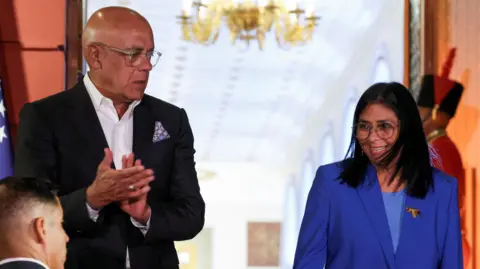
Amnesty Law Signed by Acting President Delcy Rodríguez Acting President Delcy Rodríguez signed the amnesty bill into law on 19 February 2026, following its passage by the National Assembly the previous day[3][4]. The legislation promises “general and full amnesty” for offenses linked to politically‑driven conflicts since 1999, while explicitly excluding individuals convicted of war crimes, murder, drug trafficking, corruption, or support for foreign intervention[3][1]. Lawmakers resolved a dispute by allowing lawyers to file amnesty applications on behalf of exiled detainees, granting them protection from arrest upon return[3][4].
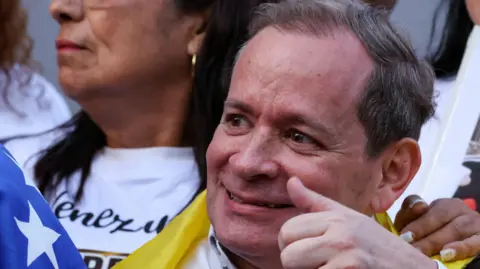
Hundreds Released and Thousands Applied for Amnesty Human‑rights group Foro Penal reports that 448 detainees have been freed since 8 January, though more than 600 political prisoners remain incarcerated[3]. The National Assembly President announced that 1,557 political prisoners have filed amnesty requests under the new law, a figure that could rise to a maximum of 11,000 eligible inmates[1]. Opposition leader Juan Pablo Guanipa, freed after a nine‑month detention, highlighted that many detainees are still excluded, underscoring criticism of the law’s limited scope[2][1].
First Releases Target Zona Seven, Prompt Hunger Strikes Authorities began freeing inmates from Zona Seven of the notorious El Helicoide prison, the initial phase of the amnesty rollout[1]. Families of remaining detainees launched a hunger strike on 14 February to demand broader releases, citing the slow pace of implementation despite promises made after the 3 January capture of President Maduro[4][1]. The hunger strike intensified after the first releases, reflecting growing frustration among relatives and human‑rights advocates[1].
Exclusions and Legal Controversies Surround the Bill Legal experts warn the law contains a “Maria Corina Machado paragraph” that bars anyone who advocated foreign armed intervention, as well as dozens of rebel military officers, from benefiting from amnesty[1]. Critics argue the exclusions leave many high‑profile opposition figures, including those accused of terrorism and treason related to the disputed 2024 election, without relief[2][3]. Opposition figures such as Pedro Urruchurtu denounced the requirement that exiles appear in court as a “trap,” questioning the bill’s fairness[3].
International Pressure and Calls for Further Action The United States, citing the 3 January raid that captured Maduro, urged Caracas to accelerate political‑prisoner releases, with President Donald Trump publicly demanding the closure of El Helicoide[1]. Families of detainees have appealed directly to Trump for intervention, accusing the Venezuelan state of abuse[3]. While some opposition lawmakers expressed cautious optimism, others, including exiled aide Pedro Urruchurtu, warned the law could entrap opponents rather than deliver genuine reconciliation[3].
Sources
-
1.
BBC: Venezuelan Political Prisoners Flood Amnesty Process as Government Prioritizes El Helicoide Releases – Details the surge of 1,557 amnesty applications, early Zona Seven releases, hunger strikes, and legal exclusions, emphasizing U.S. pressure after Maduro’s capture.
-
2.
BBC: Juan Pablo Guanipa freed as Venezuela’s amnesty law takes effect – Focuses on Guanipa’s release, his criticism of the law’s omissions, and the broader political context of the 2024 election dispute.
-
3.
AP: Venezuela’s Acting President Signs Amnesty Law Amid Calls for Prisoner Releases – Highlights the signing by Delcy Rodríguez, the number of releases since January, exclusion clauses, and split opposition reactions.
-
4.
The Hindu: Venezuela Legislature Passes Amnesty Bill Amid Political Prisoner Debate – Reports the legislative passage, the role of Nora Bracho, the hunger strike beginning 14 February, and the compromise allowing lawyers to act for exiles.
Related Tickers
Timeline
July 2024 – Venezuela holds a presidential election whose results are widely disputed, sparking mass arrests of opposition figures and setting the stage for a prolonged crackdown on dissent [2].
May 2025 – Opposition politician Juan Pablo Guanipa is detained on terrorism and treason charges for challenging the 2024 election outcome, beginning a nine‑month imprisonment that later fuels criticism of the amnesty law’s exclusions [2].
Dec 26 2025 – The government frees 99 detainees, marking the first of two mass releases in early 2026 and bringing the two‑week total to 187, though NGOs estimate roughly 900 political prisoners remain [29].
Jan 3 2026 – U.S. forces capture President Nicolás Maduro in a nighttime raid in Caracas and transport him to New York for a drug‑trafficking trial, intensifying international pressure on the Venezuelan regime [3][7][20].
Jan 8 2026 – Acting President Delcy Rodríguez’s interim government pledges to free a “significant number” of political detainees, prompting families to gather outside prisons and the UN to be asked for verification of release lists [3][7].
Jan 9 2026 – The government announces the immediate release of a “significant number” of prisoners, including five Spanish nationals such as human‑rights lawyer Rocío San Miguel, while President Trump hails the move as a “smart gesture” [17][18][20].
Jan 10 2026 – National Assembly President Jorge Rodríguez declares that Venezuelan and foreign prisoners will be freed, and President Trump states the releases come at Washington’s request [15][16].
Jan 11 2026 – Families celebrate the release of Diógenes Angulo after more than a year in custody and learn that Maduro has been captured, while rights groups report fewer than 20 releases and over 800 detainees remain [14].
Jan 12 2026 – Dozens of detainees, including foreign nationals, are freed; the UN fact‑finding mission says the releases fall short of obligations, and President Trump thanks Venezuelan authorities for “starting the process in a big way” [13][5].
Jan 13 2026 – The government claims 116 political prisoners are released, but rights groups verify only 56, highlighting a lack of transparency and prompting families to demand proof‑of‑life evidence [11][10].
Jan 14 2026 – The U.S. State Department confirms the release of multiple American detainees, while families flood Foro Penal with requests to label relatives as political prisoners after the death of Edilson Torres in custody [9][10].
Jan 15 2026 – Acting President Delcy Rodríguez vows to continue prisoner releases, describing the process as unfinished and noting that at least 72 detainees have been freed since the caretaker government began [8].
Jan 22 2026 – Rafael Tudares, son‑in‑law of opposition candidate Edmundo González, is released after 380 days, and Foro Penal verifies 151 releases since Jan 8, while Delcy Rodríguez is sworn in as acting president and pledges oil deliveries to the United States [4].
Jan 25 2026 – Foro Penal confirms a minimum of 80 political prisoners are freed, contrasting with Interim President Delcy Rodríguez’s claim of over 600 releases; the U.N. High Commissioner is slated to be contacted for verification [3].
Jan 27 2026 – The government reports 266 political prisoners have been released since the Jan 8 pledge, with at least 100 freed in the preceding two days, while Interior Minister Diosdado Cabello inflates the total to 808 [7].
Feb 5 2026 – The National Assembly unanimously adopts a historic amnesty bill covering the entire 27‑year Chavismo period, aiming to free political detainees and drop charges such as “terrorism” and “treason,” though it excludes grave human‑rights violations [30].
Feb 14 2026 – Families launch a hunger strike outside detention centers, protesting the slow pace of releases after the Maduro capture, while Foro Penal counts 448 detainees freed since early January [26].
Feb 19 2026 – Venezuela’s legislature passes the amnesty bill, setting the legal framework to free hundreds of political prisoners and allowing exiles to apply for amnesty through lawyers abroad [26].
Feb 20 2026 – Acting President Delcy Rodríguez signs the amnesty law into force; the measure excludes individuals convicted of war crimes, murder, drug trafficking, corruption or foreign‑backed activism, and 1,557 political detainees file amnesty requests under the new law [6][1].
Feb 22 2026 – National Assembly President Jorge Rodríguez announces that 1,557 political prisoners have applied for amnesty, that “hundreds” have already been released from Zona Seven of El Helicoide, and that the law ultimately targets up to 11,000 detainees; opposition leader Juan Pablo Guanipa is freed after nine months and criticizes the law’s exclusions [1][2].
Dive deeper (9 sub-stories)
-
Hundreds of Venezuelan Detainees Apply as Amnesty Law Targets El Helicoide
(22 articles)
-
Venezuela’s Acting President Delcy Rodríguez Signs Amnesty Law, Potentially Freeing Hundreds
(3 articles)
-
The Hindu: Human Rights Watch says U.S. sliding toward authoritarianism under Trump
-
AP: Families rush to label relatives political prisoners after police officer's death
-
Rubio Claims U.S. Lacks Information on 137 Venezuelan Deportees After July Prisoner Swap
(5 articles)
-
U.S. Venezuelan Migrants React to Maduro’s Ouster Amid TPS Uncertainty
(2 articles)
-
AP: Nicaragua frees dozens of prisoners after U.S. pressure
-
AP: Argentine court orders ongoing probe into Venezuelan guards under universal jurisdiction
-
CNN: At least five Americans detained in Venezuela as U.S. pressure on Maduro escalates
All related articles (37 articles)
-
BBC: Venezuelan Political Prisoners Flood Amnesty Process as Government Prioritizes El Helicoide Releases
-
BBC: Juan Pablo Guanipa freed as Venezuela’s amnesty law takes effect
-
AP: Venezuela’s Acting President Signs Amnesty Law Amid Calls for Prisoner Releases
-
The Hindu: Venezuela Legislature Passes Amnesty Bill Amid Political Prisoner Debate
-
Le Monde: Venezuela’s Assembly Passes Historic Amnesty Bill in First Reading
-
The Hindu: Human Rights Watch says U.S. sliding toward authoritarianism under Trump
-
AP: Venezuela frees dozens of political prisoners amid U.S. pressure, hundreds still held
-
BBC: Venezuela releases at least 80 political detainees amid U.S. pressure
-
BBC: Son-in-law of Venezuelan opposition candidate freed after 380 days in custody
-
AP: Venezuela acting president vows to continue releasing prisoners after Maduro ouster
-
AP: Americans detained in Venezuela released amid broader prisoner releases, numbers unclear
-
CNN: Interim Venezuelan government frees at least four Americans
-
AP: Families rush to label relatives political prisoners after police officer's death
-
CNN: Venezuela releases only dozens of political prisoners as families demand proof of life
-
CNN: Rubio says US does not know whereabouts of 137 Venezuelans deported under the Alien Enemies Act
-
AP: Dozens of prisoners released in Venezuela as families of detainees hope for more
-
BBC: Guanipa son warns Trump as Venezuela reports more than 100 political prisoners freed
-
AP: Venezuelan migrants in the US celebrate Maduro's ouster but worry about Trump's moves to deport them
-
AP: Venezuela prisoner releases enter third day after government pledge
-
AP: Nicaragua frees dozens of prisoners after U.S. pressure
-
The Hindu: Nicaragua arrests at least 60 for supporting Maduro capture, rights group says
-
AP: Venezuela begins releasing detainees as relatives wait outside prisons
-
AP: Venezuela frees small number of prisoners
-
BBC: Venezuela begins releasing political prisoners amid US pressure
-
AP: Venezuela releases high-profile prisoners after Maduro capture
-
AP: Argentine court orders ongoing probe into Venezuelan guards under universal jurisdiction
-
CNN: Venezuela frees first prisoners in peace gesture after U.S. raid on Maduro
-
Newsweek: Venezuela frees prisoners in historic bid to seek peace after Maduro capture
-
CNN: After US capture of Nicolás Maduro, Venezuelans face crackdown even as daily life slowly resumes
-
BBC: Venezuelan security forces detain at least 14 foreign journalists in Caracas
-
Newsweek: Noem says Venezuelans under TPS can seek refugee status as TPS ends
-
CNN: At least five Americans detained in Venezuela as U.S. pressure on Maduro escalates
-
The Hindu: Venezuela frees 88 more prisoners detained after post-election protests
-
CNN: Venezuelans in Salvadoran prison seek US court review of deportation
-
AP: Venezuelan migrants in El Salvador demand justice after U.S. judge ruling
-
Newsweek: Judge sets new deadline for Trump on deported Venezuelan migrants
-
AP: Judge orders due-process hearings for Venezuelan migrants sent to El Salvador prison
External resources (10 links)
- https://cnnespanol.cnn.com/2026/01/01/venezuela/excarcelacion-personas-detenidas-tocoron-orix (cited 1 times)
- https://truthsocial.com/@realDonaldTrump/posts/115864395969123502 (cited 1 times)
- https://x.com/alfredoromero/status/2009313000318963911 (cited 1 times)
- https://x.com/clippve/status/2009328334572830801 (cited 1 times)
- https://x.com/jmalbares/status/2009382395447816469?s=20 (cited 1 times)
- https://www.cartercenter.org/stories/center-finds-democracy-thwarted-in-venezuela/ (cited 2 times)
- https://foropenal.com/foro-penal-sobre-amnistia-general-a-los-presos-politicos-de-venezuela/ (cited 1 times)
- https://www.acludc.org/cases/jgg-v-trump-challenging-unlawful-use-alien-enemies-act-1789-deport-immigrants-without-due/ (cited 1 times)
- https://www.bloomberg.com/news/articles/2026-01-13/venezuela-frees-us-citizen-amid-gradual-prisoner-releases (cited 1 times)
- https://www.hrw.org/news/2025/09/22/venezuela-political-prisoners-cut-off-from-the-world (cited 1 times)