Hundreds of Venezuelan Detainees Apply as Amnesty Law Targets El Helicoide
Updated (22 articles)
Amnesty Law Floods Applications, Aims for Thousands The new amnesty legislation, signed by interim President Delcy Rodríguez on 19 February, opened a filing window that 1,557 political prisoners have already used, though the law ultimately intends to cover up to 11,000 detainees [1][2]. Government officials claim “hundreds” have already been released and that applications are being processed “immediately” [1]. Legal scholars warn the law’s wording may limit its reach, excluding certain categories of prisoners [1].
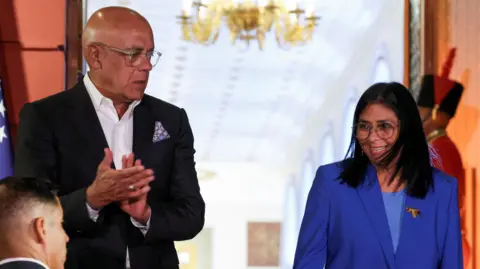
First Releases Focus on El Helicoide’s Zona Seven Authorities began freeing inmates from Zona Seven of the notorious El Helicoide complex, prompting families to start a hunger strike demanding broader clemency [1]. Jorge Rodríguez, brother of interim President Delcy Rodríguez, announced the targeted releases at a Saturday news conference [1]. The move represents the initial phase of a phased release plan that the government says will expand to other prison zones.
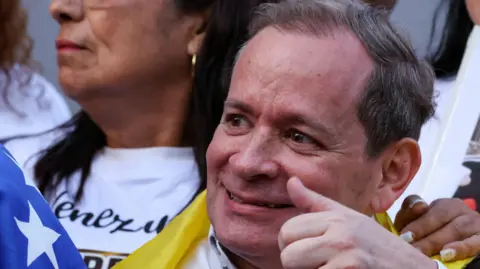
Juan Pablo Guanipa Freed, Labels Amnesty Flawed Opposition leader Juan Pablo Guanipa announced his release after nearly nine months of detention, describing the amnesty as “flawed” for leaving many political prisoners behind [2][1]. Guanipa’s case stemmed from accusations of terrorism and treason linked to the disputed 2024 election, with a brief release in early February followed by rearrest and house arrest [2]. He joined critics who argue the law omits detainees who advocated foreign armed intervention, a point echoed by legal analysts [1].
US Pressure Rises After January 3 Maduro Capture The United States intensified calls for rapid political‑prisoner releases after U.S. forces captured President Nicolás Maduro on 3 January, with President Donald Trump demanding the closure of El Helicoide [1]. U.S. officials have framed the amnesty as a goodwill gesture tied to the raid, urging Caracas to accelerate the process [1]. The government responded by announcing a “significant number” of releases on 8 January, positioning the new law as a fulfillment of that promise [2].
Legal Experts Highlight Exclusion Clause Law professor Juan Carlos Apitz identified a specific provision—dubbed the “Maria Corina Machado paragraph”—that bars anyone who called for foreign armed intervention from benefiting from the amnesty [1]. The same analysis notes that dozens of military officers involved in past rebellions are also excluded, raising concerns about the law’s comprehensiveness [1]. These exclusions have become focal points for opposition demands for a more inclusive, truth‑based reconciliation process [2].
Sources
-
1.
BBC: Venezuelan Political Prisoners Flood Amnesty Process as Government Prioritizes El Helicoide Releases: reports 1,557 amnesty applications, early Zona Seven releases, family hunger strikes, U.S. pressure, and the “Maria Corina Machado” exclusion clause .
-
2.
BBC: Juan Pablo Guanipa freed as Venezuela’s amnesty law takes effect: details Guanipa’s nine‑month detention, his release, criticism of the law’s scope, background of his terrorism charges, and opposition calls for a comprehensive amnesty .
Related Tickers
Timeline
July 2024 – The disputed presidential election triggers massive protests and a crackdown that sees more than 2,000 people arrested and many later convicted of treason, establishing a climate of political repression that underpins later prisoner‑release negotiations [7].
May 2025 – Opposition leader Juan Pablo Guanipa is arrested on terrorism and treason charges for challenging the 2024 election results, briefly released in early 2025, then rearrested and placed under house arrest for alleged breach of release terms [2].
Jan 1, 2026 – Authorities free 88 political detainees, the second mass release in two weeks, bringing the two‑week total to 187 while NGOs estimate roughly 900 political prisoners remain [22].
Jan 3, 2026 – U.S. forces capture President Nicolás Maduro in a nighttime raid on Caracas and transport him to New York for a drug‑trafficking trial, a move that intensifies domestic security measures and prompts international pressure for detainee releases [11].
Jan 6, 2026 – Security forces detain at least 14 foreign journalists covering the aftermath of Maduro’s capture, with most released the same day; the arrests coincide with Delcy Rodríguez’s swearing‑in as interim president and reflect a broader pattern of repression since the 2024 election [7].
Jan 8, 2026 – The interim government announces the start of “significant” political‑prisoner releases, pledging to free a substantial group in the coming hours, and Spain confirms the release of five Spanish nationals, including human‑rights lawyer Rocío San Miguel [12][10][6].
Jan 9, 2026 – Early release figures vary: rights groups verify nine prisoners freed [18]; the government later claims more than 100 have been released [5]; other reports note 56 prisoners freed [9] and at least 80 according to Foro Penal [3]; President Trump thanks Venezuelan authorities, calling the gesture “very important and smart” [6][5].
Jan 10, 2026 – National Assembly President Jorge Rodríguez announces that Venezuelan and foreign prisoners will be freed, prompting families to gather outside Rodeo I and El Helicoide as a limited opening unfolds [19]; Trump reiterates that the releases came at Washington’s request [19].
Jan 11, 2026 – On the third day of releases, former political detainee Diógenes Angulo is freed after more than a year, learns of Maduro’s capture, and joins families outside prisons; rights groups report fewer than 20 releases to date while the U.S. praises the move [17][11].
Jan 12, 2026 – Foro Penal verifies 49 prisoners freed, including several foreigners, as families wait outside detention centers; Ramón Guanipa warns President Trump that only about 40 political prisoners have been released out of 800 and urges continued pressure [16][5]; the U.S. State Department confirms multiple Americans have been released, though numbers remain undisclosed [15].
Jan 13, 2026 – Rights groups confirm 56 political prisoners released, while the UN Fact‑Finding Mission welcomes the step but says it falls far short of Venezuela’s human‑rights obligations, urging full, unconditional releases and transparent information for families [9].
Jan 14, 2026 – The interim government frees at least four Americans, marking the first such release since Maduro’s ouster; the U.S. State Department welcomes the development, and President Trump praises Venezuela for “starting the process of releasing political prisoners in a significant way” [8][15].
Jan 15, 2026 – Acting President Delcy Rodríguez vows to continue prisoner releases, describing the process as unfinished and linked to the new political moment after Maduro’s removal; Trump later says he had a long call with Rodríguez and that they “are getting along very well” [14].
Jan 22, 2026 – Rafael Tudares, son‑in‑law of opposition candidate Edmundo González, is released after 380 days of detention; Foro Penal reports 151 releases since Jan 8, while Delcy Rodríguez is sworn in as acting president and receives U.S. praise for agreeing to turn over up to 50 million barrels of oil [4].
Jan 25, 2026 – Foro Penal confirms at least 80 political prisoners freed, contradicting the government’s claim of over 600 releases; Delcy Rodríguez says she will request UN High Commissioner Volker Türk to verify the release lists, signaling a move toward external oversight [3].
Jan 27, 2026 – Foro Penal’s president reports 266 political prisoners freed since the Jan 8 pledge, with at least 100 released in the previous two days; Acting President Delcy Rodríguez leads the effort, promises UN verification, while President Trump praises the “rapid political‑prisoner releases” and hundreds of dissidents remain detained [13].
Feb 20, 2026 – Opposition leader Juan Pablo Guanipa announces his freedom after almost nine months in jail as Venezuela’s new amnesty law takes effect; the law aims to eventually cover up to 11,000 prisoners but critics say it excludes many, including those who advocated foreign armed intervention [2].
Feb 22, 2026 – A total of 1,557 political detainees file amnesty requests under the new law, with “hundreds” already released and the first wave targeting Zona Seven of El Helicoide, prompting family‑led hunger strikes; legal experts warn the law omits the “Maria Corina Machado paragraph” and rebel officers, while U.S. pressure mounts and President Trump calls for the closure of the notorious El Helicoide facility [1].
Dive deeper (18 sub-stories)
-
Venezuelan Amnesty Law Triggers Thousands of Prisoner Applications and First El Helicoide Releases
(2 articles)
-
Venezuela Frees Hundreds of Political Prisoners After U.S. Capture of Maduro, Still Holds Hundreds
(3 articles)
-
BBC: Son-in-law of Venezuelan opposition candidate freed after 380 days in custody
-
AP: Venezuela acting president vows to continue releasing prisoners after Maduro ouster
-
AP: Americans detained in Venezuela released amid broader prisoner releases, numbers unclear
-
CNN: Interim Venezuelan government frees at least four Americans
-
CNN: Venezuela releases only dozens of political prisoners as families demand proof of life
-
AP: Dozens of prisoners released in Venezuela as families of detainees hope for more
-
BBC: Guanipa son warns Trump as Venezuela reports more than 100 political prisoners freed
-
AP: Venezuela prisoner releases enter third day after government pledge
-
The Hindu: Nicaragua arrests at least 60 for supporting Maduro capture, rights group says
-
AP: Venezuela begins releasing detainees as relatives wait outside prisons
-
AP: Venezuela frees small number of prisoners
-
Venezuela Frees Hundreds of Political Detainees After U.S. Capture of Maduro
(2 articles)
-
CNN: Venezuela frees first prisoners in peace gesture after U.S. raid on Maduro
-
Newsweek: Venezuela frees prisoners in historic bid to seek peace after Maduro capture
-
CNN: After US capture of Nicolás Maduro, Venezuelans face crackdown even as daily life slowly resumes
-
BBC: Venezuelan security forces detain at least 14 foreign journalists in Caracas
All related articles (22 articles)
-
BBC: Venezuelan Political Prisoners Flood Amnesty Process as Government Prioritizes El Helicoide Releases
-
BBC: Juan Pablo Guanipa freed as Venezuela’s amnesty law takes effect
-
AP: Venezuela frees dozens of political prisoners amid U.S. pressure, hundreds still held
-
BBC: Venezuela releases at least 80 political detainees amid U.S. pressure
-
BBC: Son-in-law of Venezuelan opposition candidate freed after 380 days in custody
-
AP: Venezuela acting president vows to continue releasing prisoners after Maduro ouster
-
AP: Americans detained in Venezuela released amid broader prisoner releases, numbers unclear
-
CNN: Interim Venezuelan government frees at least four Americans
-
CNN: Venezuela releases only dozens of political prisoners as families demand proof of life
-
AP: Dozens of prisoners released in Venezuela as families of detainees hope for more
-
BBC: Guanipa son warns Trump as Venezuela reports more than 100 political prisoners freed
-
AP: Venezuela prisoner releases enter third day after government pledge
-
The Hindu: Nicaragua arrests at least 60 for supporting Maduro capture, rights group says
-
AP: Venezuela begins releasing detainees as relatives wait outside prisons
-
AP: Venezuela frees small number of prisoners
-
BBC: Venezuela begins releasing political prisoners amid US pressure
-
AP: Venezuela releases high-profile prisoners after Maduro capture
-
CNN: Venezuela frees first prisoners in peace gesture after U.S. raid on Maduro
-
Newsweek: Venezuela frees prisoners in historic bid to seek peace after Maduro capture
-
CNN: After US capture of Nicolás Maduro, Venezuelans face crackdown even as daily life slowly resumes
-
BBC: Venezuelan security forces detain at least 14 foreign journalists in Caracas
-
The Hindu: Venezuela frees 88 more prisoners detained after post-election protests
External resources (8 links)
- https://truthsocial.com/@realDonaldTrump/posts/115864395969123502 (cited 1 times)
- https://x.com/alfredoromero/status/2009313000318963911 (cited 1 times)
- https://x.com/clippve/status/2009328334572830801 (cited 1 times)
- https://x.com/jmalbares/status/2009382395447816469?s=20 (cited 1 times)
- https://foropenal.com/foro-penal-sobre-amnistia-general-a-los-presos-politicos-de-venezuela/ (cited 1 times)
- https://www.bloomberg.com/news/articles/2026-01-13/venezuela-frees-us-citizen-amid-gradual-prisoner-releases (cited 1 times)
- https://www.cartercenter.org/stories/center-finds-democracy-thwarted-in-venezuela/ (cited 1 times)
- https://www.hrw.org/news/2025/09/22/venezuela-political-prisoners-cut-off-from-the-world (cited 1 times)