South Korean Ex‑President Yoon Suk‑yeol Sentenced to Life for 2024 Martial‑Law Insurrection
Updated (71 articles)
-
 Image: YonhapJeon Han-gil, a former Korean history instructor and a vocal supporter of former President Yoon Suk Yeol, speaks at a rally in support of the former president near the Seoul Central District Court in southern Seoul on Feb. 19, 2026, on the day of Yoon's sentencing hearing on charges of leading an insurrection. (Yonhap) Source Full size
 -
Image: YonhapJeon Han-gil, a former Korean history instructor and a vocal supporter of former President Yoon Suk Yeol, speaks at a rally in support of the former president near the Seoul Central District Court in southern Seoul on Feb. 19, 2026, on the day of Yoon's sentencing hearing on charges of leading an insurrection. (Yonhap) Source Full size
-
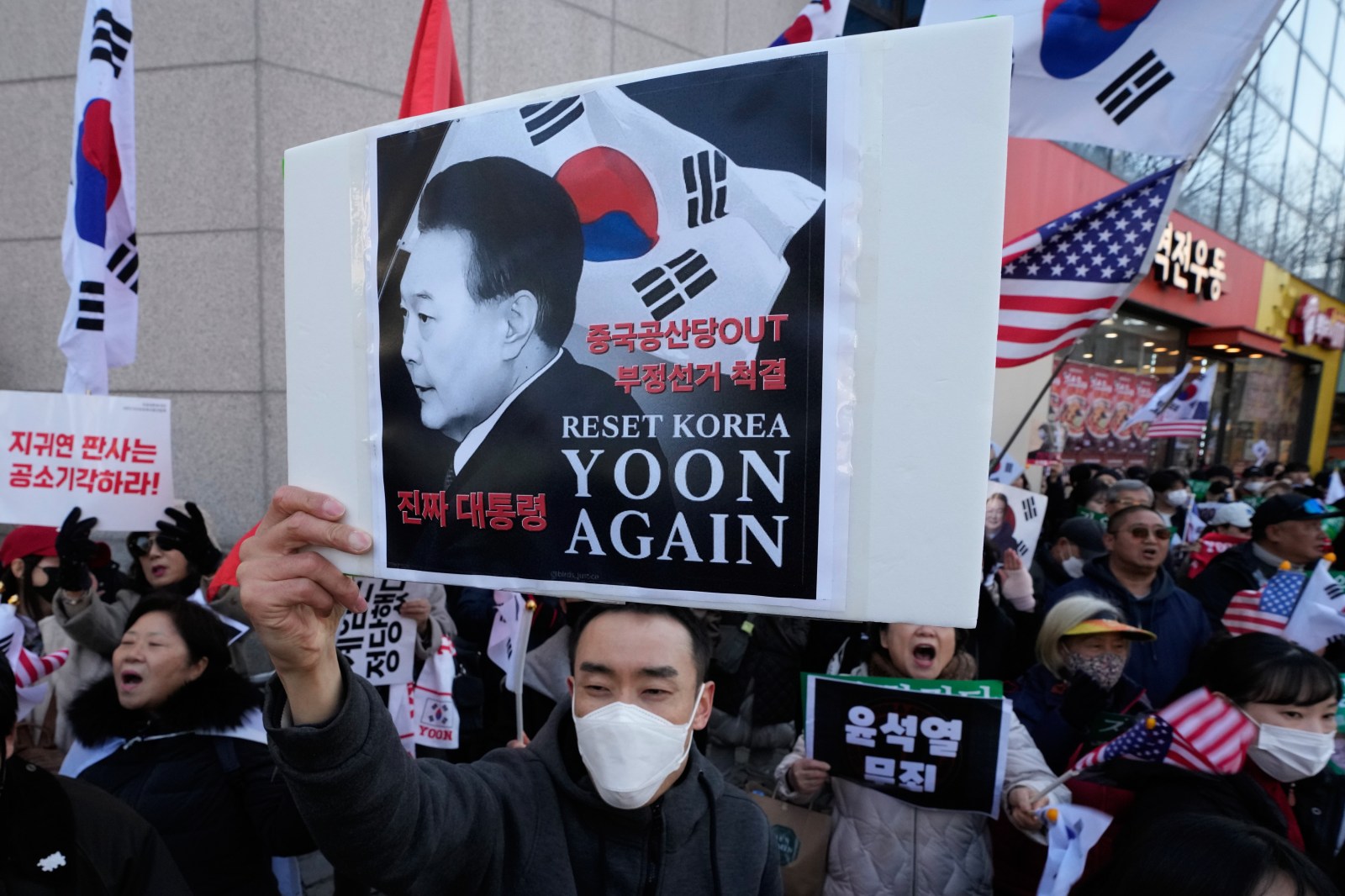
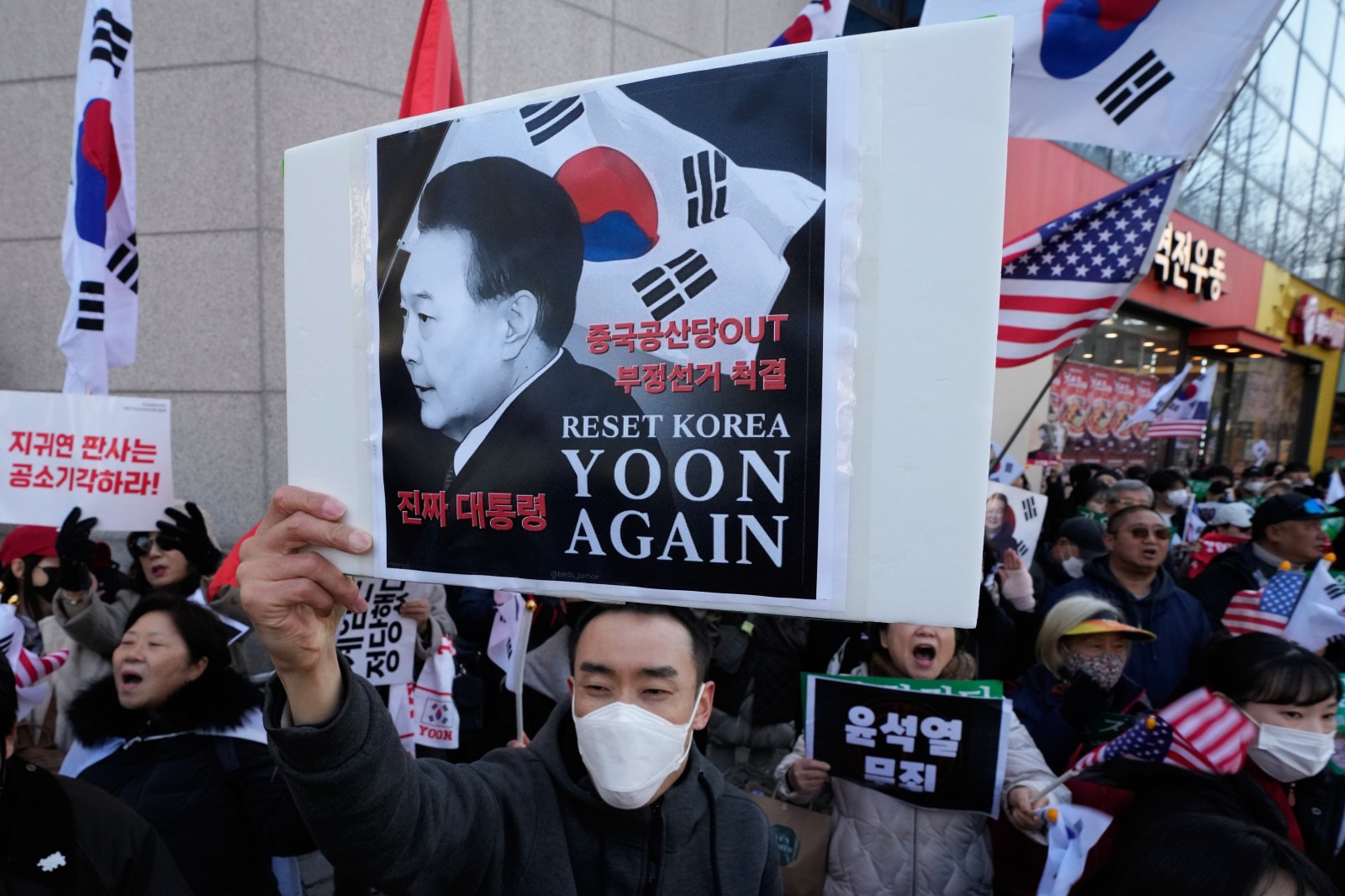
 Image: YonhapSupporters of former President Yoon Suk Yeol stage a rally near the Seoul Central District Court in the capital on Feb. 19, 2026, to proclaim his innocence as Yoon is set to receive the first verdict at the court the same day on whether his 2024 imposition of martial law constituted an insurrection following special prosecutors' recommendation of the death penalty. (Yonhap) Source Full size




Life Sentence Delivered for 2024 Martial‑Law Insurrection The Seoul Central District Court handed former President Yoon Suk‑yeol a life‑imprisonment sentence on 19 February 2026 for leading an insurrection tied to his six‑hour martial‑law decree of 3 December 2024 [4][5][8][10][14][15]. The court rejected the death‑penalty recommendation of special prosecutors, citing limited premeditation, Yoon’s age (65) and the absence of lethal violence [4][14]. This marks the first life sentence imposed on a South Korean head of state since the 1996 Chun Doo‑hwan case [10][13]. Yoon’s conviction concludes the first‑trial ruling in a legal saga that began with his impeachment in December 2024 [4][5].
Court Rejects Yoon’s Defense and Emphasizes Intent to Paralyze Legislature Judges dismissed Yoon’s claim that the decree was a “warning‑and‑appeal‑type” martial law, finding the deployment of troops to seal the National Assembly a subversive act [4][8]. Presiding judge Jee Kui‑youn (or Ji Gwi‑yeon) stated that Yoon deliberately aimed to block parliamentary work, meeting the constitutional definition of insurrection [9][11][12]. The sentencing rationale highlighted the brief duration of the crisis, minimal actual violence, and Yoon’s advanced age as mitigating factors [4][14]. Prosecutors had sought the maximum penalty, arguing the act threatened democratic order [4][12].
Co‑Defendants Receive Decades‑Long Terms While Yoon Serves Additional Five‑Year Penalty Former Defense Minister Kim Yong‑hyun received a 30‑year term, former intelligence commander Noh Sang‑won 18 years, former police chief Cho Ji‑ho 12 years, and former Seoul police chief Kim Bong‑sik 10 years for enforcing the decree [4][5][8][9][14]. Former Prime Minister Han Duck‑soo was sentenced to 23 years for falsifying cabinet records to legitimize the martial‑law order [8][13]. Yoon is already serving a separate five‑year sentence for obstructing investigators, adding to his cumulative legal penalties [9][11][13]. The court’s decision underscores a broad crackdown on senior officials involved in the power grab [4][5][8].
Apology, Protests and Political Fallout Mark Aftermath Yoon issued a public apology on 20 February 2026, expressing regret for public suffering while insisting the decree was meant to protect the nation [2][3]. Approximately 1,000 of his supporters gathered outside the court, while left‑leaning Candlelight Action rallied in favor of the verdict, highlighting disappointment that the death penalty was not imposed [7][13]. National Assembly Speaker Woo Won‑shik urged Yoon to repent, noting the ruling formally classifies the martial‑law attempt as insurrection [12]. Analysts argue the life sentence will not provide national closure, as political parties remain divided over the judgment [6][13].
Sources
-
1.
CNN: South Korean ex‑president Yoon Suk Yeol sentenced to life after brief martial‑law crisis – Details Yoon’s life sentence, six‑hour decree, alleged secret drone flights, and broader crackdown on senior officials .
-
2.
Yonhap: Yoon Suk Yeol apologizes for martial‑law suffering while defending decree after life sentence – Highlights Yoon’s apology, his claim the decree saved the nation, and his doubts about a fair appeal .
-
3.
Yonhap: Former President Yoon Sentenced to Life, Issues Apology – Reports the life term, Yoon’s apology, and the political fallout on 20 Feb 2026 .
-
4.
Yonhap: Seoul Court Sentences Ex‑President Yoon to Life for Martial‑Law Insurrection – Provides judge’s reasoning, sentencing of co‑defendants, and commentary on diplomatic damage .
-
5.
Yonhap: Former President Yoon Suk Yeol Sentenced to Life for Insurrection – Notes uniform Korean‑language coverage, avoidance of death penalty, and first‑stage verdict .
-
6.
Newsweek: Former South Korean President Yoon Suk Yeol Sentenced to Life for 2024 Coup Attempt – Emphasizes televised accusations against opposition, death‑penalty request blocked, and analyst reactions .
-
7.
Yonhap: Court Sentences Former President Yoon to Life, Rival Rallies Erupt in Seoul – Describes protests by supporters and left groups, conservative denunciations, and police deployment .
-
8.
CNN: Former South Korean President Yoon Suk Yeol Sentenced to Life for Insurrection – Covers judge’s view of intent to paralyze parliament, broader prosecutions, and Yoon’s legal team’s rebuttal .
-
9.
Yonhap: Former South Korean President Yoon Sentenced to Life for 2024 Martial‑Law Attempt – Highlights judge’s intent analysis, co‑defendants’ terms, and Yoon’s existing five‑year sentence .
-
10.
AP: Former South Korean President Yoon Suk Yeol Sentenced to Life for 2024 Martial‑Law Rebellion – Frames the charge as rebellion, notes removal from office, and death‑penalty demand .
-
11.
Yonhap: Former President Yoon Suk Yeol Sentenced to Life for 2024 Martial‑Law Attempt – Reiterates six‑hour decree, judge’s intent finding, and co‑defendants’ sentences .
-
12.
Yonhap: Assembly Speaker Calls on Former President Yoon to Apologize After Life Sentence – Reports Speaker Woo’s call for apology and critique of mitigation reasoning .
-
13.
The Hindu: Former South Korean President Yoon Sentenced to Life for 2024 Martial Law Coup – Provides rebellion charge, death‑penalty demand rejected, and context of death‑penalty moratorium .
-
14.
Yonhap: Former President Yoon Suk Yeol Sentenced to Life for 2024 Martial Law Attempt – Summarizes life imprisonment, insurrection definition, and lighter sentence than prosecutors sought .
-
15.
Yonhap: Former President Yoon Suk Yeol Sentenced to Life for 2024 Martial Law Attempt – Brief notice of life sentence .
-
16.
Yonhap: Seoul Court Convicts Former President Yoon of Insurrection Over 2024 Martial Law Attempt – Announces conviction, notes prosecutors’ death‑penalty recommendation, sentencing pending .
-
17.
Yonhap: Former President Yoon Suk Yeol Convicted of Insurrection Over Martial Law Attempt – Confirms conviction of insurrection .
-
18.
Yonhap: Former President Yoon to Receive First Verdict on Martial‑Law Insurrection Case – Details hearing schedule, indictment, death‑penalty request, and courtroom history .
-
1.
CNN: South Korean ex‑president Yoon Suk Yeol sentenced to life after brief martial‑law crisis – Reiterates sentencing, six‑hour crisis, and alleged drone missions .
Timeline
Dec 3 2024 – President Yoon Suk Yeol declares six‑hour martial law, ordering troops and helicopters to seal the National Assembly and announcing “anti‑state forces” threaten the nation; the decree is lifted after lawmakers break the blockade and vote to end it[4].
Dec 14 2024 – Lawmakers impeach Yoon just 11 days after the decree, marking a swift constitutional response to the attempted self‑coup[4].
Apr 2025 – The Constitutional Court formally removes Yoon from office, ending his presidency amid the martial‑law crisis[10].
Jul 2025 – Yoon is re‑arrested and detained on additional martial‑law‑related charges, beginning a series of prosecutions that will span eight trials[10].
Dec 11 2025 – Former Justice Minister Park Sung‑jae is indicted on insurrection charges for coordinating ministries and supporting Yoon’s martial‑law regime[30].
Dec 15‑16 2025 – The Seoul Central District Court sets Jan 16 2026 as the verdict date for Yoon’s obstruction‑of‑justice case, the first ruling in his four‑case trial bundle[27].
Dec 25 2025 – Yoon is slated to receive the first sentencing recommendation on obstruction charges, with a verdict expected on Jan 16 2026[26].
Dec 26 2025 – Special counsel Cho Eun‑suk files a request for a 10‑year prison term for Yoon on obstruction and related offenses, underscoring the prosecution’s push for a harsh penalty[25].
Jan 9 2026 – The final hearing in Yoon’s insurrection trial convenes, with eight defendants present; prosecutors signal they will seek death, life or life‑without‑forced‑labor sentences[24].
Jan 13 2026 – Prosecutors close arguments and formally request the death penalty for Yoon, labeling the December 2024 decree a “self‑coup” driven by “lust for power”[3][22].
Jan 15 2026 – Special counsel again petitions for the death penalty, arguing the martial‑law act endangered constitutional order and constitutes a grave breach of public sovereignty[21].
Jan 15 2026 – The court announces the first verdict on martial‑law‑related charges will be delivered on Jan 16, with live broadcast planned[1][20].
Jan 16 2026 – Yoon is convicted of obstruction of justice and sentenced to five years in prison, the court finding he ordered the Presidential Security Service to block investigators and privatized armed forces[19][2].
Jan 17 2026 – Media report the five‑year sentence, noting the court’s characterization of Yoon’s actions as “very bad” and his lack of remorse[18].
Jan 19 2026 – Yoon’s legal team files an appeal of the five‑year obstruction sentence, claiming procedural errors and disputing the evidence base[17].
Jan 21 2026 – Former Prime Minister Han Duck‑soo receives a 23‑year prison term for abetting the insurrection, the first cabinet‑level conviction linked to the martial‑law episode[13].
Jan 22 2026 – Special counsel files an appeal of the five‑year obstruction ruling, seeking a harsher outcome and challenging the not‑guilty verdicts on several charges[12].
Feb 19 2026 – A Seoul court convicts Yoon of insurrection and sentences him to life imprisonment, the harshest penalty ever imposed on a former South Korean head of state; co‑defendants receive 30‑year (defense minister) and 12‑year (police chief) terms[5][9].
Feb 20 2026 – Yoon issues a public apology, saying, “I deeply apologize to the people for making you experience much despair and suffering due to my shortcomings,” while insisting the decree was meant to protect the nation[7][6].
Feb 20 2026 – Special counsel Cho Eun‑suk announces plans to appeal the life‑sentence ruling, maintaining the death‑penalty request despite the court’s decision[6].
Feb 21 2026 – International coverage highlights that Yoon’s life term revives memories of Chun Doo‑hwan’s 1980s martial‑law rule, the last such decree in South Korea 44 years earlier[4].
Future (by Jan 23 2026) – Yoon has seven days to file an appeal of the five‑year obstruction sentence, a deadline that will close on Jan 23[2].
Future (post‑Feb 20 2026) – Yoon’s legal team says it will decide whether to appeal the life‑sentence after consulting him, indicating a pending higher‑court challenge[6].
Dive deeper (34 sub-stories)
-
South Korea Sentences Former President Yoon to Life for 2024 Martial‑Law Coup
(10 articles)
-
Yonhap: Yoon Suk Yeol apologizes for martial‑law suffering while defending decree after life sentence
-
Former President Yoon Suk‑Yeol Sentenced to Life, Issues Apology After Martial‑Law Conviction
(2 articles)
-
Yonhap: Former President Yoon Suk Yeol Sentenced to Life for Insurrection
-
Yonhap: Court Sentences Former President Yoon to Life, Rival Rallies Erupt in Seoul
-
Yonhap: Court sentences ex-President Yoon to life imprisonment over martial law bid
-
Seoul Court Convicts Ex‑President Yoon of Insurrection, Death‑Penalty Recommendation Pending
(3 articles)
-
Yonhap: Former President Yoon Suk Yeol Convicted of Insurrection Over Martial Law Attempt
-
Yonhap: Former President Yoon to Receive First Verdict on Martial‑Law Insurrection Case
-
Former Prime Minister Han Files Appeal Against 23‑Year Insurrection Sentence
(2 articles)
-
Park Sung‑jae Denies Insurrection Role in Jan 26 2026 Trial
(2 articles)
-
CNN: South Korea ex-prime minister Han Duck-soo jailed 23 years in rebellion case over martial law
-
Special Counsel Appeals Yoon’s Five‑Year Obstruction Sentence, Seeking Review of Evidence and Death‑Penalty Request
(3 articles)
-
Ex‑Prime Minister Han Duck‑soo Sentenced to 23 Years for Martial‑Law Insurrection
(4 articles)
-
AP: South Korea's former prime minister jailed for 23 years in martial law case
-
Yonhap: Ex-PM Han Duck-soo sentenced to 23 years in prison for insurrection
-
Yonhap: Seoul court approves live broadcast of Han Duck-soo sentencing in insurrection case
-
Yonhap: Yoon appeals five-year sentence in obstruction case over detention attempt
-
Yonhap: Yoon's lawyers say court acted with political motive in sentencing ex-president
-
Former President Yoon Suk‑yeol Sentenced to Five Years for Martial‑Law Obstruction
(4 articles)
-
Yonhap: Former President Yoon Suk Yeol sentenced to five years in prison over martial law charges
-
South Korean Court Sentences Former President Yoon Suk‑Yeol to Five Years
(2 articles)
-
South Korea’s Ex‑President Yoon Faces First Martial‑Law Verdict Jan 16 and Sentencing Friday
(7 articles)
-
BBC: Yoon Suk Yeol faces first verdict on martial law charges after impeachment
-
Yonhap: Death penalty sought for former president in martial law case tests Korea's democracy
-
South Korean Court to Deliver Verdict on Ex-President Yoon’s Martial Law Case Feb. 19
(2 articles)
-
Independent Counsel Seeks Death Penalty for Former President Yoon Over 2024 Martial Law
(2 articles)
-
BBC: Prosecutors Seek Death Penalty for Yoon Suk Yeol Over Botched Martial Law Bid
-
South Korean Prosecutors Request Death Penalty for Ex‑President Yoon at Final Hearing
(2 articles)
-
Final Hearing Resumes in Yoon Insurrection Trial, Death Penalty Still on Table
(2 articles)
-
Yonhap: Final hearing held in Yoon Suk Yeol insurrection trial
-
Final Insurrection Hearing Set for Ex-President Yoon, Verdict Expected Early February
(2 articles)
-
Yonhap: Prosecution seeks 10-year sentence for ex-president Yoon Suk Yeol over Dec 3 martial law crisis
-
Yoon Suk Yeol Awaits Sentencing Recommendation as Verdict Set for Jan 16
(4 articles)
All related articles (71 articles)
-
CNN: South Korean ex‑president Yoon Suk Yeol sentenced to life after brief martial‑law crisis
-
Yonhap: Yoon Suk Yeol apologizes for martial‑law suffering while defending decree after life sentence
-
Yonhap: Former President Yoon Sentenced to Life, Issues Apology
-
Yonhap: Seoul Court Sentences Ex‑President Yoon to Life for Martial‑Law Insurrection
-
Yonhap: Former President Yoon Suk Yeol Sentenced to Life for Insurrection
-
Newsweek: Former South Korean President Yoon Suk Yeol Sentenced to Life for 2024 Coup Attempt
-
Yonhap: Court Sentences Former President Yoon to Life, Rival Rallies Erupt in Seoul
-
CNN: Former South Korean President Yoon Suk Yeol Sentenced to Life for Insurrection
-
Yonhap: Former South Korean President Yoon Sentenced to Life for 2024 Martial‑Law Attempt
-
AP: Former South Korean President Yoon Suk Yeol Sentenced to Life for 2024 Martial‑Law Rebellion
-
Yonhap: Former South Korean President Yoon Sentenced to Life for 2024 Martial‑Law Attempt
-
Yonhap: Assembly Speaker Calls on Former President Yoon to Apologize After Life Sentence
-
The Hindu: Former South Korean President Yoon Sentenced to Life for 2024 Martial Law Coup
-
Yonhap: Former President Yoon Suk Yeol Sentenced to Life for 2024 Martial Law Attempt
-
Yonhap: Court sentences ex-President Yoon to life imprisonment over martial law bid
-
Yonhap: Seoul Court Convicts Former President Yoon of Insurrection Over 2024 Martial Law Attempt
-
Yonhap: Former President Yoon Suk Yeol Convicted of Insurrection Over Martial Law Attempt
-
Yonhap: Former President Yoon to Receive First Verdict on Martial‑Law Insurrection Case
-
Yonhap: Former Prime Minister Han Appeals 23‑Year Insurrection Sentence
-
Yonhap: Former Justice Minister Park Sung‑jae Denies Insurrection Charges
-
CNN: South Korea ex-prime minister Han Duck-soo jailed 23 years in rebellion case over martial law
-
Yonhap: Special counsel appeals ruling on ex-President Yoon's obstruction of justice charges
-
Yonhap: Ex-PM Han Duck-soo sentenced to 23 years for insurrection tied to martial law decree
-
AP: South Korea's former prime minister jailed for 23 years in martial law case
-
Yonhap: Ex-PM Han Duck-soo sentenced to 23 years over insurrection role
-
Yonhap: Ex-PM Han Duck-soo sentenced to 23 years in prison for insurrection
-
Yonhap: Ex-PM Han Duck-soo sentenced to 23 years for insurrection tied to martial law decree
-
Yonhap: Ex-PM Han Duck-soo sentenced to 23 years for insurrection role
-
Yonhap: Court to deliver verdict on ex-PM Han in insurrection case
-
Yonhap: Seoul court approves live broadcast of Han Duck-soo sentencing in insurrection case
-
Yonhap: Yoon appeals five-year sentence in obstruction case over detention attempt
-
Yonhap: Yoon Suk Yeol appeals five-year prison sentence in obstruction case
-
Yonhap: Yoon's lawyers say court acted with political motive in sentencing ex-president
-
Yonhap: Ex-President Yoon Suk Yeol sentenced to five years for obstruction of justice as martial law ruling marks first
-
AP: South Korea ex-president Yoon Suk Yeol gets five-year prison term over martial law case
-
Yonhap: Ex-President Yoon Suk Yeol sentenced to five years in prison
-
Yonhap: Former president Yoon Suk Yeol sentenced to five years in prison for obstruction of justice and related charges
-
Yonhap: Former President Yoon Suk Yeol sentenced to five years in prison on Jan 16 over martial law charges
-
BBC: South Korea ex-president Yoon Suk Yeol jailed for five years over martial law bid
-
Yonhap: Former President Yoon Suk Yeol sentenced to five years in prison over martial law charges
-
Yonhap: Court sentences ex-President Yoon to five years in prison over obstruction of justice and other charges
-
Yonhap: Ex-President Yoon to receive first verdict on martial law charges
-
BBC: Yoon Suk Yeol faces first verdict on martial law charges after impeachment
-
Yonhap: Death penalty sought for former president in martial law case tests Korea's democracy
-
Yonhap: Ex-President Yoon set for first court sentence over obstruction of justice and insurrection charges
-
Yonhap: Ex-President Yoon to receive first court sentence this week in martial law trials
-
Yonhap: Prosecutors seek death penalty for former President Yoon Suk Yeol in insurrection case
-
Yonhap: Court to decide punishment after death-penalty request in martial law insurrection case
-
Yonhap: Special counsel seeks death penalty for Yoon Suk Yeol over martial law declaration; ruling set for Feb. 19
-
AP: Independent counsel seeks death penalty for ex-president over martial law rebellion
-
BBC: Prosecutors Seek Death Penalty for Yoon Suk Yeol Over Botched Martial Law Bid
-
Yonhap: Special counsel seeks death penalty for ex-president Yoon over martial law declaration
-
Yonhap: Special counsel seeks death penalty for ex-president Yoon over martial law bid
-
Yonhap: Special counsel seeks death penalty for ex-President Yoon Suk Yeol over martial law bid
-
Yonhap: Final hearing in Yoon insurrection case advances with possible death penalty
-
Yonhap: Court postpones sentencing hearing for ex-President Yoon to next Tuesday
-
Yonhap: Final hearing held in Yoon Suk Yeol insurrection trial
-
Yonhap: Final hearing set in insurrection trial against ex-president Yoon Suk Yeol
-
Yonhap: Ex-President Yoon insurrection trial to conclude this week
-
Yonhap: Prosecution seeks 10-year sentence for ex-president Yoon Suk Yeol over Dec 3 martial law crisis
-
Yonhap: Special counsel seeks 10-year prison term for ex-President Yoon over obstruction of justice
-
Yonhap: Special counsel seeks 10-year prison term for ex-President Yoon over obstruction of justice, other charges
-
AP: Independent counsel seeks 10-year sentence for ousted president Yoon in first martial law trial
-
Yonhap: Special counsel seeks 10-year term for ex-President Yoon Suk Yeol over martial law-related charges
-
Yonhap: Special counsel seeks 10-year term for ex-President Yoon over martial law obstruction
-
Yonhap: Special counsel seeks 10-year prison term for ex-President Yoon over obstruction of justice and other charges
-
Yonhap: Ex-President Yoon set to receive first sentencing recommendation in martial law trials
-
Yonhap: Court to deliver verdict on ex-President Yoon's obstruction of justice charge on Jan. 16
-
Yonhap: Court to deliver verdict on ex-President Yoon's obstruction of justice charge on Jan. 16
-
Yonhap: Court to deliver verdict on ex-President Yoon's obstruction of justice charge on Jan. 16
-
Yonhap: Former Justice Minister Park Sung‑jae Indicted on Insurrection Charges
External resources (2 links)
- https://www.ap.org/news-highlights/spotlights/2024/south-korea-lifts-presidents-martial-law-decree-after-lawmakers-reject-military-rule/ (cited 3 times)
- https://www.ap.org/news-highlights/spotlights/2025/outspoken-liberal-leader-lee-elected-south-koreas-president-closing-period-of-political-tumult/ (cited 2 times)