Bomb Cyclone Exits New England, Record Snowfall Holds, Travel Bans Begin to Lift
Updated (114 articles)
-
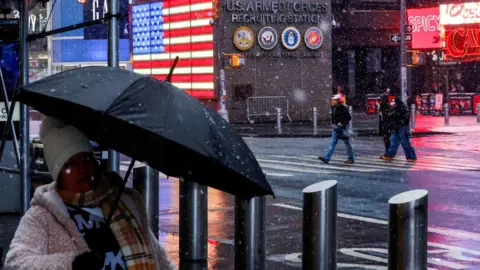
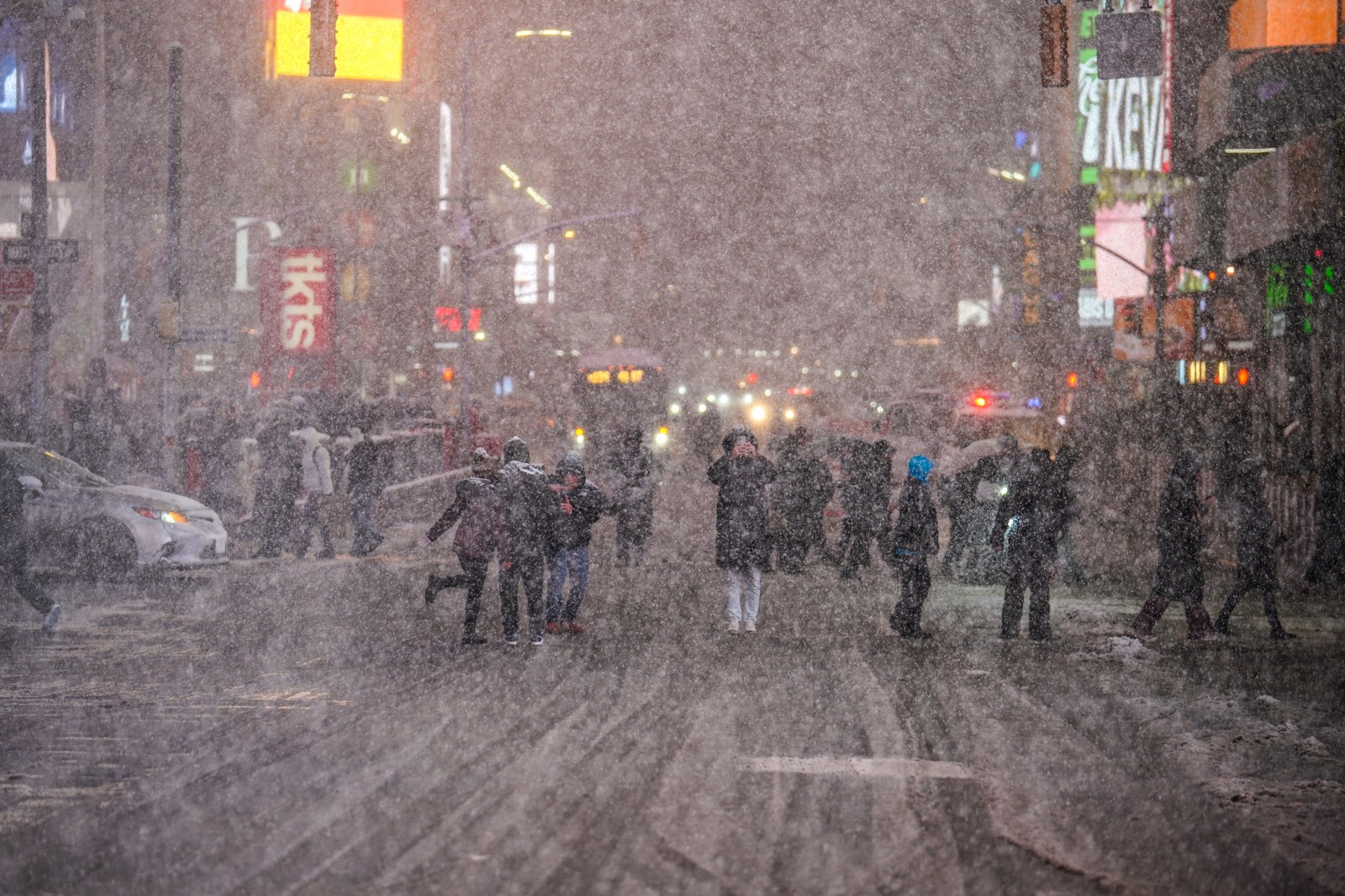 Image: NewsweekNEW YORK, NEW YORK – FEBRUARY 22: People admire the snow in Times Square on February 22, 2026 in New York City. A major winter storm is expected to hit the Northeast and Mid-Atlantic regions, bringing blizzard conditions with the potential for up to 23 inches of snow in New York City. A blizzard warning has been issued for large areas of the East Coast. (Photo by Ryan Murphy/Getty Images) Source Full size
 -
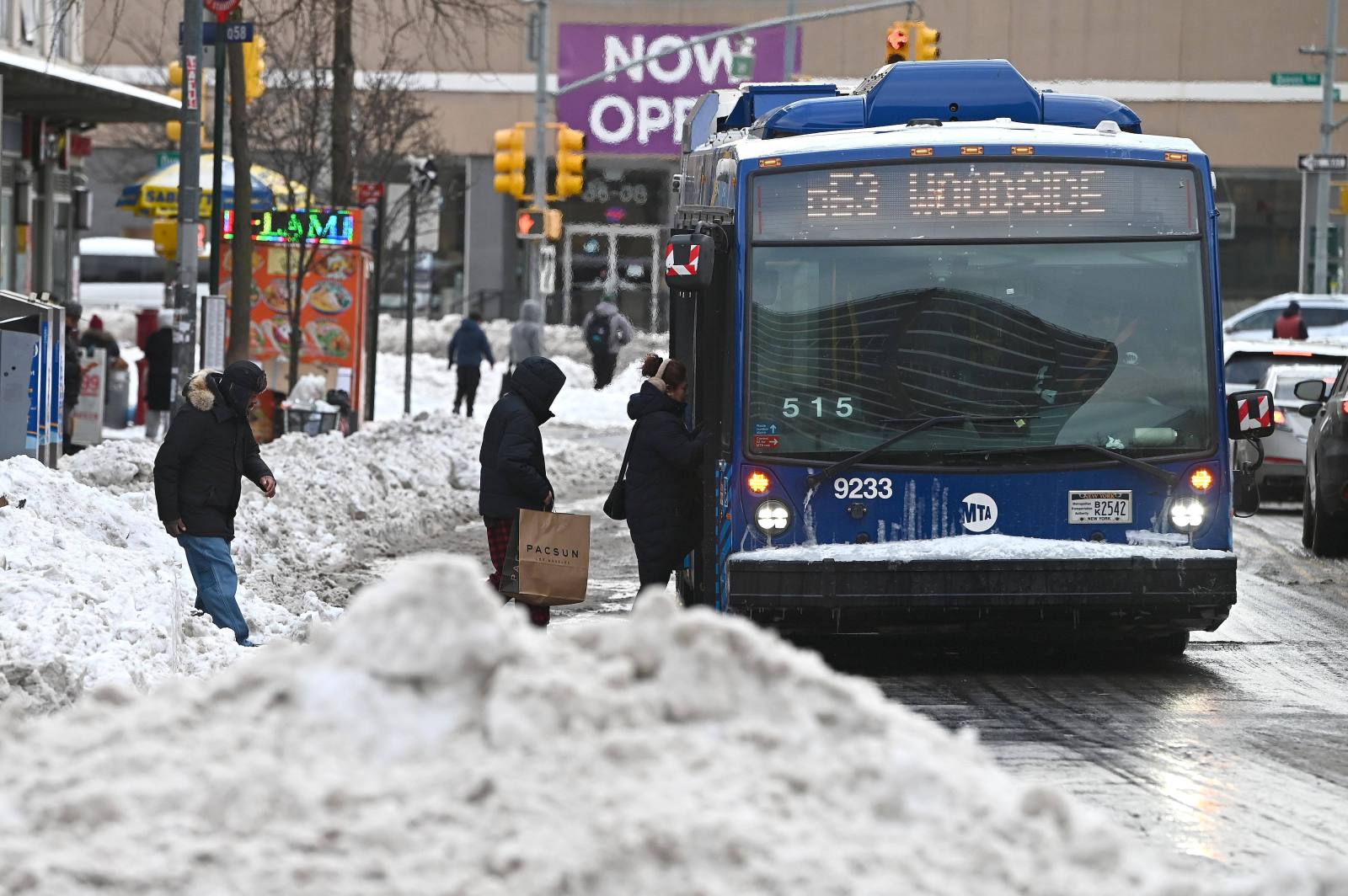 Image: NewsweekCommuters walk over berms of snow created by snow plows to board their bus in the New York City Borough of Queens, NY, January 26, 2026. New York City and it’s five boroughs saw more than 10 inches of snow fall at a rate of 1 to 2 inches per hour with freezing gusts of wind after a massive winter storm blanketed the US East Coast. (Photo by Anthony Behar/Sipa USA)(Sipa via AP Images) Source Full size
 -
Image: NewsweekNEW YORK, NEW YORK – FEBRUARY 22: People admire the snow in Times Square on February 22, 2026 in New York City. A major winter storm is expected to hit the Northeast and Mid-Atlantic regions, bringing blizzard conditions with the potential for up to 23 inches of snow in New York City. A blizzard warning has been issued for large areas of the East Coast. (Photo by Ryan Murphy/Getty Images) Source Full size
-
Image: NewsweekCommuters walk over berms of snow created by snow plows to board their bus in the New York City Borough of Queens, NY, January 26, 2026. New York City and it’s five boroughs saw more than 10 inches of snow fall at a rate of 1 to 2 inches per hour with freezing gusts of wind after a massive winter storm blanketed the US East Coast. (Photo by Anthony Behar/Sipa USA)(Sipa via AP Images) Source Full size
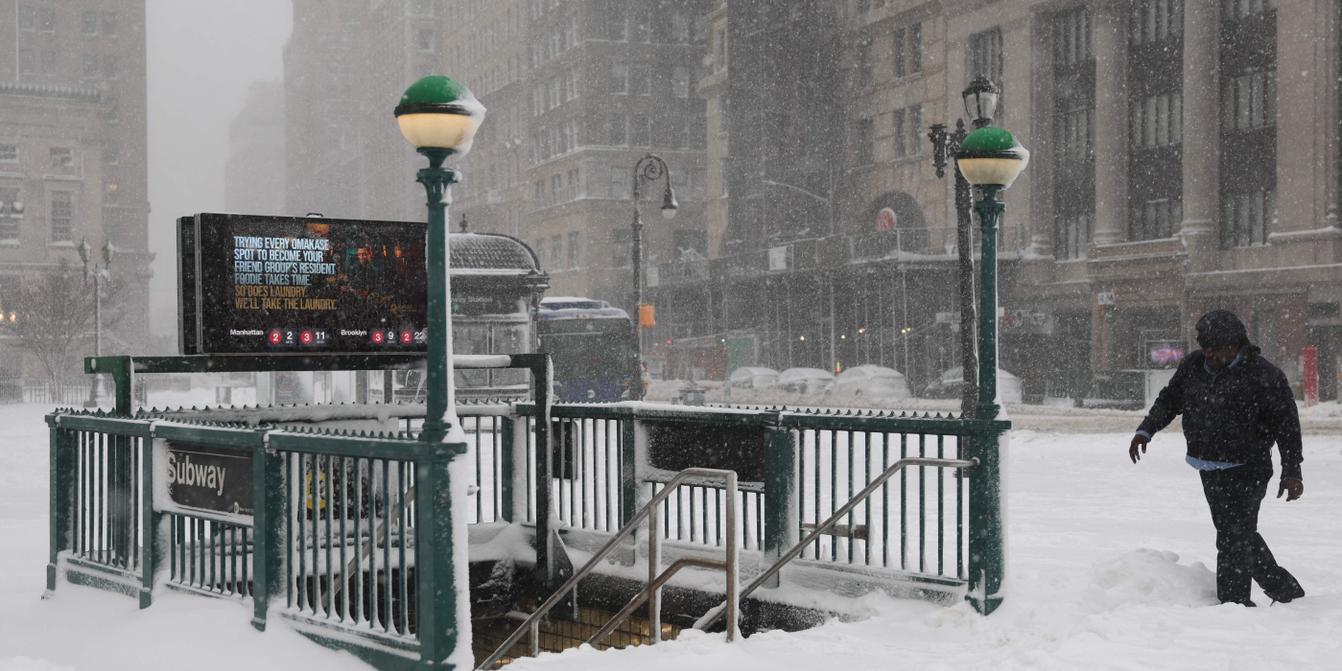
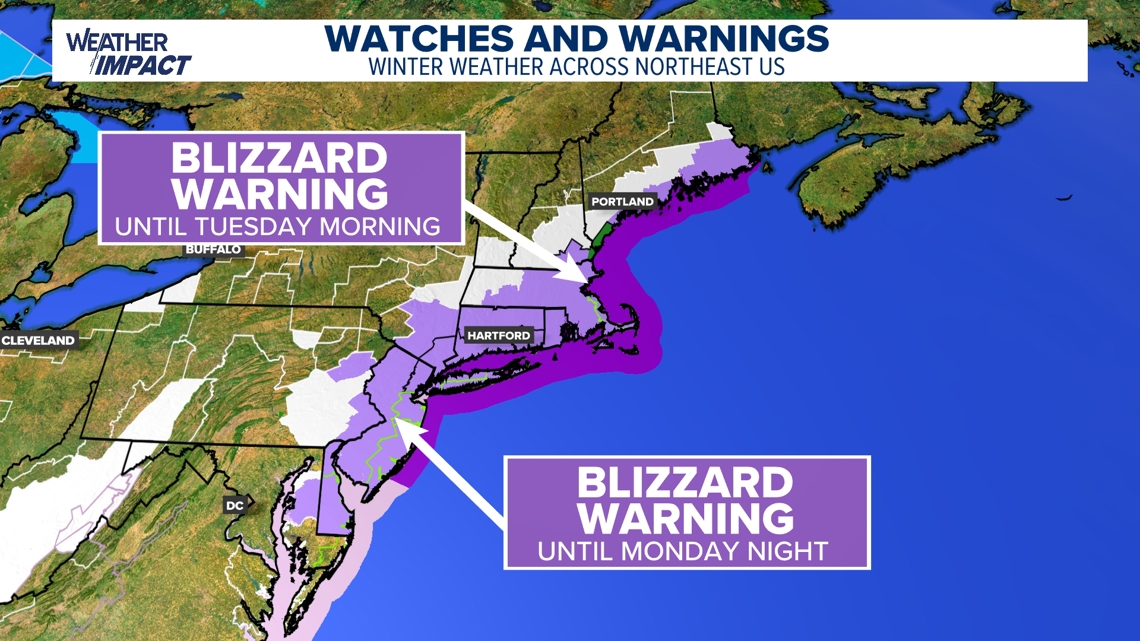
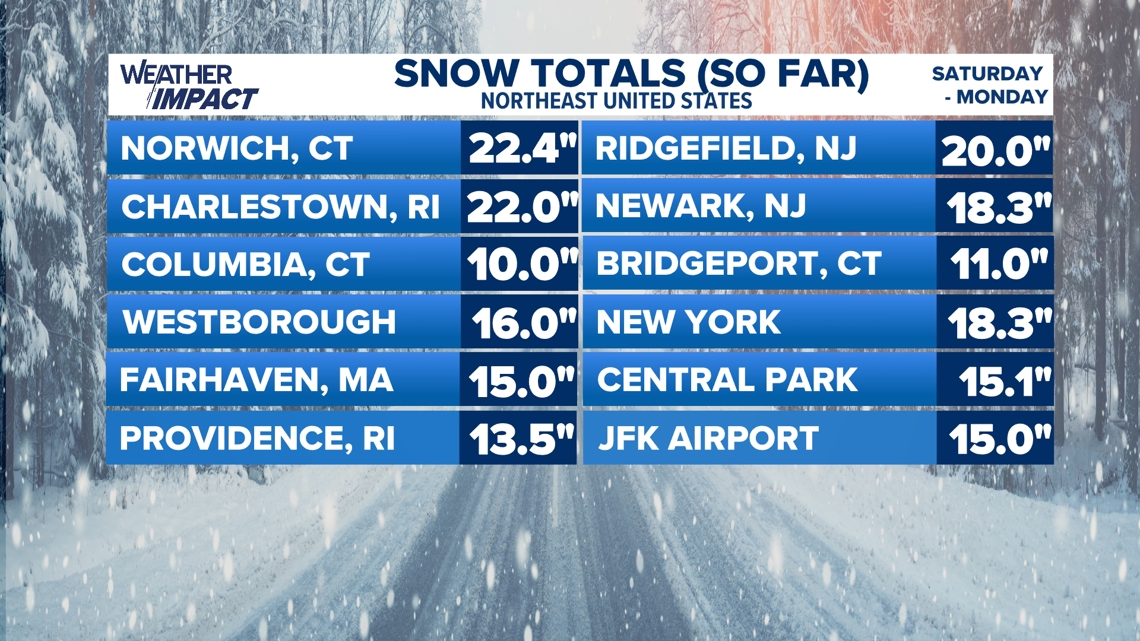
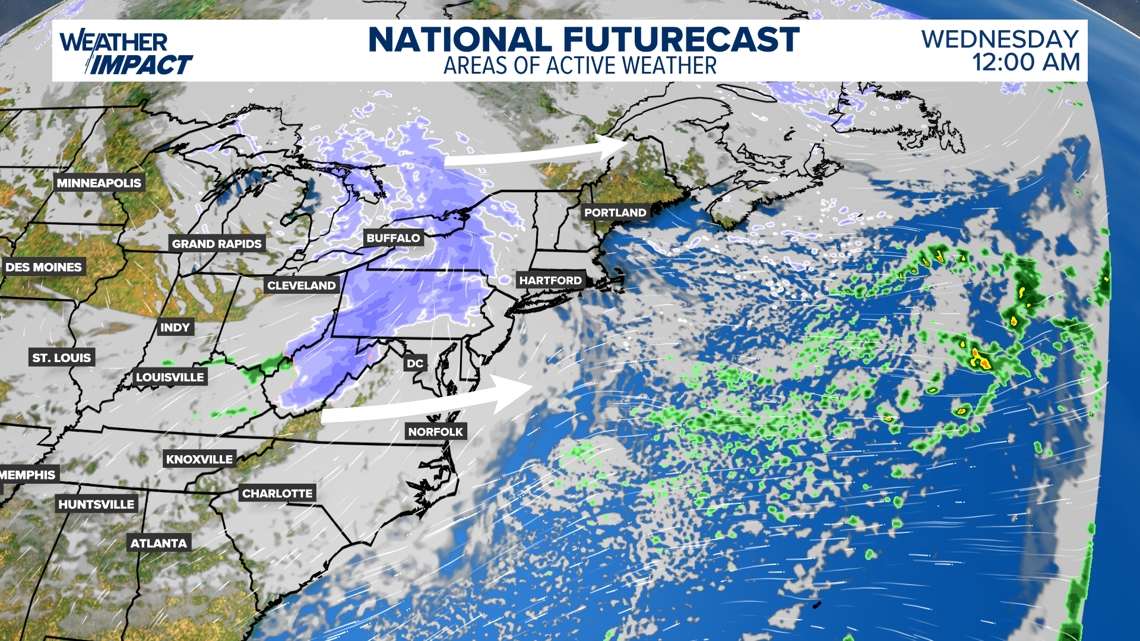

Record‑breaking snowfall blankets the Northeast The bomb cyclone dumped up to three feet of snow from Maryland to Maine, with Providence logging a historic 37.9 inches [1], New York City’s Central Park recording 19 inches [2][3], and Rhode Island seeing 36‑37 inches [2]. Meteorologists labeled the system a classic bomb cyclone/nor’easter, noting a 24‑mb pressure drop in 24 hours [6][12]. The storm produced hurricane‑strength gusts of 80‑85 mph in coastal areas [5][6]. No storm‑related fatalities were reported, though a prior January cold wave caused 18 deaths in New York [4].
Governors and mayors impose and then ease travel restrictions Massachusetts Governor Maura Healey, New York Governor Kathy Hochul, New Jersey Governor Mikie Sherrill, and Rhode Island officials all issued non‑essential travel bans and states of emergency [1][2][8][9][14]. By Monday evening, Connecticut lifted its commercial‑vehicle ban, New Jersey removed speed limits, and Massachusetts kept a non‑essential‑vehicle ban in four counties with a $500 fine [1]. New York City’s ban ended, though a hazardous travel advisory remained [1]. The Boston Globe cancelled its Tuesday print edition due to the storm’s impact [1].
Hundreds of thousands lose power as flights are grounded Power outages affected between 500,000 and 600,000 customers across the region, with Massachusetts alone reporting nearly 300,000 outages [2][3][4]. Flight cancellations topped 5,000 – 6,000 according to FlightAware, with some reports citing more than 10,000 U.S. flights canceled by Monday night [1][2][3][4][8]. Major airports in New York, Boston, Newark, Philadelphia, and T.F. Green saw cancellations exceeding 80 % of outbound flights [2][3][4][8]. The widespread loss of electricity and air service left millions stranded and forced schools and the United Nations headquarters to close [4][8].
Public‑transit systems shut down, limited service resumes The Long Island Rail Road suspended service on Monday, planning a limited restart at 4 a.m. Tuesday [1]. New Jersey Transit, Boston’s MBTA, and subway lines in New York experienced severe delays or full shutdowns [3][6][7]. DoorDash paused deliveries in New York City, and many bus routes were halted [3]. Crews continued snow removal and plowing, with over 2,000 sanitation workers and 2,600 plow operators on 12‑hour shifts in the city [9][11].
Forecasts converged on a historic blizzard, but numbers vary Early models diverged, yet by Saturday they agreed on a historic snowfall event, prompting rapid escalation of warnings [5][15]. The National Weather Service warned of 1–2 feet of snow with rates of 2–3 inches per hour, and projected an additional 1–2 feet by Tuesday morning [2][8]. Some outlets reported up to 90 cm (35 inches) in Providence and 83 cm (33 inches) at T.F. Green Airport [4][3]. Discrepancies remain in flight‑cancellation totals (5,600 vs. 10,000) and exact power‑outage counts, reflecting real‑time reporting differences.
Sources
-
1.
CNN: Northeast bomb cyclone weakens, travel bans ease after record snowfall: Details the storm’s exit, record snow totals, power outages, flight cancellations, and LIRR service resumption .
-
2.
BBC: US East Coast Storm Triggers Over 5,000 Flight Cancellations and Travel Bans: Highlights record snowfall in Providence, travel bans, 600,000 outages, and 5,706 flight cancellations .
-
3.
AP: Northeastern U.S. Hit by Decade‑Strong Snowstorm, Flights Canceled and Power Lost: Reports blizzard warnings, record snow and wind, 5,600+ flight cancellations, and 500,000 outages .
-
4.
Le Monde: Northeast U.S. hit by rare snowstorm, 40 million face extreme conditions: Emphasizes 90 cm snow, eight governors’ emergencies, 570,000 outages, and 6,000+ flight cancellations .
-
5.
CNN: Blizzard Forecast Chaos Shifts to Clarity in Under 48 Hours: Describes forecast model convergence, hurricane‑like winds, and emergency measures before the storm .
-
6.
King5: Nor'easter Dumps Up to Two Feet of Snow Across Northeast, Triggers Widespread Disruptions: Focuses on bombogenesis, 1–2 ft snow, thousands of flight cancellations, and ongoing restoration .
-
7.
Newsweek: New York City Blizzard: Social Media Shows City Under Deep Snow: Shows NYC street images, 2–3 in/hr snowfall, 17,000 outages, and mayoral travel ban .
-
8.
BBC: Historic Nor'easter Triggers Travel Ban and Widespread Outages in Northeast US: Covers record snowfall, 59 million under alerts, travel bans, and 5,500 flight cancellations .
-
9.
CNN: Zohran Mamdani imposes travel ban and snow day as historic blizzard hits NYC: Details NYC travel ban, school closures, plow deployment, and homeless aid .
-
10.
AP: East Coast Braces for Up to Two Feet of Snow as Blizzard Alerts Sweep Region: Reports early snowfall, emergency declarations, and travel bans before the storm .
-
11.
Newsweek: New York City Enforces Citywide Travel Ban as Historic Blizzard Approaches: Outlines travel ban exemptions, snow forecasts, and mobilized resources .
-
12.
CNN: Bomb Cyclone Nor’easter Triggers Blizzard Warnings Across New York, Northeast: Announces bomb cyclone formation, emergency declarations, and 6,000+ flight cancellations .
-
13.
AP: East Coast Braces for Blizzard‑Scale Snow and Winds: Highlights upgraded warnings, snowfall rates, and NYC resource deployment .
-
14.
Newsweek: Northeast Braces for Up to 18 Inches of Snow as Governors Declare Emergencies: Focuses on governor emergencies, blizzard warnings, and power‑outage risks .
-
15.
CNN: East Coast Winter Storm Forecast Shifts Toward Heavier Snow and Strong Winds: Tracks forecast evolution, scenario modeling, and bomb‑cyclone potential .
Timeline
Dec 8, 2025 – The National Weather Service issues a winter storm warning for central and southern West Virginia, forecasting 6‑9 inches of snow through 9 p.m. EST and urging motorists to slow down and monitor road conditions. [23]
Dec 16, 2025 – Meteorologists note a mid‑December jet‑stream shift that will smooth the flow, limiting further Arctic surges and setting the stage for a warmer‑than‑average Christmas across most of the U.S., while the Mountain West and Upper Midwest retain the highest chance of a white‑Christmas. [22]
Dec 17, 2025 – The Climate Prediction Center projects above‑average temperatures for most of the country over the holiday week, predicts snow chances in the intermountain West, northern New England and the Great Lakes, and highlights Dec 22‑23 as the best travel days for the 122 million expected holiday travelers. [21]
Dec 17, 2025 – A CPC outlook confirms that most of the nation will experience warmer‑than‑average conditions on Christmas, with only the far north near or below normal, and identifies the Mountain West, northern Plains and Upper Midwest as the primary white‑Christmas zones. [29]
Dec 23‑24, 2025 – Record‑warm Christmas weather grips the central U.S. (15‑30 °F above normal), while the Northeast sees light snow that transitions to rain; the First Alert Weather Team designates Dec 26 as a “First Alert Weather Day” due to expected travel delays during the holiday rush. [20]
Dec 24‑30, 2025 – AccuWeather forecasts a cold Northeast and lake‑effect snow on New Year’s Eve, with up to a foot of snow possible in parts of Michigan, Pennsylvania and New York, while California receives rain for the holiday celebrations. [19]
Dec 27‑28, 2025 – A winter storm collides with holiday travel demand across the Northeast and Great Lakes, prompting at least 1,500 flight cancellations, emergency declarations in New York and New Jersey, and power‑outage warnings as NYC records about 4 inches of snow. [28]
Jan 6, 2026 – The National Weather Service issues a Winter Storm Warning for Washington’s Cascade Range, projecting 2‑4 feet of mountain snow, 30‑40 mph wind gusts, and considerable avalanche danger, while lowland areas face heavy rain and wind advisories. [27]
Jan 21, 2026 – Texas receives statewide winter‑storm watches for heavy snow, sleet and ice, marking the first substantial winter event of the season; forecasters warn that 4‑10 inches of accumulation and single‑digit wind chills could threaten power lines, livestock and unprotected pipes. [18]
Jan 23, 2026 – A sprawling winter storm triggers broad NWS warnings across many states, with up to 17 inches forecast in Pennsylvania (10‑17 inches) and lake‑effect bands delivering 8‑16 inches near the Great Lakes, prompting officials to advise residents to stay home and stock supplies. [17]
Jan 24, 2026 – The National Weather Service warns that an “extremely dangerous” winter storm will begin Friday, bringing more than a foot of snow from Colorado to Boston, wind chills down to –15 °F, and sub‑zero Arctic air that could linger for a week; governors in 16 states declare emergencies and mobilize National Guard resources. [3]
Jan 24, 2026 – NWS travel advisories urge millions to avoid travel as heavy snow, sleet and up to an inch of ice threaten the Central U.S. to the Northeast, recommending emergency kits and cautioning that power outages could become widespread. [16]
Jan 25, 2026 – Massive winter‑storm alerts cover roughly 2,000 miles, placing 180 million people under ice‑and‑snow warnings and 210 million under cold‑weather advisories; live webcams stream the storm’s impacts nationwide. [15]
Jan 25, 2026 – DHS Secretary Kristi Noem calls the storm “the largest multi‑state storm in decades,” noting that it blankets about 40 % of the U.S. with snow, sleet and ice, with NOAA reporting up to 31 inches in Texas and 23 inches in Colorado. [12]
Jan 25, 2026 – The historic winter system spreads heavy snow (6‑12 inches) and damaging ice across the Plains, Ohio Valley, Mid‑Atlantic and Northeast, driving record‑breaking cold and leaving hundreds of thousands without power. [13]
Jan 25, 2026 – Photo‑journalists document the monster storm’s effects from Texas to Oklahoma, showing frozen doors, snow‑cleared sidewalks and shoppers stockpiling water, while major airports struggle with de‑icing and delayed flights. [14]
Jan 26, 2026 – A series of clipper storms follows Winter Storm Fern, delivering 1‑6 inches of additional snow to 14 states from Minnesota to Maine; Fern had already left 12‑18 inches on the ground and caused nine deaths. [11]
Jan 27, 2026 – A massive winter storm sweeps from Texas to Maine, dumping over 20 inches of snow in parts of the Northeast, causing 500,000+ power outages, canceling more than 6,000 flights, and killing at least 20 people; forecasters warn of another major storm potentially arriving Friday. [4]
Feb 21, 2026 – Governors of New York and New Jersey declare emergencies ahead of a forecasted 12‑18‑inch snow event, the NWS issues blizzard warnings for six states, and the New York National Guard stages 100 Guard members across Long Island, NYC and the Hudson Valley. [10]
Feb 22, 2026 – A nor’easter rapidly intensifies into a bomb cyclone off the Eastern Seaboard, prompting emergency declarations in New Jersey, New York (22 counties) and Philadelphia, while NYC mobilizes over 2,000 plows, opens 40 warming centers and expands Code Blue for the homeless. [9]
Feb 22, 2026 – Mayor Zohran Mamdani imposes a travel ban from Sunday night to Monday noon, cancels all public‑school classes with no remote learning, suspends ferry service, and deploys more than 2,000 snow plows and 2,600 sanitation workers on 12‑hour shifts. [8]
Feb 23, 2026 – A historic nor’easter triggers statewide travel bans, shuts down NYC streets and bridges, closes schools, and forces the first blizzard warning in nine years for the city, while power outages affect over 17,000 customers across the five boroughs. [2]
Feb 23, 2026 – Forecasters note that model divergence resolves within 48 hours, leading to a rapid escalation of snowfall and wind forecasts (up to 84 mph gusts, >2 ft snow) and prompting airlines to cancel thousands of flights and governors to issue emergency measures. [6]
Feb 23, 2026 – Social‑media footage shows NYC buried under snow as the Weather Prediction Center warns of 2‑3 inches per hour and up to 2 feet total, while Mayor Mamdani bans non‑essential travel and the National Guard remains activated. [7]
Feb 23, 2026 – A rare snowstorm slams the Northeast, delivering up to 90 cm of snow, 90 km/h winds and white‑out conditions; eight governors declare emergencies, 570 000 households lose power, and more than 6 000 flights are canceled, though no storm‑related deaths occur. [30]
Feb 24, 2026 – The East‑Coast storm continues, with the National Weather Service warning of an additional 1‑2 ft of snow for coastal areas into Tuesday morning, while Rhode Island, Connecticut and southeastern Massachusetts enforce non‑essential travel bans and power outages affect nearly 600 000 customers. [1]
Dive deeper (24 sub-stories)
-
CNN: Northeast bomb cyclone weakens, travel bans ease after record snowfall
-
BBC: US East Coast Storm Triggers Over 5,000 Flight Cancellations and Travel Bans
-
Record‑Breaking Northeastern Snowstorm Cancels Thousands of Flights and Cuts Power to 500,000
(11 articles)
-
Historic Nor'easter Dumps Up to Two Feet of Snow, Triggers Travel Bans and Massive Flight Cancellations Across the Northeast
(9 articles)
-
Historic Northeast Blizzard Forecast Aligns Within 48 Hours, Prompting Rapid Emergency Actions
(2 articles)
-
Mayor Zohran Mamdani Enforces Travel Ban, Closes Schools, Mobilizes Emergency Plows Amid Historic NYC Blizzard
(2 articles)
-
East Coast Braces for Blizzard‑Scale Snow, High Winds as Storm Hits Sunday
(5 articles)
-
Winter Weather Warning Brings Up to Seven Inches of Snow Across Four States
(15 articles)
-
Winter Storm Dumps Up to 12 Inches of Snow Across 14 States, Near‑Whiteout Conditions Expected
(2 articles)
-
Winter Storm Warnings Target Over One Million Residents as Snow and Ice Threaten Power Grid
(2 articles)
-
Death Toll Hits Thirty as Winter Storm Fern Intensifies and New Clip‑Series Looms
(2 articles)
-
Winter Storm of Jan 25‑26, 2026 Paralyzes U.S., Sparks Snow‑Covered Urban Scenes
(2 articles)
-
Massive Winter Storm Blankets 40% of U.S., Triggers Power Outages and Federal Declarations
(25 articles)
-
Newsweek: Avalanches Block Pennsylvania Road as Winter Storm Ferm Sweeps U.S.
-
Winter Storm Sweeps U.S., Alerts Cover 2,000 Miles, 390 Million Affected
(3 articles)
-
Trump Claims FEMA Ready as Winter Storm Fern Threatens Half U.S. Population
(3 articles)
-
Winter Storm Warning Brings Up to 3 Feet Snow and 40‑Mph Winds Across Eight States
(7 articles)
-
AP: Ice, sleet and snow on Jan. 7 force New England school closures and hazardous travel
-
Cold Arctic Air Hits Northeast While California Braces for New Year’s Eve Rain
(7 articles)
-
Winter Storm Warnings Sweep Ten States, Alaska Braces for Up to 45 Inches
(2 articles)
-
Post‑Christmas Storm Brings Freezing Rain, Snow and Travel Hazards Across Great Lakes Region
(6 articles)
-
Newsweek: Winter storm warnings spread across U.S. with up to 3 feet forecast
-
Winter Storm Warning Extends Through Thursday, Up to 20 Inches Predicted in Colorado Mountains
(2 articles)
-
Dec 2 2025 Nor’easter Brings First Seasonal Snow, Fatalities and State Emergencies
(2 articles)
All related articles (114 articles)
-
CNN: Northeast bomb cyclone weakens, travel bans ease after record snowfall
-
BBC: US East Coast Storm Triggers Over 5,000 Flight Cancellations and Travel Bans
-
AP: Northeastern U.S. Hit by Decade‑Strong Snowstorm, Flights Canceled and Power Lost
-
Le Monde: Northeast U.S. hit by rare snowstorm, 40 million face extreme conditions
-
CNN: Blizzard Forecast Chaos Shifts to Clarity in Under 48 Hours
-
King5 (Seattle, WA): Nor'easter Dumps Up to Two Feet of Snow Across Northeast, Triggers Widespread Disruptions
-
Newsweek: New York City Blizzard: Social Media Shows City Under Deep Snow
-
BBC: Historic Nor'easter Triggers Travel Ban and Widespread Outages in Northeast US
-
CNN: Zohran Mamdani imposes travel ban and snow day as historic blizzard hits NYC
-
AP: East Coast Braces for Up to Two Feet of Snow as Blizzard Alerts Sweep Region
-
Newsweek: New York City Enforces Citywide Travel Ban as Historic Blizzard Approaches
-
CNN: Bomb Cyclone Nor’easter Triggers Blizzard Warnings Across New York, Northeast
-
AP: East Coast Braces for Blizzard‑Scale Snow and Winds
-
Newsweek: Northeast Braces for Up to 18 Inches of Snow as Governors Declare Emergencies
-
CNN: East Coast Winter Storm Forecast Shifts Toward Heavier Snow and Strong Winds
-
Newsweek: Winter Storm Watches Issue Alerts for West Virginia, Maryland and Pennsylvania
-
Newsweek: Winter Weather Warning Brings Up to Seven Inches of Snow Across Four States
-
Newsweek: Winter Weather Warning Brings Up to 7 Inches of Snow Across Eight States
-
Newsweek: Winter Storm Brings Up to 12 Inches of Snow and Near‑Whiteout Conditions Across 14 States
-
Newsweek: Winter Storm Warning Issued for Over 1 Million People
-
Newsweek: Winter Storm Warning Brings Snow, High Winds to Michigan, Alaska and New York
-
Newsweek: Death Toll Climbs as Winter Storm Fern Sweeps U.S.
-
BBC: Winter Storm Sweeps U.S. and Canada, Leaving Dozens Dead and Massive Disruptions
-
Newsweek: New Clip‑Series of Snowstorms Set to Blanket 14 States
-
AP: Winter Storm Paralyzes U.S., Sparks Snow‑Covered Scenes on Jan 25, 2026
-
WBNS (Columbus, OH): Massive Winter Storm Blankets 40% of U.S. with Snow, Ice and Sleet
-
King5 (Seattle, WA): Massive Winter Storm Dumps Snow, Ice and Sleet Across 40% of U.S.
-
AP: Massive Winter Storm Sweeps U.S., Triggers Power Outages and Travel Chaos
-
Newsweek: Avalanches Block Pennsylvania Road as Winter Storm Ferm Sweeps U.S.
-
CNN: Historic U.S. Winter Storm Spreads Snow, Ice and Power Outages
-
AP: Monster Winter Storm Sweeps Across the United States, Photo Gallery Shows Impacts
-
WBNS (Columbus, OH): Massive Winter Storm Triggers Nationwide Alerts and Live Webcams
-
King5 (Seattle, WA): Massive Winter Storm Triggers Nationwide Alerts, Millions Under Warnings
-
Newsweek: Travel Warnings Affect Millions of Americans Amid Winter Storms
-
BBC: US braces for ‘extremely dangerous’ winter storm
-
Newsweek: Trump Comments as Winter Storm Fern Hits Half of U.S.
-
AP: Winter Storm Threatens Half of U.S. with Snow, Ice, and Power Outages
-
CNN: NYC Mayor Zohran Mamdani Prepares for First Snowstorm Test
-
WBNS (Columbus, OH): Winter Storm Severity Index flags ice risk across South, Texas and DC area as weekend storm nears
-
King5 (Seattle, WA): Ice-heavy winter storm flagged by WSSI as South faces major impacts
-
Newsweek: Dire Warning as Major Ice Storm Threatens Millions
-
WBNS (Columbus, OH): Winter storm bears down on half the U.S., bringing snow, ice and power-outage risk
-
King5 (Seattle, WA): Winter storm bears down on half the U.S., bringing snow, ice and widespread outages
-
Newsweek: Winter Storm Triggers Broad Warnings as Snow Reaches Up to 17 Inches
-
AP: Nationwide ice storm prep escalates as forecasts warn of heavy snow and outages
-
CNN: Massive winter storm to blanket 1,500-mile swath from Plains to Northeast
-
WBNS (Columbus, OH): Huge US winter storm threatens crippling ice, snow from Texas to Boston
-
AP: Eastern U.S. braces for severe ice storm with potential outages and extreme cold
-
Newsweek: Winter Storm Fern Could Halt Travel for Days, Officials Urge Preparations
-
Newsweek: Winter Storm Fern Prompts Wide U.S. Winter Watch for Long-Duration Ice and Snow
-
Newsweek: Winter storm warnings issued as up to 3 feet of snow and 40 mph winds threaten eight states
-
CNN: Winter storm to lash more than two dozen states with ice and heavy snow
-
Newsweek: Texas Braces for Expansive Winter Storm With Life-Threatening Cold
-
Newsweek: Forecasters issue update as major winter storm looms
-
Newsweek: Winter Storm Fern Could Bring Catastrophic Ice Across Dozens of Cities
-
AP: Ice storm threatens southern states as Arctic air meets Gulf moisture
-
WBNS (Columbus, OH): Major winter storm to blast the South with ice and snow through Sunday
-
King5 (Seattle, WA): Major winter storm to blanket South with rain, snow and ice from Texas to the Carolinas
-
Newsweek: Winter Storm Warning Forecasts Up to Four Feet of Snow Across Several States
-
Newsweek: Winter storm disrupts hundreds of NYC flights as warnings ease
-
Newsweek: Lake-Effect Snow Triggers Winter Storm Warnings Across Wisconsin, Michigan and Alaska
-
Newsweek: Winter storm warning issued for Indiana and Michigan as lake-effect snow nears
-
Newsweek: Winter storm warnings across three states forecast up to 9 inches of snow
-
AP: Ice, sleet and snow on Jan. 7 force New England school closures and hazardous travel
-
Newsweek: Winter storm warnings issued for Oregon, Washington, Idaho and Alaska with up to 24 inches expected
-
King5 (Seattle, WA): National Weather Service issues Winter Storm Warning as heavy snow and high winds head for the Cascades
-
Newsweek: NWS issues winter-storm warnings for five states as up to 35 inches of snow and high winds are forecast
-
Newsweek: Winter storm warning expands with up to 18 inches forecast across four states
-
Newsweek: New Year’s Day winter storm could bring up to 4 feet of snow across six states
-
Newsweek: Lake-effect snow warnings issued in multiple states after intense cyclone
-
Newsweek: Winter Storm Warning Issued as 20 Inches of Snow Expected, Life-Threatening Conditions
-
Newsweek: AccuWeather forecast shows cold Northeast, rain in California for New Year’s Eve
-
Newsweek: Forecast map shows states facing multi-hazard winter storm
-
AP: Winter storm sweeps across US with snow, ice and severe weather
-
Newsweek: Winter storm brings tornado risk, blizzard conditions across Midwest as it moves toward Great Lakes
-
CNN: Snowstorm snarls travel at NYC-area airports as next storm looms
-
BBC: New York snowstorm triggers state of emergency as travel chaos unfolds
-
The Hindu: Northeast winter storm causes thousands of flight delays and cancellations
-
AP: Winter storm disrupts travel across US Northeast, Great Lakes
-
King5 (Seattle, WA): Winter storm snarls holiday travel across US Northeast and Great Lakes
-
Newsweek: Massive Snow Totals Hit New York and California in 24 Hours, Prompting Travel Disruptions and Emergency Declarations
-
WBNS (Columbus, OH): Winter storm snarls holiday travel across US Northeast and Great Lakes
-
Newsweek: Winter storm warnings blanket the U.S. as up to 18 inches of snow threaten travel
-
Newsweek: Winter Storm Slams Northeast as State of Emergency Declared
-
Newsweek: Post-Christmas Winter Storm Threatens Travel Across Great Lakes, Northeast
-
Newsweek: Winter storm warnings spread across U.S. with up to 3 feet forecast
-
Newsweek: Northeast snowstorm could bring up to 10 inches ahead of Christmas weekend; storm watch active
-
Newsweek: Winter Weather Alerts Across 13 States on Christmas Day Bring Heavy Snow
-
Newsweek: Winter storm and record warmth collide with Christmas travel as the nation braces for disruptions
-
Newsweek: NWS issues advisories as Northeast braces for wintry storm ahead of Christmas
-
Newsweek: Severe thunderstorm warnings issued for New York, New Jersey, and Pennsylvania
-
Newsweek: Winter storm warnings issued for five states with up to three feet of snow through Saturday
-
WBNS (Columbus, OH): Early forecast shows warmer Christmas with limited snow chances across most of the U.S.
-
King5 (Seattle, WA): Most of the U.S. expected to be warmer than normal around Christmas, with scattered snow chances
-
CNN: White‑Christmas outlook shifts as jet stream smooths mid‑December
-
Newsweek: Major Weather Shift Expected for California Over Christmas
-
AP: Weekend Storm Brings Snow to Northeast, Sub‑Zero Cold to Midwest
-
Newsweek: Winter Storm Map Shows States Getting Snow This Weekend
-
Newsweek: Winter Storm Warnings Issued Across 13 States Amid Heavy Snow and Icing
-
Newsweek: Extreme Cold Weather Warning as Wind Chill Plunges to Minus 50°F
-
Newsweek: Winter Storm Warnings Bring Up to 20 Inches of Snow and Avalanche Risk
-
Newsweek: Winter Storm Forecast: Widespread Snow From Northern Plains to Northeast, Wyoming Up to Two Feet
-
Newsweek: Winter Weather Live Tracker: Nine-State Storm and Polar Vortex Bring Heavy Snow and Extreme Cold
-
Newsweek: Winter Storm Warning as Up to 9 Inches of Snow Could Hit West Virginia
-
Newsweek: Winter storm warnings issued across six states with heavy snowfall expected
-
Newsweek: Winter Storm Map Projects Snow and Ice Across Central and Eastern U.S. This Week
-
Newsweek: Winter Storm Warning Issued for Colorado and New Mexico Until Thursday
-
Newsweek: Winter Storm Warning: Up to 17 Inches of Snow Across Multiple States
-
Newsweek: Winter Storm Continues to Impact Northeast, Snowfall Begins in New York and Pennsylvania
-
CNN: Winter storm delivers first widespread snow of season to the Northeast
-
AP: Northeast Prepares for First Major Snowstorm of the Season
-
AP: Northeast Prepares for First Major Snowstorm While Midwest Faces O'Hare Delays
-
Newsweek: Winter Storm Forecast: 6+ Inches of Snow Expected Across Mid‑Atlantic and Northeast
-
WBNS (Columbus, OH): Winter Weather Terms and Alerts Explained (Updated Nov 24, 2025)
External resources (121 links)
- https://forecast.weather.gov/wwamap/wwatxtget.php?cwa=usa&wwa=Winter%20Storm%20Warning (cited 24 times)
- https://forecast.weather.gov/wwamap/wwatxtget.php?cwa=usa&wwa=Winter%20Weather%20Advisory (cited 8 times)
- https://www.weather.gov/ (cited 6 times)
- https://www.wpc.ncep.noaa.gov/discussions/nfdscc3.html (cited 4 times)
- https://water.noaa.gov/#@=-115.0455089,51.7807296,4.7792338&b=topographic&g=obsFcst,0!0!0!0!0!0!0!0!0!0!1!1!1!1!0!0!0!0!0!0,0.5,1!1!1!1!0,0,0,false&ab=0,0,#D94B4A,1,1,1,#cccccc,1,0,0,#B243B1,1,0,0,#98E09A,1,false&a=hide,0.35,false&s=0,0,0.9,0.9,false&n=false,#72afe9,0.9,0,0.9,0,0.9,false&p=false,0.75,0,7,0,1,2025,12,10,0,false&d=1,1,1,1,1,1,1,1,#006EFF,1,#006EFF,1,#006EFF,true&q= (cited 3 times)
- https://dot.nj.gov/transportation/uploads/comm/news/details/comm_np_20260223_160711_CommercialVehicleTravelRestrictionand35mphrestrictionLIFTEDat5pmtodayMonFeb23.pdf (cited 2 times)
- https://news.delaware.gov/2026/02/23/level-1-driving-warning-lifted-for-new-castle-county/ (cited 2 times)
- https://portal.ct.gov/governor/news/press-releases/2026/02-2026/governor-lamont-terminates-emergency-order-prohibiting-commercial-vehicle-travel?language=en_US (cited 2 times)
- https://suffolkcountyny.gov/News/ArtMID/583/ArticleID/14489 (cited 2 times)
- https://www.cpc.ncep.noaa.gov/products/predictions/610day/ (cited 2 times)
- https://www.mass.gov/doc/south-coast-travel-ban-eo/download (cited 2 times)
- https://www.mshp.dps.missouri.gov/HP68/AccidentDetailsAction?ACC_RPT_NUM=250550887 (cited 2 times)
- https://www.ncei.noaa.gov/news/coldest-day-of-the-year (cited 2 times)
- https://www.weather.gov/forecast (cited 2 times)
- https://www.weather.gov/gsp/winter (cited 2 times)
- https://www.weather.gov/lwx/warningsdefined#Winter%20Storm%20Watch (cited 2 times)
- https://www.weather.gov/lzk/ (cited 2 times)
- https://www.wpc.ncep.noaa.gov/discussions/hpcdiscussions.php?disc=pmdspd (cited 2 times)
- https://www.wpc.ncep.noaa.gov/wwd/wssi/wssi.php (cited 2 times)
- https://forecast.weather.gov/showsigwx.php?warnzone=WAZ310&warncounty=WAC073&firewxzone=WAZ656&local_place1=4%2520Miles%2520NE%2520Bellingham%2520International%2520Airport%2520WA&product1=Wind+Advisory&lat=48.8243&lon=-122.4718 (cited 1 times)
- https://forecast.weather.gov/wwamap/wwatxtget.php?cwa=CYS&wwa=winter%20storm%20warning (cited 1 times)
- https://forecast.weather.gov/wwamap/wwatxtget.php?cwa=OKX&wwa=blizzard%20warning (cited 1 times)
- https://forecast.weather.gov/wwamap/wwatxtget.php?cwa=SEW&wwa=winter%2520storm%2520warning (cited 1 times)
- https://forecast.weather.gov/wwamap/wwatxtget.php?cwa=usa&wwa=Freeze%20Warning (cited 1 times)
- https://forecast.weather.gov/wwamap/wwatxtget.php?cwa=usa&wwa=Lake%20Effect%20Snow%20Warning (cited 1 times)
- https://forecast.weather.gov/wwamap/wwatxtget.php?cwa=usa&wwa=Winter%20Storm%20Watch (cited 1 times)
- https://nasstatus.faa.gov/ (cited 1 times)
- https://wsdot.com/travel/real-time/mountainpasses/Blewett (cited 1 times)
- https://wsdot.com/travel/real-time/mountainpasses/Cayuse (cited 1 times)
- https://wsdot.com/travel/real-time/mountainpasses/Chinook (cited 1 times)
- https://wsdot.com/travel/real-time/mountainpasses/Crystal-to-Greenwater (cited 1 times)
- https://wsdot.com/travel/real-time/mountainpasses/Mt.-Baker (cited 1 times)
- https://wsdot.com/travel/real-time/mountainpasses/North-Cascade-Hwy (cited 1 times)
- https://wsdot.com/travel/real-time/mountainpasses/Snoqualmie (cited 1 times)
- https://wsdot.com/travel/real-time/mountainpasses/Stevens (cited 1 times)
- https://wsdot.com/travel/real-time/mountainpasses/White (cited 1 times)
- https://www.climate.gov/news-features/understanding-climate/interactive-map-are-you-dreaming-white-christmas (cited 1 times)
- https://www.governor.ny.gov/news/ahead-new-years-holiday-governor-hochul-urges-new-yorkers-exercise-caution-severe-winter (cited 1 times)
- https://www.governor.ny.gov/news/governor-hochul-urges-caution-ahead-post-holiday-snowfall (cited 1 times)
- https://www.tsa.gov/news/press/releases/2025/12/22/tsa-prepares-for-holiday-travel-season-cap-record-year (cited 1 times)
- https://www.weather.gov/lwx/warningsdefined#:~:text=A%20Winter%20Storm%20Watch%20is,only%20means%20it%20is%20possible. (cited 1 times)
- https://www.weather.gov/lwx/warningsdefined#:~:text=A%20Winter%20Weather%20Advisory%20will,enough%20to%20warrant%20a%20warning. (cited 1 times)
- https://www.weather.gov/media/okx/Climate/CentralPark/BiggestSnowstorms.pdf (cited 1 times)
- https://www.weather.gov/safety/winter-lake-effect-snow (cited 1 times)
- https://www.wsdot.com/traffic/passes/ (cited 1 times)
- https://nwac.us/avalanche-forecast/#/all/ (cited 1 times)
- https://www.cps.edu/media/community-updates/2026/january/classes-canceled-january-23/ (cited 1 times)
- https://x.com/NWSWPC/status/2004313247806050317 (cited 4 times)
- https://x.com/NWSWPC/status/2004476083790659723/photo/1 (cited 4 times)
- https://www.facebook.com/nytransitmuseum/posts/1327315179424421?ref=embed_post (cited 3 times)
- https://x.com/CentralPierce (cited 3 times)
- https://x.com/NWS/status/1998433730055086170 (cited 3 times)
- https://x.com/NWSCPC (cited 3 times)
- https://x.com/NWSChicago/status/1998141579182191013/photo/1 (cited 3 times)
- https://x.com/OneJerseySchorr (cited 3 times)
- https://www.facebook.com/hockingcommissioners/ (cited 2 times)
- https://www.facebook.com/photo/?fbid=1315737917257130&set=a.647464897417772 (cited 2 times)
- https://www.facebook.com/share/p/17YDkLuULD/ (cited 2 times)
- https://x.com/BostonGlobe/status/2026100362227106064 (cited 2 times)
- https://x.com/CityOfBoston/status/2026081639265165485?s=20 (cited 2 times)
- https://x.com/LIRR/status/2026072966618816783 (cited 2 times)
- https://x.com/MassDOT/status/2026064385169330452?s=20 (cited 2 times)
- https://x.com/NJTRANSIT/status/2026145124489499092 (cited 2 times)
- https://x.com/NWSCLE/status/1995893102620352798 (cited 2 times)
- https://x.com/NYCMayor/status/2026027180665315733?s=20 (cited 2 times)
- https://x.com/NYPDPC/status/2026128921905803638 (cited 2 times)
- https://x.com/NewHampshireDOT/status/2025909859078611198 (cited 2 times)
- https://x.com/sidetalknyc?lang=en (cited 2 times)
- https://www.facebook.com/MetroSchools/photos/meet-dolly-plowton-music-city-plow-blizzard-of-oz-snowella-and-frosty-the-snow-p/1337230701778613/ (cited 1 times)
- https://www.facebook.com/WatertownInternationalAirport/photos/brrr-%EF%B8%8F%EF%B8%8F-its-official-the-us-national-weather-service-buffalo-ny-confirmed-a-new-/1319894566832934/ (cited 1 times)
- https://x.com/GovKathyHochul/status/2025716110109151651 (cited 1 times)
- https://x.com/GregAbbott_TX/status/2015457545045905443 (cited 1 times)
- https://x.com/NWSBurlington/status/1995419357883613443 (cited 1 times)
- https://x.com/NWSGray/status/1994796391797838021 (cited 1 times)
- https://x.com/NWSNewYorkNY/status/2025511507555930540 (cited 1 times)
- https://x.com/NWSPittsburgh/status/1995421973837730025 (cited 1 times)
- https://x.com/NWSWPC/status/1995225345436561879/photo/1 (cited 1 times)
- https://x.com/NWSWPC/status/1996207764948103310 (cited 1 times)
- https://x.com/NWSWPC/status/1997530324247482505 (cited 1 times)
- https://x.com/NWSWPC/status/1999476989129056694/photo/1 (cited 1 times)
- https://x.com/NWSWPC/status/2013925322689749471 (cited 1 times)
- https://x.com/NWSWPC/status/2014266494276776000/photo/1 (cited 1 times)
- https://x.com/NWSWPC/status/2025671575098323095 (cited 1 times)
- https://x.com/NYCMayor/status/2025570017362776085 (cited 1 times)
- https://x.com/NYCMayor/status/2025649162646380713 (cited 1 times)
- https://x.com/NYCSanitation/status/2025767262578151583 (cited 1 times)
- https://poweroutage.us/ (cited 4 times)
- https://www.flightaware.com/live/cancelled/ (cited 3 times)
- https://www.flightaware.com/live/cancelled/tomorrow (cited 3 times)
- http://Winter%20Storm%20Severity%20Index%20-%20Effective%20From%20Fri,%20Jan%2023,%202026%2007%20AM%20ET%20Through%20Mon,%20Jan%2026,%202026%2007%20AM%20ET%20Last%20Updated:%20Friday%20January%2023,%202026%2007:13%20AM%20ET%20%20Map%20data%20%C2%A9%20OpenStreetMap%20contributors,%20CC-BY-SA%20%20Change%20image%20opacity:%20%20%2070%25%20%20%20For%20a%20users%20guide%20and%20more%20information%20about%20the%20WSSI,%20please%20select%20from%20the%20dropdown%20menu%20below.%20%20%20Click%20Me%20for%20Additional%20Information (cited 2 times)
- http://flightaware.com/ (cited 2 times)
- https://bit.ly/3LwqJFr (cited 2 times)
- https://bit.ly/3NBgUXi (cited 2 times)
- https://bit.ly/3YW3QOI (cited 2 times)
- https://bit.ly/45XMHrE (cited 2 times)
- https://bit.ly/4bfrux1 (cited 2 times)
- https://bit.ly/4rciHAB (cited 2 times)
- https://newsroom.aaa.com/2025/12/aaa-year-end-holiday-travel-forecast/ (cited 2 times)
- https://www.bostonglobe.com/2026/02/23/business/boston-globe-not-print-noreaster-snow/?event=event12 (cited 2 times)
- https://www.westchestergov.com/all-press-releases/westchester-county-travel-ban-extended-until-6-p-m-monday-february-23 (cited 2 times)
- http://PowerOutage.us (cited 1 times)
- https://amzn.to/3LZ6uQI (cited 1 times)
- https://amzn.to/3Nuebip (cited 1 times)
- https://amzn.to/3YPohNh (cited 1 times)
- https://amzn.to/3YTvADt (cited 1 times)
- https://amzn.to/3YWZAOS (cited 1 times)
- https://amzn.to/3ZsACac (cited 1 times)
- https://amzn.to/4616JkX (cited 1 times)
- https://amzn.to/464Hm1G (cited 1 times)
- https://amzn.to/4jQNSix (cited 1 times)
- https://amzn.to/4pTZeU6 (cited 1 times)
- https://amzn.to/4pX0VQS (cited 1 times)
- https://amzn.to/4qzKomV (cited 1 times)
- https://archive.ph/d8PVi (cited 1 times)
- https://bit.ly/4b5Ten2 (cited 1 times)
- https://poweroutage.us (cited 1 times)
- https://weather.com/storms/winter/news/2026-01-21-winter-storm-fern-ice-snow-forecast-south-northeast-midwest (cited 1 times)
- https://www.accuweather.com/en/winter-weather/severe-cold-in-wake-of-major-ice-storm-may-lead-to-days-of-dangerous-weather-conditions/1854992 (cited 1 times)
- https://www.dmschools.org/news_release/classes-canceled-for-friday-due-to-extreme-cold/ (cited 1 times)
- https://www.flightaware.com/ (cited 1 times)