India‑U.S. Trade Deal Triggers Farmer Protest Threats as Parliament Debates 18% Tariff Cuts
Updated (30 articles)
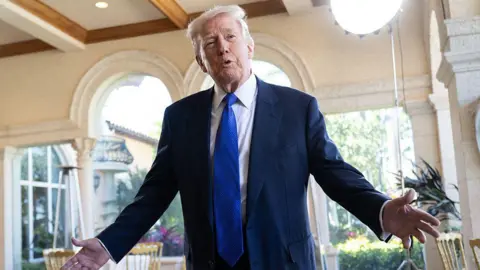
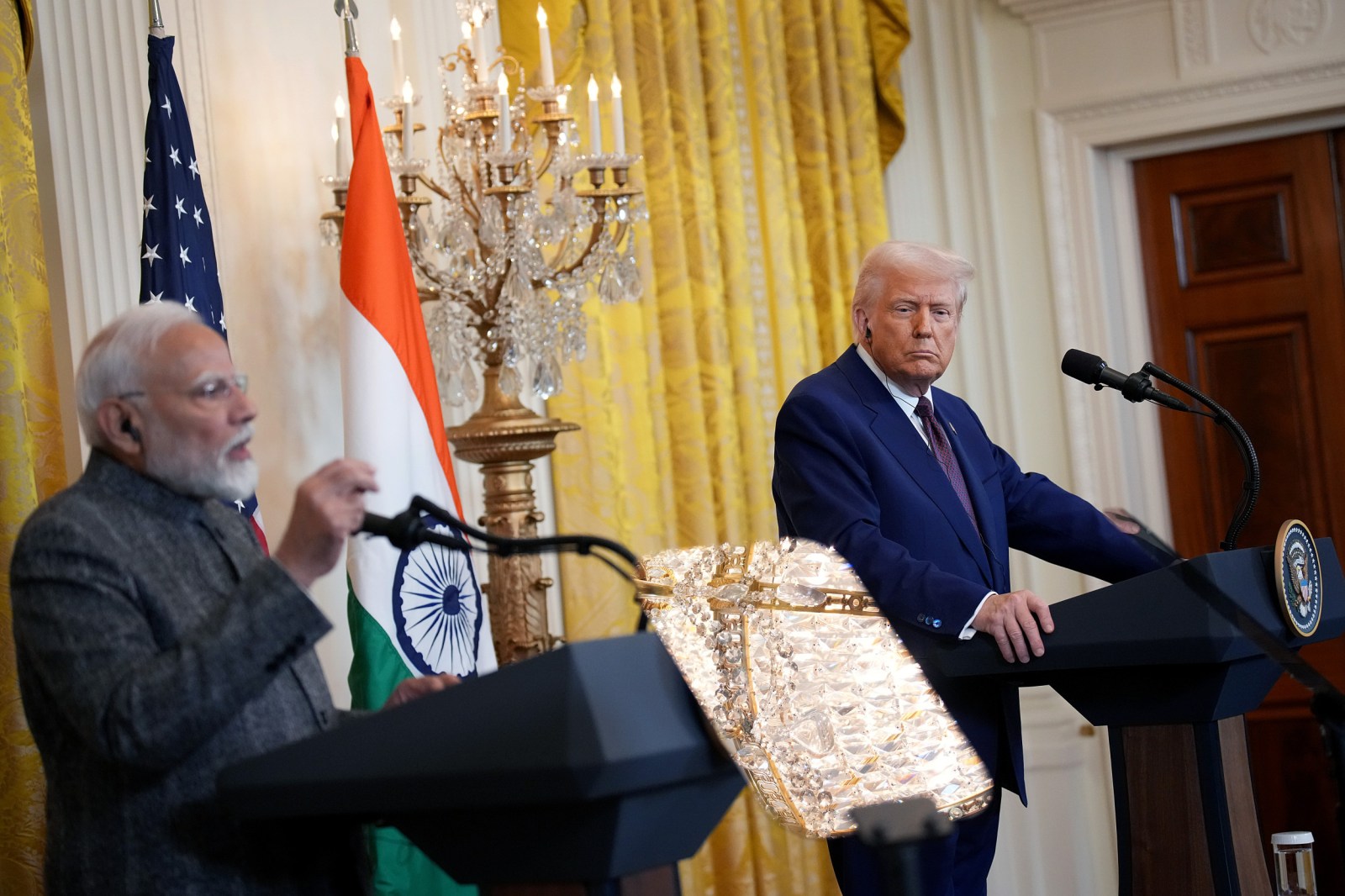

Deal announcement and core tariff changes President Donald Trump announced on Feb 2 2026 that the United States will cut the reciprocal tariff on Indian exports from 25‑50 % to 18 % and remove the 25 % penalty linked to Russian‑oil purchases, while India pledged to cease buying Russian crude and to purchase over $500 billion of U.S. goods across energy, technology and agriculture [4][7][13][16][17]. The announcement came via Trump’s Truth Social post and was echoed by Prime Minister Narendra Modi on X, who highlighted the “Made‑in‑India” benefit for 1.4 billion citizens [10][15][17].
Government’s sectoral impact narrative Commerce Minister Piyush Goyal told Parliament that the pact safeguards India’s farm and dairy sectors, lowers duties on labour‑intensive products to 18 % to boost MSME exports, and aligns with “Make in India” and “Design in India” initiatives [2][9][11][14]. He posted his full remarks on X after a parliamentary ruckus, emphasizing that agriculture and dairy will remain protected while textiles, gems, leather and engineering goods stand to gain [2][11].
Opposition and farmer concerns over agricultural liberalisation Congress leader K. Kharge warned that the deal could spark massive farmer protests similar to the 2021 farm‑law backlash, arguing that zero‑tariff U.S. imports and an 18 % Indian export duty will pit Indian farmers against subsidised American crops [1][6][8][12]. The Samyukt Kisan Morcha and All India Kisan Sabha demanded the full text of the agreement, a parliamentary review, and warned of a “betrayal” that could endanger the 48 % of the workforce dependent on agriculture [6][8][12].
Parliamentary proceedings and communication channels Opposition MPs disrupted Goyal’s statement, barred some speakers, and criticised the use of social media rather than formal parliamentary notice to disclose the deal [2][7][8]. Leader of the House J.P. Nadda defended the government’s national‑security achievements and economic reforms, while Rajya Sabha Chairman C.P. Radhakrishnan cited decorum rules to limit debate [1][2].
Discrepancies and remaining uncertainties While Trump asserted that India will stop Russian oil purchases, Indian officials have not officially confirmed this shift, and Goyal omitted any oil‑related commitments [7][13][15]. The scope of the agreement remains ambiguous: some sources describe it as a “mini‑deal” or first tranche of a broader FTA, and details on non‑tariff barriers and agricultural concessions are still pending [7][9][13].
Sources
-
1.
The Hindu “Congress Leader Kharge Warns of Farmer Protests Over India‑U.S. Trade Deal”: Kharge predicts large‑scale farmer protests, claims the deal will “destroy” Indian agriculture, and criticises lack of parliamentary notice; Nadda counters with economic progress claims .
-
2.
The Hindu “India‑U.S. Trade Deal Shields Farm and Dairy Sectors, Cuts Tariffs, Sparks Parliamentary Row”: Goyal asserts farm and dairy protection, outlines 18 % tariff cuts for labour‑intensive goods, and notes technical work continues; opposition disruption limited debate .
-
3.
The Hindu “India’s Sharad Pawar Flags Farmer Concerns Over New U.S. Tariff Policy”: Pawar warns that U.S. tariff policy allowing agricultural exports threatens Indian farmers, expects a detailed picture within 48 hours, and references Trump’s $500 bn purchase claim .
-
4.
The Hindu “India to End Russian Oil Purchases and Commit $500 Billion to U.S. Investment, Trump Announces”: Leavitt reports India will stop Russian oil, shift to U.S. supplies, and pledge $500 bn U.S. investment; tariff reductions to zero for U.S. products noted .
-
5.
The Hindu “India‑U.S. Talks Advance Trade Deal and Critical Minerals Cooperation”: Jaishankar and Rubio discuss the trade deal, critical‑minerals cooperation, and Quad partnership; both praise tariff cuts .
-
6.
The Hindu “India‑U.S. Trade Deal Relieves Exporters, Sparks Farmer Opposition”: Exporters celebrate tariff cuts restoring seafood exports; Samyukt Kisan Morcha calls the pact a betrayal and urges a strike on Feb 12 .
-
7.
The Hindu “India‑US Trade Deal Cuts Tariffs, Yet Details Remain Unclear”: Announces 50 %→18 % tariff drop, notes ambiguous scope, and highlights Trump’s claim about ending Russian oil purchases, which Goyal omitted .
-
8.
The Hindu “Opposition MPs Press Government Over India‑U.S. Trade Deal Impact on Farmers”: Rajya Sabha members demand details on $500 bn claim, oil‑sourcing shift, and criticize announcement on X instead of Parliament .
-
9.
The Hindu “India‑U.S. Trade Deal Excludes Agriculture, Lowers U.S. Tariffs, and Promises Broad Export Gains”: Confirms agriculture and dairy exclusion, 18 % U.S. tariff cut, and outlines sectoral benefits; notes opposition‑driven press briefing .
-
10.
Newsweek “Trump Announces Surprise US‑India Trade Deal Reducing Tariffs to 18%”: Highlights surprise announcement, Modi’s praise, ambassador Gor’s coordination, and geopolitical context of EU‑India FTA .
-
11.
The Hindu “India‑U.S. Trade Deal Cuts Tariffs to 18%, Sparks Market Rally and Industry Praise”: Details market surge, diamond sector relief, and opposition’s agricultural concerns .
-
12.
The Hindu “Congress Demands Parliament Review of India‑US and EU Trade Deals”: Congress calls for full text debate, accuses Modi of surrendering to Trump, and references EU FTA .
-
13.
The Hindu “U.S. Cuts Tariffs on Indian Goods to 18% Amid Unresolved Trade Deal Details”: Reports tariff cut, ambiguous broader agreement, mixed evidence on oil cessation, and $500 bn claim unverified .
-
14.
The Hindu “India‑U.S. Trade Deal Lowers Indian Tariffs to 18% Amid Praise and Criticism”: Summarises tariff reduction, Jaishankar’s growth praise, Shah’s historic label, and Ramesh’s capitulation accusation .
-
15.
AP “Trump Announces 18% Tariff Cut for India After Russian Oil Deal”: Notes tariff cut tied to India halting Russian oil, $500 bn purchase pledge, and Trump’s claim it will help end Ukraine war .
-
16.
BBC “US‑India Trade Deal Cuts Tariffs to 18% After India Halts Russian Oil Purchases”: Confirms tariff drop from 50 % to 18 %, oil shift, and $500 bn import commitment; mentions EU‑India FTA .
-
17.
The Hindu “Modi and Trump announce 18% U.S. tariff on ‘Made in India’ goods”: Covers Modi’s announcement, Trump’s Truth Social post, lack of MoFA response, and critical‑minerals ministerial .
Timeline
Feb 13, 2025 – India and the United States hold their first White House meeting, launching a series of bilateral trade negotiations that later involve eight phone calls between Prime Minister Modi and President Trump, according to the Ministry of External Affairs [22].
Jul 30, 2025 – President Trump imposes a 25 % tariff on Indian imports, marking the first major U.S. trade penalty on India and signalling a shift toward a tougher stance tied to geopolitical concerns [30].
Aug 27, 2025 – The U.S. expands the tariff on Indian goods to 50 %, adding a 25 % surcharge specifically for India’s purchases of Russian oil, thereby intensifying pressure on Delhi to alter its energy sourcing [30].
Nov 2025 – Despite the 50 % tariff, India’s exports to the United States rise 22 % year‑on‑year, showing that trade activity continues even as negotiations stall [3].
Jan 5, 2026 – President Trump claims that U.S. tariff receipts will exceed $600 billion, framing the levies as a source of national strength and security [27].
Jan 5, 2026 – Trump asserts that India “reduced it very substantially” by cutting Russian oil imports to please the United States, linking the tariff policy directly to Delhi’s energy decisions [28].
Jan 6, 2026 – At a GOP retreat, Trump says Prime Minister Modi is “not that happy with me” over the tariffs tied to Russian oil purchases, while also noting Modi’s personal request for a private meeting [26].
Jan 8, 2026 – Trump backs a bill that would allow up to 500 % tariffs on countries buying Russian oil and announces the United States’ withdrawal from the International Solar Alliance, heightening diplomatic pressure on India [24].
Jan 9, 2026 – U.S. ambassador‑designate Sergio Gor lands in New Delhi, stating he is “great to be back” and emphasizing the “opportunities ahead” for the bilateral relationship [20].
Jan 9, 2026 – The Ministry of External Affairs rebuts Commerce Secretary Howard Lutnick’s claim, confirming that Modi and Trump spoke eight times in 2025 and reaffirming India’s commitment to a balanced trade pact [22].
Jan 10, 2026 – India’s Parliament schedules the Budget Session to begin on Jan 28, setting the legislative calendar that will include debate over the pending trade agreements [21].
Jan 12, 2026 – Ambassador Gor tells reporters that trade talks remain active and that the next call to discuss the deal is slated for Tuesday, underscoring ongoing diplomatic engagement despite accusations of delay [2].
Feb 2, 2026 – President Trump announces a surprise U.S.–India trade deal that cuts the U.S. tariff on Indian goods to 18 % and removes the 25 % penalty for Russian oil purchases, while claiming India will cease buying Russian crude and commit $500 billion to U.S. imports; Modi hails the move on X as a win for “Made‑in‑India” products [4][5][19].
Feb 2, 2026 – External Affairs Minister S. Jaishankar arrives in Washington for a three‑day visit that includes the inaugural Critical Minerals Ministerial, signaling a broader strategic agenda beyond tariffs [19].
Feb 3, 2026 – The United States formally reduces its tariff on Indian imports from 25 % to 18 %, and the 25 % penalty linked to Russian oil purchases is eliminated, creating immediate market relief [18].
Feb 3, 2026 – Commerce Minister Piyush Goyal says detailed implementation steps for the tariff reduction will be released “soon,” indicating that technical work on the agreement is underway [11].
Feb 3, 2026 – Opposition MPs in the Rajya Sabha press the government for clarification on the deal’s impact on farmers, the $500 billion purchase claim, and the shift of oil sourcing to the United States and Venezuela [9].
Feb 3, 2026 – The Seafood Exporters Association of India celebrates the tariff cut, projecting a rebound in export volumes that had fallen 6.3 % in value and 15 % in volume during April‑Nov 2025 [14].
Feb 3, 2026 – Indian equity markets rally, with the Nifty 50 up 4.86 % and the Sensex up 4.48 %, while gems, textiles and leather stocks jump 15‑20 % on news of the tariff reduction [16].
Feb 4, 2026 – Union Commerce Minister Piyush Goyal tells Parliament that the agreement fully protects India’s farm and dairy sectors while cutting tariffs on labour‑intensive goods to 18 %, linking the pact to “Make in India” and MSME growth [6].
Feb 4, 2026 – Congress leader G. Kharge warns that the deal could trigger farmer protests comparable to the 2021 farm‑law backlash, arguing it would “destroy” Indian agriculture if passed [7].
Feb 4, 2026 – NCP chief Sharad Pawar says a detailed picture of the trade agreement will emerge within 48 hours, after which he will assess its implications for Indian farmers [8].
Feb 4, 2026 – The United States schedules the opening remarks for the Critical Minerals Ministerial, to be delivered by Vice President J.D. Vance and Secretary of State Marco Rubio, aiming to formalise joint exploration and processing efforts [12].
Feb 4, 2026 – Treasury Secretary Scott Bessent notes that India’s Russian‑oil purchases have “collapsed,” and the removal of the oil‑linked penalty creates a pathway to cut Russia’s war‑funding [4].
Dive deeper (7 sub-stories)
-
India‑U.S. Trade Deal Advances Amid Farmer Protest Threats and Parliamentary Turmoil
(3 articles)
-
U.S.-India Trade Deal Cuts Tariffs, Halts Russian Oil, Triggers Farmer Protests
(16 articles)
-
The Hindu: Opposition MPs Press Government Over India‑U.S. Trade Deal Impact on Farmers
-
Congress Calls for Parliamentary Debate as US Lowers Tariffs and EU Pact Finalized
(4 articles)
-
US Ambassador Gor Confirms Ongoing India‑US Trade Talks, Next Call Set for Tuesday
(3 articles)
-
Trump Supports 500% Tariffs, Withdraws from Solar Alliance, Envoy Arrives in Delhi
(2 articles)
-
The Hindu: Trump says India cut Russian oil to please him; Graham backs ambassador claim
All related articles (30 articles)
-
The Hindu: Congress Leader Kharge Warns of Farmer Protests Over India‑U.S. Trade Deal
-
The Hindu: India‑U.S. Trade Deal Shields Farm and Dairy Sectors, Cuts Tariffs, Sparks Parliamentary Row
-
The Hindu: India’s Sharad Pawar Flags Farmer Concerns Over New U.S. Tariff Policy
-
The Hindu: India to End Russian Oil Purchases and Commit $500 Billion to U.S. Investment, Trump Announces
-
The Hindu: India‑U.S. Talks Advance Trade Deal and Critical Minerals Cooperation
-
The Hindu: India‑U.S. Trade Deal Relieves Exporters, Sparks Farmer Opposition
-
The Hindu: India‑US Trade Deal Cuts Tariffs, Yet Details Remain Unclear
-
The Hindu: Opposition MPs Press Government Over India‑U.S. Trade Deal Impact on Farmers
-
The Hindu: India‑U.S. Trade Deal Excludes Agriculture, Lowers U.S. Tariffs, and Promises Broad Export Gains
-
Newsweek: Trump Announces Surprise US‑India Trade Deal Reducing Tariffs to 18%
-
The Hindu: India‑U.S. Trade Deal Cuts Tariffs to 18%, Sparks Market Rally and Industry Praise
-
The Hindu: Congress Demands Parliament Review of India‑US and EU Trade Deals
-
The Hindu: U.S. Cuts Tariffs on Indian Goods to 18% Amid Unresolved Trade Deal Details
-
The Hindu: India‑U.S. Trade Deal Lowers Indian Tariffs to 18% Amid Praise and Criticism
-
AP: Trump Announces 18% Tariff Cut for India After Russian Oil Deal
-
BBC: US‑India Trade Deal Cuts Tariffs to 18% After India Halts Russian Oil Purchases
-
The Hindu: Modi and Trump announce 18% U.S. tariff on “Made in India” goods
-
BBC: US ambassador says India-US trade talks continue amid tariff tensions
-
The Hindu: MEA reaffirms balanced trade pact with US as Taliban diplomat arrives in Delhi and other developments
-
The Hindu: U.S. ambassador-designate Gor arrives in India, cites opportunities ahead
-
The Hindu: MEA rebuts Lutnick claim, says Modi-Trump spoke eight times in 2025 as trade talks persist
-
BBC: India denies Lutnick claim that Modi didn't call Trump as US-India trade talks stall
-
The Hindu: Lutnick says Modi didn't call Trump, derailing India-U.S. trade deal
-
The Hindu: Trump's tariff and withdrawal moves heighten energy and diplomatic pressure on India as domestic and global stories unfold
-
The Hindu: Trump backs bill for up to 500% tariffs on Russian oil buyers and pulls U.S. from India-led International Solar Alliance
-
The Hindu: Trump says PM Modi is “not that happy” over US tariffs, cites cuts to Russian oil and Apache deliveries
-
The Hindu: Trump says U.S. tariff receipts will top $600B, touts national strength
-
The Hindu: Trump says India cut Russian oil to please him; Graham backs ambassador claim
-
The Hindu: India enters 2025 with high diplomatic expectations, then faces U.S. tariffs and regional strain
-
The Hindu: Tariffs, reforms, and EV entries shape India's 2025 business year
External resources (9 links)
- https://www.youtube.com/@bbcnewsindia/featured (cited 1 times)
- https://www.mea.gov.in/Speeches-Statements.htm?dtl%2F39945%2FStatement_by_Official_Spokesperson (cited 1 times)
- https://www.reuters.com/world/china/indias-exports-defy-tariffs-strengthen-hand-us-trade-talks-2025-12-16/ (cited 1 times)
- https://t.co/gPz6rWtrxj (cited 1 times)
- https://t.co/hA1zbnt3JQ (cited 1 times)
- https://twitter.com/janusmyth?ref_src=twsrc%5Etfw (cited 1 times)
- https://www.facebook.com/bbcindia/ (cited 1 times)
- https://www.instagram.com/bbcnewsindia/ (cited 1 times)
- https://x.com/BBCIndia (cited 1 times)