U.S. Envoy Laura Dogu Lands in Caracas as First Step Toward Phased Embassy Re‑Opening
Updated (13 articles)
-
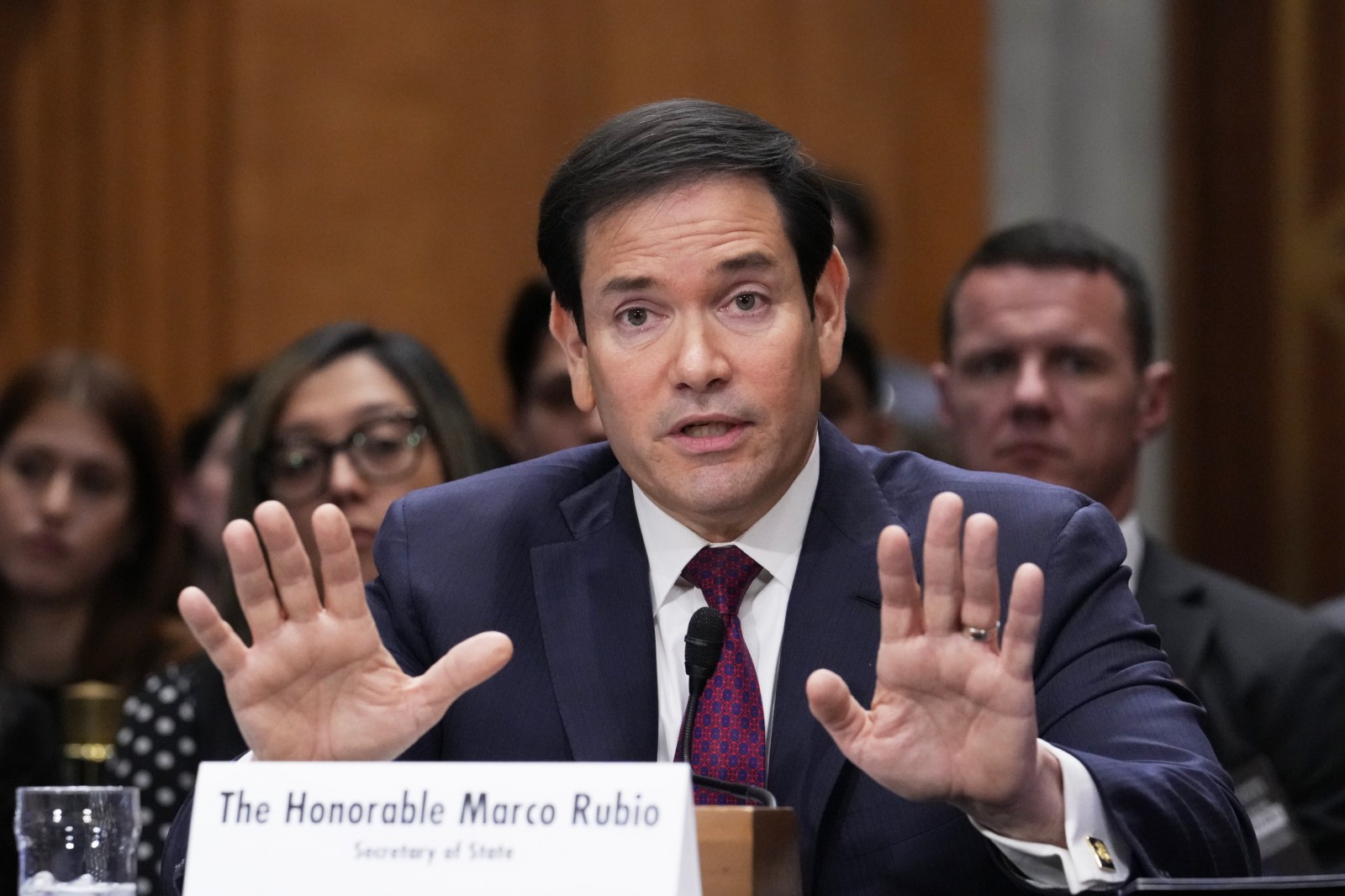 Image: NewsweekSecretary of State Marco Rubio appears before the Senate Foreign Relations Committee to explain President Donald Trump’s policy toward Venezuela following the U.S. military raid that ousted then-President Nicolas Maduro, at the Capitol in Washington, Wednesday, Jan. 28, 2026. (AP Photo/J. Scott Applewhite) Source Full size
-
Image: NewsweekSecretary of State Marco Rubio appears before the Senate Foreign Relations Committee to explain President Donald Trump’s policy toward Venezuela following the U.S. military raid that ousted then-President Nicolas Maduro, at the Capitol in Washington, Wednesday, Jan. 28, 2026. (AP Photo/J. Scott Applewhite) Source Full size
Phased embassy reopening outlined to Congress The State Department sent identical letters to ten House and Senate committees on 27 January, detailing a three‑phase plan that begins with a temporary staff site while the Caracas compound is refurbished, then expands to full diplomatic functions and eventually a permanent embassy [6]. Secretary of State Marco Rubio told the Senate Foreign Relations Committee that about 70 locally hired staff are already positioned in Bogotá to support the transition [2]. The plan also includes a short‑term annex managed by the CIA before a formal diplomatic mission is established [7].
Laura Dogu becomes first U.S. diplomat in Caracas since 2019 On 31 January 2026, career diplomat Laura F. Dogu arrived in Caracas, posting photos on X that confirmed her presence [1]. Her appointment as head of the Venezuela Affairs Unit follows her previous ambassadorships to Honduras and Nicaragua and signals the administration’s intent to move the unit from Bogotá to Caracas “very quickly” [2][4]. Venezuelan Foreign Minister Yván Gil Pinto welcomed her arrival, noting it fits a bilateral roadmap for dialogue and respect for international law [1].
Acting Venezuelan government adopts reforms matching U.S. objectives Acting President Delcy Rodríguez’s administration approved an oil‑sector law easing foreign‑investment restrictions, an amnesty bill for political prisoners, the closure of a notorious detention center, and the release of all known U.S. citizens held in Venezuela [1]. These steps align with U.S. demands for greater openness and create a more favorable environment for the planned diplomatic re‑engagement [1][6].
CIA prepares permanent foothold ahead of full embassy Intelligence officials are coordinating with the State Department on a short‑term annex that would allow U.S. officials to make informal contacts with Venezuelan security forces and opposition figures [7]. CIA Director John Ratcliffe visited Caracas, meeting Rodríguez and military leaders to convey that Venezuela can no longer serve as a safe haven for U.S. adversaries [7]. The agency’s covert assets reportedly helped capture former President Nicolás Maduro, underscoring its operational role in the transition [7].
Sanctioned oil proceeds earmarked for Venezuelan public services The administration created a financing tool that places revenue from sanctioned Venezuelan oil sales into a Qatari‑bank account, earmarking funds for policing, sanitation, medicine and small‑business aid [2][4]. Rubio said the interim government will submit monthly budgets for audit, and the proceeds will also fund an audit to verify expenditures [2]. This mechanism aims to demonstrate tangible U.S. support while maintaining oversight of the funds [4].
Sources
-
1.
CNN: US envoy Laura Dogu arrives in Caracas as Trump administration pushes embassy reopening – Details Dogu’s arrival, her three‑phased diplomatic plan, and Rodríguez’s reform package, highlighting the first public U.S. diplomatic step since 2019 .
-
2.
CNN: Trump Administration Pushes on Iran, Venezuela, Greenland and Historical Narrative – Reports Rubio’s testimony on quickly establishing a Venezuelan diplomatic presence, the 70‑staff team in Bogotá, and the oil‑revenue financing tool for Venezuelan services .
-
3.
Newsweek: Trump Threatens Iran, Rubio Warns of Force in Venezuela Amid Rising Tensions – Covers Rubio’s warning that the U.S. is prepared to use force in Venezuela if interim authorities diverge from U.S. expectations, adding context to the diplomatic push .
-
4.
CNN: Trump administration’s latest: Iran warning, Rubio testimony and “Trump Accounts” push – Highlights Rubio’s statement about a rapid diplomatic foothold in Venezuela and the placement of oil‑sale proceeds in a Qatari account for humanitarian aid .
-
5.
AP: Rubio Defends Venezuela Raid, Addresses Greenland, NATO, and Iran – Describes Rubio’s defense of the Jan. 3 raid, the resumption of sanctioned oil sales under U.S. oversight, and the conditional nature of further military action .
-
6.
AP: U.S. Takes First Formal Steps Toward Reopening Caracas Embassy – Announces the formal congressional notification, the temporary staff facility, and the goal of normalizing ties with Rodríguez’s acting government .
-
7.
CNN: CIA Moves to Establish Permanent Foothold in Post‑Maduro Venezuela – Reveals CIA plans for a permanent annex, Ratcliffe’s visit, and the agency’s role in the Maduro capture, linking intelligence efforts to the diplomatic reopening .
Timeline
2019 – The United States closes its embassy in Caracas and suspends diplomatic operations after escalating tensions with the Maduro government, relocating staff to Bogotá [7].
Feb 2025 – Former Trump envoy Richard Grenell visits Venezuela, a trip that precedes the release of six detained Americans, illustrating how high‑level contacts can prompt detainee releases [11].
2025 – President Trump issues an executive order directing the Interior Department to remove historical content deemed “disparaging,” leading to the removal of a slavery exhibit at the President’s House Site in Philadelphia [2].
Jan 5, 2026 – Mexican officials dismiss the likelihood of a U.S. invasion of Mexico despite the recent Venezuelan operation, with President Claudia Sheinbaum emphasizing coordination and rejecting any U.S. military help [12].
Jan 6, 2026 – Secretary of State Marco Rubio and senior officials brief Congress on the Venezuela raid, fielding questions about next steps; Republicans largely back the action while Democrats demand details, and a war‑powers resolution is slated for a Senate vote this week [13].
Jan 9, 2026 – A U.S. State Department team from the Venezuela Affairs Unit travels to Caracas for the first on‑ground assessment since Maduro’s capture, evaluating security and facilities for a possible phased embassy reopening [7].
Jan 9‑10, 2026 – U.S. and Venezuelan officials discuss restoring diplomatic ties as a small delegation visits Caracas, and Venezuela announces plans to send a delegation to the United States pending a sanctions waiver [11].
Jan 15, 2026 – The Trump administration explores hiring private security contractors, including Grey Bull Rescue Foundation and possibly Erik Prince, to protect Venezuelan oil assets, issuing a DoD Request for Information while avoiding a long‑term troop presence [6].
Jan 16, 2026 – CIA Director John Ratcliffe meets acting President Delcy Rodríguez in Caracas, discussing economic cooperation and stressing that Venezuela must not serve as a safe haven for U.S. adversaries, while President Trump declares the United States will “effectively run” Venezuela’s oil sector [5].
Jan 27, 2026 – CIA officials plan a permanent U.S. foothold in Venezuela, proposing a short‑term annex that would precede an official embassy and coordinating with the State Department’s Venezuela Affairs Unit [4].
Jan 27, 2026 – The State Department notifies ten congressional committees of a phased approach to reopen the Caracas embassy, outlining temporary staff operating from an interim facility and the need to revoke the 2015 recognition of Venezuela’s opposition‑controlled parliament [10].
Jan 28, 2026 – In testimony before the Senate Foreign Relations Committee, Rubio says the U.S. will “very quickly” establish a diplomatic presence in Venezuela, initially from Bogotá and later in Caracas, noting a team of about 70 locally employed staff is ready [2].
Jan 28, 2026 – Rubio announces a short‑term financing mechanism that channels proceeds from sanctioned Venezuelan oil sales into a Treasury‑controlled account to fund policing, sanitation and medicine, with monthly budget reviews by the United States [2].
Jan 28, 2026 – Rubio tells lawmakers that the administration will use force again in Venezuela if interim authorities stray from U.S. expectations, stating “we are prepared to use force to ensure maximum cooperation if other methods fail” [8].
Jan 28, 2026 – President Donald Trump threatens Iran with a “massive Armada” led by the USS Abraham Lincoln, warning of “far worse” attacks if Tehran does not negotiate a nuclear deal, as U.S. forces conduct multi‑day air exercises in the Middle East [8].
Jan 28, 2026 – Rubio defends the Jan 3 raid on Maduro, calling it a “national‑security win” that removed a major threat, and says no further military action will occur without an imminent danger [9].
Jan 28, 2026 – Rubio confirms that sanctioned Venezuelan oil may be sold under U.S. oversight, with proceeds placed in a Treasury‑controlled account and released only after Washington approves monthly budgets for public services [9].
Jan 28, 2026 – Rubio reports that technical‑level talks on Greenland and Denmark are “in a good place” and will begin “today,” indicating progress on the disputed Greenland claim [2].
Jan 28, 2026 – Rubio says he will meet opposition leader María Corina Machado later that afternoon to discuss Venezuela’s transition, highlighting ongoing engagement with opposition figures [8].
Jan 31, 2026 – Laura F. Dogu lands in Caracas as the new U.S. envoy, posting photos on X; she is tasked with implementing a three‑phased plan that involves private‑sector, public‑sector and civil‑society actors to advance the administration’s roadmap for Venezuela [1].
Feb 2026 (planned) – The State Department plans to expand the temporary‑duty staff in Caracas to cover consular, political, economic, management, security and public‑diplomacy functions as the embassy refurbishment progresses [10].
Future (unspecified) – Venezuela’s acting government intends to send a diplomatic delegation to the United States, pending a U.S. sanctions waiver, to further normalize relations [11].
Dive deeper (5 sub-stories)
-
U.S. Envoy Laura Dogu Arrives in Caracas to Lead Embassy Reopening Plan
(4 articles)
-
Trump Threatens Iran Armada as Rubio Pushes Venezuela Diplomacy and Funding
(4 articles)
-
CNN: Trump administration’s latest: Iran warning, Rubio testimony and “Trump Accounts” push
-
CIA Plans Permanent Annex and Embassy Reopening in Post‑Maduro Venezuela
(2 articles)
-
Trump Administration Considers Private Contractors to Guard Venezuelan Oil Facilities
(2 articles)
All related articles (13 articles)
-
CNN: US envoy Laura Dogu arrives in Caracas as Trump administration pushes embassy reopening
-
CNN: Trump Administration Pushes on Iran, Venezuela, Greenland and Historical Narrative
-
Newsweek: Trump Threatens Iran, Rubio Warns of Force in Venezuela Amid Rising Tensions
-
CNN: Trump administration’s latest: Iran warning, Rubio testimony and “Trump Accounts” push
-
AP: Rubio Defends Venezuela Raid, Addresses Greenland, NATO, and Iran
-
AP: U.S. Takes First Formal Steps Toward Reopening Caracas Embassy
-
CNN: CIA Moves to Establish Permanent Foothold in Post‑Maduro Venezuela
-
CNN: CIA director Ratcliffe meets Venezuela acting president in Caracas amid Maduro capture
-
CNN: Trump officials eye private security contractors to safeguard oil assets in Venezuela
-
AP: US and Venezuela explore restoring diplomatic ties as delegation visits Caracas
-
CNN: US State Department team arrives in Venezuela for first time since Maduro's capture
-
AP: Rubio and Hegseth brief Congress as lawmakers press for answers about Trump’s Venezuela operation
-
AP: Mexican officials and analysts say U.S. military action in Mexico unlikely after U.S. operation in Venezuela
External resources (15 links)
- https://www.youtube.com/shorts/KkWrN3_LNM8 (cited 2 times)
- https://www.nps.gov/inde/learn/historyculture/places-presidentshousesite.htm (cited 2 times)
- https://www.whitehouse.gov/presidential-actions/2025/03/restoring-truth-and-sanity-to-american-history/ (cited 2 times)
- https://ve.usembassy.gov/charge-daffaires-laura-dogu/ (cited 1 times)
- https://www.nytimes.com/2026/01/16/us/politics/cia-director-ratcliffe-venezuela.html (cited 1 times)
- https://x.com/atrupar (cited 3 times)
- https://www.facebook.com/nickiminaj/photos/i-came-to-this-country-as-an-illegal-immigrant-5-years-old-i-cant-imagine-the-ho/1897775873577387/ (cited 2 times)
- https://x.com/NICKIMINAJ/status/2016629253014503789?s=20 (cited 2 times)
- https://x.com/agrisanti (cited 2 times)
- https://x.com/usembassyve/status/2017687272443813910?s=20 (cited 1 times)
- https://x.com/yvangil/status/2017705406529999127 (cited 1 times)
- https://www.globalr2p.org/publications/statement-on-the-recent-developments-in-venezuela/ (cited 3 times)
- https://www.ohchr.org/en/press-releases/2025/03/venezuela-harsh-repression-and-crimes-against-humanity-ongoing-fact-finding (cited 3 times)
- https://www.vibe.com/news/entertainment/nicki-minaj-not-citizen-us-immigration-status-1234924589/ (cited 2 times)