Hamas Moves Toward New Leader as Rafah Crossing Reopens Under Tight Limits
Updated (42 articles)
-
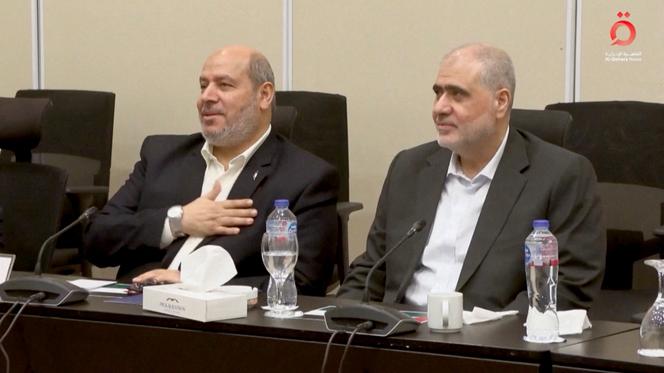 Image: Le MondeA gauche, Khalil Al-Hayya, le chef des négociateurs du Hamas, lors d’une réunion avec les délégations égyptienne, qatarie et turque, avant l’annonce d’un accord de cessez-le-feu à Gaza, à Charm El-Cheikh, en Egypte, le 8 octobre 2025.AL-QAHERA NEWS / VIA REUTERS (AL-QAHERA NEWS / VIA REUTERS) Source Full size

Succession Process Accelerates After Sinouar’s Death Yahya Sinouar, architect of the Oct 7 2023 attack, was killed by an Israeli strike on 16 Oct 2024 in Rafah; since Dec 2025 Hamas has been designating a successor, guided by five senior exiles in Turkey and Qatar who run the movement on an interim basis per Sinouar’s instructions [1]. The prospective chief must reconcile deep factional splits and navigate pressure from Turkey, Qatar, and a U.S. demand for disarmament [1]. Palestinian journalist Mohammed Daraghmeh warned that “no one knows who the boss is,” underscoring internal uncertainty [1].
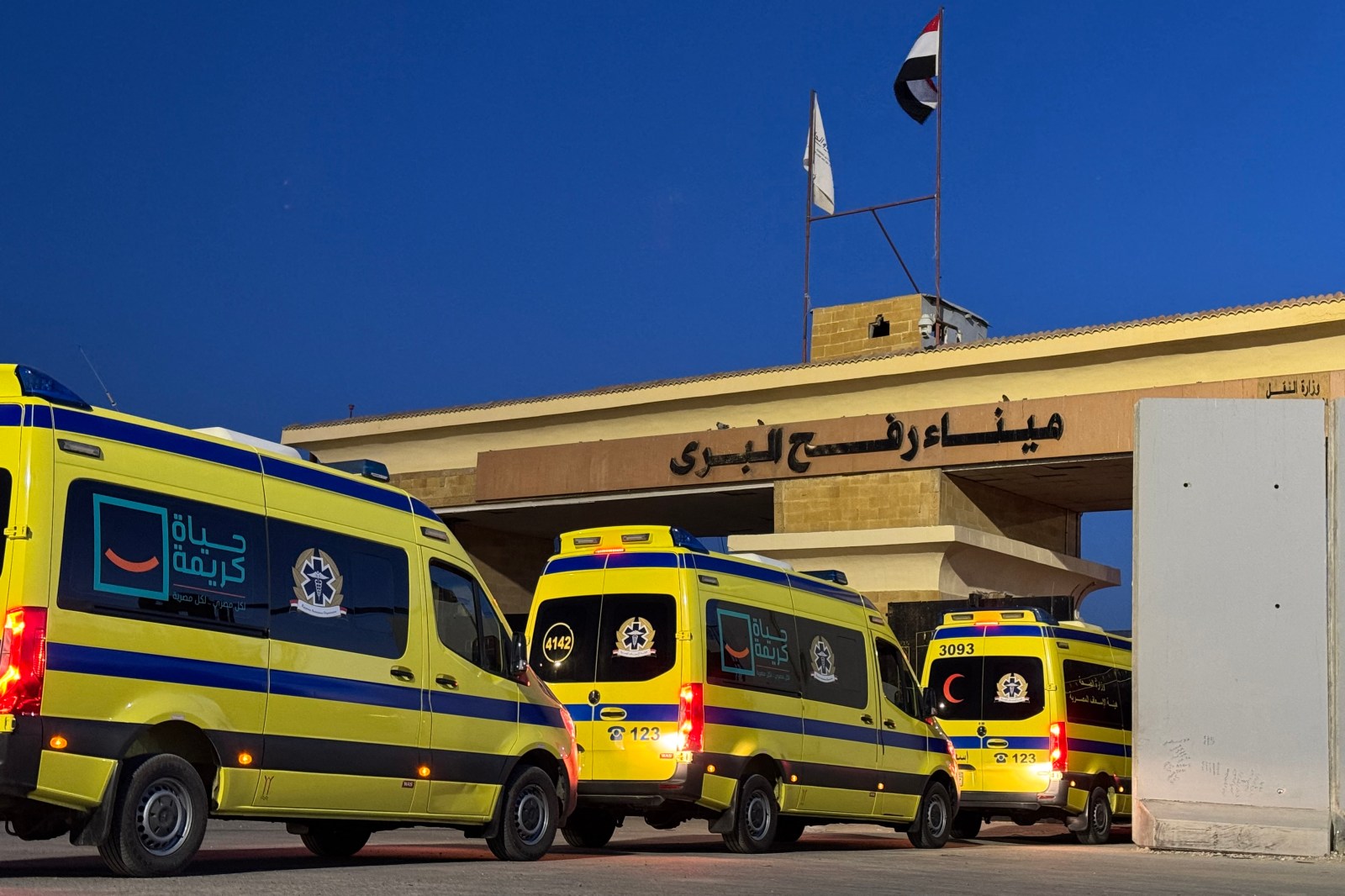
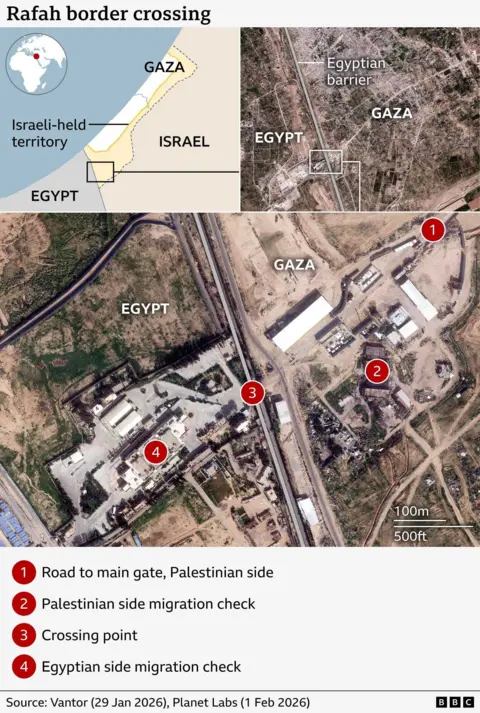
Rafah Crossing Enters Trial Phase With Minimal Traffic Israel announced a test opening on 1 Feb 2026, limiting daily medical evacuations to 50 patients and allowing a similar number of returnees, while the U.S.‑brokered cease‑fire plan ties full operation to the recovery of the last Israeli hostage, Ran Gvili [4][5]. EU border‑assistance agents and Palestinian staff supervise vetting, but actual crossings have fallen far short of targets: the BBC recorded only five patients and seven companions on 3 Feb, whereas Newsweek reported no crossings during the six‑hour daily window [2][3]. CNN cited a higher cap of 150 outbound Palestinians per day, highlighting a discrepancy among reported limits [5].
Humanitarian Need Far Outpaces Limited Access The World Health Organization estimates roughly 20,000 Gazans require urgent medical evacuation, yet only a handful have been permitted to leave despite Israel’s stated allowance of 50 patients daily [2][4]. Egypt has prepared about 150 hospitals and 300 ambulances, and over 30,000 Palestinians have registered with the Cairo embassy to return once the gate functions fully [2]. Ongoing violence, including the killing of a three‑year‑old boy by Israeli navy fire, has pushed Gaza’s death toll past 71,900 since the Oct 2023 offensive began [3].
International Actors Push for Broader Relief Amid Cease‑Fire President Donald Trump’s 20‑point cease‑fire plan, launched in October, links the Rafah opening to hostage exchanges and now to a second phase announced at the Davos Board of Peace [5]. EU foreign policy chief Kaja Kallas called the limited reopening a “lifeline,” while UK Foreign Secretary Yvette Cooper urged expanded aid [2]. Turkey and Qatar continue to press Hamas for a new strategic direction, and the United States maintains its demand that the group abandon its weapons [1].
Sources
-
1.
Le Monde: Hamas Moves to Appoint Successor to Yahya Sinouar Amid Leadership Void – Details the succession timeline, interim five‑cadre leadership, and regional pressures on Hamas .
-
2.
BBC: Rafah Border Crossing Reopens Amid Limited Patient Transfers – Reports the opening on 3 Feb, actual patient numbers (five), and WHO/EU logistical preparations .
-
3.
Newsweek: Israel Reopens Rafah Border Crossing with Strict Limits – Describes six‑hour daily operation, zero crossings on first day, and humanitarian hopes for 20,000 evacuees .
-
4.
AP: Rafah Crossing to Resume Limited Travel on Monday – Announces 1 Feb test opening, 50‑patient daily cap, and impending termination of MSF operations .
-
5.
CNN: Rafah Crossing Begins Trial Phase Amid US‑Brokered Ceasefire – Highlights trial phase start, caps of 150 outbound and 50 inbound Palestinians, and linkage to the cease‑fire’s first phase .
Timeline
Oct 7 2023 – Hamas launches a coordinated assault on Israel, seizing dozens of civilians including police officer Ran Gvili, whose abduction later anchors the cease‑fire’s first‑phase conditions [3].
Oct 10 2025 – A U.S.‑brokered cease‑fire between Israel and Hamas takes effect, marking the first phase of President Trump’s 20‑point peace plan and initiating hostage‑exchange and limited humanitarian pauses [16][24].
Dec 3 2025 – Israel announces that the Rafah border crossing will reopen “in the coming days” for Palestinian exits, tying the move to the cease‑fire and to the return of all hostages [24][26].
Dec 7 2025 – Prime Minister Benjamin Netanyahu tells reporters the second phase of the cease‑fire is “very close,” while senior Hamas official Bassem Naim says the group is “very open‑minded” about freezing or storing its weapons [20][21][22].
Dec 8 2025 – Netanyahu meets German Chancellor Friedrich Merz and says the second phase could start by month‑end, contingent on Hamas handing over Ran Gvili’s remains and on disarmament [28].
Dec 9 2025 – Hamas political wing member Husam Badran demands full implementation of the first‑phase terms before any second‑phase steps, urging an end to Israeli home demolitions [27].
Dec 24 2025 – Israel’s prime‑ministerial office accuses Hamas of breaching the cease‑fire after an explosion wounds an IDF soldier, emphasizing that the first phase remains incomplete until the last hostage’s body is recovered [18].
Dec 29 2025 – President Donald Trump declares in the Knesset that “eight wars have ended,” citing the Gaza cease‑fire as a major achievement, while a meeting with Netanyahu seeks fresh momentum for the truce’s next steps [17].
Dec 30 2025 – Trump tells Prime Minister Netanyahu that phase two of the Gaza peace plan will come “very quickly” once Hamas disarms, and warns the United States of a possible strike on Iran if its weapons programs resume [4].
Jan 1 2026 – A year‑end review notes the October 2025 Gaza cease‑fire as a cornerstone of Trump’s foreign‑policy agenda, highlighting its fragile implementation and the pending humanitarian challenges [16].
Jan 2 2026 – Actress Angelina Jolie visits the Rafah crossing, urging a sustained cease‑fire and “urgent scaling up” of aid, while Israel suspends operations of dozens of aid groups that fail new registration rules [15].
Jan 14 2026 – U.S. envoy Steve Witkoff launches phase two of the Trump‑brokered plan, establishing the National Committee for the Administration of Gaza (NCAG) to oversee demilitarisation and reconstruction, and links progress to the recovery of Ran Gvili’s remains [3][29].
Jan 15 2026 – The White House announces entry into phase two, describing it as the start of a technocratic Palestinian administration and a disarmament drive, while noting UN Security Council endorsement of the 20‑point framework [14].
Jan 22 2026 – The United States unveils the “New Gaza” master plan at Davos, depicting 180 coastal towers, a new seaport and airport, and pledging a 2‑to‑3‑year construction window for Rafah‑area housing [2].
Jan 23 2026 – Jared Kushner presents a rapid‑rebuild vision, insisting that security guarantees are the “crucial prerequisite” for a $70 billion reconstruction effort that could be completed in “two to three years” [11][12][13].
Jan 24 2026 – U.S. envoys meet Netanyahu in Cairo, urging Israel to move to the cease‑fire’s second phase within the week and announcing that NCAG head Ali Shaath expects the Rafah crossing to open in both directions imminently [10].
Jan 25 2026 – The Israeli Defense Forces begin a large‑scale search for the body of the last hostage, Ran Gvili, near the Yellow Line, while the Israeli cabinet signals it will open Rafah “upon completion of this operation” [9].
Jan 26 2026 – Israel declares that the Rafah crossing will reopen after the final hostage’s remains are recovered, limiting the gate to pedestrian traffic under full Israeli inspection and prompting UN calls for humanitarian cargo flow [8].
Feb 1 2026 – Rafah resumes limited travel as Israel caps daily medical evacuations at 50 patients with two relatives each, while EU border agents supervise vetting and Doctors Without Borders faces a shutdown deadline [7].
Feb 2 2026 – Israel reopens Rafah for six‑hour daily windows, allowing only a handful of people to cross and prohibiting goods, as EU and Palestinian staff manage operations and WHO prepares Egyptian hospitals for evacuees [6].
Feb 3 2026 – The crossing officially reopens; five patients and seven companions exit Gaza, while EU mission chief Kaja Kallas calls the move a “concrete and positive step” and a “lifeline” for the sick and wounded [1].
Feb 5 2026 – Hamas initiates a succession process to replace slain chief Yahya Sinouar (killed Oct 16 2024), with five exiled cadres managing an interim leadership and regional backers urging the group to accept disarmament demands [30].
Future‑oriented notes: The “New Gaza” blueprint envisions a coastal tourism zone, a new seaport and airport, and the construction of 180 skyscrapers within a 2‑to‑3‑year timeframe, contingent on security guarantees and the full implementation of the cease‑fire’s second phase [2][13].
Dive deeper (11 sub-stories)
-
Le Monde: Hamas Moves to Appoint Successor to Yahya Sinouar Amid Leadership Void
-
Rafah Border Crossing Reopens Feb 3, Allowing Only Few Patients and Companions
(7 articles)
-
Israel Launches Large‑Scale Search for Last Gaza Hostage as Ceasefire Phase Advances
(21 articles)
-
Kushner’s “New Gaza” Blueprint Unveiled at Davos Tied to Security, $70 B Funding, and a Two‑Year Timeline
(4 articles)
-
CNN: Trump wraps Davos trip with Board of Peace launch and Gaza plans
-
AP: Hamas says it will dissolve Gaza government for new technocratic leadership
-
Angelina Jolie Visits Rafah as Israel Suspends Gaza Aid Groups and Tent Fire Kills Two
(2 articles)
-
Newsweek: Trump’s 2025 Wins and Losses: Gaza Ceasefire, Tax Cuts, Tariffs, and Backlash
-
Netanyahu‑U.S. Meeting Attempts to Strengthen Gaza Truce Amid Ongoing Global Conflicts
(2 articles)
-
AP: Rafah blast wounds Israeli soldier; Israel accuses Hamas of ceasefire violation
-
AP: Israeli army takes journalists into a tunnel in Rafah it seized and largely flattened
All related articles (42 articles)
-
Le Monde: Hamas Moves to Appoint Successor to Yahya Sinouar Amid Leadership Void
-
BBC: Rafah Border Crossing Reopens Amid Limited Patient Transfers
-
Newsweek: Israel Reopens Rafah Border Crossing with Strict Limits
-
AP: Rafah Crossing to Resume Limited Travel on Monday
-
CNN: Rafah Crossing Begins Trial Phase Amid US‑Brokered Ceasefire
-
AP: Rafah Crossing Expected to Reopen After Final Hostage Recovery
-
AP: Israel expands search for last Gaza hostage amid ceasefire talks
-
AP: US Envoys Urge Netanyahu to Move Gaza Ceasefire to Second Phase
-
AP: Kushner’s Gaza reconstruction plan hinges on security amid doubts and displacing realities
-
Newsweek: Kushner unveils 'New Gaza' plan at Davos as part of Trump's Board of Peace
-
CNN: Trump wraps Davos trip with Board of Peace launch and Gaza plans
-
BBC: US unveils plans for development of 'New Gaza' with skyscrapers
-
CNN: Kushner unveils postwar Gaza masterplan with 180 skyscrapers at Davos
-
AP: Trump aides, Blair and allies named to lead Gaza ceasefire plan as second phase begins
-
AP: Netanyahu says announcement of next ceasefire phase is 'declarative move'
-
AP: White House advances phase two of Trump's Gaza ceasefire plan
-
CNN: US moves to phase two of Gaza ceasefire as technocratic committee forms
-
King5 (Seattle, WA): US says Gaza enters second phase of Trump-brokered ceasefire plan
-
BBC: US launches phase two of Trump Gaza peace plan with technocratic administration
-
AP: US advances second phase of Gaza ceasefire plan with disarmament, reconstruction and technocratic administration
-
AP: Hamas says it will dissolve Gaza government for new technocratic leadership
-
Newsweek: Netanyahu says Rafah will stay closed until Hamas returns remains of Ran Gvili, sets deadline for Hamas disarmament under Trump plan
-
CNN: Angelina Jolie visits Rafah crossing as Gaza aid groups suspend operations
-
AP: Grandmother and grandson die in Gaza tent fire as Jolie visits Rafah crossing
-
Newsweek: Trump’s 2025 Wins and Losses: Gaza Ceasefire, Tax Cuts, Tariffs, and Backlash
-
BBC: Trump pushes phase two of Gaza ceasefire, warns Hamas of consequences if disarmament stalls
-
AP: Trump claims eight wars ended; Netanyahu meeting underscores Gaza work
-
AP: Rafah blast wounds Israeli soldier; Israel accuses Hamas of ceasefire violation
-
Newsweek: Israel Puts Hamas on Notice as Key Trump Peace Condition Remains Unanswered
-
CNN: Trump Pushes Gaza Ceasefire Second Phase Amid Israeli Conditions
-
The Hindu: Hamas calls for more international pressure on Israel before ceasefire's next phase
-
AP: Hamas calls for more international pressure on Israel before ceasefire’s next phase
-
AP: Israeli army takes journalists into a tunnel in Rafah it seized and largely flattened
-
WBNS (Columbus, OH): Netanyahu says Israel and Hamas will enter ceasefire's second phase soon
-
BBC: Netanyahu Says Second Phase of Gaza Peace Plan Near, but Key Issues Remain
-
CNN: Hamas open to freezing or storing weapons amid ceasefire concerns
-
AP: Netanyahu: Israel and Hamas near second phase of ceasefire
-
AP: Hamas open to freezing or storing its weapons as ceasefire enters second phase
-
AP: Qatar says Gaza ceasefire at a critical moment as first phase winds down
-
AP: Israel to Reopen Rafah Crossing in Coming Days, Allowing Gaza Residents to Exit
-
BBC: Israel to Reopen Rafah Crossing for Palestinian Exits
-
AP: Trump claims eight wars ended as Israel-Hamas ceasefire unfolds
External resources (3 links)
- https://x.com/tksshawa/status/2014342358419001642 (cited 1 times)