EU Parliament Delays Turnberry Deal After Supreme Court Ruling and New US Import Levy
Updated (26 articles)

US Supreme Court Strikes Down Trump Tariffs, Prompting Fresh US Levy The U.S. Supreme Court declared on 20 February 2026 that the additional duties imposed by the Trump administration were unlawful, removing most of the 2025‑2026 tariff regime [1][4]. Hours later Washington announced a new levy on European imports, adding further uncertainty for EU exporters [1]. The decision opened the door for potentially higher U.S. import taxes on EU goods, contradicting the 15 % ceiling set in the Turnberry agreement [1][3].
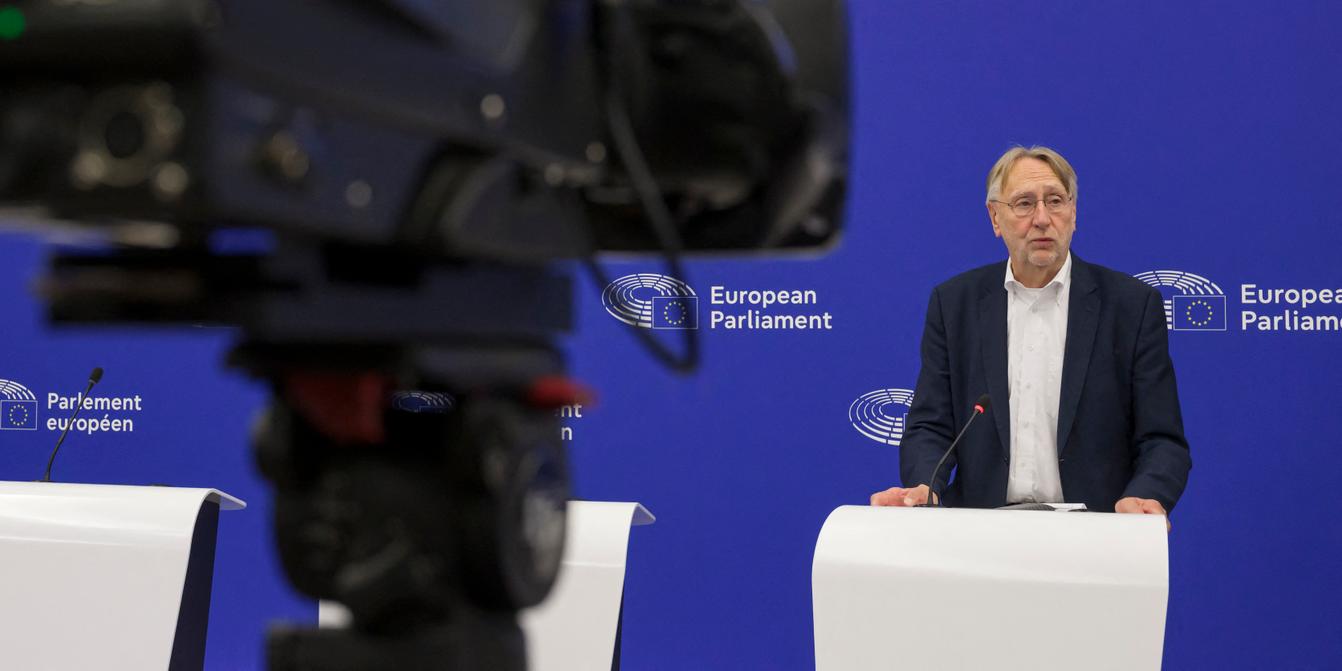
European Parliament Votes to Postpone Ratification of Turnberry Deal On 23 February 2026 the European Parliament voted to delay ratifying the EU‑U.S. trade pact signed at Donald Trump’s Turnberry golf resort on 27 July 2025 [1]. Bernd Lange, chair of the International Trade Committee, warned that without a clear U.S. tariff framework, EU exports could face duties above the 15 % limit [1][3]. The postponement reflects growing political pressure, with many leaders describing the deal as a diplomatic embarrassment [1].
Markets React to Tariff Reversal with Mixed Regional Moves U.S. equity futures slipped after earlier modest gains, with the S&P 500 futures down 0.8 % and Nasdaq futures down 1 % on 23 February 2026 [2]. Asian equities diverged: Hong Kong’s Hang Seng rose 2.2 %, South Korea’s Kospi fell 0.1 %, and Australia’s ASX 200 dropped 0.6 % amid holiday closures [2]. Bitcoin fell 5 % below $65,000, while crude oil prices slipped 77 cents and the euro strengthened to $1.1820 [2].
EU Seeks Clarification and Threatens Anti‑Coercion Measures The European Commission formally requested “full clarity” from Washington on its tariff commitments after the court’s ruling [3]. President Trump announced a push for a 15 % global tariff, up from a previously hinted 10 % rate, intensifying EU concerns [3]. In response, the EU warned it could activate its Anti‑Coercion Instrument to block U.S. firms from the bloc’s 450‑million‑consumer market if coercive tariffs persist [3].
Source Discrepancy on Supreme Court Decision Date The Hindu reports the Supreme Court’s decisive ruling on 23 February 2026, while AP’s February 20 2026 article describes the same decision occurring two days earlier [2][4]. Both accounts agree the Court nullified most Trump tariffs, but the exact date of the announcement differs between outlets.
Sources
-
1.
Le Monde: EU Parliament Halts Ratification of US Trade Deal Amid New Tariff Uncertainty: Details the 23 Feb vote to postpone the Turnberry deal, Supreme Court’s 20 Feb ruling, and the new U.S. levy on EU imports, emphasizing political backlash and tariff ceiling concerns .
-
2.
The Hindu: Markets React to Supreme Court’s Reversal of Trump Tariffs: Focuses on global market fallout, including futures, Asian equities, Bitcoin dip, and commodity price shifts following the Court’s decision .
-
3.
AP (EU Seeks US Clarification): EU Seeks US Clarification After Court Blocks Trump Tariffs: Highlights the EU Commission’s demand for U.S. clarity, Trump’s 15 % tariff push, and the bloc’s threat to use its Anti‑Coercion Instrument .
-
4.
AP (Wall Street steadies): Wall Street steadies as Supreme Court overturns Trump tariffs: Reports modest U.S. stock gains on 20 Feb, analyst expectations, and Trump’s promise of a 10 % executive‑order tariff tool .
Related Tickers
Timeline
Aug 2025 – A U.S. appeals court rules most of President Trump’s tariffs illegal but leaves them in place while the administration seeks a Supreme Court ruling, keeping the threat alive for European exporters[4].
Jun 2025 – The United Kingdom secures a 10 % U.S. tariff rate on its goods—the lowest among U.S. trade partners—covering the first 100,000 vehicles annually, but the broader steel‑tariff exemption is put on hold[4].
27 Jul 2025 – The “Turnberry” U.S.–EU trade pact is signed at Donald Trump’s Turnberry golf resort, capping U.S. tariffs on EU imports at 15 % and linking U.S. investment commitments to lower duties[1][26].
Aug 2025 – The same appeals court decision (see Aug 2025 above) fuels U.S.‑EU tension as the court’s partial stay leaves the tariffs effective pending a Supreme Court judgment[4].
31 Dec 2025 – Analysts note that several high‑profile tariff promises—200 % on European whiskey, 100 % on foreign films and pharma—remain unrealized, highlighting a pattern of “unrealized tariff threats” in the Trump administration[22].
Mid‑Jan 2026 – President Trump announces a 10 % import levy on eight European NATO allies (Denmark, Norway, Sweden, France, Germany, the UK, the Netherlands, Finland) to start 1 Feb, warning it could rise to 25 % by 1 Jun if Greenland negotiations fail[13][20].
19 Jan 2026 – Trump frames the tariffs as a “national‑security priority” and declares he is “100 % committed to following through on the threat”[11]; the same day, Greenland’s premier Jens‑Frederik Nielsen says “the territory will not buckle under pressure”[13].
19 Jan 2026 – The EU’s anti‑coercion instrument—dubbed a “trade bazooka”—is put on the table as a possible retaliation, though activation could take up to ten weeks after member‑state approval[2][13].
19 Jan 2026 – European stock indices plunge (DAX –1.3 %, CAC –1.9 %, FTSE –0.4 %) and U.S. futures slide as markets react to the tariff threat, while gold spikes to $4,689/oz and silver to $94/oz as investors seek safe havens[19][21].
19 Jan 2026 – The IMF warns that trade tensions, including the Greenland tariff row, remain a “main risk to growth” in its World Economic Outlook[3].
20 Jan 2026 – Wall Street sinks further, with the S&P 500 down 2.1 % and the Dow off 870 points, as the 10 % tariff threat takes effect on 1 Feb and investors rush to gold and silver[24].
21 Jan 2026 – The European Parliament suspends its ratification of the Turnberry deal, citing Greenland‑related security concerns and warning “no compromise until Trump ends threats”[1].
21 Jan 2026 – EU lawmakers block a vote on the U.S.–EU trade pact amid fears of up‑to‑35 % tariffs on countries opposing Greenland, deepening uncertainty over the agreement’s future[7].
21 Jan 2026 – After a “productive meeting” with NATO Secretary‑General Mark Rutte, Trump posts that the talks “helped form the framework of a future Greenland and Arctic deal” and pledges not to impose the February tariffs[6].
21 Jan 2026 – U.S. equities rebound sharply (Dow +589 pts, S&P +1.16 %, Nasdaq +1.18 %) as the tariff threat recedes and investors cite the “framework” announcement as a de‑escalation signal[6].
22 Jan 2026 – Following a Davos meeting, Trump withdraws the Greenland tariffs, describing the outcome as a “framework of a future deal” and prompting a rally in U.S. and global markets[9][17].
23 Jan 2026 – Stocks surge after the tariff reversal, with the Dow climbing again, gold breaking $4,900/oz and silver topping $100/oz, while analysts note the market’s “TACO” shorthand for rapid policy retreats[5].
20 Feb 2026 – The U.S. Supreme Court strikes down the administration’s sweeping tariff regime, easing market panic; the S&P 500 rises 0.7 % and the Dow 0.5 % as investors had largely anticipated the ruling[15].
20 Feb 2026 – Trump vows to issue a new 10 % global tariff via an executive order for up to 150 days and to pursue additional duties through Commerce Department investigations[15].
22 Feb 2026 – The European Commission demands “full clarity” from Washington after the Court’s decision and warns it may activate the anti‑coercion instrument if the U.S. fails to honor the 15 % tariff ceiling set in the 2025 Turnberry statement[14].
23 Feb 2026 – Markets react to the Court’s reversal: U.S. equity futures dip modestly, gold climbs 1.9 %, and analysts stress the “winners‑and‑losers effect of shifts in tariff policy” while noting continued uncertainty[23].
24 Feb 2026 – The European Parliament votes to postpone ratifying the Turnberry agreement, citing the February Supreme Court ruling and the risk that U.S. import taxes could exceed the 15 % cap, effectively halting the deal pending legal clarity[26].
Future (2026‑2027) – The EU’s anti‑coercion instrument requires four months for investigation, six months for negotiation, and up to ten weeks for member‑state approval before any retaliatory measures can be deployed, meaning any EU response to renewed U.S. tariffs could extend into late 2026 or beyond[2].
Dive deeper (4 sub-stories)
-
EU Parliament Delays Turnberry Trade Deal as US Court Strikes Down Tariffs
(15 articles)
-
Supreme Court Overturns Trump Tariffs, Triggers Mixed U.S. Futures and Global Market Shifts
(2 articles)
-
Trump Reverses Greenland Tariffs, Sending U.S. Stocks Soaring on Jan 23
(5 articles)
-
Trump Threatens 10% Tariffs on Eight European Nations, Markets React Sharply
(4 articles)
All related articles (26 articles)
-
Le Monde: EU Parliament Halts Ratification of US Trade Deal Amid New Tariff Uncertainty
-
The Hindu: Markets React to Supreme Court’s Reversal of Trump Tariffs
-
AP: EU Seeks US Clarification After Court Blocks Trump Tariffs
-
AP: Wall Street steadies as Supreme Court overturns Trump tariffs
-
AP: Allies Accelerate Trade Diversification Amid Trump’s Tariff Threats
-
CNN: Trump's Greenland tariff reversal sparks stocks rebound amid ongoing policy uncertainty
-
AP: U.S. stocks rise as Trump walks back Greenland tariffs
-
Newsweek: Trump withdraws Greenland tariffs after Davos meeting, signaling faster reversals
-
BBC: EU suspends approval of US trade deal amid Greenland tensions
-
AP: U.S. stocks rebound after Trump halts Greenland tariffs
-
CNN: US stocks rebound as Trump softens Greenland stance and backs off tariff threat
-
CNN: EU blocks vote on US-EU trade deal as Trump backs down on Greenland tariffs
-
Newsweek: EU-US trade deal on hold as Greenland tariff threats escalate
-
Newsweek: Trump Greenland threats trigger Sell America trade
-
King5 (Seattle, WA): Markets slide as Trump threatens tariffs on eight European nations over Greenland
-
AP: Wall Street slides as Trump threatens tariffs on eight NATO members
-
AP: Trump tariff threat drags European shares and US futures
-
Newsweek: US stocks set to open lower as Greenland tariff threats loom
-
Newsweek: EU bazooka could be deployed against Trump over Greenland tariffs
-
AP: Trump threatens 10% tariffs on eight EU nations over Greenland, triggering European diplomacy
-
BBC: Gold and silver hit record highs as tariff threat rattles markets
-
BBC: Europe weighs response to Trump's Greenland tariffs threat
-
CNN: Trump's Greenland tariffs trigger EU countermeasures and market uncertainty
-
King5 (Seattle, WA): Trump tariffs on Europe threaten Washington state exports as Greenland move looms
-
BBC: Trump threatens 10% tariffs on eight allies over Greenland dispute as court case looms
-
AP: Trump’s unrealized tariff threats in 2025
External resources (7 links)
- https://assets.publishing.service.gov.uk/media/67b6f8efbd116e3d7b1cf310/united-states-trade-and-investment-factsheet-2025-02-21.pdf (cited 1 times)
- https://www.cnbc.com/2025/08/05/trump-says-pharma-tariffs-could-eventually-reach-up-to-250percent.html (cited 1 times)
- https://www.reuters.com/business/eu-suspend-us-tariff-countermeasures-6-months-2025-08-04/ (cited 1 times)
- https://www.reuters.com/markets/us/ (cited 1 times)
- https://www.bloomberg.com/news/articles/2026-01-18/macron-to-seek-use-of-eu-anti-coercion-instrument-against-trump (cited 2 times)
- https://archive.is/dFSWb#selection-1353.210-1353.255 (cited 1 times)
- https://www.europarl.europa.eu/news/en/press-room/20260121IPR32541/eu-us-trade-deal-turnberry-legislation-on-hold-until-greenland-threats-cease (cited 1 times)