U.S. Reduces Indian Tariffs to 18% Triggering Market Rally and Mixed Political Reactions
Updated (20 articles)
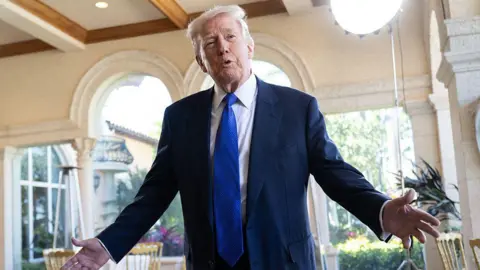
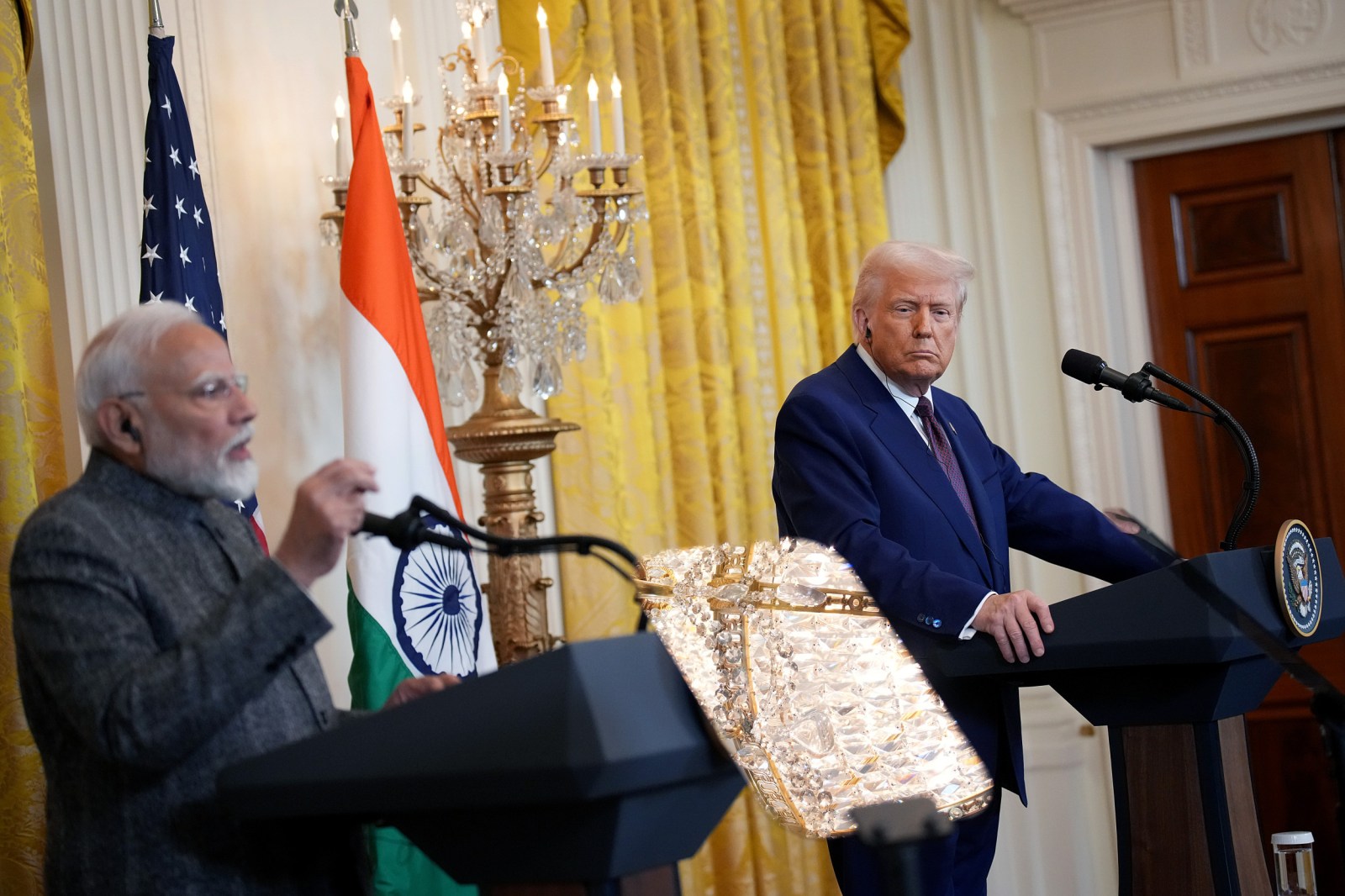

Tariff Cut Announced During Trump‑Modi Call President Donald Trump announced on Feb 2, 2026 that the U.S. reciprocal tariff on Indian goods will drop from a 25‑50% range to a flat 18% after a phone conversation with Prime Minister Narendra Modi [1][2][3][6]. The reduction takes effect immediately, removing the 25% penalty imposed in August 2025 and superseding the 50% combined rate that had been in place [4][5]. The move is framed as part of a broader, still‑undisclosed trade agreement that could affect sectors such as energy, technology, agriculture and coal [2][4][5].
Indian Markets Surge and Export Sectors Celebrate The Nifty 50 opened at 26,308.05, up 4.86%, and the BSE Sensex rose 4.48% to 85,323.20 following the announcement, with gems, textiles and leather stocks jumping 15‑20% [1]. GJEPC Chairman Kirit Bhansali hailed “immense relief” for diamond and jewellery manufacturers, noting zero‑duty imports for loose diamonds and coloured gemstones under Annexure 3 [1]. Industry bodies expect a sector‑wide boost, while analysts note the cut still leaves India above regional competitors such as Bangladesh (20%) and Vietnam (20%) [2].
Political Praise Countered by Opposition Concerns Haryana Chief Minister Nayab Singh Saini called the deal a “historic leap” for bilateral ties, and U.S. Senator Jim Risch praised India as a “close partner” against China and Russia [1]. Conversely, Samajwadi Party president Akhilesh Yadav warned that opening Indian markets to U.S. farm produce threatens the 70% of Indians dependent on agriculture [1]. Congress leader Jairam Ramesh accused Modi of “capitulating” and suggested Trump’s leverage over India [3][6].
Unresolved Deal Details and Strategic Discrepancies Trump claimed India pledged $500 billion in U.S. purchases and would halt Russian oil imports, linking the tariff cut to ending the Ukraine war [4][5][7]. The Ministry of External Affairs has not verified the oil pledge, and data shows a 29% month‑on‑month drop in Russian crude imports but no official confirmation [2]. The $500 billion figure far exceeds current bilateral trade of $131 billion and Indian investment of $40 billion, indicating a multi‑year, multi‑sector estimate [2]. The U.S. also maintains pressure on India’s projects with Iran, prompting a possible pause to the Chabahar port initiative [2][5].
Sources
-
1.
The Hindu: India‑U.S. Trade Deal Cuts Tariffs to 18%, Sparks Market Rally and Industry Praise – Details the tariff cut, market surge, sector praise, and political reactions, emphasizing investor optimism .
-
2.
The Hindu: U.S. Cuts Tariffs on Indian Goods to 18% Amid Unresolved Trade Deal Details – Highlights the tariff reduction, lack of clarity on broader agreement, and disputed $500 bn pledge and Russian oil claim .
-
3.
The Hindu: India‑U.S. Trade Deal Lowers Indian Tariffs to 18% Amid Praise and Criticism – Focuses on political endorsements from Indian ministers and opposition criticism of Modi’s concession .
-
4.
AP: Trump Announces 18% Tariff Cut for India After Russian Oil Deal – Links the tariff cut to India’s alleged halt of Russian oil purchases and Trump’s claim it will help end the Ukraine war .
-
5.
BBC: US‑India Trade Deal Cuts Tariffs to 18% After India Halts Russian Oil Purchases – Reports the tariff reduction, the $500 bn purchase commitment, and the context of the EU‑India free‑trade pact .
-
6.
The Hindu: Modi and Trump announce 18% U.S. tariff on “Made in India” goods – Provides Modi’s announcement, Trump’s Truth Social post, and notes the foreign ministry’s silence on oil and tariff specifics .
-
7.
Newsweek: Trump Announces Surprise Trade Deal Cutting U.S. Tariffs on Indian Goods to 18% – Describes the surprise announcement, timing after the EU‑India pact, and Treasury’s view of the tariff move as pressure on Russia .
Timeline
Dec 24, 2025 – The United States imposes a 25 % tariff on Indian imports, effective Aug 1, 2025, and expands it to 50 % on Aug 27, 2025, targeting labor‑intensive goods such as apparel, gems, jewellery and seafood, marking a sharp turn in bilateral trade relations and adding pressure on India’s export sectors [20].
Dec 25, 2025 – India enters the year with high diplomatic expectations, but U.S. tariffs derail its ties, while regional security strains surface after the Pahalgam terror attack and unresolved China‑Russia dynamics, underscoring a fragile geopolitical environment [19].
Jan 5, 2026 – President Trump posts on Truth Social that U.S. tariff receipts will exceed $600 billion, claiming the levies strengthen national security and finance, and he also asserts that India has “reduced it very substantially” in Russian oil imports to please him [17][18].
Jan 6, 2026 – At a House GOP retreat, Trump says Prime Minister Modi is “not that happy with me” over U.S. tariffs tied to Russian oil purchases, recounts Modi’s request for a private meeting, and announces a change in the delivery of the 68 Apache helicopters India has long awaited [16].
Jan 7, 2026 – Trump backs the Russia Sanctions Act, a bipartisan bill that would allow up to 500 % tariffs on secondary purchases of Russian oil, and simultaneously announces the United States’ withdrawal from the India‑led International Solar Alliance, intensifying pressure on Delhi’s energy policy [14].
Jan 8, 2026 – Trump signs a memorandum withdrawing the United States from more than 60 international organisations, including climate bodies, while reiterating support for the 500 % tariff bill, further reshaping U.S. multilateral engagement and amplifying diplomatic pressure on India [15].
Jan 9, 2026 – U.S. Commerce Secretary Howard Lutnick claims Modi did not call Trump to seal the trade deal; India’s Ministry of External Affairs refutes the allegation, cites eight Modi‑Trump calls in 2025, and reaffirms commitment to a balanced U.S.–India trade pact [13][12][3].
Jan 9, 2026 – Ambassador‑designate Sergio Gor lands in New Delhi, signaling a new diplomatic phase as he prepares to assume his post on Jan 12 amid ongoing trade frictions and recent high‑level ministerial visits to Washington in 2025 [10].
Jan 9, 2026 – Prime Minister Modi posts on X that the United States will apply an 18 % tariff to “Made in India” goods, thanking President Trump on behalf of 1.4 billion Indians, while the Ministry of External Affairs has not yet responded to Trump’s claims about halting Russian oil imports [9].
Jan 10, 2026 – India’s Ministry of External Affairs reiterates a balanced trade pact with the United States, Parliament schedules the Budget Session to begin Jan 28 with the Union budget expected in February, and a Taliban‑appointed diplomat arrives in Delhi, highlighting concurrent diplomatic developments [11].
Jan 12, 2026 – U.S. Ambassador Sergio Gor tells reporters in Delhi that trade talks remain active, notes a scheduled follow‑up call on Tuesday, and emphasizes the enduring friendship between President Trump and Prime Minister Modi despite tariff disputes [2].
Feb 1, 2026 – India’s Union budget omits any allocation for the Chabahar port project, suggesting a pause in the initiative amid U.S. pressure on Iranian‑related trade and the broader sanctions environment [7].
Feb 2, 2026 – President Trump announces on Truth Social a surprise India‑U.S. trade deal that cuts U.S. tariffs on Indian goods to 18 %, removes the 25 % penalty linked to Russian oil purchases, and ties the relief to India’s pledge to halt Russian crude imports and boost U.S. purchases to over $500 billion, while Treasury Secretary Scott Bessent links the move to choking Kremlin revenue [4][1][5].
Feb 2, 2026 – Prime Minister Modi welcomes the 18 % tariff on a post on X, describing it as “delighted” for 1.4 billion Indians and thanking Trump, while downplaying the Russian oil clause, and he arrives in Washington for a three‑day Critical Minerals Ministerial that aims to sign a non‑binding supply‑chain resilience document [9][4].
Feb 2, 2026 – The European Union and India sign a free‑trade agreement a week earlier, projected to double EU exports to India by 2032, providing Delhi leverage and prompting Washington to act before being outflanked by Europe, as EU Commission President Ursula von der Leyen calls it “the mother of all deals” [1].
Feb 3, 2026 – The United States formally reduces tariffs on Indian goods from 25 % to 18 % during a Trump‑Modi call, with the penalty tariff removed, while details of the broader bilateral agreement remain undisclosed, leaving market‑access questions for soybeans, dairy and other sectors unresolved [7].
Feb 3, 2026 – Indian officials hail the tariff cut as a growth catalyst: External Affairs Minister S. Jaishankar calls it a job‑creating “Make in India” boost, Home Minister Amit Shah labels it historic, and Union Minister Ashwini Vaishnaw stresses the democratic alliance’s development potential, even as opposition leader Jairam Ramesh accuses Modi of capitulation [6].
Feb 3, 2026 – Indian equity markets rally, with the Nifty 50 opening up 4.86 % and the Sensex rising 4.48 %, while diamond and jewellery manufacturers anticipate a sector‑wide boost from “zero duty” imports under the new tariff schedule, and the rupee is expected to tighten to the 90.15‑90.25 range versus the dollar [8].
Feb 3, 2026 – Analysts note that the 18 % tariff, though lower than the previous 25‑50 % range, still exceeds rates for regional competitors such as Bangladesh (20 %) and Vietnam (20 %), and India continues to seek a further reduction toward roughly 15 % after the U.S. withdrew a 5 % GSP concession in 2019, highlighting ongoing competitive pressures [7].
Feb 3, 2026 – The United States alleges India pledged $500 billion in purchases of American energy, technology, agriculture and coal products, a figure the Ministry of External Affairs does not verify, while data show Indian imports of Russian crude fell 29 % month‑on‑month in early 2026, reflecting mixed evidence on the oil pledge [7].
Feb 3, 2026 – The U.S. continues to pressure India on strategic projects, threatening 25 % tariffs on countries doing business with Iran, prompting Delhi to consider scaling back the Chabahar port project, as indicated by its absence from the February 1 budget, echoing similar 2019 pressures after U.S. sanctions on Iranian oil [7].
Dive deeper (5 sub-stories)
-
Trump‑India Trade Deal Lowers U.S. Tariff on Indian Goods to 18% After Russian Oil Clause
(11 articles)
-
US Ambassador Gor Confirms Ongoing India‑US Trade Talks Amid Tariff Dispute
(3 articles)
-
India and U.S. Trade Talks Continue After Tariffs and Call Dispute
(3 articles)
-
Trump Backs 500% Tariffs and Pulls U.S. From Solar Alliance as India Cuts Russian Oil
(2 articles)
-
The Hindu: Trump says India cut Russian oil to please him; Graham backs ambassador claim
All related articles (20 articles)
-
The Hindu: India‑U.S. Trade Deal Cuts Tariffs to 18%, Sparks Market Rally and Industry Praise
-
The Hindu: U.S. Cuts Tariffs on Indian Goods to 18% Amid Unresolved Trade Deal Details
-
The Hindu: India‑U.S. Trade Deal Lowers Indian Tariffs to 18% Amid Praise and Criticism
-
AP: Trump Announces 18% Tariff Cut for India After Russian Oil Deal
-
BBC: US‑India Trade Deal Cuts Tariffs to 18% After India Halts Russian Oil Purchases
-
The Hindu: Modi and Trump announce 18% U.S. tariff on “Made in India” goods
-
Newsweek: Trump Announces Surprise Trade Deal Cutting U.S. Tariffs on Indian Goods to 18%
-
BBC: US ambassador says India-US trade talks continue amid tariff tensions
-
The Hindu: MEA reaffirms balanced trade pact with US as Taliban diplomat arrives in Delhi and other developments
-
The Hindu: U.S. ambassador-designate Gor arrives in India, cites opportunities ahead
-
The Hindu: MEA rebuts Lutnick claim, says Modi-Trump spoke eight times in 2025 as trade talks persist
-
BBC: India denies Lutnick claim that Modi didn't call Trump as US-India trade talks stall
-
The Hindu: Lutnick says Modi didn't call Trump, derailing India-U.S. trade deal
-
The Hindu: Trump's tariff and withdrawal moves heighten energy and diplomatic pressure on India as domestic and global stories unfold
-
The Hindu: Trump backs bill for up to 500% tariffs on Russian oil buyers and pulls U.S. from India-led International Solar Alliance
-
The Hindu: Trump says PM Modi is “not that happy” over US tariffs, cites cuts to Russian oil and Apache deliveries
-
The Hindu: Trump says U.S. tariff receipts will top $600B, touts national strength
-
The Hindu: Trump says India cut Russian oil to please him; Graham backs ambassador claim
-
The Hindu: India enters 2025 with high diplomatic expectations, then faces U.S. tariffs and regional strain
-
The Hindu: Tariffs, reforms, and EV entries shape India's 2025 business year
External resources (6 links)
- https://www.youtube.com/@bbcnewsindia/featured (cited 1 times)
- https://www.mea.gov.in/Speeches-Statements.htm?dtl%2F39945%2FStatement_by_Official_Spokesperson (cited 1 times)
- https://www.reuters.com/world/china/indias-exports-defy-tariffs-strengthen-hand-us-trade-talks-2025-12-16/ (cited 1 times)
- https://www.facebook.com/bbcindia/ (cited 1 times)
- https://www.instagram.com/bbcnewsindia/ (cited 1 times)
- https://x.com/BBCIndia (cited 1 times)