Trump‑India Trade Deal Lowers U.S. Tariff on Indian Goods to 18% After Russian Oil Clause
Updated (11 articles)
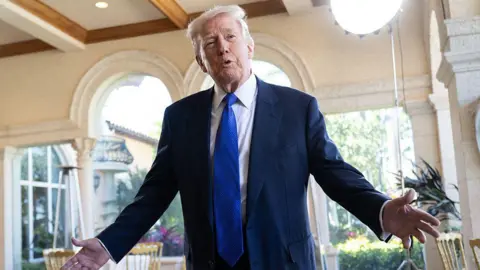

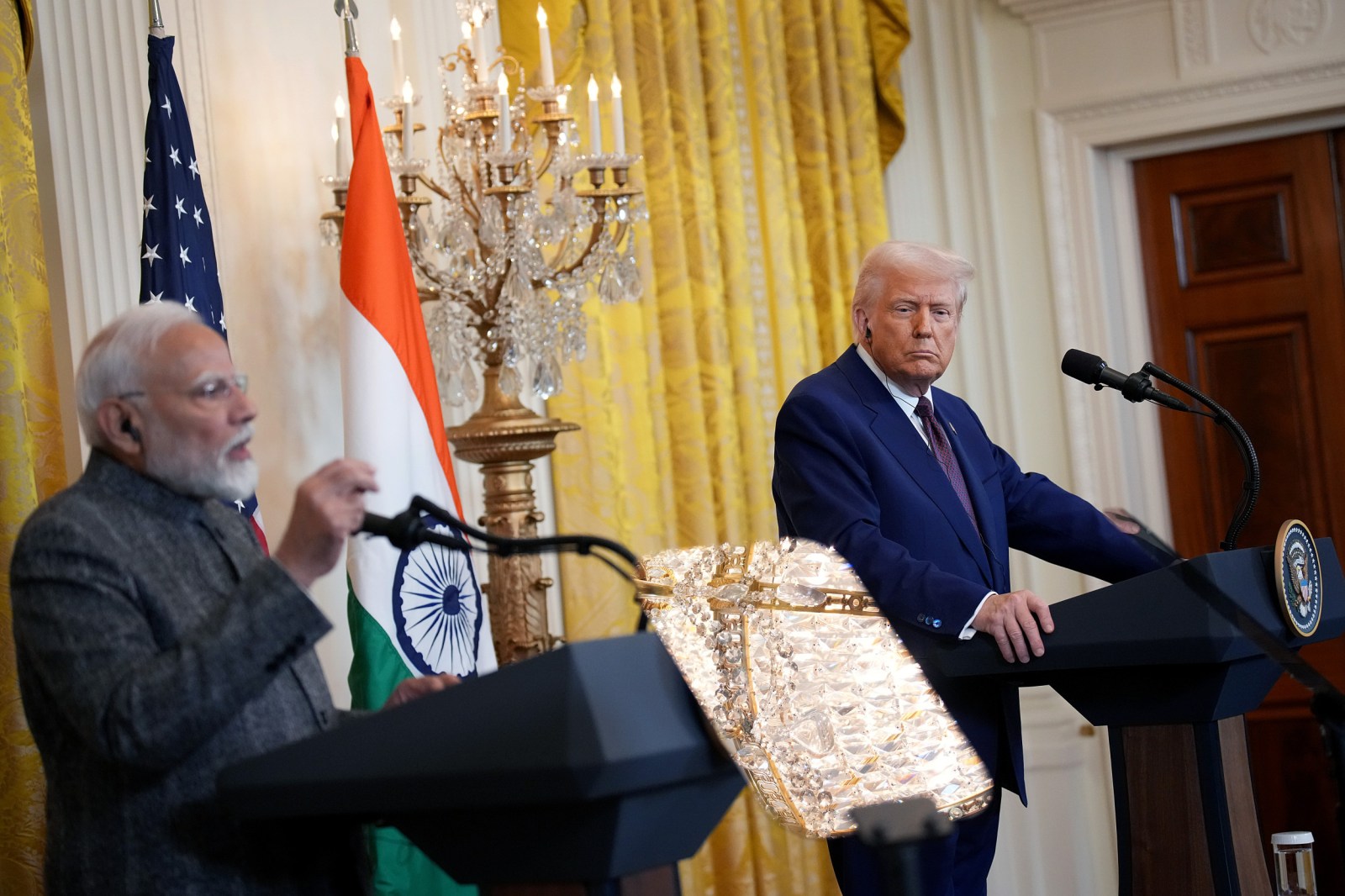
Tariff Rate Slashed to 18% Following Feb 2 Phone Call President Donald Trump announced on Feb 2 that the United States will reduce the reciprocal tariff on Indian exports from the previous 25%‑50% range to a flat 18% effective immediately, replacing the 50% penalty imposed in August 2025 [1][2][3][4][5][6][7]. The cut was confirmed during a telephone conversation with Prime Minister Narendra Modi and was framed as part of a broader trade agreement announced on Feb 3 [1][3][6]. Indian officials described the move as a “historic” step to boost jobs, growth, and “Make In India” initiatives [3][6]. The United States also pledged to eliminate Indian tariffs and non‑tariff barriers, though the exact scope of those concessions remains undisclosed [2][5].
Deal Tied to India’s Halt of Russian Oil Imports Trump linked the tariff reduction to India’s commitment to cease purchases of Russian crude, a claim Modi echoed on X while downplaying the clause [4][5][7]. Data from CREA showed a 29% month‑on‑month drop in Russian oil imports in early 2026, and Reliance Industries reported no Russian oil received in January 2026, lending some credence to the pledge [2]. The Indian Ministry of External Affairs has not officially confirmed the cessation, maintaining that oil decisions are market‑driven [2][6]. U.S. officials, including Treasury Secretary Scott Bessent, highlighted the move as a strategy to pressure Russia by cutting revenue from oil sales [7].
Pledged $500 Billion U.S. Purchases and Investment Trump asserted that India committed to “Buy American” across energy, technology, agriculture and coal, totaling over $500 billion [4][5][7]. The Ministry of External Affairs declined to verify any such figure, noting current bilateral trade in goods stands at about $131 billion and Indian investment in the U.S. averages $40 billion [2]. Analysts view the $500 billion claim as a multi‑year, multi‑sector target rather than an immediate obligation [2][5]. The lack of concrete timelines has prompted skepticism from Indian opposition leaders who question the deal’s strategic value [3][6].
Market Surge and Political Reactions Across Capitals Indian equity markets reacted sharply, with the Nifty 50 opening up 4.86% and the Sensex rising 4.48% on Feb 3, while gems, textiles and leather stocks jumped 15‑20% [1]. The rupee was expected to strengthen, trading around 90.2 per dollar, reflecting anticipated foreign inflows [1]. Indian leaders such as Haryana Chief Minister Nayab Singh Saini, Home Minister Amit Shah and External Affairs Minister S. Jaishankar praised the agreement as a catalyst for growth [1][3]. Opposition figures, including Samajwadi Party president Akhilesh Yadav and Congress leader Jairam Ramesh, warned that the deal could compromise agricultural interests and signal capitulation to U.S. pressure [1][3][6].
Sources
-
1.
The Hindu: India‑U.S. Trade Deal Cuts Tariffs to 18%, Sparks Market Rally and Industry Praise: Highlights tariff cut, market surge, industry relief, political praise, and opposition concerns over agriculture .
-
2.
The Hindu: U.S. Cuts Tariffs on Indian Goods to 18% Amid Unresolved Trade Deal Details: Emphasizes tariff reduction, vague broader agreement, competitive rate context, mixed evidence on Russian oil halt, and $500 bn claim skepticism .
-
3.
The Hindu: India‑U.S. Trade Deal Lowers Indian Tariffs to 18% Amid Praise and Criticism: Focuses on political endorsements, Modi’s gratitude, and Congress criticism labeling the deal as capitulation .
-
4.
AP: Trump Announces 18% Tariff Cut for India After Russian Oil Deal: Links tariff cut directly to India’s pledge to stop Russian oil purchases and frames it as aiding the Ukraine war effort .
-
5.
BBC: US‑India Trade Deal Cuts Tariffs to 18% After India Halts Russian Oil Purchases: Reports tariff drop, $500 bn purchase pledge, and mentions concurrent EU‑India free‑trade pact .
-
6.
The Hindu: Modi and Trump announce 18% U.S. tariff on “Made in India” goods: Details Modi’s announcement, Trump’s Truth Social post, and notes the foreign ministry’s pending response .
-
7.
Newsweek: Trump Announces Surprise Trade Deal Cutting U.S. Tariffs on Indian Goods to 18%: Describes surprise announcement, timing after EU‑India pact, Treasury’s Russia‑pressure rationale, and strategic supply‑chain implications .
Timeline
July 30, 2025 – President Donald Trump announces a 25% tariff on Indian imports effective Aug 1, tying it to India’s purchases of Russian oil and framing it as a geopolitical penalty, the first major U.S. trade sanction on India in his second term [11].
Aug 27, 2025 – The Trump administration expands the tariff on Indian goods to 50% via an executive order, reinstating the penalty after a brief suspension and intensifying pressure on India amid stalled trade talks [11].
Nov 21, 2025 – India’s Union Government notifies all four Labour Codes, consolidating 13 central labour statutes into unified wage, bonus, safety and social‑security rules that will become fully operational on Apr 1, 2026, marking a major regulatory overhaul for employers and workers [11].
Dec 16, 2025 – Parliament passes a bill raising the foreign‑direct investment cap in the insurance sector from 74% to 100%; the finance minister says the change will attract capital, technology and better products, deepening foreign participation in a strategic industry [11].
Dec 24, 2025 – India’s 2025 business year sees GST reforms that cut slabs to 5% and 18%, record‑high GST revenue of ₹2.37 lakh crore, and four RBI rate cuts totalling 125 bps to 5.25%, while the Digital Personal Data Protection Act is partially notified, reflecting a broad policy drive to boost growth and data privacy [11].
Dec 25, 2025 – New Delhi enters 2025 with high diplomatic expectations, planning bilateral visits and multilateral engagements, but U.S. tariffs on Indian labour‑intensive goods and a 25% surcharge on Russian oil imports erode trust and complicate the anticipated reset of India‑U.S. ties [10].
Jan 5, 2026 – President Trump posts on Truth Social that U.S. tariff receipts will exceed $600 billion, claiming the levies make America “financially stronger” and bolster national security ahead of a Supreme Court‑related tariff decision [9].
Jan 6, 2026 – Speaking at a GOP retreat, Trump says Prime Minister Modi is “not that happy with me” over the 50% tariffs tied to Russian oil purchases, recounts Modi’s request for a private meeting, and announces a change to the pending delivery of 68 Apache helicopters, highlighting personal rapport amid policy friction [8].
Feb 1, 2026 – India’s Union budget omits any allocation for the Chabahar port project, suggesting a pause in the Iran‑linked initiative as the United States threatens 25% tariffs on firms doing business with Iran, echoing earlier pressure that led India to curtail Iranian oil purchases in 2019 [5].
Feb 2, 2026 – President Trump uses Truth Social to announce a surprise India‑U.S. trade deal that cuts U.S. tariffs on Indian goods from 25% (or 50% combined) to 18% and removes the 25% penalty linked to Russian oil, contingent on India halting Russian crude imports and pledging $500 billion of U.S. purchases, framing the move as a win for American workers and a step toward ending the Ukraine war [2][1].
Feb 2, 2026 – Prime Minister Modi posts on X that he is “delighted” Indian products will face an 18% tariff and thanks President Trump on behalf of 1.4 billion Indians, while downplaying the Russian‑oil clause, positioning the deal as a boost for exporters [2][7].
Feb 2, 2026 – Newly appointed U.S. Ambassador to India Sergio Gor teases the announcement with a “STAY TUNED…” post, indicating direct high‑level coordination behind the tariff cut [2].
Feb 2, 2026 – Treasury Secretary Scott Bessent notes that India’s purchases of Russian oil have “collapsed,” linking the tariff relief to a strategy of choking Kremlin revenue and supporting Ukraine [2].
Feb 2, 2026 – The European Union and India sign a free‑trade pact a week earlier, expected to double EU exports to India by 2032, with EU Commission President Ursula von der Leyen calling it “the mother of all deals,” a development that likely spurs Washington’s swift action [1].
Feb 2, 2026 – External Affairs Minister S. Jaishankar arrives in Washington for a three‑day visit that includes a Critical Minerals Ministerial chaired by Secretary of State Marco Rubio, where a non‑binding document on supply‑chain resilience is expected to be signed, linking the trade deal to broader clean‑energy cooperation [7].
Feb 2, 2026 – Trump claims the tariff cut will help end the Ukraine war, stating “thousands are dying each week,” and ties the reduction to global peace, stability and prosperity in a Truth Social post [3].
Feb 3, 2026 – The United States formally lowers the reciprocal tariff on Indian goods to 18% after the Feb 2 phone call, with the change effective immediately, while details of the broader agreement—including market‑access for soybeans and dairy—remain undisclosed, prompting industry uncertainty [5][4].
Feb 3, 2026 – Indian External Affairs Minister S. Jaishankar hails the deal as a “growth catalyst,” saying it will create jobs, spur innovation and strengthen “Make in India,” while Home Minister Amit Shah calls the day “historic” for bilateral relations, reflecting high‑level political endorsement [4].
Feb 3, 2026 – Union Minister Ashwini Vaishnaw emphasizes the democratic alliance, noting the United States and India can co‑create technologies and benefit citizens, framing the trade pact as a partnership of the world’s two largest democracies [4].
Feb 3, 2026 – The “We Pay the Tariffs” coalition of 800 U.S. small firms warns the new 18% rate is six times higher than the pre‑Trump average of 2.5%, labeling the deal a “tax hike” that could hurt small‑business competitiveness [1].
Feb 3, 2026 – Diamond and jewellery industry leaders celebrate the tariff cut, with GJEPC Chairman Kirit Bhansali saying it provides “immense relief” and will give “zero duty imports” for loose diamonds and coloured gemstones, anticipating a sector‑wide boost [6].
Feb 3, 2026 – Indian equity markets rally, with the Nifty 50 opening at 26,308.05 (+4.86%) and the BSE Sensex at 85,323.20 (+4.48%); gems, textiles and leather stocks jump 15‑20%, reflecting investor optimism about the trade deal’s impact on exports [6].
Feb 3, 2026 – The rupee’s one‑month non‑deliverable forward rate tightens to the 90.15‑90.25 range versus the dollar, tighter than the prior 91.5125 close, as foreign inflows are expected to return following the tariff reduction [6].
Feb 3, 2026 – Congress leader Jairam Ramesh accuses Prime Minister Modi of “capitulating finally,” criticizing the deal as leveraging U.S. pressure over Russian oil and questioning its merit, highlighting domestic political backlash in India [4].
Future (expected) – The Critical Minerals Ministerial is slated to sign a non‑binding document on supply‑chain resilience and clean‑energy cooperation during Jaishankar’s Washington visit, setting the stage for deeper strategic collaboration beyond the tariff cut [7].
Dive deeper (8 sub-stories)
-
The Hindu: India‑U.S. Trade Deal Cuts Tariffs to 18%, Sparks Market Rally and Industry Praise
-
The Hindu: U.S. Cuts Tariffs on Indian Goods to 18% Amid Unresolved Trade Deal Details
-
The Hindu: India‑U.S. Trade Deal Lowers Indian Tariffs to 18% Amid Praise and Criticism
-
Trump Cuts India Tariffs to 18% After Modi’s Russian Oil Halt Promise
(3 articles)
-
Trump Secures 18% U.S. Tariff Cut for Indian Goods After Russia Oil Stipulation
(2 articles)
-
The Hindu: Trump says U.S. tariff receipts will top $600B, touts national strength
-
The Hindu: India enters 2025 with high diplomatic expectations, then faces U.S. tariffs and regional strain
-
The Hindu: Tariffs, reforms, and EV entries shape India's 2025 business year
All related articles (11 articles)
-
The Hindu: India‑U.S. Trade Deal Cuts Tariffs to 18%, Sparks Market Rally and Industry Praise
-
The Hindu: U.S. Cuts Tariffs on Indian Goods to 18% Amid Unresolved Trade Deal Details
-
The Hindu: India‑U.S. Trade Deal Lowers Indian Tariffs to 18% Amid Praise and Criticism
-
AP: Trump Announces 18% Tariff Cut for India After Russian Oil Deal
-
BBC: US‑India Trade Deal Cuts Tariffs to 18% After India Halts Russian Oil Purchases
-
The Hindu: Modi and Trump announce 18% U.S. tariff on “Made in India” goods
-
Newsweek: Trump Announces Surprise Trade Deal Cutting U.S. Tariffs on Indian Goods to 18%
-
The Hindu: Trump says PM Modi is “not that happy” over US tariffs, cites cuts to Russian oil and Apache deliveries
-
The Hindu: Trump says U.S. tariff receipts will top $600B, touts national strength
-
The Hindu: India enters 2025 with high diplomatic expectations, then faces U.S. tariffs and regional strain
-
The Hindu: Tariffs, reforms, and EV entries shape India's 2025 business year