India‑U.S. Trade Deal Cuts Tariffs, Triggers Farmer Opposition and Oil Shift
Updated (14 articles)
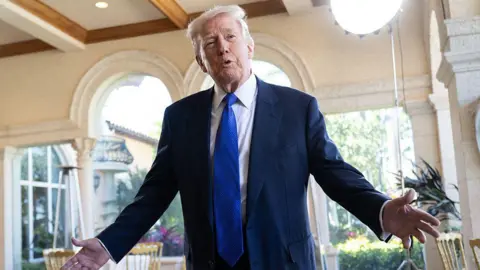

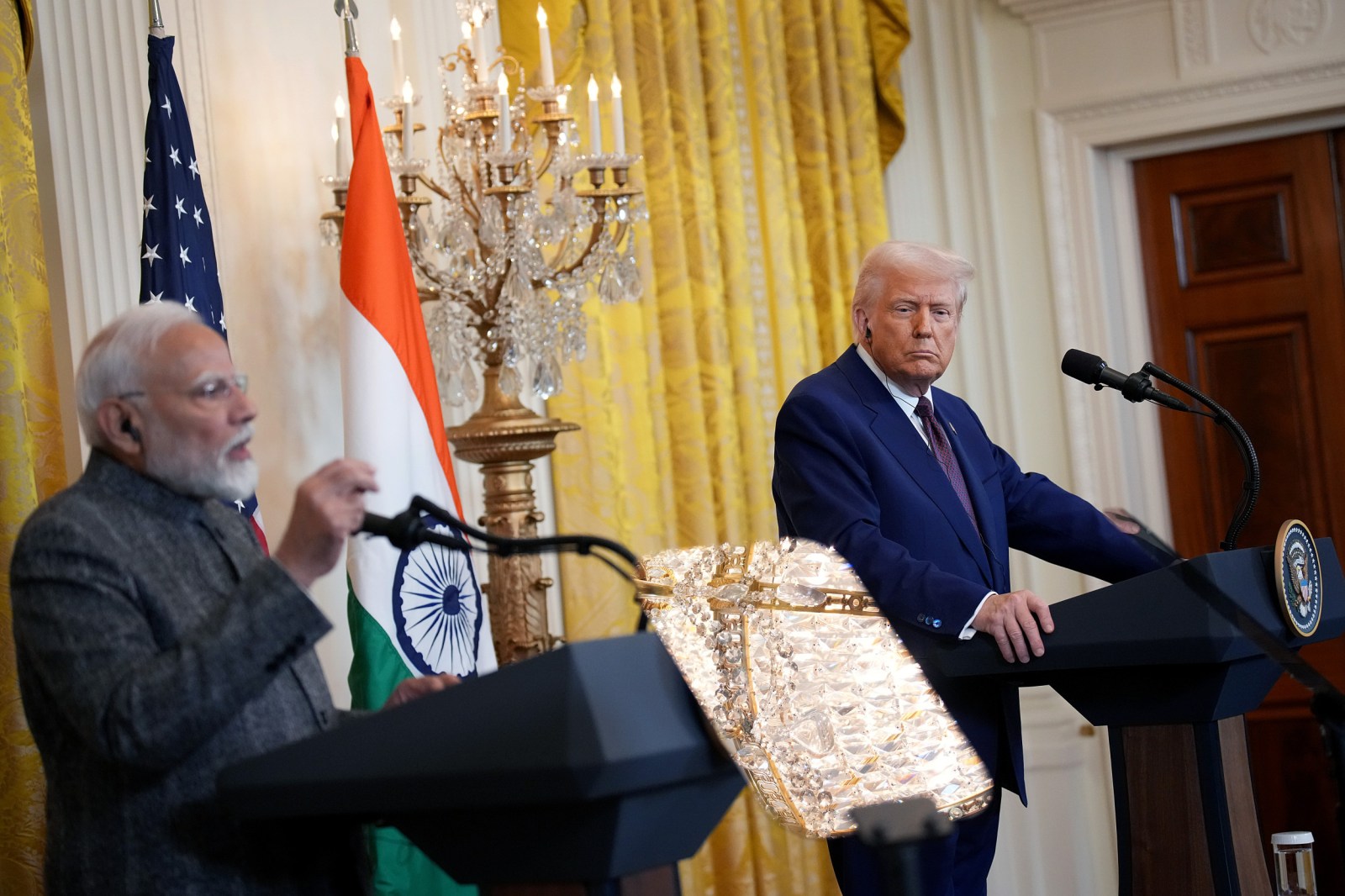
Tariff Reductions and Zero‑Duty Export Access Announced On February 2 2026 President Donald Trump announced via Truth Social that the United States will lower the tariff on Indian goods to 18 percent, down from the 25‑50 percent range imposed in 2025, and will eliminate duties on U.S. exports to India [5][8][9][10]. Prime Minister Narendra Modi thanked Trump on X, describing the move as a win for the country’s 1.4 billion citizens [5][10]. The White House press secretary confirmed that U.S. agricultural, energy and transport products will face zero‑percent tariffs [1][2]. Both leaders framed the agreement as a boost to bilateral trade and a step toward greater strategic partnership [5][9].
India Commits to $500 Billion Purchases and Oil Shift The deal ties the tariff cut to India’s pledge to purchase more than $500 billion of American goods across energy, technology, agriculture and coal sectors [2][5][9][8]. President Trump also stated that India will cease buying Russian oil and will source oil from the United States, with possible purchases from Venezuela [2][4][7][9]. While U.S. officials cite a 29 % month‑on‑month drop in Russian crude imports as evidence, India’s Ministry of External Affairs has not formally confirmed the oil‑cessation claim [7][4]. The commitment, if realized, would span several years and represent a significant shift in India’s energy procurement strategy [2][5].
Farmers and Trade Unions Mobilize Against Agricultural Imports The Samyukt Kisan Morcha and All India Kisan Sabha condemned the agreement, warning that zero‑percent import duties will allow heavily subsidised U.S. soybean, cotton, maize and wheat to flood the market, threatening the 48 % of the workforce dependent on agriculture [3][6]. The groups accused Prime Minister Modi of yielding to U.S. pressure and called for a nationwide strike on February 12 2026 [3]. The Centre of Indian Trade Unions labeled the pact a threat to national sovereignty, while the dairy sector warned of damage from subsidised dairy imports [3][6]. Sharad Pawar, former agriculture minister, echoed farmer concerns, noting the policy could undermine domestic producers [1].
Exporters and Markets Respond Positively While Deal Details Remain Vague Export associations, including the Seafood Exporters Association and the Gem & Jewellery Export Promotion Council, celebrated the tariff cut, expecting export volumes to rebound to pre‑2025 levels and anticipating “immense relief” for diamond manufacturers [3][6]. Indian equities surged, with the Nifty 50 up 4.86 % and the Sensex rising 4.48 % on the announcement, and the rupee tightened against the dollar [6][4]. However, officials have not provided an implementation timetable, and it remains unclear whether the agreement is a limited tariff‑only “mini‑deal” or the first tranche of a broader free‑trade pact [4][7].
Sharad Pawar Seeks Clarification Within 48 Hours On February 4 2026 NCP chief Sharad Pawar warned that the U.S. tariff clause allowing American farm products into India could jeopardise Indian farmers and demanded a detailed picture of the trade deal within the next 48 hours [1]. He also explained his absence from the parliamentary budget session after his nephew Ajit Pawar’s fatal crash, while urging concrete development measures for the common people [1].
Sources
-
1.
The Hindu: India’s Sharad Pawar Flags Farmer Concerns Over New U.S. Tariff Policy: Pawar warns of threats to Indian farmers from the U.S. tariff clause, expects a detailed deal picture in 48 hours, and notes his missed budget session after a family tragedy .
-
2.
The Hindu: India to End Russian Oil Purchases and Commit $500 Billion to U.S. Investment, Trump Announces: Announces India’s cessation of Russian oil, $500 bn U.S. investment pledge, and reciprocal tariff reductions to 18 % and zero % .
-
3.
The Hindu: India‑U.S. Trade Deal Relieves Exporters, Sparks Farmer Opposition: Highlights exporter optimism, farmer protests over subsidised U.S. crops, and calls for a strike on Feb 12 2026 .
-
4.
The Hindu: India‑US Trade Deal Cuts Tariffs, Yet Details Remain Unclear: Reports tariff cut to 18 %, ambiguous scope of the agreement, and market gains, while noting Trump’s claim on Russian oil cessation .
-
5.
Newsweek: Trump Announces Surprise US‑India Trade Deal Reducing Tariffs to 18%: Covers Trump’s surprise announcement, Modi’s praise, $500 bn purchase pledge, and geopolitical context involving the EU‑India FTA .
-
6.
The Hindu: India‑U.S. Trade Deal Cuts Tariffs to 18%, Sparks Market Rally and Industry Praise: Details tariff reduction, diamond sector relief, political praise, market rally, and opposition from Samajwadi Party .
-
7.
The Hindu: U.S. Cuts Tariffs on Indian Goods to 18% Amid Unresolved Trade Deal Details: Notes tariff cut, lack of broader agreement details, mixed evidence on Russian oil halt, and $500 bn pledge disputes .
-
8.
AP: Trump Announces 18% Tariff Cut for India After Russian Oil Deal: Summarises tariff cut tied to India’s pledge to stop Russian oil purchases and $500 bn U.S. purchases, framing it as aid to end the Ukraine war .
-
9.
BBC: US‑India Trade Deal Cuts Tariffs to 18% After India Halts Russian Oil Purchases: Reports tariff reduction, $500 bn purchase commitment, and the preceding EU‑India free‑trade pact .
-
10.
The Hindu: Modi and Trump announce 18% U.S. tariff on “Made in India” goods: Details Modi’s announcement, Trump’s claims about oil and investment, and the pending response from India’s foreign ministry .
Timeline
July 30, 2025 – President Trump imposes a 25% tariff on Indian imports, marking the first major U.S. trade penalty against India and signaling a shift toward using tariffs as leverage over Russia‑linked energy purchases [14].
Aug 27, 2025 – The United States expands the tariff on Indian goods to 50% via an executive order, intensifying pressure on Delhi and underscoring the volatility of U.S. trade policy toward India [14].
Nov 21, 2025 – The Union Government formally notifies all four Labour Codes, consolidating 13 labour statutes and setting an April 1, 2026 date for full operational rollout, a major regulatory shift for Indian employers and workers [14].
Dec 16, 2025 – The Lok Sabha passes a bill raising the foreign‑direct investment cap in the insurance sector from 74% to 100%, aiming to attract capital, technology and new products to the Indian market [14].
Dec 24, 2025 – India implements GST reforms that narrow the tax structure to 5% and 18% slabs, records a ₹2.37 lakh crore monthly revenue, and accompanies four RBI rate cuts totaling 125 bps, reflecting an accommodative fiscal and monetary stance [14].
Dec 25, 2025 – India enters the year with high diplomatic expectations, planning bilateral visits and multilateral engagements, but U.S. tariffs on labor‑intensive goods and a 25% surcharge on Russian oil imports erode trust and complicate energy diplomacy [13].
Jan 5, 2026 – President Trump claims U.S. tariff receipts will top $600 billion, arguing that the levies strengthen national security and financial standing while referencing earlier 50% tariffs on India and a 25% penalty for Russian oil purchases [12].
Jan 6, 2026 – Trump tells a GOP retreat that Prime Minister Modi is “not that happy with me” over the tariffs, noting that India has “reduced it very substantially” in Russian oil imports and that the U.S. has imposed a 50% overall tariff, including a 25% component tied to oil [11].
Feb 1, 2026 – The Union budget omits any allocation for the Chabahar port project, suggesting a pause in India’s Iran‑linked infrastructure amid U.S. pressure on Iranian trade and sanctions considerations [9].
Feb 2, 2026 – External Affairs Minister S. Jaishankar arrives in Washington for a three‑day trip that includes the Critical Minerals Ministerial, where participants expect to sign a non‑binding document on supply‑chain resilience and clean‑energy cooperation [10].
Feb 2, 2026 – President Trump announces on Truth Social a surprise U.S.–India trade deal that cuts tariffs on Indian goods to 18% and removes the 25% penalty linked to Russian oil, while claiming India will cease Russian oil purchases and boost U.S. imports to $500 billion [2][10].
Feb 2, 2026 – Prime Minister Modi posts on X that the 18% tariff “benefits 1.4 billion Indians,” thanks Trump on behalf of the nation, and omits any mention of the Russia clause, highlighting political framing of the deal [10].
Feb 2, 2026 – The European Union and India sign a free‑trade pact a week earlier, expected to double EU exports to India by 2032, providing Delhi leverage that prompts Washington to act before being outflanked [1].
Feb 3, 2026 – Trump and Modi confirm the tariff cut during a telephone call, with the U.S. Embassy confirming the immediate reduction from 25% to 18% and the removal of the Russian‑oil penalty, though New Delhi does not verify the $500 billion purchase commitment [9].
Feb 3, 2026 – Commerce Minister Piyush Goyal says detailed implementation timelines for the 18% tariff will be released “soon,” leaving the exact rollout date ambiguous [6].
Feb 3, 2026 – U.S. Treasury Secretary Scott Bessent notes that India’s Russian oil purchases have “collapsed,” framing the tariff reduction as a tool to cut Kremlin war‑funding [2].
Feb 3, 2026 – Ambassador Sergio Gor tweets “STAY TUNED…” moments before the announcement, signaling top‑level diplomatic coordination behind the surprise deal [2].
Feb 3, 2026 – The Seafood Exporters Association of India celebrates the tariff cut, expecting export volumes to return to pre‑2025 levels after a 6.3% value decline caused by the 50% U.S. duty [7].
Feb 3, 2026 – Gem & Jewellery Export Promotion Council chairman Kirit Bhansali says the cut “provides immense relief” and will give loose diamonds and coloured gemstones “zero duty imports,” heralding a sector‑wide boost [8].
Feb 3, 2026 – Indian equity markets rally, with the Nifty 50 opening up 4.86% and the Sensex rising 4.48%, while the rupee is expected to open in the 90.15‑90.25 range versus the dollar, reflecting investor optimism on the tariff cut [8].
Feb 3, 2026 – Officials describe the agreement as a “mini‑deal” or first tranche of a broader bilateral trade agreement, but do not clarify whether non‑tariff barriers will be fully removed, leaving the scope ambiguous [6].
Feb 3, 2026 – Sensitive agricultural and dairy products are excluded from any tariff reductions, as Commerce Minister Goyal assures that domestic farm sectors will not be compromised [6].
Feb 3, 2026 – The Samyukt Kisan Morcha (SKM) denounces the pact as a betrayal, warns that subsidised U.S. soybeans, cotton, maize and wheat could flood the market, and calls for a general strike on Feb 12, highlighting farmer opposition [7].
Feb 3, 2026 – The All India Kisan Sabha demands parliamentary scrutiny of the full text of the India‑U.S. deal and other FTAs, urging that anti‑farmer accords be rescinded, underscoring legislative pressure [7].
Feb 3, 2026 – The Centre of Indian Trade Unions labels the deal “the most deadly action” against Indian workers and peasants, framing it as a threat to sovereignty [7].
Feb 3, 2026 – Trump claims the tariff reduction will help end the Ukraine war, stating that “thousands are dying each week,” and ties the trade move to broader geopolitical objectives [3].
Feb 4, 2026 – Sharad Pawar warns that the new U.S. tariff framework allowing U.S. farm products into India could threaten domestic farmers, and he expects a detailed trade‑deal picture within 48 hours, indicating imminent clarification needs [4].
Feb 4, 2026 – White House Press Secretary Karoline Leavitt states that India commits to stop buying Russian oil, to shift purchases to the United States (and possibly Venezuela), and to invest $500 billion in U.S. energy, transport and agriculture, reinforcing the geopolitical payoff of the tariff cut [5].
Feb 4, 2026 – Leavitt adds that India will eliminate all tariffs and non‑tariff barriers on U.S. products, achieving zero‑percent duty for American exports, while India’s own tariff on U.S. goods falls to 18%, completing the reciprocal reduction [5].
Feb 4, 2026 – The “We Pay the Tariffs” coalition of 800 U.S. small firms warns that the new 18% rate is six times higher than the pre‑Trump average of 2.5%, labeling the deal a tax hike for American businesses [1].
Feb 12, 2026 (planned) – The Samyukt Kisan Morcha schedules a nationwide general strike to protest the trade deal, reflecting ongoing farmer mobilization against perceived threats to agriculture [7].
Apr 1, 2026 (planned) – The Labour Codes become fully operational, standardizing wage, safety and social‑security regulations across Indian workplaces, a key reform that will intersect with the new trade environment [14].
Dive deeper (12 sub-stories)
-
The Hindu: India’s Sharad Pawar Flags Farmer Concerns Over New U.S. Tariff Policy
-
India Halts Russian Oil Imports, Cuts U.S. Tariffs and Promises $500 Billion Investment
(3 articles)
-
The Hindu: India‑U.S. Trade Deal Relieves Exporters, Sparks Farmer Opposition
-
The Hindu: India‑US Trade Deal Cuts Tariffs, Yet Details Remain Unclear
-
Newsweek: Trump Announces Surprise US‑India Trade Deal Reducing Tariffs to 18%
-
The Hindu: India‑U.S. Trade Deal Cuts Tariffs to 18%, Sparks Market Rally and Industry Praise
-
The Hindu: U.S. Cuts Tariffs on Indian Goods to 18% Amid Unresolved Trade Deal Details
-
AP: Trump Announces 18% Tariff Cut for India After Russian Oil Deal
-
The Hindu: Trump says PM Modi is “not that happy” over US tariffs, cites cuts to Russian oil and Apache deliveries
-
The Hindu: Trump says U.S. tariff receipts will top $600B, touts national strength
-
The Hindu: India enters 2025 with high diplomatic expectations, then faces U.S. tariffs and regional strain
-
The Hindu: Tariffs, reforms, and EV entries shape India's 2025 business year
All related articles (14 articles)
-
The Hindu: India’s Sharad Pawar Flags Farmer Concerns Over New U.S. Tariff Policy
-
The Hindu: India to End Russian Oil Purchases and Commit $500 Billion to U.S. Investment, Trump Announces
-
The Hindu: India‑U.S. Trade Deal Relieves Exporters, Sparks Farmer Opposition
-
The Hindu: India‑US Trade Deal Cuts Tariffs, Yet Details Remain Unclear
-
Newsweek: Trump Announces Surprise US‑India Trade Deal Reducing Tariffs to 18%
-
The Hindu: India‑U.S. Trade Deal Cuts Tariffs to 18%, Sparks Market Rally and Industry Praise
-
The Hindu: U.S. Cuts Tariffs on Indian Goods to 18% Amid Unresolved Trade Deal Details
-
AP: Trump Announces 18% Tariff Cut for India After Russian Oil Deal
-
BBC: US‑India Trade Deal Cuts Tariffs to 18% After India Halts Russian Oil Purchases
-
The Hindu: Modi and Trump announce 18% U.S. tariff on “Made in India” goods
-
The Hindu: Trump says PM Modi is “not that happy” over US tariffs, cites cuts to Russian oil and Apache deliveries
-
The Hindu: Trump says U.S. tariff receipts will top $600B, touts national strength
-
The Hindu: India enters 2025 with high diplomatic expectations, then faces U.S. tariffs and regional strain
-
The Hindu: Tariffs, reforms, and EV entries shape India's 2025 business year
External resources (2 links)
- https://www.mea.gov.in/Speeches-Statements.htm?dtl%2F39945%2FStatement_by_Official_Spokesperson (cited 1 times)
- https://t.co/gPz6rWtrxj (cited 1 times)