Trump Sets Ten‑Day Deadline as Two U.S. Carrier Groups Near Iran
Updated (25 articles)
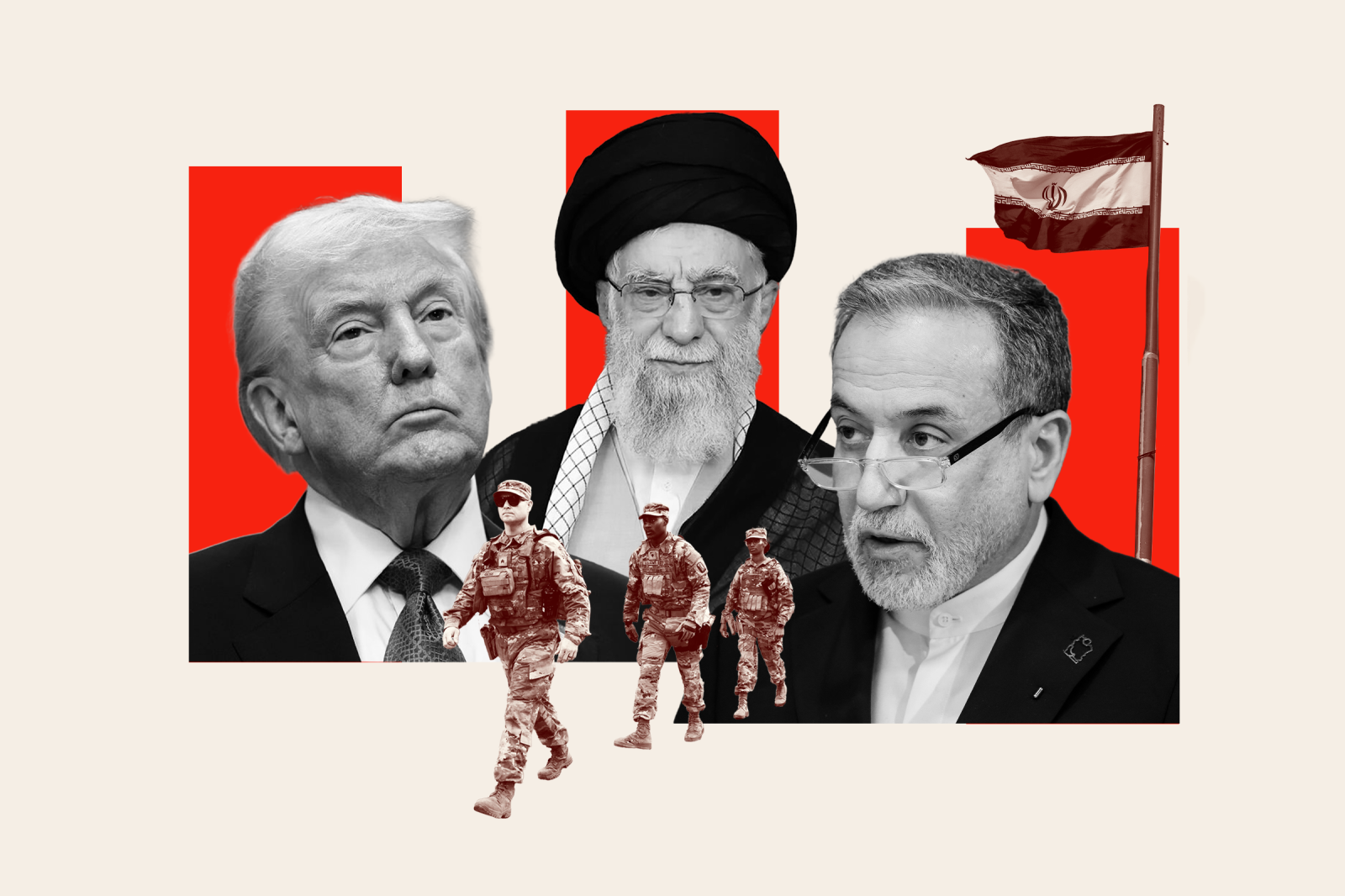

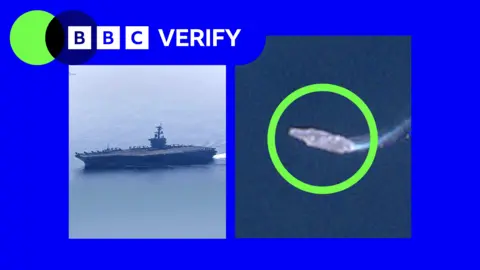


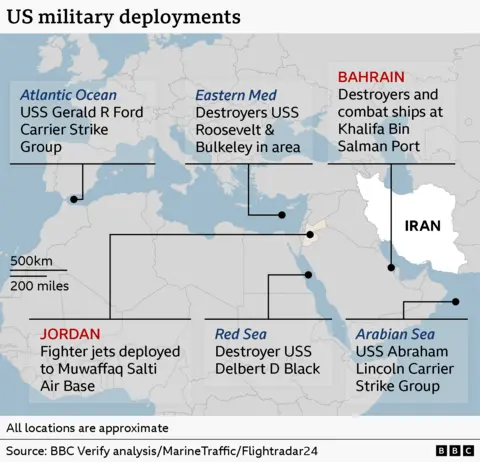
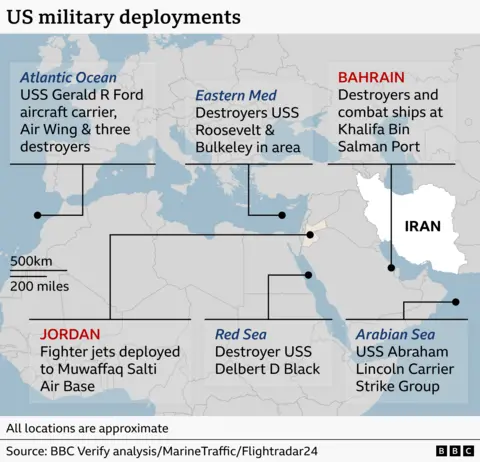
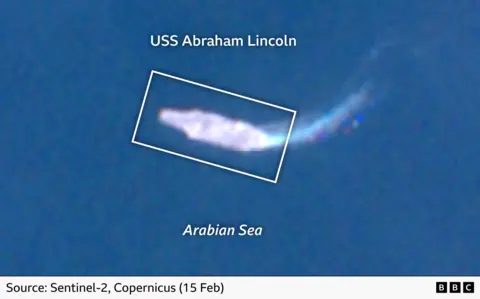
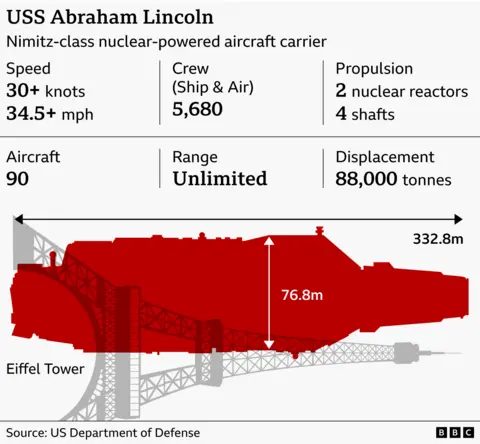
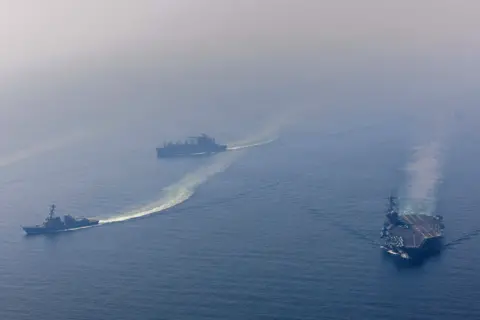
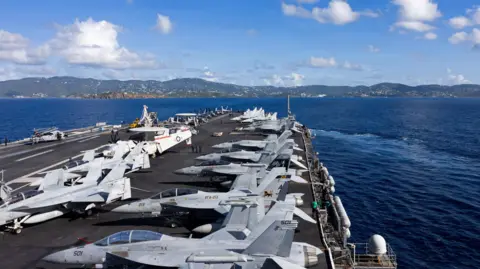
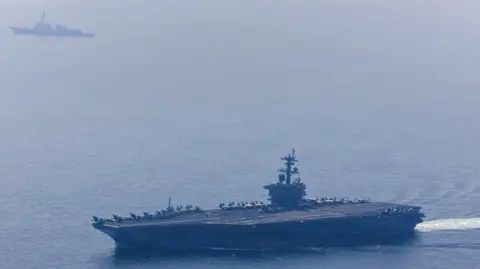
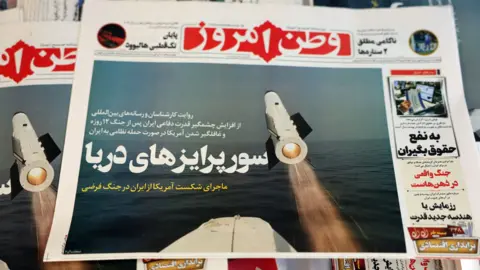

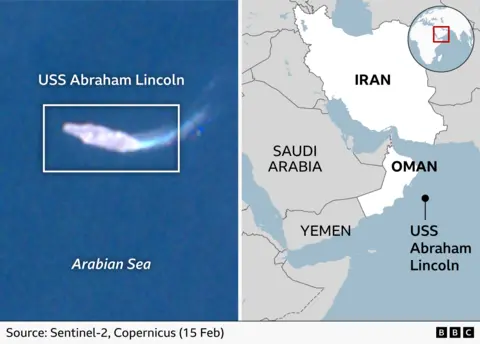
Massive naval and air buildup surrounds Iranian waters The United States has positioned the USS Abraham Lincoln carrier strike group in the Arabian Sea and the USS Gerald R. Ford group transiting the Mediterranean, together fielding roughly 14 warships, over 10,700 service members, dozens of F‑35, F‑22, F‑15 and F‑16 fighters, multiple E‑3 early‑warning aircraft and a fleet of refueling tankers [1][3][4][5]. Satellite imagery also shows 18 stealth F‑35s at Jordan’s Muwaffaq Salti Air Base and a surge of electronic‑warfare Growlers, expanding the U.S. strike envelope [3].
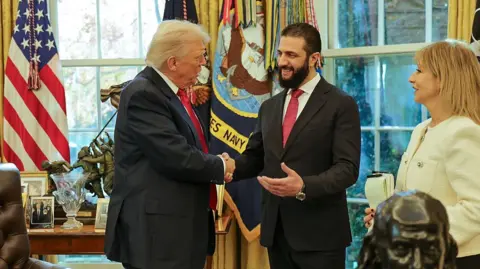
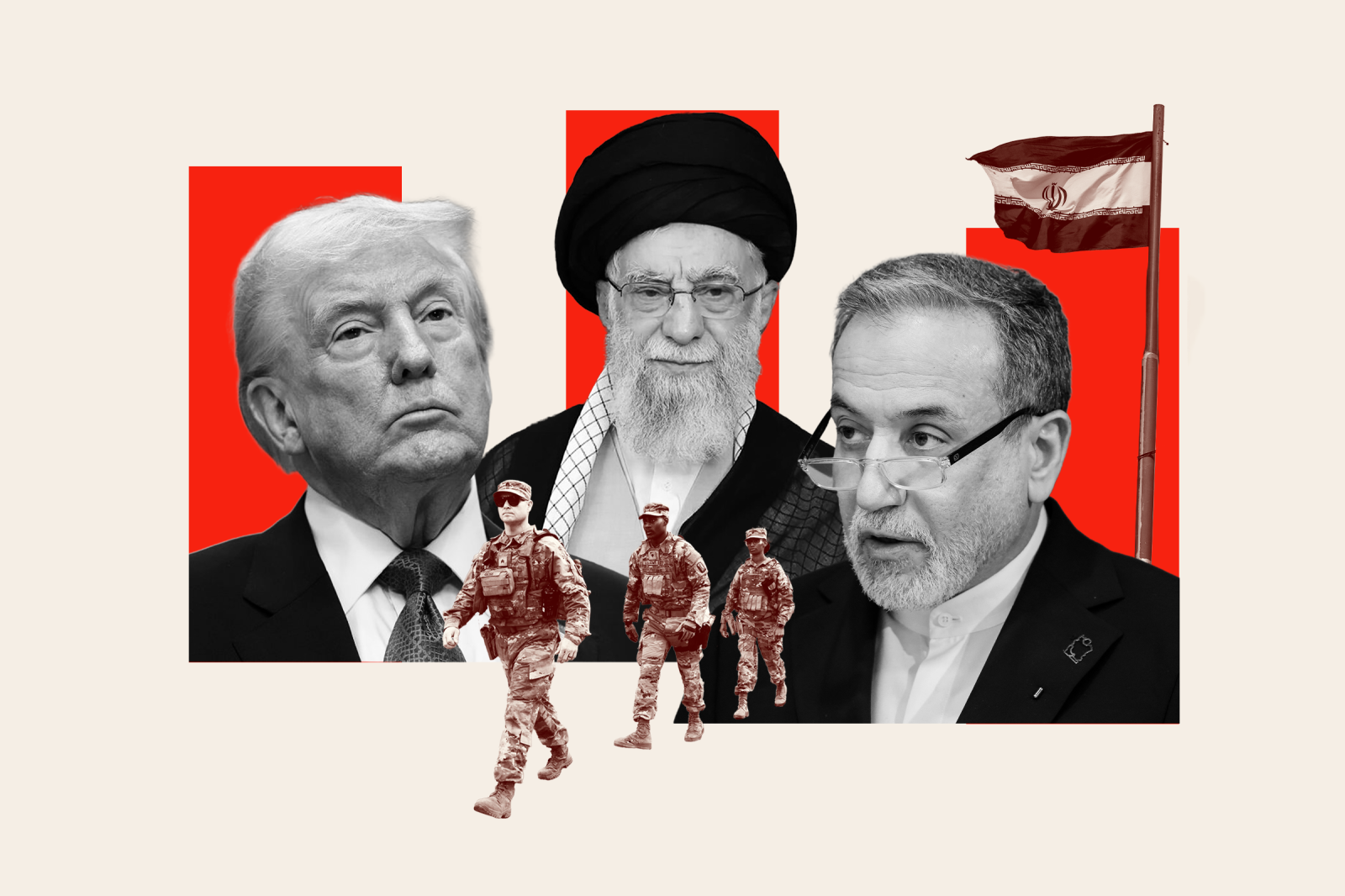
President Trump threatens a limited strike within ten days Trump told reporters the world would know “within the next, probably, 10 days” whether a nuclear‑deal deadline is met or a limited military strike will be launched [2][5][7][8]. The deadline mirrors a July‑2025 “Midnight Hammer” timeline that preceded a previous strike on Iranian nuclear facilities [2]. While advisers have prepared strike plans ranging from quick hits to broader operations, Trump has not yet given final authorization [3][8].
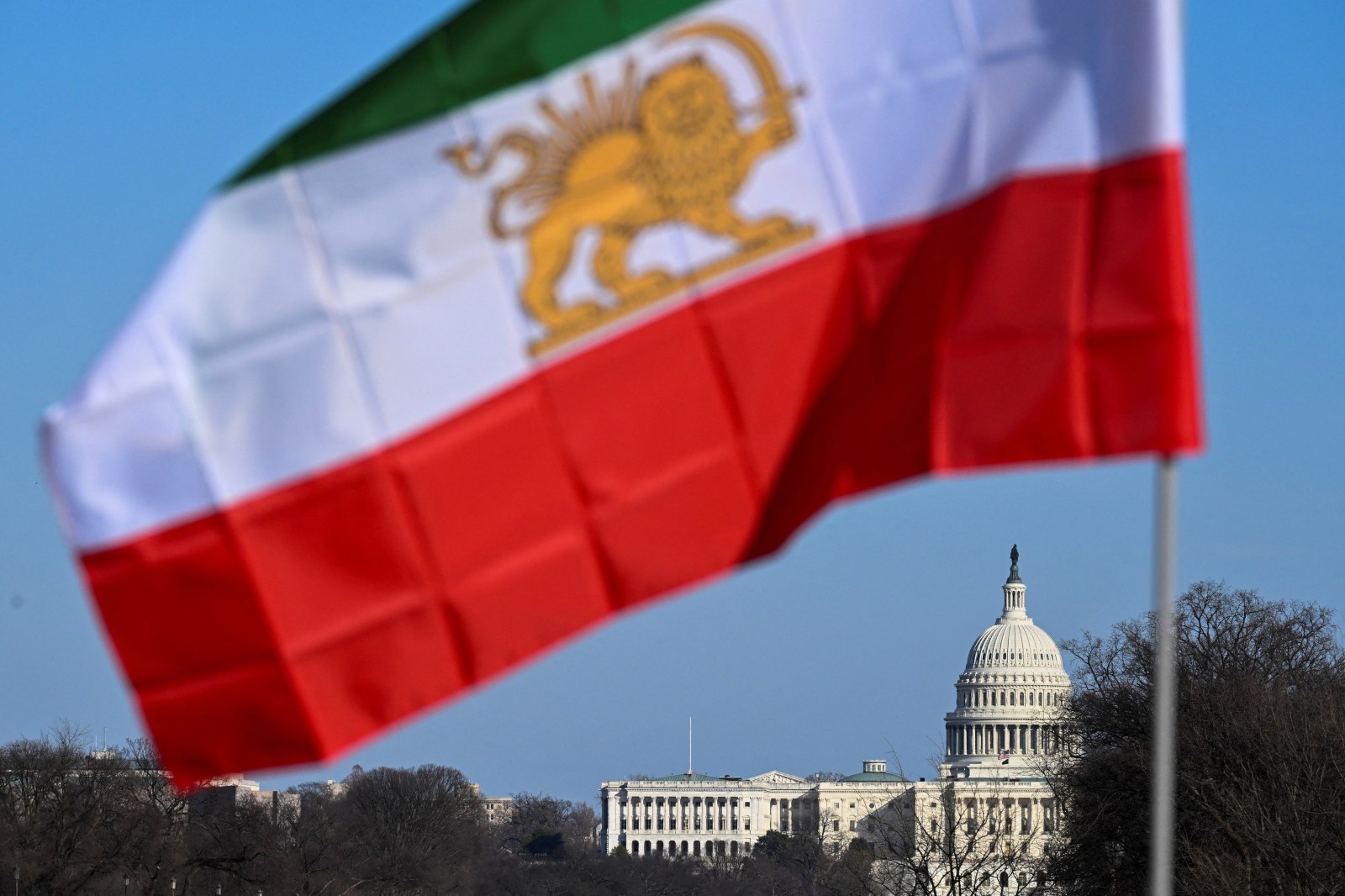
Geneva indirect talks produce draft principles but no agreement Iranian Foreign Minister Abbas Araghchi announced Tehran is drafting a possible agreement to hand to U.S. envoy Steve Witkoff, after Geneva sessions produced “guiding principles” on the nuclear issue [2][7][8]. Both sides acknowledge they remain “far apart” on key points, and Iran’s Supreme Leader warns that accepting U.S. demands could threaten the regime’s survival [6][7].
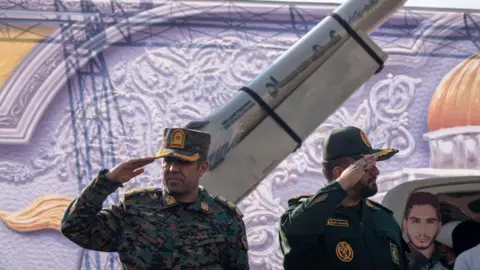
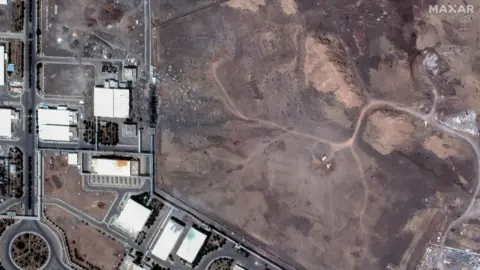
Iran hardens nuclear facilities and conducts missile drills Commercial satellite analysis shows Iran burying key structures at Natanz and Isfahan under concrete and soil, adding new roofs and reinforced tunnel entrances [3][1][10]. The IRGC carried out live‑fire drills in the Strait of Hormuz, briefly closing the waterway for the first time since the 1980s [10]. Iran also maintains a short‑range missile arsenal and anti‑ship systems capable of threatening regional shipping [1].
Regional non‑state allies stand ready to expand the conflict Hezbollah, Iraqi militias and Yemen’s Ansar Allah are prepared to disrupt Strait of Hormuz traffic, attack U.S. bases and enforce a Red Sea blockade, raising the cost of any U.S. action [1][6][10]. Analysts caution that even a surgical strike could trigger broader retaliation and destabilize the Middle East [4][6].
Sources
-
1.
Newsweek: Iran Gears Up to Outlast U.S. and Israeli Pressure: Details the unprecedented U.S. buildup, Iran’s missile and nuclear capabilities, and Trump’s tight deal deadline .
-
2.
BBC: Trump Mulls Limited Strike on Iran Amid Ongoing Nuclear Talks: Highlights Trump’s 10‑day strike consideration, Geneva talks progress, and domestic political constraints .
-
3.
CNN: US Positions Massive Military Hardware Near Iran as Diplomatic Talks Continue: Describes carrier movements, stealth fighter deployments in Jordan, and Iran’s site fortifications .
-
4.
AP: Pentagon Deploys Largest U.S. Naval and Air Force Buildup to Middle East Amid Iran Nuclear Tensions: Quantifies the force size, personnel numbers, and expert warnings about escalation .
-
5.
BBC: US Deploys Two Aircraft Carriers as Tensions Rise with Iran: Provides AIS tracking of carriers, IRGC maritime drills, and analysis of sortie capacity .
-
6.
BBC: US Deploys Carrier Groups as Iran Signals Defiance Over Washington’s Demands: Covers U.S. demands on Iran’s programs, Tehran’s existential framing, and internal unrest .
-
7.
BBC: White House Presses Iran to Negotiate as U.S. Warships Deploy: Reports Leavitt’s urging, carrier deployment timeline, and Khamenei’s AI‑generated warning image .
-
8.
CNN: US Military Poised for Iran Strike This Weekend, Trump Yet to Decide: Notes weekend strike readiness, Situation Room briefing, and timing factors like the Olympics .
-
9.
BBC: U.S. Plans Large‑Scale Troop Pullout from Syria Amid Rising Iran Tensions: Announces Syrian troop withdrawal, carrier deployments, and Trump’s early‑strike hints .
-
10.
Newsweek: Six Indicators Suggest Imminent US‑Iran Conflict: Lists indicators of a week‑long war, Iran’s economic strain, and prediction‑market odds .
Related Tickers
Timeline
2024 – The United States completes its withdrawal from the al‑Tanf garrison and the al‑Shaddadi base after the collapse of the Assad regime and a weakened Islamic State, marking a shift in Syrian security dynamics and reducing U.S. ground presence in the region [5].
June 2025 – The United States launches a B‑2 stealth‑bomber raid that bombs three Iranian nuclear facilities, demonstrating a willingness to use strategic airpower to curb Tehran’s nuclear program [10].
June 2025 – Israel conducts a 12‑day war against Iran, during which the United States again strikes three Iranian nuclear sites, underscoring coordinated U.S.–Israeli pressure on Tehran’s nuclear capabilities [24].
Jan 21, 2026 – President Donald Trump tells NewsNation that any Iranian attack “will be met with a response that would wipe the Iranian regime off the face of the Earth,” while Supreme Leader Ayatollah Ali Khamenei warns that a U.S. attack “will be a regional war” [22][16].
Jan 21, 2026 – Iran’s foreign minister Abbas Araghchi publishes a Wall Street Journal op‑ed stating Tehran “will use everything it has” if attacked, warning that a broader conflict would be prolonged and destabilising [21].
Jan 23, 2026 – The Pentagon moves the largest U.S. naval and air‑force contingent in decades to the Middle East, adding two carrier strike groups (USS Abraham Lincoln and USS Gerald R. Ford) and over 10,700 service members to pressure Iran over its nuclear program [23].
Jan 25, 2026 – Terminal High Altitude Area Defense (THAAD) and Patriot missile batteries arrive at Al Udeid Air Base in Qatar, bolstering regional air‑defence against possible Iranian missile retaliation [10].
Jan 26, 2026 – The USS Abraham Lincoln carrier strike group enters the Indian Ocean, positioning U.S. naval power nearer to Iran and signalling readiness for potential strikes [12].
Jan 26, 2026 – The Abraham Lincoln carrier and three guided‑missile destroyers reach the Middle East, marking the first U.S. carrier presence there since the carrier Gerald R. Ford left for the Caribbean in October 2025 [25].
Jan 28, 2026 – Trump posts on Truth Social that a “massive Armada” led by the Abraham Lincoln is moving “quickly toward Iran” and warns of “far worse” attacks if Tehran does not negotiate [20].
Jan 28, 2026 – U.S. Air Forces Central announces a multi‑day combat‑air‑power exercise across its area of responsibility, though details remain classified, highlighting heightened readiness [20].
Jan 29, 2026 – Iran declares it has fielded 1,000 strategic drones across its armed forces, while Trump announces the deployment of the Abraham Lincoln carrier strike group and warns of imminent military action [18].
Jan 29, 2026 – Former security council secretary Ali Shamkhani warns on X that any U.S. attack would trigger “unprecedented” retaliation against the United States, Israel and their supporters, calling a limited strike “an illusion” [19].
Jan 30, 2026 – Trump warns that if Iran does not accept a deal, “the next attack will be far worse” than the June 2025 strike, as the Abraham Lincoln carrier strike group arrives in the Arabian Sea with destroyers, F‑35Cs and other assets [10][30].
Jan 31, 2026 – Analysts note that Trump’s 19‑day window for a possible Iran strike narrows options to precise hits or a broader bombardment, while U.S. naval presence shifts from two carrier groups to a single group plus additional tracked assets [9].
Feb 1, 2026 – Supreme Leader Ayatollah Ali Khamenei tells Tasnim that “if the Americans start a war this time, it will be a regional war,” emphasizing Tehran’s resolve amid the U.S. carrier Abraham Lincoln operating in the Arabian Sea [16][24].
Feb 1, 2026 – The United States deploys the USS Abraham Lincoln to the Arabian Sea, confirming a heightened naval presence as Trump threatens intervention over Iran’s nuclear program [6].
Feb 18, 2026 – Leaked briefings predict a “massive, week‑long campaign” against Iran; the U.S. adds the Gerald R. Ford carrier to the fleet, while satellite images show Iran fortifying nuclear sites with concrete and soil [15].
Feb 19, 2026 – The White House urges Iran to strike a deal, while the Navy positions the Abraham Lincoln near Iranian waters and plans to send the Gerald R. Ford within three weeks, with all forces expected in the region by mid‑March [4].
Feb 19, 2026 – U.S. officials convene a Situation Room briefing on Iran; the military readies for a possible weekend strike, though Trump has not given final authorization [8].
Feb 19, 2026 – The United States announces a large‑scale pullout of roughly 1,000 troops from Syria over the coming months, linking the drawdown to a transition toward Syrian‑led counter‑terrorism after years of involvement since 2015 [5].
Feb 20, 2026 – Trump tells reporters he is “considering a limited military strike on Iran” and says the world will know “within the next, probably, 10 days” whether a deal or action occurs, echoing past deadline tactics [1][2].
Feb 20, 2026 – The U.S. boosts its naval presence: the Gerald R. Ford carrier, the Abraham Lincoln, destroyers, combat ships and fighter jets operate in the region, while Iran reinforces military facilities and Supreme Leader Khamenei posts AI‑generated images of the Gerald R. Ford sinking [1].
Feb 22, 2026 – The United States completes its largest Middle‑East buildup since the 2003 Iraq invasion, with the Gerald R. Ford shooting down a Shahed drone and the deployment of a second carrier strike group, while Iran retains a robust missile force and warns of “unimaginable consequences” if struck [14].
Dive deeper (23 sub-stories)
-
Newsweek: Iran Gears Up to Outlast U.S. and Israeli Pressure
-
BBC: Trump Mulls Limited Strike on Iran Amid Ongoing Nuclear Talks
-
CNN: US Positions Massive Military Hardware Near Iran as Diplomatic Talks Continue
-
AP: Pentagon Deploys Largest U.S. Naval and Air Force Buildup to Middle East Amid Iran Nuclear Tensions
-
BBC: US Deploys Two Aircraft Carriers as Tensions Rise with Iran
-
BBC: US Deploys Carrier Groups as Iran Signals Defiance Over Washington’s Demands
-
BBC: White House Presses Iran to Negotiate as U.S. Warships Deploy
-
CNN: US Military Poised for Iran Strike This Weekend, Trump Yet to Decide
-
BBC: U.S. Plans Large‑Scale Troop Pullout from Syria Amid Rising Iran Tensions
-
Newsweek: Six Indicators Suggest Imminent US‑Iran Conflict
-
BBC: Iran’s Supreme Leader Threatens Regional War Over Possible U.S. Attack
-
Newsweek: Iran’s Supreme Leader Warns U.S. Attack Will Trigger Regional War
-
AP: Iran’s Supreme Leader Threatens Regional War Over Possible U.S. Attack
-
CNN: Trump’s Iran Options Remain Limited Amid Naval Buildup and Regime Weakness
-
CNN: US Forces Surge in Middle East as Trump Mulls Iran Strike
-
Newsweek: U.S. Carrier Deploys as Trump Issues Final Warning to Iran
-
Newsweek: Iran Deploys 1,000 Drones as U.S. Armada Moves Toward Region
-
Newsweek: Iran Threatens Unprecedented Retaliation After Trump Revives Strike Threat
-
Trump Threatens Iran as USS Abraham Lincoln Arrives, Air Drills Commence
(2 articles)
-
U.S. Carrier Strike Group Enters Indian Ocean as Trump Mulls Iran Response
(2 articles)
-
Newsweek: Iran warns it will use everything it has as U.S. moves forces
-
Newsweek: Trump threatens to wipe Iran's regime off the face of the Earth as tensions rise
-
CNN: Arab states help de-escalate US-Iran tensions as US moves carrier group to Middle East
All related articles (25 articles)
-
Newsweek: Iran Gears Up to Outlast U.S. and Israeli Pressure
-
BBC: Trump Mulls Limited Strike on Iran Amid Ongoing Nuclear Talks
-
CNN: US Positions Massive Military Hardware Near Iran as Diplomatic Talks Continue
-
AP: Pentagon Deploys Largest U.S. Naval and Air Force Buildup to Middle East Amid Iran Nuclear Tensions
-
BBC: US Deploys Two Aircraft Carriers as Tensions Rise with Iran
-
BBC: US Deploys Carrier Groups as Iran Signals Defiance Over Washington’s Demands
-
BBC: White House Presses Iran to Negotiate as U.S. Warships Deploy
-
CNN: US Military Poised for Iran Strike This Weekend, Trump Yet to Decide
-
BBC: U.S. Plans Large‑Scale Troop Pullout from Syria Amid Rising Iran Tensions
-
Newsweek: Six Indicators Suggest Imminent US‑Iran Conflict
-
BBC: Iran’s Supreme Leader Threatens Regional War Over Possible U.S. Attack
-
Newsweek: Iran’s Supreme Leader Warns U.S. Attack Will Trigger Regional War
-
AP: Iran’s Supreme Leader Threatens Regional War Over Possible U.S. Attack
-
CNN: Trump’s Iran Options Remain Limited Amid Naval Buildup and Regime Weakness
-
CNN: US Forces Surge in Middle East as Trump Mulls Iran Strike
-
Newsweek: U.S. Carrier Deploys as Trump Issues Final Warning to Iran
-
Newsweek: Iran Deploys 1,000 Drones as U.S. Armada Moves Toward Region
-
Newsweek: Iran Threatens Unprecedented Retaliation After Trump Revives Strike Threat
-
Newsweek: Trump Issues New Ultimatum to Iran, Threatening “Far Worse” Strikes
-
CNN: US Conducts Middle‑East Air Drills as Iran Tensions Rise
-
CNN: USS Abraham Lincoln Carrier Strike Group Moves Into Indian Ocean Amid Rising US‑Iran Tensions
-
AP: USS Abraham Lincoln Carrier Deploys to Middle East Amid Iran Tensions
-
Newsweek: Iran warns it will use everything it has as U.S. moves forces
-
Newsweek: Trump threatens to wipe Iran's regime off the face of the Earth as tensions rise
-
CNN: Arab states help de-escalate US-Iran tensions as US moves carrier group to Middle East
External resources (17 links)
- https://www.eia.gov/international/analysis/country/irn (cited 2 times)
- https://usun.usmission.gov/u-s-representative-to-the-united-nations-ambassador-mike-waltzs-interview-with-tony-perkins-of-the-salem-news-channel/ (cited 1 times)
- https://www.reutersconnect.com/all?search=all%3AL1N3YF0BU&linkedFromStory=true (cited 2 times)
- https://edition.cnn.com/2026/02/01/middleeast/iran-diplomat-araghchi-interview-intl (cited 1 times)
- https://x.com/ifrc/status/2011790950574531015 (cited 2 times)
- https://x.com/netblocks/status/2011838716562542678 (cited 2 times)
- https://t.me/farsna/408848 (cited 1 times)
- https://x.com/CENTCOM/status/2013647979673010637 (cited 1 times)
- https://x.com/CENTCOM/status/2015815632302801143 (cited 1 times)
- https://x.com/araghchi/status/2016568541399445735 (cited 1 times)
- https://www.bing.com/ck/a?!&&p=8b801433ae68c44f5453de72e45c10b1e846f1ca098dafb67ed046fcab4f8c53JmltdHM9MTc2OTY0NDgwMA&ptn=3&ver=2&hsh=4&fclid=31294c2b-4a98-6c6c-3c6d-5ac24bca6d43&psq=USS+Abraham+Lincoln+Newsweek&u=a1aHR0cHM6Ly93d3cubmV3c3dlZWsuY29tL21hcC1zaG93cy11c3MtYWJyYWhhbS1saW5jb2xuLXBhdGgtdG93YXJkLWlyYW4tcHJvdGVzdHMtY29udGludWUtMTEzNzE4MDQ (cited 2 times)
- https://www.fmprc.gov.cn/wjbzhd/202601/t20260115_11813505.shtml (cited 2 times)
- https://www.ifrc.org/article/ifrc-mourns-killing-one-iranian-red-crescent-colleague (cited 2 times)
- https://www.newsguardrealitycheck.com/p/ai-videos-fill-void-amid-iran-internet-blackout (cited 2 times)
- https://www.opec.org/assets/assetdb/asb-2025.pdf (cited 2 times)
- https://tbg.airframes.io/ (cited 1 times)
- https://www.bing.com/ck/a?!&&p=65e0516d046020389640ccff0832ad6b9bf7e11b7dc1521552dea5cc311b1a05JmltdHM9MTc2OTY0NDgwMA&ptn=3&ver=2&hsh=4&fclid=31294c2b-4a98-6c6c-3c6d-5ac24bca6d43&psq=Iran+drills+Newsweek&u=a1aHR0cHM6Ly93d3cubmV3c3dlZWsuY29tL2lyYW4tdXBkYXRlLXVzLW1pbGl0YXJ5LXRvLXBlcmZvcm0tc2hvdy1vZi1zdHJlbmd0aC1pbi1taWRkbGUtZWFzdC0xMTQyNzg4OQ (cited 1 times)