Treasury Secretary Warns Carney of Tariff Fallout as Trump Threatens 100% Duties on Canada‑China Deal
Updated (19 articles)
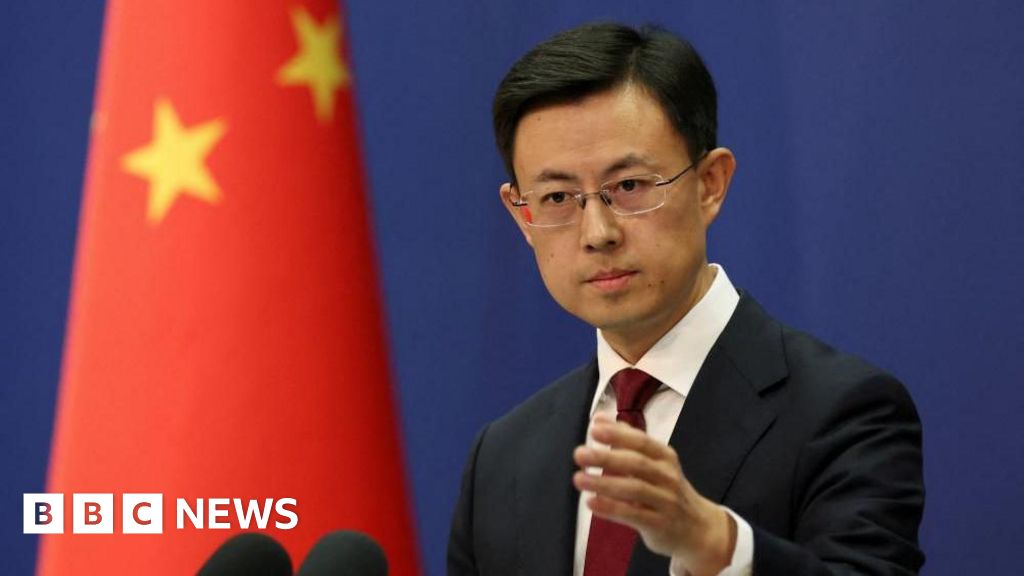
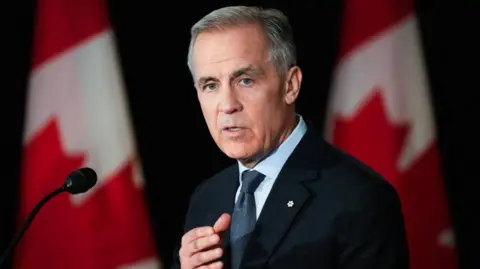
Carney Reaffirms Davos Remarks and Rejects Back‑track Claims On Jan. 27 2026 Prime Minister Mark Carney told reporters he “meant what I said in Davos,” standing by his criticism of “economic coercion” by great powers and dismissing Treasury Secretary Scott Bessent’s claim that he was “aggressively walking back” those comments; Carney also described his phone call with President Donald Trump as “very good” and said the discussion covered USMCA, Ukraine and Arctic security [2][3][4].
Trump Issues Immediate 100% Tariff Threat Over China Partnership President Trump posted on Truth Social on Jan. 24 2026 that the United States would impose a 100 % tariff on all Canadian imports “immediately” if Ottawa finalizes its trade agreement with Beijing, simultaneously rescinding Carney’s invitation to his “Board of Peace” and reiterating earlier rhetoric that Canada could become a “drop‑off port” for Chinese goods [8][9][10][11][5][1].
Canada‑China Strategic Partnership Limits Tariffs, Caps EV Imports The bilateral accord announced in late January reduces Chinese electric‑vehicle duties to a 6.1 % most‑favoured‑nation rate, caps annual EV imports at 49,000 units (rising to about 70,000 over five years), and cuts Canadian canola tariffs from 85 % to 15 % by March, while Carney stresses the deal is not a free‑trade agreement but a sector‑specific partnership [5][6][8][9][10][4].
USMCA Review Looms as Canada Pursues Diversification With the United States‑Mexico‑Canada Agreement slated for a mandatory review later in 2026, Carney announced a plan to negotiate roughly a dozen new trade deals across four continents within six months to halve reliance on the United States, which currently receives over 75 % of Canadian exports; Bessent warned that picking a fight ahead of the USMCA review could backfire [1][2][4][5].
Legal and Diplomatic Tensions Escalate Treasury Secretary Bessent clarified that any U.S. tariff would apply only if Canada allows Chinese firms to dump goods into the U.S. market, while the Supreme Court is set to rule soon on whether Trump can invoke the International Emergency Economic Powers Act for the proposed tariffs; meanwhile, Trump’s repeated calls for Canada to become a “51st state” and his interest in Greenland have strained NATO ties [11][5][4][1].
Sources
-
1.
AP: Treasury Secretary Bessent cautions Canada’s Carney ahead of USMCA review – Bessent warns Carney against sparring before the USMCA review, notes Trump’s 100 % tariff threat, and highlights Carney’s Davos speech and subsequent walk‑back controversy .
-
2.
AP: Carney Reaffirms Davus Remarks, Announces Dozen New Trade Deals Amid Trump Tariff Threat – Carney repeats his Davos comments, rejects Bessent’s walk‑back claim, outlines a dozen new trade deals, and details the China‑Canada partnership’s tariff cuts .
-
3.
BBC: Carney Refutes Claims He Softened Davos Remarks After Call With Trump – Carney denies back‑pedalling, describes the Trump call as constructive, and frames the tariff threat as a negotiation tactic .
-
4.
AP: Carney Dismisses Trump’s Tariff Threats as Negotiation Bluster Ahead of USMCA Review – Carney calls Trump’s threats bluster, details the limited China‑EV deal, and notes Bessent’s accusation of aggressive walk‑back .
-
5.
BBC: China Says Canada Deal Not Targeting US Amid Trump Tariff Threat – Chinese spokesperson says the partnership isn’t aimed at third parties; Canada stresses no free‑trade pact and outlines tariff reductions .
-
6.
AP: Canada Rejects Free‑Trade Deal with China Amid U.S. Tariff Threats – Carney confirms Canada won’t seek a free‑trade agreement, explains the limited scope of the China accord, and references USMCA notification rules .
-
7.
Newsweek: Trump warns Canada‑China trade pact will “systematically destroy” Canada – Trump warns the deal will devastate Canada, threatens 100 % tariffs, and revives his “51st state” rhetoric; Carney denies free‑trade intentions .
-
8.
King5: Trump threatens 100% tariff on Canada over China trade deal – Trump posts immediate 100 % tariff threat; Carney’s China deal lowers EV tariffs; Trump revokes Board of Peace invitation .
-
9.
BBC: Trump threatens 100% tariffs on Canada over China partnership – Trump’s social‑media threat, details of the Canada‑China partnership’s tariff cuts, and Carney’s call for middle‑power unity .
-
10.
AP: Trump threatens 100% tariff on Canada over China deal – Trump vows immediate 100 % tariffs; Canada‑China deal swaps EV and farm‑product duties; Treasury clarifies conditions .
-
11.
CNN: Trump Threatens 100% Tariffs on Canada Over Potential China Deal – Trump’s 100 % tariff warning, Carney’s EV cap, LeBlanc’s denial of a free‑trade pact, sharp drop in cross‑border activity, and pending Supreme Court decision on emergency powers .
Timeline
2018 – Canada arrests Huawei executive Meng Wanzhou at the request of the United States, triggering a diplomatic crisis that leads Beijing to detain two Canadians, Michael Kovrig and Michael Spavor [5].
2021 – China releases Kovrig and Spavor, ending the high‑profile hostage dispute but leaving a lingering mistrust that shadows later trade talks [5].
2024 – Canada imposes a 100 % tariff on Chinese electric vehicles and a 25 % duty on steel and aluminium; China retaliates with 100 % tariffs on Canadian canola oil and meal and 25 % on pork and seafood, creating a tit‑for‑tat trade war [12].
Oct 2025 – An Asia summit produces a framework for a Canada‑China trade agreement, averting a broader trade clash and setting the stage for bilateral negotiations [8].
Jan 16 2026 – Prime Minister Mark Carney meets President Xi Jinping in Beijing’s Great Hall of the People, announcing a “new strategic partnership” that cuts Chinese tariffs on Canadian canola seed to ~15 % by March and reduces Canada’s EV tariff to 6.1 % for an initial 49 000 vehicles per year, with a cap rising to ~70 000 over five years [5][7][9][18]; Xi says the partnership should be “a new type of strategic partnership,” and Carney declares, “the world has changed and this deal positions Canada for a new world order.”
Jan 16 2026 – Ottawa formally lowers the 100 % tariff on Chinese electric cars, sets the 49 000‑vehicle cap, and announces broader tariff relief on lobsters, crabs and peas, framing the move as a deliberate shift away from over‑reliance on the United States [18].
Jan 17 2026 – Carney emphasizes that the China talks are “preliminary” and that Canada seeks “strategic autonomy” by diversifying trade, while analysts note the deal could help Canada build its own EV sector and attract Chinese investment within three years [15][16].
Jan 24 2026 – President Donald Trump posts on Truth Social that the United States will impose an immediate 100 % tariff on all Canadian imports if Ottawa finalises the China pact, calls Carney “Governor Carney,” and warns, “China will eat Canada alive, completely devour it” [3][14][19]; the same day he revokes Carney’s invitation to his “Board of Peace.”
Jan 25 2026 – Trump escalates his rhetoric, stating the Canada‑China deal will “systematically destroy” Canada and shares a video of an auto‑industry leader warning of the agreement’s risks [8].
Jan 26 2026 – China’s foreign‑ministry spokesperson Guo Jiakun asserts the strategic partnership “does not target any third party,” while Carney reiterates that Canada is not pursuing a free‑trade agreement with China and stresses compliance with USMCA notification rules; Treasury Secretary Scott Bessent clarifies the tariff threat applies only if Chinese goods enter the U.S. market [2].
Jan 27 2026 – Carney tells reporters, “to be absolutely clear, I meant what I said in Davos,” rejecting Treasury Secretary Bessent’s claim that he “aggressively walked back” his remarks and describing his phone call with Trump as a “very good conversation on a wide range of subjects” [1]; he also announces a plan to seal about a dozen new trade deals across four continents within six months, aiming to double non‑U.S. exports as the USMCA review approaches [11].
Jan 28 2026 – Bessent warns Carney not to “pick a fight” ahead of the formal USMCA review, saying, “I would not pick a fight going into USMCA to score some cheap political points,” while noting the review is mandatory later in 2026 [10].
Early 2026 (coming weeks) – The U.S. Supreme Court is expected to rule on whether President Trump can invoke the International Emergency Economic Powers Act to impose the proposed 100 % tariffs on Canadian goods [6].
Mid‑2026 (later this year) – Carney plans to travel to Qatar and attend the World Economic Forum after leaving China, signalling a broader diplomatic push beyond the North‑American corridor [18].
2026‑2030 – Canada sets a target to lift its exports to China by roughly 50 % by 2030 as part of the strategic partnership’s long‑term goals [7].
2026 – Taiwan agrees to invest $250 billion in the United States in exchange for reducing its tariff rate to 15 % from 20 %, illustrating the wider global shift toward alternative trade arrangements amid U.S. protectionism [15].
Dive deeper (14 sub-stories)
-
Treasury Secretary Bessent Warns Carney of Trade Fight Risks as USMCA Review Looms
(3 articles)
-
AP: Carney Reaffirms Davos Remarks, Announces Dozen New Trade Deals Amid Trump Tariff Threat
-
BBC: China Says Canada Deal Not Targeting US Amid Trump Tariff Threat
-
AP: Canada Rejects Free‑Trade Deal with China Amid U.S. Tariff Threats
-
Newsweek: Trump warns Canada‑China trade pact will “systematically destroy” Canada
-
Trump Threatens Immediate 100% Tariff on Canada After China Deal, Cancels Board Invitation
(3 articles)
-
CNN: Trump Threatens 100% Tariffs on Canada Over Potential China Deal
-
AP: Canada-China EV deal tests US trade ties as Trump tariffs push partners toward alternatives
-
AP: Canada-China talks advance as Trump influence lingers
-
AP: Canada cuts tariffs on Chinese EVs, moving closer to U.S. market
-
BBC: Canada-Chinese tariff deal signals recalibration away from the United States
-
Newsweek: Canada cuts tariffs on 49,000 Chinese EVs a year as part of broader China thaw
-
AP: Canada cuts 100% tariff on Chinese EVs in exchange for lower canola tariffs
-
China and Canada Reach Tariff Relief and Strategic Partnership in Beijing Talks
(2 articles)
All related articles (19 articles)
-
AP: Treasury Secretary Bessent cautions Canada’s Carney ahead of USMCA review
-
AP: Carney Reaffirms Davos Remarks, Announces Dozen New Trade Deals Amid Trump Tariff Threat
-
BBC: Carney Refutes Claims He Softened Davos Remarks After Call With Trump
-
AP: Carney Dismisses Trump’s Tariff Threats as Negotiation Bluster Ahead of USMCA Review
-
BBC: China Says Canada Deal Not Targeting US Amid Trump Tariff Threat
-
AP: Canada Rejects Free‑Trade Deal with China Amid U.S. Tariff Threats
-
Newsweek: Trump warns Canada‑China trade pact will “systematically destroy” Canada
-
King5 (Seattle, WA): Trump threatens 100% tariff on Canada over China trade deal
-
BBC: Trump threatens 100% tariffs on Canada over China partnership
-
AP: Trump threatens 100% tariff on Canada over China deal
-
CNN: Trump Threatens 100% Tariffs on Canada Over Potential China Deal
-
AP: Canada-China EV deal tests US trade ties as Trump tariffs push partners toward alternatives
-
AP: Canada-China talks advance as Trump influence lingers
-
AP: Canada cuts tariffs on Chinese EVs, moving closer to U.S. market
-
BBC: Canada-Chinese tariff deal signals recalibration away from the United States
-
Newsweek: Canada cuts tariffs on 49,000 Chinese EVs a year as part of broader China thaw
-
AP: Canada cuts 100% tariff on Chinese EVs in exchange for lower canola tariffs
-
BBC: China and Canada announce tariffs relief after high-stakes Beijing meeting
-
CNN: Canada and China pursue strategic partnership as Trump-era tensions ease
External resources (4 links)
- https://truthsocial.com/@realDonaldTrump/posts/115951048952031044 (cited 1 times)
- https://twitter.com/alexa_stjohn (cited 1 times)
- https://x.com/DLeBlancNB/status/2015115649601737165?s=20 (cited 1 times)