Geneva Nuclear Talks End Without Deal, Yet Progress Claims Spur Vienna Follow‑Up
Updated (16 articles)
-
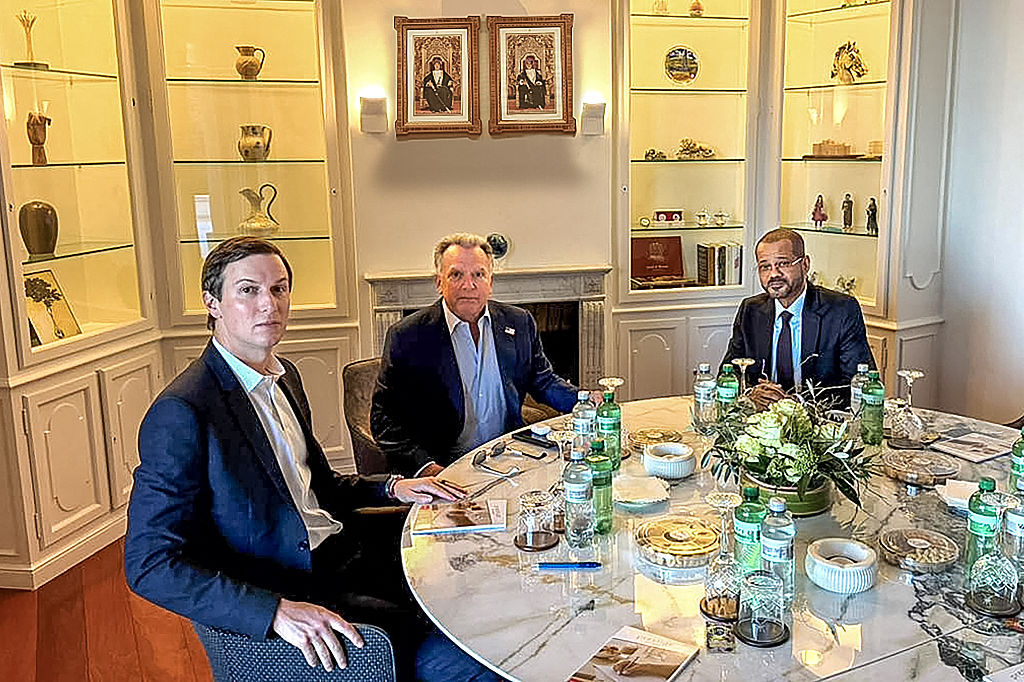 Image: NewsweekIn this handout photo released by the Omani Ministry of Foreign Affairs on February 26, 2026, US special envoy Steve Witkoff (C) and Jared Kushner hold a meeting with Oman’s Foreign Minister Badr Albusaidi (R) in Geneva. A third round of indirect talks between the United States and Iran, mediated by Oman’s foreign minister, opened in Geneva on February 26, a diplomatic source told AFP. (Photo by Omani Foreign Ministry / AFP via Getty Images) / XGTY / RESTRICTED TO EDITORIAL USE – MANDATORY CREDIT “AFP PHOTO / OMANI FOREIGN MINISTRY” – HANDOUT – NO MARKETING NO ADVERTISING CAMPAIGNS – DISTRIBUTED AS A SERVICE TO CLIENTS Source Full size
 -
Image: NewsweekIn this handout photo released by the Omani Ministry of Foreign Affairs on February 26, 2026, US special envoy Steve Witkoff (C) and Jared Kushner hold a meeting with Oman’s Foreign Minister Badr Albusaidi (R) in Geneva. A third round of indirect talks between the United States and Iran, mediated by Oman’s foreign minister, opened in Geneva on February 26, a diplomatic source told AFP. (Photo by Omani Foreign Ministry / AFP via Getty Images) / XGTY / RESTRICTED TO EDITORIAL USE – MANDATORY CREDIT “AFP PHOTO / OMANI FOREIGN MINISTRY” – HANDOUT – NO MARKETING NO ADVERTISING CAMPAIGNS – DISTRIBUTED AS A SERVICE TO CLIENTS Source Full size
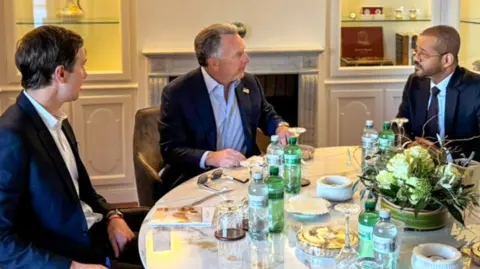
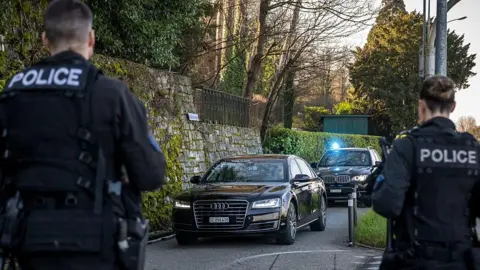
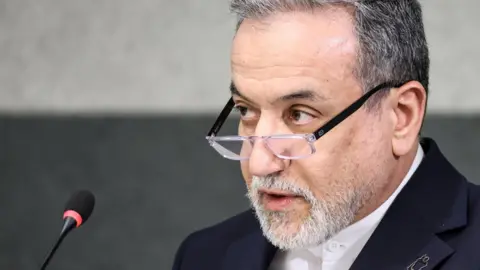
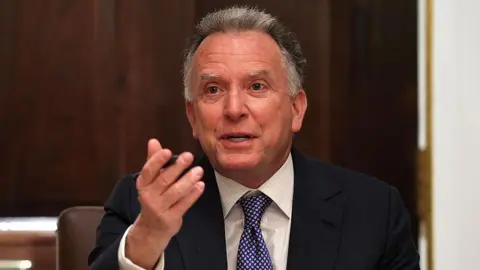
Geneva Session Concludes Without Formal Agreement On 26‑27 February 2026 Iran and the United States held a third round of indirect talks in Geneva, mediated by Omani foreign minister Badr al‑Busaidi, who described the meeting as “significant progress” despite no binding accord being signed [1][2][4][5]. Iran’s chief negotiator Abbas Araghchi praised “good progress” but acknowledged remaining gaps [4][5]. The United States delegation included special envoy Steve Witkoff, Jared Kushner, and IAEA chief Rafael Grossi [4][5].
Iran Insists on Enrichment Rights and Limited Freeze Tehran reiterated its right to peaceful nuclear energy, refusing a full halt to uranium enrichment and demanding sanctions relief [1][2][3][4]. Iranian officials offered a temporary suspension of enrichment, a reduction to as low as 1.5 % U‑235, and a phased dilution of 400 kg of 60 % enriched uranium in exchange for economic incentives [3][4]. The proposal also included a regional consortium to process uranium, but it fell short of U.S. zero‑enrichment expectations [3][4].
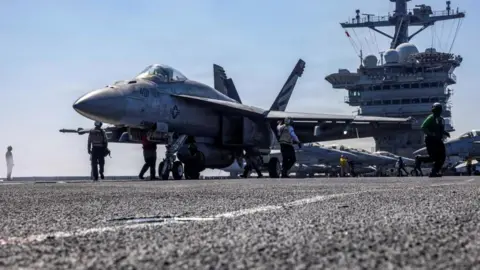
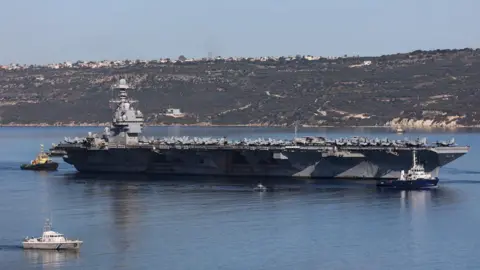
U.S. Demands Full Dismantlement and Zero‑Enrichment Washington pressed Iran to dismantle the Fordow, Natanz and Esfahan facilities, hand over all enriched uranium, and accept a permanent, sunset‑free deal [3][5]. The U.S. side signaled willingness to consider a minimal “medical” enrichment level only if strict IAEA monitoring is applied [3]. Concurrently, the United States deployed two aircraft carriers (USS Gerald R. Ford and USS Abraham Lincoln), nine destroyers, and thousands of troops, marking the largest Middle‑East buildup since 2003 [1][2][5].
Regional Military Posturing Raises Escalation Risk President Donald Trump warned of a “limited military action” if negotiations stall, while senior officials outlined contingency plans that include targeted strikes [2][6][7]. Jordan announced its bases would not host U.S. strike operations, and Israel pressed for tighter limits on Iran’s missile program [2]. Iran‑backed Kataib Hezbollah threatened to attack Iraqi Kurdistan should the Kurdistan Regional Government support a U.S. or Israeli strike, adding a militia dimension to the tension [3][6].
Technical Follow‑Up Scheduled in Vienna Under IAEA Oversight Both parties agreed to resume technical‑level discussions in Vienna next week, with the International Atomic Energy Agency expected to monitor any interim arrangements [1][2][3][4][5]. The Vienna talks aim to bridge gaps on enrichment limits, sanctions relief, and verification mechanisms. Success or failure will likely shape regional security and oil market stability, as Brent crude hovered near $70 per barrel amid ongoing uncertainty [1][2].
Sources
-
1.
AP: Iran‑U.S. Geneva Nuclear Talks End Without Deal as War Risk Persists: reports that indirect talks on Feb 27 ended without agreement, mediator Badr al‑Busaidi cited “significant progress,” but no specifics; notes US naval buildup and oil market reaction.
-
2.
Newsweek: Third Round of U.S.–Iran Indirect Talks Ends With “Significant Progress”: emphasizes Omani minister’s praise, details US carrier and fighter deployment, Trump’s limited‑strike rhetoric, and regional allies refusing launch bases.
-
3.
ISW (Feb 27): Iran’s Nuclear Talks Stall Amid Missile Push and Militia Threats: highlights gap between US full‑dismantlement demand and Iran’s limited cuts, mentions missile program tension, and Kataib Hezbollah threat to Iraqi Kurdistan.
-
4.
BBC (Feb 26): US‑Iran nuclear talks end after “significant progress,” mediator says: notes presence of Steve Witkoff, Jared Kushner, IAEA chief, Iran’s rejection of halt, and upcoming Vienna talks.
-
5.
The Hindu (Feb 26): Iran and U.S. talks show “good progress,” next round slated within a week: quotes Araghchi’s optimism, outlines US dismantlement demand, and describes two‑carrier deployment.
-
6.
ISW (Feb 24): Iran‑U.S. Talks, Regional Tensions, and Domestic Unrest (Feb 23‑26 2026): provides background on possible interim deal, Ali Larijani’s travel, Trump’s strike options, and protest unrest.
-
7.
BBC (Feb 22): Trump Questions Iran’s Lack of Capitulation as Envoy Discusses Negotiations: features Trump’s curiosity, Araghchi’s “win‑win” comment, earlier Geneva progress, and large naval presence.
Related Tickers
Videos (1)
Timeline
Dec 24, 2025 – Iran and the United States publicly reaffirm their commitment to diplomacy at a UN Security Council meeting, while a wide split over the nuclear deal persists; Iran’s ambassador urges Western powers to restore trust and respect Iran’s 2015‑deal rights, and the U.S. counselor stresses that any talks require Tehran to abandon enrichment altogether, noting IAEA data showing 60 % enrichment of over 440 kg of uranium [11].
Jan 13, 2026 – President Donald Trump tells reporters that Iran wants to negotiate, as his team weighs cyber or strike options after the crackdown that activists estimate killed at least 646 people; Oman’s foreign minister visits Tehran to keep diplomatic channels open, and Iran’s foreign minister claims the situation is under control and blames Israel and the United States for the unrest [10].
Feb 4, 2026 – In an NBC interview, Trump warns Supreme Leader Ayatollah Ali Khamenei of “very hard” retaliation over a new nuclear site, while Iran’s foreign minister confirms a Friday nuclear meeting in Muscat and the White House shifts the venue from Turkey to Oman after Arab leaders press for engagement; Secretary of State Marco Rubio says any meaningful deal must also address Iran’s missile program and regional proxies, and the United States maintains a substantial air‑and‑naval strike force near Iran [16].
Feb 5, 2026 – Iran’s foreign minister announces the Friday Oman talks will focus solely on the nuclear issue, rejecting missile and human‑rights topics; a senior Iranian official says Tehran will propose a “different” format, and the White House notes mixed regional support, with Turkey’s president urging a diplomatic solution and Vice President JD Vance highlighting Khamenei’s refusal to speak directly with Trump [9].
Feb 6, 2026 – American and Iranian negotiators launch final nuclear discussions in Muscat, with special envoy Steve Witkoff and Jared Kushner present; the United States seeks to broaden the agenda to include ballistic‑missile and regional influence issues, while Tehran insists on a nuclear‑only track; Trump frames the meeting as Iran’s “last chance” amid a crackdown that may have killed more than 30 000 people, and the U.S. deploys the carrier USS Abraham Lincoln and supporting warships to pressure Tehran [15].
Feb 6, 2026 – Iran’s foreign minister calls the Oman talks a “good beginning” focused exclusively on nuclear matters, and the U.S. delegation, including Kushner, pushes to raise Iran’s missile program and support for armed groups, highlighting gaps in the negotiations; Oman’s foreign minister says the meetings clarify both sides’ positions [3].
Feb 7, 2026 – Indirect talks in Muscat feature U.S. Central Command commander Adm. Brad Cooper alongside the delegation, and Trump declares the discussions “very good” while warning of steep consequences for failure; Iran’s foreign minister demands a calm, threat‑free atmosphere, and Omani officials note the talks clarify possible progress, even as Iran enriches uranium to 60 % and the United States imposes fresh sanctions on its energy sector and threatens a 25 % import tax on oil from countries buying Iranian crude [8].
Feb 17, 2026 – Geneva negotiations end after three and a half hours with only a vague set of “guiding principles,” leaving the scope of the talks—nuclear versus missiles—undetermined; Vice President JD Vance says Trump can end diplomacy when it “reaches its natural end,” and Israeli Prime Minister Netanyahu warns Tehran may be buying time, while both sides agree to reconvene later [5].
Feb 18, 2026 – In Geneva, Iran and the United States agree on “guiding principles” and plan to receive detailed Iranian proposals within two weeks; Iran temporarily closes part of the Strait of Hormuz for IRGC drills, and Vice President Vance says Trump has set non‑negotiable “red lines” that Tehran has not yet acknowledged, as the Department of Homeland Security remains partially shut down amid domestic gridlock [4].
Feb 22, 2026 – In a Fox News interview, envoy Steve Witkoff says Trump is “curious” why Iran has not capitulated despite the U.S. buildup of the aircraft carrier USS Gerald R Ford and other naval assets; Iran’s foreign minister Abbas Araghchi signals willingness for a “win‑win” diplomatic solution and expects a draft agreement in the coming days, while large university protests erupt across Iran after a January crackdown that HRANA estimates killed over 7,000 people [2].
Feb 24‑26, 2026 – Iran’s senior negotiator Ali Larijani travels to Oman to deliver Tehran’s response, which still includes enrichment and sanctions relief, while President Trump weighs a limited strike that could target the Supreme Leader and his son; student‑led anti‑regime protests surge with at least 32 demonstrations since Feb 21, and Israel conducts its largest raid since late 2024 against Hezbollah’s missile array in Baalbek, prompting Iran‑backed Iraqi militias and Yemen’s Houthis to pledge support for Tehran in any U.S.–Iran conflict [14].
Feb 26, 2026 – Omani foreign minister Badr Albusaidi announces that the third Geneva round ends with “significant progress” and that delegations will pause for capital‑level consultations before technical talks resume in Vienna next week; the United States maintains its largest Middle‑East military buildup since 2003, with two aircraft carriers and thousands of troops, while Trump threatens a limited military action if a deal does not materialize [6].
Feb 26, 2026 – The United States presses Iran to dismantle its Fordow, Natanz and Esfahan sites, hand over all enriched uranium, and accept a permanent, sunset‑free agreement, whereas Tehran offers a limited enrichment pause, a regional consortium, and phased dilution of 400 kg of 60 % uranium, falling short of U.S. demands; Secretary of State Rubio warns Tehran’s missile program aims for intercontinental capability, and Kataib Hezbollah threatens to target Iraqi Kurdistan if the KRG backs a U.S. or Israeli strike [13].
Feb 26, 2026 – Iran’s foreign minister Abbas Araghchi declares that the Geneva talks “made very good progress” and entered the elements of an agreement on both nuclear and sanctions issues, calling the talks a historic opportunity; the United States outlines demands for dismantling nuclear sites and uranium hand‑over, and both sides agree to technical‑level discussions in Vienna within a week, while the U.S. maintains two carriers in the region and domestic Iranian pressure persists amid famine fears [12].
Feb 27, 2026 – Indirect Geneva talks conclude without a deal, leaving war risk on the table; Iran insists on continuing enrichment and seeks sanctions relief, rejecting U.S. proposals to transfer material abroad, while the United States keeps a massive naval and air presence in the Middle East; lower‑level representatives prepare for technical follow‑up talks in Vienna under IAEA oversight, and officials warn that failure could trigger a regional war, as Brent crude hovers near $70 a barrel after Iran briefly halts traffic in the Strait of Hormuz [7].
Late Feb 2026 (planned) – Both delegations schedule technical‑level negotiations in Vienna for the week following Feb 26, with the IAEA expected to monitor any enrichment suspension and a potential regional consortium, marking the next concrete step toward a possible interim or comprehensive nuclear agreement [6][12][13].
Dive deeper (15 sub-stories)
-
AP: Iran‑U.S. Geneva Nuclear Talks End Without Deal as War Risk Persists
-
Newsweek: Third Round of U.S.–Iran Indirect Talks Ends With “Significant Progress”
-
ISW: Iran’s Nuclear Talks Stall Amid Missile Push and Militia Threats
-
BBC: US‑Iran nuclear talks end after “significant progress,” mediator says
-
The Hindu: Iran and U.S. talks show “good progress,” next round slated within a week
-
ISW: Iran‑U.S. Talks, Regional Tensions, and Domestic Unrest (Feb 23‑26 2026)
-
BBC: Trump Questions Iran’s Lack of Capitulation as Envoy Discusses Negotiations
-
CNN: Geneva Talks Yield Mixed Progress on Iran, Ukraine and U.S. Domestic Gridlock
-
CNN: Trump’s Diplomacy with Iran Stalls as Geneva Talks End Without Clear Deal
-
AP: US and Iran Hold Indirect Talks in Oman Amid Military Posturing
-
BBC: Iran‑U.S. Talks in Oman Signal Tentative Nuclear Dialogue
-
Le Monde: US‑Iran Nuclear Talks Begin in Oman Amid Diverging Agendas
-
Trump Warns Khamenei as US‑Iran Nuclear Talks Scheduled for Friday in Oman
(2 articles)
-
AP: Trump says Iran wants to talk as protest death toll rises
-
AP: Iran and U.S. reaffirm diplomacy at UN as gap on nuclear deal remains wide
All related articles (16 articles)
-
AP: Iran‑U.S. Geneva Nuclear Talks End Without Deal as War Risk Persists
-
Newsweek: Third Round of U.S.–Iran Indirect Talks Ends With “Significant Progress”
-
ISW: Iran’s Nuclear Talks Stall Amid Missile Push and Militia Threats
-
BBC: US‑Iran nuclear talks end after “significant progress,” mediator says
-
The Hindu: Iran and U.S. talks show “good progress,” next round slated within a week
-
ISW: Iran‑U.S. Talks, Regional Tensions, and Domestic Unrest (Feb 23‑26 2026)
-
BBC: Trump Questions Iran’s Lack of Capitulation as Envoy Discusses Negotiations
-
CNN: Geneva Talks Yield Mixed Progress on Iran, Ukraine and U.S. Domestic Gridlock
-
CNN: Trump’s Diplomacy with Iran Stalls as Geneva Talks End Without Clear Deal
-
AP: US and Iran Hold Indirect Talks in Oman Amid Military Posturing
-
BBC: Iran‑U.S. Talks in Oman Signal Tentative Nuclear Dialogue
-
Le Monde: US‑Iran Nuclear Talks Begin in Oman Amid Diverging Agendas
-
Le Monde: Trump warns Iran’s Supreme Leader as US‑Iran talks loom in Oman
-
AP: Iran‑U.S. Nuclear Talks Set for Friday in Oman Amid Heightened Tensions
-
AP: Trump says Iran wants to talk as protest death toll rises
-
AP: Iran and U.S. reaffirm diplomacy at UN as gap on nuclear deal remains wide
External resources (201 links)
- https://www.youtube.com/watch?v=fEv46brfZ5U (cited 1 times)
- https://home.treasury.gov/news/press-releases/sb0405 (cited 4 times)
- https://2021-2025.state.gov/joint-statement-announcing-the-timeline-for-the-end-of-the-military-mission-of-the-global-coalition-to-defeat-isis-in-iraq (cited 2 times)
- https://ofac.treasury.gov/recent-actions/20250917 (cited 2 times)
- https://www.eia.gov/todayinenergy/detail.php?id=65504 (cited 2 times)
- https://www.nytimes.com/2026/02/22/world/middleeast/iran-larijani-khamenei-pezeshkian.html (cited 5 times)
- https://www.wsj.com/world/middle-east/u-s-brings-tough-demands-to-iran-nuclear-talks-8aab06ad?gaa_at=eafs&gaa_n=AWEtsqfJ0DxdhSOzrfgSG2MO0C3-mswsGbfRlrq4vz2lYvdbQEbz8PJtpny02y0LBKY%3D&gaa_ts=69a0551f&gaa_sig=8GGBD3YBoBo3KhJxhKRE6sjfk0d2U5yXJ4PiqJoASAEMDxEJTGnzRRoxpyGoL4pDMwJ7UluooKVo-9qPRYkt4g%3D%3D (cited 5 times)
- https://www.foxnews.com/world/trump-gives-iran-10-day-ultimatum-experts-signal-talks-may-buying-time-strike (cited 3 times)
- https://www.nytimes.com/2026/02/22/us/politics/trump-iran-strike-attack.html (cited 3 times)
- https://www.reuters.com/world/middle-east/vp-vance-says-us-sees-evidence-iran-is-trying-rebuild-nuclear-weapon-2026-02-25/ (cited 3 times)
- https://www.aljazeera.com/news/2026/2/7/iran-says-oman-mediated-talks-with-us-a-good-start (cited 2 times)
- https://www.axios.com/2026/02/21/trump-iran-plan-kill-khamenei-regime-change-deal (cited 2 times)
- https://www.axios.com/2026/02/22/iran-us-talks-friday-nuclear-deal (cited 2 times)
- https://www.nytimes.com/2026/02/22/us/politics/iran-terrorist-attacks-proxies-trump.html (cited 2 times)
- https://www.nytimes.com/2026/02/26/world/middleeast/iran-us-nuclear-talks.html (cited 2 times)
- https://www.reuters.com/world/middle-east/iran-us-diverge-views-sanctions-relief-senior-iranian-official-reuters-2026-02-22/ (cited 2 times)
- https://www.reuters.com/world/middle-east/irans-revolutionary-guards-say-they-have-attacked-espionage-centers-iraqs-erbil-2024-01-15/ (cited 2 times)
- https://www.reuters.com/world/middle-east/pentagon-says-iraq-mission-being-scaled-back-2025-10-01/ (cited 2 times)
- https://www.reuters.com/world/us-iraq-deal-would-see-hundreds-troops-withdraw-first-year-sources-say-2024-09-06/ (cited 2 times)
- https://www.aljazeera.com/news/2026/2/24/lebanons-army-tells-soldiers-to-act-after-post-comes-under-israeli-fire[96] https://aawsat.com/العالم-العربي/المشرق-العربي/5245141-الجيش-اللبناني-يوسع-انتشاره-في-الجنوب-تلازم-بين-القرارين (cited 1 times)
- https://www.axios.com/2024/11/15/iran-israel-destroyed-active-nuclear-weapons-research-facility (cited 1 times)
- https://www.cnbc.com/2020/01/05/iraq-prime-minister-says-parliament-must-end-foreign-troop-presence-as-soon-as-possible.html?msockid=1078030d392b610630d915813868600d (cited 1 times)
- https://www.cnbc.com/2026/02/25/us-iran-talks-nuclear-trump-oil-prices-war-conflict.html (cited 1 times)
- https://www.foxnews.com/world/pentagon-official-warns-us-assets-middle-east-set-highly-kinetic-war (cited 1 times)
- https://www.iranintl.com/202511193175 (cited 1 times)
- https://www.iranintl.com/fa/202602162359 (cited 1 times)
- https://www.nytimes.com/2021/03/27/world/middleeast/china-iran-deal.html (cited 1 times)
- https://www.nytimes.com/2026/01/11/world/middleeast/syria-military-aleppo.html (cited 1 times)
- https://www.reuters.com/article/world/exclusive-iran-moves-missiles-to-iraq-in-warning-to-enemies-idUSKCN1LG0W7/ (cited 1 times)
- https://www.reuters.com/world/middle-east/israel-warns-lebanon-it-would-hit-hard-if-hezbollah-gets-involved-any-us-iran-2026-02-24/ (cited 1 times)
- https://www.reuters.com/world/middle-east/least-6-killed-21-wounded-israeli-strikes-eastern-lebanon-security-sources-say-2026-02-20/ (cited 1 times)
- https://www.reuters.com/world/us/us-control-oil-dollars-heaps-pressure-iraq-over-iranian-influence-2026-01-23/ (cited 1 times)
- https://www.thetimes.com/world/middle-east/article/iran-russia-nuclear-talks-deal-lfzbdh7z7 (cited 1 times)
- https://www.wsj.com/world/middle-east/syria-us-troops-withdraw-a97a2665 (cited 1 times)
- https://www.wsj.com/world/middle-east/trump-hints-at-10-day-window-for-decision-on-iran-6370e477?mod=middle-east_news_article_pos2 (cited 1 times)
- https://x.com/idfonline/status/2025115329039339989 (cited 3 times)
- https://t.me/centerkaf/5388 (cited 2 times)
- https://t.me/centerkaf/5508 (cited 2 times)
- https://x.com/IranIntl/status/2024944941953097839 (cited 2 times)
- https://x.com/Osint613/status/2026802222839840818 (cited 2 times)
- https://x.com/QalaatAlMudiq/status/2026972838675001527 (cited 2 times)
- https://x.com/fpleitgenCNN/status/2027090634545230215?s=20 (cited 2 times)
- https://t.me/Alwaadalsadeq3/21286 (cited 1 times)
- https://t.me/MTVLebanoNews/52822 (cited 1 times)
- https://t.me/MTVLebanoNews/52823 (cited 1 times)
- https://t.me/TelevisionSyria/74598 (cited 1 times)
- https://t.me/abualaskary/144 (cited 1 times)
- https://t.me/aishab_alkahf/344 (cited 1 times)
- https://t.me/centerkaf/5434 (cited 1 times)
- https://t.me/centerkaf/5444 (cited 1 times)
- https://t.me/jmmfront/10 (cited 1 times)
- https://t.me/jmmfront/104 (cited 1 times)
- https://t.me/jmmfront/106 (cited 1 times)
- https://t.me/jmmfront/119 (cited 1 times)
- https://t.me/jmmfront/142 (cited 1 times)
- https://t.me/jmmfront/149 (cited 1 times)
- https://t.me/jmmfront/171 (cited 1 times)
- https://t.me/moriahdoron/23784 (cited 1 times)
- https://t.me/s/anjmotahed/8975 (cited 1 times)
- https://t.me/syrianmoi/29324 (cited 1 times)
- https://twitter.com/bbcpersian/status/2025185330463473806?s=20 (cited 1 times)
- https://twitter.com/bbcpersian/status/2025193438396748201?s=20 (cited 1 times)
- https://www.facebook.com/share/p/184MvoaTk6/ (cited 1 times)
- https://x.com/ALJADEEDNEWS/status/2024366579870261395?s=20 (cited 1 times)
- https://x.com/Akram_Alkabee/status/1935621345271824734/photo/1 (cited 1 times)
- https://x.com/AlHadath/status/2026950111314452958?s=20 (cited 1 times)
- https://x.com/Alhadath_Brk/status/2025949162588508396?s=20 (cited 1 times)
- https://x.com/Alhadath_Brk/status/2025949367203438781?s=20 (cited 1 times)
- https://x.com/Alhadath_Brk/status/2025949481829642627?s=20 (cited 1 times)
- https://x.com/Alhadath_Brk/status/2025949533725676010?s=20 (cited 1 times)
- https://x.com/AvichayAdraee/status/2015874688568655916 (cited 1 times)
- https://x.com/CENTCOM/status/2021961984187539590 (cited 1 times)
- https://x.com/ChrisOsieck/status/2025235308455841945 (cited 1 times)
- https://x.com/Faytuks/status/1935121393034686556 (cited 1 times)
- https://x.com/FazelHawramy/status/2025528405496680927?s=20 (cited 1 times)
- https://x.com/GhonchehAzad/status/2006000426353856898 (cited 1 times)
- https://x.com/IranIntl/status/2025951802944876907?s=20 (cited 1 times)
- https://x.com/LawkGhafuri/status/2023470599323218007 (cited 1 times)
- https://x.com/LebarmyOfficial/status/2026270911918112941 (cited 1 times)
- https://x.com/ManotoNews/status/2026998393357124088?s=20 (cited 1 times)
- https://x.com/MarioLeb79/status/2025144844281127160 (cited 1 times)
- https://x.com/MarioNawfal/status/2025300922562453976 (cited 1 times)
- https://x.com/MossadSpokesman/status/1983934332625383501 (cited 1 times)
- https://x.com/Mostafa_Najafii/status/1952099738142335280 (cited 1 times)
- https://x.com/NadavPollak/status/2025254231536439498 (cited 1 times)
- https://x.com/QalaatAlMudiq/status/2009901573137207300 (cited 1 times)
- https://x.com/QalaatAlMudiq/status/2026750530635112632 (cited 1 times)
- https://x.com/RadioFarda_/status/2026678527341252917?s=20 (cited 1 times)
- https://x.com/Shayan86/status/2025327629952323742?s=20 (cited 1 times)
- https://x.com/YoussefRaggi/status/2026301459470385583 (cited 1 times)
- https://x.com/aboalaa_alwalae/status/1934724552795254855 (cited 1 times)
- https://x.com/alarabytv/status/2024364869676314801?s=46 (cited 1 times)
- https://x.com/ariel_oseran/status/2025202158262514000 (cited 1 times)
- https://x.com/ayatsubzero/status/1935119451776762181 (cited 1 times)
- https://x.com/badralbusaidi/status/2027089708392579576 (cited 1 times)
- https://x.com/bbcpersian/status/2025952245129388499?s=20 (cited 1 times)
- https://x.com/bbcpersian/status/2025998248079434208?s=20 (cited 1 times)
- https://x.com/disclosetv/status/2026784185294241809?s=20 (cited 1 times)
- https://x.com/fab_hinz/status/1935270463145414717 (cited 1 times)
- https://x.com/faytuksnetwork/status/2024185521950367949?s=46 (cited 1 times)
- https://x.com/hra_news/status/2025190021808951569 (cited 1 times)
- https://x.com/idfonline/status/2023299816780968441 (cited 1 times)
- https://x.com/idfonline/status/2023442050562355371 (cited 1 times)
- https://x.com/laurnorman/status/2021559172622700594 (cited 1 times)
- https://x.com/mdubowitz/status/2025581454403449233 (cited 1 times)
- https://x.com/observelebanon/status/2024186791113208169?s=46 (cited 1 times)
- https://x.com/thenewregion/status/2025662008151183443 (cited 1 times)
- (cited 10 times)
- https://www.washingtoninstitute.org/policy-analysis/tracking-anti-us-and-anti-israel-strikes-iraq-and-syria-during-gaza-crisis (cited 7 times)
- https://www.maariv.co.il/news/military/article-1287880 (cited 6 times)
- https://www.alaraby.co.uk/politics/العراق-احتمالات-انخراط-الفصائل-في-صراع-واشنطن-وطهران (cited 5 times)
- https://aawsat.com/%D8%A7%D9%84%D8%B9%D8%A7%D9%84%D9%85-%D8%A7%D9%84%D8%B9%D8%B1%D8%A8%D9%8A/%D8%A7%D9%84%D9%85%D8%B4%D8%B1%D9%82-%D8%A7%D9%84%D8%B9%D8%B1%D8%A8%D9%8A/5244769-%D8%AF%D9%85%D8%B4%D9%82-%D9%84%D8%AA%D8%B7%D8%A8%D9%8A%D9%82-%D8%B3%D9%8A%D9%86%D8%A7%D8%B1%D9%8A%D9%88-%D8%A7%D9%84%D8%B4%D9%85%D8%A7%D9%84-%D8%B9%D9%84%D9%89-%D8%A7%D9%84%D8%B3%D9%88%D9%8A%D8%AF%D8%A7%D8%A1-%D8%AE%D9%84%D8%A7%D9%84-%D8%B4%D9%87%D8%B1%D9%8A%D9%86-%D9%88%D8%AD%D8%B1%D8%B5-%D8%B9%D9%84%D9%89 (cited 4 times)
- https://www.enabbaladi.net/797439/%d8%a7%d9%84%d8%b3%d9%88%d9%8a%d8%af%d8%a7%d8%a1-%d8%aa%d8%a8%d8%a7%d8%af%d9%84-%d9%85%d9%88%d9%82%d9%88%d9%81%d9%8a%d9%86-%d8%a8%d9%8a%d9%86-%d8%a7%d9%84%d8%ad%d9%83%d9%88%d9%85%d8%a9-%d9%88/ (cited 4 times)
- https://aawsat.com/العالم-العربي/المشرق-العربي/5243242-لبنان-لم-يحصل-على-ضمانات-دولية-حاسمة-تنأى-به-عن-التصعيد-في (cited 3 times)
- https://aawsat.com/العالم-العربي/المشرق-العربي/5245097-تجميد-المفاوضات-المدنية-بين-لبنان-وإسرائيل (cited 3 times)
- https://almasdaronline.com/articles/337905 (cited 2 times)
- https://defapress.ir/fa/news/815138 (cited 2 times)
- https://farsnews.ir/Rahgozar_b/1772023165546020909 (cited 2 times)
- https://iranwire.com/en/news/147783-ali-larijani-masterminded-the-massacre-says-former-official/ (cited 2 times)
- https://nournews.ir/fa/news/277848 (cited 2 times)
- https://www.al-akhbar.com/NewspaperArticles/arab/880035/تأهب-يمني-للحرب–صنعاء-تعزز-دفاعها-الجوي (cited 2 times)
- https://www.aljazeera.net/news/2026/2/13/شمخاني-للجزيرة-نت-قدراتنا-الصاروخية (cited 2 times)
- https://www.enabbaladi.net/796343/%d8%ad%d8%b3%d9%86-%d8%a7%d9%84%d8%a3%d8%b7%d8%b1%d8%b4-%d9%8a%d9%88%d8%b6%d8%ad-%d8%a3%d8%b3%d8%a8%d8%a7%d8%a8-%d8%ae%d8%b1%d9%88%d8%ac%d9%87-%d9%85%d9%86-%d8%a7%d9%84%d8%b3%d9%88%d9%8a%d8%af%d8%a7/ (cited 2 times)
- https://www.ft.com/content/27f02d44-a223-4934-8f2b-7cfd8772b181 (cited 2 times)
- https://www.naharnet.com/stories/en/318493-report-berri-led-contacts-with-hezbollah-seek-to-prevent-it-from-backing-iran-militarily (cited 2 times)
- https://www.naharnet.com/stories/en/318619-israel-boycotts-mechanism-meeting (cited 2 times)
- https://www.rudaw.net/english/middleeast/iraq/07022026 (cited 2 times)
- https://www.tasnimnews.ir/fa/news/1404/12/06/3525789 (cited 2 times)
- https://almadapaper.net/405502/ (cited 1 times)
- https://amwaj.media/en/article/inside-story-decision-time-as-iran-us-ponder-peace-over-war (cited 1 times)
- https://basirat.ir/files/fa/publication/pages/1404/7/27/1545_8957.pdf (cited 1 times)
- https://defapress.ir/fa/news/705726 (cited 1 times)
- https://en.mehrnews.com/news/242062/Iran-rules-out-speculations-about-temporary-deal-with-US (cited 1 times)
- https://english.aawsat.com/arab-world/5242834-official-contacts-aim-keep-lebanon-out-war-iran-israel-raises-readiness-northern (cited 1 times)
- https://iranwire.com/en/features/142441-irans-senior-clerics-stay-silent-amid-war-as-former-president-seeks-compromise/ (cited 1 times)
- https://iranwire.com/en/features/142957-where-is-irans-supreme-leader-ali-khamenei/ (cited 1 times)
- https://iranwire.com/en/news/144768-exclusive-with-khamenei-unreachable-iranian-officials-fear-for-his-health-and-the-regime/ (cited 1 times)
- https://isis-online.org/isis-reports/imagery-update-concrete-sarcophagus-at-taleghan-2-nears-completion (cited 1 times)
- https://israel-alma.org/hezbollah-quantitative-and-qualitative-analysis-of-the-effectiveness-of-israels-targeted-eliminations-during-the-ceasefire/ (cited 1 times)
- https://jamestown.org/laith-al-balous-damascuss-man-in-suweida/ (cited 1 times)
- https://levant24.com/news/2025/09/abdulbaqi-appointed-to-lead-suwayda-security-file/ (cited 1 times)
- https://masirahtv.net/post/294363 (cited 1 times)
- https://news.walla.co.il/item/3816696 (cited 1 times)
- https://nournews.ir/fa/news/277371 (cited 1 times)
- https://oilprice.com/Geopolitics/Middle-East/Irans-Hidden-Nuclear-Push-Resumes-Under-Pickaxe-Mountain.html (cited 1 times)
- https://outrider.org/ (cited 1 times)
- https://saba.ye/ar/news3651784.htm (cited 1 times)
- https://sana.sy/locals/2403400/ (cited 1 times)
- https://tasnimnews.ir/fa/news/1404/11/21/3514264 (cited 1 times)
- https://thearabweekly.com/hezbollah-vows-continued-resistance-after-israeli-strike-kills-eight-members (cited 1 times)
- https://today.lorientlejour.com/article/1490729/iranian-foreign-minister-abbas-araghchi-arrives-in-beirut.html (cited 1 times)
- https://wanaen.com/omani-sources-claim-larijani-to-arrive-in-muscat-on-tuesday/ (cited 1 times)
- https://www.alhadath.net/2026/02/23/مع-تصاعد-التوتر-بين-طهران-وواشنطن-نتانياهو-يتحدث-عن-ايام-صعبة (cited 1 times)
- https://www.almanar.com.lb/article/512087/ (cited 1 times)
- https://www.bloomberg.com/graphics/2026-iran-protects-nuclear-sites/ (cited 1 times)
- https://www.carnegie.org/ (cited 1 times)
- https://www.criticalthreats.org/analysis/iran-crisis-updates-november-2022 (cited 1 times)
- https://www.criticalthreats.org/analysis/iran-update-august-4-2025 (cited 1 times)
- https://www.criticalthreats.org/analysis/iran-update-february-11-2026 (cited 1 times)
- https://www.criticalthreats.org/analysis/iran-update-february-11-2026#_edn8d0bee51726908a1a899508eec56234bref13 (cited 1 times)
- https://www.criticalthreats.org/analysis/iran-update-february-13-2026 (cited 1 times)
- https://www.criticalthreats.org/analysis/iran-update-june-26-2025 (cited 1 times)
- https://www.criticalthreats.org/analysis/iran-update-november-20-2025 (cited 1 times)
- https://www.criticalthreats.org/analysis/iran-update-october-21-2025#_ednf187308f0a5c5d2b2cc25c3f44b30516ref5 (cited 1 times)
- https://www.criticalthreats.org/analysis/iran-update-october-21-2025#_ednf187308f0a5c5d2b2cc25c3f44b30516ref7 (cited 1 times)
- https://www.dia.mil/Portals/110/Documents/News/golden_dome.pdf (cited 1 times)
- https://www.enabbaladi.net/797211/%d9%85%d9%81%d8%a7%d9%88%d8%b6%d8%a7%d8%aa-%d9%84%d8%aa%d8%a8%d8%a7%d8%af%d9%84-%d9%85%d8%ad%d8%aa%d8%ac%d8%b2%d9%8a%d9%86-%d8%a8%d9%8a%d9%86-%d8%a7%d9%84%d8%ad%d9%83%d9%88%d9%85%d8%a9-%d9%88%d9%81/ (cited 1 times)
- https://www.entekhab.ir/fa/news/909876/ (cited 1 times)
- https://www.i24news.tv/ar/%D8%A3%D8%AE%D8%A8%D8%A7%D8%B1/middle-east/artc-78b54fc5 (cited 1 times)
- https://www.i24news.tv/ar/أخبار/middle-east/artc-78b54fc5 (cited 1 times)
- https://www.irananalytica.org/p/the-man-who-would-be-king (cited 1 times)
- https://www.isna.ir/news/8406-05949/ (cited 1 times)
- https://www.jpost.com/israel-news/defense-news/article-885682 (cited 1 times)
- https://www.jpost.com/middle-east/article-887542 (cited 1 times)
- https://www.jpost.com/middle-east/article-887628 (cited 1 times)
- https://www.jpost.com/middle-east/iran-news/article-881050 (cited 1 times)
- https://www.kan.org.il/content/kan-news/defense/1000328/ (cited 1 times)
- https://www.khabaronline.ir/news/2131524 (cited 1 times)
- https://www.lefigaro.fr/international/entre-les-etats-unis-et-l-iran-la-levee-des-sanctions-au-coeur-de-l-impossible-dialogue-20260222 (cited 1 times)
- https://www.maariv.co.il/news/military/article-1286628 (cited 1 times)
- https://www.majalla.com/node/329453/%D9%88%D8%AB%D8%A7%D8%A6%D9%82-%D9%88%D9%85%D8%B0%D9%83%D8%B1%D8%A7%D8%AA/%D8%A7%D9%84%D9%85%D8%AC%D9%84%D8%A9-%D8%AA%D9%86%D8%B4%D8%B1-%D8%A7%D9%84%D9%86%D8%B5-%D8%A7%D9%84%D8%AD%D8%B1%D9%81%D9%8A-%D9%84%D9%80%D8%A7%D9%84%D8%A7%D8%AA%D9%81%D8%A7%D9%82-%D8%A7%D9%84%D8%B4%D8%A7%D9%85%D9%84-%D8%A8%D9%8A%D9%86-%D8%A7%D9%84%D8%AD%D9%83%D9%88%D9%85%D8%A9-%D8%A7%D9%84%D8%B3%D9%88%D8%B1%D9%8A%D8%A9-%D9%88%D9%82%D8%B3%D8%AF (cited 1 times)
- https://www.mashreghnews.ir/news/1759367 (cited 1 times)
- https://www.mehrnews.com/news/6631180/ (cited 1 times)
- https://www.mehrnews.com/news/6756834/ (cited 1 times)
- https://www.naharnet.com/stories/en/318539-at-least-10-killed-30-wounded-by-israeli-strikes-on-bekaa-valley (cited 1 times)
- https://www.naharnet.com/stories/en/318551-hezbollah-vows-resistance-after-deadly-israeli-strike (cited 1 times)
- https://www.naharnet.com/stories/en/318611-hezbollah-official-says-group-won-t-intervene-in-event-of-limited-us-strikes-on-iran (cited 1 times)
- https://www.naharnet.com/stories/en/318616-reports-hezbollah-reassures-state-presidency-threatens-hezbollah (cited 1 times)
- https://www.radiozamaneh.com/874567/ (cited 1 times)
- https://www.rouhanihassan.com/Fa/News/116484 (cited 1 times)
- https://www.sawtbeirut.com/press/لبنان-يترقّب-نتائج-جنيف-رسائل-تهدئة/ (cited 1 times)
- https://www.tasnimnews.com/fa/news/1404/05/14/3370075/ (cited 1 times)
- https://www.tasnimnews.ir/fa/news/1404/11/13/3507091 (cited 1 times)
- https://www.thenationalnews.com/news/mena/2025/06/14/hezbollah-assured-lebanese-officials-it-wont-join-irans-retaliation-security-sources-say/ (cited 1 times)
- https://www.timesofisrael.com/liveblog_entry/eight-hezbollah-operatives-killed-in-israeli-strikes-yesterday-official-from-terror-group-says/ (cited 1 times)
- https://www.timesofisrael.com/liveblog_entry/irans-deputy-fm-warns-of-consequences-of-any-escalation-in-the-region/ (cited 1 times)
- https://www.timesofisrael.com/liveblog_entry/report-irans-irgc-is-currently-running-hezbollah-preparing-it-for-war-with-israel-us/ (cited 1 times)
- https://www.timesofisrael.com/liveblog_entry/security-cabinet-told-that-trump-is-pushing-for-iran-deal-in-stages-report/ (cited 1 times)
- https://www.washingtoninstitute.org/policy-analysis/profile-kataib-sarkhat-al-quds-formerly-known-ashab-al-kahf (cited 1 times)
- https://www.ynet.co.il/news/article/sj8wtdxuwg (cited 1 times)
- https://www.ynetnews.com/article/bjai91dowl (cited 1 times)