Tarique Rahman Takes Office as Bangladesh Prime Minister Following 2025 Election Victory
Updated (23 articles)
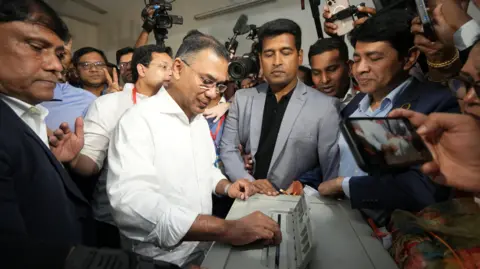
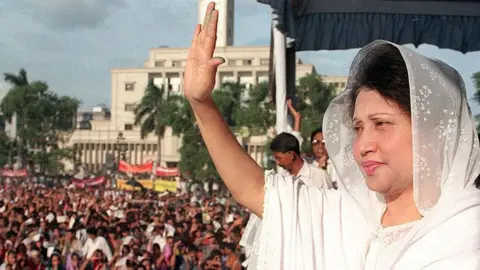
Swearing‑in Marks Historic BNP Triumph on 17 February Tarique Rahman, 60, took the oath of office on 17 February 2026 after the Bangladesh Nationalist Party secured a landslide in the December 2025 general election, delivering the first premiership for the Zia family since Khaleda Zia’s tenure [1]. The ceremony featured 49 newly appointed cabinet ministers and attracted foreign delegations from India, Nepal, Pakistan and Sri Lanka [1]. Rahman’s inauguration signals a dramatic shift in Bangladesh’s political landscape after years of opposition rule [1].
Return From 17‑Year Exile Preceded Mother’s Death and Party Leadership Rahman arrived in Dhaka on 25 December 2025, ending a 17‑year self‑imposed exile [1]. Five days later, his mother, former prime minister Khaleda Zia, died, prompting national mourning [1]. He was formally named BNP leader on 9 January 2026, consolidating his authority within the party ahead of the swearing‑in [1].
Legal Past Includes Arrest, Sentencing and Subsequent Clearance Rahman faced arrest on corruption charges in 2007, alleging torture during detention and serving 18 months in prison [1]. He was sentenced in absentia for a 2004 grenade attack but later cleared of those charges, a point his supporters cite to refute accusations of nepotism [1]. Critics continue to highlight these controversies as potential challenges to his governance [1].
Government Pledge Emphasizes Order While Opposition Takes Shape At the oath ceremony, Rahman vowed that “peace, law and order must be maintained at any cost,” promising a crackdown on unrest [1]. Shafiqur Rahman of Jamaat‑e‑Islami was appointed Leader of the Opposition, while BNP insider Amir Khasru downplayed dynastic concerns [1]. Analysts note that Rahman’s ability to deliver stability will be closely scrutinized in the coming months [1].
Timeline
1981 – General Ziaur Rahman is assassinated, prompting his widow Khaleda Zia to enter politics and later become a central figure in Bangladesh’s opposition movement [3].
1982 – Khaleda Zia joins the Bangladesh Nationalist Party (BNP) and quickly rises to vice‑chairman, laying the foundation for her future leadership [3].
1991 – Khaleda Zia becomes Bangladesh’s first female prime minister, steering the country back to parliamentary democracy after years of military rule [4][15].
2007 – Tarique Rahman is arrested on corruption charges, alleges torture, and serves 18 months in prison, marking a controversial chapter in his political career [1].
2008 – Facing health issues after alleged torture, Tarique Rahman departs for London for medical treatment, beginning a 17‑year self‑imposed exile [8][23].
2012 – Khaleda Zia makes her last recorded official visit to India, sustaining a decades‑long diplomatic rapport [13].
2015 – She meets Indian Prime Minister Narendra Modi following the India‑Bangladesh Land Boundary Agreement, underscoring continued bilateral cooperation [13].
2020 – Khaleda Zia is released from prison, re‑entering public life under house‑arrest conditions [7].
2024 – A mass uprising topples Prime Minister Sheikh Hasina; Hasina flees to exile in India while Nobel laureate Muhammad Yunus assumes leadership of an interim caretaker government [5][10][12].
Jan 2025 – Bangladesh’s Supreme Court acquits Khaleda Zia in her final corruption case, clearing her to contest the upcoming election [6].
Jan 2025 – Khaleda Zia travels to London for advanced medical treatment after her release, reflecting lingering health challenges [3].
May 2025 – She returns to Bangladesh from London, resuming limited political activity amid a fragile national climate [6][15].
Dec 17 2025 – Tarique Rahman announces his planned return on Dec 25, pledging a welfare‑state agenda if elected and invoking the legacy of his father [23].
Dec 24 2025 – The interim government announces heightened security measures for Tarique’s arrival, citing a recent Mogbazar bombing as a threat [22].
Dec 25 2025 – Tarique Rahman lands at Hazrat Shahjalal International Airport after 17 years abroad, greeted by massive crowds and launching the BNP’s Feb 12, 2026 election campaign [21][8][20].
Dec 26 2025 – He visits General Ziaur Rahman’s grave at Zia Udyan, paying floral tributes in a highly secured ceremony [19].
Dec 27 2025 – Tarique completes biometric voter registration at the Election Commission, preparing to contest the Bogura‑6 constituency despite Awami League objections [18].
Dec 30 2025 – Khaleda Zia dies at age 80 after a prolonged illness, ending a political career that defined Bangladesh’s “Battle of the Begums” and closing a generational chapter [2][3][4][6][7][10][12][14][15][16].
Dec 31 2025 – A state funeral draws thousands of mourners and regional dignitaries; India’s External Affairs Minister S. Jaishankar attends, highlighting the diplomatic significance of her legacy [11][14].
Jan 9 2026 – The BNP Standing Committee appoints Tarique Rahman as party chairman, filling the vacancy created by his mother’s death and positioning him as the BNP’s prime‑ministerial contender [9].
Feb 12 2026 – Bangladesh holds a general election under the Yunus‑led interim government; the BNP fields Tarique Rahman as its prime‑ministerial candidate amid a contested political landscape [10][12].
Feb 17 2026 – Tarique Rahman is sworn in as prime minister, declaring that “peace, law and order must be maintained at any cost” and pledging a secure, inclusive state [1].
Dive deeper (6 sub-stories)
-
Tarique Rahman Sworn In as Bangladesh Prime Minister Following 17‑Year Exile
(8 articles)
-
Khaleda Zia’s Death Triggers State Funeral, Rahman’s Return, and 2026 Election Countdown
(9 articles)
-
Jaishankar Leads Indian Delegation at Khaleda Zia’s Funeral as Massive Public Turnout Swells
(2 articles)
-
The Hindu: Khaleda Zia’s decades of diplomacy with India shape bilateral ties
-
Tarique Rahman Returns, Positions BNP for Inclusive Campaign Ahead of 2026 Election
(2 articles)
-
The Hindu: Tarique Rahman registers as Bangladeshi voter after 17 years abroad in self-exile
All related articles (23 articles)
-
BBC: Tarique Rahman Sworn In as Bangladesh Prime Minister After 17‑Year Exile
-
The Hindu: Tarique Rahman appointed BNP chairman after Khaleda Zia's death
-
The Hindu: Bangladesh braces for generational shift as Khaleda Zia dies and Tarique Rahman returns ahead of 2026 elections
-
BBC: Huge crowds mourn Bangladesh's first female PM at state funeral
-
The Hindu: Khaleda Zia's funeral prayers held in Dhaka amid tight security as Jaishankar arrives to represent India
-
The Hindu: Khaleda Zia’s decades of diplomacy with India shape bilateral ties
-
The Hindu: Bangladesh's Khaleda Zia dies after prolonged illness; three-day mourning declared
-
The Hindu: Bangladesh’s Battle of the Begums ends as Khaleda Zia dies and Hasina remains in exile, election looms
-
AP: Khaleda Zia dies at 80; Bangladesh mourns as funeral plans are announced
-
CNN: Khaleda Zia, former Bangladeshi prime minister, dies at 80
-
BBC: Khaleda Zia dies in Dhaka after long political career
-
The Hindu: Khaleda Zia dies at 80, ending era in Bangladesh politics
-
BBC: Khaleda Zia dies at 80, Bangladesh's first female prime minister
-
The Hindu: Bangladesh's first female Prime Minister Khaleda Zia dies at 80
-
The Hindu: Tarique Rahman Returns From London, Signals Inclusive BNP Path Ahead of Elections
-
The Hindu: Tarique Rahman registers as Bangladeshi voter after 17 years abroad in self-exile
-
The Hindu: BNP acting chairman Tarique Rahman visits his father's grave in Dhaka, 17 years after self-exile
-
The Hindu: Tarique Rahman Returns to Bangladesh, Calls for Secure, Inclusive State Ahead of 2026 Election
-
AP: Tarique Rahman returns to Bangladesh after 17 years in exile, poised to lead amid election race
-
The Hindu: BNP acting chairman Tarique Rahman lands in Dhaka ahead of February elections
-
BBC: Bangladesh BNP frontrunner Tarique Rahman returns after 17-year exile ahead of elections
-
The Hindu: BNP's Tarique Rahman to return to Dhaka ahead of polls with security measures
-
The Hindu: Tarique Rahman Plans Return to Bangladesh After 17 Years