Trump’s State of the Union Set for Feb. 27 Amid Mixed Economic Indicators
Updated (35 articles)
Trump Gears Up for Tuesday’s State of the Union President Donald Trump will deliver his first State of the Union of a second term on Tuesday, Feb. 27, centering his remarks on the economy, immigration, crime, energy and national security [1]. He frames the economy as “dead” despite official data showing solid growth [1]. The speech is expected to reinforce his narrative on border enforcement and energy policy [1].
2025 GDP Grows 2.2% While Stock Indices Hover Near Records The U.S. economy expanded 2.2% in 2025, the slowest pace since 2020, following a 2.8% rise in 2024 [2]. Wall Street indices remain close to all‑time highs even after a mid‑year sell‑off, bolstering retirement accounts [2]. January 2025 added more jobs than forecast, keeping unemployment low, yet wage growth has stalled for three years and inflation eased to 2.4%, producing modest real‑paycheck gains [2]. Rising equity values and AI investment have widened the wealth gap, creating a K‑shaped recovery [2].
Trump’s $18 Trillion Investment Claim Exceeds Official and Independent Estimates Trump asserts that $18 trillion in investment commitments have been secured, but the White House lists $9.6 trillion and a January study doubts that more than $5 trillion will materialize [1]. The discrepancy highlights a pattern of overstating economic achievements in the lead‑up to the address [1].
FBI and DHS Reports Refute Migrant Crime and Missing Children Allegations Trump alleges that migrants fuel a crime surge and that 300,000 migrant children are missing; FBI data show no overall crime spike and research indicates undocumented people are less likely to be arrested [1]. A DHS Office of Inspector General report attributes the “missing children” narrative to monitoring lapses rather than mass disappearances [1]. These findings directly contradict the president’s immigration rhetoric [1].
Sources
-
1.
AP: Trump’s false and misleading claims ahead of his State of the Union: details Trump’s inaccurate statements on economic performance, inflation, investment totals, migrant crime and energy policy, contrasting them with official statistics and agency reports .
-
2.
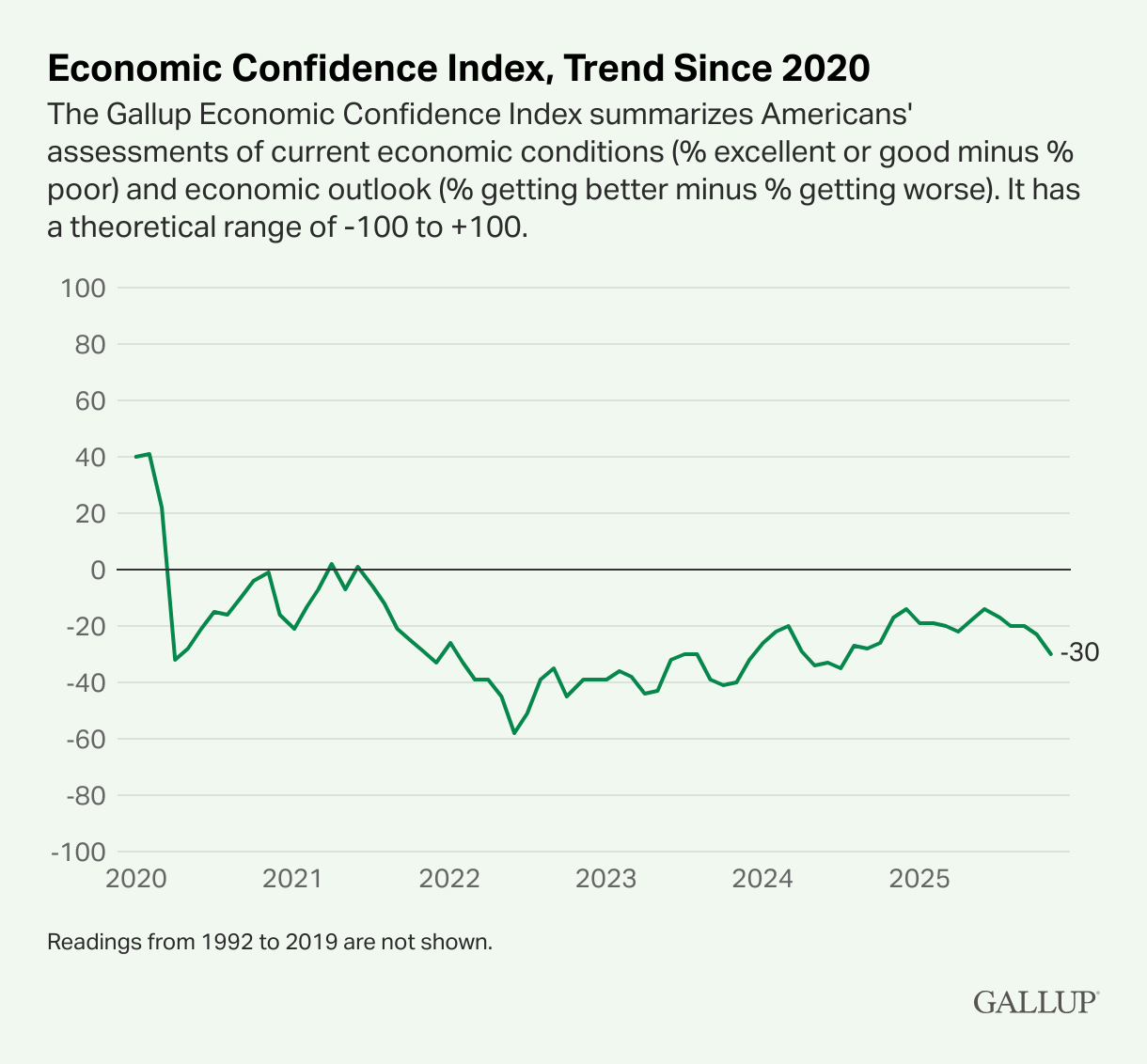
CNN: Trump’s Economy Shows Mixed Signals Ahead of State of the Union: emphasizes recent GDP growth, stock market resilience, strong job creation, stalled wage growth, lower inflation, and a widening wealth gap, framing the economy as unevenly recovering .
Related Tickers
Videos (1)
Primary Data (1)
Timeline
1776 – Trump frames the $1,776 “warrior dividend” as a tribute to the nation’s founding in 1776 and ties the payment to the upcoming 250th‑anniversary celebrations. [1]
2020 – U.S. GDP growth slows to its lowest rate since the pandemic‑era downturn, a benchmark the administration later cites when touting recovery. [4]
2024 – Republican Rob Bresnahan wins Pennsylvania’s 8th congressional district by a narrow margin, turning the seat into a key battleground for the 2026 midterms. [3]
Jan 2025 – January job gains exceed forecasts, keeping unemployment low while wage growth stalls and inflation falls to 2.4%, creating a mixed backdrop for the administration’s economic messaging. [4]
Dec 3, 2025 – In a three‑hour Cabinet meeting, Trump declares “affordability is a hoax that was started by Democrats,” offering no concrete plan to curb rising grocery, housing, or ACA‑premium costs. [25]
Dec 4, 2025 – White House officials announce a pending Pennsylvania trip to tout tariff‑driven growth and tax cuts, noting inflation at 3% YoY and state unemployment rising to 4%. [27]
Dec 9, 2025 – Trump travels to the Mount Airy Casino Resort in Mount Pocono, Pennsylvania, asserting that inflation is “no longer a problem,” labeling Democratic affordability concerns a “hoax,” and promising that tariffs will fund a forthcoming “warrior dividend.” [26][24]
Dec 10, 2025 – At a northeast‑Pennsylvania rally, Trump dismisses the teleprompter, mixes economic claims with immigration jokes, and repeats that tariffs will bolster domestic manufacturing despite voter anxiety over prices. [2][23]
Dec 11, 2025 – Trump delivers an unscripted rally in Pennsylvania, shifting focus to immigration and windmills while ignoring the scripted affordability message his advisers had prepared. [2][24]
Dec 12, 2025 – Republican strategists urge Trump to scale back or renegotiate his 10% global tariff regime after it fuels a 3% inflation rise and a 4.4% unemployment rate, warning the policy harms manufacturing and housing. [21]
Dec 16, 2025 – Vice President JD Vance gives a disciplined economic speech in Allentown, blaming Democrats for high grocery and housing costs and urging patience for the benefits of Trump’s policies slated for 2026. [20]
Dec 17, 2025 – Trump delivers a 20‑minute primetime address from the White House, announcing a $1,776 “warrior dividend” for 1.45 million service members, claiming inflation is “essentially gone,” and framing the 2026 election as a referendum on his leadership. [18][19][28][30]
Dec 18, 2025 – Fact‑checkers and experts note that Trump’s economic rhetoric mirrors Biden’s “positive‑spin” strategy, highlighting that 52% of Americans still think the economy is worsening despite the president’s upbeat claims. [17][1]
Dec 19, 2025 – An 18‑minute scripted “affordability” address airs primetime; advisers split on its effectiveness, while the administration leverages fresh inflation‑cooling data to launch a media blitz. [16][15]
Dec 20, 2025 – In Allentown, retiree Idalia Bisbal protests rising rent, groceries, and utilities, while Vice President Vance rallies locals, acknowledging the affordability crisis and blaming the Biden administration. [14]
Dec 24, 2025 – A CNN/SSRS poll finds 58% of Americans view Trump’s first year of his second term as a failure, and a Newsweek analysis flags multiple false or exaggerated claims in his year‑end address. [11][15]
Dec 27, 2025 – Fact‑checking reveals Trump repeatedly inflated investment figures, claiming $17‑$18 trillion in new capital despite White House data showing under $9 trillion, and falsely asserted drug‑price cuts of “2,000‑3,000%.” [10][13]
Dec 29, 2025 – Trump pushes for renewed stimulus and lower interest rates, arguing a strong stock market could boost annual growth by up to 20% while warning tariffs are driving inflation above the 2% target. [9]
Jan 12, 2026 – Senator Elizabeth Warren urges Democrats to “read the room” on the economy, warning donor‑centric strategies risk losing working‑class voters in the 2026 and 2028 cycles and pressing Trump to back bipartisan housing legislation. [8]
Jan 20, 2026 – Trump declares his first year of the second term a success, cites tariff‑driven growth and an immigration crackdown, and celebrates a December inflation rate of 2.7% even as a CNN poll shows 58% view his year as a failure. [7][6]
Jan 20, 2026 – The administration pivots from denialism to a rapid‑policy push, proposing $2,000 stimulus checks, larger tax refunds, and a new Federal Reserve chair to lower rates, while mortgage rates briefly dip below 6% and tariffs threaten price stability. [6][7]
Feb 3, 2026 – A Wall Street Journal op‑ed from the White House inflates the administration’s “major investment” tally to $18 trillion, misrepresents Q3 2025 GDP growth, and cherry‑picks a 27% deficit reduction that only applies to a partial fiscal year. [5]
Feb 24, 2026 – Economic data show 2025 GDP grew 2.2%—the slowest since 2020—while stock markets hover near all‑time highs, wage growth stalls, housing and childcare costs remain unaffordable, and a K‑shaped recovery widens wealth gaps. [4]
July 2026 – The United States celebrates its 250th anniversary, a milestone Trump repeatedly cites to project a stronger nation and to anchor his “One Big, Beautiful Bill” narrative. [1]
2026 (ongoing) – The White House schedules weekly road‑trip appearances for Trump throughout the year to reinforce the affordability message and mobilize low‑propensity voters ahead of the midterms. [16]
2026 (future) – The administration signals intent to appoint a new Federal Reserve chair who could accelerate interest‑rate cuts, aiming to boost borrowing power amid ongoing affordability concerns. [6]
Nov 2026 – Voters head to the polls in a midterm referendum that will decide control of the House and Senate, with both parties framing the election around affordability and the president’s economic record. [21][8]
Dive deeper (16 sub-stories)
-
Trump Prepares Tuesday’s State of the Union Amid Mixed Economic Indicators
(6 articles)
-
Trump’s WSJ Op‑Ed Claims $18 Trillion Investment, Misstates Growth
(3 articles)
-
Trump Launches Rapid Affordability Package as Mortgage Rates Slip Below 6%
(2 articles)
-
CNN: Warren urges Democrats to read the room on the economy
-
CNN: CNN poll shows Americans want economy-focused messages from Trump and Democrats as leaders aren’t listening
-
Vance Echoes Trump’s A‑Plus‑Plus‑Plus Grade While Allentown Residents Cite Rising Costs
(6 articles)
-
Newsweek: Reader reactions to Trump's year-end address show praise, criticism, and memes
-
CNN: Trump tests new affordability script; advisers unsure whether he’ll stick to it
-
Trump’s Dec 17 Primetime Address Introduces Warrior Dividend Amid Economic Messaging Controversy
(2 articles)
-
Trump Announces $1,776 “Warrior Dividend” Checks for 1.45 Million Troops Before Christmas
(5 articles)
-
CNN: Trump’s Wednesday Night Address and Vance’s Economic Pitch
-
CNN: Trump and Powell Align on Affordability Strategy
-
BBC: Trump veers off-script and does little to calm Republican nerves
-
Trump Claims Inflation Solved While Criticizing Immigration at Pennsylvania Rally
(2 articles)
-
CNN: Trump has ‘fun’ but fails to feel Americans’ pain on prices
-
CNN: Trump dismisses affordability as a hoax amid Cabinet meeting
All related articles (35 articles)
-
AP: Trump’s false and misleading claims ahead of his State of the Union
-
CNN: Trump’s Economy Shows Mixed Signals Ahead of State of the Union
-
CNN: Trump’s WSJ Op‑Ed Packs False or Misleading Economic Claims
-
CNN: Affordability shows signs of improvement as Trump pursues rapid policy action
-
Newsweek: Trump Declares First Year of Second Term a Success as Inflation Data Surface
-
CNN: Warren urges Democrats to read the room on the economy
-
CNN: Trump’s push for stimulus and lower rates echoes Biden-era policies amid tariffs and inflation concerns
-
CNN: Trump’s 2025 top lies span economy, foreign policy and Capitol events
-
CNN: CNN poll shows Americans want economy-focused messages from Trump and Democrats as leaders aren’t listening
-
Newsweek: Trump's 2025 record shows loud rhetoric, limited gains, and mounting disapproval
-
Newsweek: Trump's second-term economy posts stronger Q3 growth but affordability concerns linger
-
AP: Allentown tests Trump’s A+++++ economy claim as costs rise ahead of midterms
-
Newsweek: Reader reactions to Trump's year-end address show praise, criticism, and memes
-
CNN: Trump tests new affordability script; advisers unsure whether he’ll stick to it
-
Newsweek: Trump repeats Biden's economic messaging mistake, experts say
-
CNN: Trump’s Dec 17 Primetime Address: Key Takeaways
-
BBC: Trump unveils 'warrior dividend' for troops as he defends economic record
-
AP: Trump’s 2025 Economic Claims Clash With Government Data
-
AP: Trump’s prime‑time address touts “warrior dividend” amid economic concerns
-
WBNS (Columbus, OH): Trump announces $1,776 Christmas troop bonus in White House speech, says tariffs fund payments
-
King5 (Seattle, WA): Trump announces $1,776 Christmas bonus for U.S. troops in White House speech, frames economy as strong
-
King5 (Seattle, WA): Trump uses prime-time address to blame Democrats for the economy while pledging a troop bonus
-
CNN: Trump’s Wednesday Night Address and Vance’s Economic Pitch
-
CNN: Vance’s Dec 16 Pennsylvania Speech Highlights Economic Concerns and GOP Strategy
-
Newsweek: Trump’s 2026 Midterm Strategy: Key Republican Recommendations
-
CNN: Trump and Powell Align on Affordability Strategy
-
BBC: Trump veers off-script and does little to calm Republican nerves
-
AP: Trump Blames Inflation, Raises Immigration Grievances in Pennsylvania Rally
-
CNN: Vance to travel to Pennsylvania next week to press affordability push
-
CNN: Trump has ‘fun’ but fails to feel Americans’ pain on prices
-
BBC: Trump hits the road to sell economic message and counter cost of living concerns
-
CNN: Trump Visits Pennsylvania to Push Affordability Message Ahead of Midterms
-
CNN: Trump calls affordability a scam as he campaigns on inflation claims
-
AP: Trump to Visit Pennsylvania to Discuss Inflation Efforts
-
CNN: Trump dismisses affordability as a hoax amid Cabinet meeting
External resources (137 links)
- https://www.youtube.com/live/p_HZOI61BNA?t=2029s (cited 1 times)
- https://www.youtube.com/watch?v=q9oZ0pHymko (cited 1 times)
- https://www.whitehouse.gov/investments/ (cited 3 times)
- https://www.bea.gov/sites/default/files/2026-01/trad1125.pdf (cited 2 times)
- https://bidenwhitehouse.archives.gov/briefing-room/statements-releases/2022/06/14/remarks-by-president-biden-at-the-29th-afl-cio-quadrennial-constitutional-convention/ (cited 1 times)
- https://constitution.congress.gov/constitution/amendment-1/ (cited 1 times)
- https://crimecards.dc.gov/homicides:crimes/with%20any%20or%20no%20weapon/dated::05242025:11282025/citywide:heat (cited 1 times)
- https://fiscaldata.treasury.gov/static-data/published-reports/mts/monthly-receipts-outlays-deficit-surplus/MonthlyReceiptsOutlaysDeficitSurplus.xls (cited 1 times)
- https://www.banking.senate.gov/newsroom/minority/advisory-after-a-year-of-empty-promises-higher-prices-and-fewer-homes_-warren-schumer-senate-democrats-take-on-trumps-historic-housing-costs-crisis (cited 1 times)
- https://www.bea.gov/news/2025/us-international-trade-goods-and-services-september-2025 (cited 1 times)
- https://www.bea.gov/news/2026/gross-domestic-product-3rd-quarter-2025-updated-estimate-gdp-industry-and-corporate (cited 1 times)
- https://www.bea.gov/news/2026/us-international-trade-goods-and-services-november-2025 (cited 1 times)
- https://www.bea.gov/sites/default/files/2026-01/trad-time-series-1125.xlsx (cited 1 times)
- https://www.bls.gov/news.release/archives/cpi_07132022.htm#:~:text=The%20all%20items%20index%20increased%209.1%20percent%20for%20the%2012,over%20the%20last%2012%20months. (cited 1 times)
- https://www.cbo.gov/system/files/2025-08/61466-DebtService.pdf (cited 1 times)
- https://www.cdc.gov/nchs/nvss/vsrr/drug-overdose-data.htm (cited 1 times)
- https://www.cdc.gov/vaccines/hcp/imz-schedules/child-adolescent-age.html (cited 1 times)
- https://www.eia.gov/environment/emissions/carbon/#:~:text=Industrial%20CO2%20emissions%20remained%20unchanged%20in%202023%20as%20industrial%20production%20growth%20slowed (cited 1 times)
- https://www.fec.gov/resources/cms-content/documents/2024presgeresults.pdf (cited 1 times)
- https://www.fec.gov/resources/cms-content/documents/federalelections2020.pdf (cited 1 times)
- https://www.federalreserve.gov/releases/z1/dataviz/dfa/distribute/table/ (cited 1 times)
- https://www.jec.senate.gov/public/index.cfm/republicans/state-inflation-tracker (cited 1 times)
- https://www.justice.gov/usao-dc/pr/four-men-sentenced-prison-actions-during-jan-6-capitol-breach (cited 1 times)
- https://www.justice.gov/usao-dc/pr/new-jersey-man-found-guilty-assaulting-law-enforcement-and-other-charges-during-jan-6 (cited 1 times)
- https://www.justice.gov/usao-dc/pr/texas-couple-sentenced-prison-assaulting-law-enforcement-and-other-charges-during-jan-6 (cited 1 times)
- https://www.oig.dhs.gov/sites/default/files/assets/2024-08/OIG-24-46-Aug24.pdf (cited 1 times)
- https://fred.stlouisfed.org/series/TLMFGCONS (cited 2 times)
- https://fred.stlouisfed.org/series/WFRBLN40080 (cited 2 times)
- https://eml.berkeley.edu/~saez/ (cited 1 times)
- https://fred.stlouisfed.org/series/CPIAUCSL (cited 1 times)
- https://news.gallup.com/poll/699311/economic-confidence-slips-holiday-spending-plans-plummet.aspx (cited 1 times)
- https://web.archive.org/web/20251007150001/https:/www.whitehouse.gov/investments/ (cited 1 times)
- https://web.archive.org/web/20251217023226/https://www.whitehouse.gov/investments/ (cited 1 times)
- https://www.brookings.edu/articles/what-caused-the-u-s-pandemic-era-inflation/ (cited 1 times)
- https://www.medschool.umaryland.edu/media/som/news/news-logos/BU-researcher-warns-of-367,000-deaths-from-halted-USAID-programs_.pdf (cited 1 times)
- https://www.presidency.ucsb.edu/documents/2024-republican-party-platform (cited 1 times)
- https://www.stlouisfed.org/on-the-economy/2025/oct/how-tariffs-are-affecting-prices-2025?utm_source=chatgpt.com (cited 1 times)
- https://apnorc.org/projects/trumps-approval-rating-slips-on-the-economy-and-immigration/ (cited 2 times)
- https://www.foxnews.com/politics/fox-news-poll-voters-say-white-house-doing-more-harm-than-good-economy (cited 2 times)
- https://www.politico.com/news/2025/12/04/poll-americans-trump-voters-affordability-crisis-00674747 (cited 2 times)
- https://apnorc.org/ (cited 1 times)
- https://apnorc.org/?doing_wp_cron=1766029160.5116949081420898437500 (cited 1 times)
- https://www.c-span.org/clip/campaign-2024/donald-trump-uses-tictacs-to-demonstrate-inflation/5128283 (cited 1 times)
- https://www.nytimes.com/2025/08/23/us/harvard-changes-academic-freedom-trump-deal.html?smid=url-share (cited 1 times)
- https://www.nytimes.com/2025/10/24/us/politics/trump-deportations-ice.html (cited 1 times)
- https://www.nytimes.com/2025/12/04/world/middleeast/gaza-strikes-ceasefire.html (cited 1 times)
- https://www.oregonlive.com/living/2025/10/hell-hole-burning-war-torn-11-portlanders-on-what-the-city-is-really-like.html (cited 1 times)
- https://www.oregonlive.com/opinion/2025/10/editorial-hello-world-an-open-letter-from-war-ravaged-portland.html (cited 1 times)
- https://www.reuters.com/investigates/special-report/usa-trump-retribution-tracker (cited 1 times)
- https://www.theatlantic.com/national-security/archive/2025/09/fentanyl-trump-venezuela-caribbean-boats/684373/ (cited 1 times)
- https://www.washingtonpost.com/dc-md-va/2025/01/29/dc-homicide-tracker/ (cited 1 times)
- https://www.washingtonpost.com/outlook/its-easy-to-fact-check-trumps-lies-he-tells-the-same-ones-all-the-time/2018/11/15/5effb25c-e874-11e8-a939-9469f1166f9d_story.html (cited 1 times)
- https://www.washingtonpost.com/politics/2024/11/07/trumps-mandate-isnt-powerful-he-suggests-heres-why/ (cited 1 times)
- https://www.washingtonpost.com/technology/interactive/2025/ice-social-media-blitz/ (cited 1 times)
- https://www.wsj.com/opinion/donald-j-trump-my-tariffs-have-brought-america-back-2248391b?st=XkXFar&reflink=desktopwebshare_permalink (cited 1 times)
- https://t.co/2s1efP1vxs (cited 1 times)
- https://t.co/GKUxgjrYJX (cited 1 times)
- https://t.co/V8ZUS1QuHo (cited 1 times)
- https://truthsocial.com/@realDonaldTrump/posts/115239044548033727 (cited 1 times)
- https://truthsocial.com/@realDonaldTrump/posts/115497796099239673 (cited 1 times)
- https://truthsocial.com/@realDonaldTrump/posts/115770165868454573 (cited 1 times)
- https://x.com/KevRGordon/status/2016968526020411873 (cited 1 times)
- https://x.com/KobeissiLetter/status/2011938163892080786 (cited 1 times)
- https://x.com/SenWarren/status/2010795010632139173?s=20 (cited 1 times)
- https://x.com/acyn/status/2003236521718247460?s=46 (cited 1 times)
- https://x.com/atrupar/status/1996324579757756524 (cited 1 times)
- https://x.com/bellingcat/status/1347428500530204674 (cited 1 times)
- https://x.com/bencasselman/status/2016925206074327306 (cited 1 times)
- https://x.com/reidhoffman/status/2010793286349541419 (cited 1 times)
- https://rollcall.com/factbase/trump/transcript/donald-trump-interview-greg-kelly-newsmax-march-25-2025/#59 (cited 2 times)
- https://www.atlantafed.org/cqer/research/gdpnow (cited 2 times)
- https://angusreid.org/trump-carney-51st-state-canada-usa/ (cited 1 times)
- https://ballotpedia.org/The_Republican_Party_Platform,_2024 (cited 1 times)
- https://counciloncj.org/crime-trends-in-u-s-cities-year-end-2025-update/ (cited 1 times)
- https://d3nkl3psvxxpe9.cloudfront.net/documents/cbsnews_20241124_1.pdf (cited 1 times)
- https://deadline.com/2025/09/trump-news-coverage-jimmy-kimmel-1236549937/ (cited 1 times)
- https://finance.yahoo.com/quote/%5EFTSE/ (cited 1 times)
- https://finance.yahoo.com/quote/%5EGSPTSE/history/ (cited 1 times)
- https://finance.yahoo.com/quote/%5EKS11/history/ (cited 1 times)
- https://finance.yahoo.com/quote/%5EN225/history/ (cited 1 times)
- https://finance.yahoo.com/quote/000001.SS/history/ (cited 1 times)
- https://navigatorresearch.org/wp-content/uploads/2025/12/Navigator-Update-12.18.2025.pdf (cited 1 times)
- https://realtimeinequality.org/ (cited 1 times)
- https://rethinktrade.org/press-releases/reports-manufacturing-data-2025/ (cited 1 times)
- https://rollcall.com/factbase/trump/transcript/donald-trump-interview-60-minutes-november-2-2025/#168 (cited 1 times)
- https://rollcall.com/factbase/trump/transcript/donald-trump-interview-60-minutes-november-2-2025/#206 (cited 1 times)
- https://rollcall.com/factbase/trump/transcript/donald-trump-interview-daniel-baldwin-oan-october-1-2025/#86 (cited 1 times)
- https://rollcall.com/factbase/trump/transcript/donald-trump-press-gaggle-air-force-one-february-9-2025/ (cited 1 times)
- https://rollcall.com/factbase/trump/transcript/donald-trump-press-gaggle-before-marine-one-departure-july-15-2025/ (cited 1 times)
- https://rollcall.com/factbase/trump/transcript/donald-trump-press-gaggle-kennedy-center-red-carpet-december-7-2025/#47 (cited 1 times)
- https://rollcall.com/factbase/trump/transcript/donald-trump-remarks-apple-investment-announcement-white-house-august-6-2025/#6 (cited 1 times)
- https://rollcall.com/factbase/trump/transcript/donald-trump-remarks-bilat-mark-rutte-nato-march-13-2025/ (cited 1 times)
- https://rollcall.com/factbase/trump/transcript/donald-trump-remarks-cabinet-meeting-white-house-august-26-2025/ (cited 1 times)
- https://rollcall.com/factbase/trump/transcript/donald-trump-remarks-diwali-celebration-white-house-october-21-2025/#131 (cited 1 times)
- https://rollcall.com/factbase/trump/transcript/donald-trump-remarks-executive-orders-sovereign-wealth-fund-february-3-2025/#34 (cited 1 times)
- https://rollcall.com/factbase/trump/transcript/donald-trump-remarks-foreign-ministers-democratic-republic-congo-rwanda-june-27-2025/#50 (cited 1 times)
- https://rollcall.com/factbase/trump/transcript/donald-trump-remarks-laken-riley-bill-signing-january-29-2025/#12 (cited 1 times)
- https://rollcall.com/factbase/trump/transcript/donald-trump-remarks-prescription-drug-prices-november-6-2025/#211 (cited 1 times)
- https://rollcall.com/factbase/trump/transcript/donald-trump-remarks-thanksgiving-turkey-pardon-november-25-2025/#24 (cited 1 times)
- https://rollcall.com/factbase/trump/transcript/donald-trump-speech-250th-anniversary-army-fort-liberty-north-carolina-june-10-2025/#43 (cited 1 times)
- https://rollcall.com/factbase/trump/transcript/donald-trump-speech-american-business-forum-miami-november-5-2025/#139 (cited 1 times)
- https://rollcall.com/factbase/trump/transcript/donald-trump-speech-american-business-forum-miami-november-5-2025/#24 (cited 1 times)
- https://rollcall.com/factbase/trump/transcript/donald-trump-speech-campaign-rally-erie-pennsylvania-september-29-2024/ (cited 1 times)
- https://rollcall.com/factbase/trump/transcript/donald-trump-speech-department-of-defense-leaders-quantico-september-30-2025/#81 (cited 1 times)
- https://rollcall.com/factbase/trump/transcript/donald-trump-speech-political-rally-bozeman-montana-august-9-2024/ (cited 1 times)
- https://rollcall.com/factbase/trump/transcript/donald-trump-speech-political-rally-wildwood-new-jersey-may-11-2024/#195 (cited 1 times)
- https://rollcall.com/factbase/trump/transcript/donald-trump-speech-political-support-budget-white-house-june-26-2025/#102 (cited 1 times)
- https://rollcall.com/factbase/trump/transcript/donald-trump-speech-us-saudi-investment-forum-november-19-2025/#59 (cited 1 times)
- https://rollcall.com/factbase/trump/transcript/donald-trump-speech-us-saudi-investment-forum-november-19-2025/#80 (cited 1 times)
- https://rollcall.com/factbase/trump/transcript/donald-trump-speech-world-economic-forum-davos-january-21-2026/#22 (cited 1 times)
- https://stateline.org/2025/10/30/removals-from-inside-us-outnumber-border-deportations-for-the-first-time-since-2014 (cited 1 times)
- https://warnermedia-my.sharepoint.com/personal/daniel_dale_cnn_com/Documents/Desktop/clemency%20to%20the%20perpetrators (cited 1 times)
- https://www.abroadworks.com/blog/outsourcing-popularity (cited 1 times)
- https://www.aec.gov.au/faqs/postal-voting.htm (cited 1 times)
- https://www.atlantafed.org/cqer/feature/2026/01/21-gdpnow (cited 1 times)
- https://www.audubon.org/climate/survivalbydegrees (cited 1 times)
- https://www.bloomberg.com/graphics/2023-bidenomics-middle-class-economic-anxiety-2024-election/?accessToken=eyJhbGciOiJIUzI1NiIsInR5cCI6IkpXVCJ9.eyJzb3VyY2UiOiJTdWJzY3JpYmVyR2lmdGVkQXJ0aWNsZSIsImlhdCI6MTc3MDA2ODE2MiwiZXhwIjoxNzcwNjcyOTYyLCJhcnRpY2xlSWQiOiJSWEJGT0VUMEFGQjQwMSIsImJjb25uZWN0SWQiOiI5OUM2NkE2RDA4N0U0RDg5ODM4REQzMzQ0QzZBRjQzRiJ9.Ns6AVQmzv-yMfrJRy3u_UTDerMnp6iklz097vb9qqnw (cited 1 times)
- https://www.bloomberg.com/news/articles/2025-03-06/us-trade-deficit-surges-to-a-record-ahead-of-trump-tariffs (cited 1 times)
- https://www.calculatorsoup.com/calculators/algebra/percentage-decrease-calculator.php (cited 1 times)
- https://www.cato.org/blog/doge-produced-largest-peacetime-workforce-cut-record-spending-kept-rising-0 (cited 1 times)
- https://www.ch.ch/en/votes-and-elections/elections/where-and-when-to-vote#where-to-vote (cited 1 times)
- https://www.donaldjtrump.com/news/6fe08181-09f4-4a17-9d5e-d29e456382d9 (cited 1 times)
- https://www.foreignaffairs.com/united-states/americas-brexit-phase (cited 1 times)
- https://www.ft.com/content/17a1674d-0e6b-4e9b-9c0d-82de5887be15 (cited 1 times)
- https://www.gelliottmorris.com/p/the-cost-of-playing-defense-on-immigration (cited 1 times)
- https://www.ismworld.org/events/conferences-and-events/annual-conference/full-conference-agenda/speakers/anirban-basu-bio/ (cited 1 times)
- https://www.opb.org/article/2025/10/14/portland-mayor-keith-wilson-responds-to-ice-protests-ongoing-threats-of-national-guard-deployment/ (cited 1 times)
- https://www.pnas.org/doi/abs/10.1073/pnas.2014704117 (cited 1 times)
- https://www.politifact.com/factchecks/2025/jul/18/donald-trump/epstein-files-werent-made-up-by-obama-and-biden-th/ (cited 1 times)
- https://www.pricinglab.org/tariff-tracker/ (cited 1 times)
- https://www.rolls-royce.com/media/press-releases/2025/15-07-2025-rr-increases-us-manufacturing-capabilities-in-south-carolina.aspx (cited 1 times)
- https://www.scribd.com/document/941888523/cbsnews-20251102-SUN#from_embed (cited 1 times)
- https://www.theglobalist.com/just-the-facts-united-states-donald-trump-immigration-deportation-citizenshi (cited 1 times)
- https://www.vera.org/news/crime-is-down-in-2025-trump-doesnt-deserve-credit (cited 1 times)
- https://www.washingtonexaminer.com/news/3425297/stephen-miller-eviscerated-ice-officials-deportation-numbers/ (cited 1 times)
- https://youtu.be/41A4YidCQxY?feature=shared&t=406 (cited 1 times)