Trump, Xi Discuss Taiwan Arms, Iran Tariff Ahead of April Beijing Visit
Updated (12 articles)

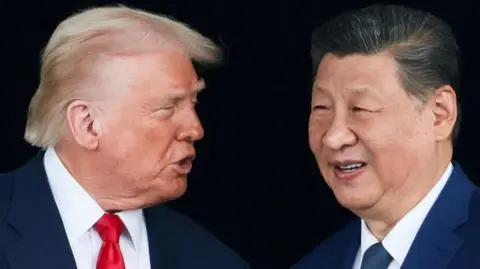
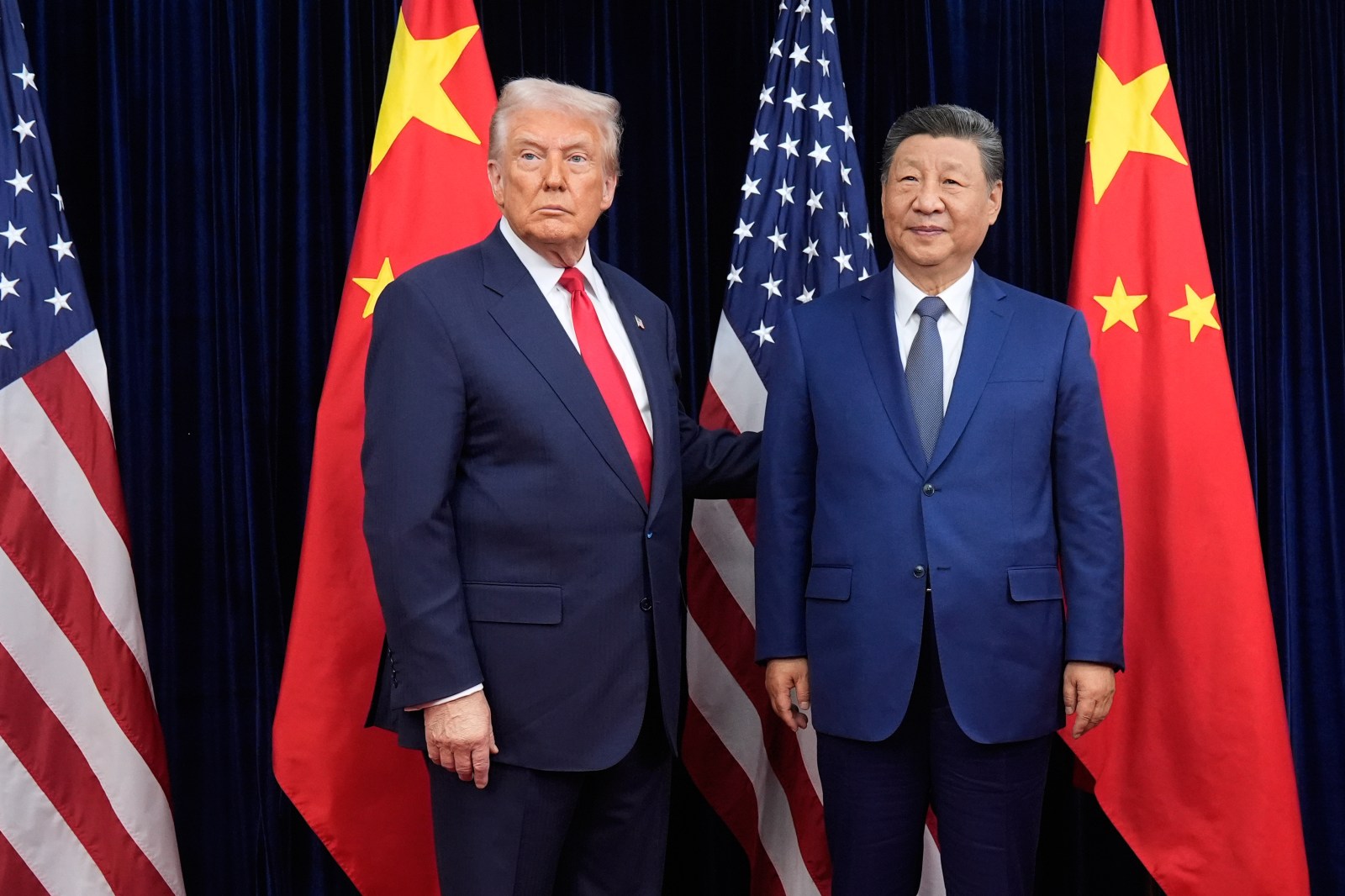
Phone Call Marks First Direct Dialogue Since November On February 4, 2026 President Donald Trump and Chinese President Xi Jinping held a “long and thorough” phone conversation, the first since November 24, 2023, covering Taiwan, Ukraine, Iran, trade and upcoming summits [1][4]. Both leaders emphasized the personal rapport, with Trump posting on Truth Social that the relationship is “extremely good” and “the most important in the world” [1][3][4]. The call also previewed Trump’s planned April visit to Beijing, which he described as “very much looking forward to” [1][3][4].
Xi Labels Taiwan the Core Issue and Demands Extreme Caution Xi reiterated that Taiwan is “the most important issue” in U.S.–China relations and warned the United States to handle any weapons transfers to the island with “extreme caution” or “prudence” [1][3][2]. Beijing’s statement warned that “Taiwan will never be allowed to separate from China,” framing the arms sales as a direct threat to sovereignty [2][3]. The warning aligns across all reports, though the phrasing varies between “extreme caution” (Newsweek) and “prudence” (BBC).
U.S. Announces New Taiwan Arms Package Amid Chinese Opposition The United States unveiled a large arms package for Taiwan, described as $10 billion in the AP report and $11 billion in the BBC story, including medium‑range missiles, howitzers, drones and rocket launchers [1][2]. China condemned the sale as supporting “Taiwan’s independence” and heightening Strait tensions [1][2][3]. The discrepancy in package value reflects differing source estimates, but all agree the sale provoked a strong Chinese warning.
Trump Imposes 25% Import Tax Targeting Iran‑Linked Nations During the call Trump announced a 25 percent tariff on imports from countries that do business with Iran, aiming to pressure Tehran and its trade partners [2][3]. The measure follows Trump’s broader strategy of isolating Iran, including consideration of military action and high‑level talks shifted to Oman [2]. China, Iran’s largest trading partner with $32 billion in 2024 trade, is directly affected by the policy [2].
Trade Talks Highlight Soybean, Energy and Critical Minerals Both leaders discussed expanding U.S. soybean exports to China, with Beijing considering raising imports from 12 million to 20 million tonnes for the current season [1][4]. Energy trade, including U.S. oil and gas sales, and a ministerial meeting on critical‑minerals self‑reliance were also on the agenda [2][4]. Trump framed these topics as part of a “very positive” and cooperative dialogue [3][4].
Sources
-
1.
BBC: Xi Urges Trump to Exercise Caution on Taiwan Arms Sales Amid Renewed US‑China Dialogue – Details the call’s breadth, Xi’s warning on Taiwan, Trump’s praise of the relationship, upcoming April visit, soybean import prospects, and the $11 billion arms sale criticism .
-
2.
AP: Trump and Xi Discuss Iran, Trade, Taiwan and Upcoming Summits – Highlights the call, Iran‑related import tax, the $10 billion Taiwan arms package, shift of Iran talks to Oman, and a critical‑minerals ministerial meeting .
-
3.
Newsweek: Trump Urged by Xi to Exercise Extreme Caution on Taiwan Arms Sales – Emphasizes Xi’s “extreme caution” demand, Taiwan as core issue, Trump’s social‑media recap, Iran tariff, and broader diplomatic context including New START expiry .
-
4.
Yonhap: Trump claims “positive” call with Xi on Taiwan, Ukraine, Iran and more – Focuses on Trump’s description of the call as “long and thorough,” trade topics like soybeans and energy, and the anticipation of his April Beijing visit .
Timeline
Oct 30, 2025 – President Trump and President Xi meet on the sidelines of the APEC summit in South Korea, securing concessions that lower bilateral tensions and set the stage for later diplomatic overtures [7].
Dec 5, 2025 – The U.S. releases its 33‑page National Security Strategy, framing China chiefly as an economic rival, limiting China mentions to a single paragraph, and expanding focus on Taiwan’s semiconductor role [2].
Dec 2025 – Washington announces an $11 billion arms package for Taiwan—including rocket launchers, howitzers and missiles—prompting Beijing to condemn the sale as support for “Taiwan’s independence” [1].
Dec 8, 2025 – China’s Foreign Ministry spokesperson Guo Jiakun reiterates that Taiwan is a core red line, urging the United States to stop “conniving with” independence forces while offering “win‑win” cooperation on other issues [7].
Dec 10, 2025 – Germany’s Federal Foreign Office, during Foreign Minister Johann Wadephul’s Beijing visit, issues a statement warning against any escalation in the Taiwan Strait and linking Asian stability to European prosperity [6].
Dec 11, 2025 – The Trump administration’s NSS emphasizes “rebalancing” U.S.–China economic ties, drops all human‑rights language, and receives a positive reaction from Beijing’s spokesperson Guo Jiakun, who praises the “mutual respect” tone [2].
Dec 19, 2025 – A bipartisan group of U.S. House members files a resolution condemning China’s coercive actions toward Japan and reaffirming the United States’ commitment to a free and open Indo‑Pacific and to its allies [12].
Dec 29, 2025 – Beijing issues a red‑line warning to the United States as Chinese war games circle Taiwan, marking a notable escalation in cross‑strait tensions [5].
Jan 2, 2026 – President Trump invites Japanese Prime Minister Sanae Takaichi to the United States for a spring visit, the first such trip since she took office, as Washington seeks to deepen the U.S.–Japan alliance amid strained Japan‑China ties [9].
Early Jan 2026 – China conducts two‑day military drills in the waters off Taiwan, a move linked to the U.S. announcement of a new $11 billion arms package for the island and heightening regional pressure [9].
Feb 4, 2026 – In a wide‑ranging phone call, President Xi warns President Trump to exercise “extreme caution” on any Taiwan weapons transfers, labeling Taiwan the “most important issue” in bilateral relations [3].
Feb 4, 2026 – The leaders also discuss Iran, with Trump announcing a 25 % import tax on countries doing business with Tehran and noting a forthcoming high‑level Iran‑U.S. dialogue in Oman scheduled for Friday [8].
Feb 4, 2026 – Trump unveils a $10 billion arms package for Taiwan that includes medium‑range missiles, howitzers and drones, prompting Beijing to reiterate that “Taiwan will never be allowed to separate from China” [8].
Feb 4, 2026 – Trump posts on Truth Social that the call is “long and thorough,” praises the relationship with Xi as “extremely good,” and highlights trade topics such as U.S. oil and gas sales, a potential rise in Chinese soybean imports to 20 million tons, and additional aircraft deliveries [11].
Feb 4, 2026 – The New START nuclear arms‑control treaty is set to expire on Thursday (Feb 6), leading Trump to argue that any future agreement should involve China [3].
Feb 5, 2026 – Xi reiterates that Taiwan is China’s territory and urges the United States to handle all weapons supplies to the island “with prudence,” while Trump calls the conversation “excellent” and says he looks forward to his April trip to Beijing [1].
Feb 5, 2026 – Trump notes that Beijing is considering raising U.S. soybean purchases from 12 million to 20 million tons and affirms his intent to travel to China in April for a summit that could also open talks with North Korean leader Kim Jong‑un [1][11].
Feb 9, 2026 – The United States and Iran hold high‑level talks in Oman, shifted from Turkey at Iran’s request, as part of Trump’s broader strategy to isolate Tehran while managing regional fallout [8].
Spring 2026 (planned) – Prime Minister Takaichi and President Trump coordinate a U.S. visit for the Japanese leader, aiming to cement a “new chapter” in the alliance and align with the cherry‑blossom festival [9][10].
Apr 2026 (planned) – President Trump is scheduled to travel to Beijing for a face‑to‑face summit with Xi, expected to address trade, Taiwan, and broader strategic issues and to potentially pave the way for a U.S.–North Korea dialogue [1][3][7][8].
2027 (planned) – Japan commits to raising its defense spending to 2 % of GDP by 2027 as part of a broader modernization effort and deeper security cooperation with the United States [4].
Ongoing (2025‑2026) – China expands its military reach with hypersonic and anti‑ship missiles, fortifies artificial islands in the South China Sea, and continues diplomatic pressure on Taiwan, shaping U.S. strategic calculations in the Indo‑Pacific [4].
Dive deeper (6 sub-stories)
-
Trump and Xi Discuss Taiwan Arms Caution, Iran Tariff, and April China Visit
(4 articles)
-
Trump Invites Japan’s Prime Minister Takaichi for Spring U.S. Visit Amid Rising Taiwan Tensions
(2 articles)
-
Newsweek: China issues red-line warning to US as war games target Taiwan
-
Trump’s Second Term Triggers U.S. Asia‑Pacific Strategy Overhaul Amid China’s Military Build‑Up
(3 articles)
-
Yonhap: U.S. lawmakers condemn China's actions against Japan, reaffirm commitment to allies
-
CNN: Trump NSS Emphasizes Economic Rivalry, Downplays Human Rights
All related articles (12 articles)
-
BBC: Xi Urges Trump to Exercise Caution on Taiwan Arms Sales Amid Renewed US‑China Dialogue
-
AP: Trump and Xi Discuss Iran, Trade, Taiwan and Upcoming Summits
-
Newsweek: Trump Urged by Xi to Exercise Extreme Caution on Taiwan Arms Sales
-
Yonhap: Trump claims “positive” call with Xi on Taiwan, Ukraine, Iran and more
-
The Hindu: Trump invites Japan's prime minister Sanae Takaichi to visit the U.S. amid Japan-China tensions
-
AP: Trump invites Japan’s Sanae Takaichi to visit the United States as Japan-China ties strain
-
Newsweek: China issues red-line warning to US as war games target Taiwan
-
Newsweek: Trump’s second term prompts reassessment of U.S. Asia-Pacific posture
-
Yonhap: U.S. lawmakers condemn China's actions against Japan, reaffirm commitment to allies
-
CNN: Trump NSS Emphasizes Economic Rivalry, Downplays Human Rights
-
Newsweek: U.S.’s NATO Ally Issues Warning to China
-
Newsweek: China Responds to U.S. National Security Strategy, Reiterating Taiwan Red Line