NASA Sets March 6 Artemis II Launch After Wet‑Dress Rehearsal Success
Updated (16 articles)
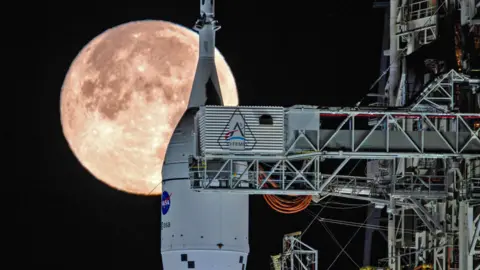
Wet‑Dress Rehearsal Resolves Hydrogen Leak Issues Thursday’s full‑scale wet‑dress rehearsal at Kennedy Space Center successfully tanked the SLS and completed the countdown sequence, confirming launch readiness. The test fixed the hydrogen leak that halted the February 3 rehearsal, allowing NASA to move the earliest launch date to March 6 (March 7 UK time). NASA announced the crew could lift off as early as that date, pending final safety checks and weather. [1][2][3]
Four‑Person Crew Enters Two‑Week Quarantine The crew—Commander Reid Wiseman, Pilot Victor Glover, Mission Specialist Christina Koch, and Canadian astronaut Jeremy Hansen—will begin a mandatory two‑week health quarantine Friday night. NASA’s launch window spans five days in early March, after which the program pauses until April. The quarantine aligns with the narrow launch window and ensures crew health before the ten‑day mission. [1][2][3]
Mission Profile Targets Orion and SLS Deep‑Space Validation Artemis II will perform a ten‑day lunar loop, including two days of Orion checkout in Earth orbit, a four‑day transit to the Moon, a flyby of the far side at 4,000‑6,000 mile altitude, and a Pacific splash‑down. The flight will verify that Orion’s life‑support, navigation and heat‑shield systems operate as designed with crew aboard. Success is required to clear the path for Artemis III’s 2028 lunar landing. [1][2][3]
Agency Leaders Highlight Progress and Crew Morale NASA Administrator Jared Isaacman said launch teams made “major progress” between rehearsals, while launch director Charlie Blackwell‑Thompson called the test a “big step in earning our right to fly.” NASA’s Lori Glaze added that the astronauts are excited and morale is high as they prepare for quarantine. The leadership comments underscore confidence ahead of the narrow launch window. [1][2][3]
Sources
-
1.
WBNS: NASA Targets March 6 Artemis II Launch After Successful Wet Dress Rehearsal: Details NASA’s announcement of a March 6 earliest launch, hydrogen‑leak fixes, leadership quotes, crew quarantine, and pending safety checks.
-
2.
King5: Artemis II May Launch March 6 After Successful Wet‑Dress Rehearsal: Mirrors WBNS on launch date and leak fix, emphasizes crew composition and mission’s lunar flyby significance.
-
3.
BBC: NASA Sets Early March Launch for Artemis II Lunar Flyby: Highlights March 6 (UK March 7) date, full mission profile, Lori Glaze’s morale comment, and context of Artemis III competition.
Videos (1)
Timeline
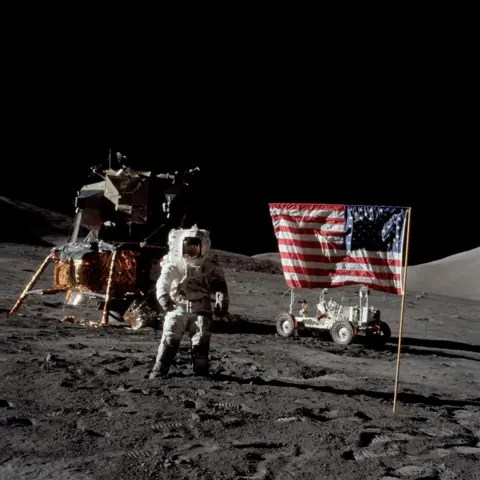
Dec 1972 – Apollo 17 completes the last crewed Moon landing, marking the end of the Apollo era and framing Artemis II as the first human return to lunar vicinity in over five decades [3].
Sep 2025 – NASA targets a February 5 launch for Artemis II, names the four‑person crew (Wiseman, Glover, Koch, Hansen), and plans a proximity‑operations docking rehearsal; Open University expert Dr Simeon Barber warns that “no earlier than mid‑2027 is optimistic” for a Moon landing, stressing dependence on Starship HLS [4].
Dec 31 2025 – Artemis II stays on track for a possible Feb 6 launch, incorporates a ten‑day lunar flyby, and resolves Artemis I heat‑shield wear; lawmakers cite the mission as a strategic counter to China’s lunar ambitions [8].
Jan 17 2026 – NASA rolls the 322‑ft Space Launch System and Orion capsule from the Vehicle Assembly Building to Launch Complex 39B, with the crew watching; the rollout supports an early‑February launch window and recalls past delays from heat‑shield and capsule issues [9].
Jan 18 2026 – The SLS arrives at Pad 39B after a 12‑hour, 4‑mile crawl; launch windows open Feb 6 onward, and Airbus’s Sian Cleaver says “we basically can’t get to the Moon without” the European Service Module, while mission‑management chair John Honeycutt stresses safety as the top priority [2].
Jan 18 2026 – NASA opens Artemis II virtual boarding passes, loading more than 1.5 million public names onto an SD card aboard Orion; Acting Associate Administrator Lori Glaze calls the flight “a key test flight for returning humans to the Moon” and notes a fueling test must occur before a launch date is set [12].
Jan 30 2026 – NASA sets the first launch window to begin Feb 8, confirming the four‑astronaut crew and a free‑return lunar flyby; the ten‑day mission will test Orion’s life‑support, navigation and targeting, and Glaze frames it as a stepping stone toward Mars [11][15].
Feb 3 2026 – CNN launches its “Countdown” newsletter, announcing Artemis II could lift off as early as March 6, 2026, and highlighting the mission as humanity’s first deep‑space flight in five decades [6].
Feb 3 2026 – NASA pushes the launch window to March after a wet‑dress rehearsal reveals hydrogen‑leak problems; the crew’s quarantine is reset, and officials consider rolling the SLS back for battery work while a second rehearsal proceeds [5].
Feb 3 2026 – A planetary parade begins Feb 17, with Venus, Jupiter, Saturn, Uranus, Neptune and Mercury visible; NASA warns a polar vortex could delay the Feb 8 launch, and introduces Dr Lauren Edgar as a member of the first majority‑female astronaut class [14].
Feb 20 2026 – NASA sets the earliest launch date to March 6 after a successful second wet‑dress rehearsal that fixes earlier hydrogen leaks; Lori Glaze says “every night I look up at the Moon… we’re ready,” and Administrator Jared Isaacman declares “major progress,” while launch director Charlie Blackwell‑Thompson calls the test “a big step in earning our right to fly” [1][10][13].
2028 (planned) – Artemis III aims for a lunar south‑pole landing using a SpaceX‑built Starship lander, with the success of Artemis II clearing the path and prompting competition from Blue Origin as NASA pursues a sustained lunar presence [1].
Dive deeper (4 sub-stories)
-
NASA Targets March 6 Artemis II Launch After Wet‑Dress Rehearsal Success
(4 articles)
-
Artemis II Launch Window Set for Feb 8, 2026, with Possible March 6 Slip Amid Cold‑Weather Risks
(9 articles)
-
NASA Opens Virtual Boarding Passes for Artemis II, Over 1.5 Million Names Already Registered
(2 articles)
-
AP: NASA moon rocket rolls to launch pad for crewed Artemis Moon flyaround
All related articles (16 articles)
-
WBNS (Columbus, OH): NASA Targets March 6 Artemis II Launch After Successful Wet Dress Rehearsal
-
King5 (Seattle, WA): Artemis II May Launch March 6 After Successful Wet‑Dress Rehearsal
-
BBC: NASA Sets Early March Launch for Artemis II Lunar Flyby
-
CNN: NASA Targets March Launch for Artemis II After Wet Dress Rehearsal Issues
-
CNN: CNN Launches Countdown Newsletter Ahead of Artemis II Crew Mission
-
King5 (Seattle, WA): February Sky Above: Planet Parade, Artemis II Launch, and a New NASA Astronaut
-
WBNS (Columbus, OH): Artemis II Crewed Moon Flyby Set for Early February 2026
-
King5 (Seattle, WA): Artemis II crewed lunar flyby set for early February 2026
-
WBNS (Columbus, OH): NASA offers virtual boarding passes for Artemis II Moon mission
-
King5 (Seattle, WA): NASA opens Artemis II virtual boarding passes for Moon mission
-
BBC: Artemis II set for early February launch after SLS rollout
-
BBC: NASA’s SLS Rocket Reaches Launch Pad 39B for Artemis II
-
AP: NASA moon rocket rolls to launch pad for crewed Artemis Moon flyaround
-
CNN: Artemis II will fly near the Moon with four astronauts but not land
-
CNN: Artemis II on track for first crewed lunar mission with February launch target
-
BBC: Artemis II aims for February crewed lunar flyby with four astronauts
External resources (16 links)
- https://www.youtube.com/watch?v=rayK1pwhzEs (cited 2 times)
- https://www.nasa.gov/news-release/launch-your-name-around-moon-in-2026-on-nasas-artemis-ii-mission/ (cited 6 times)
- https://www.nasa.gov/humans-in-space/astronauts/christina-koch/ (cited 4 times)
- https://www.nasa.gov/humans-in-space/astronauts/g-reid-wiseman/ (cited 4 times)
- https://www.nasa.gov/humans-in-space/astronauts/victor-j-glover/ (cited 4 times)
- https://www3.nasa.gov/send-your-name-with-artemis/ (cited 4 times)
- https://www.nasa.gov/blogs/missions/2026/02/03/nasa-conducts-artemis-ii-fuel-test-eyes-march-for-launch-opportunity/ (cited 2 times)
- https://t.co/5nu5GdtPvo (cited 2 times)
- https://t.co/XWDUrrQxhd (cited 2 times)
- https://t.co/ZUh4kMIQqO (cited 2 times)
- https://t.co/xHhp44Qzr4 (cited 2 times)
- https://twitter.com/hashtag/Artemis?src=hash&ref_src=twsrc%5Etfw (cited 2 times)
- https://x.com/NASA/status/2012969742559060312?s=20 (cited 2 times)
- https://x.com/NASAAdmin/status/2018578937115271660 (cited 1 times)
- https://www.asc-csa.gc.ca/eng/astronauts/canadian/active/bio-jeremy-hansen.asp (cited 4 times)
- https://bit.ly/4q4Vy1O (cited 2 times)