India and Spain Accelerate Under‑16 Social Media Bans Amid Enforcement Challenges
Updated (39 articles)
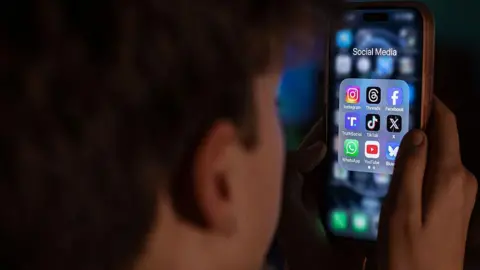
India’s State Leaders Initiate Ban Feasibility Studies On Feb 5, 2026, Andhra Pradesh formed a ministerial panel that invited Meta, X, Google and ShareChat for consultations, while Goa’s tourism and IT minister Rohan Khaunte announced a review of a possible ban; both moves follow the Economic Survey’s non‑binding recommendation for age‑based limits. IT Minister Nara Lokesh warned on X that children are “slipping into relentless usage,” harming attention and education. The initiatives reflect a coordinated push across multiple states to assess a nationwide under‑16 ban [1].
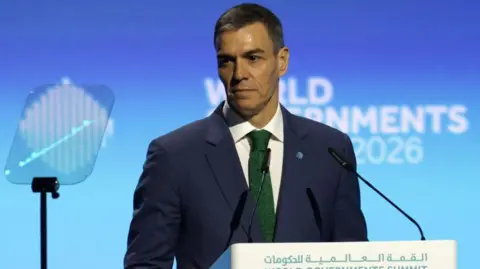
Spain’s Parliament Prepares to Enact Under‑16 Ban Prime Minister Pedro Sánchez unveiled the draft law at the World Governments Summit in Dubai on Feb 3, 2026, pledging to protect minors from addiction, abuse and violent content. The proposal mandates robust age‑verification tools, criminalises platform executives who fail to remove illegal material, and penalises algorithmic amplification of harmful content. Legislative debate is set to begin next week, with the People’s Party supporting the measure and Vox opposing it [2][3].
Technical and Legal Hurdles Underscore Global Implementation Risks Digital‑rights activist Nikhil Pahwa warned that IP‑based location checks are inaccurate and could spark inter‑state conflicts in India, while scholar Prateek Waghre noted uncertainties around platform compliance and potential court challenges [1]. Australia’s mandatory age‑verification model, cited by both Indian and Spanish officials, has been circumvented by children using false birthdays or adult photos, exposing verification weaknesses [2][3]. These obstacles suggest that any ban will require new technical solutions beyond simple check‑boxes.
Parental Attitudes and Political Reactions Shape Policy Debate Delhi resident Jitender Yadav argued that without increased parental engagement children will find ways around any ban, highlighting the limits of platform‑focused regulation [1]. In Spain, Elon Musk labeled Sánchez a “tyrant and traitor,” while industry leaders have yet to comment, illustrating polarized public and corporate responses. The convergence of parental concerns and political opposition underscores the need for comprehensive digital‑literacy measures alongside any legal restrictions [2][3].
Sources
-
1.
BBC: India’s Push to Ban Social Media for Children Under 16 Gains Momentum: details state‑level panels, ministerial warnings, expert doubts on enforcement, and parental views, emphasizing India’s emerging multi‑state deliberations .
-
2.
BBC: Spain moves to ban social media for under‑16s: outlines Sánchez’s Dubai announcement, robust verification demands, criminal liability for executives, investigations into AI tools, and mixed political reactions .
-
3.
CNN: Spain Moves to Ban Social Media for Under‑16s, Expands Criminal Liability for Platforms: expands on Spain’s draft law, adds a “hate‑footprint” system, notes upcoming parliamentary process, and compares Europe’s moves to Australia’s earlier ban .
Timeline
2024 – Australia passes the Online Safety Amendment (Social Media Minimum Age) Bill, establishing a legal framework that obliges major platforms to block users under 16 and sets fines up to A$49.5 million for non‑compliance, laying the groundwork for the world‑first ban [16].
10 Dec 2025 – Australia enforces the under‑16 social‑media ban, requiring ten platforms (including TikTok, Instagram, Facebook, YouTube and X) to block or delete accounts of users younger than 16, with the eSafety Commissioner overseeing enforcement and penalties [20][21][24][27].
4 Dec 2025 – Meta begins deactivating under‑16 Instagram, Facebook and Threads accounts, notifying 13‑15‑year‑olds that their profiles will be shut down ahead of the Australian ban and offering a content‑download window [23].
6 Dec 2025 – A government‑funded trial reveals that a 13‑year‑old can bypass age‑verification on Snapchat using a parent’s photo, highlighting loopholes in the upcoming Australian policy [22].
Early Dec 2025 – Two teenagers file a High Court challenge to Australia’s ban, arguing the law infringes on constitutional rights and prompting industry legal push‑back [24].
9‑10 Dec 2025 – Elon Musk’s X declares it will not comply with the Australian ban, calling the measure a “backdoor way to control access to the internet” and signalling potential non‑compliance [20].
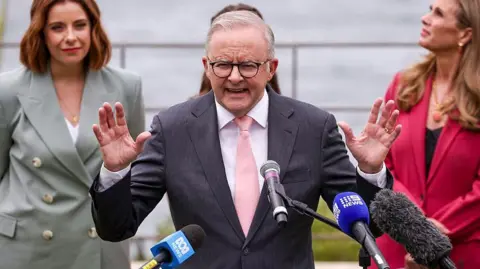
Mid‑Dec 2025 – Australian Prime Minister Anthony Albanese frames the ban as a model for global child‑online safety, urging other nations to adopt similar age limits while acknowledging enforcement challenges [18][19].
12 Jan 2026 – Meta blocks about 550,000 Australian accounts across Instagram, Facebook and Threads, reporting 330,639 Instagram, 173,497 Facebook and 39,916 Threads closures in the first week of compliance [13].
14 Jan 2026 – South Korea’s KMCC requests X to implement safeguards for minors against the Grok AI model, urging the platform to appoint a minor‑protection officer and report annually under existing law [28].
16 Jan 2026 – Australia reports that 4.7 million child accounts have been deactivated since the ban took effect, with Communications Minister Anika Wells saying the measure gives parents confidence in online safety [12].
20 Jan 2026 – The UK launches a three‑month public consultation on an under‑16 social‑media ban and grants Ofsted new powers to police school phone policies, aiming to shape legislation before the next school year [11].
**23 Jan 2026 – eSafety Commissioner Julie Inman Grant says platforms comply “kicking and screaming” with the Australian ban, noting no sustained migration to alternative apps and highlighting ongoing fines of up to A$49.5 million [4].
23 Jan 2026 – Meta temporarily blocks teen access to AI characters on Instagram and WhatsApp, applying the restriction to any user flagged as a minor and timing the move ahead of a Los Angeles federal court trial on child‑safety allegations [10].
25 Jan 2026 – French President Emmanuel Macron pushes a fast‑track legislative process to ban social‑media use for under‑15s before the September school start, warning that “children’s brains are not for sale” to foreign platforms [8][9].
26 Jan 2026 – France’s National Assembly approves core provisions of an under‑15 ban, creating regulator‑approved “harmful” and “parent‑consent” lists, and seeking a fast‑track vote to meet a September implementation deadline [3].
27 Jan 2026 – The French parliament passes the under‑15 social‑media ban by a 130‑21 vote, coupling it with a prohibition on mobile‑phone use in senior high schools and citing health‑watchdog data on teen mental‑health harms [7].
3 Feb 2026 – Spain’s Prime Minister Pedro Sánchez announces a draft law to ban social‑media for under‑16s, pledging robust age‑verification, criminal liability for platform executives, and a “hate‑footprint” system, with parliamentary debate set to begin the following week [2][6].
5 Feb 2026 – India’s debate intensifies as several states (Andhra Pradesh, Goa) launch panels and consultations on a possible nationwide ban for under‑16s, while the Economic Survey urges federal age‑based limits and digital‑rights activists warn of enforcement and legal hurdles [1].
Dive deeper (7 sub-stories)
-
India Advances State‑Level Push Toward Under‑16 Social Media Ban
(28 articles)
-
Spain’s Parliament to Ban Social Media for Under‑16s, Expand Executive Criminal Liability
(2 articles)
-
France Parliament Passes Under‑15 Social‑Media Ban, Set for September Implementation
(3 articles)
-
AP: Meta Temporarily Blocks Teens From AI Characters on Instagram and WhatsApp
-
South Korea’s KMCC Urges X to Implement Minor‑Protection Measures for Grok AI
(3 articles)
-
BBC: A month into Australia's teen social media ban, teens report changed online habits
-
The Hindu: AI boom, youth-access rules, and flagship launches define 2025 tech year
All related articles (39 articles)
-
BBC: India’s Push to Ban Social Media for Children Under 16 Gains Momentum
-
BBC: Spain moves to ban social media for under‑16s
-
CNN: Spain Moves to Ban Social Media for Under‑16s, Expands Criminal Liability for Platforms
-
AP: France Approves Bill Banning Social Media for Under‑15s
-
BBC: France Moves Toward Ban on Social Media for Under‑15s
-
CNN: Macron pushes fast‑track ban on social media for under‑15s in France
-
AP: Macron pushes accelerated ban on social media for under‑15s as France cites teen health risks
-
AP: Meta Temporarily Blocks Teens From AI Characters on Instagram and WhatsApp
-
BBC: Australia’s Under‑16 Social Media Ban Faces Reluctant Industry Compliance
-
BBC: Australia imposes first-of-its-kind under-16 social media ban on major platforms
-
BBC: UK to consult on social media ban for under-16s
-
AP: Australia bans under-16 social media use as 4.7 million child accounts are deactivated
-
Yonhap: KMCC asks X to set up minor protection measures for Grok
-
BBC: Meta blocks about 550,000 Australian accounts under new under-16 ban
-
BBC: A month into Australia's teen social media ban, teens report changed online habits
-
The Hindu: AI boom, youth-access rules, and flagship launches define 2025 tech year
-
Yonhap: KMCC nominee says social media ban for teens could be considered
-
Yonhap: KMCC Nominee Signals Consideration of Teen Social Media Ban
-
The Hindu: Australia’s social media minimum age takes effect, with fines for noncompliance
-
BBC: Australia’s under‑16 social‑media ban excludes gaming platforms
-
AP: Reddit Files Court Challenge to Australia’s Under‑16 Social‑Media Ban
-
AP: Denmark Moves Toward 15‑Year‑Old Social Media Ban
-
AP: Australia’s under-16 social media ban takes effect
-
CNN: Australia Enacts First Global Under‑16 Social Media Ban
-
AP: Australia’s Social Media Ban Takes Effect, 15‑Year‑Old Riley Faces Loss of Online Connections
-
BBC: Australia enacts nationwide ban on social media for children under 16
-
BBC: Australia’s world-first under-16 social media ban takes effect
-
CNN: Australia rolls out under-16 social media ban as platforms pledge compliance
-
The Hindu: Australia bans social media for under-16s as others move to curb access
-
The Hindu: Australia begins enforcing world-first teen social media ban (Dec 10, 2025)
-
The Hindu: Meta says Australia pushing teens to 'less regulated' platforms
-
CNN: Australia enacts world-first nationwide ban on social media for under-16s
-
CNN: Australia is banning young teens from social media. Could it happen in the US?
-
The Hindu: Australia to enforce under-16 social media ban starting Dec 10, 2025
-
BBC: Australia’s under-16 social media ban takes effect December 10, 2025
-
BBC: Can you ban kids from social media? Australia is about to, but some teens are a step ahead
-
BBC: Meta starts removing Australian children from social media ahead of ban
-
BBC: Australia’s Social Media Ban: Minister Stays Firm Amid Tech Company Pushback
-
CNN: Australia Approaches Dec 10 Social Media Ban for Under‑16s
External resources (25 links)
- https://www.youtube.com/@bbcnewsindia/featured (cited 1 times)
- https://governor.nebraska.gov/gov-pillen-signs-last-bills-protect-children-online (cited 1 times)
- https://www.gov.uk/government/news/government-to-drive-action-to-improve-childrens-relationship-with-mobile-phones-and-social-media (cited 1 times)
- https://sml.stanford.edu/sites/g/files/sbiybj22976/files/media/file/academicadvisorygroupstatement.pdf (cited 1 times)
- https://www.tiktok.com/@cnn/video/7581841747634916663 (cited 2 times)
- https://www.facebook.com/bbcindia/ (cited 1 times)
- https://www.instagram.com/bbcnewsindia/ (cited 1 times)
- https://www.tiktok.com/@_heyitszoeyandmark/video/7554659239663324434?_r=1&_t=ZS-91THUdlkMrv (cited 1 times)
- https://x.com/BBCIndia (cited 1 times)
- https://x.com/RahmEmanuel/status/1998467923774681394 (cited 1 times)
- https://x.com/naralokesh/status/2016747258201694548 (cited 1 times)
- https://corp.roblox.com/newsroom/2025/11/roblox-requires-age-checks-limits-minor-and-adult-chat (cited 1 times)
- https://ec.europa.eu/commission/presscorner/detail/en/ip_26_203 (cited 1 times)
- https://ico.org.uk/about-the-ico/media-centre/news-and-blogs/2026/02/ico-announces-investigation-into-grok/ (cited 1 times)
- https://medium.com/chamber-of-progress/utahs-app-store-age-verification-bill-sets-a-dangerous-precedent-3f49058ea343 (cited 1 times)
- https://medium.com/meta-australia-policy-blog/removing-access-to-instagram-threads-and-facebook-for-under-16s-in-australia-1ab448660c0f (cited 1 times)
- https://www.36months.com/ (cited 1 times)
- https://www.aph.gov.au/e-petitions/petition/EN8494 (cited 1 times)
- https://www.bfmtv.com/politique/elysee/document-bfmtv-interdiction-des-reseaux-sociaux-aux-mineurs-emmanuel-macron-engage-la-procedure-acceleree-pour-une-loi-applicable-des-la-rentree-prochaine_AV-202601240240.html (cited 1 times)
- https://www.defindia.org/wp-content/uploads/2025/12/2.-The-Ideal-Internet-3.0-%E2%80%93-Digital-Divides-Vulnerabilities-of-Indian-Teens-Online.pdf (cited 1 times)
- https://www.infrastructure.gov.au/department/media/publications/age-assurance-technology-trial-final-report (cited 1 times)
- https://www.lemon8-app.com/h5/feoffline/report/osa-detail?region=au (cited 1 times)
- https://www.pcgamer.com/hardware/brits-can-get-around-discords-age-verification-thanks-to-death-strandings-photo-mode-bypassing-the-measure-introduced-with-the-uks-online-safety-act-we-tried-it-and-it-works-thanks-kojima/ (cited 1 times)
- https://www.safeonsocial.com/ (cited 1 times)
- https://www.westernsydney.edu.au/young-and-resilient/news/in_media/young_and_resilient_research_centre_joins_chorus_of_nearly_150_australian_and_international_experts_opposing_social_media_ban_for_u16s (cited 1 times)