India‑U.S. Trade Deal Nears Finalisation: Joint Statement Expected Within Days, Legal Pact Mid‑March
Updated (40 articles)

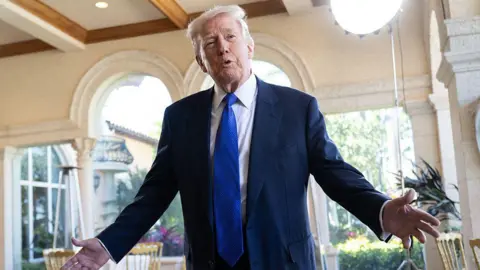
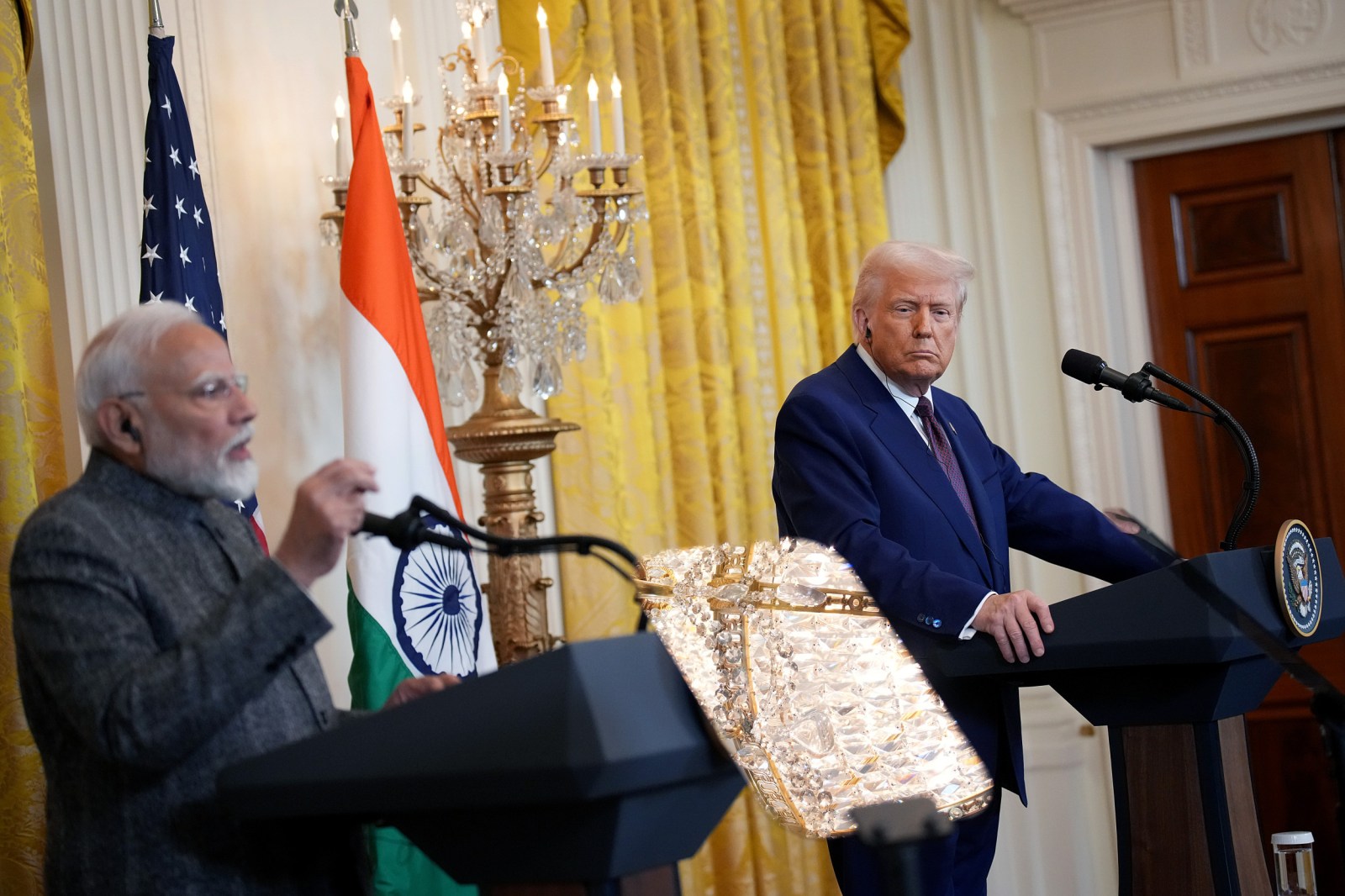
Tariff Cut to 18 % for Indian Exports, U.S. Uses Executive Order The United States will lower the tariff on Indian goods from a range of 25‑50 % to 18 % by executive order, making the reduction effective immediately after the joint statement [1][8][14][15][17][18]. India’s own Most‑Favoured‑Nation tariffs can only be reduced after a formal legal agreement, projected for mid‑March, because WTO‑mandated rates require parliamentary ratification [1][3][6]. The deal also eliminates the 25 % penalty previously tied to India’s Russian‑oil purchases [14][17][5].
Joint Statement to Be Signed Within Days, Technical Work Near Completion Commerce Minister Piyush Goyal announced on Feb 5 that a joint statement covering the first tranche of the Bilateral Trade Agreement will be signed in the next 4‑5 days, paving the way for the tariff cut [1]. Both governments are finalising technical processes, with an official announcement expected soon and a legal pact slated for mid‑March [6][3][10]. The statement will convert the executive‑order tariff reduction into a binding authority for India’s MFN rates [1][6].
$500 Billion Purchase Commitment and Expanded Market Access President Trump and Prime Minister Modi agreed that India will purchase roughly $500 billion of U.S. goods over five years, focusing on energy, data‑centre, ICT, aerospace and agricultural products [1][4][5][10][12][17]. Current Boeing orders already total $70‑80 billion and could exceed $100 billion with engines and spares, illustrating the scale of U.S. exports [1]. The commitment is presented as a driver of jobs and growth in both economies and is linked to broader supply‑chain and critical‑minerals cooperation [6][11].
Agriculture and Dairy Shielded, Yet Farmer Opposition Grows The Indian government asserts that the agreement protects agriculture and dairy, preventing higher U.S. market access that could harm domestic producers [3][4][12]. Nevertheless, farmer coalitions such as the Samyukt Kisan Morcha warn that zero‑percent duties on U.S. farm products will flood the market with subsidised crops, threatening 48 % of the workforce dependent on agriculture [7][9][13]. Opposition MPs have demanded parliamentary scrutiny and warned of large‑scale protests if the deal proceeds [2][9][13].
Geopolitical Shifts: Russian Oil Halt, Critical Minerals, Quad Alignment The deal ties tariff relief to India’s cessation of Russian oil purchases, with the U.S. citing this as a step toward curbing Kremlin revenue [5][11][17][14]. Simultaneously, external affairs talks in Washington secured a framework for joint critical‑minerals exploration, reinforcing the Quad partnership and diversifying supply chains [6][11]. U.S. officials emphasise the strategic dimension of the pact, positioning India as a democratic counterweight to China in the Indo‑Pacific [11][17][14].
Sources
-
1.
The Hindu: India and U.S. Near Trade Deal: Joint Statement Expected in Days, Legal Agreement by Mid‑March – Details the imminent joint statement, U.S. tariff cut via executive order, and India’s mid‑March legal pact requirement .
-
2.
The Hindu: Congress Leader Kharge Warns of Farmer Protests Over India‑U.S. Trade Deal – Highlights Congress leader’s warning of massive farmer protests and criticism of the deal’s impact on agriculture .
-
3.
The Hindu: India‑U.S. Trade Deal Protects Agriculture, Cuts Dairy Tariffs, Sparks Parliamentary Row – Reports on agricultural protection claims, tariff reductions to 18 %, and parliamentary disruptions .
-
4.
The Hindu: India’s Sharad Pawar Flags Farmer Concerns Over New U.S. Tariff Policy – Focuses on farmer leader’s alarm over U.S. agricultural export access and expectation of a detailed deal picture .
-
5.
The Hindu: India to End Russian Oil Purchases and Commit $500 Billion to U.S. Investment, Trump Announces – Announces India’s shift from Russian to U.S. oil and the $500 bn investment pledge .
-
6.
The Hindu: India‑U.S. Talks Advance Trade Deal and Critical Minerals Cooperation – Covers Jaishankar‑Rubio meeting, critical‑minerals cooperation, and Quad reaffirmation .
-
7.
The Hindu: India‑U.S. Trade Deal Relieves Exporters, Sparks Farmer Opposition – Shows exporter optimism and farmer coalition’s fear of subsidised U.S. crops .
-
8.
The Hindu: India‑US Trade Deal Cuts Tariffs, Yet Details Remain Unclear – Notes tariff cut announcement, ambiguity over deal scope, and market reactions .
-
9.
The Hindu: Opposition MPs Press Government Over India‑U.S. Trade Deal Impact on Farmers – Details Rajya Sabha queries on farmer impact, oil‑sourcing shift, and procedural criticism .
-
10.
The Hindu: India‑U.S. Trade Deal Excludes Agriculture, Lowers U.S. Tariffs, and Promises Broad Export Gains – Emphasises exclusion of agri‑dairy items and broad export opportunities .
-
11.
Newsweek: Trump Announces Surprise US‑India Trade Deal Reducing Tariffs to 18% – Provides U.S. perspective, timing after EU FTA, and geopolitical backdrop .
-
12.
The Hindu: India‑U.S. Trade Deal Cuts Tariffs to 18%, Sparks Market Rally and Industry Praise – Highlights market rally, sector praise, and opposition concerns .
-
13.
The Hindu: Congress Demands Parliament Review of India‑US and EU Trade Deals – Reports Congress demand for full text review and criticism of Modi’s handling .
-
14.
The Hindu: U.S. Cuts Tariffs on Indian Goods to 18% Amid Unresolved Trade Deal Details – Points out lack of detail, competitive tariff context, and mixed evidence on oil cessation .
-
15.
The Hindu: India‑U.S. Trade Deal Lowers Indian Tariffs to 18% Amid Praise and Criticism – Summarises official praise, ministerial comments, and Congress criticism .
-
16.
AP: Trump Announces 18% Tariff Cut for India After Russian Oil Deal – Highlights tariff cut linked to Russia‑oil cessation and humanitarian framing .
-
17.
BBC: US‑India Trade Deal Cuts Tariffs to 18% After India Halts Russian Oil Purchases – Provides international view, EU‑India FTA context, and small‑business reaction .
-
18.
The Hindu: Modi and Trump announce 18% U.S. tariff on “Made in India” goods – Details joint announcement, lack of MoFA response, and critical‑minerals ministerial .
Timeline
July 30, 2025 – President Donald Trump announces a 25 % tariff on Indian imports, tying the duty to India’s purchases of Russian oil and marking the first major U.S. trade penalty on Delhi in his second term [30].
August 27, 2025 – The U.S. expands the tariff on Indian goods to 50 % and adds a 25 % penalty for Russian‑oil purchases, intensifying pressure on India’s export sectors [30].
November 2025 – Indian exports to the United States rise 22 % year‑on‑year despite the 50 % tariff, showing resilience in key categories such as apparel and gems [20].
December 11, 2025 – Prime Minister Narendra Modi tells a U.S.‑led call that “progress has been made” in the bilateral relationship, underscoring ongoing high‑level engagement after the August tariffs [19].
January 1, 2026 – The EU’s Carbon Border Adjustment Mechanism (CBAM) takes effect, taxing Indian steel and aluminium shipments and prompting Congress leader Jairam Ramesh to warn that the “India‑EU FTA must address this non‑tariff barrier” [28].
January 5, 2026 – President Trump posts on Truth Social that U.S. tariff receipts will exceed $600 billion, arguing the levies “strengthen national security” and citing the 50 % India tariff as part of the total [26].
January 5, 2026 – Trump claims India “cut Russian oil to please me” and Senator Lindsey Graham notes Ambassador Vinay Kwatra asked him to mediate with Trump over the 25 % oil‑linked tariff [27].
January 6, 2026 – At a GOP retreat, Trump says Modi is “not that happy with me” over the tariffs and announces a change in the pending delivery of 68 Apache helicopters [25].
January 7, 2026 – Trump backs the bipartisan Russia Sanctions Act, which would allow up to 500 % tariffs on secondary buyers of Russian oil, and announces the United States’ withdrawal from the International Solar Alliance [24].
January 9, 2026 – U.S. Commerce Secretary Howard Lutnick alleges Prime Minister Modi did not call the president to seal the trade pact; the Ministry of External Affairs rebuts, citing eight Modi‑Trump calls in 2025 [23].
January 9, 2026 – Ambassador‑designate Sergio Gor lands in New Delhi, reiterates India’s commitment to a “balanced trade pact” and signals a new diplomatic phase amid tariff tensions [18].
January 9, 2026 – India and the EU hold Brussels talks that reaffirm a rules‑based FTA framework, protect farmers and MSMEs, and see Commerce Minister Piyush Goyal meet EU Trade Commissioner Maroš Šefčovič [21].
January 10, 2026 – After a two‑day Brussels visit, Goyal reports “steady progress” on market‑access, rules‑of‑origin and services tracks, and expresses confidence in an early conclusion of the India‑EU FTA [16].
January 10, 2026 – The MEA reiterates a balanced U.S.‑India trade pact after Lutnick’s remarks, while the Taliban‑appointed diplomat arrives in Delhi and the parliamentary budget session is slated to begin Jan 28 [17].
January 12, 2026 – U.S. Ambassador Sergio Gor tells reporters that trade talks remain active and a follow‑up call is scheduled, emphasizing the “real friendship” between Trump and Modi despite disagreements [5].
January 24, 2026 – European Council President Antonio Luis Santos da Costa and Commission President Ursula von der Leyen attend India’s Republic Day as chief guests and pledge to push the pending free‑trade negotiations forward [4].
January 27, 2026 – The EU and India announce a landmark free‑trade agreement after nearly two decades, covering 25 % of global GDP, cutting tariffs on chemicals, machinery, aircraft and cars (to 10 % under a quota) and labeling the pact the “mother of all deals” [3, 1].
January 27, 2026 – India and the EU finalize the trade pact, set for formal signing after a five‑to‑six‑month legal vetting period, with implementation expected within a year [14].
January 27, 2026 – The India‑EU free‑trade agreement is sealed, aiming to raise bilateral trade to $200 billion by 2030 and described by leaders as a “blueprint for shared prosperity” [15].
January 27, 2026 – Analysts note that the EU‑India deal gains momentum amid U.S. 50 % tariffs on Indian goods, providing Delhi an alternative market as the United States threatens a trade war with European allies [2].
February 2, 2026 – Prime Minister Modi announces on X that the United States will apply an 18 % tariff on “Made in India” products, thanking Trump on behalf of 1.4 billion Indians; Trump posts on Truth Social that the deal includes a $500 billion “Buy American” commitment, a halt to Russian‑oil purchases and possible sourcing from Venezuela [13, 1].
February 2, 2026 – External Affairs Minister S. Jaishankar arrives in Washington for a three‑day Critical Minerals Ministerial, underscoring supply‑chain cooperation with Secretary of State Marco Rubio [13].
February 3, 2026 – President Trump reduces the U.S. tariff on Indian goods from 25 % to 18 % via an executive order, removing the 25 % penalty for Russian‑oil imports and making the cut effective immediately [11].
February 3, 2026 – The Seafood Exporters Association of India says the 18 % tariff cut will restore export volumes to pre‑2025 levels after a 6.3 % value decline caused by the 50 % duty [9].
February 3, 2026 – Farmers’ coalition Samyukt Kisan Morcha calls the agreement a “betrayal,” warns of subsidised U.S. soy, cotton, maize and wheat flooding the market, and urges a general strike on Feb 12 [9].
February 3, 2026 – Opposition MPs raise questions in Rajya Sabha about the $500 billion purchase claim, the shift to U.S. and Venezuelan oil, and demand parliamentary scrutiny of the deal [10].
February 3, 2026 – External Affairs Minister Jaishankar hails the trade deal as a “growth catalyst,” Home Minister Amit Shah calls it “historic,” and Prime Minister Modi declares the announcement “wonderful” for 1.4 billion Indians [12].
February 4, 2026 – External Affairs Minister Jaishankar and U.S. Secretary of State Marco Rubio meet in Washington, praise the tariff reduction, and agree to formalise critical‑minerals cooperation ahead of the Feb 4 ministerial [8].
February 4, 2026 – Congress leader K. Kharge warns that the India‑U.S. trade deal could trigger farmer protests “similar to the 2021 farm‑law backlash,” urging the government to reconsider [7].
February 5, 2026 – Commerce Minister Piyush Goyal says a joint statement covering the first tranche of the bilateral trade agreement will be signed within 4‑5 days, triggering the U.S. tariff cut to 18 % [6].
February 5, 2026 – Goyal projects India will import $500 billion of U.S. energy, data‑centre, ICT and aerospace products over five years, citing Boeing orders that could exceed $100 billion [6].
February 6, 2026 – India’s MFN tariff reductions on U.S. goods will await a formal legal agreement expected in mid‑March, converting the joint statement into binding authority [6].
Dive deeper (11 sub-stories)
-
India and U.S. Set to Sign Joint Trade Statement Within Days, Legal Pact Expected Mid‑March
(3 articles)
-
India‑U.S. Trade Deal Advances Amid Farmer Protest Threats and Parliamentary Turmoil
(3 articles)
-
India‑U.S. Trade Deal Cuts Tariffs, Triggers Farmer Opposition and Oil Shift
(14 articles)
-
The Hindu: Opposition MPs Press Government Over India‑U.S. Trade Deal Impact on Farmers
-
Congress Calls for Parliamentary Debate as US Lowers Tariffs and EU Pact Finalized
(4 articles)
-
India and EU Finalize Landmark Free‑Trade Pact, Await Formal Signing Amid US Tariff Pressures
(5 articles)
-
US Ambassador Gor Confirms Ongoing India‑US Trade Talks, Next Call Set for Tuesday
(3 articles)
-
Goyal’s Brussels Mission Boosts Momentum Toward Early India‑EU Free Trade Deal
(3 articles)
-
Trump Supports 500% Tariffs, Withdraws from Solar Alliance, Envoy Arrives in Delhi
(2 articles)
-
The Hindu: Trump says India cut Russian oil to please him; Graham backs ambassador claim
-
The Hindu: EU carbon border tax hits Indian exports to EU, says Jairam Ramesh
All related articles (40 articles)
-
The Hindu: India and U.S. Near Trade Deal: Joint Statement Expected in Days, Legal Agreement by Mid‑March
-
The Hindu: Congress Leader Kharge Warns of Farmer Protests Over India‑U.S. Trade Deal
-
The Hindu: India‑U.S. Trade Deal Protects Agriculture, Cuts Dairy Tariffs, Sparks Parliamentary Row
-
The Hindu: India’s Sharad Pawar Flags Farmer Concerns Over New U.S. Tariff Policy
-
The Hindu: India to End Russian Oil Purchases and Commit $500 Billion to U.S. Investment, Trump Announces
-
The Hindu: India‑U.S. Talks Advance Trade Deal and Critical Minerals Cooperation
-
The Hindu: India‑U.S. Trade Deal Relieves Exporters, Sparks Farmer Opposition
-
The Hindu: India‑US Trade Deal Cuts Tariffs, Yet Details Remain Unclear
-
The Hindu: Opposition MPs Press Government Over India‑U.S. Trade Deal Impact on Farmers
-
The Hindu: India‑U.S. Trade Deal Excludes Agriculture, Lowers U.S. Tariffs, and Promises Broad Export Gains
-
Newsweek: Trump Announces Surprise US‑India Trade Deal Reducing Tariffs to 18%
-
The Hindu: India‑U.S. Trade Deal Cuts Tariffs to 18%, Sparks Market Rally and Industry Praise
-
The Hindu: Congress Demands Parliament Review of India‑US and EU Trade Deals
-
The Hindu: U.S. Cuts Tariffs on Indian Goods to 18% Amid Unresolved Trade Deal Details
-
The Hindu: India‑U.S. Trade Deal Lowers Indian Tariffs to 18% Amid Praise and Criticism
-
AP: Trump Announces 18% Tariff Cut for India After Russian Oil Deal
-
BBC: US‑India Trade Deal Cuts Tariffs to 18% After India Halts Russian Oil Purchases
-
The Hindu: Modi and Trump announce 18% U.S. tariff on “Made in India” goods
-
BBC: India‑EU Trade Deal Gains Momentum Amid Trump‑Era Tariff Pressures
-
CNN: India and EU Finalize Landmark Trade Pact, Await Formal Signing
-
BBC: EU and India seal landmark free‑trade pact amid US tariff pressures
-
AP: India and EU Finalize Free Trade Deal Amid US Tariff Pressures
-
BBC: India‑EU Trade Talks Intensify Ahead of Republic Day Summit
-
BBC: US ambassador says India-US trade talks continue amid tariff tensions
-
The Hindu: Goyal wraps Brussels trip, upbeat on early conclusion of India-EU FTA ahead of summit
-
The Hindu: MEA reaffirms balanced trade pact with US as Taliban diplomat arrives in Delhi and other developments
-
The Hindu: U.S. ambassador-designate Gor arrives in India, cites opportunities ahead
-
The Hindu: MEA rebuts Lutnick claim, says Modi-Trump spoke eight times in 2025 as trade talks persist
-
BBC: India denies Lutnick claim that Modi didn't call Trump as US-India trade talks stall
-
The Hindu: India–EU hold FTA talks in Brussels, reaffirm safeguards for farmers and MSMEs
-
The Hindu: India and EU hold Brussels FTA talks to protect farmers and MSMEs
-
The Hindu: Lutnick says Modi didn't call Trump, derailing India-U.S. trade deal
-
The Hindu: Trump's tariff and withdrawal moves heighten energy and diplomatic pressure on India as domestic and global stories unfold
-
The Hindu: Trump backs bill for up to 500% tariffs on Russian oil buyers and pulls U.S. from India-led International Solar Alliance
-
The Hindu: Trump says PM Modi is “not that happy” over US tariffs, cites cuts to Russian oil and Apache deliveries
-
The Hindu: Trump says U.S. tariff receipts will top $600B, touts national strength
-
The Hindu: Trump says India cut Russian oil to please him; Graham backs ambassador claim
-
The Hindu: EU carbon border tax hits Indian exports to EU, says Jairam Ramesh
-
The Hindu: India enters 2025 with high diplomatic expectations, then faces U.S. tariffs and regional strain
-
The Hindu: Tariffs, reforms, and EV entries shape India's 2025 business year
External resources (13 links)
- https://www.youtube.com/@bbcnewsindia/featured (cited 4 times)
- https://www.mea.gov.in/Speeches-Statements.htm?dtl%2F39945%2FStatement_by_Official_Spokesperson (cited 1 times)
- https://www.pib.gov.in/PressNoteDetails.aspx?id=157070&NoteId=157070&ModuleId=3®=3&lang=2#:~:text=Bilateral%20trade%20volume%20reached%20approximately,increasing%20to%20%E2%82%AC29%20billion. (cited 1 times)
- https://www.reuters.com/world/china/indias-exports-defy-tariffs-strengthen-hand-us-trade-talks-2025-12-16/ (cited 1 times)
- https://www.reuters.com/world/india/eu-nears-historic-trade-deal-with-india-von-der-leyen-says-2026-01-20/ (cited 1 times)
- https://www.facebook.com/bbcindia/ (cited 4 times)
- https://www.instagram.com/bbcnewsindia/ (cited 4 times)
- https://x.com/BBCIndia (cited 4 times)
- https://t.co/gPz6rWtrxj (cited 1 times)
- https://t.co/hA1zbnt3JQ (cited 1 times)
- https://twitter.com/janusmyth?ref_src=twsrc%5Etfw (cited 1 times)