US Deputy Secretary Warns China Nearing Nuclear Parity After New START Expiration
Updated (14 articles)
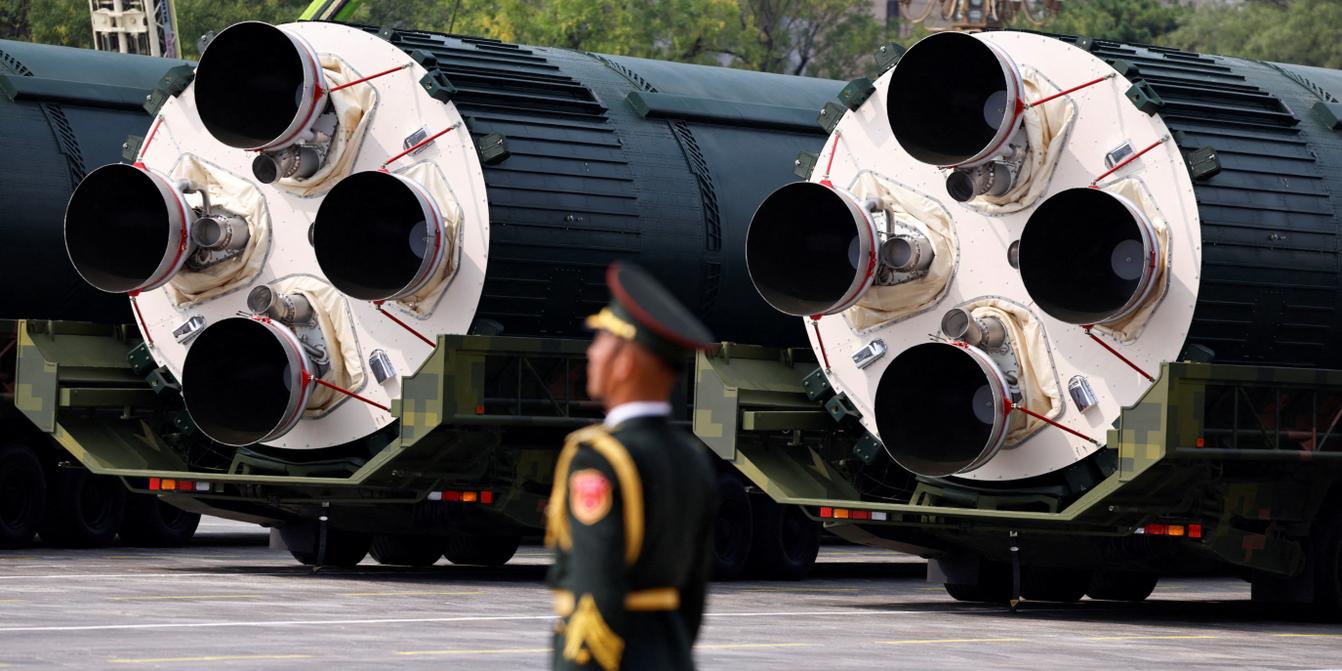
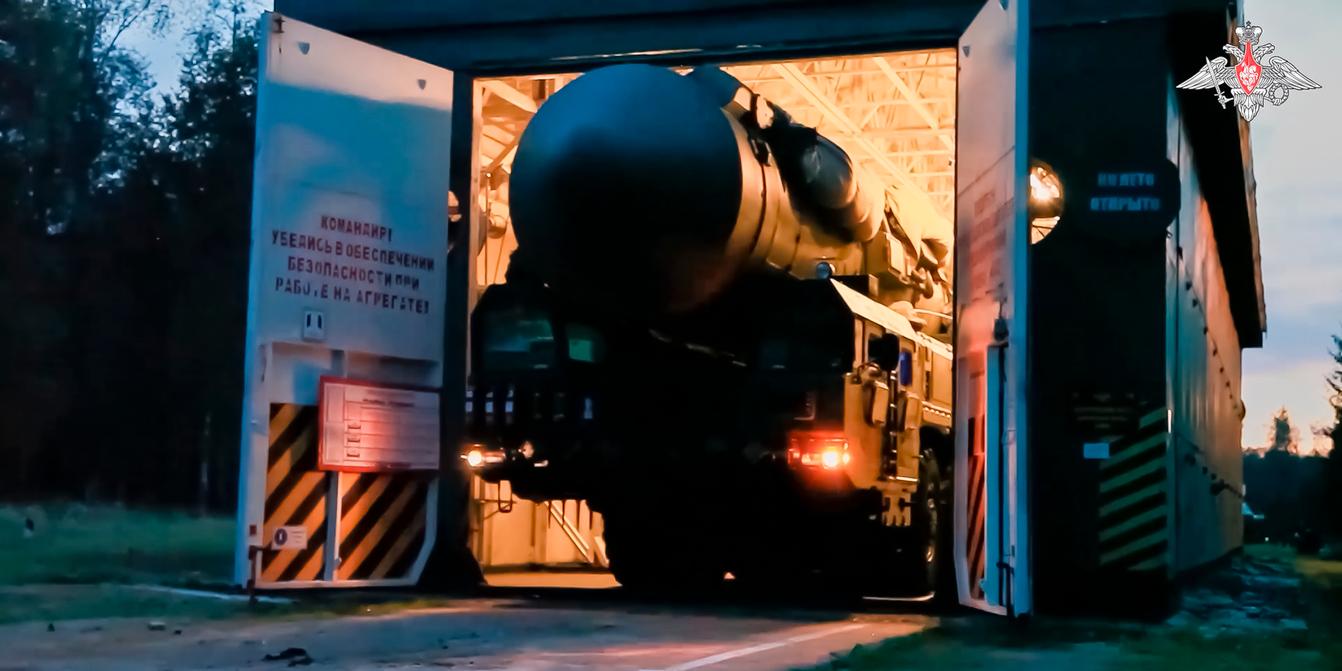
New START Treaty Lapsed on 5 February 2026, Removing Warhead Caps The bilateral U.S.–Russia New START agreement, which limited each side to 1,550 deployed warheads, expired on 5 February 2026, ending the last legal restraint on strategic arsenals [1][2]. Its termination removed verification, notification and on‑site‑visit rules that had governed the world’s largest nuclear powers for over a decade [2]. For the first time since 1972, no international treaty now caps the development, deployment or testing of intercontinental nuclear weapons [2].
United States and Russia Retain Over 5,000 Nuclear Warheads Each The non‑governmental Ican coalition notes that the United States and Russia each hold more than 5,000 nuclear weapons, together accounting for roughly 90 % of the global stockpile [1][2]. Their arsenals far exceed the former New START ceiling, underscoring the scale of the existing deterrent framework [1]. Analysts warn that without treaty limits, these two powers could further expand their forces unchecked [2].
U.S. Deputy Secretary Christopher Yeaw Accuses China of Rapid Arsenal Growth Speaking at the Geneva disarmament conference on 23 February 2026, Deputy Secretary of State for Arms Control Christopher Yeaw claimed China is “deliberately and without constraint” building a massive nuclear arsenal [1]. He warned that Beijing could field over 1,000 warheads by 2030 and achieve parity with the United States within four to five years, citing hidden tests in June 2020 and plans for larger explosions [1]. Yeaw’s remarks aim to push for a new trilateral agreement that would include China [1].
China Rejects U.S. Claims, Calls Trilateral Talks Unreasonable Shen Jian, China’s ambassador for disarmament in Geneva, dismissed Yeaw’s allegations as unfounded, arguing China’s arsenal is not comparable to the world’s largest [1]. He rejected the notion of Chinese participation in any trilateral negotiations, labeling the expectation “unreasonable” [1]. Beijing’s response highlights the diplomatic friction surrounding any effort to regulate its nuclear program [1].
Analysts Warn New Arms Race Without Treaty Constraints Editorial commentary notes that the three major powers—China, the United States and Russia—appear set to expand their stockpiles now that New START is gone [2]. New York Times journalists David Sanger and William Broad warned of a “new generation of nuclear weapons” emerging as “vengeance after New Start,” signaling a renewed competition [2]. The article also mentions that President Trump declined to extend the treaty, a stance opposed by Russian President Vladimir Putin, illustrating political disagreements over renewal [2].
Sources
-
1.
Le Monde: US Deputy Secretary Accuses China of Rapid Nuclear Expansion After New Start Lapse – Reports Christopher Yeaw’s 23 Feb Geneva speech accusing China of building >1,000 warheads by 2030, China’s denial, and the treaty’s expiry .
-
2.
Le Monde: Nuclear Arms Unchecked After New START Lapse – Highlights the 5 Feb expiration, loss of all nuclear caps, U.S./Russia stockpiles, China’s intended growth, Trump’s refusal to extend, and NYT warnings of a fresh arms race .
Related Tickers
Timeline
Feb 2010 – The United States and Russia sign the New START treaty, capping each side at 1,550 deployed strategic warheads and 700 delivery systems and establishing the last bilateral nuclear arms‑control framework of the post‑Cold War era [1][14].
Feb 2011 – New START enters into force, instituting on‑site inspections, data exchanges and a verification regime that limits the two largest nuclear arsenals for the first time since SALT II [1][11].
2021 – The treaty receives a five‑year extension, pushing its expiry to 5 Feb 2026 and creating a deadline for future negotiations [1][11].
2022 – A Pentagon report projects China’s nuclear stockpile could reach about 1,500 warheads by 2035, underscoring the treaty’s omission of Beijing and prompting calls for a China‑inclusive pact [1].
2023 – Russia suspends participation in New START verification, accusing the United States of “strategic defeat” and citing inspection disputes, while the United States withholds data in response [11][6].
Jan 2025 – Donald Trump returns to the White House, reiterating his 2018 withdrawal from the Iran nuclear deal and signaling a hard‑line stance on arms‑control treaties [14].
Sep 22 2025 – President Vladimir Putin offers a voluntary one‑year extension of New START limits, but the United States gives no official reply, leading Russian officials to label the silence “erroneous and regrettable” [6][9].
Feb 4 2026 – Russia’s foreign ministry warns it is ready to take “decisive action” once New START lapses, asserting that the two powers will be free from treaty obligations [6].
Feb 5 2026 – New START formally expires, ending the last legally binding caps on U.S. and Russian strategic nuclear arsenals for the first time in over 50 years [1][11][13].
Feb 5 2026 – President Donald Trump posts on Truth Social that the United States will not extend New START, calling it “badly negotiated” and urging nuclear experts to draft a “new, improved, and modernized” treaty that includes China [1][4][5].
Feb 5 2026 – Secretary of State Marco Rubio states the administration will not maintain the existing caps and insists any future agreement must involve China to reflect 21st‑century realities [1][4].
Feb 5 2026 – The Russian foreign ministry declares the lapse “erroneous and regrettable” for the U.S. but says Russia is now free to act without treaty constraints, hinting at possible “decisive steps” [1][6][10].
Feb 5 2026 – Former New START chief negotiator Rose Gottemoeller warns the expiration benefits Putin and harms the United States’ image, calling it a diplomatic win for Moscow [5].
Feb 5 2026 – Former Russian President Dmitry Medvedev warns the treaty’s expiry could accelerate the Doomsday Clock, urging global attention to heightened existential risk [2][5].
Feb 5 2026 – The Bulletin of the Atomic Scientists moves the Doomsday Clock to 85 seconds to midnight (later reported as 89 seconds), citing the treaty’s lapse and rising nuclear danger as the closest setting ever [3][7].
Feb 5 2026 – Arms‑control experts Paul Dean, Matthew Kroenig and others warn that abandoning the limits could spark a three‑way U.S.–Russia–China arms race, eroding strategic stability [1][7].
Feb 5 2026 – The Kremlin publicly calls the expiration “negative,” expresses regret, and pledges a “responsible, thorough approach to stability” while inviting dialogue if constructive responses arise [10].
Feb 5 2026 – Senior U.S. and Russian officials meet in Abu Dhabi and agree to resume high‑level military‑to‑military dialogue, reopening a channel suspended in 2021 despite the treaty’s end [10].
Feb 7‑8 2026 – New York Times reporters David Sanger and William Broad warn that a “new generation of nuclear weapons” emerges as “vengeance after New START,” signaling a fresh arms competition [13].
Feb 23 2026 – Deputy Secretary of State for Arms Control Christopher Yeaw tells the Geneva disarmament conference that China is rapidly expanding its nuclear arsenal, could field over 1,000 warheads by 2030 and may achieve parity with the United States within four to five years, accusing Beijing of “deliberately and without constraint” development [12].
2026 onward – The Trump administration signals intent to craft a China‑inclusive nuclear treaty, revives “Trump‑class” battleship concepts and pursues AI‑driven weapons programs that blur nuclear and conventional lines, while NATO acquires Palantir’s AI battle‑management system, indicating a shift toward multilateral and technological competition [3][4][14].
Dive deeper (2 sub-stories)
All related articles (14 articles)
-
Le Monde: US Deputy Secretary Accuses China of Rapid Nuclear Expansion After New Start Lapse
-
Le Monde: Nuclear Arms Unchecked After New START Lapse
-
CNN: Nuclear Arms Control Unraveling as New START Ends
-
AP: Kremlin Regrets New START Expiration as Trump Pushes China‑Inclusive Deal
-
Newsweek: Trump Calls for New Nuclear Treaty as New START Ends
-
Newsweek: Trump and Putin Push Past Nuclear Guardrails as AI War Rises
-
Newsweek: Trump’s Inaction Lets New START Expire, Leaving No Nuclear Caps
-
The Hindu: New START’s expiry removes legal caps on US‑Russia nuclear arsenals
-
CNN: New START Treaty Expires, Signaling Shift in Nuclear Power Balance
-
Newsweek: Russia Issues Decisive‑Action Warning as New START Treaty Expires
-
Newsweek: China Rejects Calls to Join New START as Treaty Expires
-
Le Monde: New Start Treaty Ends, Raising Nuclear Proliferation Concerns
-
Newsweek: Russia’s Medvedev Says Nuclear Club Set to Expand as New START Deadline Looms
-
Newsweek: Kremlin says Trump silent on Putin's offer to extend New START