Trump Discusses Taiwan Arms Sales with Xi, Plans April China Visit
Updated (34 articles)
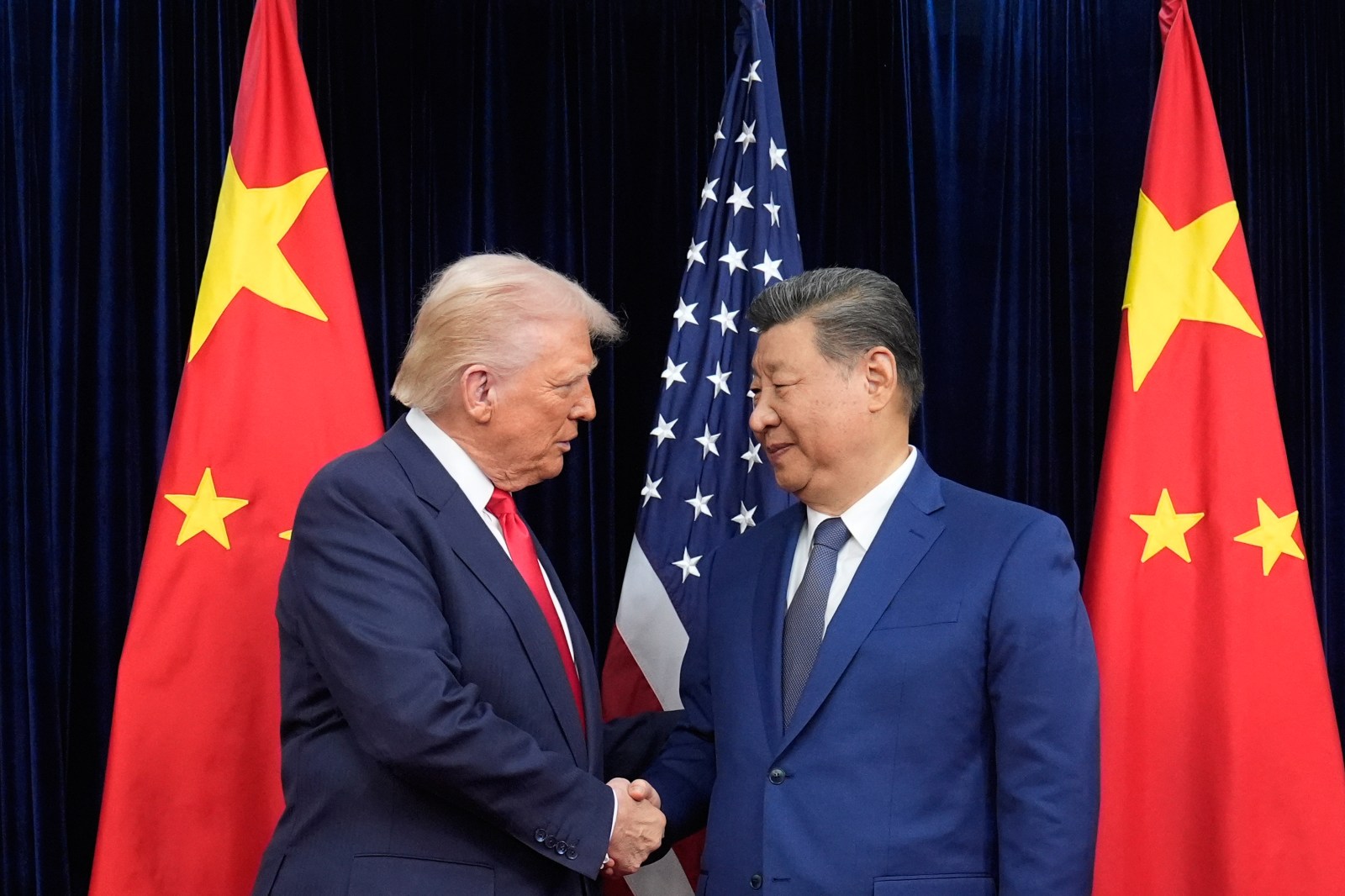
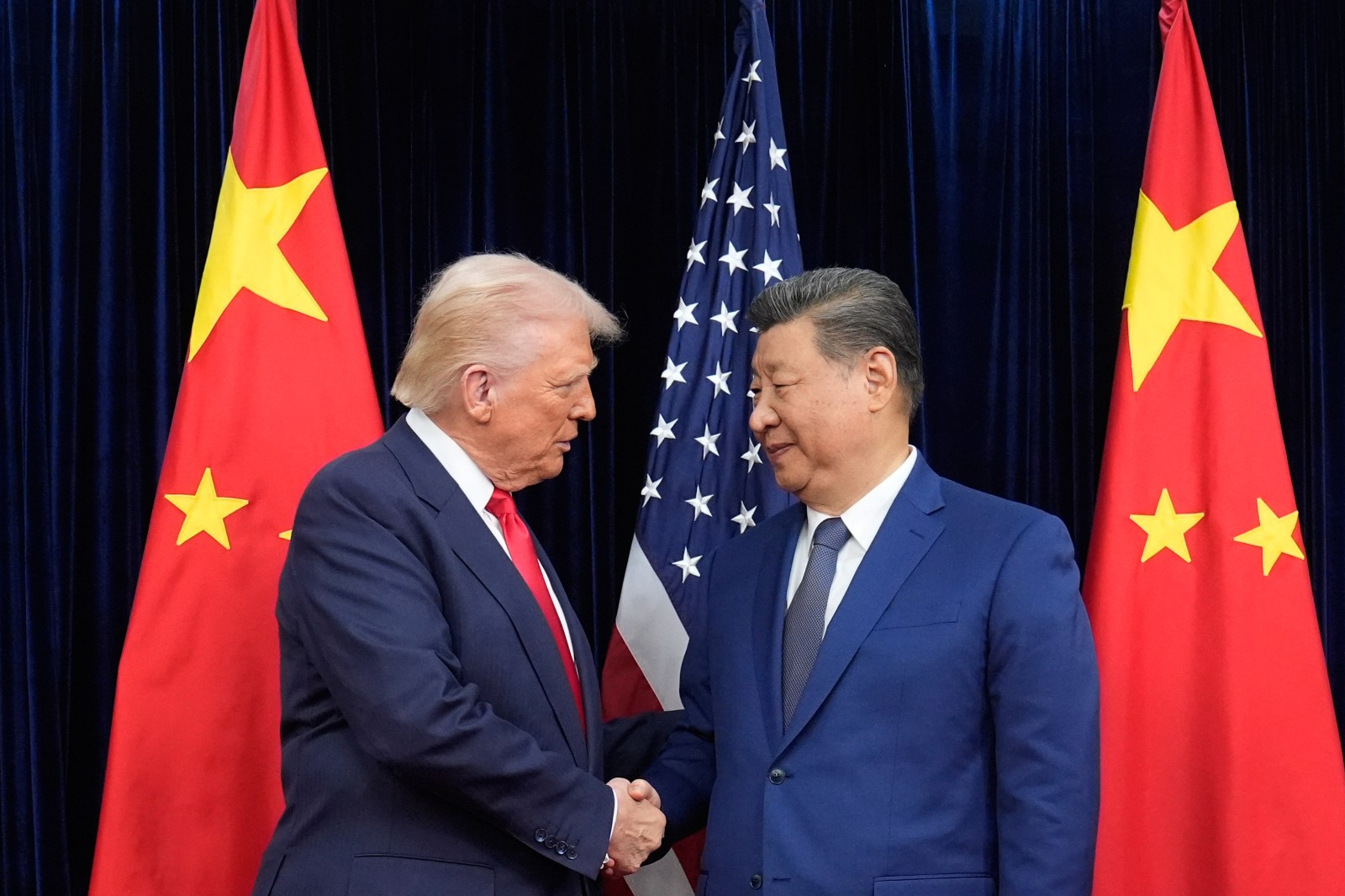
Trump Announces Direct Talks with Xi on Taiwan Weapons President Donald Trump told reporters on Feb. 18 that he had spoken with Chinese President Xi Jinping about future arms sales to Taiwan and expects a decision soon, echoing a similar Air Force One statement on Feb. 17 [1][2]. Xi’s Feb. 4 phone call labeled Taiwan “the most important issue in China‑U.S. relations,” underscoring Beijing’s sensitivity to the discussion [1][2]. The public admission of bilateral consultation on the matter is unprecedented for a U.S. president.
December $11 Billion Package Triggers Beijing Protest The United States approved a record‑breaking $11 billion arms package for Taiwan in December, prompting strong objections from China [1]. Beijing warned the United States to handle future sales prudently, describing the Taiwan question as the “most important issue” in bilateral ties [1]. The protest reflects long‑standing Chinese opposition to any increase in Taiwan’s defensive capabilities.
Potential Larger Follow‑On Package Under Consideration Sources cited by the Financial Times suggest the next proposal could exceed the December deal, possibly adding Patriot missiles, NASAMS air‑defense systems, and two additional weapon systems [2]. Analysts note that the larger package would further strain U.S.–China relations. The exact composition and timing of the follow‑on sale remain uncertain.
Six Assurances May Be Violated by Public Disclosure Experts warn that Trump’s public discussion could breach the “Six Assurances,” specifically the second assurance that forbids U.S. consultation with China on Taiwan arms sales [1][2]. Analysts William Yang, Bonnie Glaser, and Paul Heer highlight the policy’s non‑binding nature but stress the diplomatic risk. Glaser doubts substantive negotiation is occurring despite the rhetoric.
Taiwan Defense Budget Debate Shows Divergent Proposals Taiwan’s opposition parties have introduced a $12.7 billion special defense budget, far below President Lai Ching‑te’s $40 billion request [2]. AP reports that lawmakers will review a $40 billion budget after the parliamentary recess beginning Feb. 23 [1]. The discrepancy reflects internal political tension over how to fund Taiwan’s security amid external pressures.
April Trip Expected to Combine Trade, Technology, and Taiwan Issues Trump plans his first China visit of the term in April, aiming to build on the October Busan summit and address trade, technology, and Taiwan concerns [1][2]. The trip is likely to feature discussions on the pending arms sales and broader bilateral relations. Observers anticipate that the visit will test the durability of the recent trade truce.
Sources
-
1.
AP: Trump Says He Is Discussing Taiwan Arms Sales With China, Prompting Diplomatic Concerns: details Trump’s claim of talks with Xi, Beijing’s warning, the $11 billion December sale, the slated April visit, and Taiwan’s $40 billion defense budget review .
-
2.
Newsweek: Trump Says He’s Discussing Taiwan Arms Sales With Xi: highlights Trump’s Air Force One statement, the possibility of a larger follow‑on package, concerns about breaching the Six Assurances, and the opposition’s $12.7 billion budget proposal versus the president’s $40 billion request .
Related Tickers
Timeline
2022 – Pelosi’s visit to Taiwan triggers China’s largest‑to‑date drills – Beijing launches massive live‑fire exercises around the island in retaliation for Nancy Pelosi’s historic trip, marking a sharp escalation that sets a precedent for later “Justice Mission 2025” drills[15].
2022 – PLA begins regular “grey‑zone” drills around Taiwan – The People’s Liberation Army starts a series of joint army‑navy‑air‑rocket exercises, establishing a pattern of pressure that intensifies after U.S. arms sales[3].
2024 – Lai Ching‑te assumes Taiwan’s presidency – Lai’s inauguration raises cross‑strait tensions, prompting Beijing to cite his term as a trigger for heightened military activity[3].
Dec 5 2025 – U.S. releases National Security Strategy emphasizing Taiwan – The strategy devotes several paragraphs to Taiwan’s semiconductor role and “status‑quo” deterrence, while mentioning China only once, signaling a shift toward economic framing[23].
Dec 8 2025 – China responds to U.S. NSS, reiterates Taiwan red line – Foreign Ministry spokesperson Guo Jiakun warns that “the Taiwan question is the first red line that cannot be crossed” in U.S.–China relations[25].
Dec 10 2025 – Germany warns China against Taiwan Strait escalation – German Foreign Minister Johann Wadephul issues a statement that any change to the status‑quo must be non‑violent, underscoring European concern over the growing flashpoint[24].
Dec 18 2025 – U.S. announces $11 billion arms package for Taiwan – The Trump administration clears a deal that includes HIMARS launchers, self‑propelled howitzers and missiles, the largest sale since the Biden era[4].
Dec 26 2025 – China sanctions 20 U.S. defence firms over the arms sale – Beijing imposes symbolic counter‑measures targeting firms involved in the $11 billion package, warning the U.S. to halt “provocations” on Taiwan[27].
Dec 29 2025 – Beijing issues a red‑line warning to the United States – Chinese officials tell Washington that further U.S. support for Taiwan will cross a “red line,” heightening diplomatic tension[21].
Dec 29 2025 – China launches “Justice Mission 2025” drills around Taiwan – Army, navy, air force and rocket units conduct live‑fire exercises simulating a blockade of key ports, with five no‑fly zones announced and 130 aircraft and 22 ships deployed in the first 24 hours[22][5].
Dec 30 2025 – President Trump says he is “not worried” about the drills – In a press briefing, Trump claims his “great relationship” with Xi means Beijing “won’t invade” and downplays the risk of the Chinese exercises[20].
Dec 30 2025 – Trump adds “nothing worries me” as China conducts naval drills – The president repeats his confidence, stating that the drills are routine and that he does not believe Xi plans an invasion[19].
Dec 31 2025 – Xi Jinping’s New Year’s Eve address reaffirms unification goal – Xi declares Taiwan’s reunification “unstoppable,” frames it as a “bond of blood and kinship,” and does not rule out the use of force[12].
Dec 31 2025 – PLA declares “Justice Mission 2025” completed – Beijing’s Eastern Theater Command says the two‑day operation fully tests joint‑operations capability, while Japan labels the drills “escalatory”[13].
Jan 1 2026 – U.S. State Department urges China to halt pressure on Taiwan – The department calls for restraint, opposes unilateral changes to the status‑quo and reaffirms support for peace across the strait[10].
Jan 1 2026 – Taiwan President Lai Ching‑te vows to defend sovereignty – In a New Year address, Lai pledges to “safeguard Taiwan’s sovereignty,” boost defense spending and build resilience amid Beijing’s expansion[11].
Jan 1 2026 – Xi does not rule out force; PLA could act by 2027 – Xi warns that “force remains an option” for reunification, while U.S. officials assess the PLA will be capable of an operation by the end of 2027[10].
Jan 30 2026 – Taiwan forward‑deploys HIMARS launchers to Penghu and Dongyin – The island places U.S.‑made systems within 30 miles of China’s coast, capable of firing ATACMS missiles up to 186 miles, prompting Chinese defence ministry to call the move “provocative”[9].
Feb 4 2026 – Trump says his call with Xi covered Taiwan, Ukraine and Iran – On Truth Social, Trump describes the conversation as “long and thorough,” praising his “extremely good” relationship with Xi and noting upcoming trade talks[28].
Feb 5 2026 – Xi urges the United States to handle Taiwan arms sales prudently – In a phone call, Xi labels Taiwan “the most important issue” in bilateral relations and warns Washington to act with caution on weapons supplies[1].
Feb 5 2026 – Trump hails the call as “excellent” and looks forward to an April China visit – Trump posts that the discussion was “very much” thorough and says he “very much” anticipates his scheduled trip to Beijing in April[1].
Feb 17 2026 – Trump announces on Air Force One that he “talked to” Xi about future Taiwan arms sales – The president says a decision will be made “pretty soon,” marking a rare public admission of U.S.–China dialogue on the issue[7].
Feb 18 2026 – Trump claims he is “discussing” Taiwan arms sales with China, sparking Six‑Assurances concerns – Analysts warn the remarks could breach the U.S. “Six Assurances” that forbid consultation with Beijing on Taiwan weapons deals[6].
Feb 18 2026 – Taiwan’s opposition plans to review a $40 billion defense budget after parliament reconvenes on Feb 23 – Lawmakers intend to examine the special budget amid doubts about U.S. commitment to Taiwan’s security[6].
Apr 2026 (planned) – President Trump’s first China visit of his term – The trip, announced in February, is expected to feature discussions on trade, technology and Taiwan, with the island likely to dominate the agenda[1][7].
Dive deeper (9 sub-stories)
-
Trump Announces Direct Talks With Xi Over Taiwan Arms Sales Ahead of April Visit
(6 articles)
-
Taiwan Deploys U.S. HIMARS on Penghu and Dongyin Islands Near China
(5 articles)
-
U.S. Arms Package and Beijing’s Sixth “Justice Mission” Drill Prompt New Year Tensions
(13 articles)
-
China Escalates Military Drills and Reunification Rhetoric After Pelosi Visit
(3 articles)
-
Newsweek: China fires rockets near Taiwan during war games
-
Newsweek: China issues red-line warning to US as war games target Taiwan
-
Trump’s Second Term Triggers U.S. Asia‑Pacific Strategy Overhaul Amid China’s Military Build‑Up
(3 articles)
-
Yonhap: U.S. lawmakers condemn China's actions against Japan, reaffirm commitment to allies
-
CNN: Trump NSS Emphasizes Economic Rivalry, Downplays Human Rights
All related articles (34 articles)
-
AP: Trump Says He Is Discussing Taiwan Arms Sales With China, Prompting Diplomatic Concerns
-
Newsweek: Trump Says He’s Discussing Taiwan Arms Sales With Xi
-
BBC: Xi urges US prudence on Taiwan arms amid expanding China‑US dialogue
-
AP: Trump and Xi Discuss Iran, Trade, Taiwan and Upcoming Summits
-
Newsweek: Trump Urged by Xi to Exercise Extreme Caution on Taiwan Arms Sales
-
Yonhap: Trump claims “positive” call with Xi on Taiwan, Ukraine, Iran and more
-
Newsweek: Taiwan Moves U.S. HIMARS Rocket Launchers Closer to China
-
Newsweek: Trump administration warns China over Taiwan as Beijing stages new drills
-
Yonhap: U.S. urges Beijing to cease military pressure on Taiwan after drills
-
AP: Taiwan president vows to defend sovereignty after Chinese drills
-
Newsweek: Xi Jinping doubles down on Taiwan claim after war games
-
AP: China says Taiwan drills completed after two days of high-powered maneuvers
-
AP: China conducts second day of large-scale drills around Taiwan, signaling deterrence
-
AP: China conducts live-fire drills around Taiwan, reiterating reunification goal
-
Newsweek: China fires rockets near Taiwan during war games
-
AP: China condemns U.S. arms sale to Taiwan as military drills around the island continue
-
BBC: Trump says he's not worried about China's Taiwan drills
-
CNN: China stages war games around Taiwan after arms deal
-
AP: China launches large-scale drills around Taiwan amid sovereignty dispute and arms sales
-
AP: China's Taiwan drills enter second day, warning external forces
-
Newsweek: Trump says nothing worries me as China conducts naval drills around Taiwan
-
The Hindu: Trump says not concerned by Chinese drills around Taiwan
-
Newsweek: China issues red-line warning to US as war games target Taiwan
-
The Hindu: China conducts live-fire drills around Taiwan simulating port blockade
-
BBC: China conducts Justice Mission 2025 drills around Taiwan, simulating seizure and blockade
-
Newsweek: China stages drills around Taiwan after U.S. arms sale
-
Newsweek: Trump’s second term prompts reassessment of U.S. Asia-Pacific posture
-
Yonhap: U.S. lawmakers condemn China's actions against Japan, reaffirm commitment to allies
-
The Hindu: China sanctions 20 U.S. defence firms over Trump’s Taiwan arms sales
-
AP: U.S. Announces $11 Billion Arms Package for Taiwan
-
BBC: US announces $11bn arms sale to Taiwan including HIMARS and self-propelled howitzers
-
CNN: Trump NSS Emphasizes Economic Rivalry, Downplays Human Rights
-
Newsweek: U.S.’s NATO Ally Issues Warning to China
-
Newsweek: China Responds to U.S. National Security Strategy, Reiterating Taiwan Red Line