Trump Implements 10% Global Tariff After Court Blocks Broad Duties, Promises 15% Upgrade
Updated (102 articles)
-
 Image: YonhapIndustry Minister Kim Jung-kwan (2nd from R) speaks at a meeting with private industries in Seoul on Feb. 23, 2026, to discuss South Korea's response to U.S. tariff policies following the U.S. Supreme Court's ruling against U.S. President Donald Trump's "reciprocal" tariffs. (Yonhap) Source Full size
 -
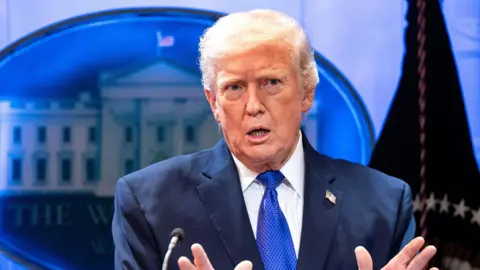
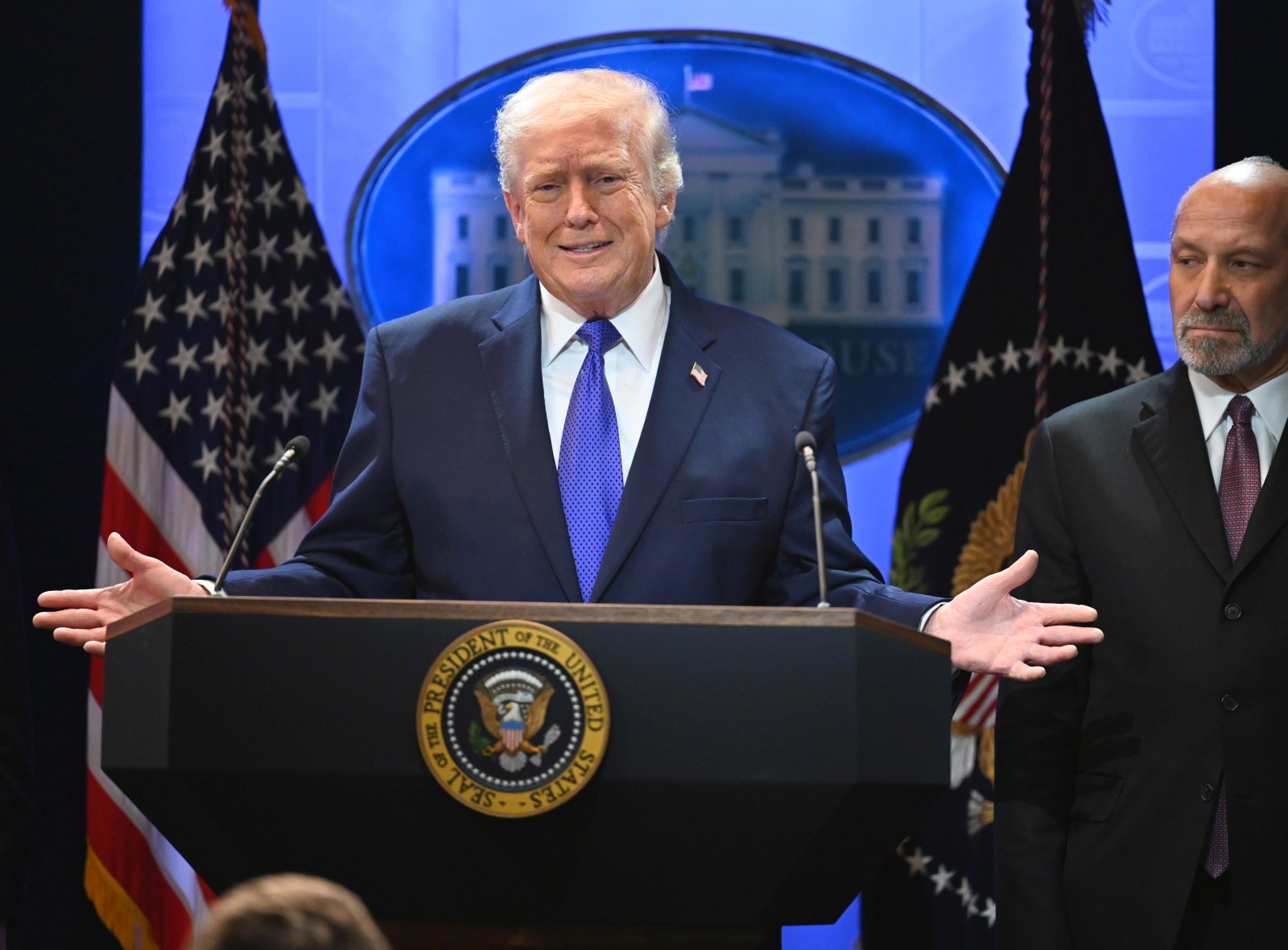 Image: NewsweekU.S. President Donald Trump speaks during a press briefing at the White House on February 20, 2026, in Washington, DC. after the Supreme Court ruled against his use of emergency powers to implement international trade tariffs, a central portion of the administration’s core economic policy. Source Full size
 -
Image: NewsweekU.S. President Donald Trump speaks during a press briefing at the White House on February 20, 2026, in Washington, DC. after the Supreme Court ruled against his use of emergency powers to implement international trade tariffs, a central portion of the administration’s core economic policy. Source Full size
-
Image: YonhapIndustry Minister Kim Jung-kwan (2nd from R) speaks at a meeting with private industries in Seoul on Feb. 23, 2026, to discuss South Korea's response to U.S. tariff policies following the U.S. Supreme Court's ruling against U.S. President Donald Trump's "reciprocal" tariffs. (Yonhap) Source Full size






Supreme Court blocks IEEPA‑based reciprocal tariffs On 20 February 2026 the Court issued a 6‑3 decision holding that the 1977 International Emergency Economic Powers Act does not authorize President Trump’s country‑specific tariffs, instantly nullifying the duties imposed since April 2025 and halting further collection by Customs and Border Protection [2][6][13][16]. The ruling forced the administration to abandon its emergency‑tariff strategy and left $130‑$175 billion in revenues subject to potential refunds [1][19][20].
Administration pivots to Section 122 global levy Hours after the decision the White House signed an executive order invoking Section 122 of the 1974 Trade Act, authorizing a uniform 10 % tariff on all imports effective 24 February 2026, with the statutory ceiling of 15 % available for later increase [1][3][5][11][19]. Treasury officials said the new levy will not change overall tariff revenue, and customs began collecting the 10 % rate on Tuesday while Trump publicly promised a rise to 15 % but had not yet enacted it [2][3][4]. The 150‑day authority operates without congressional approval, though extension would require legislative action unlikely before the 2026 midterms [2][5][7][8][11].
Legal and financial fallout intensifies Importers and industry groups have filed lawsuits seeking full refunds of the IEEPA duties, with FedEx leading a claim and a coalition representing over 900 firms demanding restitution [1][2][13]. The Treasury estimates the IEEPA collections generated roughly $130 billion, and analysts warn that the refund process could drag on for months or years, adding to market uncertainty [1][19][20]. Treasury Secretary Scott Bessent affirmed that overall tariff revenue will remain flat despite the court’s rebuke [2][15].
Allies, Congress, and markets react to the new tariff regime Britain’s trade secretary and the EU have paused or sought clarification on existing agreements, while India deferred talks, reflecting heightened diplomatic caution [1][6][14]. Senate Democrats, led by Chuck Schumer, introduced refund legislation targeting $134‑$175 billion and pledged to block any extension of the 15 % tariff beyond the 150‑day limit [4][6][7][15]. Trump warned on Truth Social that nations “playing games” with the ruling would face “much higher” duties, signaling an escalation despite the legal setback [3][4][6][9][10]. The S&P 500 slipped about 1 % as investors priced in the renewed trade‑war risk [6].
Sources
-
1.
BBC: Trump’s 10% Global Tariff Takes Effect Amid Legal Pushback and Uncertainty: outlines the 10 % levy launch, $130 bn collected, legal challenges, and analyst warnings.
-
2.
AP: Supreme Court rebuke leaves Trump’s tariff strategy in limbo: details the Court’s 6‑3 rebuke, 10 % levy start, 15 % promise, and refund uncertainty.
-
3.
AP: Trump Ups Tariff Threats After Supreme Court Strikes Down Most Import Taxes: reports Trump’s “much higher” tariff threat, 15 % target, Senate refund bill, and Pentagon deployments.
-
4.
CNN: Trump administration updates: tariffs, SOTU, Iran talks, and drug‑boat strikes: notes CBP halt, 15 % global tariff, Democratic refund act, and low SOTU approval poll.
-
5.
Yonhap: US Supreme Court voids reciprocal tariffs, Trump shifts to global duties: describes the Court’s nullification, 10‑15 % global tariff via Section 122, and South Korea’s investment stance.
-
6.
BBC: Trump threatens higher tariffs after Supreme Court blocks his trade levies: highlights Trump’s “much higher” threat, EU/India pause, market dip, and 150‑day deadline.
-
7.
Yonhap: Trump Threatens Higher Tariffs After Supreme Court Blocks Emergency Duties: covers “much higher” warning, 15 % global tariff, Section 301 investigations, and Schumer’s opposition.
-
8.
Yonhap: Trump threatens higher tariffs after Supreme Court blocks emergency powers: similar to above, emphasizing Section 122 use and refund concerns.
-
9.
Yonhap: Trump warns of “much higher” tariffs for countries that “play games”: reports the “much higher” threat, 15 % global tariff, and election‑time framing.
-
10.
Yonhap: Trump warns of “much higher” tariff for countries that “play games”: adds Trump’s “ridiculous” comment and Reuters briefing reference.
-
11.
Newsweek: Trump claims Supreme Court ruling expands his trade powers after tariff strike‑down: claims the ruling unintentionally broadened powers, announces 10 % then 15 % tariff, and cites Section 122 authority.
-
12.
Newsweek: China Reacts to U.S. Supreme Court Ruling on Trump Tariffs: presents Beijing’s warning, Trump’s 10‑15 % tariffs, and planned April visit to Xi.
-
13.
The Hindu: U.S. Customs Halts IEEPA Tariff Collections After Supreme Court Ruling: notes CBP stop at 12:01 a.m. EST, continuation of other tariffs, and $175 bn refund estimate.
-
14.
Yonhap: South Korea Finance Minister Warns High Uncertainty Over U.S. Tariff Moves: quotes Korean finance minister on uncertainty, 15 % global levy, and investment outlook.
-
15.
CNN: Trump Vows New Tariffs After Supreme Court Blocks Emergency Powers: reports Trump’s promise of higher duties, Treasury’s alternative authorities, and Democratic refund bill.
-
16.
Le Monde: Supreme Court curtails Trump’s tariff authority in 6‑3 ruling: analyses constitutional impact, historic significance, and political setback.
-
17.
Yonhap: South Korea to Maintain “Amicable” Talks with the United States on Tariff Issues: describes continued Korea‑U.S. consultations, 15 % global tariff, and Section 301 investigations.
-
18.
Yonhap: US Supreme Court Strikes Down Reciprocal Tariffs, Korea Braces for New Tariff Rounds: outlines legal basis, 15 % global tariff, and potential product‑specific duties on Korean exports.
-
19.
Le Monde: Trump lifts global tariffs to 15% as U.S. Supreme Court curtails his emergency authority: details immediate 15 % increase, EU retaliation tools, and refund debate.
-
20.
BBC: Trump Raises Global Tariffs to 15% Amid Supreme Court Ruling: reports 15 % levy via Section 122, $130 bn collected, EU/UK deal uncertainty, and market reaction.
Videos (2)
Timeline
Apr 2, 2025 – Trump announces “Liberation Day” tariffs, imposing a 15 % duty on South Korean goods after Seoul pledges a $350 billion investment, down from an earlier 25 % rate, marking a major use of emergency powers to pressure trade partners [14][24].
Aug 2025 – A federal appeals court rules that the Trump administration’s IEEPA‑based tariffs exceed presidential authority, setting the stage for a Supreme Court review [25].
Feb 20, 2026 – The U.S. Supreme Court issues a 6‑3 decision that the 1977 International Emergency Economic Powers Act does not authorize sweeping tariffs, invalidating roughly $175 billion of duties and reaffirming that only Congress may levy taxes [21][23][27][30].
Feb 20, 2026 – Trump declares the Court’s ruling a “disgrace” and signs an executive order invoking Section 122 of the 1974 Trade Act to impose a 10 % global tariff on all imports, slated to begin three days later [17][19][20][21][29].
Feb 21, 2026 – Trump raises the global tariff to the statutory maximum of 15 % via Section 122, applying it to most imports while preserving existing sector‑specific duties on steel, aluminium, lumber and autos [3][11][12].
Feb 22, 2026 – Treasury reports that at least $130 billion collected under the now‑invalid IEEPA tariffs faces refund lawsuits, including a FedEx claim for a full refund, while analysts warn the rapid tariff shifts “add to the chaos and mess” and revive trade‑war risk [1][4].
Feb 23, 2026 – Trump posts on Truth Social that any country “playing games” with the Court’s decision will face “much higher tariff, and worse,” intensifying pressure on trade partners [2][6][7]; Beijing responds that “no winners” exist in a trade war, the EU suspends ratification of its summer deal, India defers tax‑treaty talks, and South Korea’s finance minister warns uncertainty is “very high” [8][9][2].
Feb 24, 2026 – The 10 % global tariff becomes effective, starting a 150‑day window; the S&P 500 slips about 1 % as markets react, and Britain’s trade secretary says the 10 % US‑UK arrangement remains the best deal while the EU pauses its deal ratification [1].
Apr 2026 (planned) – Trump schedules a visit to China at President Xi’s invitation to build on the October Busan trade truce, signaling a diplomatic push despite the new tariffs [8].
July 2026 (expected) – The 150‑day Section 122 tariff period expires; unless Congress extends it, the global duty lapses, prompting industry groups to prepare for potential refund litigation in the New York International Trade Court [8][19][28].
Nov 2026 (midterm elections) – The administration frames the tariffs as a campaign issue, using them to appeal to voters ahead of the 2026 midterms while Democrats push legislation to reimburse households for higher costs [6][10][15].
2026 onward – Treasury Secretary Scott Bessent projects tariff revenue to remain “virtually unchanged” by mixing Section 122, 232 and 301 duties, while the White House readies a backup plan under Section 338 of the Smoot‑Hawley Act and launches new Section 301 investigations into unfair trade practices [4][18][6].
Dive deeper (70 sub-stories)
-
Trump Enforces 10% Global Tariff After Court Blocks Broad IEEPA Duties
(3 articles)
-
AP: Supreme Court rebuke leaves Trump’s tariff strategy in limbo
-
AP: Trump Ups Tariff Threats After Supreme Court Strikes Down Most Import Taxes
-
CNN: Trump administration updates: tariffs, SOTU, Iran talks, and drug‑boat strikes
-
Supreme Court Nullifies Reciprocal Tariffs; Trump Sets 10‑15% Global Tariff, Korea Investment Unchanged
(4 articles)
-
Trump Announces 15% Global Tariff After Court Bars Emergency Duties
(3 articles)
-
Trump Threatens Escalated Tariffs After Supreme Court Blocks Emergency Authority
(2 articles)
-
Trump Says Court Ruling Boosts His Trade Authority, Unveils New 10% Global Tariff
(2 articles)
-
Newsweek: China Reacts to U.S. Supreme Court Ruling on Trump Tariffs
-
The Hindu: U.S. Customs Halts IEEPA Tariff Collections After Supreme Court Ruling
-
Yonhap: South Korea Finance Minister Warns High Uncertainty Over U.S. Tariff Moves
-
CNN: Trump Vows New Tariffs After Supreme Court Blocks Emergency Powers
-
Le Monde: Supreme Court curtails Trump’s tariff authority in 6‑3 ruling
-
Yonhap: South Korea to Maintain “Amicable” Talks with the United States on Tariff Issues
-
Trump Raises Global Tariffs to 15% After Supreme Court Limits Emergency Powers
(4 articles)
-
Trump Raises Global Tariff to 15% Following Supreme Court’s 6‑3 Ruling
(2 articles)
-
BBC: Supreme Court Nullifies Trump Global Tariffs, Business Leaders React Cautiously
-
CNN: Trump Raises Global Tariffs to 15% After Court Blocks Emergency Duties
-
The Hindu: Supreme Court Blocks Trump Tariffs, Triggers Refund Uncertainty and Global Trade Repercussions
-
CNN: Supreme Court Strikes Down Trump’s Global Tariffs, Shifting GOP Trade Landscape
-
AP: Supreme Court Ruling Undermined, Trump Unilaterally Raises Tariffs
-
BBC: Supreme Court curtails Trump’s tariff powers as president hikes temporary global tariff to 15%
-
AP: Global Trade Turmoil After U.S. Supreme Court Tariff Ruling
-
The Hindu: U.S. Supreme Court nullifies most Trump tariffs, President imposes 10% surcharge
-
BBC: Trump imposes new 10% global tariff after Supreme Court blocks prior levies
-
Le Monde: Supreme Court voids Trump tariffs but protectionist push endures
-
Newsweek: Supreme Court Ruling Narrows, But Does Not Eliminate, U.S. Tariff Regime
-
CNN: Roberts declares Trump’s tariffs unlawful, ending Supreme Court winning streak
-
Le Monde: U.S. Supreme Court Strikes Down Trump’s 2025 Global Tariff Scheme
-
Le Monde: Supreme Court Blocks Major Portion of Trump’s Tariff Authority
-
Trump Orders 10% Worldwide Tariff After Supreme Court Strikes Down Global Tariffs
(3 articles)
-
Le Monde: Supreme Court Declares Trump’s 2025 Tariffs Illegal
-
The Hindu: Supreme Court blocks Trump tariffs, raising stakes for H1B fee challenges
-
Le Monde: Trump Enacts 10% Global Tariff After Supreme Court Ruling
-
Yonhap: South Korea vows to shield exports after US Supreme Court blocks Trump tariffs
-
BBC: Trump attacks Supreme Court after tariffs ruling, pledges new duties
-
AP: Supreme Court blocks Trump’s global tariffs as president vows new 10% levy
-
Yonhap: Trump Issues Global 10% Tariff After Supreme Court Blocks IEEPA Duties
-
Yonhap: U.S. Supreme Court overturns Trump’s emergency tariffs, sparking South Korean trade uncertainty
-
Yonhap: U.S. Trade Deals Likely to Persist After Supreme Court IEEPA Ruling
-
Yonhap: South Korean presidential office convenes to address U.S. Supreme Court’s Trump‑tariff decision
-
Trump Signs Proclamation Imposing 10% Global Tariff After Supreme Court Ruling
(2 articles)
-
Supreme Court Strikes Down Trump’s Emergency Tariffs, President Unveils 10% Global Duty
(7 articles)
-
CNN: Trump Enacts 10% Global Tariff After Supreme Court Blocks Emergency Tariffs
-
AP: Supreme Court Overturns Trump Tariffs, President Vows New Measures
-
CNN: Trump adds 10% global tariff, denounces court and eyes Iran strike
-
AP: Trump slams Supreme Court after tariffs decision
-
Supreme Court Blocks Trump Global Tariffs, President Promises New 10% Executive Order
(4 articles)
-
CNN: Supreme Court Ruling Cuts Part of Trump’s Tariff Power but Prices Likely Stay High
-
CNN: Trump Announces New 10% Tariff After Supreme Court Ruling
-
CNN: Supreme Court Blocks Trump’s Emergency Tariffs in 6‑3 Ruling
-
Newsweek: Trump Plans New Tariff Orders After Supreme Court Ruling
-
CNN: Supreme Court Declares Trump’s Emergency Tariffs Unlawful
-
King5 (Seattle, WA): Trump Announces 10% Global Tariff After Supreme Court Ruling
-
Yonhap: Trump Announces 10 % Global Tariff Using 1974 Trade Act Provision
-
Trump Condemns Supreme Court Tariff Ruling, Orders Immediate 10% Global Tariff
(2 articles)
-
Yonhap: South Korea to weigh response after U.S. Supreme Court nullifies Trump tariffs
-
BBC: Trump’s Supreme Court Loss Cuts Key Tariffs, Leaves Trade Uncertainty
-
Yonhap: South Korea to Review Policy After U.S. Supreme Court Tariff Ruling
-
Yonhap: Trump warns tariffs could steepen as Supreme Court reviews legality
-
Supreme Court Delays Decision on Trump’s 15% Korea Tariffs, Keeping Policy in Limbo
(4 articles)
-
Newsweek: Supreme Court weighs Trump tariffs as IEEPA case nears ruling
-
Newsweek: Backup tariff plan outlined as Supreme Court weighs IEEPA ruling
-
South Korea Prepares Tailored Countermeasures Ahead of U.S. Supreme Court Decision on Reciprocal Tariffs
(2 articles)
-
Supreme Court Again Delays Decision on Trump’s 15% Korea Tariff Ruling
(2 articles)
-
Yonhap: Supreme Court ruling could drop Korea tariffs to zero and unsettle Korea-U.S. trade terms, expert says
-
Supreme Court Weighs IEEPA Tariffs as Trump Warns of National‑Security Blow
(2 articles)
-
Newsweek: Trump Warns of ‘Dark and Sinister Forces’ as Supreme Court Tariffs Case Looms
-
Newsweek: Supreme Court Decision Could Prompt Treasury Backup Tariff Plan
-
Newsweek: Trump Urges Supreme Court to Uphold Tariffs Ahead of Decision
All related articles (102 articles)
-
BBC: Trump’s 10% Global Tariff Takes Effect Amid Legal Pushback and Uncertainty
-
AP: Supreme Court rebuke leaves Trump’s tariff strategy in limbo
-
AP: Trump Ups Tariff Threats After Supreme Court Strikes Down Most Import Taxes
-
CNN: Trump administration updates: tariffs, SOTU, Iran talks, and drug‑boat strikes
-
Yonhap: US Supreme Court voids reciprocal tariffs, Trump shifts to global duties
-
BBC: Trump threatens higher tariffs after Supreme Court blocks his trade levies
-
Yonhap: Trump Threatens Higher Tariffs After Supreme Court Blocks Emergency Duties
-
Yonhap: Trump threatens higher tariffs after Supreme Court blocks emergency powers
-
Yonhap: Trump warns of “much higher” tariffs for countries that “play games”
-
Yonhap: Trump warns of “much higher tariff” for countries that “play games”
-
Newsweek: Trump claims Supreme Court ruling expands his trade powers after tariff strike‑down
-
Newsweek: China Reacts to U.S. Supreme Court Ruling on Trump Tariffs
-
The Hindu: U.S. Customs Halts IEEPA Tariff Collections After Supreme Court Ruling
-
Yonhap: South Korea Finance Minister Warns High Uncertainty Over U.S. Tariff Moves
-
CNN: Trump Vows New Tariffs After Supreme Court Blocks Emergency Powers
-
Le Monde: Supreme Court curtails Trump’s tariff authority in 6‑3 ruling
-
Yonhap: South Korea to Maintain “Amicable” Talks with the United States on Tariff Issues
-
Yonhap: US Supreme Court Strikes Down Reciprocal Tariffs, Korea Braces for New Tariff Rounds
-
Le Monde: Trump lifts global tariffs to 15% as U.S. Supreme Court curtails his emergency authority
-
BBC: Trump Raises Global Tariffs to 15% Amid Supreme Court Ruling
-
King5 (Seattle, WA): Trump Announces 15% Global Tariff After Supreme Court Ruling
-
CNN: Trump lifts global tariff to 15% after Supreme Court rebuke
-
BBC: Supreme Court Nullifies Trump Global Tariffs, Business Leaders React Cautiously
-
CNN: Trump Raises Global Tariffs to 15% After Court Blocks Emergency Duties
-
AP: Trump Announces 15% Global Tariff After Supreme Court Ruling
-
The Hindu: Supreme Court Blocks Trump Tariffs, Triggers Refund Uncertainty and Global Trade Repercussions
-
CNN: Supreme Court Strikes Down Trump’s Global Tariffs, Shifting GOP Trade Landscape
-
AP: Supreme Court Ruling Undermined, Trump Unilaterally Raises Tariffs
-
BBC: Supreme Court blocks Trump’s global IEEPA tariffs, new 10‑15% levy announced
-
BBC: Supreme Court curtails Trump’s tariff powers as president hikes temporary global tariff to 15%
-
Yonhap: Trump Raises Global Tariff to 15% After Supreme Court Ruling
-
AP: Global Trade Turmoil After U.S. Supreme Court Tariff Ruling
-
The Hindu: U.S. Supreme Court nullifies most Trump tariffs, President imposes 10% surcharge
-
BBC: Trump imposes new 10% global tariff after Supreme Court blocks prior levies
-
Le Monde: Supreme Court voids Trump tariffs but protectionist push endures
-
Newsweek: Supreme Court Ruling Narrows, But Does Not Eliminate, U.S. Tariff Regime
-
CNN: Roberts declares Trump’s tariffs unlawful, ending Supreme Court winning streak
-
Le Monde: U.S. Supreme Court Strikes Down Trump’s 2025 Global Tariff Scheme
-
Le Monde: Supreme Court Blocks Major Portion of Trump’s Tariff Authority
-
Yonhap: South Korea to Track New U.S. Global Tariff After Supreme Court Ruling
-
AP: Trump vows 10% global tariff after Supreme Court blocks his sweeping trade measures
-
AP: Trump vows 10% global tariff after Supreme Court blocks his sweeping trade plan
-
AP: Trump vows 10% global tariff after Supreme Court blocks his sweeping trade plan
-
Yonhap: South Korea to Track U.S. Global Tariff After Supreme Court Ruling
-
Le Monde: Supreme Court Declares Trump’s 2025 Tariffs Illegal
-
The Hindu: Supreme Court blocks Trump tariffs, raising stakes for H1B fee challenges
-
Le Monde: Trump Enacts 10% Global Tariff After Supreme Court Ruling
-
Yonhap: South Korea vows to shield exports after US Supreme Court blocks Trump tariffs
-
BBC: Trump attacks Supreme Court after tariffs ruling, pledges new duties
-
AP: Supreme Court blocks Trump’s global tariffs as president vows new 10% levy
-
Yonhap: Trump Issues Global 10% Tariff After Supreme Court Blocks IEEPA Duties
-
Yonhap: U.S. Supreme Court overturns Trump’s emergency tariffs, sparking South Korean trade uncertainty
-
Yonhap: U.S. Trade Deals Likely to Persist After Supreme Court IEEPA Ruling
-
Yonhap: South Korean presidential office convenes to address U.S. Supreme Court’s Trump‑tariff decision
-
Yonhap: Trump signs proclamation imposing 10 % global tariff after Supreme Court ruling
-
Yonhap: Supreme Court blocks Trump’s emergency tariffs; president pivots to new duties
-
CNN: Trump Enacts 10% Global Tariff After Supreme Court Blocks Emergency Tariffs
-
Newsweek: Supreme Court Strikes Down Trump’s Emergency‑Power Tariffs
-
AP: Supreme Court Overturns Trump Tariffs, President Vows New Measures
-
CNN: Trump adds 10% global tariff, denounces court and eyes Iran strike
-
AP: Trump slams Supreme Court after tariffs decision
-
AP: Supreme Court nullifies Trump’s global tariff regime
-
CNN: Supreme Court Ruling Cuts Part of Trump’s Tariff Power but Prices Likely Stay High
-
CNN: Trump Announces New 10% Tariff After Supreme Court Ruling
-
Yonhap: Supreme Court Blocks Trump’s Emergency Tariffs, President Vows New Measures
-
Yonhap: Trump Announces 10% Global Tariff Using 1974 Trade Act Section 122
-
CNN: Supreme Court Blocks Trump’s Emergency Tariffs in 6‑3 Ruling
-
AP: Supreme Court Blocks Trump’s IEEPA Tariffs as President Plans New 10% Global Tax
-
Newsweek: Trump Plans New Tariff Orders After Supreme Court Ruling
-
CNN: Supreme Court Declares Trump’s Emergency Tariffs Unlawful
-
King5 (Seattle, WA): Trump Announces 10% Global Tariff After Supreme Court Ruling
-
Newsweek: Supreme Court Halts Trump’s Global Tariff Plan, President Vows Alternative Path
-
The Hindu: Trump Promises 10% Global Tariff After Supreme Court Blocks His Emergency‑Power Tariffs
-
Yonhap: Trump Announces 10 % Global Tariff Using 1974 Trade Act Provision
-
WBNS (Columbus, OH): Supreme Court blocks President Trump’s global tariff authority
-
WBNS (Columbus, OH): Trump condemns Supreme Court tariff ruling, announces 10% global tariff
-
King5 (Seattle, WA): Trump denounces Supreme Court tariff ruling, unveils new 10% global tax
-
Yonhap: Supreme Court blocks Trump’s emergency tariff scheme
-
Yonhap: South Korea to weigh response after U.S. Supreme Court nullifies Trump tariffs
-
Yonhap: Supreme Court blocks Trump’s emergency tariff scheme
-
BBC: Trump’s Supreme Court Loss Cuts Key Tariffs, Leaves Trade Uncertainty
-
Yonhap: South Korea to Review Policy After U.S. Supreme Court Tariff Ruling
-
King5 (Seattle, WA): Supreme Court blocks Trump’s global tariff plan
-
Yonhap: Supreme Court Blocks Trump's Emergency Tariffs, Raising Trade Uncertainty
-
Yonhap: Supreme Court Blocks Trump’s Emergency Tariffs
-
Yonhap: Trump warns tariffs could steepen as Supreme Court reviews legality
-
Yonhap: Trump anxiously awaits Supreme Court ruling on reciprocal tariffs
-
Yonhap: Trump anxious for Supreme Court ruling on reciprocal tariffs
-
Yonhap: Supreme Court does not rule on Trump's reciprocal tariffs
-
Newsweek: Supreme Court weighs Trump tariffs as IEEPA case nears ruling
-
Yonhap: Greer says Trump admin would replace reciprocal tariffs immediately if Supreme Court rules against them
-
Newsweek: Backup tariff plan outlined as Supreme Court weighs IEEPA ruling
-
Yonhap: South Korea to seek an optimal response if US court rules against reciprocal tariffs, Seoul official says
-
Yonhap: Seoul to seek optimal response if Supreme Court rules against reciprocal tariffs
-
Yonhap: U.S. Supreme Court delays ruling on legality of Trump's reciprocal tariffs
-
Yonhap: Supreme Court holds off on ruling on legality of Trump's reciprocal tariffs
-
Yonhap: Supreme Court ruling could drop Korea tariffs to zero and unsettle Korea-U.S. trade terms, expert says
-
Yonhap: Trump warns loss of tariff authority would be a terrible blow to U.S.
-
Yonhap: Trump warns Supreme Court ruling against tariffs could threaten U.S. national security
-
Newsweek: Trump Warns of ‘Dark and Sinister Forces’ as Supreme Court Tariffs Case Looms
-
Newsweek: Supreme Court Decision Could Prompt Treasury Backup Tariff Plan
-
Newsweek: Trump Urges Supreme Court to Uphold Tariffs Ahead of Decision
External resources (54 links)
- https://www.youtube.com/watch?v=ZiQt_5Q07iI (cited 1 times)
- https://www.youtube.com/watch?v=x_kUqOifBnc (cited 1 times)
- https://www.cbp.gov/newsroom/stats/trade (cited 6 times)
- https://newhouse.house.gov/media-center/press-releases/newhouse-applauds-trump-administration-lowering-farm-guestworker-wages (cited 4 times)
- https://www.cantwell.senate.gov/imo/media/doc/02202026bessentlettertariffsrefund1.pdf (cited 4 times)
- https://www.congress.gov/crs-product/LSB11281 (cited 3 times)
- https://www.supremecourt.gov/opinions/25pdf/24-1287_4gcj.pdf (cited 3 times)
- https://www.whitehouse.gov/fact-sheets/2026/02/fact-sheet-president-donald-j-trump-imposes-a-temporary-import-duty-to-address-fundamental-international-payment-problems/ (cited 3 times)
- https://mayor.dc.gov/release/mayor-bowser-requests-federal-support-region-continues-respond-potomac-interceptor-break (cited 2 times)
- https://www.finance.senate.gov/ranking-members-news/wyden-markey-shaheen-and-19-senate-democrats-release-legislation-requiring-refunds-of-trumps-illegal-tariffs#:~:text=The%20Tariff%20Refund%20Act%20of%202026%20would%20ensure%20that%20U.S (cited 2 times)
- https://www.gov.ca.gov/2025/04/16/governor-newsom-files-lawsuit-to-end-president-trumps-tariffs/ (cited 2 times)
- https://tile.loc.gov/storage-services/service/ll/usrep/usrep453/usrep453654/usrep453654.pdf (cited 1 times)
- https://www.archives.gov/milestone-documents/gibbons-v-ogden (cited 1 times)
- https://www.supremecourt.gov/opinions/23pdf/23-939_e2pg.pdf (cited 1 times)
- https://law.marquette.edu/poll/2026/02/05/new-marquette-law-school-national-survey-finds-63-say-u-s-supreme-court-should-limit-trumps-tariff-authority/ (cited 1 times)
- https://maristpoll.marist.edu/wp-content/uploads/2026/02/NPR_PBS-News_Marist-Poll_USA-NOS-and-Tables_202602021147.pdf (cited 1 times)
- https://www.law.cornell.edu/uscode/text/19/2132 (cited 1 times)
- https://apnorc.org/projects/about-6-in-10-think-trump-has-gone-too-far-when-it-comes-to-deploying-federal-immigration-agents-in-major-u-s-cities/ (cited 3 times)
- https://www.reuters.com/legal/government/bessent-expects-supreme-court-uphold-legality-trumps-tariffs-eyes-plan-b-2025-09-01/ (cited 3 times)
- https://www.axios.com/2025/04/18/trump-national-emergency-declarations (cited 2 times)
- https://www.ap.org/news-highlights/spotlights/2025/trump-plans-tariffs-on-mexico-and-canada-for-tuesday-while-doubling-existing-10-tariffs-on-china/ (cited 1 times)
- https://content.govdelivery.com/bulletins/gd/USDHSCBP-40b11c9?wgt_ref=USDHSCBP_WIDGET_2 (cited 2 times)
- https://content.govdelivery.com/bulletins/gd/USDHSCBP-40b3b7b (cited 1 times)
- https://x.com/SenatorHassan (cited 9 times)
- https://x.com/JDVance (cited 6 times)
- https://x.com/RepJeffries (cited 6 times)
- https://x.com/SenAmyKlobuchar (cited 6 times)
- https://x.com/AmericanFreedom (cited 3 times)
- https://x.com/BenjaminSWeiss/status/2024913315374207379 (cited 3 times)
- https://x.com/JonathanTurley/status/2024873977538294161 (cited 3 times)
- https://x.com/RepDonBacon/status/2024876064216866992 (cited 3 times)
- https://x.com/SenSchumer (cited 3 times)
- https://x.com/amyklobuchar (cited 3 times)
- https://truthsocial.com/@realDonaldTrump/116109104602937332 (cited 2 times)
- https://truthsocial.com/@realDonaldTrump/116109447886304328 (cited 2 times)
- https://truthsocial.com/@realDonaldTrump/posts/116121997925438698 (cited 2 times)
- https://x.com/JBPritzker/status/2024976736849432935 (cited 2 times)
- https://x.com/JDVance/status/2024928034667545067?s=20 (cited 2 times)
- https://x.com/LeaderJohnThune/status/2024909322388423065?s=20 (cited 2 times)
- https://x.com/PressSec/status/2024891673268957692 (cited 2 times)
- https://x.com/Southcom/status/2026006115428016257?s=20 (cited 2 times)
- https://x.com/SpeakerJohnson/status/2024892242930884617?s=20 (cited 2 times)
- https://x.com/berndlange/status/2025522482803818991 (cited 2 times)
- https://x.com/berndlange/status/2025945751197524466 (cited 2 times)
- https://x.com/swissmem/status/2024875732334219269 (cited 1 times)
- https://www.cato.org/commentary/trump-has-many-options-supreme-court-strikes-down-tariffs (cited 3 times)
- https://www.cov.com/-/media/files/corporate/publications/2016/12/law360_the_presidents_long_forgotten_power_to_raise_tariffs.pdf (cited 3 times)
- https://jbpritzker.com/latest/governor-jb-pritzker-demands-refund-for-illinoisans/ (cited 2 times)
- https://google.com/search?q=furniture+tariff+cnn&rlz=1C5GCCM_en&oq=furniture+tariff+cnn&gs_lcrp=EgZjaHJvbWUqBggAEEUYOzIGCAAQRRg7MggIARAAGBYYHjIKCAIQABiABBiiBDIKCAMQABiABBiiBDIKCAQQABiABBiiBDIGCAUQRRg8MgYIBhBFGDzSAQgzNjYxajBqNKgCALACAfEF1yZPvfUj5tQ&sourceid=chrome&ie=UTF-8 (cited 1 times)
- https://wp.next.newsweek.com/wp-admin/post.php?post=11560026&action=edit (cited 1 times)
- https://www.cato.org/blog/supreme-court-got-it-right-ieepa-dont-pop-champagne-yet (cited 1 times)
- https://www.ft.com/content/b1177a90-56ed-4936-8a02-a72424df510d (cited 1 times)
- https://www.natesilver.net/p/trump-approval-ratings-nate-silver-bulletin (cited 1 times)
- https://www.wepaythetariffs.com/sign-the-refund-letter (cited 1 times)