India and U.S. Postpone Trade Delegation as Supreme Court Nullifies Trump Tariffs
Updated (43 articles)
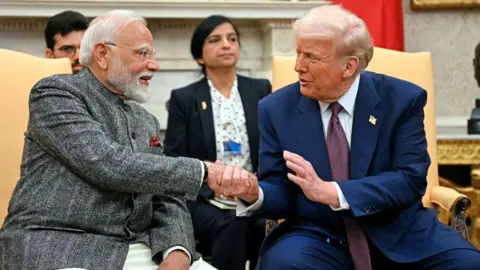
Supreme Court’s 6‑3 Ruling Undermines Trump’s Global Tariff Scheme On 20 February 2026 the U.S. Supreme Court held 6‑3 that the International Emergency Economic Powers Act does not grant the president authority to impose worldwide tariffs, striking down the Trump administration’s reciprocal duties on India and other nations [2][4][7][8]. President Donald Trump immediately announced a plan to raise a universal import surcharge to 15 % after labeling the decision “ridiculous” [2][4]. The Court’s opinion preserved existing Section 232 steel and aluminium duties but left the new 10 % surcharge, set for 150 days beginning 24 February, in place [7][5].
Interim India‑U.S. Trade Pact Cuts Tariffs to 18 % Amid Ongoing Negotiations The interim agreement announced on 2 February 2026 reduces U.S. tariffs on Indian goods from 25 % (previously 50 % with a Russian‑oil penalty) to 18 % and preserves exemptions for dairy, GM crops, meat and poultry [1][11][6]. Commerce Minister Piyush Goyal highlighted a $500 billion import target and sector‑specific safeguards for apparel, leather and marine products [11][1]. The pact also removes the punitive 25 % surcharge on Indian purchases of Russian oil, leaving a baseline 10 % global surcharge on top of most‑favoured‑nation rates [6].
Chief Negotiators’ Washington Meeting Delayed Until After Legal Review India’s delegation, slated to begin talks in Washington on 23 February, was postponed on 22 February after both sides requested time to assess the Supreme Court ruling and the president’s tariff announcements [3][1]. No new date has been set, and officials indicated the meeting will be rescheduled to a “mutually convenient” time once the policy impacts are clarified [1][3]. Reuters reported that the delegation’s departure, originally planned for Sunday, remains on hold [1].
Trump Shifts Tariff Strategy Using Section 122 and Executive Orders Following the Court’s rebuke, Trump signed an executive order on 21 February imposing a 10 % ad valorem surcharge for 150 days, citing Section 122 of the 1974 Trade Act as the legal basis [5][10]. He later announced a 15 % global tariff, describing it as a response to the “anti‑American” ruling, while Treasury Secretary Scott Bessent hinted at “more convoluted” mechanisms to achieve the same level [8][4]. The administration maintains that existing Section 232 and Section 301 duties remain untouched [7][10].
Political Fallout and Conflicting Reports on India’s Effective Tariff Rate Indian opposition leaders, including Rahul Gandhi and Jairam Ramesh, condemned the interim deal as a compromise forced by the U.S. tariff pressure, arguing a longer delay could have protected farmers [9]. Some reports state India continues to face a 10 % surcharge despite the announced 15 % global rate, reflecting divergent interpretations of the executive order’s scope [5][4]. The controversy underscores domestic criticism of the government’s handling of the trade talks and the Supreme Court’s decision [9][4].
Sources
-
1.
BBC: India, U.S. postpone trade talks after Supreme Court blocks Trump tariffs – Details the postponement of the Washington delegation, the 18 % tariff cut in the interim deal, and unresolved farmer concerns .
-
2.
The Hindu: Supreme Court Strikes Down Trump’s IEEPA Tariff Authority – Explains the 6‑3 ruling, Trump’s vow to raise tariffs to 15 %, and the impact on India‑U.S. negotiations .
-
3.
The Hindu: India and U.S. Delay Chief Negotiators Meeting Amid New Tariffs – Reports the rescheduling of the chief negotiators’ meeting from 23 February and mentions Trump’s 10 % tariff announcement .
-
4.
The Hindu: Trump hikes tariff to 15% as Supreme Court rebukes his authority; voter rolls cut, security disputes and arrests dominate India’s headlines – Highlights Trump’s 15 % increase, the Court’s nullification of reciprocal tariffs, and broader Indian domestic news .
-
5.
The Hindu: Trump raises U.S. global tariff rate from 10% to 15% – Covers the executive order imposing a 10 % surcharge for 150 days and the subsequent 15 % global rate announcement .
-
6.
The Hindu: India’s Commerce Ministry reviews U.S. tariff fallout after Supreme Court ruling – Shows the ministry’s assessment of the Court’s decision, the 10 % surcharge, and the pending interim pact .
-
7.
The Hindu: U.S. Tariff Landscape Shifts After Supreme Court Ruling – Analyzes the retention of 50 % steel/aluminium duties, the 10 % baseline tariff, and the steep drop in Indian steel/aluminium exports .
-
8.
The Hindu: Trump Mulls New Tariff Routes After Supreme Court Ruling – Describes Trump’s search for “work‑arounds,” Treasury hints at indirect paths, and the use of Section 122 .
-
9.
The Hindu: Congress Accuses Modi of Compromise as US Court Dismantles Trump Tariffs – Features Rahul Gandhi’s criticism of the interim deal and the timing of the Supreme Court ruling .
-
10.
The Hindu: Trump says U.S.–India trade deal unchanged after Supreme Court strikes tariffs – Records Trump’s claim that the February 2 pact remains intact and his praise for Modi despite tariff disputes .
-
11.
The Hindu: India‑U.S. Interim Trade Pact Set for April Implementation, Says Commerce Minister – Provides the timeline for signing the interim pact, the tariff reduction to 18 %, and related FTAs with the UK, Oman and New Zealand .
Related Tickers
Timeline
July 30, 2025 – President Trump imposes a 25 % tariff on Indian imports, marking the first major U.S. trade penalty against India and signalling a shift toward protectionist policy [30].
August 27, 2025 – The United States expands tariffs on Indian goods to 50 % and adds a 25 % surcharge for Russian‑oil purchases, straining Indian exporters and prompting market volatility [1].
November 2025 – Indian exports to the United States rise 22 % year‑on‑year despite the tariff regime, showing resilience in key sectors [4].
December 2, 2025 – Indian Ambassador Vinay Kwatra hosts a U.S. Senate delegation, discussing sanctions on Russian oil and the broader trade dispute [28].
December 11, 2025 – Prime Minister Modi tells U.S. officials that “progress has been made” in the bilateral relationship during a phone call with President Trump [24].
December 2025 – A U.S. Senate bill championed by Lindsey Graham proposes up to 500 % tariffs on countries buying Russian oil, raising alarm in New Delhi [24].
January 5, 2026 – President Trump claims U.S. tariff receipts will top $600 billion, framing the levy as a source of national strength [27].
January 5, 2026 – Trump asserts “India cut Russian oil to please me,” linking the trade dispute directly to Delhi’s energy choices [28].
January 6, 2026 – Trump says Prime Minister Modi “is not that happy with me” over the 50 % tariffs tied to Russian‑oil imports, while emphasizing their personal rapport [26].
January 8, 2026 – Trump backs a bill for up to 500 % tariffs on Russian‑oil buyers and signs a memorandum withdrawing the United States from more than 60 global organisations, heightening diplomatic pressure on India [25].
January 9, 2026 – India rejects Commerce Secretary Howard Lutnick’s claim that Modi did not call Trump, noting “eight calls in 2025” and stressing that negotiations remain active [4][24].
January 10, 2026 – The Ministry of External Affairs reaffirms a balanced U.S.–India trade pact; a Taliban‑appointed diplomat arrives in Delhi, and U.S. ambassador‑designate Sergio Gor lands in India [23].
January 12, 2026 – Ambassador Sergio Gor tells reporters that trade talks continue, schedules the next call for Tuesday, and describes the Trump‑Modi friendship as “real” and consequential [3].
February 2, 2026 – President Trump announces a surprise U.S.–India trade deal that cuts U.S. tariffs on Indian goods to 18 %, removes the Russian‑oil penalty, and cites India’s pledge to halt Russian oil purchases [5][2].
February 3, 2026 – Indian exporters celebrate the 18 % tariff cut, expecting export volumes to rebound; the diamond sector hails “immense relief” for manufacturers [21][17].
February 3, 2026 – Farmer coalitions protest, warning that “zero‑duty U.S. farm imports will flood Indian agriculture” and could harm 48 % of the workforce [17][19].
February 3, 2026 – The agreement excludes agriculture and dairy, protecting those sectors while opening labour‑intensive exports such as textiles, apparel and engineering goods [20][13].
February 3, 2026 – U.S. Secretary of State Rubi and Indian External Affairs Minister Jaishankar meet in Washington, laying groundwork for a Critical Minerals Ministerial scheduled for February 4 and expanding supply‑chain cooperation [16].
February 4, 2026 – In Parliament, opposition MPs disrupt the session; Commerce Minister Piyush Goyal asserts that agriculture and dairy are fully protected in the deal [13].
February 4, 2026 – Congress leader Kharge warns the pact could trigger farmer protests “like 2021,” fearing it will “destroy Indian agriculture” [12].
February 4, 2026 – Sharad Pawar warns that a new U.S. tariff clause allowing agricultural imports could threaten Indian farmers, and says a detailed picture of the deal will emerge within 48 hours [14].
February 4, 2026 – White House Press Secretary Karoline Leavitt announces that India will stop buying Russian oil, commit $500 billion to U.S. investment, and enjoy zero U.S. tariffs on its exports while U.S. tariffs on Indian goods fall to 18 % [15].
February 5, 2026 – Commerce Minister Goyal says a joint statement on the first tranche will be signed within days, and a formal legal agreement—required for India to cut its MFN tariffs—will be finalized by mid‑March [11].
February 8, 2026 – India and the United States postpone the scheduled Washington delegation, agreeing to study the Supreme Court’s ruling that blocks Trump’s global tariffs before rescheduling [1].
February 20, 2026 – The Supreme Court issues a 6‑3 decision striking down Trump’s use of the International Emergency Economic Powers Act for tariffs, creating uncertainty for the U.S.–India trade talks [6].
February 20, 2026 – Trump says he will explore “other alternatives” after the Court decision, hinting at work‑arounds via the rarely used Section 122 of the Trade Act [9].
February 21, 2026 – Trump raises the worldwide tariff to 15 % via an executive order after the Court blocks his emergency‑powers claim [7].
February 21, 2026 – India’s Commerce Ministry reviews the impact of the Court ruling and Trump’s 10 % temporary surcharge announced for 150 days [8].
February 21, 2026 – Congress leader Rahul Gandhi calls the interim trade deal an “ordeal” and accuses Prime Minister Modi of compromising Indian sovereignty [10].
February 23, 2026 – India and the United States defer the Washington delegation with no new date set, as both sides assess the Supreme Court ruling’s implications for the trade agenda [1].
Dive deeper (8 sub-stories)
-
India‑U.S. Trade Talks Delayed After Supreme Court Blocks Trump Tariffs, President Raises Global Duty to 15%
(25 articles)
-
India‑U.S. Interim Trade Pact to Be Signed March, Activate April, Says Minister
(4 articles)
-
India‑U.S. Trade Deal Advances Amid Farmer Protest Threats and Parliamentary Turmoil
(3 articles)
-
The Hindu: Opposition MPs Press Government Over India‑U.S. Trade Deal Impact on Farmers
-
Congress Calls for Parliamentary Debate as US Lowers Tariffs and EU Pact Finalized
(4 articles)
-
US Ambassador Gor Confirms Ongoing India‑US Trade Talks, Next Call Set for Tuesday
(3 articles)
-
Trump Supports 500% Tariffs, Withdraws from Solar Alliance, Envoy Arrives in Delhi
(2 articles)
-
The Hindu: Trump says India cut Russian oil to please him; Graham backs ambassador claim
All related articles (43 articles)
-
BBC: India, U.S. postpone trade talks after Supreme Court blocks Trump tariffs
-
The Hindu: Supreme Court Strikes Down Trump’s IEEPA Tariff Authority
-
The Hindu: India and U.S. Delay Chief Negotiators Meeting Amid New Tariffs
-
The Hindu: Trump hikes tariff to 15% as Supreme Court rebukes his authority; voter rolls cut, security disputes and arrests dominate India’s headlines
-
The Hindu: Trump raises U.S. global tariff rate from 10% to 15%
-
The Hindu: India’s Commerce Ministry reviews U.S. tariff fallout after Supreme Court ruling
-
The Hindu: U.S. Tariff Landscape Shifts After Supreme Court Ruling
-
The Hindu: Trump Mulls New Tariff Routes After Supreme Court Ruling
-
The Hindu: Congress Accuses Modi of Compromise as US Court Dismantles Trump Tariffs
-
The Hindu: Trump says U.S.–India trade deal unchanged after Supreme Court strikes tariffs
-
The Hindu: India‑U.S. Interim Trade Pact Set for April Implementation, Says Commerce Minister
-
The Hindu: India‑US Trade Deal Promises Tariff Cuts and $500 Billion Imports
-
The Hindu: India and U.S. Near Trade Deal: Joint Statement Expected in Days, Legal Agreement by Mid‑March
-
The Hindu: Congress Leader Kharge Warns of Farmer Protests Over India‑U.S. Trade Deal
-
The Hindu: India‑U.S. Trade Deal Protects Agriculture, Cuts Dairy Tariffs, Sparks Parliamentary Row
-
The Hindu: India’s Sharad Pawar Flags Farmer Concerns Over New U.S. Tariff Policy
-
The Hindu: India to End Russian Oil Purchases and Commit $500 Billion to U.S. Investment, Trump Announces
-
The Hindu: India‑U.S. Talks Advance Trade Deal and Critical Minerals Cooperation
-
The Hindu: India‑U.S. Trade Deal Relieves Exporters, Sparks Farmer Opposition
-
The Hindu: India‑US Trade Deal Cuts Tariffs, Yet Details Remain Unclear
-
The Hindu: Opposition MPs Press Government Over India‑U.S. Trade Deal Impact on Farmers
-
The Hindu: India‑U.S. Trade Deal Excludes Agriculture, Lowers U.S. Tariffs, and Promises Broad Export Gains
-
Newsweek: Trump Announces Surprise US‑India Trade Deal Reducing Tariffs to 18%
-
The Hindu: India‑U.S. Trade Deal Cuts Tariffs to 18%, Sparks Market Rally and Industry Praise
-
The Hindu: Congress Demands Parliament Review of India‑US and EU Trade Deals
-
The Hindu: U.S. Cuts Tariffs on Indian Goods to 18% Amid Unresolved Trade Deal Details
-
The Hindu: India‑U.S. Trade Deal Lowers Indian Tariffs to 18% Amid Praise and Criticism
-
AP: Trump Announces 18% Tariff Cut for India After Russian Oil Deal
-
BBC: US‑India Trade Deal Cuts Tariffs to 18% After India Halts Russian Oil Purchases
-
The Hindu: Modi and Trump announce 18% U.S. tariff on “Made in India” goods
-
BBC: US ambassador says India-US trade talks continue amid tariff tensions
-
The Hindu: MEA reaffirms balanced trade pact with US as Taliban diplomat arrives in Delhi and other developments
-
The Hindu: U.S. ambassador-designate Gor arrives in India, cites opportunities ahead
-
The Hindu: MEA rebuts Lutnick claim, says Modi-Trump spoke eight times in 2025 as trade talks persist
-
BBC: India denies Lutnick claim that Modi didn't call Trump as US-India trade talks stall
-
The Hindu: Lutnick says Modi didn't call Trump, derailing India-U.S. trade deal
-
The Hindu: Trump's tariff and withdrawal moves heighten energy and diplomatic pressure on India as domestic and global stories unfold
-
The Hindu: Trump backs bill for up to 500% tariffs on Russian oil buyers and pulls U.S. from India-led International Solar Alliance
-
The Hindu: Trump says PM Modi is “not that happy” over US tariffs, cites cuts to Russian oil and Apache deliveries
-
The Hindu: Trump says U.S. tariff receipts will top $600B, touts national strength
-
The Hindu: Trump says India cut Russian oil to please him; Graham backs ambassador claim
-
The Hindu: India enters 2025 with high diplomatic expectations, then faces U.S. tariffs and regional strain
-
The Hindu: Tariffs, reforms, and EV entries shape India's 2025 business year
External resources (11 links)
- https://www.youtube.com/@bbcnewsindia/featured (cited 2 times)
- https://www.mea.gov.in/Speeches-Statements.htm?dtl%2F39945%2FStatement_by_Official_Spokesperson (cited 1 times)
- https://www.whitehouse.gov/fact-sheets/2026/02/fact-sheet-the-united-states-and-india-announce-historic-trade-deal/ (cited 1 times)
- https://www.reuters.com/world/china/indias-exports-defy-tariffs-strengthen-hand-us-trade-talks-2025-12-16/ (cited 1 times)
- https://www.reuters.com/world/india/india-delays-us-trade-talks-after-supreme-court-rejects-trump-tariffs-source-2026-02-22/ (cited 1 times)
- https://www.facebook.com/bbcindia/ (cited 2 times)
- https://www.instagram.com/bbcnewsindia/ (cited 2 times)
- https://x.com/BBCIndia (cited 2 times)
- https://t.co/gPz6rWtrxj (cited 1 times)
- https://t.co/hA1zbnt3JQ (cited 1 times)
- https://twitter.com/janusmyth?ref_src=twsrc%5Etfw (cited 1 times)