Syrian Army Occupies Kurdish Northeast as U.S. Plans Final Troop Pullout
Updated (51 articles)


Syrian Forces Capture Kurdish‑Run Northeast in Early January Syrian army entered the autonomous northeast at the start of January 2026, reaching key Kurdish towns and signaling the planned dissolution of Kurdish institutions. The advance aligns with a new Islamist coalition that intends to integrate the region into a broader state. The coalition is headed by transitional president Ahmed Al‑Charaa, who seeks to fold the area into an Islamist‑led Syrian state [1].
Kurdish Women Leaders Cite Threat to Gender Equality Laws Under the Autonomous Administration of North and East Syria (AANES), women enjoyed bans on polygamy and child marriage, equal inheritance and testimony rights, and domestic‑violence protections. Activist Ilham Omar, who rescued a girl from forced confinement in 2011, helped draft those statutes and now escorts officials out of seized areas. Omar also conducts night patrols with Community Protection Units as many Kurds flee, underscoring fear that the new regime will overturn these gains [1].
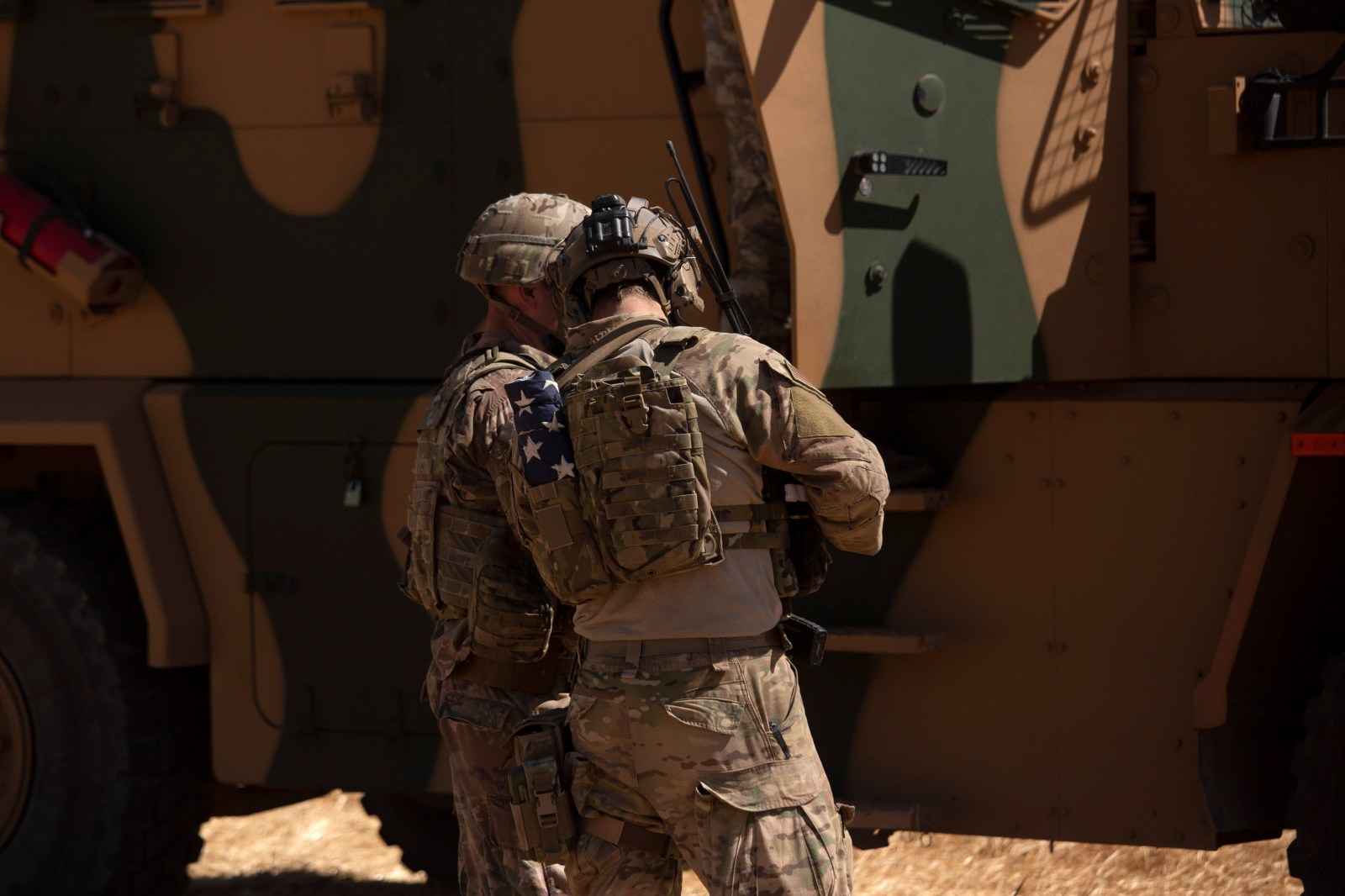
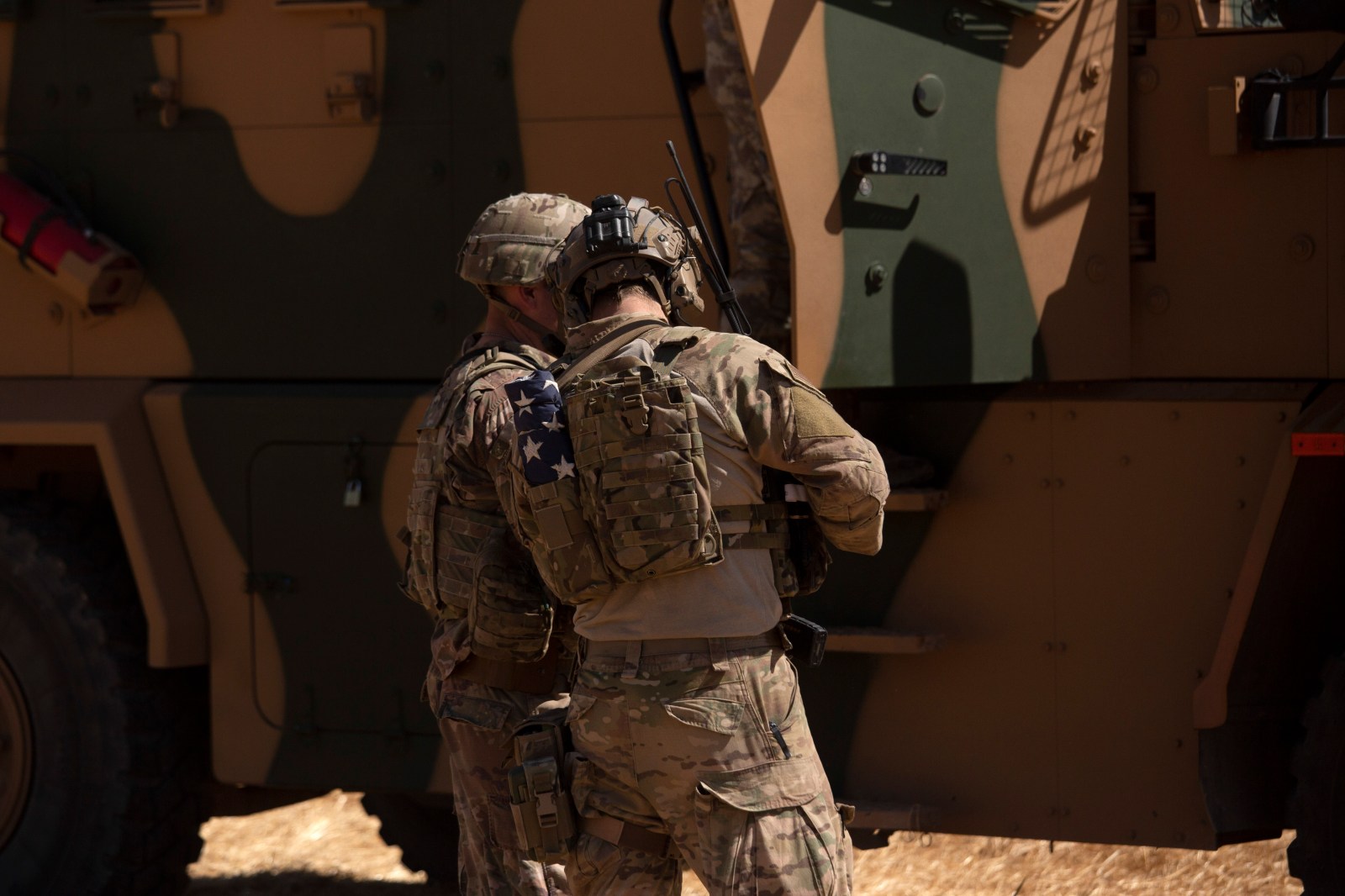
U.S. Sets 60‑Day Timeline for Final Troop Withdrawal senior U.S. official announced that the remaining 1,000 American troops will leave Syria within the next 60 days, ending the last U.S. footprint. The U.S. presence, begun in 2015 to fight ISIS alongside the Kurdish‑led Syrian Democratic Forces, is now deemed unnecessary as Damascus, led by President Ahmed al‑Sharaa, agrees to assume primary counter‑terrorism responsibilities. Some personnel have already departed under a conditions‑based transition, while the remaining forces will continue limited support for partner‑led anti‑ISIS operations [2].
Withdrawal Declared Independent of Recent Iranian‑Backed Attacks CBS News confirmed the pullout is not a response to recent Iranian‑backed attacks that killed two Iowa National Guard members and a translator in Palmyra. The timing follows a long‑standing Trump administration pledge for a full withdrawal, which was only partially fulfilled after internal resistance kept a reduced force in place. The announcement therefore reflects a strategic shift rather than an immediate reaction to regional security incidents [2].
Combined Moves May Accelerate Islamist Consolidation in Syria The simultaneous Syrian army occupation and U.S. exit create a potential power vacuum that could hasten the Islamist coalition’s integration of the Kurdish region. Analysts note that without U.S. backing, Kurdish militias may lack the capacity to resist the coalition’s plans, raising concerns for the preservation of AANES’s gender‑equality statutes. Both reports highlight Ahmed Al‑Charaa’s central role, linking the military takeover and political restructuring under a single leadership [1][2].
Sources
-
1.
Le Monde: Kurdish Women Fear Islamist Rule as Syrian Army Takes Northeast: Focuses on Kurdish women’s anxiety, progressive AANES gender laws, Ilham Omar’s activism, and the early‑January Syrian army incursion under Islamist president Ahmed Al‑Charaa .
-
2.
Newsweek: U.S. Announces Withdrawal of Remaining 1,000 Troops from Syria: Details the 60‑day U.S. pullout schedule, its 2015 ISIS‑fighting origins, Damascus’s new counter‑terrorism role, and clarification that the move is unrelated to recent Iranian‑backed attacks .
Related Tickers
Timeline
Oct 2025 – Hard‑line factions on both sides block the March‑2025 integration talks, keeping the Syrian state and the Kurdish‑led SDF at odds over a federal versus centralized model [28].
Dec 2024 – Interim President Ahmed al‑Sharaa leads a rebel offensive that topples Bashar al‑Assad, creating a new Syrian government that soon seeks to re‑assert control over the northeast [1][2].
Mar 2025 – The Kurdish‑led SDF signs a deal to integrate all its military and civilian institutions into the Syrian state, laying groundwork for future mergers [22].
Dec 11 2025 – U.S. forces shift to cooperate with interim President al‑Sharaa, moving from a Kurdish‑centric strategy to a dual‑track partnership that includes Damascus [25].
Dec 23 2025 – A Turkish delegation arrives in Damascus; clashes erupt in Aleppo as Turkey pushes for SDF integration and warns “Turkey will not tolerate any separatist structures” [26].
Jan 9 2026 – Syria’s Defense Ministry announces a cease‑fire in Aleppo’s Kurdish districts, but fighting continues and Tom Barrack welcomes the pause, seeking an extension [23].
Jan 9 2026 – The Syrian government orders civilians to evacuate Aleppo; tens of thousands flee as Turkish President Erdogan congratulates Damascus and warns against Kurdish separatism [24][9].
Jan 11 2026 – The last SDF fighters withdraw from Aleppo’s Sheikh Maqsoud district, with Mazloum Abdi saying the agreement “secured evacuation via mediation” [22].
Jan 11 2026 – First responders enter contested Aleppo neighborhoods after days of deadly clashes that left at least 23 dead and displaced over 140 000 people [21].
Jan 17 2026 – Syrian troops move into Deir Hafer following a Kurdish redeployment east of the Euphrates; President al‑Sharaa’s decree declares Kurdish a national language and recognises Nowruz as a holiday [20].
Jan 17 2026 – U.S. forces complete their withdrawal from Iraq’s Ain al‑Asad base, ending the phased pull‑out tied to the broader coalition wind‑down [19].
Jan 18 2026 – Syrian army seizes the Omar oil field, Syria’s largest, and nearby gas fields, marking a major shift in energy control [17].
Jan 18 2026 – Government forces capture the Tabqa city and Euphrates Dam, while the SDF disputes the loss and claims security has been restored [18].
Jan 18 2026 – A rapid two‑day offensive brings Syrian troops into Aleppo, Raqqa and Deir Ezzor, displacing Kurdish forces and securing dams and oil fields for Damascus [16].
Jan 19 2026 – The cease‑fire unravels as clashes erupt around Shaddadeh and al‑Aqtan prisons; Turkish President Erdogan urges “immediate cease‑fire compliance” [14].
Jan 19 2026 – Despite the 14‑point cease‑fire, fighting continues; President Ahmed al‑Sharaa urges “unity and centralised decision‑making” as government troops advance [15].
Jan 20 2026 – Both sides announce a four‑day cease‑fire; Tom Barrack says the SDF’s anti‑ISIS role “has largely expired” and urges integration into state forces [12].
Jan 21 2026 – The SDF calls for urgent international aid as Damascus presses forward, while Barrack reiterates that the SDF’s original mission is over [11].
Jan 21 2026 – The U.S. begins moving up to 7 000 IS detainees to Iraq; Admiral Brad Cooper tells al‑Sharaa the transfer must proceed without disruption [5].
Jan 22 2026 – UNHCR assumes management of al‑Hol camp after the SDF withdraws, but a UN spokesman warns conditions remain “tense and volatile” [3].
Jan 22 2026 – Sharaa’s government completes a rapid seizure of the Kurdish‑held northeast, issuing a decree that grants Kurdish citizenship, makes Kurdish a national language and declares Nowruz a holiday [4].
Jan 23 2026 – Turkish President Erdogan congratulates the Syrian government on defeating the SDF, stating Turkey “will not tolerate any separatist structures” [9].
Jan 24 2026 – Syria’s defense ministry extends the cease‑fire by 15 days, saying the extension backs the U.S. operation to transfer roughly 7 000 IS militants to Iraq [8].
Jan 26 2026 – The United States presses Damascus to preserve SDF counter‑ISIS capabilities, warning that “SDF’s established human‑intelligence networks cannot be replicated overnight” [27].
Jan 29 2026 – Kurdish forces retreat as the U.S. backs interim President al‑Sharaa; commander Azad calls the shift “a slap in the face” for the Kurds [2].
Jan 30 2026 – The Syrian government and SDF sign an integration deal that creates a three‑brigade division, transfers the Omar oil field and Tabqa dam to Damascus, and grants Kurdish cultural rights; Tom Barrack calls the pact “a profound and historic milestone” [1].
Feb 4 2026 – Syrian Interior Ministry units roll into Qamishli to secure civil‑registry offices, the airport and other state facilities, with spokesperson Nour al‑Din al‑Baba pledging coordination with “the other side” [7].
Feb 5 2026 – President Ahmed Al‑Charaa imposes an accord that dissolves the autonomous Rojava region, ending Kurdish self‑rule after twelve years [30].
Feb 19 2026 – A senior U.S. official announces the withdrawal of the remaining 1 000 American troops from Syria, to be completed within 60 days, citing Damascus’ willingness to lead counter‑terrorism [6].
Mid‑Apr 2026 (planned) – The U.S. withdrawal is slated to finish, ending the last American footprint in Syria [6].
Future (ongoing) – The Syrian government plans to fully integrate former SDF fighters individually into the national army and interior ministry, while the United States continues to relocate up to 7 000 IS detainees to Iraqi facilities [8][5].
Dive deeper (11 sub-stories)
-
Le Monde: Kurdish Women Fear Islamist Rule as Syrian Army Takes Northeast
-
U.S. Orders Final Pullout of 1,000 Troops From Syria by April 2026
(3 articles)
-
Le Monde: Syrian President Ends Kurdish Autonomy as U.S. Pulls Support
-
AP: Syrian Interior Ministry Forces Deploy in Kurdish Qamishli Under Damascus‑SDF Deal
-
Integration Deal and ISIS Resurgence Redefine Syria’s Northeast Landscape
(14 articles)
-
US Urges Damascus to Preserve SDF Counter‑ISIS Gains as Syrian Forces Seize Prisons
(8 articles)
-
Syrian Government Extends Ceasefire to 15 Days, Backing U.S. IS Detainee Transfer and New SDF Integration Accord
(3 articles)
-
AP: DEM party warns violence in Syria could derail Turkish peace efforts
-
Syrian Government Captures Tabqa, Omar Oil Field and Dams as Kurds Withdraw Eastward
(3 articles)
-
Syrian Army Secures Deir Hafer as Kurdish Forces Redeploy East of Euphrates
(2 articles)
-
Kurdish SDF Completes Withdrawal from Aleppo’s Sheikh Maqsoud Following Ceasefire Deal
(14 articles)
All related articles (51 articles)
-
Le Monde: Kurdish Women Fear Islamist Rule as Syrian Army Takes Northeast
-
Newsweek: U.S. Announces Withdrawal of Remaining 1,000 Troops from Syria
-
Le Monde: Syrian President Ends Kurdish Autonomy as U.S. Pulls Support
-
AP: Syrian Interior Ministry Forces Deploy in Kurdish Qamishli Under Damascus‑SDF Deal
-
The Hindu: ISIS resurges as Syrian Kurdish forces grapple with renewed fighting
-
BBC: Syrian Government and Kurdish SDF Seal Integration Deal After Ceasefire
-
BBC: Kurds Retreat as U.S. Shifts Support to Syria’s New Interim President
-
ISW: U.S. Presses Damascus to Preserve SDF Counter‑ISIS Gains in Northeastern Syria
-
AP: Ceasefire Extension Amid Ongoing Syrian‑Kurdish Tensions
-
AP: Syrian forces seize al-Aqtan prison housing IS detainees after Kurdish evacuation
-
AP: Jan 23: Turkey hails Syrian government gains as Kurdish-led SDF collapses
-
BBC: UN to run al-Hol camp in Syria as Kurdish-led withdrawal gives Damascus control
-
AP: IS prisoners moved from Syria to Iraq after Baghdad request, officials say
-
BBC: Sharaa's government seizes Kurdish-held northeast in rapid Syria realignment
-
AP: Kurdish-led SDF loses power in Syria as US shifts support to Damascus government
-
AP: US begins transferring ISIS detainees from Syria to Iraq as prisons shift to government control
-
BBC: US moves up to 7,000 IS detainees from Syria to Iraq as Damascus takes control
-
AP: IS detainees moved from Syria to Iraq as government forces seize detention centers
-
Newsweek: US policy shift leaves SDF seeking aid as Damascus advances in Syria
-
BBC: Syria seals ceasefire as Kurdish-led forces withdraw from al-Hol camp
-
AP: Syria and SDF announce four-day ceasefire as IS prison clashes persist
-
CNN: Syrian forces hunt ISIS fugitives after prison break
-
AP: DEM party warns violence in Syria could derail Turkish peace efforts
-
AP: Damascus–SDF ceasefire deal unravels as clashes erupt around northeast Syria prisons
-
BBC: Clashes persist after Syria-SDF ceasefire deal
-
ISW: Syrian Government Offensive Compels SDF Ceasefire and Integration
-
AP: Syrian government and SDF sign ceasefire with SDF to withdraw from Raqqa and Deir el-Zour
-
CNN: Iraq says US forces have fully withdrawn from its federal territory
-
CNN: Syrian forces seize Kurdish-held territory and oil wealth as talks yield withdrawal plan
-
BBC: Syrian army seizes Omar oil field from Kurdish forces
-
CNN: Syrian government advances seize Tabqa and Euphrates Dam as Kurds begin withdrawal east of Aleppo
-
AP: Iraqi army fully takes over key base following US withdrawal
-
BBC: Syrian army moves into Deir Hafer after Kurdish withdrawal east of the Euphrates
-
AP: Syrian military opens civilian corridor east of Aleppo as clashes escalate
-
AP: First responders enter devastated Aleppo neighborhood after days of deadly fighting
-
BBC: Last Kurdish forces withdraw from Aleppo after ceasefire deal reached
-
AP: Kurdish fighters evacuated from Aleppo's Sheikh Maqsoud after days of clashes
-
The Hindu: Syrian army says it cleared last Kurdish-held area in Aleppo; Kurds deny takeover
-
The Hindu: Syria urges Kurdish fighters to surrender as Aleppo operation nears completion
-
AP: Aleppo ceasefire falters as fighting resumes after Syria's defense ministry announcement
-
The Hindu: Kurdish fighters refuse to leave Aleppo after truce
-
AP: Thousands flee Aleppo as government-Kurdish clashes escalate with civilian toll rising
-
CNN: Syrian army strikes in Aleppo force thousands to flee as fighting with Kurdish-led SDF intensifies
-
The Hindu: Syrian authorities order evacuations in Aleppo as clashes with Kurdish-led SDF intensify
-
BBC: Clashes in Aleppo kill at least 12, force tens of thousands from Kurdish neighbourhoods
-
AP: Clashes break out in Aleppo after government opens corridors; hundreds flee Kurdish neighborhoods
-
The Hindu: Syrian army shells Kurdish-held Aleppo districts after evacuation deadline
-
AP: Deadliest exchange yet between Syrian government and Kurdish SDF erupts in Aleppo
-
The Hindu: Clashes flare as Turkish officials visit Syria ahead of Kurdish integration deadline
-
CNN: Deadly clashes erupt between Syrian army and Kurdish-led SDF in Aleppo amid integration talks
-
Newsweek: US troops in Syria pivot to new partnership with interim president
External resources (59 links)
- https://media.defense.gov/2024/May/02/2003455786/-1/-1/1/OIR_Q2_MAR2024_FINAL_508.PDF (cited 2 times)
- https://media.defense.gov/2025/May/01/2003702293/-1/-1/1/OIR_Q2_MAR2025_FINAL.PDF (cited 2 times)
- https://mei.edu/publication/how-damascus-and-the-sdf-came-to-blows-in-aleppo-and-what-might-come-next/ (cited 3 times)
- https://mei.edu/publication/how-damascus-and-the-sdf-came-to-blows-in-aleppo-and-what-might-come-next (cited 1 times)
- https://abcnews.go.com/International/wireStory/displaced-aleppo-residents-return-home-after-days-intense-129138016 (cited 1 times)
- https://www.reuters.com/world/middle-east/how-syrias-sharaa-captured-kurdish-held-areas-while-keeping-us-onside-2026-01-21/ (cited 1 times)
- https://www.reuters.com/world/middle-east/sectarian-violence-risks-dividing-syria-despite-sharaas-diplomacy-2025-09-15 (cited 1 times)
- https://www.reuters.com/world/middle-east/syria-kurdish-forces-race-save-integration-deal-ahead-deadline-2025-12-18 (cited 1 times)
- https://www.reuters.com/world/middle-east/us-estimates-200-islamic-state-fighters-escaped-syrian-prison-us-official-says-2026-01-20/ (cited 1 times)
- https://www.reutersconnect.com/all?search=all%3AL1N3XP05K&linkedFromStory=true (cited 1 times)
- https://www.reutersconnect.com/all?search=all%3AL6N3Y8131&linkedFromStory=true (cited 1 times)
- https://www.reutersconnect.com/all?search=all%3AL6N3Y90JE&linkedFromStory=true (cited 1 times)
- https://t.me/AlekhbariahSY/193126 (cited 7 times)
- https://t.me/AlekhbariahSY/193127 (cited 7 times)
- https://x.com/GregoryPWaters/status/2013763518596571309 (cited 2 times)
- https://t.me/AlekhbariahSY/192424 (cited 1 times)
- https://t.me/AlekhbariahSY/193486 (cited 1 times)
- https://t.me/AlekhbariahSY/193494 (cited 1 times)
- https://t.me/SyPresidency/1990 (cited 1 times)
- https://t.me/syrianmoi/28580 (cited 1 times)
- https://www.linkedin.com/pulse/turkey-draws-line-between-sdf-pkk-major-policy-shift-wjyye/ (cited 1 times)
- https://x.com/AlekhbariahSY/status/2010999229217472959 (cited 1 times)
- https://x.com/CENTCOM/status/2012563385452314819?s=20 (cited 1 times)
- https://x.com/DeirEzzore/status/2008263749912985629 (cited 1 times)
- https://x.com/GregoryPWaters/status/1620863800806375424?s=20 (cited 1 times)
- https://x.com/GregoryPWaters/status/1635699797494489091?s=20 (cited 1 times)
- https://x.com/QalaatAlMudiq/status/2008222366724485434 (cited 1 times)
- https://x.com/azelin/status/2014331041213784386?s=20 (cited 1 times)
- https://x.com/hxhassan/status/2011518202044358727 (cited 1 times)
- https://x.com/hxhassan/status/2011557424168370627 (cited 1 times)
- https://x.com/usambturkiye/status/2012925459093233947?s=46&t=S3QyRyNYNXr2ITunghb0UQ (cited 1 times)
- https://x.com/zakorahmed0/status/2010038964539818384 (cited 1 times)
- (cited 4 times)
- https://carnegieendowment.org/sada/2017/03/syrias-decentralization-roadmap?lang=en (cited 3 times)
- https://www.thenationalnews.com/news/mena/2026/01/21/orange-uniforms-empty-cells-and-bullets-inside-syrias-shaddadi-prison-after-the-isis-breakout (cited 3 times)
- https://www.washingtoninstitute.org/policy-analysis/sdfs-approach-integration-talks-syria-and-risk-expanded-conflict (cited 3 times)
- https://sana.sy/en/syria/2291194/ (cited 2 times)
- https://www.france24.com/en/middle-east/20260115-syria-sunni-clans-hold-key-to-stability-ending-sectarian-strife-sharaa (cited 2 times)
- https://www.globalsecurity.org/military/library/policy/army/fm/3-90/ch15.htm (cited 2 times)
- https://www.washingtoninstitute.org/policy-analysis/caught-crossfire-islamic-state-detention-sites-risk (cited 2 times)
- https://en.majalla.com/node/325228/opinion/syrias-8th-brigade-disbands-blueprint-military-consolidation (cited 1 times)
- https://limacharlienews.com/mena/victory-joint-us-specops-take-tabqa-dam/ (cited 1 times)
- https://shafaq.com/en/World/Syrian-Defense-Ministry-signals-potential-military-action-against-SDF (cited 1 times)
- https://syriadirect.org/along-the-euphrates-sdf-withdrawal-marks-a-turning-point/ (cited 1 times)
- https://urbanlex.unhabitat.org/laws/syria/the-local-administration-law-73544 (cited 1 times)
- https://www.al-monitor.com/originals/2026/01/top-syrian-kurdish-official-foza-yusuf-says-war-damascus-lose-lose-all (cited 1 times)
- https://www.alhadath.net/syria/2025/11/13/قوات-الشمال-الديمقراطي-نريد-الاندماج-ضمن-الوية-الجيش-السوري- (cited 1 times)
- https://www.centcom.mil/MEDIA/NEWS-ARTICLES/News-Article-View/Article/2867285/combat-role-in-iraq-complete-invitation-from-iraq-reaffirmed-to-advise-assist-e/ (cited 1 times)
- https://www.criticalthreats.org/analysis/ending-the-us-presence-in-syria-could-cause-a-rapid-isis-reconstitution-and-threaten-core-us-national-security-interests (cited 1 times)
- https://www.ecchr.eu/en/case/crimes-in-syria-the-neglected-atrocities-of-afrin/ (cited 1 times)
- https://www.economist.com/middle-east-and-africa/2025/02/03/an-interview-with-ahmed-al-sharaa-syrias-president (cited 1 times)
- https://www.enabbaladi.net/770912/%d8%a7%d9%84%d8%a5%d8%af%d8%a7%d8%b1%d8%a9-%d8%a7%d9%84%d8%b0%d8%a7%d8%aa%d9%8a%d8%a9-%d8%aa%d8%b1%d9%81%d8%b6-%d8%a7%d9%84%d8%a7%d9%86%d8%aa%d8%ae%d8%a7%d8%a8%d8%a7%d8%aa-%d8%a7%d9%84%d8%a8%d8%b1/ (cited 1 times)
- https://www.enabbaladi.net/774514/%d8%a7%d9%84%d8%b4%d8%b1%d8%b9-%d9%84%d8%a7-%d9%8a%d8%ab%d9%82-%d8%a8%d8%a5%d8%b3%d8%b1%d8%a7%d8%a6%d9%8a%d9%84-%d9%88%d9%84%d8%a7-%d9%8a%d8%b3%d8%aa%d8%a8%d8%b9%d8%af-%d8%aa%d8%ad%d8%b1%d9%83-%d8%aa/ (cited 1 times)
- https://www.fdd.org/analysis/op_eds/2025/03/11/after-sdf-damascus-deal-a-spotlight-on-us-forces-in-syria/ (cited 1 times)
- https://www.milliyet.com.tr/gundem/kasim-ayi-sonrasinda-sdgye-harekat-imasi-7448561 (cited 1 times)
- https://www.newarab.com/news/sharaa-says-turkey-may-attack-sdf-if-they-dont-join-syrian-govt (cited 1 times)
- https://www.rudawarabia.net/arabic/middleeast/syria/150120263 (cited 1 times)
- https://www.syria.tv/تأكيداً-لما-نشره-تلفزيون-سوريا-الرئيس-الشرع-يلتقي-شيخ-مشايخ-قبيلة-شمر (cited 1 times)
- https://www.syriaweekly.com/p/special-reviewing-a-dramatic-expansion (cited 1 times)