Iran Temporarily Closes Parts of Strait of Hormuz, Disrupting Global Oil Flow
Updated (35 articles)
-
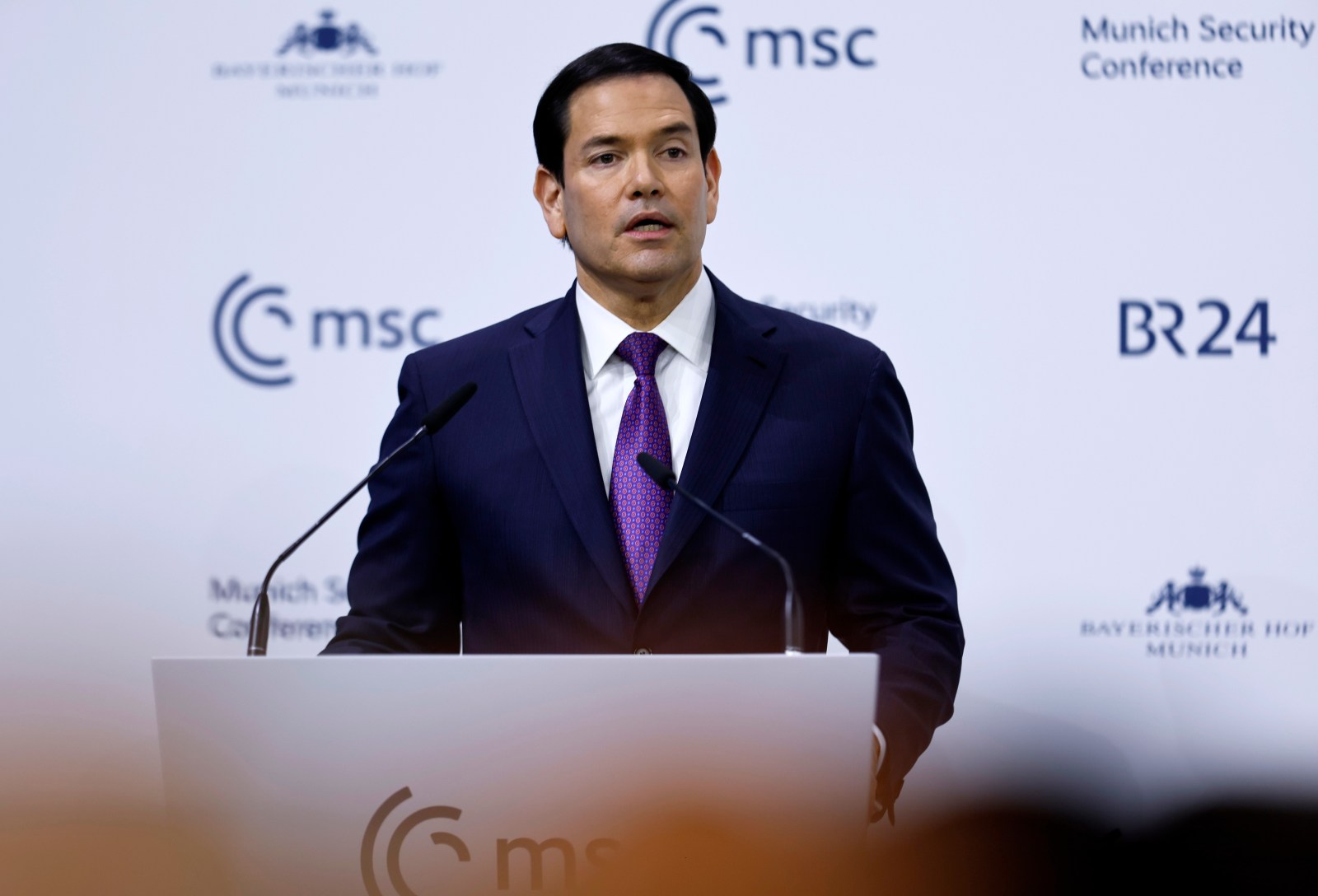 Image: NewsweekMUNICH, GERMANY – FEBRUARY 14: U.S. Secretary of State Marco Rubio delivers a key note speech at the 62nd Munich Security Conference on February 14, 2026 in Munich, Germany. The conference, which brings together government leaders, security experts and defence ministers, is taking place at a time when the traditional western political and military alliance is facing rupture due to the policies of U.S. President Donald Trump. (Photo by Johannes Simon/Getty Images) Source Full size
 -
Image: NewsweekMUNICH, GERMANY – FEBRUARY 14: U.S. Secretary of State Marco Rubio delivers a key note speech at the 62nd Munich Security Conference on February 14, 2026 in Munich, Germany. The conference, which brings together government leaders, security experts and defence ministers, is taking place at a time when the traditional western political and military alliance is facing rupture due to the policies of U.S. President Donald Trump. (Photo by Johannes Simon/Getty Images) Source Full size
Partial Closure Threatens One‑Fifth of World Oil Supply On February 18, Iran announced a temporary shutdown of sections of the Strait of Hormuz, a chokepoint through which roughly 20 percent of global oil passes, and began live‑fire drills in the waterway [1]. The move marks one of the few recent attempts to restrict maritime traffic, echoing limited closures during the Iran‑Iraq war but far rarer since the 1980s [1]. Iran’s Revolutionary Guard also conducted exercises nearby, heightening the risk to commercial vessels [2].
U.S. Navy Deploys Two Aircraft Carriers to Counter Escalation The U.S. Fifth Fleet’s flagship, the nuclear‑powered carrier USS Abraham Lincoln, remained on station while the newer carrier USS Gerald R. Ford sailed from the Caribbean to join the task force, a deployment President Donald Trump described as a contingency in case diplomatic talks fail [2]. Earlier in the month, a U.S. Navy fighter shot down an Iranian drone that approached the Abraham Lincoln, and CENTCOM warned that unsafe actions near U.S. forces could trigger collisions or broader conflict [1]. No official comment was made on the latest closure, but the carrier buildup underscores Washington’s readiness to protect shipping lanes [1][2].
Diplomatic Channels Remain Open Ahead of Geneva Negotiations U.S. Secretary of State Marco Rubio told reporters on February 16 that “very difficult” negotiations with Tehran are hampered by hard‑line clerics, even as Iran’s deputy foreign minister Majid Takht‑Ravanchi offered to discuss diluting its 60 percent‑enriched uranium in exchange for sanctions relief [2]. The International Atomic Energy Agency has requested data on 400 kg of missing enriched uranium and access to the Natanz, Fordow and Isfahan sites, signaling continued focus on nuclear verification [2]. Despite the military posturing, both sides appear to be positioning for talks scheduled in Geneva later this month [2].
Regional Leaders Signal Possible Military Action Israeli Prime Minister Benjamin Netanyahu warned that Iran must dismantle its enrichment infrastructure, and President Trump reportedly assured Israel of U.S. support for strikes on Iran’s ballistic‑missile program [2]. Iran’s Supreme Leader Ayatollah Ali Khamenei warned the United States that a “slap” could cripple even the world’s strongest army, reinforcing Tehran’s readiness to target U.S. interests [1]. These statements illustrate a parallel track of diplomatic engagement and overt threats that could shape regional security dynamics [1][2].
Sources
-
1.
AP: Iran’s Temporary Closure of the Strait of Hormuz Raises Global Oil Concerns – Details Iran’s partial shutdown, live‑fire exercises, the 20 % oil transit figure, recent drone shoot‑down, and Supreme Leader Khamenei’s warning, highlighting the immediate economic and security implications .
-
2.
Newsweek: Rubio warns Iran “difficult” ahead of Geneva talks – Covers Secretary Rubio’s criticism of Iran’s clerical leadership, the deployment of the USS Gerald R. Ford, Iran’s offer to dilute 60 % enriched uranium, IAEA data requests, and regional leaders’ statements on potential strikes, providing a broader diplomatic and military context .
Timeline
June 2025 – The United States conducts B‑2 stealth bomber strikes on three Iranian nuclear sites, marking the first major U.S. kinetic action against Iran’s enrichment program and setting a precedent for future escalation [4].
Dec 28 2025 – Nationwide protests erupt in Iran after the rial collapses, quickly spreading to major cities and prompting a harsh security crackdown [22].
Jan 21 2026 – Iran’s foreign minister warns it will use “everything it has” if attacked again, while the USS Abraham Lincoln carrier strike group transits the Strait of Malacca toward the Indian Ocean and U.S. F‑15E fighters and HIMARS are repositioned in the region [22].
Jan 23 2026 – President Trump declares an “armada” of ships, including the carrier USS Abraham Lincoln, is heading toward Iran “just in case,” and the death toll from the crackdown is reported between 3,100 (official) and over 4,500 (activists) [21].
Jan 24 2026 – IRGC commander Gen. Mohammad Pakpour warns the U.S. and Israel that Iran’s forces have “finger on the trigger,” while European airlines suspend Dubai flights amid rising tensions [28].
Jan 24 2026 – A senior Iranian official tells Newsweek that a regional collapse would benefit Israel, urging diplomacy over war [19].
Jan 25 2026 – Iran unveils a giant anti‑U.S. mural in Tehran’s Enghelab Square depicting a blood‑stained USS Abraham Lincoln, while the U.S. Central Command confirms the carrier strike group has entered the Indian Ocean [27].
Jan 26 2026 – The USS Abraham Lincoln and three destroyers arrive in the Middle East, operating in the Indian Ocean and adding roughly 5,700 U.S. service members to the theater [26].
Jan 27 2026 – Tehran posts threatening billboards in Revolution Square showing a blood‑splattered carrier deck, and President Trump reiterates that the “armada” is positioned “just in case” [17].
Jan 28 2026 – CENTCOM announces a multi‑day air exercise to prove U.S. airmen can disperse and generate combat sorties, while the carrier group is already on station and Trump repeats the “armada” warning [16].
Jan 29 2026 – Iran announces deployment of 1,000 strategic drones across its armed forces, and the U.S. adds the nuclear‑powered carrier USS Gerald R. Ford to join USS Abraham Lincoln in the region as a contingency [14][7].
Jan 29 2026 – The EU moves to list the IRGC as a terrorist organization in response to the protest crackdown, aligning with U.S. and Canadian designations [15].
Jan 30 2026 – The U.S. expands its Middle‑East buildup: THAAD and Patriot batteries arrive at Al Udeid Air Base, additional F‑15E Strike Eagles and an E‑11A communications relay jet land in Qatar, and a multiday combat‑power exercise begins [4].
Jan 31 2026 – CENTCOM issues a direct warning that any “unsafe behavior” by Iran’s IRGC near U.S. forces in the Strait of Hormuz could trigger escalation, as Iran schedules a two‑day live‑fire naval drill in the waterway [12].
Feb 1 2026 – Supreme Leader Ayatollah Ali Khamenei warns that a U.S. attack would spark a regional war, while the USS Abraham Lincoln operates in the Arabian Sea and Iran’s FM Abbas Araghchi says trust in the U.S. has eroded but “fruitful” negotiations continue [2][11].
Feb 3 2026 – An F‑35C from USS Abraham Lincoln shoots down an Iranian Shahed‑139 drone that aggressively approaches the carrier 500 mi off Iran; IRGC gunboats and a Mohajer drone then harass the U.S.–flagged tanker Stena Imperative, prompting USS McFaul to escort it safely [1][3][9][10].
Feb 3 2026 – Diplomatic talks slated for later in the week are disrupted after Tehran asks to move negotiations to Oman, exclude regional participants, and focus solely on the nuclear issue [3][1].
Feb 4 2026 – President Trump reiterates that the U.S. keeps “a range of options” on the table, including a major strike, while Iran’s president Masoud Pezeshkian orders “fair and equitable” talks with the United States [8][1].
Feb 4 2026 – Iran temporarily closes parts of the Strait of Hormuz and conducts live‑fire exercises, a rare escalation that threatens 20 % of global oil flow [6].
Feb 16 2026 – U.S. Secretary of State Marco Rubio says “radical Shia clerics” make real deals “very difficult,” as Iran offers to dilute its 60 % enriched uranium in exchange for sanctions relief and the U.S. sends the carrier USS Gerald R. Ford to join the Lincoln group [7].
Feb 18 2026 – Iran’s Supreme Leader warns the United States that even the world’s strongest army could receive a “slap” that prevents it from recovering, underscoring Tehran’s readiness to target U.S. interests after the Strait of Hormuz closure [6].
Feb 18 2026 – Planned U.S.–Iran talks remain on the agenda, with White House envoy Steve Witkoff expected to meet Iranian officials in Turkey or Oman later in the month [1][8].
Dive deeper (4 sub-stories)
-
Iran Temporarily Closes Parts of Strait of Hormuz, Disrupting Global Oil Flow
(5 articles)
-
Iran President Urges Fair Talks as U.S. Carrier Downs Drone, Tensions Escalate
(6 articles)
-
Khamenei Warns of Regional War as U.S. Carrier Group Moves Toward Iran
(21 articles)
-
EU Poised to Terror‑List Iran’s Guard as Death Toll Surpasses 6,000
(3 articles)
All related articles (35 articles)
-
AP: Iran’s Temporary Closure of the Strait of Hormuz Raises Global Oil Concerns
-
Newsweek: Rubio warns Iran “difficult” ahead of Geneva talks
-
The Hindu: Iran President Calls for Negotiations as U.S. Downs Drone
-
AP: Iran’s President Calls for Fair Talks as U.S. Shoots Down Drone
-
Newsweek: U.S. Fighter Jet Downs Iranian Shahed Drone Near Carrier Abraham Lincoln
-
CNN: US Carrier Downs Iranian Drone Amid Rising Tensions and Stalled Talks
-
AP: U.S. Navy F‑35C Downs Iranian Shahed‑139 Drone Near Carrier
-
BBC: US forces down Iranian drone near carrier amid rising tensions
-
BBC: Iran’s Supreme Leader Threatens Regional War Over Possible U.S. Attack
-
Newsweek: Iran’s Supreme Leader Warns U.S. Attack Will Trigger Regional War
-
AP: Iran’s Supreme Leader Threatens Regional War Over Possible U.S. Attack
-
Newsweek: U.S. Warns Iran’s IRGC Over Live‑Fire Drills in Strait of Hormuz
-
CNN: US Forces Surge in Middle East as Trump Mulls Iran Strike
-
Newsweek: U.S. Carrier Deploys as Trump Issues Final Warning to Iran
-
Newsweek: Iran Deploys 1,000 Drones as U.S. Armada Moves Toward Region
-
AP: EU Moves Toward Sanctioning Iran’s Revolutionary Guard Amid Protest Crackdown
-
Newsweek: Trump Issues New Ultimatum to Iran, Threatening “Far Worse” Strikes
-
CNN: US Conducts Middle‑East Air Drills as Iran Tensions Rise
-
CNN: Tehran Braces for U.S. Naval Presence Amid Post‑Crackdown Tension
-
Newsweek: Iran Unveils Blood‑Stained Billboard Targeting U.S. Carrier Amid Rising Tensions
-
AP: Iran’s Death Toll Tops 6,000 as U.S. Carrier Arrives Amid Currency Collapse
-
Newsweek: Trump Says U.S. Navy Deploys Large Armada Near Iran Amid Ongoing Tensions
-
CNN: USS Abraham Lincoln Carrier Strike Group Moves Into Indian Ocean Amid Rising US‑Iran Tensions
-
AP: USS Abraham Lincoln Carrier Deploys to Middle East Amid Iran Tensions
-
AP: Iran’s New Anti‑US Mural Highlights Escalating Tehran‑Washington Tensions
-
King5 (Seattle, WA): Iran’s IRGC Commander Threatens US as Warships Move Toward Region
-
AP: Iran’s IRGC Commander Threatens US as Warships Approach
-
Newsweek: Iran’s Officials Warn Regional Collapse Amid U.S. Military Threats
-
AP: U.S. Military Deploys Carrier Group to Middle East Amid Iran Unrest
-
Newsweek: Iran rejects Trump's claim of halted executions as U.S. ships move toward Iran
-
Newsweek: Trump warns of armada heading to Iran amid protests
-
Newsweek: Iran warns it will use everything it has as U.S. moves forces
-
Newsweek: Trump threatens to wipe Iran's regime off the face of the Earth as tensions rise
-
CNN: Arab states help de-escalate US-Iran tensions as US moves carrier group to Middle East
-
Newsweek: Iran Issues Final Warning to U.S. Warships as Naval Drill Concludes
External resources (28 links)
- https://www.eia.gov/international/analysis/country/irn (cited 2 times)
- https://usun.usmission.gov/u-s-representative-to-the-united-nations-ambassador-mike-waltzs-interview-with-tony-perkins-of-the-salem-news-channel/ (cited 1 times)
- https://www.reutersconnect.com/all?search=all%3AL1N3YF0BU&linkedFromStory=true (cited 2 times)
- https://edition.cnn.com/2026/02/01/middleeast/iran-diplomat-araghchi-interview-intl (cited 1 times)
- https://www.axios.com/2026/02/03/iran-us-nuclear-negotiations-format (cited 1 times)
- https://www.iranintl.com/en/liveblog/202601258930 (cited 1 times)
- https://x.com/defencehq/status/2014459690638344339?s=46&t=QxzOMiC4we0qkulaZlO4vg (cited 2 times)
- https://x.com/ifrc/status/2011790950574531015 (cited 2 times)
- https://x.com/netblocks/status/2011838716562542678 (cited 2 times)
- https://t.me/farsna/408848 (cited 1 times)
- https://x.com/CENTCOM/status/2013647979673010637 (cited 1 times)
- https://x.com/CENTCOM/status/2015815632302801143 (cited 1 times)
- https://x.com/IranObserver0/status/1996871455900946913 (cited 1 times)
- https://x.com/LindseyGrahamSC/status/2015931978936103039 (cited 1 times)
- https://x.com/araghchi (cited 1 times)
- https://x.com/araghchi/status/2016568541399445735 (cited 1 times)
- https://www.bcaresearch.com/marketing/matt-gertken (cited 2 times)
- https://www.bing.com/ck/a?!&&p=8b801433ae68c44f5453de72e45c10b1e846f1ca098dafb67ed046fcab4f8c53JmltdHM9MTc2OTY0NDgwMA&ptn=3&ver=2&hsh=4&fclid=31294c2b-4a98-6c6c-3c6d-5ac24bca6d43&psq=USS+Abraham+Lincoln+Newsweek&u=a1aHR0cHM6Ly93d3cubmV3c3dlZWsuY29tL21hcC1zaG93cy11c3MtYWJyYWhhbS1saW5jb2xuLXBhdGgtdG93YXJkLWlyYW4tcHJvdGVzdHMtY29udGludWUtMTEzNzE4MDQ (cited 2 times)
- https://www.fdd.org/team/behnam-ben-taleblu/ (cited 2 times)
- https://www.fmprc.gov.cn/wjbzhd/202601/t20260115_11813505.shtml (cited 2 times)
- https://www.ifrc.org/article/ifrc-mourns-killing-one-iranian-red-crescent-colleague (cited 2 times)
- https://www.newsguardrealitycheck.com/p/ai-videos-fill-void-amid-iran-internet-blackout (cited 2 times)
- https://www.opec.org/assets/assetdb/asb-2025.pdf (cited 2 times)
- https://tbg.airframes.io/ (cited 1 times)
- https://www.bing.com/ck/a?!&&p=2cddb51d14ef76e9b599de147f99bb1def9946dac9bb94a2ac8593a04478dd77JmltdHM9MTc2OTEyNjQwMA&ptn=3&ver=2&hsh=4&fclid=31294c2b-4a98-6c6c-3c6d-5ac24bca6d43&psq=Trump+Iran&u=a1aHR0cHM6Ly93d3cucmV1dGVycy5jb20vd29ybGQvbWlkZGxlLWVhc3QvdXMtbWlsaXRhcnktYXNzZXRzLWhlYWRpbmctbWlkZGxlLWVhc3QtZXZlbi10cnVtcC1iYWNrcy1vZmYtdG91Z2hlc3QtaXJhbi0yMDI2LTAxLTIyLw (cited 1 times)
- https://www.bing.com/ck/a?!&&p=2f764b001b8f718152361d90da32fc483ff7d27555ebf932b6babadc1a203aa5JmltdHM9MTc2OTEyNjQwMA&ptn=3&ver=2&hsh=4&fclid=31294c2b-4a98-6c6c-3c6d-5ac24bca6d43&psq=USS+Abraham+Newsweek&u=a1aHR0cHM6Ly93d3cubmV3c3dlZWsuY29tL3Bob3Rvcy11cy1haXJjcmFmdC1jYXJyaWVyLXdlc3QtcGFjaWZpYy1pcmFuLXRlbnNpb25zLTExMzgzOTE1 (cited 1 times)
- https://www.bing.com/ck/a?!&&p=40b3e932505231d92a99e37c323c13c7c311dfd6ea662ef346f9fea0714ff168JmltdHM9MTc2OTEyNjQwMA&ptn=3&ver=2&hsh=4&fclid=31294c2b-4a98-6c6c-3c6d-5ac24bca6d43&psq=3%2c117+people%2c+death+Iran&u=a1aHR0cHM6Ly91ay5uZXdzLnlhaG9vLmNvbS9pcmFuaWFuLXN0YXRlLXR2LWlzc3Vlcy1maXJzdC0wMzA1MTIzMDkuaHRtbA (cited 1 times)
- https://www.bing.com/ck/a?!&&p=65e0516d046020389640ccff0832ad6b9bf7e11b7dc1521552dea5cc311b1a05JmltdHM9MTc2OTY0NDgwMA&ptn=3&ver=2&hsh=4&fclid=31294c2b-4a98-6c6c-3c6d-5ac24bca6d43&psq=Iran+drills+Newsweek&u=a1aHR0cHM6Ly93d3cubmV3c3dlZWsuY29tL2lyYW4tdXBkYXRlLXVzLW1pbGl0YXJ5LXRvLXBlcmZvcm0tc2hvdy1vZi1zdHJlbmd0aC1pbi1taWRkbGUtZWFzdC0xMTQyNzg4OQ (cited 1 times)