National Weather Service Issues Winter Storm Watches for Mid‑Atlantic as Snow Threatens Four States
Updated (101 articles)
-
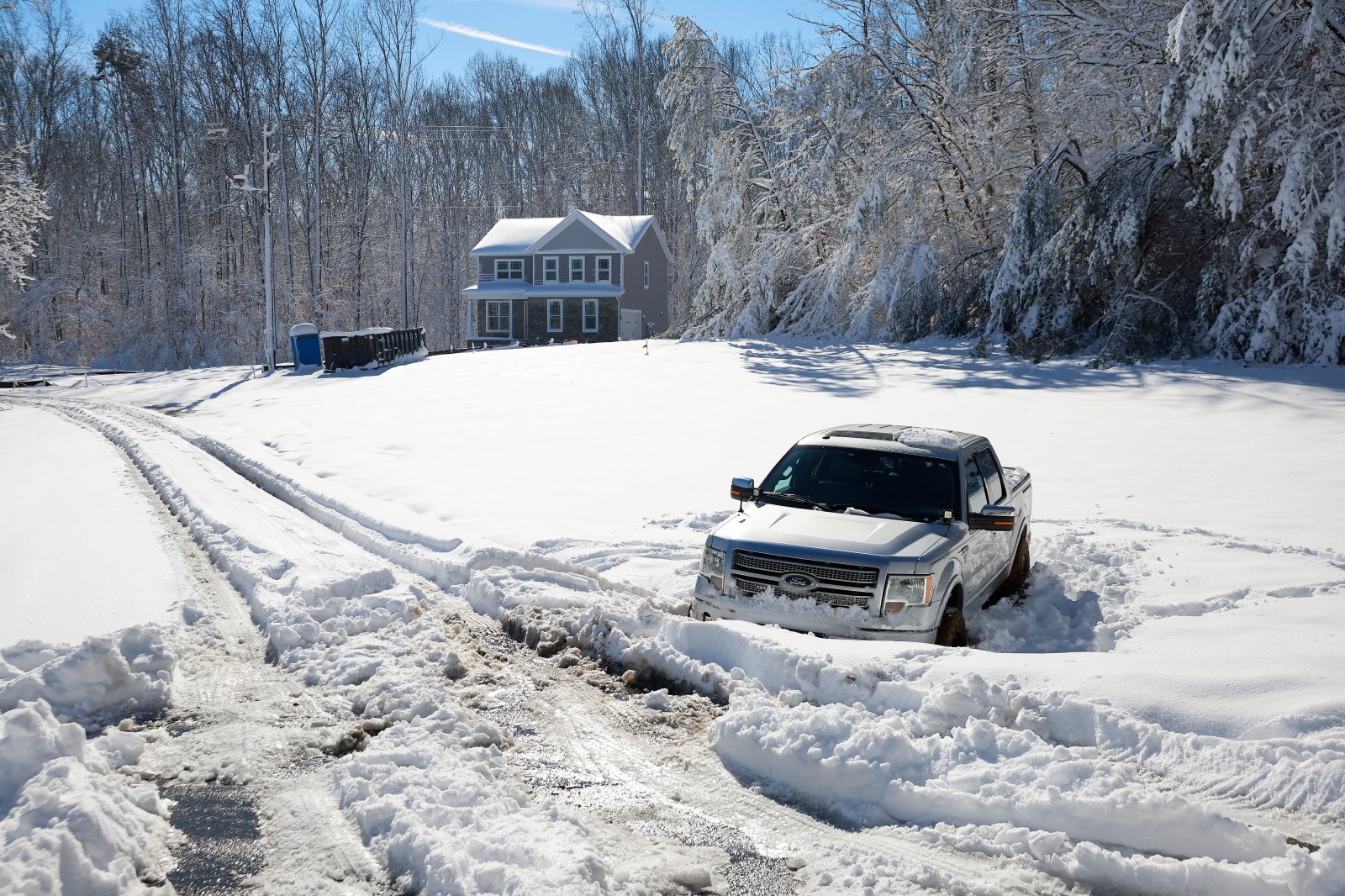
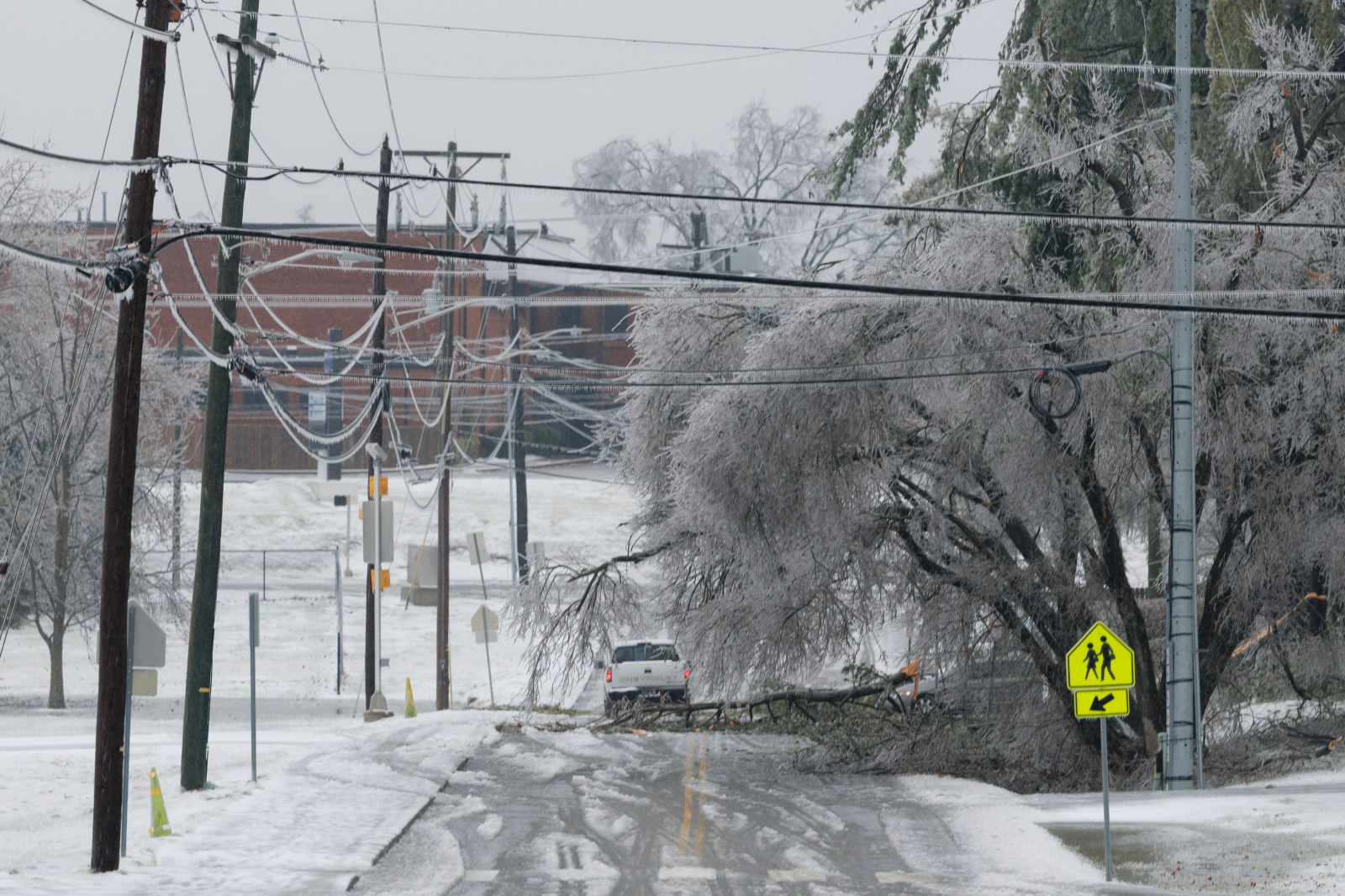 Image: NewsweekNASHVILLE, TENNESSEE – JANUARY 25: A vehicle navigates around fallen branches due to ice during a snowstorm on January 25, 2026 in Nashville, Tennessee. A massive winter storm is bringing frigid temperatures, ice, and snow to millions of Americans across the nation. (Photo by Brett Carlsen/Getty Images) Source Full size
-
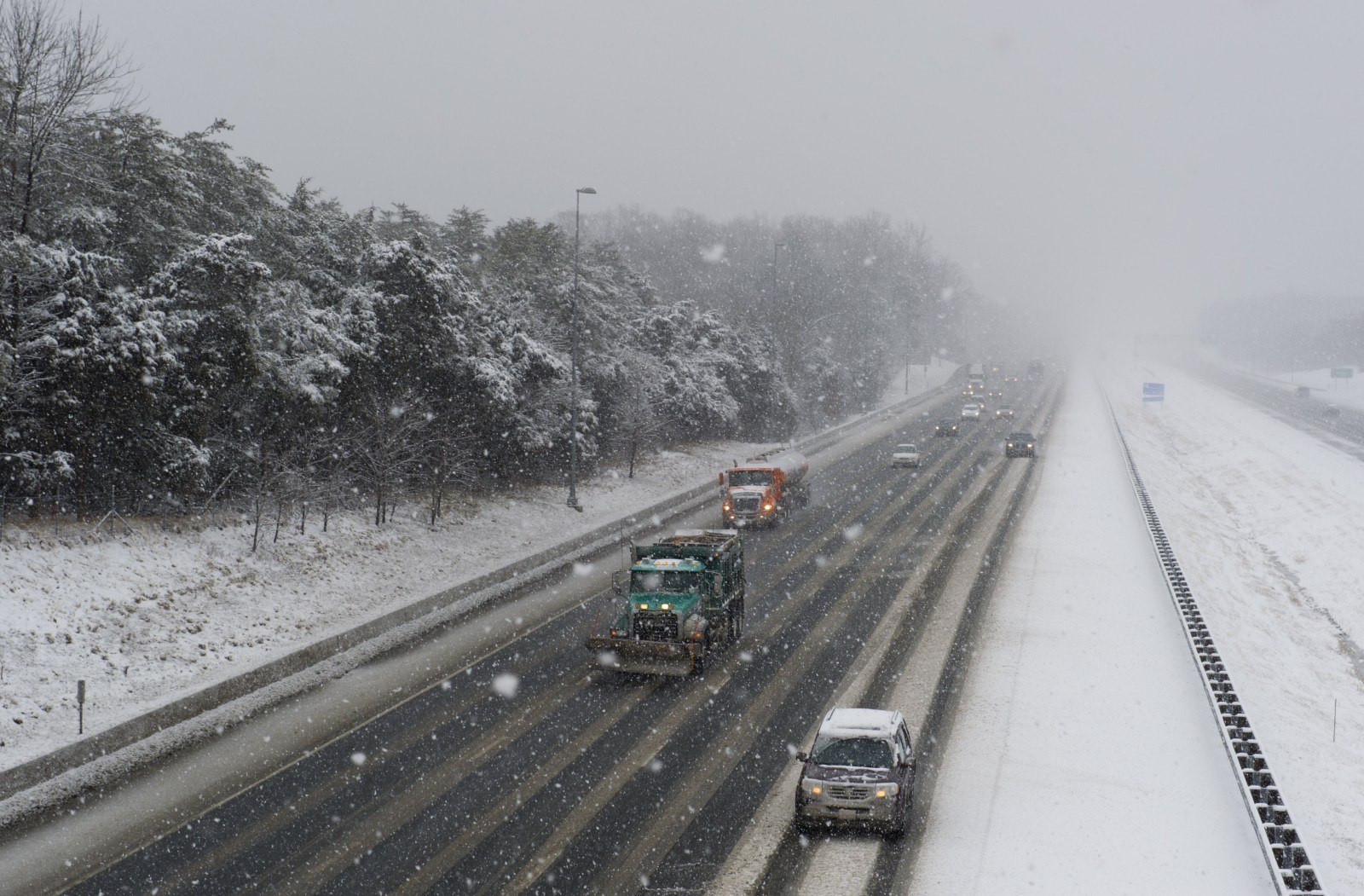 Image: NewsweekTraffic moving on I-66 West during a snow storm on March 5, 2015 in Manassas, Virginia. A major winter storm slammed parts of the United States, as thousands of flights were canceled and government offices shut down in anticipation of more than half a foot of snow in Washington, DC. AFP PHOTO/ KAREN BLEIER (Photo credit should read KAREN BLEIER/AFP via Getty Images) Source Full size
-
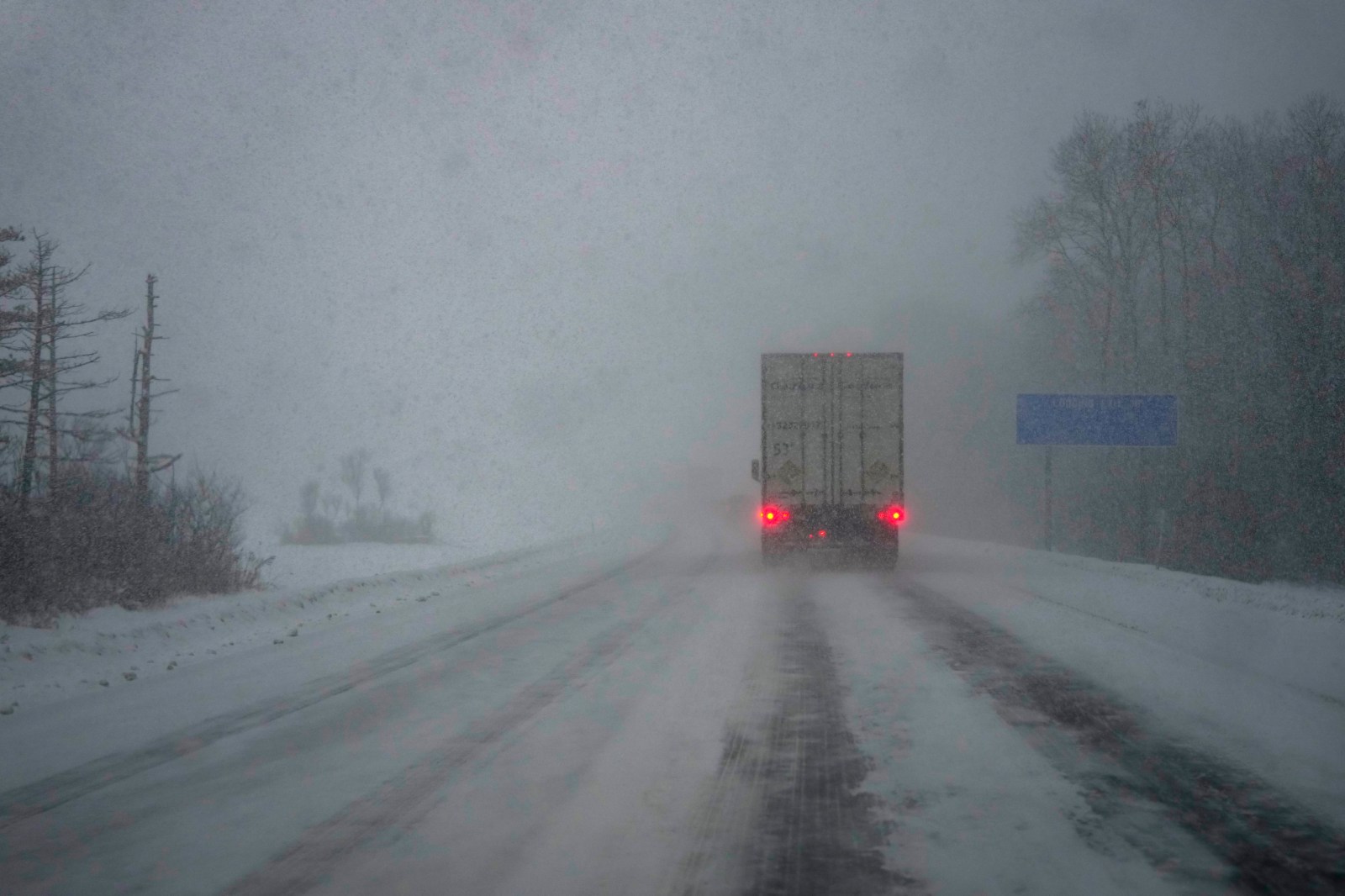 Image: NewsweekWATERTOWN, NEW YORK – DECEMBER 5: A semi-truck with hazard lights on navigates through the snow squall on I-81 on December 5, 2024 in Watertown, New York. This region in New York is experiencing the second snowstorm of the week and has been under a Winter Storm Warning for two days. (Photo by Kayla Bartkowski/Getty Images) Source Full size
-
Image: NewsweekTraffic moving on I-66 West during a snow storm on March 5, 2015 in Manassas, Virginia. A major winter storm slammed parts of the United States, as thousands of flights were canceled and government offices shut down in anticipation of more than half a foot of snow in Washington, DC. AFP PHOTO/ KAREN BLEIER (Photo credit should read KAREN BLEIER/AFP via Getty Images) Source Full size
-
Image: NewsweekWATERTOWN, NEW YORK – DECEMBER 5: A semi-truck with hazard lights on navigates through the snow squall on I-81 on December 5, 2024 in Watertown, New York. This region in New York is experiencing the second snowstorm of the week and has been under a Winter Storm Warning for two days. (Photo by Kayla Bartkowski/Getty Images) Source Full size
-
Image: NewsweekNASHVILLE, TENNESSEE – JANUARY 25: A vehicle navigates around fallen branches due to ice during a snowstorm on January 25, 2026 in Nashville, Tennessee. A massive winter storm is bringing frigid temperatures, ice, and snow to millions of Americans across the nation. (Photo by Brett Carlsen/Getty Images) Source Full size
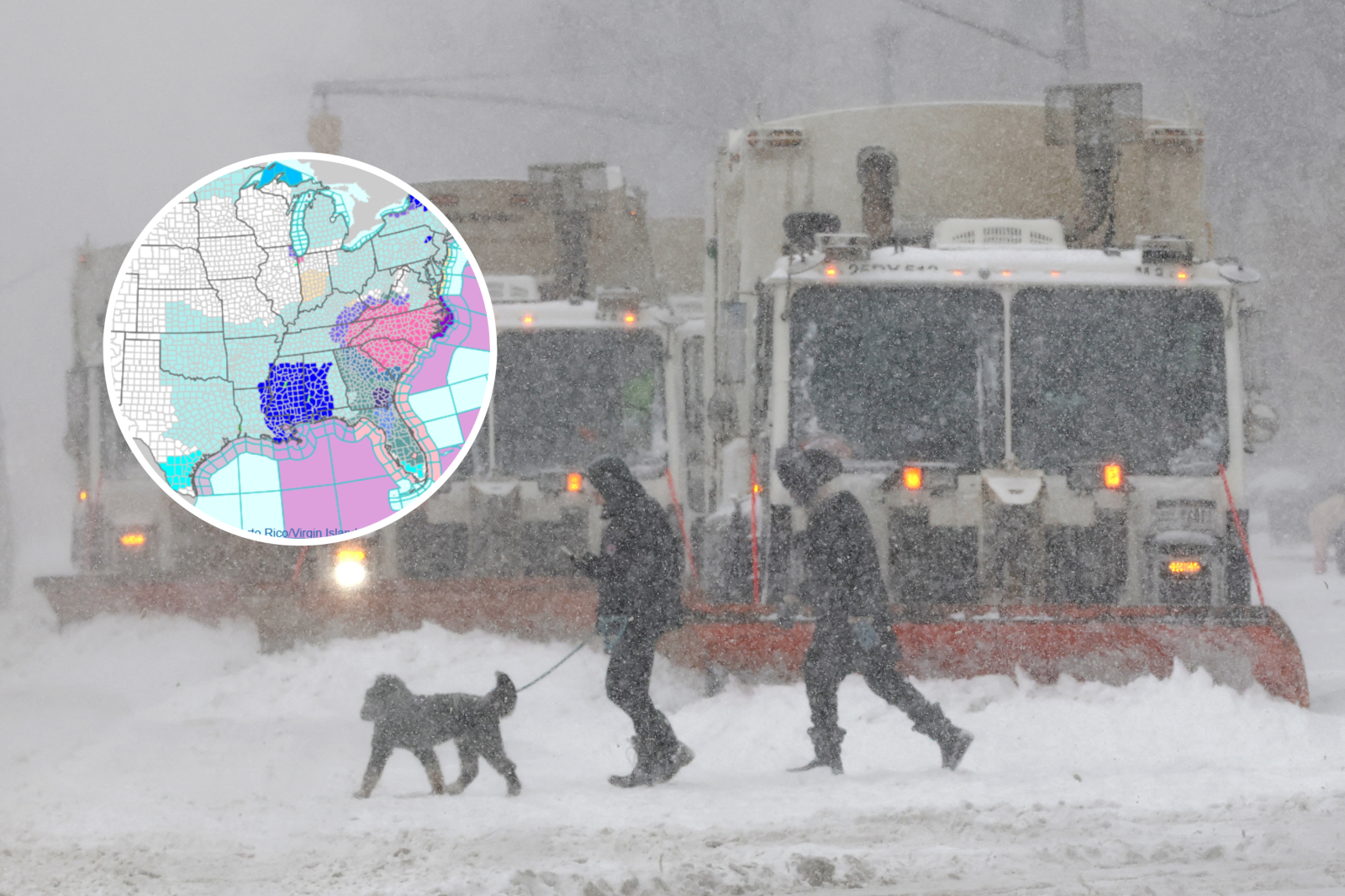
Mid‑Atlantic Winter Storm Watches Activated On February 4 the National Weather Service released winter storm watches for West Virginia, western Maryland and Pennsylvania, forecasting 4‑7 inches of snow in Charleston and up to 6 inches in Baltimore and Pittsburgh areas, with wind gusts reaching 50 mph and visibility dropping below a quarter‑mile on Friday and Saturday mornings [1]. The watches replace earlier watches and signal heightened confidence that hazardous conditions will develop within 48 hours. Officials warned that slippery roads and white‑out conditions could impede commuter traffic.
Snow and Ice Expected in Four Additional States The same day the NWS issued winter weather warnings for counties in New York, North Carolina, Virginia and Alaska, projecting 2‑4 inches of snow in Wayne and northern Cayuga (NY), up to 1 inch of snow or sleet in several NC and VA counties, and as much as 7 inches of lake‑effect snow on Eagle summit in Alaska with 55‑mph winds [2]. Freezing rain was also forecast for select NC counties, raising the risk of icy surfaces. These warnings cover the period from Wednesday afternoon through Thursday morning, targeting morning commutes.
Travel Advisories Emphasize Morning Commutes Both the Mid‑Atlantic watches and the multi‑state warnings advise motorists to reduce speed, use caution, and check real‑time road conditions via 511 before traveling [1][2]. The NWS highlighted that Thursday morning rush‑hour travel in New York, North Carolina and Virginia, as well as Friday evening travel in West Virginia and Pennsylvania, could be especially hazardous. Drivers were urged to allow extra travel time and consider postponing non‑essential trips.
Wind and Visibility Pose Additional Hazards Strong winds of 50‑60 mph are expected in Maryland, West Virginia and Alaska, contributing to blowing snow that can reduce visibility to less than a quarter‑mile [1][2]. Similar conditions were reported in a sudden snow‑squall warning over western New York, where gusts of 20 mph and quarter‑mile visibility prompted alerts for Interstate 90 [3]. The combination of heavy snowfall and high winds raises the likelihood of rapid white‑out conditions.
Power Outage Risks from Freezing Rain and Heavy Snow Forecasts of freezing rain in Bladen, Inland Pender and Robeson counties (NC) could create slippery sidewalks and increase the chance of localized power outages [2]. In Maryland and West Virginia, falling trees and downed lines are possible as gusts reach 50 mph alongside 4‑7 inches of snow [1]. The NWS urged residents to prepare emergency supplies and secure outdoor items to mitigate damage.
Sources
-
1.
Newsweek: Winter Storm Watches Issue Alerts for West Virginia, Maryland and Pennsylvania: Details the issuance of watches for WV, MD, PA, predicts 4‑7 inches of snow, 50 mph gusts, and hazardous travel .
-
2.
Newsweek: Winter Weather Warning Brings Up to Seven Inches of Snow Across Four States: Covers warnings for NY, NC, VA, AK, outlines snowfall totals, freezing rain risk, and travel impacts .
-
3.
Newsweek: Sudden Snow‑Squall Warning Hits Over 1 Million New Yorkers: Reports a rapid snow‑squall alert affecting over a million residents in six NY counties, with quarter‑mile visibility and I‑90 impacts .
-
4.
Newsweek: Winter Weather Warning Brings Up to 7 Inches of Snow Across Eight States: Expands the scope to eight states including Kentucky, Ohio, Michigan, and Florida, emphasizing strong winds and freeze warnings .
-
5.
Newsweek: Winter Storm Brings Up to 12 Inches of Snow and Near‑Whiteout Conditions Across 14 States: Describes a larger storm system affecting 14 states, forecasting up to 12 inches of snow and blizzard‑level winds .
-
6.
Newsweek: Winter Storm Warning Issued for Over 1 Million People: Highlights early weekend warnings for TN, WV, VA, NC, predicts up to 12 inches of snow and extreme cold, and urges preparedness .
Timeline
Dec 2, 2025 – A fast‑moving winter system delivers the first widespread snow of the season to the interior Northeast, dropping up to 10 inches in places and causing a fatal crash near Jefferson City, Missouri, while heavy snow in Ohio, Indiana and Kentucky slows commutes and triggers road closures [24].
Dec 3, 2025 – The National Weather Service issues a winter storm warning for Colorado and New Mexico, forecasting 8‑20 inches in the Sangre de Cristo Mountains and urging travelers to delay trips and exercise extreme caution on mountain passes [23].
Dec 12, 2025 – The Weather Prediction Center releases a map showing a 4‑inch‑or‑more snow corridor from the northern High Plains to the Northeast; New York City faces a 23 % chance of 4 inches, while lake‑effect bands promise up to 14 inches near the Great Lakes [22].
Dec 16, 2025 – NOAA defines a “white‑Christmas” as ≥ 1 inch of snow on Dec 25 morning, notes a forthcoming jet‑stream shift that will block further Arctic surges, and highlights the Mountain West, northern Plains, Upper Midwest and northern New England as the regions with the highest chance of meeting that criterion [21].
Dec 17, 2025 – The Climate Prediction Center projects above‑average temperatures across most of the U.S. for Christmas, with only the far north near or below normal, while snow‑prone zones remain in the intermountain West, northern New England, the Great Lakes and Upper Midwest, and 122.4 million Americans plan holiday travel [20].
Dec 20, 2025 – NOAA forecasts a major winter storm that will blanket the South from Texas to the Carolinas, with Arctic air colliding with Gulf moisture to produce > 200 million people under sub‑20 °F temperatures, ≥ 4 inches of snow, isolated foot‑deep accumulations and quarter‑inch ice, and warns that I‑20 and I‑40 could become impassable [14].
Dec 20, 2025 – Former NOAA chief Ryan Maue warns of a “widespread potentially catastrophic” ice storm from Texas to the Carolinas, describing an atmospheric river that could coat roads, trees and power lines with dangerous ice and stressing the lack of snow‑removal equipment in the South [13].
Dec 21, 2025 – The Weather Prediction Center updates its forecast, shifting the storm’s track northward and expanding the impact area, and Weather Channel meteorologist Stephanie Abrams calls the system “plan‑changing” as it stretches from Texas to the I‑95 corridor [12].
Dec 22, 2025 – An Arctic blast sweeps 30 states, bringing > 1 foot of snow to parts of Colorado, West Virginia and upstate New York, wind chills below –50 °F across the Northern Plains, and emergency declarations in Arkansas, Georgia, Texas, North Carolina and South Carolina; Texas Governor Greg Abbott assures residents there is “no expectation whatsoever” of a grid failure [3].
Dec 23, 2025 – A massive winter system places 182 million people under ice‑and‑snow watches and over 210 million under cold‑weather advisories, forces school closures, cancels thousands of flights, drives wind chills to –40 °F, and prompts FEMA to pre‑position 7 million meals, 600 k blankets and 300 generators; Governor Abbott again pledges that the 2021 Texas grid collapse will not recur [11].
Jan 11, 2026 – The National Weather Service issues winter storm warnings for Maine, Michigan and Alaska, projecting up to 9 inches of snow and gusts up to 45 mph, and advises residents to prepare power‑outage kits and carry winter‑storm survival gear in their vehicles [17].
Jan 16, 2026 – The Weather Prediction Center warns of dangerous snow squalls across the Plains and Upper Midwest, describing rapid visibility loss and gusty winds; a squall grounds flights at Chicago O’Hare and Midway and contributes to a 30‑vehicle pileup in northern Indiana [28].
Jan 19, 2026 – The NWS issues a snow‑squall warning for more than 1 million Pennsylvanians, urging drivers to delay travel or pull off the highway as whiteout conditions can develop within minutes, especially on I‑70, I‑80, I‑79, I‑376 and the Pennsylvania Turnpike [15].
Jan 19, 2026 – Winter storm warnings for parts of Michigan and New York predict up to 4 feet of snow in the Tug Hill region, 6‑12 inches along Route 28 in Herkimer County, and 10‑20 inches across western New York, with snowfall rates of up to 4 inches per hour and wind gusts up to 40 mph [16].
Jan 20, 2026 – NOAA’s Owen Shieh describes a “subzero Arctic air mass” pushing south and a cold front draping the Southern Plains, forecasting mixed rain, snow, freezing rain and sleet from Texas to the Carolinas, > 200 million Americans below 20 °F, and a 70‑80 % chance of ≥ 4 inches of snow with quarter‑inch ice accumulations [27].
Jan 21, 2026 – Forecasters at the Weather Prediction Center issue a fresh update that moves the storm’s projected track northward, warns of heavy snow, sleet and freezing rain from the Southern Rockies to the Mid‑South and East Coast, and cautions that “life‑threatening conditions” could appear in parts of Texas, New Mexico, Oklahoma, Kansas, Louisiana, Mississippi, Arkansas, Alabama, Tennessee and Missouri [12].
Jan 22, 2026 – The Arctic cold wave again threatens 160 million Americans across 30 states, with > 1 foot of snow possible in Colorado to West Virginia, wind chills below –50 °F in the Northern Plains, and governors in Arkansas, Georgia, Texas, North Carolina and South Carolina activating emergency orders and National Guard resources [3].
Jan 23, 2026 – Nationwide alerts cover roughly 2 000 miles, placing 180 million people under ice‑and‑snow warnings and 210 million under cold‑weather advisories, while the NWS notes that a strong Arctic air mass will keep the Eastern U.S. frigid into the following week [9][10].
Jan 23, 2026 – The storm’s damage potential rivals a hurricane as ice and wind threaten power lines; 177 million people sit under ice/snow warnings, 200 million under cold‑weather advisories, schools close in the Midwest, and Texas deploys National Guard and extra utility crews to avoid a repeat of the 2021 grid failure [26].
Jan 24, 2026 – The National Weather Service warns that the extreme winter storm will begin Friday with heavy snow, freezing rain and sub‑zero temperatures, labeling conditions “extremely dangerous”; New York City Mayor Zohran Mamdani deploys thousands of sanitation workers, 700 salt spreaders and 2 200 snow plows, while NWS meteorologists Rich Otto and Tony Fracasso say travel could be “nearly impossible during the peak of the storm” [1].
Jan 25, 2026 – CNN tracks a historic U.S. winter storm that spreads 6‑12 inches of snow and damaging ice across the Plains, Ohio Valley, Mid‑Atlantic and Northeast, while rapid temperature drops create record‑breaking cold and hundreds of thousands lose power [5].
Jan 25, 2026 – Massive winter‑storm alerts continue, with over 180 million under ice‑and‑snow watches and more than 210 million under cold‑weather advisories, prompting emergency managers to activate response plans and provide safety resources such as live webcams and travel‑kit checklists [9][10].
Jan 26, 2026 – Winter Storm Fern sweeps the U.S. and southern Canada, burying major cities under thick snow, breaking 24‑hour records with > 20 inches in the Northeast, causing > 500 000 power outages, and killing at least 20 people; forecasters warn of another major winter storm arriving Friday with further heavy precipitation [2].
Jan 27, 2026 – The Associated Press confirms the death toll rises to at least 30 storm‑related fatalities nationwide, including eight New York City residents found dead outdoors, a snowplow‑collision death in Norwood, Massachusetts, and multiple carbon‑monoxide and hypothermia deaths in Louisiana, underscoring the storm’s lethal breadth [8].
Jan 30, 2026 – A large system spans 14 states from the South to the Great Lakes, delivering 7‑12 inches of snow and 60‑mph gusts to coastal North Carolina and southeast Virginia, creating near‑whiteout conditions and prompting NWS warnings that travel may become “very difficult to impossible” through the weekend [7].
Feb 4, 2026 – The National Weather Service issues winter storm watches for West Virginia, western Maryland and Pennsylvania, forecasting 4‑7 inches of snow with 50‑mph gusts in Charleston and up to 6 inches with whiteout potential in Baltimore, while noting the system is less intense than the recent bomb cyclone but still dangerous [6].
Dive deeper (19 sub-stories)
-
Winter Storm Watches Issued for West Virginia, Maryland, Pennsylvania Ahead of Heavy Snow
(3 articles)
-
Winter Weather Warning Expands to Four States, Up to Seven Inches Expected Feb 4‑5
(11 articles)
-
Buffalo Snow‑Squall Warning Affects Over One Million Residents and Major Highway
(7 articles)
-
Winter Storm Dumps Up to 12 Inches of Snow Across 14 States, Near‑Whiteout Conditions Expected
(2 articles)
-
Winter Storm Warnings Target Over One Million Residents as Snow and Ice Threaten Power Grid
(2 articles)
-
Death Toll Hits Thirty as Winter Storm Fern Intensifies and New Clip‑Series Looms
(2 articles)
-
Forecasters Alert New Major Winter Storm Threatening Eastern U.S. Friday
(10 articles)
-
Winter Storm Blankets 40% of U.S., Triggers Power Outages and Record Cold
(28 articles)
-
Winter Storm Sweeps U.S., Alerts Cover 2,000 Miles, 390 Million Affected
(3 articles)
-
Trump Claims FEMA Ready as Winter Storm Fern Threatens Half U.S. Population
(3 articles)
-
Winter Storm Warning Brings Up to 3 Feet Snow and 40‑Mph Winds Across Eight States
(7 articles)
-
Winter Storm Warnings Bring Up to 24 Inches Snow Across Pacific Northwest
(2 articles)
-
Cold Arctic Air Hits Northeast While California Braces for New Year’s Eve Rain
(7 articles)
-
Winter Storm Warnings Sweep Ten States, Alaska Braces for Up to 45 Inches
(2 articles)
-
Post‑Christmas Storm Brings Freezing Rain, Snow and Travel Hazards Across Great Lakes Region
(6 articles)
-
Newsweek: Winter storm warnings spread across U.S. with up to 3 feet forecast
-
Newsweek: USPS Issues Delivery Warnings for 15 States Amid Winter Storms
-
Winter Storm Warning Extends Through Thursday, Up to 20 Inches Predicted in Colorado Mountains
(2 articles)
-
Dec 2 2025 Nor’easter Brings First Seasonal Snow, Fatalities and State Emergencies
(2 articles)
All related articles (101 articles)
-
Newsweek: Winter Storm Watches Issue Alerts for West Virginia, Maryland and Pennsylvania
-
Newsweek: Winter Weather Warning Brings Up to Seven Inches of Snow Across Four States
-
Newsweek: Sudden Snow‑Squall Warning Hits Over 1 Million New Yorkers
-
Newsweek: Winter Weather Warning Brings Up to 7 Inches of Snow Across Eight States
-
Newsweek: Winter Storm Brings Up to 12 Inches of Snow and Near‑Whiteout Conditions Across 14 States
-
Newsweek: Winter Storm Warning Issued for Over 1 Million People
-
Newsweek: Winter Storm Warning Brings Snow, High Winds to Michigan, Alaska and New York
-
WBNS (Columbus, OH): Snow Squall Alerts: What Drivers Need to Know
-
King5 (Seattle, WA): Understanding Snow Squall Alerts and Safety Measures
-
Newsweek: Death Toll Climbs as Winter Storm Fern Sweeps U.S.
-
BBC: Winter Storm Sweeps U.S. and Canada, Leaving Dozens Dead and Massive Disruptions
-
Newsweek: New Clip‑Series of Snowstorms Set to Blanket 14 States
-
WBNS (Columbus, OH): Massive Winter Storm Blankets 40% of U.S. with Snow, Ice and Sleet
-
King5 (Seattle, WA): Massive Winter Storm Dumps Snow, Ice and Sleet Across 40% of U.S.
-
AP: Massive Winter Storm Sweeps U.S., Triggers Power Outages and Travel Chaos
-
CNN: Historic U.S. Winter Storm Spreads Snow, Ice and Power Outages
-
WBNS (Columbus, OH): Massive Winter Storm Triggers Nationwide Alerts and Live Webcams
-
King5 (Seattle, WA): Massive Winter Storm Triggers Nationwide Alerts, Millions Under Warnings
-
Newsweek: Travel Warnings Affect Millions of Americans Amid Winter Storms
-
BBC: US braces for ‘extremely dangerous’ winter storm
-
Newsweek: Trump Comments as Winter Storm Fern Hits Half of U.S.
-
AP: Winter Storm Threatens Half of U.S. with Snow, Ice, and Power Outages
-
WBNS (Columbus, OH): Winter Storm Severity Index flags ice risk across South, Texas and DC area as weekend storm nears
-
King5 (Seattle, WA): Ice-heavy winter storm flagged by WSSI as South faces major impacts
-
Newsweek: Dire Warning as Major Ice Storm Threatens Millions
-
WBNS (Columbus, OH): Winter storm bears down on half the U.S., bringing snow, ice and power-outage risk
-
King5 (Seattle, WA): Winter storm bears down on half the U.S., bringing snow, ice and widespread outages
-
Newsweek: Winter Storm Triggers Broad Warnings as Snow Reaches Up to 17 Inches
-
AP: Nationwide ice storm prep escalates as forecasts warn of heavy snow and outages
-
CNN: Massive winter storm to blanket 1,500-mile swath from Plains to Northeast
-
WBNS (Columbus, OH): Huge US winter storm threatens crippling ice, snow from Texas to Boston
-
BBC: Arctic Cold Wave Threatens 160 Million Americans with Heavy Snow and Extreme Wind Chill
-
AP: Eastern U.S. braces for severe ice storm with potential outages and extreme cold
-
Newsweek: Winter Storm Fern Could Halt Travel for Days, Officials Urge Preparations
-
Newsweek: Winter Storm Fern Prompts Wide U.S. Winter Watch for Long-Duration Ice and Snow
-
Newsweek: Winter storm warnings issued as up to 3 feet of snow and 40 mph winds threaten eight states
-
CNN: Winter storm to lash more than two dozen states with ice and heavy snow
-
Newsweek: Texas Braces for Expansive Winter Storm With Life-Threatening Cold
-
Newsweek: Forecasters issue update as major winter storm looms
-
Newsweek: Winter Storm Fern Could Bring Catastrophic Ice Across Dozens of Cities
-
AP: Ice storm threatens southern states as Arctic air meets Gulf moisture
-
WBNS (Columbus, OH): Major winter storm to blast the South with ice and snow through Sunday
-
King5 (Seattle, WA): Major winter storm to blanket South with rain, snow and ice from Texas to the Carolinas
-
Newsweek: Snow squalls trigger travel alert for more than 1 million Pennsylvanians
-
Newsweek: Winter Storm Warning Forecasts Up to Four Feet of Snow Across Several States
-
Newsweek: Winter storm disrupts hundreds of NYC flights as warnings ease
-
AP: Winter storm blankets Midwest and East Coast with snow and subfreezing wind chills
-
Newsweek: Lake-Effect Snow Triggers Winter Storm Warnings Across Wisconsin, Michigan and Alaska
-
King5 (Seattle, WA): Snow squalls threaten Plains and upper Midwest with warnings and travel disruptions
-
Newsweek: Snow squalls threaten Plains and Midwest travel, forecasters warn
-
Newsweek: Winter storm warning issued for Indiana and Michigan as lake-effect snow nears
-
Newsweek: Winter storm warnings across three states forecast up to 9 inches of snow
-
Newsweek: Winter storm warnings issued for Oregon, Washington, Idaho and Alaska with up to 24 inches expected
-
Newsweek: Winter storm warning expands with up to 18 inches forecast across four states
-
Newsweek: New Year’s Day winter storm could bring up to 4 feet of snow across six states
-
Newsweek: New Year's Eve Travel Warning Issued for Several States Amid Snow Squalls
-
Newsweek: Lake-effect snow warnings issued in multiple states after intense cyclone
-
Newsweek: Winter Storm Warning Issued as 20 Inches of Snow Expected, Life-Threatening Conditions
-
Newsweek: AccuWeather forecast shows cold Northeast, rain in California for New Year’s Eve
-
Newsweek: Forecast map shows states facing multi-hazard winter storm
-
AP: Winter storm sweeps across US with snow, ice and severe weather
-
Newsweek: Winter storm brings tornado risk, blizzard conditions across Midwest as it moves toward Great Lakes
-
CNN: Snowstorm snarls travel at NYC-area airports as next storm looms
-
BBC: New York snowstorm triggers state of emergency as travel chaos unfolds
-
The Hindu: Northeast winter storm causes thousands of flight delays and cancellations
-
AP: Winter storm disrupts travel across US Northeast, Great Lakes
-
King5 (Seattle, WA): Winter storm snarls holiday travel across US Northeast and Great Lakes
-
Newsweek: Massive Snow Totals Hit New York and California in 24 Hours, Prompting Travel Disruptions and Emergency Declarations
-
WBNS (Columbus, OH): Winter storm snarls holiday travel across US Northeast and Great Lakes
-
Newsweek: Winter storm warnings blanket the U.S. as up to 18 inches of snow threaten travel
-
Newsweek: Winter Storm Slams Northeast as State of Emergency Declared
-
Newsweek: Post-Christmas Winter Storm Threatens Travel Across Great Lakes, Northeast
-
Newsweek: Winter storm warnings spread across U.S. with up to 3 feet forecast
-
Newsweek: Northeast snowstorm could bring up to 10 inches ahead of Christmas weekend; storm watch active
-
Newsweek: Winter Weather Alerts Across 13 States on Christmas Day Bring Heavy Snow
-
Newsweek: Winter storm and record warmth collide with Christmas travel as the nation braces for disruptions
-
Newsweek: NWS issues advisories as Northeast braces for wintry storm ahead of Christmas
-
Newsweek: Severe thunderstorm warnings issued for New York, New Jersey, and Pennsylvania
-
WBNS (Columbus, OH): Early forecast shows warmer Christmas with limited snow chances across most of the U.S.
-
King5 (Seattle, WA): Most of the U.S. expected to be warmer than normal around Christmas, with scattered snow chances
-
CNN: White‑Christmas outlook shifts as jet stream smooths mid‑December
-
Newsweek: Major Weather Shift Expected for California Over Christmas
-
AP: Weekend Storm Brings Snow to Northeast, Sub‑Zero Cold to Midwest
-
Newsweek: Winter Storm Map Shows States Getting Snow This Weekend
-
Newsweek: USPS Issues Delivery Warnings for 15 States Amid Winter Storms
-
Newsweek: Winter Storm Warnings Issued Across 13 States Amid Heavy Snow and Icing
-
Newsweek: Extreme Cold Weather Warning as Wind Chill Plunges to Minus 50°F
-
Newsweek: Winter Storm Warnings Bring Up to 20 Inches of Snow and Avalanche Risk
-
Newsweek: Winter Storm Forecast: Widespread Snow From Northern Plains to Northeast, Wyoming Up to Two Feet
-
Newsweek: Winter Weather Live Tracker: Nine-State Storm and Polar Vortex Bring Heavy Snow and Extreme Cold
-
Newsweek: Winter Storm Warning as Up to 9 Inches of Snow Could Hit West Virginia
-
Newsweek: Winter storm warnings issued across six states with heavy snowfall expected
-
Newsweek: Winter Storm Map Projects Snow and Ice Across Central and Eastern U.S. This Week
-
Newsweek: Winter Storm Warning Issued for Colorado and New Mexico Until Thursday
-
Newsweek: Winter Storm Warning: Up to 17 Inches of Snow Across Multiple States
-
Newsweek: Winter Storm Continues to Impact Northeast, Snowfall Begins in New York and Pennsylvania
-
CNN: Winter storm delivers first widespread snow of season to the Northeast
-
AP: Northeast Prepares for First Major Snowstorm of the Season
-
AP: Northeast Prepares for First Major Snowstorm While Midwest Faces O'Hare Delays
-
Newsweek: Winter Storm Forecast: 6+ Inches of Snow Expected Across Mid‑Atlantic and Northeast
-
WBNS (Columbus, OH): Winter Weather Terms and Alerts Explained (Updated Nov 24, 2025)
External resources (89 links)
- https://forecast.weather.gov/wwamap/wwatxtget.php?cwa=usa&wwa=Winter%20Storm%20Warning (cited 18 times)
- https://forecast.weather.gov/wwamap/wwatxtget.php?cwa=usa&wwa=Winter%20Weather%20Advisory (cited 8 times)
- https://www.weather.gov/ (cited 6 times)
- https://www.wpc.ncep.noaa.gov/discussions/nfdscc3.html (cited 4 times)
- https://water.noaa.gov/#@=-115.0455089,51.7807296,4.7792338&b=topographic&g=obsFcst,0!0!0!0!0!0!0!0!0!0!1!1!1!1!0!0!0!0!0!0,0.5,1!1!1!1!0,0,0,false&ab=0,0,#D94B4A,1,1,1,#cccccc,1,0,0,#B243B1,1,0,0,#98E09A,1,false&a=hide,0.35,false&s=0,0,0.9,0.9,false&n=false,#72afe9,0.9,0,0.9,0,0.9,false&p=false,0.75,0,7,0,1,2025,12,10,0,false&d=1,1,1,1,1,1,1,1,#006EFF,1,#006EFF,1,#006EFF,true&q= (cited 3 times)
- https://www.cpc.ncep.noaa.gov/products/predictions/610day/ (cited 2 times)
- https://www.mshp.dps.missouri.gov/HP68/AccidentDetailsAction?ACC_RPT_NUM=250550887 (cited 2 times)
- https://www.ncei.noaa.gov/news/coldest-day-of-the-year (cited 2 times)
- https://www.noaa.gov/stories/4-tips-to-keep-you-safe-during-snow-squall (cited 2 times)
- https://www.weather.gov/forecast (cited 2 times)
- https://www.weather.gov/gsp/winter (cited 2 times)
- https://www.weather.gov/lwx/warningsdefined#Winter%20Storm%20Watch (cited 2 times)
- https://www.weather.gov/lzk/ (cited 2 times)
- https://www.weather.gov/safety/winter-lake-effect-snow (cited 2 times)
- https://www.weather.gov/safety/winter-snow-squall (cited 2 times)
- https://www.wpc.ncep.noaa.gov/discussions/hpcdiscussions.php?disc=pmdspd (cited 2 times)
- https://www.wpc.ncep.noaa.gov/wwd/wssi/wssi.php (cited 2 times)
- https://about.usps.com/newsroom/service-alerts/ (cited 1 times)
- https://forecast.weather.gov/wwamap/wwatxtget.php?cwa=CYS&wwa=winter%20storm%20warning (cited 1 times)
- https://forecast.weather.gov/wwamap/wwatxtget.php?cwa=usa&wwa=Freeze%20Warning (cited 1 times)
- https://forecast.weather.gov/wwamap/wwatxtget.php?cwa=usa&wwa=Lake%20Effect%20Snow%20Warning (cited 1 times)
- https://forecast.weather.gov/wwamap/wwatxtget.php?cwa=usa&wwa=Winter%20Storm%20Watch (cited 1 times)
- https://nasstatus.faa.gov/ (cited 1 times)
- https://postalpro.usps.com/?_gl=1*ylr40f*_gcl_au*MTkzMzM2NDk4MC4xNzM3MDYxMzA0*_ga*MTk2MTM1MTIxNC4xNjk5OTgwNjky*_ga_3NXP3C8S9V*MTc0MDUxODEwNS40MC4xLjE3NDA1MTgxMTkuMC4wLjA. (cited 1 times)
- https://www.climate.gov/news-features/understanding-climate/interactive-map-are-you-dreaming-white-christmas (cited 1 times)
- https://www.governor.ny.gov/news/ahead-new-years-holiday-governor-hochul-urges-new-yorkers-exercise-caution-severe-winter (cited 1 times)
- https://www.governor.ny.gov/news/governor-hochul-urges-caution-ahead-post-holiday-snowfall (cited 1 times)
- https://www.tsa.gov/news/press/releases/2025/12/22/tsa-prepares-for-holiday-travel-season-cap-record-year (cited 1 times)
- https://www.weather.gov/ctp/snowsquall (cited 1 times)
- https://www.weather.gov/lwx/warningsdefined#:~:text=A%20Winter%20Storm%20Watch%20is,only%20means%20it%20is%20possible. (cited 1 times)
- https://www.weather.gov/lwx/warningsdefined#:~:text=A%20Winter%20Weather%20Advisory%20will,enough%20to%20warrant%20a%20warning. (cited 1 times)
- https://www.weather.gov/tae/2025WinterStorm (cited 1 times)
- https://www.wpc.ncep.noaa.gov/key_messages/LatestKeyMessage_1.png (cited 1 times)
- https://www.cps.edu/media/community-updates/2026/january/classes-canceled-january-23/ (cited 1 times)
- https://x.com/NWSWPC/status/2004313247806050317 (cited 4 times)
- https://x.com/NWSWPC/status/2004476083790659723/photo/1 (cited 4 times)
- https://www.facebook.com/nytransitmuseum/posts/1327315179424421?ref=embed_post (cited 3 times)
- https://x.com/CentralPierce (cited 3 times)
- https://x.com/NWS/status/1998433730055086170 (cited 3 times)
- https://x.com/NWSCPC (cited 3 times)
- https://x.com/NWSChicago/status/1998141579182191013/photo/1 (cited 3 times)
- https://x.com/OneJerseySchorr (cited 3 times)
- https://www.facebook.com/ISPBremen/posts/1180892397534817?ref=embed_post (cited 2 times)
- https://www.facebook.com/hockingcommissioners/ (cited 2 times)
- https://www.facebook.com/share/p/17YDkLuULD/ (cited 2 times)
- https://x.com/NWSCLE/status/1995893102620352798 (cited 2 times)
- https://www.facebook.com/MetroSchools/photos/meet-dolly-plowton-music-city-plow-blizzard-of-oz-snowella-and-frosty-the-snow-p/1337230701778613/ (cited 1 times)
- https://www.facebook.com/WatertownInternationalAirport/photos/brrr-%EF%B8%8F%EF%B8%8F-its-official-the-us-national-weather-service-buffalo-ny-confirmed-a-new-/1319894566832934/ (cited 1 times)
- https://x.com/NWSBurlington/status/1995419357883613443 (cited 1 times)
- https://x.com/NWSGray/status/1994796391797838021 (cited 1 times)
- https://x.com/NWSPittsburgh/status/1995421973837730025 (cited 1 times)
- https://x.com/NWSWPC/status/1995225345436561879/photo/1 (cited 1 times)
- https://x.com/NWSWPC/status/1996207764948103310 (cited 1 times)
- https://x.com/NWSWPC/status/1997530324247482505 (cited 1 times)
- https://x.com/NWSWPC/status/1999246482105598282 (cited 1 times)
- https://x.com/NWSWPC/status/1999476989129056694/photo/1 (cited 1 times)
- https://x.com/NWSWPC/status/2006096080119718295 (cited 1 times)
- https://x.com/NWSWPC/status/2006096082757964100 (cited 1 times)
- https://x.com/NWSWPC/status/2013925322689749471 (cited 1 times)
- https://x.com/NWSWPC/status/2014266494276776000/photo/1 (cited 1 times)
- https://x.com/juanlozano70 (cited 1 times)
- http://Winter%20Storm%20Severity%20Index%20-%20Effective%20From%20Fri,%20Jan%2023,%202026%2007%20AM%20ET%20Through%20Mon,%20Jan%2026,%202026%2007%20AM%20ET%20Last%20Updated:%20Friday%20January%2023,%202026%2007:13%20AM%20ET%20%20Map%20data%20%C2%A9%20OpenStreetMap%20contributors,%20CC-BY-SA%20%20Change%20image%20opacity:%20%20%2070%25%20%20%20For%20a%20users%20guide%20and%20more%20information%20about%20the%20WSSI,%20please%20select%20from%20the%20dropdown%20menu%20below.%20%20%20Click%20Me%20for%20Additional%20Information (cited 2 times)
- http://flightaware.com/ (cited 2 times)
- https://bit.ly/3LwqJFr (cited 2 times)
- https://bit.ly/3NBgUXi (cited 2 times)
- https://bit.ly/3YW3QOI (cited 2 times)
- https://bit.ly/45XMHrE (cited 2 times)
- https://bit.ly/4bfrux1 (cited 2 times)
- https://bit.ly/4rciHAB (cited 2 times)
- https://newsroom.aaa.com/2025/12/aaa-year-end-holiday-travel-forecast/ (cited 2 times)
- https://poweroutage.us/ (cited 2 times)
- https://amzn.to/3LZ6uQI (cited 1 times)
- https://amzn.to/3Nuebip (cited 1 times)
- https://amzn.to/3YPohNh (cited 1 times)
- https://amzn.to/3YTvADt (cited 1 times)
- https://amzn.to/3YWZAOS (cited 1 times)
- https://amzn.to/3ZsACac (cited 1 times)
- https://amzn.to/4616JkX (cited 1 times)
- https://amzn.to/464Hm1G (cited 1 times)
- https://amzn.to/4jQNSix (cited 1 times)
- https://amzn.to/4pTZeU6 (cited 1 times)
- https://amzn.to/4pX0VQS (cited 1 times)
- https://amzn.to/4qzKomV (cited 1 times)
- https://archive.ph/d8PVi (cited 1 times)
- https://poweroutage.us (cited 1 times)
- https://weather.com/storms/winter/news/2026-01-21-winter-storm-fern-ice-snow-forecast-south-northeast-midwest (cited 1 times)
- https://www.accuweather.com/en/winter-weather/severe-cold-in-wake-of-major-ice-storm-may-lead-to-days-of-dangerous-weather-conditions/1854992 (cited 1 times)
- https://www.dmschools.org/news_release/classes-canceled-for-friday-due-to-extreme-cold/ (cited 1 times)
- https://www.flightaware.com/live/cancelled/ (cited 1 times)