Bomb Cyclone Delivers Record Snow, Massive Flight Cancellations and Widespread Power Outages Across the Carolinas
Updated (16 articles)
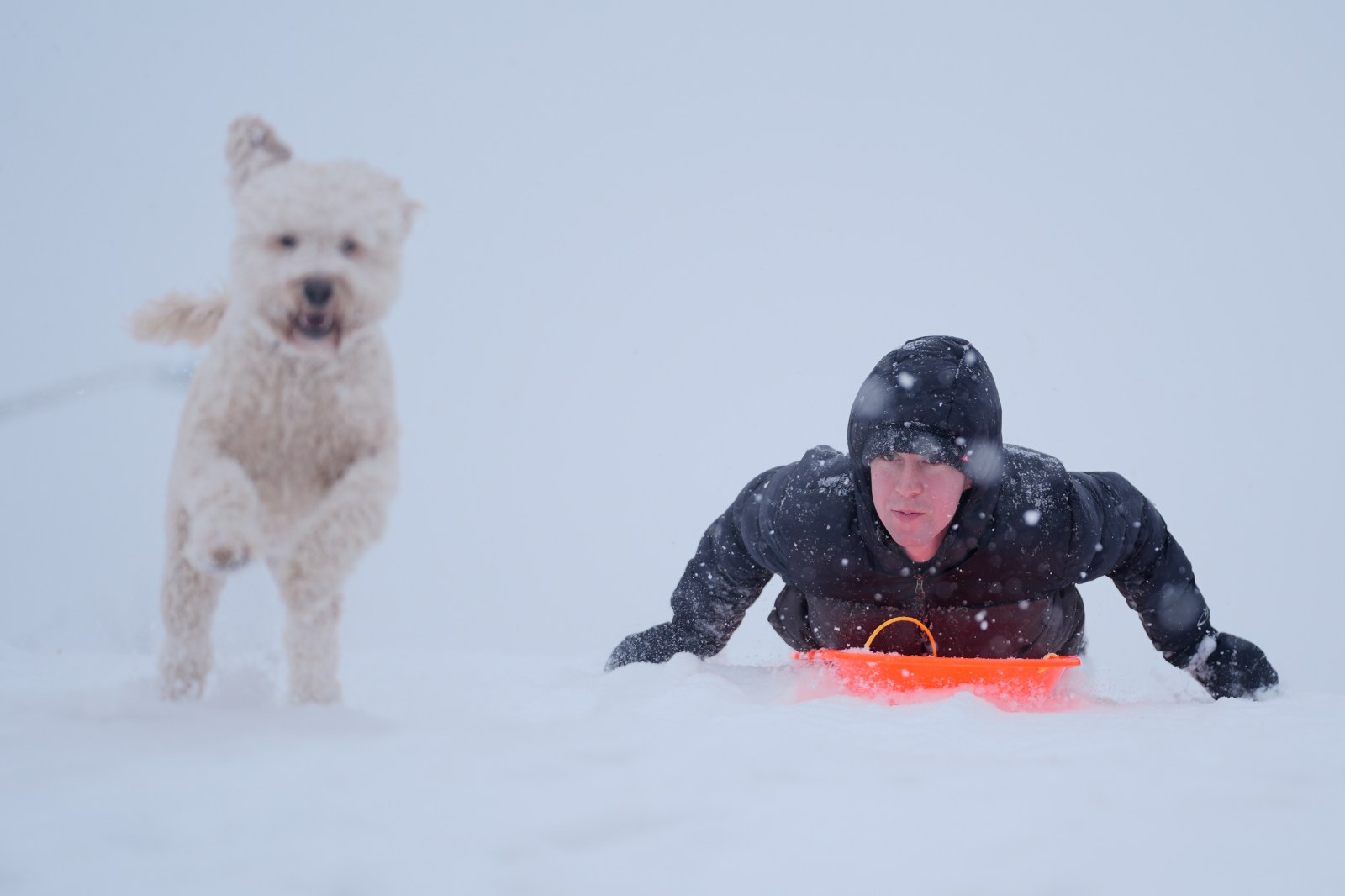
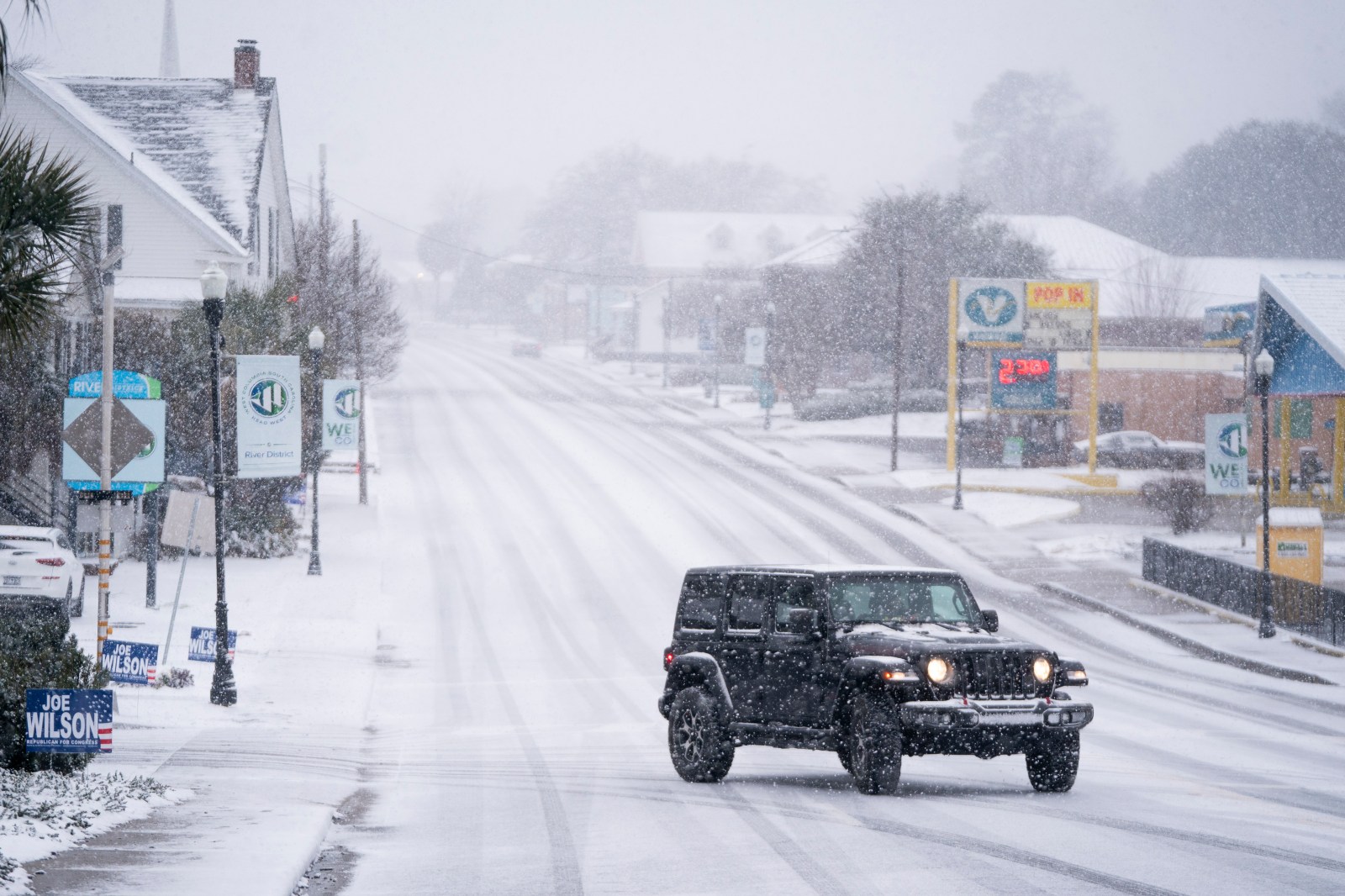
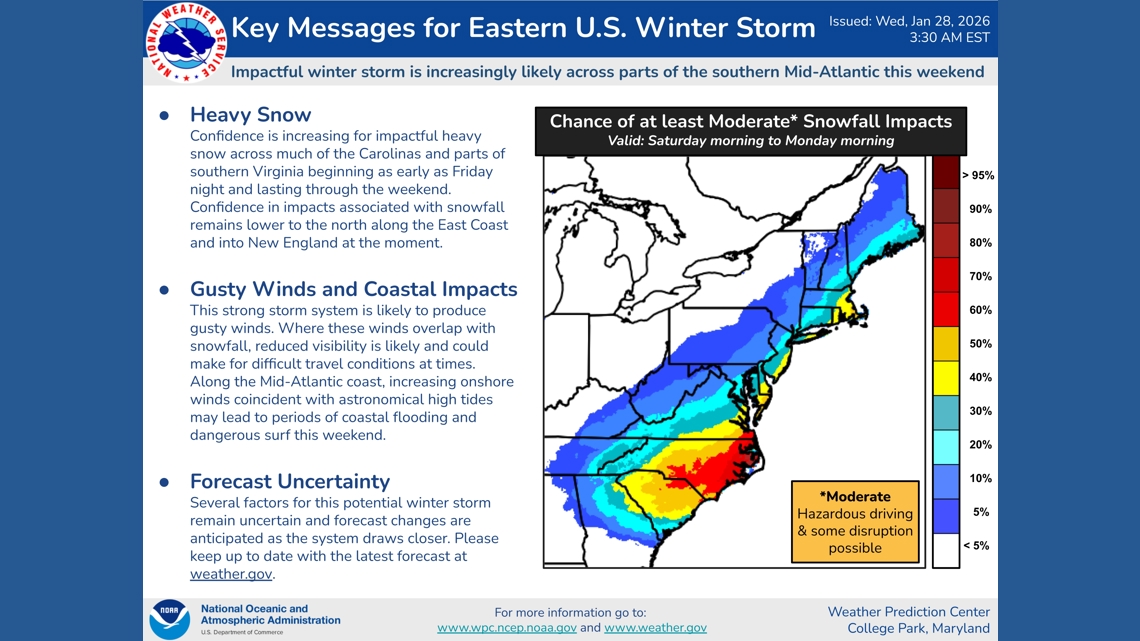
Historic Bomb Cyclone Forms and Dumps Record Snow A rapidly deepening low off the North Carolina coast on Jan 31 intensified into a bomb cyclone, meeting the 24 mb‑in‑24‑hours criterion and producing historic snowfall. The National Weather Service labeled the event “historic,” reporting up to 15 inches along the Outer Banks and coastal areas [1], while other agencies recorded more than a foot in Charlotte and 18 inches in James City [5][6]. Some forecasts even projected 22.5 inches near Faust, NC [6]. The storm’s wind gusts exceeded 50 mph along the coast, creating blizzard‑like conditions [6][12].
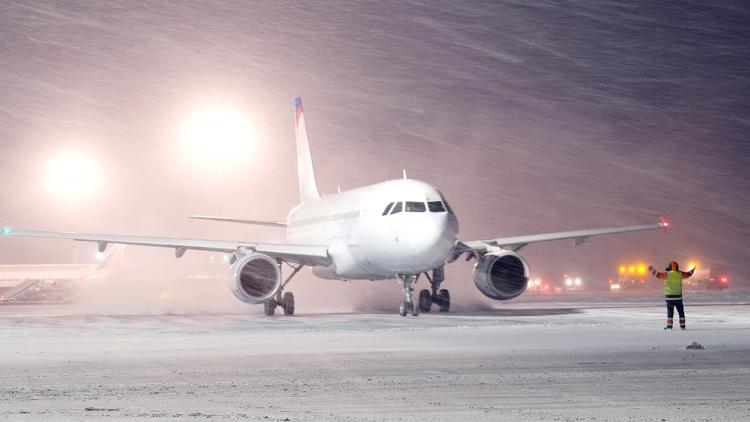
Flight Cancellations Paralyze Major Airports FlightAware logged 2,500 cancellations on Saturday and another 1,910 on Sunday, the highest nationwide for the weekend [2][3]. Charlotte Douglas International Airport alone saw over 800 cancellations on Sunday after more than 1,000 the previous day, forcing runway de‑icing and extensive ground‑crew operations [2][3]. The Department of Transportation ordered airlines to refund passengers even on non‑refundable tickets, and urged travelers to verify flight status before heading to the airport [2][3]. Total cancellations across the U.S. exceeded 4,600 according to the Associated Press [4].
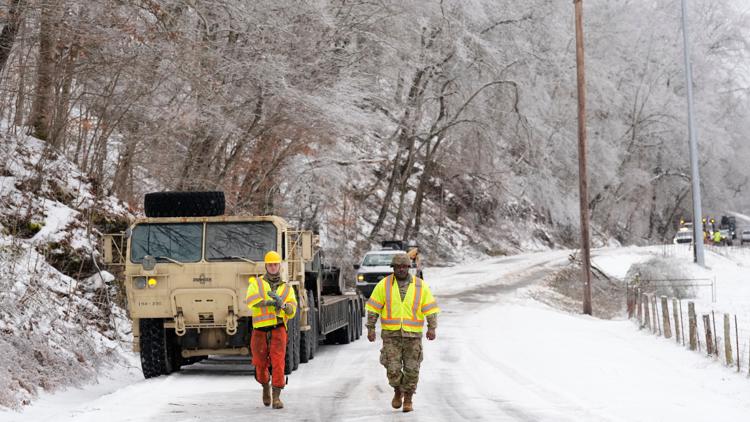
Cold‑Weather Advisories and Power Outages Stretch Across the Southeast By Sunday, roughly 150 million people from the Gulf Coast to New England were under cold‑weather advisories or extreme‑cold warnings [4][5]; other outlets cited 240 million under advisories, reflecting differing agency counts [8][9]. Tens of thousands of customers in Tennessee and Mississippi remained without electricity, with utility estimates of 90 % restoration by Tuesday [4][5][9]. Some reports noted over 81,000 outages in those states [4], while others tracked more than 197,000 customers without power after a prior ice storm [8][9][10].
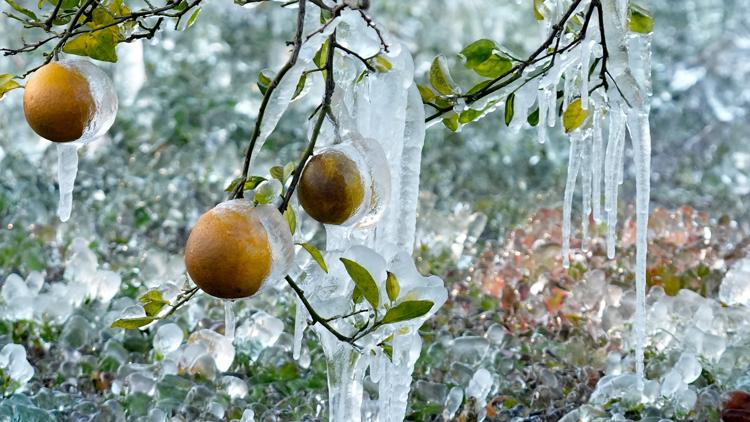
Fatalities and Unusual Wildlife Impacts Highlight Severity The storm and accompanying cold snap have been linked to at least 110 deaths nationwide, including hypothermia, traffic collisions and suspected carbon‑monoxide poisoning [4][5][8][9][10]. Florida experienced rare snow flurries, temperatures in the 20s, and “cold‑stunned” iguanas that required humane removal [6][7][8][10]. Agricultural damage included ice on strawberries and oranges, prompting growers to spray water for protection [5][6][7][8].
Reporting Discrepancies Show Varying Impact Estimates Snowfall peaks range from 15 inches (BBC) to 22.5 inches (CNN) and 18 inches in James City (AP). Cold‑advisory totals differ between 150 million (BBC, WBNS, AP) and 240 million (Newsweek, WBNS [9]). Power‑outage figures span “tens of thousands” (WBNS, King5) to 81,000 (AP) and 197,000 (Newsweek, WBNS [9]). Flight‑cancellation counts also vary, with 4,600 total (AP) versus 2,800 on Saturday and 1,700 on Sunday (WBNS). These inconsistencies stem from differing data sources and timing of reports.
Sources
-
1.
BBC: North Carolina Hit by Historic Bomb Cyclone Snowstorm: Highlights the storm’s historic classification, 15‑inch coastal snow totals, and broader regional impacts .
-
2.
WBNS: Bomb cyclone triggers massive flight cancellations and travel disruptions: Details >1,900 Sunday cancellations, Charlotte’s 800‑plus flight losses, and DOT refund rules .
-
3.
King5: Bomb cyclone forces thousands of flight cancellations across the U.S.: Mirrors WBNS data on nationwide cancellations and emphasizes passenger‑rights resources .
-
4.
AP: 150 Million U.S. Residents Under Cold‑Weather Advisories as Bomb Cyclone Aftermath Lingers: Reports 150 million under advisories, 18‑inch snowfall in James City, and 110+ deaths .
-
5.
WBNS: Bomb Cyclone Sparks Record Snow, Power Outages and Even Frozen Iguanas Across the U.S.: Adds frozen‑fruit damage, 88,000 Tennessee/Mississippi outages, and iguana casualties .
-
6.
CNN: Historic bomb cyclone slams Southeast with record snow, wind and power outages: Provides 22.5‑inch peak near Faust, 50 mph winds, and Florida’s cold‑stunned iguanas .
-
7.
Newsweek: Bomb Cyclone Hits East Coast, Drives Arctic Air to Florida: Focuses on Arctic air surge, first‑time freezing temps in South Florida since 1989, and expert pressure‑drop analysis .
-
8.
Newsweek: Carolinas Hit by Bomb Cyclone Snowstorm, Power Outages and Fatalities Surge: Cites 240 million under advisories, 197,000 outage count, and over 100 deaths .
-
9.
WBNS: Snow‑laden Carolinas and widening power‑outage crisis: Emphasizes 750 collisions on I‑85, 240 million advisory count, and local relief efforts .
-
10.
King5: Snow‑Heavy Bomb Cyclone Slams Carolinas, Extends Frigid Outbreak Down East: Notes 240 million advisories, 197,000 outages, and Myrtle Beach’s 8‑inch snow .
-
11.
CNN: Bomb Cyclone Set to Hit Southeast and Mid‑Atlantic with Snow and Strong Winds: Forecasts heavy snow, no ice threat, and 27 million under winter warnings .
-
12.
CNN: Bomb Cyclone Brings Snow, Hurricane‑Force Winds and Flood Threat to Southeast: Projects 5‑10‑inch snow bands, 75 mph gusts, and coastal flooding risk .
-
13.
CNN: Bomb cyclone set to unleash snow, wind and coastal flooding from the Southeast to the Northeast: Discusses scenario uncertainty, 6‑12‑inch snow forecasts, and potential power impacts .
-
14.
CNN: East Coast Bomb Cyclone Forecast Shows Multiple Scenarios for Weekend Storm: Outlines three model scenarios, emphasizing coastal flooding and reduced ice risk .
-
15.
King5: East Coast Braces for Possible Bomb Cyclone This Weekend: Provides background on bombogenesis, historical comparisons, and preparedness advice .
Related Tickers
Timeline
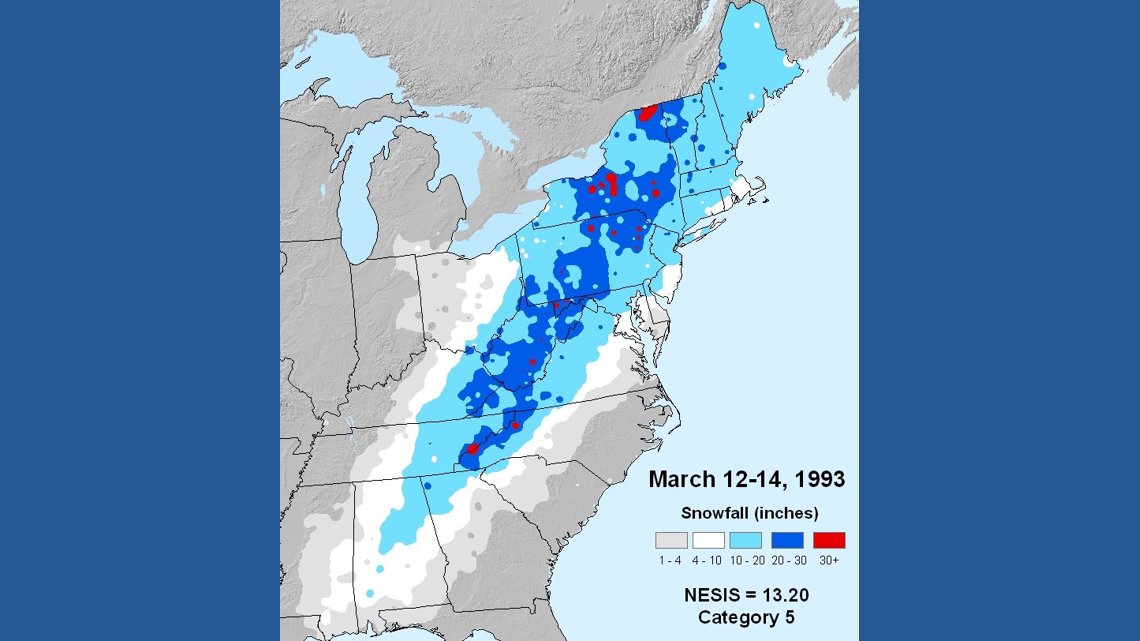
Mar 1993 – The “Storm of the Century” produces blizzard conditions, hurricane‑force gusts and coastal flooding across 26 states, causing $5.5 billion in damage, 318 deaths and power loss for more than 10 million people, illustrating the severe impact possible from a bomb cyclone in the Eastern U.S. [16]
Jan 2018 – The North American Blizzard meets bomb‑cyclone criteria, delivering heavy snow, damaging winds and record flooding, resulting in 22 deaths and $1.1 billion in damage, underscoring the region’s vulnerability to rapid‑intensifying storms. [16]
Dec 1, 2025 – A bomb cyclone forms over the East Coast, intensifying as its central pressure drops ≥24 mb in 24 hours; it delivers the first widespread snow and ice of the season to the Northeast on Tuesday, triggers winter alerts for nearly 70 million people, and a deep Arctic air surge promises record low temperatures across the Plains, Midwest and interior Northeast. [7]
Jan 28, 2026 – Forecast models agree a low‑pressure system will develop off the Carolina coast early Saturday and rapidly intensify into a bomb cyclone, with potential impacts extending to the East Coast by Monday; officials urge residents to stock supplies and monitor updates. [6]
Jan 29, 2026 – The rapidly intensifying low pressure forms a bomb cyclone off the Carolina coast early Saturday, projected to bring 6‑12 inches of snow to coastal North Carolina and Virginia, near‑hurricane‑force gusts, and moderate to locally significant coastal flooding along the Southeast and parts of the Northeast. [5]
Jan 30, 2026 – The bomb cyclone rapidly strengthens, threatening the Southeast with 5‑10 inches of snow, gusts up to 75 mph near the coast, and heightened coastal flooding as high tides coincide with onshore winds; more than 28 million people fall under winter storm watches while many still recover from a prior deadly ice storm. [4]
Jan 31, 2026 – The storm deepens off the Southeast coast, dropping a record 22.5 inches of snow near Faust, NC, with winds exceeding 50 mph, storm surges of 2‑3 ft raising water to major flood stage on the Outer Banks, and causing widespread flight cancellations, icy roads and a Florida cold snap that triggers a rare iguana‑removal order. [2]
Jan 31, 2026 – Meteorologists warn the bomb cyclone will deliver heavy snow, strong winds, and blizzard‑like visibility from southern Virginia through the Carolinas into Georgia, affecting over 27 million East Coast residents; the system is expected to produce primarily wet snow, eliminating an ice threat. [3]
Jan 31, 2026 – The East Coast bomb cyclone forecast outlines three scenarios: a coastal track delivering snow and flooding from Cape Hatteras to Cape Cod, a broader snow‑impact track along the I‑95 corridor, or an offshore path with minimal impacts, highlighting forecast uncertainty for the weekend. [6]
Feb 1, 2026 – The bomb cyclone drops foot‑plus snow across the Carolinas, creates blizzard conditions, and leaves about 240 million people under cold‑weather advisories; the death toll exceeds 100 (half in the Deep South) from hypothermia and carbon‑monoxide exposure, while power outages affect tens of thousands and temperatures plunge to –27 °F in West Virginia. [9]
Feb 1, 2026 – Record snowfall blankets North Carolina (nearly a foot in Charlotte, 18 inches in James City), while 150 million Americans remain under cold‑weather advisories; power outages persist for over 81 000 customers in Tennessee and Mississippi, and Florida experiences snow flurries, frozen fruit and stunned iguanas. [10]
Feb 1, 2026 – Nationwide flight cancellations exceed 1,900 on Sunday, with Charlotte Douglas International Airport losing over 800 flights; snow totals top a foot in parts of North Carolina, and tens of thousands remain without electricity as crews work to restore service. [11]
Feb 1, 2026 – The bomb cyclone drives record snowfall in North Carolina, triggers extreme‑cold alerts for 150 million people, forces 2,800 flight cancellations on Saturday and 1,700 on Sunday, leaves over 88 000 customers without power in Tennessee and Mississippi, and produces snow and frozen iguanas in Florida; fatalities rise above 110. [12]
Feb 2, 2026 – The National Weather Service labels the bomb cyclone that hit North Carolina and the Mid‑Atlantic a “historic storm,” noting snowfall up to 15 inches along the coast and Outer Banks, the highest wintry event of the century for the region, and reports a widespread travel standstill. [1]
Feb 2, 2026 – The U.S. Department of Transportation mandates refunds for all canceled flights, even non‑refundable tickets, as airlines grapple with the storm‑related disruptions across the nation. [11]
Dive deeper (11 sub-stories)
-
BBC: North Carolina Hit by Historic Bomb Cyclone Snowstorm
-
Bomb Cyclone Spurs Over 1,900 Flight Cancellations Nationwide, Charlotte Worst Affected
(2 articles)
-
Bomb Cyclone Leaves 150 Million Under Cold Advisories, Record Snow and Ongoing Outages
(2 articles)
-
CNN: Historic bomb cyclone slams Southeast with record snow, wind and power outages
-
Bomb Cyclone Intensifies Off Carolina Coast, Dumping Snow and Arctic Cold Into Florida
(3 articles)
-
Newsweek: Carolinas Hit by Bomb Cyclone Snowstorm, Power Outages and Fatalities Surge
-
Bomb Cyclone Dumps Foot‑Deep Snow, Over 100 Dead, Power Outages Persist
(2 articles)
-
CNN: Bomb Cyclone Set to Hit Southeast and Mid‑Atlantic with Snow and Strong Winds
-
CNN: East Coast Bomb Cyclone Forecast Shows Multiple Scenarios for Weekend Storm
-
King5 (Seattle, WA): East Coast Braces for Possible Bomb Cyclone This Weekend
-
CNN: Bomb cyclone brings first widespread snow to the Northeast on Tuesday
All related articles (16 articles)
-
BBC: North Carolina Hit by Historic Bomb Cyclone Snowstorm
-
WBNS (Columbus, OH): Bomb cyclone triggers massive flight cancellations and travel disruptions
-
King5 (Seattle, WA): Bomb cyclone forces thousands of flight cancellations across the U.S.
-
AP: 150 Million U.S. Residents Under Cold‑Weather Advisories as Bomb Cyclone Aftermath Lingers
-
WBNS (Columbus, OH): Bomb Cyclone Sparks Record Snow, Power Outages and Even Frozen Iguanas Across the U.S.
-
CNN: Historic bomb cyclone slams Southeast with record snow, wind and power outages
-
Newsweek: Bomb Cyclone Hits East Coast, Drives Arctic Air to Florida
-
Newsweek: Carolinas Hit by Bomb Cyclone Snowstorm, Power Outages and Fatalities Surge
-
WBNS (Columbus, OH): Snow‑laden Carolinas and widening power‑outage crisis
-
King5 (Seattle, WA): Snow‑Heavy Bomb Cyclone Slams Carolinas, Extends Frigid Outbreak Down East
-
CNN: Bomb Cyclone Set to Hit Southeast and Mid‑Atlantic with Snow and Strong Winds
-
CNN: Bomb Cyclone Brings Snow, Hurricane‑Force Winds and Flood Threat to Southeast
-
CNN: Bomb cyclone set to unleash snow, wind and coastal flooding from the Southeast to the Northeast
-
CNN: East Coast Bomb Cyclone Forecast Shows Multiple Scenarios for Weekend Storm
-
King5 (Seattle, WA): East Coast Braces for Possible Bomb Cyclone This Weekend
-
CNN: Bomb cyclone brings first widespread snow to the Northeast on Tuesday
External resources (33 links)
- https://oceanservice.noaa.gov/facts/bombogenesis.html (cited 4 times)
- https://airconsumer.dot.gov/consumer/s/oacp-form (cited 2 times)
- https://forecast.weather.gov/product.php?site=NWS&issuedby=mhx&product=PNS (cited 2 times)
- https://water.noaa.gov/#@=-74.3599289,36.1603018,6.7284998&b=topographic&g=obsFcst,1!1!1!1!1!1!1!1!1!1!1!1!1!1!1!0!0!0!0!0,0.5,1!1!1!1!0,0,0,true&ab=0,0,#D94B4A,1,1,1,#cccccc,1,0,0,#B243B1,1,0,0,#98E09A,1,false&a=hydrologic,0.35,false&s=0,0,0.9,0.9,false&n=false,#72afe9,0.9,0,0.9,0,0.9,false&p=false,0.75,0,7,0,1,2026,2,1,0,false&d=0,0,1,1,1,1,1,1,#006EFF,1,#006EFF,1,#006EFF,false&q= (cited 2 times)
- https://www.ndbc.noaa.gov/station_page.php?station=41120 (cited 2 times)
- https://www.ndbc.noaa.gov/station_page.php?station=44088 (cited 2 times)
- https://www.transportation.gov/airconsumer/airline-cancellation-delay-dashboard (cited 2 times)
- https://www.transportation.gov/individuals/aviation-consumer-protection/traveling-disability (cited 2 times)
- https://www.weather.gov/media/mfl/news/2010WxSummary.pdf (cited 2 times)
- https://www.weather.gov/mhx/Mar011980EventReview (cited 2 times)
- https://www.weather.gov/source/crh/snowmap.html (cited 2 times)
- https://forecast.weather.gov/wwamap/wwatxtget.php?cwa=TBW&wwa=extreme%20cold%20warning (cited 1 times)
- https://www.weather.gov/safety/winter-noreaster (cited 1 times)
- https://www.weather.gov/tbw/93storm (cited 1 times)
- https://www.wpc.ncep.noaa.gov/#page=ovw (cited 1 times)
- https://en.wikipedia.org/wiki/1993_Storm_of_the_Century (cited 2 times)
- https://en.wikipedia.org/wiki/January_2018_North_American_blizzard (cited 1 times)
- https://www.facebook.com/Kannapolis911/posts/pfbid0YihVkiGbPsVawRGjtniSHAF2pX6ed6i1hKrjZm76KaHuwJSMw8xqjKk6meZRfaTkl (cited 2 times)
- https://www.facebook.com/photo?fbid=1221444846798017&set=a.178104197798759 (cited 2 times)
- https://www.facebook.com/photo?fbid=1304029581760028&set=a.257950109701319 (cited 2 times)
- https://www.facebook.com/photo?fbid=1450366753796186&set=a.248360163996857 (cited 2 times)
- https://x.com/NWSWilmingtonNC/status/2017887505333231878 (cited 2 times)
- https://x.com/SCDOTPress/status/2017946904596738247?s=20 (cited 2 times)
- https://x.com/SCHP_Troop5/status/2017957194625335736?s=20 (cited 2 times)
- https://x.com/SCHP_Troop6/status/2017940249867854196?s=20 (cited 2 times)
- https://x.com/SCHP_Troop7/status/2017951308540510343?s=20 (cited 2 times)
- https://x.com/ncdot/status/2017938219103293898?s=46 (cited 2 times)
- https://x.com/NWSWPC (cited 1 times)
- https://poweroutage.us/ (cited 4 times)
- https://myfwc.com/media/zxfnuvyh/eo-26-03.pdf?utm_content=&utm_medium=email&utm_name=&utm_source=govdelivery&utm_term=campaign (cited 2 times)
- https://poweroutage.us/area/state/florida (cited 2 times)
- https://www.flightaware.com/live/cancelled/today (cited 2 times)