Kim Jong‑un Orders Accelerated Nuclear Build‑Up, Offers Conditional US Rapprochement
Updated (127 articles)
-
 Image: YonhapThis photo, provided by the foreign ministry on Feb. 23, 2026, shows Jeong Yeon-doo, vice minister for diplomatic strategy and intelligence, delivering a speech at the high-level segment of the Conference on Disarmament held on the same day in Geneva, Switzerland. (PHOTO NOT FOR SALE) (Yonhap) Source Full size
 -
Image: YonhapThis photo, provided by the foreign ministry on Feb. 23, 2026, shows Jeong Yeon-doo, vice minister for diplomatic strategy and intelligence, delivering a speech at the high-level segment of the Conference on Disarmament held on the same day in Geneva, Switzerland. (PHOTO NOT FOR SALE) (Yonhap) Source Full size
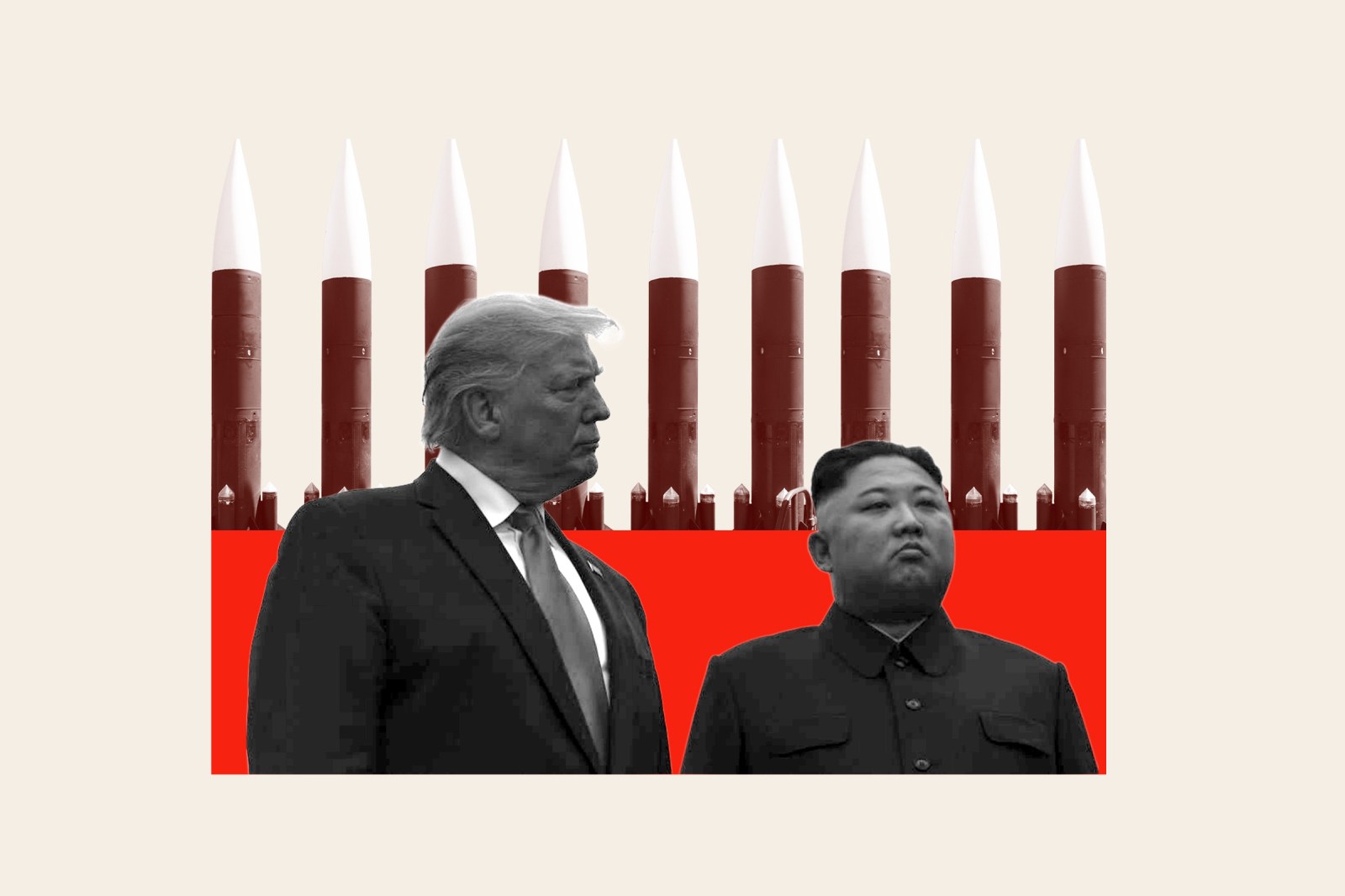
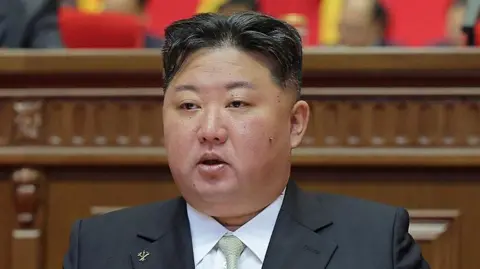


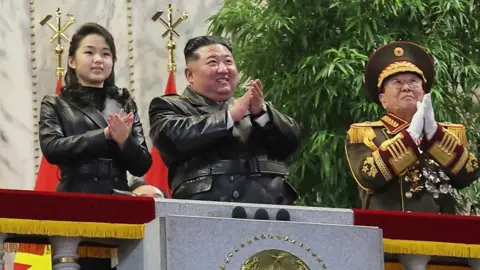
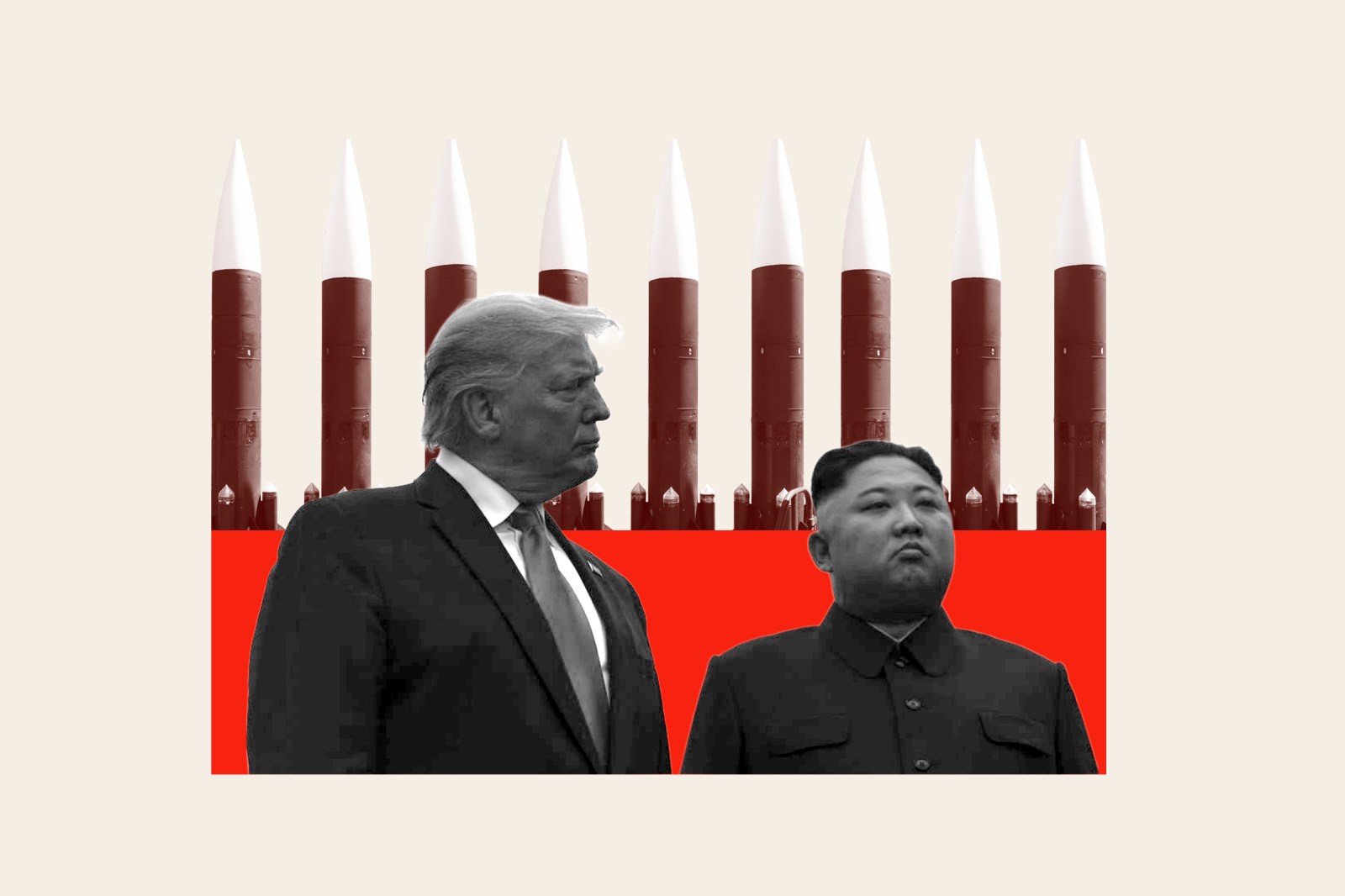
Kim Announces Accelerated Nuclear Expansion at Ninth Party Congress Kim Jong‑un told the Ninth Workers’ Party Congress on 26 February 2026 that North Korea will redouble efforts to increase its nuclear warhead stockpile and broaden deployment [1][2]. The five‑year plan calls for new land‑ and submarine‑launched ICBMs, AI‑enabled unmanned strike platforms, anti‑satellite weapons, high‑resolution reconnaissance satellites, and advanced electronic‑warfare systems [1][2]. Naval nuclear forces receive special emphasis to ensure a survivable second‑strike capability [1]. SIPRI estimates the regime already possesses about 50 assembled warheads with material for roughly 40 more [2].
Kim Conditions US Relations on Recognition of Nuclear Status Kim said the United States could maintain “good relations” only if Washington formally recognizes North Korea’s constitutional right to nuclear weapons and ends its “hostile policy” [1][2]. He added that, under those conditions, there would be “no reason” preventing a constructive relationship [1]. South Korean ambassador Kang Kyung‑hwa hinted a Trump‑Kim summit might be arranged in Beijing alongside a Trump‑Xi meeting slated for April [1]. President Donald Trump’s 2025 global security roadmap omitted any reference to North Korean denuclearisation, fueling speculation about revived talks [2].
South Korea Designated Hostile, Excluded from Diplomatic Outreach In the same speech Kim labeled South Korea the “most hostile entity,” permanently removing Seoul from the “compatriots” category [1][2]. Vice‑minister Jeong Yeon‑doo urged the DPRK at the Geneva Conference on 23 February 2026 to comply with the NPT and relevant UN Security Council resolutions and to cease illegal military cooperation with Russia [3]. Seoul outlined a phased denuclearisation strategy that begins with dialogue‑based halting of nuclear and ballistic programs, moving toward medium‑term reductions and eventual dismantlement [3]. Kim’s rhetoric underscores the widening diplomatic gap between Pyongyang and Seoul [1][2].
Analysts Warn US‑Only Talks Amid Drill Scheduling Disputes An AFP‑quoted analyst interpreted Kim’s remarks as a push for direct US‑North Korea talks that bypass Seoul, prompting calls for close US‑South Korea coordination to preserve alliance cohesion [2][1]. Meanwhile, South Korea rejected a US‑proposed February trilateral air drill with Japan because the dates conflicted with Japan’s Takeshima Day and the Lunar New Year holiday, offering earlier or bilateral alternatives that the United States dismissed [4][5]. The Freedom Shield spring exercise date announcement was also delayed after the US objected to Seoul’s plan to scale back on‑field training, though both sides expect the March drill to proceed [6]. These military‑exercise tensions illustrate the broader strategic friction surrounding Kim’s nuclear escalation [1][2][4][5][6].
Sources
-
1.
Yonhap: Kim Jong‑un Vows Faster Nuclear Buildup While Offering Conditional U.S. Diplomacy: details Kim’s accelerated nuclear plan, conditional US overture, hostile label for South Korea, and suggestion of a Trump‑Kim meeting in Beijing.
-
2.
BBC: Kim Jong Un Calls for Nuclear Expansion, Offers Conditional US Rapprochement: mirrors Yonhap’s announcements, adds SIPRI warhead estimate, analyst comment on US‑only talks, and notes Trump’s roadmap omits denuclearisation.
-
3.
Yonhap: South Korea Urges North Korea to Honor UN Resolutions and Resume Talks: reports South Korean envoy Jeong Yeon‑doo urging DPRK compliance with NPT and UNSC resolutions, condemning illegal cooperation with Russia, and outlining a phased denuclearisation strategy.
-
4.
Yonhap: South Korea Declines U.S. Trilateral Drill Proposal Ahead of Japan’s Takeshima Day: explains Seoul’s rejection of February trilateral air drills due to holiday timing, offers alternative dates, and US decision to conduct solo drills.
-
5.
Yonhap: South Korea Rejects US‑Japan Trilateral Air Drills Ahead of Japan’s Takeshima Day: emphasizes diplomatic sensitivities over the Dokdo/Takeshima dispute and US dismissal of Seoul’s proposal.
-
6.
Yonhap: South Korea, U.S. Delay Announcement of Freedom Shield Drill Date: describes postponement of the spring drill date announcement after US objections to South Korea’s plan to scale back field training, while confirming the March exercise will proceed.
-
7.
Newsweek: Trump’s Iran Pressure Meets North Korea’s Nuclear Shield: links Trump’s heightened pressure on Iran with North Korea’s nuclear deterrent, notes deepening NK‑Russia ties, sanctions limitations, and the US’s continued denuclearisation stance.
Timeline
2006 – North Korea conducts its first nuclear test, establishing a baseline for its later expansion to a deterrent force that rivals great‑power arsenals [2].
June 2024 – Pyongyang and Moscow sign a mutual‑defense pact, the first formal agreement since the 1961 China treaty, deepening military ties and paving the way for Korean troops to fight in Ukraine [2].
Dec 3 2024 – South Korea declares martial law, prompting a reassessment of its defense posture and later influencing President Lee Jae Myung’s “self‑reliant defense” agenda [7].
Dec 1 2025 – Seoul and Washington agree to launch sectoral working groups to implement the joint fact‑sheet on trade, security, civil uranium enrichment, spent‑fuel reprocessing and nuclear‑powered submarines [24][26][28].
Dec 2 2025 – South Korea’s foreign ministry urges the United States to begin formal talks on civil uranium enrichment and spent‑fuel reprocessing, linking the request to regional security needs [27].
Dec 7 2025 – National Security Adviser Wi Sung‑lac states South Korea will not use joint U.S.–ROK drills as a bargaining chip to restart inter‑Korean talks, despite stalled dialogue [23].
Dec 8 2025 – The Unification Ministry says adjustments to Korea‑U.S. exercises could be discussed only if “necessary conditions and a suitable environment” arise, reflecting caution over using drills diplomatically [22].
Dec 12 2025 – Weekly North Korean briefing notes a 50,000‑unit housing project reaching its final stage, underscoring Pyongyang’s domestic development narrative amid rising tensions [21].
Dec 16 2025 – National Security Adviser Wi meets U.S. Secretary of State Marco Rubio, exploring a separate bilateral “Section 91” agreement—modelled on Australia’s—to enable South Korea’s nuclear‑submarine program [18].
Dec 16 2025 – Wi also announces Seoul is weighing a separate U.S. accord to bypass the 123 civil‑nuclear pact and secure nuclear‑powered submarines, citing Australia’s precedent [19].
Dec 17 2025 – Pro‑Pyongyang newspaper Choson Sinbo highlights the omission of North Korea from the U.S. National Security Strategy, interpreting it as a deliberate avoidance of denuclearisation language [17].
Dec 21 2025 – Wi Sung‑lac outlines simultaneous working‑level talks on uranium enrichment, spent‑fuel reprocessing and submarine construction to begin in the new year, with a Section 91‑based agreement as a possible framework [15].
Dec 23 2025 – Korea forms an inter‑agency task force to investigate the Coupang data breach affecting 33.7 million users, while also naming ambassador Rim Kap‑soo as chief negotiator for U.S. civil‑nuclear talks [14].
Dec 24 2025 – South Korea and the United States agree to pursue a stand‑alone pact on nuclear‑powered submarine cooperation, with working‑level talks slated for early 2026 and a commitment to use low‑enriched uranium only [13].
Jan 7 2026 – Defense Minister Ahn Gyu‑back affirms the annual South Korea‑U.S. joint drills will proceed as planned, calling them a “lifeline for soldiers,” yet leaves open the possibility of adjustments if U.S.–North Korea talks materialise [12].
Jan 15 2026 – The United States proposes a three‑nation aerial drill with Japan and South Korea for February, but the schedule clashes with Lunar New Year and Japan’s Takeshima Day, prompting Seoul’s objection [5].
Jan 23 2026 – Under Secretary of Defense for Policy Elbridge Colby visits Seoul for three days, discussing South Korea’s nuclear‑submarine push, conditions‑based OPCON transfer and alliance burden‑sharing [11].
Jan 24 2026 – The 2026 U.S. National Defense Strategy states South Korea can assume “primary responsibility” for deterring North Korea, offering “critical but more limited” U.S. support and omitting any reference to denuclearisation [10].
Jan 26 2026 – The Pentagon’s NDS highlights Seoul’s leading deterrent role, while Defense Minister Ahn and Colby meet in Seoul to cement cooperation on a nuclear‑powered submarine and the OPCON handover slated for 2030 [8][9].
Jan 27 2026 – The Department of Defense releases its National Defense Strategy, urging allies like South Korea to take “primary responsibility” for their own defense under an “America First” posture [7].
Jan 30 2026 – South Korea and Japan announce the resumption of joint naval search‑and‑rescue drills—the first since 2017—while also pledging cooperation on AI, space and future‑oriented defence projects [6].
Feb 20 2026 – President Donald Trump intensifies military pressure on Iran; North Korean leader Kim Jong‑Un watches the escalation under the protection of an expanding nuclear arsenal that now fields missiles capable of striking the United States [2].
Feb 23 2026 – South Korea formally declines the U.S. trilateral aerial drill proposal, citing timing conflicts with Japan’s Takeshima Day and the Lunar New Year, and urges a bilateral or earlier exercise instead [5].
Feb 24 2026 – At the Geneva Conference on Disarmament, South Korean vice‑minister Jeong Yeon‑doo urges North Korea to comply with the NPT and UN Security Council resolutions and to halt its illegal military cooperation with Russia [4].
Feb 26 2026 – At the Ninth Workers’ Party Congress, Kim Jong‑Un vows to accelerate nuclear weapons expansion, increase deployment reach and conditionally open U.S. diplomatic overtures on the basis of Washington’s recognition of North Korea’s constitutional nuclear status [1][3].
Feb 26 2026 – Analysts note Kim’s speech signals a push for U.S.–only talks that bypass Seoul, while SIPRI estimates North Korea holds about 50 assembled warheads with material for up to 40 more, and Trump’s 2025 global security roadmap omits denuclearisation, hinting at possible revived U.S.–North Korea engagement [1].
Feb 26 2026 – South Korean ambassador Kang Kyung‑hwa hints a possible Trump‑Kim summit in Beijing, potentially alongside a Trump‑Xi meeting slated for April, though no official confirmation exists [3].
Feb 26 2026 – South Korea’s Freedom Shield “March” exercise proceeds as scheduled, aiming to verify Full Operational Capability of its wartime command structure ahead of the planned OPCON transfer by 2030 [5].
Feb 26 2026 – Defense Minister Ahn projects a nuclear‑powered submarine could enter service in the mid‑2030s, contingent on securing U.S. fuel assistance within two years [12].
Future 2026‑2027 – Working groups on nuclear‑powered submarines and civil uranium enrichment are set to convene within three months of the Dec 1 2025 agreement, targeting a joint framework by early 2026 and laying groundwork for a Section 91‑style bilateral accord [28].
Early 2026 – South Korea plans to complete the conditions‑based OPCON handover from the United States by the end of President Lee Jae Myung’s term in 2030, with verification of Full Operational Capability expected by year‑end [12].
Dive deeper (15 sub-stories)
-
Kim Jong Un Announces Accelerated Nuclear Build‑Up, Offers Conditional US Talks at Party Congress
(19 articles)
-
South Korea Rejects U.S.-Japan Trilateral Air Drills Over Takeshima Day Timing
(5 articles)
-
South Korea and U.S. Postpone Freedom Shield Drill Date Announcement Amid Training Dispute
(12 articles)
-
South Korean and U.S. Army Chiefs Discuss Security, Boost Cooperation Before May LANPAC
(3 articles)
-
South Korea and U.S. Energy Secretary Accelerate Nuclear Enrichment, Reprocessing, Submarine Plans
(34 articles)
-
South Korea and U.S. Diplomats Commit to Joint Nuclear Power and Submarine Projects
(2 articles)
-
South Korea and Japan Agree to Restart Joint Naval SAR Drills, Expand Defense Ties
(8 articles)
-
U.S. 2026 Defense Strategy Pushes South Korea to Lead Deterrence, Omits Denuclearization
(30 articles)
-
Yonhap: U.S. Defense Strategy Omits North Korea Denuclearization Goal
-
South Korea Urged to Stay Alert as North Korea’s Conventional Military Weakens
(2 articles)
-
South Korea’s Top Nuclear Negotiator Visits Washington, Lays Groundwork for Early Talks
(3 articles)
-
U.S. Forces Korea Chief Declares Peninsula Central to Indo‑Pacific Strategy
(5 articles)
-
Yonhap: S. Korea security adviser says no plan to gain access to highly enriched uranium for nuclear-powered submarines
-
Yonhap: S. Korea, U.S. hold joint drill on nuclear, radiological terror responses
-
Yonhap: Sen. Andy Kim criticizes NSS deprioritization of the Korean Peninsula
All related articles (127 articles)
-
Yonhap: Kim Jong‑un Vows Faster Nuclear Buildup While Offering Conditional U.S. Diplomacy
-
BBC: Kim Jong Un Calls for Nuclear Expansion, Offers Conditional US Rapprochement
-
Yonhap: South Korea Urges North Korea to Honor UN Resolutions and Resume Talks
-
Yonhap: South Korea Declines U.S. Trilateral Drill Proposal Ahead of Japan’s Takeshima Day
-
Yonhap: South Korea Rejects US‑Japan Trilateral Air Drills Ahead of Japan’s Takeshima Day
-
Yonhap: South Korea, U.S. Delay Announcement of Freedom Shield Drill Date
-
Newsweek: Trump’s Iran Pressure Meets North Korea’s Nuclear Shield
-
Yonhap: South Korean and U.S. Army Chiefs Discuss Peninsula Security via Video Call
-
Yonhap: U.S. State Department Reaffirms Nuclear Deterrence for South Korea Amid Trade Tensions
-
Yonhap: South Korea, U.S. Energy Secretary Commit to Accelerate Uranium Enrichment, Fuel Reprocessing, and Submarine Plans
-
Yonhap: South Korea and U.S. diplomats pledge close cooperation on nuclear power and submarines
-
Yonhap: South Korea and Japan Agree to Restart Joint Naval Search‑and‑Rescue Drills
-
Yonhap: South Korea and Japan to Resume Joint Naval Search‑and‑Rescue Drills After Nine Years
-
Yonhap: South Korea and Japan Agree to Resume Joint Naval Search‑and‑Rescue Drills
-
Yonhap: South Korea and Japan to Restart Joint Naval Search‑and‑Rescue Drills After Nine Years
-
Yonhap: South Korean and Japanese Defense Ministers Hold Forward‑Looking Talks in Yokosuka
-
Yonhap: South Korean Defense Minister Ahn Gyu‑back Heads to Yokosuka for Bilateral Talks
-
Yonhap: U.S. National Defense Strategy Presses South Korea Toward Greater Self‑Reliance
-
Yonhap: U.S. 2026 Defense Strategy Redefines South Korea’s Role
-
Yonhap: Kim Announces Upcoming Nuclear Deterrent Plans at Party Congress
-
Yonhap: Colby Calls South Korea “Model Ally” as Seoul Pledges 3.5% Defense Spending
-
Yonhap: South Korea and U.S. Discuss Nuclear Submarines, Wartime Troop Control
-
Yonhap: Pentagon’s Under Secretary lauds South Korea’s 3.5% defense spending pledge
-
Yonhap: South Korea and U.S. Discuss Nuclear Submarines and Troop‑Control Transfer
-
Yonhap: U.S. Defense Official Praises South Korea’s 3.5% GDP Defense Spending Pledge
-
Yonhap: South Korean Defense Minister and U.S. Under Secretary Discuss Nuclear Submarines and Troop Control
-
Yonhap: South Korea’s Nuclear Submarine Push Tied to U.S. Alliance, Says FM Cho
-
Yonhap: U.S. 2026 Defense Strategy Highlights South Korea’s Leading Role
-
Yonhap: U.S. Defense Strategy Omits Denuclearization, Raising Seoul‑Washington Tensions
-
Yonhap: Pentagon Announces Elbridge Colby’s South Korea, Japan Trip After New Defense Strategy Release
-
Yonhap: Lee Calls Self‑Reliant Defense “Most Basic of Basics” Amid New U.S. Strategy
-
Yonhap: U.S. 2026 Defense Strategy Calls for South Korea to Lead Conventional Deterrence
-
Yonhap: U.S. Defense Strategy Names South Korea Primary Deterrent Role (Jan 23 2026)
-
Yonhap: South Korea to Lead Primary Deterrence of North Korea, U.S. NDS Says
-
Yonhap: U.S. Defense Strategy Omits North Korea Denuclearization Goal
-
Yonhap: U.S. Defense Strategy Calls South Korea Primary Deterrent Against North Korea
-
Yonhap: South Korea Urged to Remain Vigilant as North Korea’s Conventional Forces Decline
-
Yonhap: Shift in Responsibility Between South Korea and U.S. Mirrors USFK Posture Review, NDS Says
-
Yonhap: U.S. Defense Strategy Says South Korea Can Lead Deterrence of North Korea with Limited U.S. Support
-
Yonhap: North Korea’s Nuclear Forces Deemed “Clear and Present” Threat to U.S. Homeland
-
Yonhap: U.S. Defense Strategy Labels North Korea Direct Threat to South Korea and Japan
-
Yonhap: Pentagon official to visit Seoul amid alliance modernization push
-
Yonhap: South Korea defense minister to visit Japan for talks with counterpart
-
Yonhap: S Korea and Japan eye defense minister talks in Japan this month, report says
-
Yonhap: Progressive groups and lawmakers urge suspension of South Korea–U.S. drills to ease North Korea tensions
-
Yonhap: S Korea's lead nuclear negotiator visits Washington to push talks on enrichment and spent fuel reprocessing
-
Yonhap: USFK commander says Korea central to Indo-Pacific security, highlights strategic triangle
-
Yonhap: S Korea-U.S. alliance steadies after year of uncertainty as deals progress
-
Yonhap: South Korea forms interagency team for U.S. talks on civil uranium enrichment and spent fuel reprocessing
-
Yonhap: South Korea forms interagency team for U.S. talks on civil uranium enrichment and spent fuel reprocessing
-
Yonhap: Pentagon's Colby weighing late Jan. visits to South Korea and Japan
-
Yonhap: South Korea defense minister says annual U.S. joint drills will proceed as planned amid reengagement talks with North Korea
-
Yonhap: South Korea defense minister visits CFC at Camp Humphreys, urges firm readiness and swift implementation of alliance agreements
-
Yonhap: Defense minister visits U.S.-Korea Combined Forces Command at Camp Humphreys, urges firm joint readiness
-
Yonhap: Kim says need to advance North Korea's nuclear capabilities amid geopolitical crisis
-
Yonhap: USFK chief's remarks spark concern Korea could be treated as an instrument in great-power rivalry
-
Yonhap: USFK commander says S. Korea not simply reacting to threats on the peninsula
-
Yonhap: USFK commander: South Korea not simply responding to threats, cites strategy for regional security
-
Yonhap: Defense minister warns of growing security instability around Korean Peninsula amid NK-Russia cooperation
-
Yonhap: South Korea, U.S. complete postponed joint field drills by year-end
-
Yonhap: South Korea pursues greater autonomy in US-led alliance, eyeing wartime OPCON handover and nuclear submarines
-
Yonhap: South Korea conducts regular Dokdo defense drills amid Japan protests
-
Yonhap: South Korea, United States move to pursue stand-alone pact on nuclear-powered submarine cooperation
-
Yonhap: S. Korea and U.S. pursue stand-alone nuclear-sub pact as currency stability, market measures, Dokdo drills and anti-fake-news bill move unfold
-
Yonhap: South Korea, United States to pursue stand-alone pact on nuclear-powered submarine cooperation
-
Yonhap: S. Korea, U.S. to pursue stand-alone pact on nuclear-powered submarines
-
Yonhap: South Korea conducts regular East Sea drills near Dokdo, second under current government
-
Yonhap: S. Korea security adviser says no plan to gain access to highly enriched uranium for nuclear-powered submarines
-
Yonhap: Korea forms interagency task force to probe Coupang data breach
-
Yonhap: Non-proliferation expert Rim Kap-soo named chief negotiator for U.S.-South Korea nuclear talks
-
Yonhap: S. Korea, U.S. plan simultaneous talks next year on implementing summit agreements
-
Yonhap: S. Korea, U.S. to launch simultaneous discussions on summit deals next year
-
Yonhap: South Korea to push Lee's state visit to China early next year
-
Yonhap: South Korea to push Lee Jae Myung's state visit to China early next year
-
Yonhap: Security adviser reports progress in talks with U.S. on advancing summit agreements
-
Yonhap: Defense ministry seeks talks with the United States on fuel for nuclear-powered submarines, aiming to conclude within two years
-
Yonhap: South Korea aims to wrap U.S. talks on nuclear-powered submarine fuel within two years
-
Yonhap: Pro-Pyongyang paper flags omission of North Korea in US security strategy
-
Yonhap: South Korea-U.S. talks on civil uranium enrichment and spent fuel reprocessing
-
Yonhap: Pro-Pyongyang paper notes North Korea omission from US security strategy
-
Yonhap: Top security adviser meets Rubio for talks on post-summit measures
-
Yonhap: South Korea weighs separate U.S. accord to pursue nuclear-powered submarines
-
Yonhap: S. Korea advances on nuclear-powered submarines, civil uranium enrichment and fuel reprocessing
-
Yonhap: Top security adviser to discuss with U.S. about S. Korea's push to build nuclear-powered subs
-
Yonhap: USFK Commander Calls Korean Peninsula Central to Indo-Pacific Security
-
Yonhap: USFK Commander Stresses Joint Drills as Seoul Proposes Adjustment
-
Yonhap: S. Korea, U.S. hold joint drill on nuclear, radiological terror responses
-
Yonhap: Key developments on North Korea this week
-
Yonhap: Summary of external news of North Korea this week
-
Yonhap: Summary of inter-Korean news this week
-
Yonhap: South Korea Keeps Option Open to Adjust Joint U.S. Military Exercises to Revive Dialogue with North Korea
-
Yonhap: South Korea Urges Flexibility in US‑South Korea Military Drills to Reopen Dialogue with North Korea
-
Yonhap: Sen. Andy Kim criticizes NSS deprioritization of the Korean Peninsula
-
Yonhap: Seoul urges swift U.S. action on uranium enrichment and spent fuel reprocessing
-
Yonhap: FM Cho highlights efforts to accelerate cooperation with U.S. in atomic energy, nuclear-powered subs
-
Yonhap: North Korea denuclearization omitted from U.S. NSS prompts Seoul to recalibrate strategy
-
Yonhap: Nuclear void: US and China bypass denuclearization on Korea, Seoul urged to rethink deterrence
-
Yonhap: S. Korea's nat'l security adviser to visit U.S. next week for talks on post-summit measures
-
Yonhap: Ex-Seoul diplomat cautions against dropping denuclearization language in NK policy
-
Yonhap: U.S. envoy keeps denuclearization stance as NSS omits North Korea mention
-
Yonhap: Unification ministry: Adjusting Korea-U.S. drills may be discussed if conditions met
-
Yonhap: U.S. envoy reaffirms “complete denuclearization” of North Korea amid its omission in new U.S. security strategy
-
Yonhap: North Korea denuclearization language vanishes from US, Chinese security documents
-
Yonhap: S. Korea says joint US-WK drills not being used as lever to restart talks
-
Yonhap: S. Korea says it is not using joint drills with U.S. as leverage for talks
-
Yonhap: Seoul sets up task forces for U.S. talks on nuclear subs, uranium rights, defense costs
-
Yonhap: Hegseth Promises Favor to Allies Who Increase Defense Spending
-
Yonhap: U.S. National Security Strategy Emphasizes First Island Chain, Leaves North Korea Out
-
Yonhap: U.S. National Security Strategy Emphasizes First Island Chain, Omits North Korea
-
Yonhap: New U.S. National Security Strategy Emphasizes South Korea’s Role in First Island Chain, Excludes North Korea
-
Yonhap: U.S. National Security Strategy Highlights South Korea’s Role in First Island Chain, Omits North Korean Denuclearization
-
Yonhap: New U.S. National Security Strategy Calls for Greater Ally Defense Spending
-
Yonhap: Trump Administration Unveils New National Security Strategy, Calls for Greater Ally Defense Spending
-
Yonhap: Seoul Official Reaffirms Korea’s Non‑Proliferation Commitment on Uranium Enrichment
-
Yonhap: South Korean FM Cho Emphasizes Diplomacy with North Korea Amid Deterrence Efforts
-
Yonhap: U.S. Diplomat Praises Trump’s Support for South Korea’s Nuclear‑Powered Submarines
-
Yonhap: South Korea Reaffirms NPT Commitments While Advancing Nuclear‑Powered Submarine Program
-
Yonhap: Korean Democratic Party Leader Meets Acting U.S. Envoy to Discuss Alliance and Strategic Cooperation
-
Yonhap: South Korea President Rejects Calls for Nuclear Armament
-
Yonhap: South Korea and U.S. Agree to Launch Working Groups on Summit Commitments
-
Yonhap: South Korea and U.S. Agree to Launch Working Groups on Summit Commitments
-
Yonhap: South Korea Urges U.S. to Begin Civil Uranium Enrichment Talks
-
Yonhap: South Korea and U.S. Agree to Form Working Groups on Nuclear Energy and Submarines
-
Yonhap: South Korea Calls on U.S. to Start Civil Uranium Enrichment Talks
-
Yonhap: South Korea and U.S. to Discuss Implementation Channel for Fact Sheet Commitments
-
Yonhap: North Korea and South Korea Conduct Joint Military Drills Amid Domestic Developments
-
Yonhap: North Korea Nuclear Site Modernization and US‑South Korea Drills Deemed Defensive