East Coast Bomb Cyclone Brings Blizzard Warnings, Snowfall Up to 24 Inches Sunday
Updated (102 articles)
-
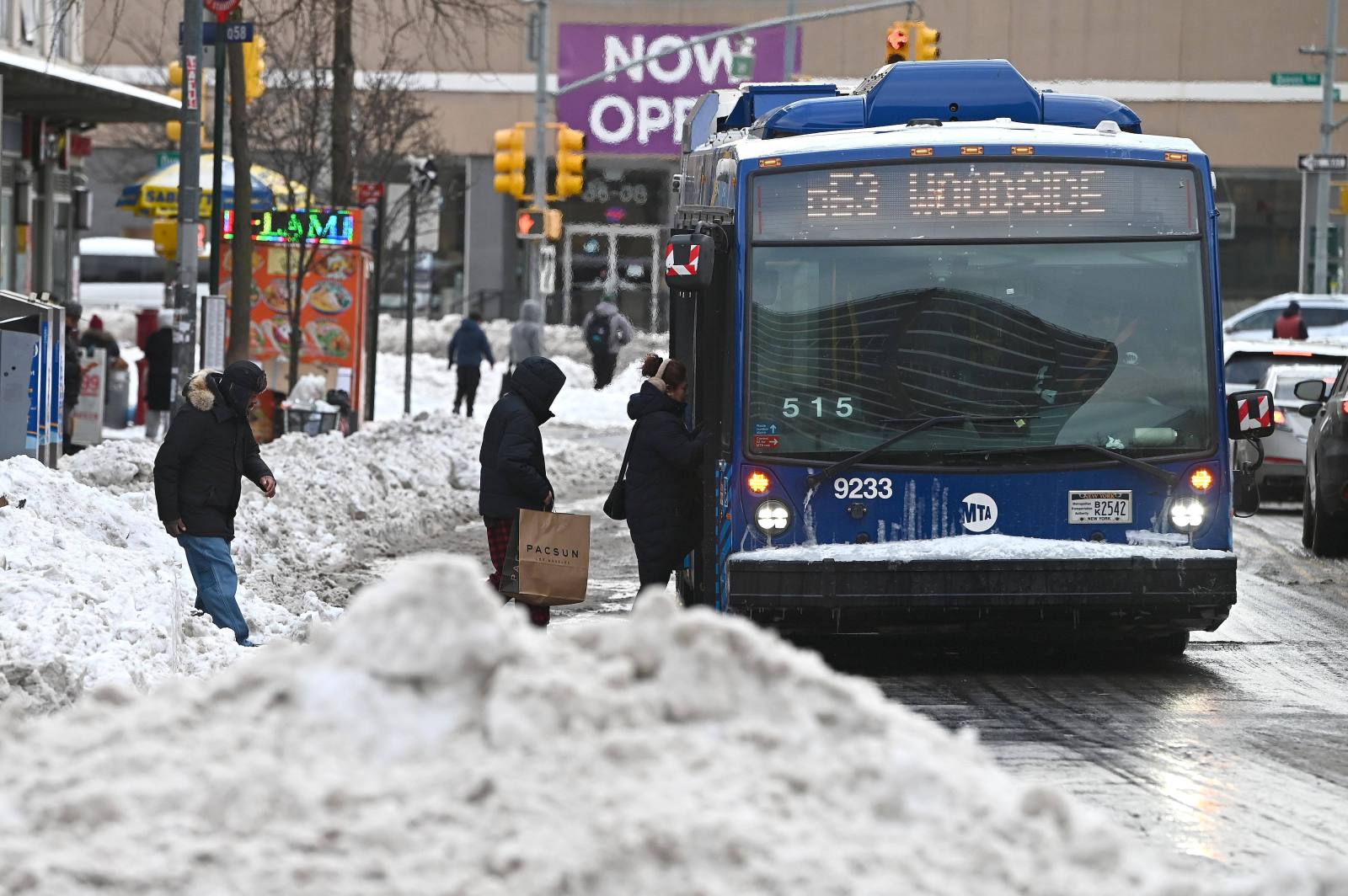 Image: NewsweekCommuters walk over berms of snow created by snow plows to board their bus in the New York City Borough of Queens, NY, January 26, 2026. New York City and it’s five boroughs saw more than 10 inches of snow fall at a rate of 1 to 2 inches per hour with freezing gusts of wind after a massive winter storm blanketed the US East Coast. (Photo by Anthony Behar/Sipa USA)(Sipa via AP Images) Source Full size
 -
Image: NewsweekCommuters walk over berms of snow created by snow plows to board their bus in the New York City Borough of Queens, NY, January 26, 2026. New York City and it’s five boroughs saw more than 10 inches of snow fall at a rate of 1 to 2 inches per hour with freezing gusts of wind after a massive winter storm blanketed the US East Coast. (Photo by Anthony Behar/Sipa USA)(Sipa via AP Images) Source Full size
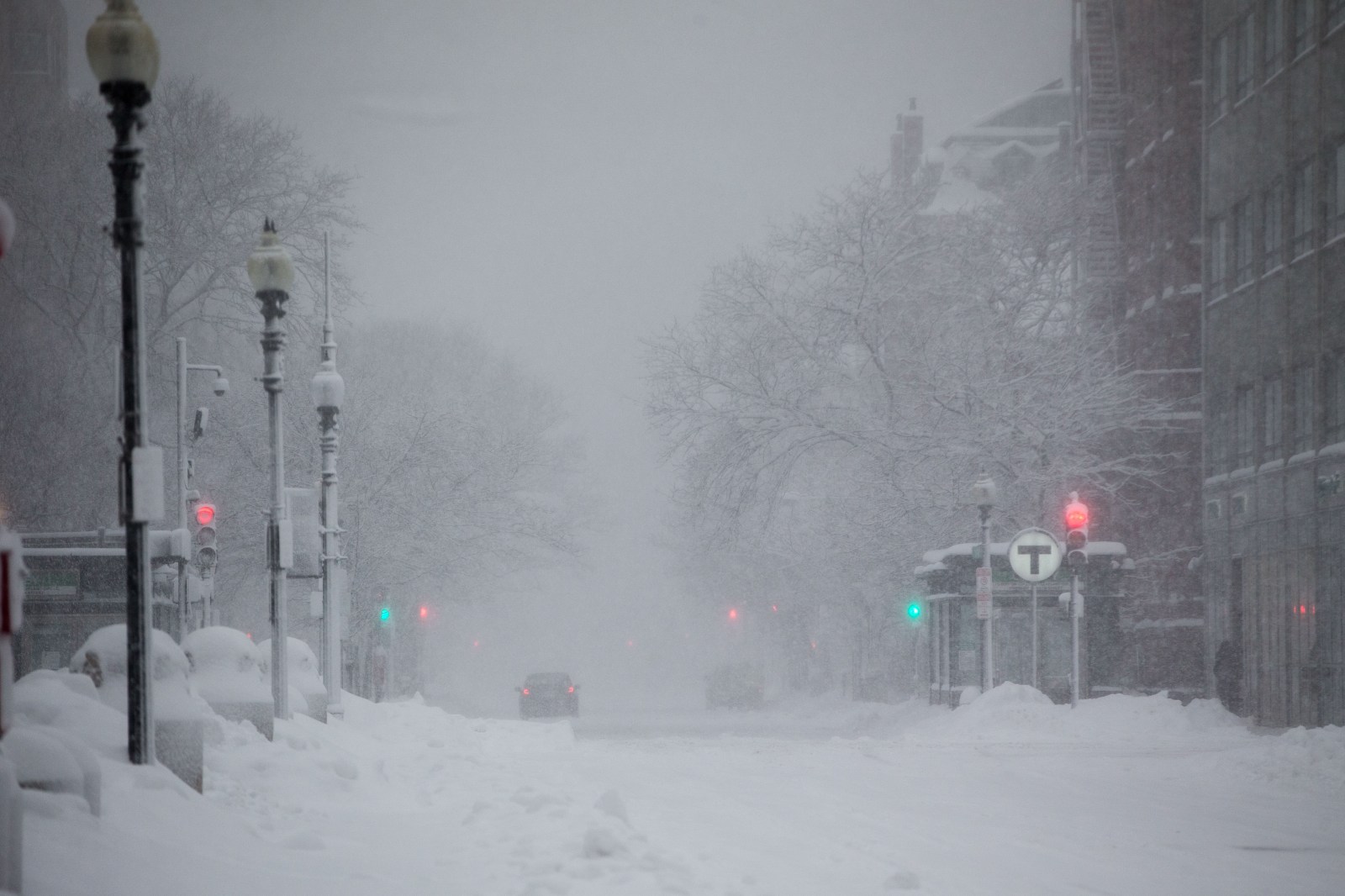
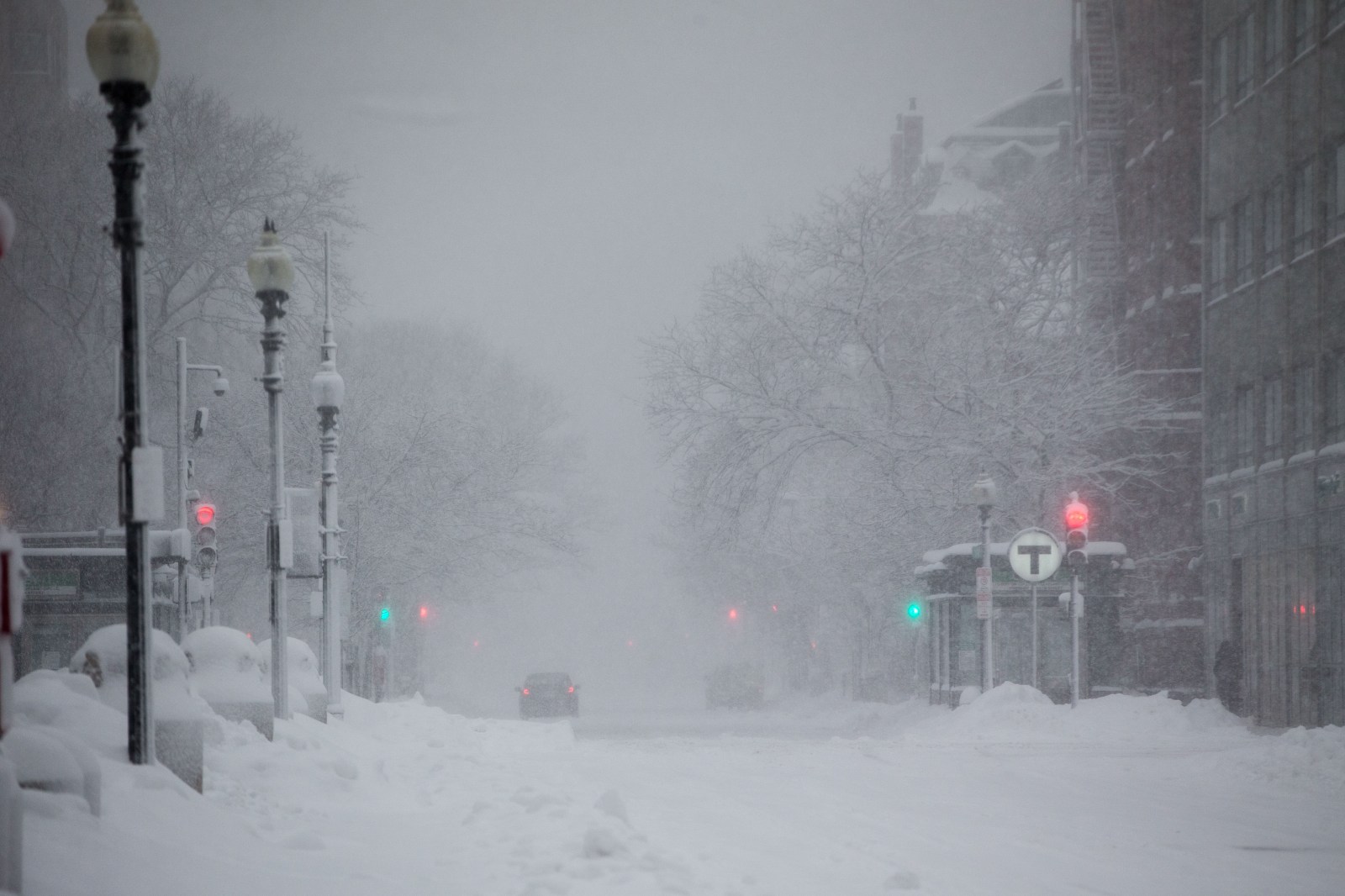
Storm Intensifies Into Bomb Cyclone With Blizzard Warnings Across Northeast Rapidly deepening low‑pressure system will become a bomb cyclone off the Atlantic coast Sunday, prompting blizzard warnings for New York, New Jersey, Connecticut, Pennsylvania, Rhode Island and Massachusetts, with additional alerts for Long Island, Boston and coastal Delaware [1][2][3]. Meteorologists upgraded the forecast from milder expectations after model runs showed a sharper pressure drop and stronger onshore flow [1][4]. The National Weather Service expects wind gusts of 40‑70 mph, creating white‑out conditions and hazardous travel throughout the region [2][3].
Snowfall Forecast Ranges From One to Two Feet, Up to 24 Inches Near I‑95 The Weather Prediction Center projects 12‑24 inches of snow east or southeast of Interstate 95, while most interior areas should receive at least a foot, with rates of 1‑2 inches per hour during the night‑time peak [1][3][4]. Snow accumulation will begin Sunday morning in Washington, move through Philadelphia and New York City, and reach Boston by evening, then taper off by Monday afternoon [1]. Model consensus has shifted toward heavier snow and stronger winds over the past 24 hours, raising the bomb‑cyclone potential along the shoreline [4].
Governors Declare Emergencies and Deploy Guard Units Ahead of Impact New York Governor Kathy Hochul and New Jersey Governor Mikie Sherrill each issued states of emergency, citing expected 12‑18 inches of snow and the need to protect vulnerable populations [2]. Hochul activated 100 National Guard members for staging across Long Island, New York City and the Lower Hudson Valley, while local officials echoed the emergency directives [2][3]. Authorities urged residents to stock three days of supplies and limit travel as power outages are likely from wind‑driven, wet snow [2].
City of New York Mobilizes Equipment, Alerts, and Hotline Services Mayor Zohran Mamdani announced the deployment of additional snow‑clearing equipment from outside the city and expanded use of geocoding to prioritize bus stops and crosswalks for clearance [1]. The mayor also posted a text‑alert line (“NotifyNYC” to 629‑629) and reminded citizens to call 311 for assistance, especially for vulnerable individuals [2]. Schools remain undecided on closures, while private firms prepared front‑end loaders for a week‑long cleanup effort [1].
High Winds and Coastal Flooding Threaten Power Outages and Travel Steady winds of 25‑35 mph, with gusts up to 70 mph in some forecasts, will combine with heavy, wet snow to snap tree limbs and cause widespread power outages [1][3]. Onshore winds are expected to push ocean water onto shorelines, creating moderate to locally major flooding from Delaware through Long Island and southern New England, with the surge coinciding with the high tide late Sunday night [3][4]. Airports in New York, Philadelphia and Boston face dangerous or impossible travel conditions during the peak Sunday‑night to Monday‑morning window [3].
Sources
-
1.
AP: East Coast Braces for Blizzard‑Scale Snow and Winds: Details rapid storm intensification, blizzard warnings for multiple states, NYC’s extra equipment deployment, and projected snowfall and wind rates .
-
2.
Newsweek: Northeast Braces for Up to 18 Inches of Snow as Governors Declare Emergencies: Highlights emergency declarations by Hochul and Sherrill, National Guard mobilization, three‑day supply advisories, and city hotlines .
-
3.
CNN: Nor'easter‑Driven Bomb Cyclone Set to Blanket NYC and Northeast with Blizzard‑Level Snow: Emphasizes bomb‑cyclone development, first NYC blizzard alert since 2017, 12‑24‑inch totals near I‑95, and coastal flooding risk .
-
4.
CNN: East Coast Winter Storm Forecast Shifts Toward Heavier Snow and Strong Winds: Discusses model convergence, scenario‑based snowfall outcomes, and rising bomb‑cyclone potential along the coast .
-
5.
Newsweek: Life‑Threatening Snow Squall Warnings Issued for Wyoming and Colorado: Reports brief, high‑impact snow‑squall alerts in the Rockies, describing visibility drops, gusts over 50 mph, and potential for rapid re‑issuance .
Timeline
Dec 11, 2025 – The National Weather Service issues winter‑storm alerts for 13 states, forecasting up to 5 inches of snow in Buffalo, NY, and warning of severe icing that could delay flights [24].
Dec 15, 2025 – The first significant snowfall of the season blankets the New York‑New Jersey metro with several inches, while an Arctic air surge drives Midwest temperatures below ‑20 °F, prompting road‑speed reductions and over 1,000 flight delays [23].
Dec 19, 2025 – Severe thunderstorm warnings cover more than 13 million people in New York, New Jersey and Pennsylvania, with wind gusts of 60‑70 mph and rare December tornado threats, urging residents to seek interior shelter [22].
Dec 25, 2025 – A Northeast snowstorm watch predicts up to 10 inches of snow from Friday afternoon to Saturday, and Governor Kathy Hochul urges residents to “monitor local forecasts and enroll in alerts” ahead of the holiday weekend [21].
Dec 27, 2025 – A winter storm disrupts holiday travel across the Northeast and Great Lakes, dumping ≈4 inches of snow in New York City, canceling ≈1,500 flights, and prompting emergency declarations in New York and New Jersey [20][30].
Dec 28, 2025 – Governor Hochul declares a state of emergency in more than half of New York’s counties as Central Park records 4.3 inches of snow, flights exceed 900 cancellations, and Code Blue activates to shelter the homeless [3].
Jan 5, 2026 – The NWS expands winter‑storm warnings for Alaska, Michigan, California and Utah, projecting up to 18 inches of snow and gusts of 35‑40 mph, and urges travelers to delay trips and carry emergency supplies [19].
Jan 6, 2026 – A Winter Storm Warning for the Cascades predicts 2‑4 feet of mountain snow, wind gusts up to 35 mph, and “considerable” avalanche danger above 5,500 ft, prompting travel advisories and power‑outage warnings [29].
Jan 17, 2026 – Lake‑effect snow warnings cover northern Wisconsin, Michigan’s Upper Peninsula and Alaska, forecasting up to 6 inches locally and urging residents to avoid travel and prepare for possible outages [18].
Jan 19, 2026 – The NWS issues a snow‑squall warning for over 1 million Pennsylvanians, describing white‑out conditions that can appear within minutes and urging drivers to delay travel or pull off the highway [17].
Jan 20, 2026 – Forecasters warn that a mixed‑precipitation storm will sweep from Texas to the Carolinas, with a “sub‑zero Arctic air mass” meeting Gulf moisture, potentially delivering ≥4 inches of snow and ¼‑inch of ice along I‑20/I‑40 [27].
Jan 21, 2026 – Texas officials label the approaching system the “first substantial winter weather event of the season,” with up to 10 inches of snow/ice and single‑digit wind chills, while Governor Greg Abbott assures “no expectation whatsoever” of a grid failure [15].
Jan 21, 2026 – The Weather Prediction Center updates its forecast, expanding the storm’s northern reach and describing it as “plan‑changing” with Stephanie Abrams noting its stretch from Texas to the I‑95 corridor [16].
Jan 23, 2026 – DHS advises FEMA to avoid the word “ice” in public alerts to prevent meme‑driven confusion, sparking a brief dispute over messaging language [12].
Jan 23, 2026 – WCNC chief meteorologist Brad Panovich warns that the upcoming ice storm could “match or exceed” the 2002 event, urging residents to stock supplies, charge devices, and stay off roads [13].
Jan 23, 2026 – Broad NWS warnings forecast up to 17 inches of snow in western Pennsylvania and heavy lake‑effect bands, warning that travel could become “nearly impossible” and power outages may follow [14].
Jan 23, 2026 – A massive winter system spanning Texas to New England threatens half the U.S., with 177 million under ice/snow warnings, “damage comparable to a hurricane,” and Arctic air driving wind chills below ‑40 °F in the Midwest [26].
Jan 24, 2026 – The NWS labels the approaching storm “extremely dangerous,” projecting over 200 million Americans under ice‑and‑snow watches, sub‑zero wind chills, and governors in 16 states declaring emergencies; NYC Mayor Zohran Mamdani deploys 2,200 plows and 700 salt spreaders, while Rich Otto warns travel could be “nearly impossible during the peak of the storm” [1].
Jan 24, 2026 – Travel advisories urge millions to avoid roads as ice‑storm warnings cover the Carolinas and Georgia, with NWS officials stressing life‑threatening conditions and recommending emergency kits in vehicles [11].
Jan 25, 2026 – Nationwide alerts cover over 180 million people with ice‑and‑snow watches and more than 210 million with cold‑weather advisories, prompting states to activate emergency plans and issue extensive safety resources [10].
Jan 25, 2026 – A historic winter storm delivers 6‑12 inches of snow and record‑breaking cold across the Plains to the Northeast, while power‑outage trackers record hundreds of thousands without electricity [8].
Jan 25, 2026 – AP photo‑gallery images capture the monster storm’s impact from Texas to the Midwest, showing residents torch‑thawing frozen doors, airports de‑icing planes, and shelves emptied of water in Pittsburgh [9].
Jan 26, 2026 – The storm sweeps the U.S. and southern Canada, breaking snowfall records (e.g., 11.4 inches in Central Park, 18 inches at Toronto Pearson), causing ≥20 deaths, canceling >6,000 flights, and prompting the NWS to warn of another major winter storm arriving Friday [2].
Feb 4, 2026 – The NWS issues winter‑weather warnings for up to 7 inches of snow across New York, North Carolina, Virginia and Alaska, emphasizing hazardous morning commutes and the risk of freezing‑rain‑induced outages [6].
Feb 20, 2026 – Forecast models converge on a potent East‑Coast storm for Sunday, with scenarios ranging from moderate coastal snow to a widespread ≥6‑inch blizzard; bomb‑cyclone potential rises as the system tracks closer to shore [5].
Feb 21, 2026 – A nor’easter intensifies into a bomb cyclone off the coast, delivering blizzard conditions and the first NYC blizzard warning since 2017; officials expect 12‑24 inches of snow, 40‑55 mph winds, travel impossibility, and coastal flooding coinciding with high tide [4].
Dive deeper (19 sub-stories)
-
East Coast Braces for Blizzard‑Scale Snow, Bomb‑Cyclone Winds on Sunday
(8 articles)
-
Northeast Governors Declare Emergencies as Blizzard Threatens 12‑18 Inches of Snow
(2 articles)
-
Snow‑Squall Warnings Issued for Wyoming and Colorado as Storm Approaches
(2 articles)
-
Winter Weather Warning Brings Up to Seven Inches of Snow Across Four States
(15 articles)
-
Winter Storm Dumps Up to 12 Inches of Snow Across 14 States, Near‑Whiteout Conditions Expected
(2 articles)
-
Winter Storm Warnings Target Over One Million Residents as Snow and Ice Threaten Power Grid
(2 articles)
-
Snow Squall Alerts Prompt Immediate Driving Precautions Across Midwest and Pacific Northwest
(6 articles)
-
Death Toll Hits Thirty as Winter Storm Fern Intensifies and New Clip‑Series Looms
(2 articles)
-
Forecasters Alert New Major Winter Storm Threatening Eastern U.S. Friday
(10 articles)
-
Winter Storm of Jan 25‑26, 2026 Paralyzes U.S., Sparks Snow‑Covered Urban Scenes
(2 articles)
-
Massive Winter Storm Blankets 40% of U.S., Triggers Power Outages and Federal Declarations
(25 articles)
-
Massive Winter Storm Sweeps U.S., Triggering Alerts for 210 Million and Live Webcams
(4 articles)
-
Trump Claims FEMA Ready as Winter Storm Fern Threatens Half U.S. Population
(3 articles)
-
CNN: FEMA urged to avoid the word 'ice' in storm messaging to prevent memes
-
Winter Storm Warning Brings Up to 3 Feet Snow and 40‑Mph Winds Across Eight States
(7 articles)
-
Post‑Christmas Storm Brings Freezing Rain, Snow and Travel Hazards Across Great Lakes Region
(6 articles)
-
Newsweek: Winter storm warnings spread across U.S. with up to 3 feet forecast
-
Winter Storm Warning Extends Through Thursday, Up to 20 Inches Predicted in Colorado Mountains
(2 articles)
-
Dec 2 2025 Nor’easter Brings First Seasonal Snow, Fatalities and State Emergencies
(2 articles)
All related articles (102 articles)
-
AP: East Coast Braces for Blizzard‑Scale Snow and Winds
-
Newsweek: Northeast Braces for Up to 18 Inches of Snow as Governors Declare Emergencies
-
CNN: Nor'easter‑Driven Bomb Cyclone Set to Blanket NYC and Northeast with Blizzard‑Level Snow
-
CNN: East Coast Winter Storm Forecast Shifts Toward Heavier Snow and Strong Winds
-
Newsweek: Life‑Threatening Snow Squall Warnings Issued for Wyoming and Colorado
-
Newsweek: Winter Storm Watches Issue Alerts for West Virginia, Maryland and Pennsylvania
-
Newsweek: Winter Weather Warning Brings Up to Seven Inches of Snow Across Four States
-
Newsweek: Sudden Snow‑Squall Warning Hits Over 1 Million New Yorkers
-
Newsweek: Winter Weather Warning Brings Up to 7 Inches of Snow Across Eight States
-
Newsweek: Winter Storm Brings Up to 12 Inches of Snow and Near‑Whiteout Conditions Across 14 States
-
Newsweek: Winter Storm Warning Issued for Over 1 Million People
-
Newsweek: Winter Storm Warning Brings Snow, High Winds to Michigan, Alaska and New York
-
WBNS (Columbus, OH): Snow Squall Alerts: What Drivers Need to Know
-
King5 (Seattle, WA): Understanding Snow Squall Alerts and Safety Measures
-
Newsweek: Death Toll Climbs as Winter Storm Fern Sweeps U.S.
-
BBC: Winter Storm Sweeps U.S. and Canada, Leaving Dozens Dead and Massive Disruptions
-
Newsweek: New Clip‑Series of Snowstorms Set to Blanket 14 States
-
AP: Winter Storm Paralyzes U.S., Sparks Snow‑Covered Scenes on Jan 25, 2026
-
WBNS (Columbus, OH): Massive Winter Storm Blankets 40% of U.S. with Snow, Ice and Sleet
-
King5 (Seattle, WA): Massive Winter Storm Dumps Snow, Ice and Sleet Across 40% of U.S.
-
AP: Massive Winter Storm Sweeps U.S., Triggers Power Outages and Travel Chaos
-
CNN: Historic U.S. Winter Storm Spreads Snow, Ice and Power Outages
-
AP: Monster Winter Storm Sweeps Across the United States, Photo Gallery Shows Impacts
-
WBNS (Columbus, OH): Massive Winter Storm Triggers Nationwide Alerts and Live Webcams
-
King5 (Seattle, WA): Massive Winter Storm Triggers Nationwide Alerts, Millions Under Warnings
-
Newsweek: Travel Warnings Affect Millions of Americans Amid Winter Storms
-
BBC: US braces for ‘extremely dangerous’ winter storm
-
Newsweek: Trump Comments as Winter Storm Fern Hits Half of U.S.
-
AP: Winter Storm Threatens Half of U.S. with Snow, Ice, and Power Outages
-
WBNS (Columbus, OH): Winter Storm Severity Index flags ice risk across South, Texas and DC area as weekend storm nears
-
King5 (Seattle, WA): Ice-heavy winter storm flagged by WSSI as South faces major impacts
-
CNN: FEMA urged to avoid the word 'ice' in storm messaging to prevent memes
-
Newsweek: Dire Warning as Major Ice Storm Threatens Millions
-
WBNS (Columbus, OH): Winter storm bears down on half the U.S., bringing snow, ice and power-outage risk
-
King5 (Seattle, WA): Winter storm bears down on half the U.S., bringing snow, ice and widespread outages
-
Newsweek: Winter Storm Triggers Broad Warnings as Snow Reaches Up to 17 Inches
-
AP: Nationwide ice storm prep escalates as forecasts warn of heavy snow and outages
-
CNN: Massive winter storm to blanket 1,500-mile swath from Plains to Northeast
-
WBNS (Columbus, OH): Huge US winter storm threatens crippling ice, snow from Texas to Boston
-
AP: Eastern U.S. braces for severe ice storm with potential outages and extreme cold
-
Newsweek: Winter Storm Fern Could Halt Travel for Days, Officials Urge Preparations
-
Newsweek: Winter Storm Fern Prompts Wide U.S. Winter Watch for Long-Duration Ice and Snow
-
Newsweek: Winter storm warnings issued as up to 3 feet of snow and 40 mph winds threaten eight states
-
CNN: Winter storm to lash more than two dozen states with ice and heavy snow
-
Newsweek: Texas Braces for Expansive Winter Storm With Life-Threatening Cold
-
Newsweek: Forecasters issue update as major winter storm looms
-
Newsweek: Winter Storm Fern Could Bring Catastrophic Ice Across Dozens of Cities
-
AP: Ice storm threatens southern states as Arctic air meets Gulf moisture
-
WBNS (Columbus, OH): Major winter storm to blast the South with ice and snow through Sunday
-
King5 (Seattle, WA): Major winter storm to blanket South with rain, snow and ice from Texas to the Carolinas
-
Newsweek: Snow squalls trigger travel alert for more than 1 million Pennsylvanians
-
Newsweek: Winter Storm Warning Forecasts Up to Four Feet of Snow Across Several States
-
Newsweek: Winter storm disrupts hundreds of NYC flights as warnings ease
-
Newsweek: Lake-Effect Snow Triggers Winter Storm Warnings Across Wisconsin, Michigan and Alaska
-
King5 (Seattle, WA): Snow squalls threaten Plains and upper Midwest with warnings and travel disruptions
-
Newsweek: Snow squalls threaten Plains and Midwest travel, forecasters warn
-
Newsweek: Winter storm warning issued for Indiana and Michigan as lake-effect snow nears
-
Newsweek: Winter storm warnings across three states forecast up to 9 inches of snow
-
Newsweek: Winter storm warnings issued for Oregon, Washington, Idaho and Alaska with up to 24 inches expected
-
King5 (Seattle, WA): National Weather Service issues Winter Storm Warning as heavy snow and high winds head for the Cascades
-
Newsweek: NWS issues winter-storm warnings for five states as up to 35 inches of snow and high winds are forecast
-
Newsweek: Winter storm warning expands with up to 18 inches forecast across four states
-
Newsweek: New Year’s Day winter storm could bring up to 4 feet of snow across six states
-
Newsweek: New Year's Eve Travel Warning Issued for Several States Amid Snow Squalls
-
Newsweek: Lake-effect snow warnings issued in multiple states after intense cyclone
-
Newsweek: Winter Storm Warning Issued as 20 Inches of Snow Expected, Life-Threatening Conditions
-
Newsweek: Forecast map shows states facing multi-hazard winter storm
-
AP: Winter storm sweeps across US with snow, ice and severe weather
-
Newsweek: Winter storm brings tornado risk, blizzard conditions across Midwest as it moves toward Great Lakes
-
CNN: Snowstorm snarls travel at NYC-area airports as next storm looms
-
BBC: New York snowstorm triggers state of emergency as travel chaos unfolds
-
The Hindu: Northeast winter storm causes thousands of flight delays and cancellations
-
AP: Winter storm disrupts travel across US Northeast, Great Lakes
-
King5 (Seattle, WA): Winter storm snarls holiday travel across US Northeast and Great Lakes
-
Newsweek: Massive Snow Totals Hit New York and California in 24 Hours, Prompting Travel Disruptions and Emergency Declarations
-
WBNS (Columbus, OH): Winter storm snarls holiday travel across US Northeast and Great Lakes
-
Newsweek: Winter storm warnings blanket the U.S. as up to 18 inches of snow threaten travel
-
Newsweek: Winter Storm Slams Northeast as State of Emergency Declared
-
Newsweek: Post-Christmas Winter Storm Threatens Travel Across Great Lakes, Northeast
-
Newsweek: Winter storm warnings spread across U.S. with up to 3 feet forecast
-
Newsweek: Northeast snowstorm could bring up to 10 inches ahead of Christmas weekend; storm watch active
-
Newsweek: NWS issues advisories as Northeast braces for wintry storm ahead of Christmas
-
Newsweek: Severe thunderstorm warnings issued for New York, New Jersey, and Pennsylvania
-
Newsweek: Winter storm warnings issued for five states with up to three feet of snow through Saturday
-
AP: Weekend Storm Brings Snow to Northeast, Sub‑Zero Cold to Midwest
-
Newsweek: Winter Storm Map Shows States Getting Snow This Weekend
-
Newsweek: Winter Storm Warnings Issued Across 13 States Amid Heavy Snow and Icing
-
Newsweek: Extreme Cold Weather Warning as Wind Chill Plunges to Minus 50°F
-
Newsweek: Winter Storm Warnings Bring Up to 20 Inches of Snow and Avalanche Risk
-
Newsweek: Winter Storm Forecast: Widespread Snow From Northern Plains to Northeast, Wyoming Up to Two Feet
-
Newsweek: Winter Weather Live Tracker: Nine-State Storm and Polar Vortex Bring Heavy Snow and Extreme Cold
-
Newsweek: Winter Storm Warning as Up to 9 Inches of Snow Could Hit West Virginia
-
Newsweek: Winter storm warnings issued across six states with heavy snowfall expected
-
Newsweek: Winter Storm Map Projects Snow and Ice Across Central and Eastern U.S. This Week
-
Newsweek: Winter Storm Warning Issued for Colorado and New Mexico Until Thursday
-
Newsweek: Winter Storm Warning: Up to 17 Inches of Snow Across Multiple States
-
Newsweek: Winter Storm Continues to Impact Northeast, Snowfall Begins in New York and Pennsylvania
-
CNN: Winter storm delivers first widespread snow of season to the Northeast
-
AP: Northeast Prepares for First Major Snowstorm of the Season
-
AP: Northeast Prepares for First Major Snowstorm While Midwest Faces O'Hare Delays
-
Newsweek: Winter Storm Forecast: 6+ Inches of Snow Expected Across Mid‑Atlantic and Northeast
-
WBNS (Columbus, OH): Winter Weather Terms and Alerts Explained (Updated Nov 24, 2025)
External resources (96 links)
- https://forecast.weather.gov/wwamap/wwatxtget.php?cwa=usa&wwa=Winter%20Storm%20Warning (cited 21 times)
- https://forecast.weather.gov/wwamap/wwatxtget.php?cwa=usa&wwa=Winter%20Weather%20Advisory (cited 6 times)
- https://www.weather.gov/ (cited 5 times)
- https://www.wpc.ncep.noaa.gov/discussions/nfdscc3.html (cited 4 times)
- https://water.noaa.gov/#@=-115.0455089,51.7807296,4.7792338&b=topographic&g=obsFcst,0!0!0!0!0!0!0!0!0!0!1!1!1!1!0!0!0!0!0!0,0.5,1!1!1!1!0,0,0,false&ab=0,0,#D94B4A,1,1,1,#cccccc,1,0,0,#B243B1,1,0,0,#98E09A,1,false&a=hide,0.35,false&s=0,0,0.9,0.9,false&n=false,#72afe9,0.9,0,0.9,0,0.9,false&p=false,0.75,0,7,0,1,2025,12,10,0,false&d=1,1,1,1,1,1,1,1,#006EFF,1,#006EFF,1,#006EFF,true&q= (cited 3 times)
- https://www.mshp.dps.missouri.gov/HP68/AccidentDetailsAction?ACC_RPT_NUM=250550887 (cited 2 times)
- https://www.ncei.noaa.gov/news/coldest-day-of-the-year (cited 2 times)
- https://www.noaa.gov/stories/4-tips-to-keep-you-safe-during-snow-squall (cited 2 times)
- https://www.weather.gov/forecast (cited 2 times)
- https://www.weather.gov/gsp/winter (cited 2 times)
- https://www.weather.gov/lwx/warningsdefined#Winter%20Storm%20Watch (cited 2 times)
- https://www.weather.gov/lzk/ (cited 2 times)
- https://www.weather.gov/safety/winter-lake-effect-snow (cited 2 times)
- https://www.weather.gov/safety/winter-snow-squall (cited 2 times)
- https://www.wpc.ncep.noaa.gov/discussions/hpcdiscussions.php?disc=pmdspd (cited 2 times)
- https://www.wpc.ncep.noaa.gov/wwd/wssi/wssi.php (cited 2 times)
- https://forecast.weather.gov/showsigwx.php?warnzone=WAZ310&warncounty=WAC073&firewxzone=WAZ656&local_place1=4%2520Miles%2520NE%2520Bellingham%2520International%2520Airport%2520WA&product1=Wind+Advisory&lat=48.8243&lon=-122.4718 (cited 1 times)
- https://forecast.weather.gov/wwamap/wwatxtget.php?cwa=CYS&wwa=winter%20storm%20warning (cited 1 times)
- https://forecast.weather.gov/wwamap/wwatxtget.php?cwa=SEW&wwa=winter%2520storm%2520warning (cited 1 times)
- https://forecast.weather.gov/wwamap/wwatxtget.php?cwa=usa&wwa=Freeze%20Warning (cited 1 times)
- https://forecast.weather.gov/wwamap/wwatxtget.php?cwa=usa&wwa=Lake%20Effect%20Snow%20Warning (cited 1 times)
- https://forecast.weather.gov/wwamap/wwatxtget.php?cwa=usa&wwa=Winter%20Storm%20Watch (cited 1 times)
- https://nasstatus.faa.gov/ (cited 1 times)
- https://wsdot.com/travel/real-time/mountainpasses/Blewett (cited 1 times)
- https://wsdot.com/travel/real-time/mountainpasses/Cayuse (cited 1 times)
- https://wsdot.com/travel/real-time/mountainpasses/Chinook (cited 1 times)
- https://wsdot.com/travel/real-time/mountainpasses/Crystal-to-Greenwater (cited 1 times)
- https://wsdot.com/travel/real-time/mountainpasses/Mt.-Baker (cited 1 times)
- https://wsdot.com/travel/real-time/mountainpasses/North-Cascade-Hwy (cited 1 times)
- https://wsdot.com/travel/real-time/mountainpasses/Snoqualmie (cited 1 times)
- https://wsdot.com/travel/real-time/mountainpasses/Stevens (cited 1 times)
- https://wsdot.com/travel/real-time/mountainpasses/White (cited 1 times)
- https://www.governor.ny.gov/news/ahead-new-years-holiday-governor-hochul-urges-new-yorkers-exercise-caution-severe-winter (cited 1 times)
- https://www.governor.ny.gov/news/governor-hochul-urges-caution-ahead-post-holiday-snowfall (cited 1 times)
- https://www.tsa.gov/news/press/releases/2025/12/22/tsa-prepares-for-holiday-travel-season-cap-record-year (cited 1 times)
- https://www.weather.gov/ctp/snowsquall (cited 1 times)
- https://www.weather.gov/lwx/warningsdefined#:~:text=A%20Winter%20Storm%20Watch%20is,only%20means%20it%20is%20possible. (cited 1 times)
- https://www.weather.gov/lwx/warningsdefined#:~:text=A%20Winter%20Weather%20Advisory%20will,enough%20to%20warrant%20a%20warning. (cited 1 times)
- https://www.weather.gov/media/okx/Climate/CentralPark/BiggestSnowstorms.pdf (cited 1 times)
- https://www.wpc.ncep.noaa.gov/key_messages/LatestKeyMessage_1.png (cited 1 times)
- https://www.wsdot.com/traffic/passes/ (cited 1 times)
- https://nwac.us/avalanche-forecast/#/all/ (cited 1 times)
- https://www.cps.edu/media/community-updates/2026/january/classes-canceled-january-23/ (cited 1 times)
- https://x.com/NWSWPC/status/2004313247806050317 (cited 4 times)
- https://x.com/NWSWPC/status/2004476083790659723/photo/1 (cited 4 times)
- https://www.facebook.com/nytransitmuseum/posts/1327315179424421?ref=embed_post (cited 3 times)
- https://x.com/CentralPierce (cited 3 times)
- https://x.com/NWS/status/1998433730055086170 (cited 3 times)
- https://x.com/NWSChicago/status/1998141579182191013/photo/1 (cited 3 times)
- https://x.com/OneJerseySchorr (cited 3 times)
- https://www.facebook.com/ISPBremen/posts/1180892397534817?ref=embed_post (cited 2 times)
- https://www.facebook.com/hockingcommissioners/ (cited 2 times)
- https://www.facebook.com/share/p/17YDkLuULD/ (cited 2 times)
- https://x.com/NWSCLE/status/1995893102620352798 (cited 2 times)
- https://www.facebook.com/MetroSchools/photos/meet-dolly-plowton-music-city-plow-blizzard-of-oz-snowella-and-frosty-the-snow-p/1337230701778613/ (cited 1 times)
- https://www.facebook.com/WatertownInternationalAirport/photos/brrr-%EF%B8%8F%EF%B8%8F-its-official-the-us-national-weather-service-buffalo-ny-confirmed-a-new-/1319894566832934/ (cited 1 times)
- https://x.com/NWSBurlington/status/1995419357883613443 (cited 1 times)
- https://x.com/NWSGray/status/1994796391797838021 (cited 1 times)
- https://x.com/NWSPittsburgh/status/1995421973837730025 (cited 1 times)
- https://x.com/NWSWPC/status/1995225345436561879/photo/1 (cited 1 times)
- https://x.com/NWSWPC/status/1996207764948103310 (cited 1 times)
- https://x.com/NWSWPC/status/1997530324247482505 (cited 1 times)
- https://x.com/NWSWPC/status/1999476989129056694/photo/1 (cited 1 times)
- https://x.com/NWSWPC/status/2006096080119718295 (cited 1 times)
- https://x.com/NWSWPC/status/2006096082757964100 (cited 1 times)
- https://x.com/NWSWPC/status/2013925322689749471 (cited 1 times)
- https://x.com/NWSWPC/status/2014266494276776000/photo/1 (cited 1 times)
- https://x.com/fema/status/2014527497627427012 (cited 1 times)
- https://x.com/fema/status/2014739275942666279?s=20 (cited 1 times)
- http://Winter%20Storm%20Severity%20Index%20-%20Effective%20From%20Fri,%20Jan%2023,%202026%2007%20AM%20ET%20Through%20Mon,%20Jan%2026,%202026%2007%20AM%20ET%20Last%20Updated:%20Friday%20January%2023,%202026%2007:13%20AM%20ET%20%20Map%20data%20%C2%A9%20OpenStreetMap%20contributors,%20CC-BY-SA%20%20Change%20image%20opacity:%20%20%2070%25%20%20%20For%20a%20users%20guide%20and%20more%20information%20about%20the%20WSSI,%20please%20select%20from%20the%20dropdown%20menu%20below.%20%20%20Click%20Me%20for%20Additional%20Information (cited 2 times)
- http://flightaware.com/ (cited 2 times)
- https://bit.ly/3LwqJFr (cited 2 times)
- https://bit.ly/3NBgUXi (cited 2 times)
- https://bit.ly/3YW3QOI (cited 2 times)
- https://bit.ly/45XMHrE (cited 2 times)
- https://bit.ly/4bfrux1 (cited 2 times)
- https://bit.ly/4rciHAB (cited 2 times)
- https://poweroutage.us/ (cited 2 times)
- https://amzn.to/3LZ6uQI (cited 1 times)
- https://amzn.to/3Nuebip (cited 1 times)
- https://amzn.to/3YPohNh (cited 1 times)
- https://amzn.to/3YTvADt (cited 1 times)
- https://amzn.to/3YWZAOS (cited 1 times)
- https://amzn.to/3ZsACac (cited 1 times)
- https://amzn.to/4616JkX (cited 1 times)
- https://amzn.to/464Hm1G (cited 1 times)
- https://amzn.to/4jQNSix (cited 1 times)
- https://amzn.to/4pTZeU6 (cited 1 times)
- https://amzn.to/4pX0VQS (cited 1 times)
- https://amzn.to/4qzKomV (cited 1 times)
- https://archive.ph/d8PVi (cited 1 times)
- https://poweroutage.us (cited 1 times)
- https://weather.com/storms/winter/news/2026-01-21-winter-storm-fern-ice-snow-forecast-south-northeast-midwest (cited 1 times)
- https://www.accuweather.com/en/winter-weather/severe-cold-in-wake-of-major-ice-storm-may-lead-to-days-of-dangerous-weather-conditions/1854992 (cited 1 times)
- https://www.dmschools.org/news_release/classes-canceled-for-friday-due-to-extreme-cold/ (cited 1 times)
- https://www.flightaware.com/live/cancelled/ (cited 1 times)