Trump Urges Canada to Join U.S. as 51st State, Prompting Canadian Sovereignty Push
Updated (35 articles)
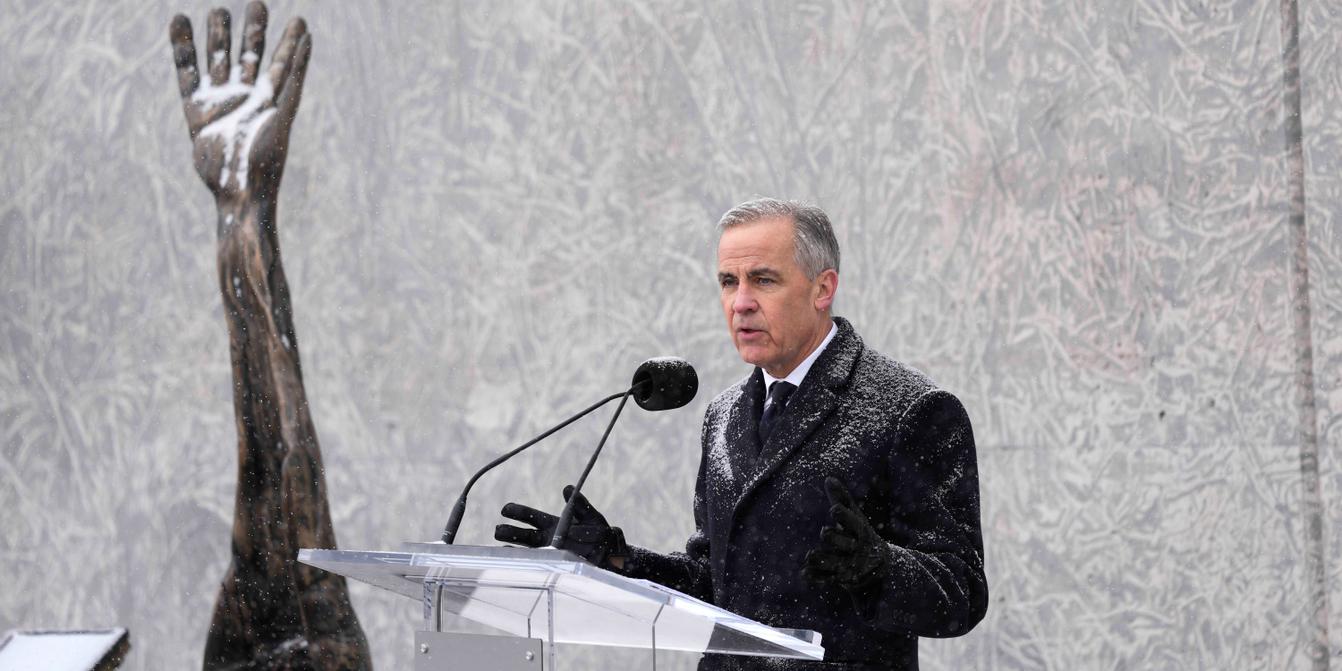
Trump’s 51st‑State Proposal Stokes Immediate Backlash President Donald Trump publicly invited Canada to become the United States’ 51st state, reiterating tariff threats and a renewed push for Greenland, which ignited outrage among roughly 40 million Canadians and prompted sharp rebukes from Canadian officials [1][2]. The suggestion amplified existing trade tensions, with Trump warning of a possible 100 % tariff on Canadian goods if Ottawa continues its China‑focused trade strategy [4]. Canadian media highlighted the proposal as a direct challenge to Canada’s long‑standing security and economic reliance on its southern neighbour [1].
Harper Calls for National Unity and Sacrifice Former prime minister Stephen Harper, speaking at his portrait unveiling, urged Canadians to be prepared to make “any sacrifice necessary” to protect sovereignty amid Trump’s overtures [2]. He warned that a potential Alberta separatist referendum—where Premier Danielle Smith estimates support near 30 %—could further fracture national cohesion [2]. Harper appealed to both Liberal and Conservative parties to set aside partisan disputes and reinforce a united front against external pressures [2].
Carney Advocates Medium‑Power Coalition and China Deal Prime Minister Mark Carney, in a January Davos address, declared that the era of unquestioned U.S. dominance is ending and called for a coalition of “medium powers” to counter great‑power hegemony [1][3]. He simultaneously secured a landmark China trade agreement that slashes U.S. tariffs on Chinese electric vehicles and reduces Canadian canola duties, positioning Canada as a more autonomous trading partner [4][3]. Carney emphasized that Canada must no longer rely solely on geography or U.S. alliances for security and prosperity [1].
U.S. Officials Meet Alberta Separatist Group, Raising Domestic Alarm State Department representatives repeatedly engaged members of the Alberta Prosperity Project, a far‑right organization advocating Alberta’s independence, according to the Financial Times report cited by Le Monde [1]. The meetings, described as “repeated engagements,” signal a U.S. willingness to exploit internal Canadian divisions, intensifying concerns in Ottawa about foreign interference in provincial politics [1].
Western Leaders Pivot Toward China as U.S. Relations Deteriorate In the weeks following Trump’s aggressive rhetoric, British Prime Minister Keir Starmer, Canadian Finance Minister Mark Carney, and Finnish Prime Minister Petteri Orpo met with Xi Jinping, while French President Emmanuel Macron and German Chancellor Friedrich Merz scheduled upcoming visits [3][4]. Carney’s negotiations yielded relaxed Canadian tariffs on Chinese electric vehicles and better market access for Canadian agri‑goods, while Europe balanced security worries with pragmatic trade concessions [3][4]. Analysts described the shift as a strategic response to U.S. “bullying,” suggesting China is becoming a counterweight in Western foreign policy [3][4].
Sources
-
1.
Le Monde:Canada’s Identity Clash with the United States Escalates: details Trump’s 51st‑state invitation, U.S. contacts with Alberta separatists, Carney’s Davos warning, and his call for a medium‑power coalition .
-
2.
AP:Harper Calls for Unity as Canada Faces U.S. Threats: reports Harper’s “any sacrifice” pledge, Alberta referendum concerns, and Carney’s endorsement of reduced U.S. dependence .
-
3.
CNN:Western Leaders’ Beijing Tour Highlights Shifting Alliances Amid Trump’s Aggressive Policies: outlines the China visits by Starmer, Carney, and Orpo, trade concessions secured, and the broader geopolitical pivot .
-
4.
AP:Trump’s moves push US allies to reset with China: covers Carney’s China tariff deal, Starmer’s Beijing trip, EU‑China dynamics, and Trump’s threats of a 100 % tariff on Canada .
Videos (1)
Timeline
Oct 2018 – Canada arrests Huawei executive Meng Wanzhou, prompting China to detain Canadians Michael Kovrig and Michael Spavor in retaliation, a dispute that shadows later trade talks. [25]
2021 – China releases Kovrig and Spavor, easing diplomatic tension but leaving a legacy of mistrust that influences the 2026 Canada‑China negotiations. [25]
Oct 2024 – Canada imposes a 100 % tariff on Chinese electric vehicles and a 25 % tariff on Chinese steel and aluminium, mirroring U.S. measures and sparking Chinese retaliation. [25]
Mar 2025 – China levies steep tariffs on Canadian canola, pork, seafood and canola seed, deepening the trade dispute and pressuring Ottawa to seek alternative markets. [25]
2025 – A Pew poll shows 64 % of Canadians hold a negative view of the United States, the highest in two decades, reflecting growing anti‑U.S. sentiment. [17]
Oct 2025 – An Angus Reid poll finds 46 % of Canadians want their government to treat the United States as an adversary, underscoring domestic pressure on Prime Minister Mark Carney. [17]
Jan 7, 2026 – Prime Minister Mark Carney announces a Beijing visit (Jan 13‑17), the first by a Canadian premier in eight years, framing it as a cornerstone of a plan to double non‑U.S. exports within a decade amid looming USMCA review and U.S. tariff threats. [25][28]
Jan 13, 2026 – Carney lands in Beijing; Chinese state media urge Ottawa to adopt “strategic autonomy” and portray the trip as an opportunity to tilt Canada away from Washington. [26]
Jan 14, 2026 – Carney meets Premier Li Qiang and other officials, discusses canola‑tariff relief and broader trade reset, and officials label the mission “consequential” for boosting non‑U.S. exports. [24][26]
Jan 15, 2026 – Carney opens his Beijing visit declaring a “new era” of Canada‑China engagement, meets Xi Jinping and leaders of Alibaba, CNPC and CATL, and signals intent to deepen economic, energy and security cooperation. [23]
Jan 16, 2026 – Canada eliminates the 100 % tariff on Chinese EVs, replacing it with a 6.1 % MFN rate and an annual cap of 49,000 vehicles; China concurrently cuts its canola‑seed tariff from 84 % to ~15 %, a move Carney frames as diversification away from U.S. dependence. [21][20][22]
Jan 17, 2026 – Carney meets Xi in Beijing, announces the EV and canola tariff concessions, and notes that President Trump’s policies shape the diplomatic atmosphere. [18]
Jan 18, 2026 – Polling shows 64 % of Canadians view the United States negatively and 46 % want the U.S. treated as an adversary, reflecting backlash to Trump’s rhetoric and tariff threats. [17]
Jan 20, 2026 – At Davos, Carney declares the post‑war order “not coming back,” urges middle‑power coalitions to resist economic coercion, reaffirms NATO and Greenland commitments, and warns Canada can no longer rely on geography for security. [16][15]
Jan 22, 2026 – Returning from Davos, Carney calls for national unity, pledges rapid execution of an economic plan to break domestic trade barriers and secure twelve new trade deals across four continents within six months. [5]
Jan 23, 2026 – President Trump withdraws Carney’s invitation to his “Board of Peace,” labels Carney “Governor Carney,” and promotes the Golden Dome missile‑defence scheme, heightening bilateral tension. [14]
Jan 24, 2026 – Trump posts on Truth Social that the U.S. will impose a 100 % tariff on Canadian goods if Ottawa finalizes the China pact; the Canada‑China agreement lowers EV tariffs and canola duties; Trump also suggests Canada could become the U.S. “51st state” and rescinds the Board invitation. [12][13][4][29]
Jan 25, 2026 – Trump releases a video warning that China will “devour” Canada, repeats the 100 % tariff threat, calls Carney “Governor,” and the U.S. Supreme Court prepares to rule on his use of the International Emergency Economic Powers Act. [13][11]
Jan 26, 2026 – China’s foreign‑ministry spokesperson asserts the Canada‑China strategic partnership does not target any third party; U.S. Treasury Secretary Bessent clarifies the tariff condition applies only if Canada lets Chinese goods flood the U.S. market; Carney reiterates Canada is not pursuing a free‑trade deal with China. [2][10]
Jan 27, 2026 – Carney refutes Treasury claims he “walked back” his Davos remarks, confirms a “very good” phone call with Trump, and says the upcoming USMCA review and China talks remain on the agenda. [1][8][9]
Jan 30, 2026 – Trump’s hard‑line stance creates diplomatic space for China; UK Prime Minister Starmer, German Chancellor Merz and Finnish PM Orpo schedule Beijing trips, while Trump warns allies against China engagement and is expected to visit Beijing in April. [7]
Feb 3, 2026 – Western leaders (Starmer, Carney, Orpo) meet Xi in Beijing; China offers concrete trade concessions to Canada, the EU balances security concerns with pragmatic engagement, and analysts note the shift stems from perceived U.S. “rogue” behavior. [6]
Feb 5, 2026 – Trump publicly urges Canada to become the U.S. “51st state,” sparking outrage among 40 million Canadians; Carney’s Davos speech earlier warned of a rupture in the post‑war order and called for a coalition of medium powers to counter great‑power dominance. [30]
Later 2026 (expected) – The mandatory USMCA review proceeds, likely shaping Canada‑U.S. trade terms; Trump is slated to travel to Beijing in April; German Chancellor Merz plans a May visit to China, and Canada aims to double non‑U.S. exports by 2035‑36 as part of its diversification strategy. [1][5][7][4]
Dive deeper (7 sub-stories)
-
Trump Calls Canada 51st State as Canada Pushes Medium‑Power Coalition Amid Alberta Separatist Talks
(3 articles)
-
Western Leaders’ Beijing Tour Accelerates Trade Deals as Trump’s Hard‑Line Tactics Strain Alliances
(7 articles)
-
Treasury Secretary Warns Carney of Tariff Fallout as Trump Threatens 100% Duties on Canada‑China Deal
(19 articles)
-
Canada Commits to 5% GDP Arctic Defence Amid Trump‑Era US Pressure
(2 articles)
-
Carney Calls for National Unity and Rapid Economic Action After Davos Warning
(2 articles)
-
BBC: Trump's Canada impact: tariffs spark patriotism and reshuffle travel and trade
-
AP: China urges Canada to adopt strategic autonomy during Carney's visit
All related articles (35 articles)
-
Le Monde: Canada’s Identity Clash with the United States Escalates
-
AP: Harper Calls for Unity as Canada Faces U.S. Threats
-
CNN: Western Leaders’ Beijing Tour Highlights Shifting Alliances Amid Trump’s Aggressive Policies
-
AP: Trump’s moves push US allies to reset with China
-
AP: Treasury Secretary Bessent cautions Canada’s Carney ahead of USMCA review
-
AP: Carney Reaffirms Davos Remarks, Announces Dozen New Trade Deals Amid Trump Tariff Threat
-
BBC: Carney Refutes Claims He Softened Davos Remarks After Call With Trump
-
AP: Carney Dismisses Trump’s Tariff Threats as Negotiation Bluster Ahead of USMCA Review
-
BBC: China Says Canada Deal Not Targeting US Amid Trump Tariff Threat
-
AP: Canada Rejects Free‑Trade Deal with China Amid U.S. Tariff Threats
-
Newsweek: Trump warns Canada‑China trade pact will “systematically destroy” Canada
-
King5 (Seattle, WA): Trump threatens 100% tariff on Canada over China trade deal
-
BBC: Trump threatens 100% tariffs on Canada over China partnership
-
AP: Trump threatens 100% tariff on Canada over China deal
-
CNN: Trump Threatens 100% Tariffs on Canada Over Potential China Deal
-
BBC: Canada Boosts Arctic Defence Amid US‑Russia‑China Competition
-
AP: Carney rebuts Trump after Davos remarks as Trump withdraws Board of Peace invitation
-
BBC: Carney urges national unity and swift economic action after Davos warnings
-
CNN: Canada strengthens Arctic defense stance as Trump pressure grows and Davos framing calls for unity
-
BBC: Carney says old world order is not coming back at Davos
-
BBC: Trump's Canada impact: tariffs spark patriotism and reshuffle travel and trade
-
AP: Canada-China EV deal tests US trade ties as Trump tariffs push partners toward alternatives
-
AP: Canada-China talks advance as Trump influence lingers
-
AP: Canada cuts tariffs on Chinese EVs, moving closer to U.S. market
-
BBC: Canada-Chinese tariff deal signals recalibration away from the United States
-
Newsweek: Canada cuts tariffs on 49,000 Chinese EVs a year as part of broader China thaw
-
AP: Canada cuts 100% tariff on Chinese EVs in exchange for lower canola tariffs
-
BBC: China and Canada announce tariffs relief after high-stakes Beijing meeting
-
CNN: Canada and China pursue strategic partnership as Trump-era tensions ease
-
AP: Carney declares new era in Canada-China relations during Beijing visit
-
AP: China urges Canada to adopt strategic autonomy during Carney's visit
-
BBC: Carney’s China visit tests balancing act to diversify trade
-
AP: Carney visits China to mend Canada-China economic ties
-
AP: Prime Minister Mark Carney to visit China Jan. 13-17 as Canada seeks to reduce reliance on the U.S.
-
BBC: Mark Carney to visit Beijing 13 to 17 January to reset Canada-China trade ties
External resources (18 links)
- https://www.youtube.com/watch?v=-6whrOPdfts (cited 1 times)
- https://www.pewresearch.org/short-reads/2025/07/24/canadians-opinions-of-the-us-and-its-president-are-at-or-near-historic-lows/ (cited 1 times)
- https://edition.cnn.com/politics/live-news/trump-administration-news-01-20-26?post-id=cmkmh54y8000b356oucdt95cn (cited 1 times)
- https://www.reuters.com/world/china/frances-macron-threatens-china-with-tariffs-over-trade-surplus-les-echos-2025-12-07/ (cited 1 times)
- https://truthsocial.com/@realDonaldTrump/posts/115951048952031044 (cited 1 times)
- https://twitter.com/alexa_stjohn (cited 1 times)
- https://weibo.com/7264589101/QoiNyomtp (cited 1 times)
- https://x.com/DLeBlancNB/status/2015115649601737165?s=20 (cited 1 times)
- https://338canada.com/federal.htm (cited 1 times)
- https://abacusdata.ca/new-year-same-deadlock-liberals-and-conservatives-tied-as-trump-re-emerges-and-voters-stay-cautious/ (cited 1 times)
- https://angusreid.org/carney-asia-trade-apec-asean-korea-malaysia-singapore/ (cited 1 times)
- https://leger360.com/in-the-news-us-intervention-in-venezuela-raises-alarm-in-canada/ (cited 1 times)
- https://mp.weixin.qq.com/s/TOA4k_NJcv45_qkIXWcU3Q (cited 1 times)
- https://www.canada.ca/en/department-national-defence/news/2025/07/national-defence-announces-progress-on-the-arctic-over-the-horizon-radar-project.html (cited 1 times)
- https://www.distilledspirits.org/news/american-spirits-exports-2025-mid-year-report-u-s-spirits-exports-decline-sharply-in-second-quarter/ (cited 1 times)
- https://www.fosters.com/story/news/2006/01/24/conservatives-win-in-canadian-election/53136816007/ (cited 1 times)
- https://www.international.gc.ca/transparency-transparence/indo-pacific-indo-pacifique/index.aspx?lang=eng#a2_1_1 (cited 1 times)
- https://www.theglobeandmail.com/politics/article-liberal-mps-trip-taiwan-carney-china/ (cited 1 times)