Russia Unleashes Record Missile‑Drone Barrage, Cutting Power for Millions as Abu Dhabi Talks Begin
Updated (71 articles)
-
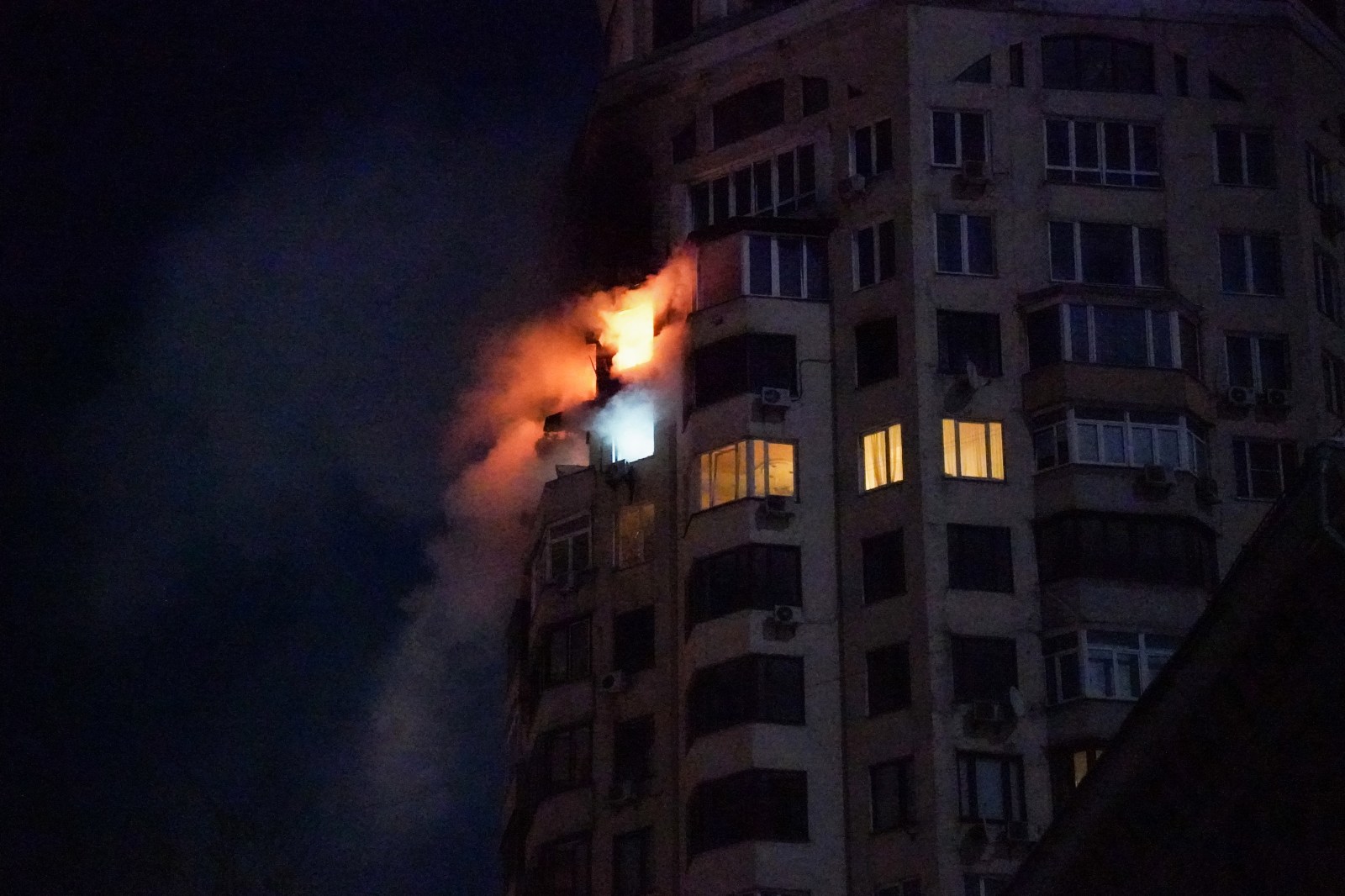 Image: NewsweekTOPSHOT – This photo shows fire coming from an apartment building following a Russian air attack in Kyiv early on February 3, 2026, amid the Russian invasion of Ukraine. Russia resumed strikes on Kyiv on February 3, Ukrainian officials said, as a week-long truce announced by US President Donald Trump gave way to renewed attacks in freezing conditions. (Photo by Serhii Okunev / AFP via Getty Images) Source Full size
-
Image: NewsweekTOPSHOT – This photo shows fire coming from an apartment building following a Russian air attack in Kyiv early on February 3, 2026, amid the Russian invasion of Ukraine. Russia resumed strikes on Kyiv on February 3, Ukrainian officials said, as a week-long truce announced by US President Donald Trump gave way to renewed attacks in freezing conditions. (Photo by Serhii Okunev / AFP via Getty Images) Source Full size
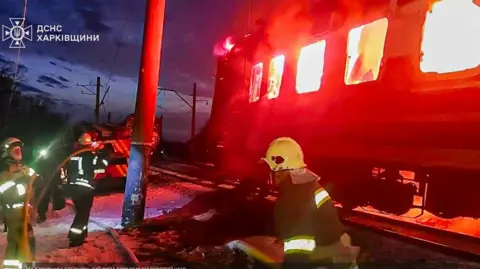
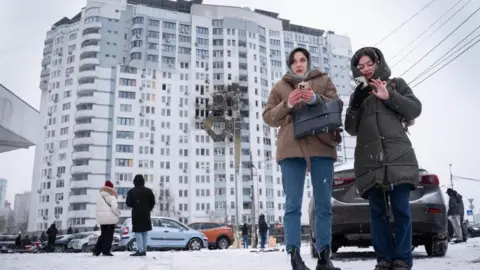


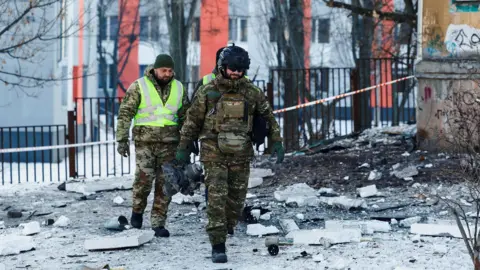

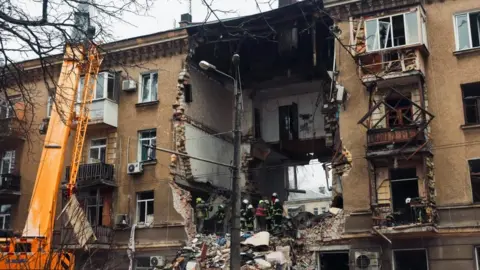
Largest 2026 missile‑drone strike hits six Ukrainian regions On the night of Feb 3, Russia fired roughly 70 ballistic and cruise missiles and launched ≈ 450 long‑range drones at power facilities in Kyiv, Kharkiv, Odesa, Dnipro, Sumy and Zaporizhzhia, ending a week‑long pause that the United States had helped negotiate [1][3][4]. Ukrainian air defenses downed 38 missiles and 412 drones, but dozens penetrated the grid, striking energy sites and residential blocks [3][4]. The coordinated assault was described by CNN as the “biggest missile‑drone strike this year” and by Newsweek as a “massive missile and drone assault” [1][3].
Freezing temperatures exacerbate blackout humanitarian crisis Temperatures fell to –20 °C in Kyiv and –25 °C in Kharkiv, plunging tens of thousands of high‑rise apartments into darkness and forcing residents into metro stations and shelters [1][3][4]. Over 1,200 buildings in Kyiv and 820 in Kharkiv lost heating; Odesa reported outages for more than 50,000 people [1][4]. The cold snap amplified water shortages and threatened the health of vulnerable civilians across the affected regions [7][13].
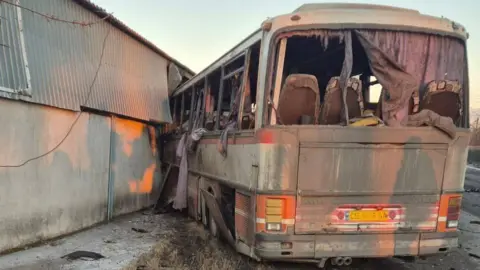
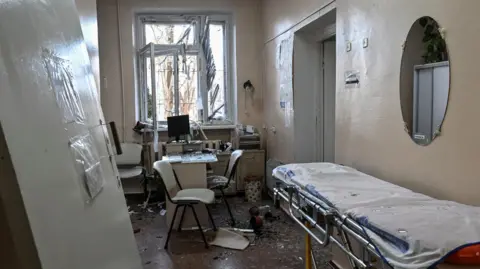
Civilian casualties rise amid strikes on infrastructure and civilians Two teenagers were killed and eight injured in Zaporizhzhia, while six people were wounded in Kyiv after a drone hit a kindergarten and multi‑storey blocks [1]. A Russian drone struck a bus carrying DTEK miners in Dnipropetrovsk, killing 12 and injuring 8 according to CNN [6][5]. A maternity hospital in Zaporizhzhia sustained injuries to six women in labor, and a residential building near Kyiv killed a couple and wounded their child [5][13].
Energy firm DTEK operates in “survival mode” after plant damage CEO Maxim Timchenko showed video of a mangled thermal plant, confirming that two of DTEK’s five plants are offline and the remaining three run at reduced capacity [1][4]. DTEK labeled the Feb 3 attack the ninth major strike since October and warned that continued hits could breach Geneva Convention protections for civilian heating infrastructure [4][3]. The firm urged extension of the ceasefire to prevent a total collapse of Ukraine’s power system [1].
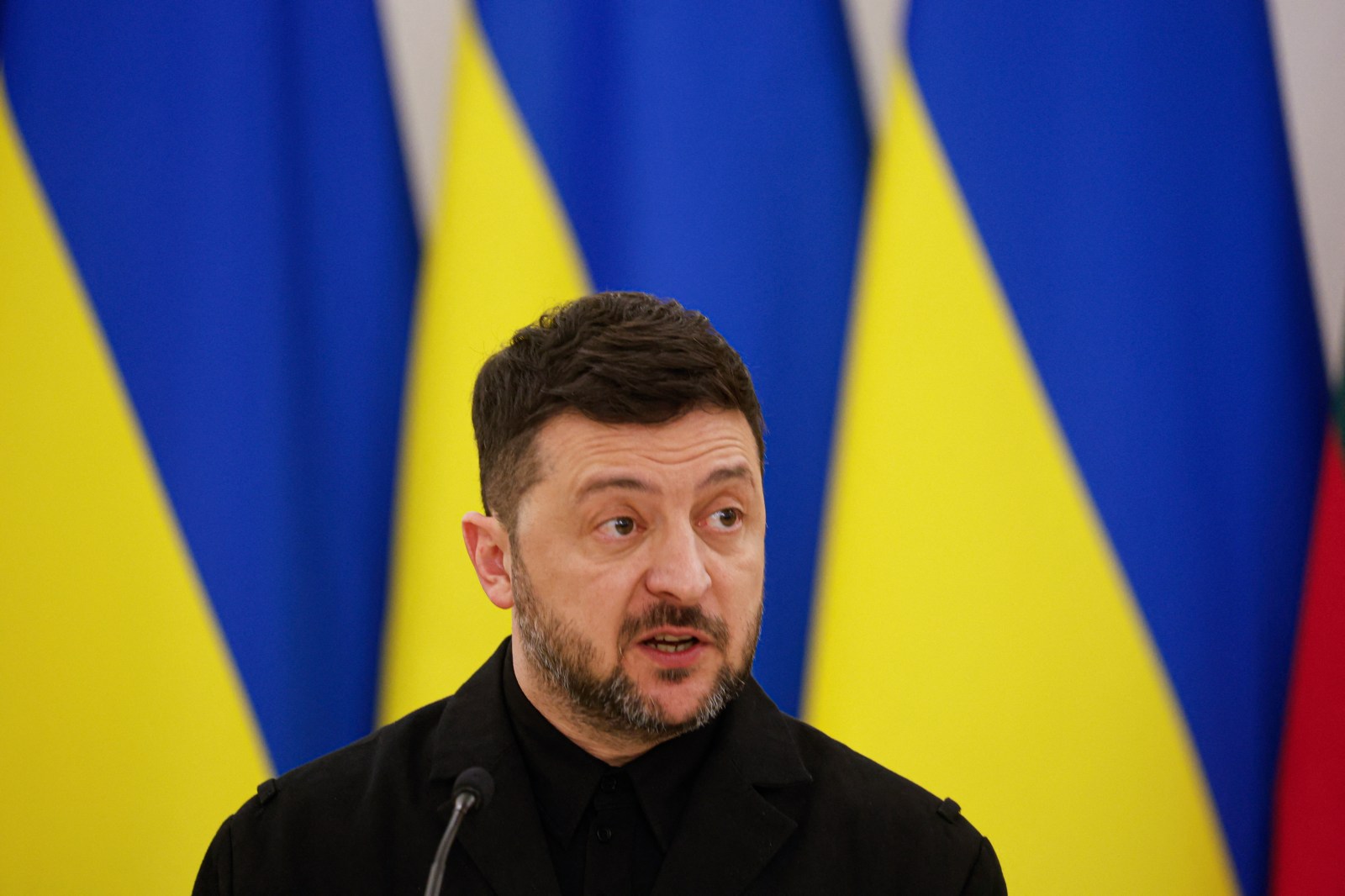
Diplomatic activity intensifies as Abu Dhabi negotiations commence NATO Secretary‑General Mark Rutte met President Zelensky in Kyiv, pledging unwavering alliance support while three‑way talks began in Abu Dhabi [3][4]. U.S. Special Envoy Steve Witkoff and former President’s son‑in‑law Jared Kushner were slated to join the talks, and the United States continued to mediate despite the renewed strikes [3][1]. Trump publicly claimed a week‑long pause was secured with Putin, a statement unconfirmed by the Kremlin and contradicted by Russia’s resumption of attacks [1][10][9].
Pause claim remains disputed The White House and Trump asserted that a U.S.‑proposed pause was in effect until Sunday, yet Kremlin spokesman Dmitry Peskov offered no confirmation, and Russian forces resumed the massive barrage on Sunday night [1][10][9]. This discrepancy highlights ongoing uncertainty over the diplomatic truce’s scope and durability.
Sources
-
1.
CNN: Russia Resumes Massive Night Strikes on Ukrainian Cities, Ending US‑Backed Pause: Details the 70‑missile, 450‑drone attack, civilian heating loss, and Zelensky’s call for U.S. response .
-
2.
CNN: Ukraine Aims to Kill 50,000 Russian Soldiers Monthly Amid Manpower and Drone Challenges: Discusses Kyiv’s attrition targets, casualty estimates, and manpower shortfalls .
-
3.
Newsweek: Russia Resumes Massive Missile and Drone Assault on Ukraine Ahead of Abu Dhabi Peace Talks: Highlights the strike’s timing before negotiations, NATO chief’s Kyiv visit, and U.S. envoy participation .
-
4.
BBC: Russia launches record missile barrage on Ukraine’s energy grid: Reports record‑high missile/drone numbers, interception rates, and NATO’s call for more air‑defence missiles .
-
5.
BBC: Russian drone strikes kill miners, hit maternity hospital amid cold‑snap pause: Covers the miner bus attack, maternity hospital strike, and Starlink countermeasures .
-
6.
CNN: Russian Drone Strike Kills 12 Miners in Dnipropetrovsk Region: Provides casualty figures, DTEK’s statement, and Starlink restrictions .
-
7.
CNN: Power Outages Sweep Ukraine and Moldova Amid Winter Freeze and Diplomatic Pause: Describes technical fault‑induced blackouts, Trump‑mediated pause claim, and upcoming talks .
-
8.
Newsweek: Zelensky Proposes Reciprocal Energy Truce as Ukraine Braces for Harsh Winter: Outlines Kyiv’s mirror‑response proposal and winter‑energy concerns .
-
9.
BBC: Trump claims Putin agreed to week‑long pause on Ukrainian attacks amid extreme cold: Reports Trump’s claim, lack of Russian confirmation, and ongoing strikes .
-
10.
CNN: Ukraine President Thanks Trump After Claim of Russian Attack Pause: Notes Zelensky’s gratitude, continued strikes, and U.S. diplomatic optimism .
-
11.
Newsweek: Trump Says Putin Agreed to One‑Week Kyiv Strike Pause Amid Extreme Cold: Highlights pause claim, civilian casualties, and Starlink blocking efforts .
-
12.
CNN: Russian Drone Hits Ukrainian Civilian Train, Five Killed: Describes train attack, casualty numbers, and Zelensky’s terrorism label .
-
13.
BBC: Zelensky calls Russian train drone strike terrorism as attacks hit Odesa and Kyiv region: Covers train strike, Odesa drone barrage, and ongoing peace talks .
Timeline
Dec 5, 2025 – Russia fires 653 drones and 51 missiles overnight, striking the Fastiv railway hub outside Kyiv, causing blackouts in eight regions and a brief loss of external power at the Zaporizhzhia nuclear plant; Ukraine’s air defenses intercept most of the attack, and US envoy Steve Witkoff reports constructive talks on a security framework with Kyiv. [25]
Dec 6, 2025 – Russia launches another massive wave of 653 drones and 51 missiles across Ukraine as diplomatic talks continue in Florida; the Ukrainian air force shoots down 585 drones and 30 missiles, eight people are wounded and energy infrastructure is hit in multiple regions, while the IAEA notes a brief loss of off‑site power at Zaporizhzhia. [30]
Dec 13, 2025 – Over 1 million Ukrainian households lose electricity after Russia deploys more than 450 drones and 30 Kinzhal hypersonic missiles, briefly cutting power at the Zaporizhzhia plant; President Zelensky reports the scale of the assault, NATO urges rapid delivery of additional air‑defence missiles, and US negotiator Steve Witkoff plans a Berlin meeting with Zelensky on a peace proposal. [24]
Dec 23, 2025 – Ukrainian drones strike an industrial site in Russia’s Stavropol region, igniting a fire at the Lukoil‑run Stavrolen complex; the governor reports no injuries, underscoring Kyiv’s strategy of targeting Russian energy assets far from the front line. [29]
Dec 27, 2025 – Kyiv endures a massive Russian missile and drone barrage just two days before President Zelensky’s scheduled meeting with US President Donald Trump, with air‑defence systems engaging incoming weapons and explosions reported across the capital. [28]
Dec 30, 2025 – President Trump, speaking beside Israeli Prime Minister Netanyahu, warns Iran and Hamas of “hell to pay,” while Russian Foreign Minister Sergei Lavrov repeats Moscow’s claim that Ukraine launched 91 drones at Putin’s Novgorod‑region residence and says Moscow will review its negotiating stance; the allegation fuels diplomatic tension ahead of upcoming peace talks. [27][23][22]
Dec 31, 2025 – Drone attacks in Odesa injure six, including two children, damage power infrastructure and prompt EU top diplomat Kaja Kallas to label Moscow’s Putin‑residence allegation a “deliberate distraction” from peace negotiations; Putin’s New Year address declares Russian victory despite the ongoing fighting. [21][20]
Jan 1, 2026 – In his New Year address, President Zelensky declares the peace deal “90 % ready” and warns that the remaining 10 % will determine Ukraine’s future, while the United States offers a 15‑year security guarantee to Kyiv. [18]
Jan 1, 2026 – The CIA concludes Ukraine did not target Putin’s residence, briefing President Trump that the Kremlin’s claim lacks evidence. [19]
Jan 1, 2026 – Russia hands a video and navigation‑memory data to the US military attaché, claiming it proves a Ukrainian drone aimed at Putin’s Novgorod residence, a claim the United States disputes. [17]
Jan 2, 2026 – Russian‑installed Kherson governor Vladimir Saldo reports three Ukrainian drones hit a cafe and hotel in Khorly, killing 24 civilians and wounding at least 50, a claim Ukraine does not confirm. [16]
Jan 5, 2026 – A Russian drone strikes a Kyiv hospital, killing at least one and injuring others; President Zelensky says Russia launches 165 drones overnight, including 100 Shahed models, highlighting the intensity of the aerial campaign. [15]
Jan 9, 2026 – Russia fires the hypersonic Oreshnik missile for the second time, striking near Lviv close to a Polish NATO logistics hub; the strike causes no casualties but serves as a “warning to the West,” with President Putin claiming the missile can destroy deep underground bunkers. [11][12][13][14]
Jan 11, 2026 – A Ukrainian drone hits Voronezh, Russia, killing one woman and wounding three; Ukraine also strikes three Lukoil drilling platforms in the Caspian Sea, while Kyiv still lacks power for tens of thousands of residents after recent attacks. [10]
Jan 13, 2026 – At a UN Security Council emergency session, US Deputy Ambassador Tammy Bruce labels Russia’s Oreshnik launch near Poland a “dangerous escalation,” condemning the missile’s use against civilian infrastructure. [9]
Jan 24, 2026 – Fresh Russian strikes kill one civilian and injure 35 in Kyiv and Kharkiv, damaging energy facilities for 6,000 buildings; Foreign Minister Andrii Sybiha calls the assault “brutal,” trilateral talks in Abu Dhabi resume amid the violence, and President Trump announces Putin’s acceptance of a “Board of Peace” invitation. [5]
Jan 27, 2026 – President Zelensky condemns a Russian drone strike that kills five passengers on a Kharkiv‑region train, labeling the attack “purely terrorism,” while Odesa suffers a heavy drone barrage killing three and a residential block near Kyiv is hit, deepening the winter energy crisis. [4][8]
Jan 29, 2026 – President Trump tells his cabinet that he personally asked President Putin to halt attacks on Kyiv for a week because of the extreme cold and claims Putin agreed; the Kremlin offers no confirmation, and Ukraine’s State Emergency Service warns temperatures could plunge to –30 °C, threatening severe power shortages. [7][3]
Jan 30, 2026 – Russia launches a record‑high missile and drone barrage on Ukraine’s energy grid, firing over 70 missiles (38 intercepted) and 450 drones, crippling heating‑only plants as temperatures fall to –20 °C; NATO secretary‑general urges allies to “dig deep in their stockpiles,” Dutch PM Mark Rutte pledges “hard power” support, and DTEK calls the strike the ninth major attack since October. [1]
Feb 1, 2026 – Russia pauses targeting civilian centres during an extreme cold snap, announcing the pause will expire on Sunday; nevertheless, a Russian drone hits a DTEK bus in Ternivka, killing at least 12 miners, and another drone strikes Zaporizhzhia’s Maternity Hospital 3 during deliveries, injuring six, prompting Ukrainian officials to thank Elon Musk for blocking Starlink use by Russian drones. [2]
Feb 2, 2026 – Ukraine shifts three‑way peace talks with the United States and Russia to mid‑week, aiming to discuss Ukraine’s ceding of territory and the Zaporizhzhia nuclear plant amid ongoing power‑grid attacks that leave millions without heat. [2]
Feb 3, 2026 – President Zelensky pushes Ukraine’s new defence minister to raise the target to 50,000 Russian casualties per month, citing a CSIS estimate of 1.2 million Russian personnel killed, wounded or missing, while manpower shortages and limited drone operators strain Kyiv’s front line; Donetsk remains a focal point of Ukraine’s attrition strategy. [6]
Future/Planned – NATO continues to press for rapid delivery of Patriot and other air‑defence missiles throughout the winter; US envoy Steve Witkoff is slated to meet Zelensky in Berlin to discuss the US‑backed peace proposal; additional three‑way talks are scheduled for the weekend following the Feb 2 shift, and Ukraine seeks US congressional approval for a security‑guarantee agreement negotiated with President Trump. [1][2][6][24]
Dive deeper (14 sub-stories)
-
Russia Launches Largest Night Missile‑Drone Assault, Ending U.S.-Backed Pause
(7 articles)
-
Zelensky Sets New Goal of 50,000 Russian Casualties Monthly Amid Manpower and Drone Shortfalls
(3 articles)
-
Russia Launches Massive Missile‑Drone Barrage on Ukraine Ahead of Abu Dhabi Talks
(14 articles)
-
Russian Drone Strikes Kill 12 Miners, Hit Zaporizhzhia Maternity Hospital as Peace Talks Rescheduled
(8 articles)
-
Russian Drone Strikes Ukrainian Train, Killing Five; Zelensky Calls Attack Terrorism
(4 articles)
-
Russia Launches Massive Drone‑Missile Barrage as Abu Dhabi Trilateral Talks Continue
(2 articles)
-
U.S. Labels Russia’s Oreshnik Missile Launch Near Poland Dangerous Escalation
(2 articles)
-
Ukrainian Drone Sets Volgograd Oil Depot Ablaze as Russia Fires Hypersonic Missile at Kyiv
(4 articles)
-
Russia Launches Overnight Oreshnik Missile Strike, Killing Four in Kyiv and Hitting Lviv
(9 articles)
-
U.S. Officials Refute Kremlin Drone Attack Claim on Putin Residence Amid Peace Talks
(9 articles)
-
Kharkiv Apartment Block Strike Kills Two, Injures Dozens as Peace Talks Approach
(2 articles)
-
Zelensky Declares Peace Deal 90% Complete as U.S. Offers 15‑Year Guarantees
(4 articles)
-
Russia Claims 91 Ukrainian Drones Targeted Putin’s Novgorod Residence; Global Leaders React
(2 articles)
-
Newsweek: Widespread Christmas strikes target civilian energy infrastructure
All related articles (71 articles)
-
CNN: Russia Resumes Massive Night Strikes on Ukrainian Cities, Ending US‑Backed Pause
-
CNN: Ukraine Aims to Kill 50,000 Russian Soldiers Monthly Amid Manpower and Drone Challenges
-
Newsweek: Russia Resumes Massive Missile and Drone Assault on Ukraine Ahead of Abu Dhabi Peace Talks
-
BBC: Russia launches record missile barrage on Ukraine’s energy grid
-
BBC: Russian drone strikes kill miners, hit maternity hospital amid cold‑snap pause
-
CNN: Russian Drone Strike Kills 12 Miners in Dnipropetrovsk Region
-
CNN: Power Outages Sweep Ukraine and Moldova Amid Winter Freeze and Diplomatic Pause
-
Newsweek: Zelensky Proposes Reciprocal Energy Truce as Ukraine Braces for Harsh Winter
-
BBC: Trump claims Putin agreed to week‑long pause on Ukrainian attacks amid extreme cold
-
CNN: Ukraine President Thanks Trump After Claim of Russian Attack Pause
-
Newsweek: Trump Says Putin Agreed to One‑Week Kyiv Strike Pause Amid Extreme Cold
-
CNN: Russian Drone Hits Ukrainian Civilian Train, Five Killed
-
BBC: Zelensky calls Russian train drone strike terrorism as attacks hit Odesa and Kyiv region
-
AP: Russian Drone Assault on Odesa Spurs Zelenskyy’s Call for Accelerated Diplomacy
-
CNN: Russia’s largest overnight air strike hits Ukraine amid Abu Dhabi trilateral talks
-
BBC: Ukraine condemns fresh Russian strikes as Abu Dhabi peace talks continue
-
CNN: Ukrainian Energy Workers Brace for Russian Strikes Amid Harsh Winter
-
AP: Ukrainian drone strikes cut power to hundreds of thousands in Russia-occupied southern Ukraine as diplomacy moves forward
-
BBC: Ukraine declares energy sector state of emergency as strikes disrupt power
-
AP: US accuses Russia of dangerous escalation as Ukraine war intensifies
-
AP: Ukrainian drone strike in Voronezh kills 1, wounds 3 as Kyiv power outages persist
-
AP: Ukrainian drone strike ignites Volgograd oil depot as Russia fires hypersonic missile
-
AP: Russia launches overnight attack on Ukraine with hypersonic Oreshnik missile
-
Newsweek: Zelensky urges Trump to act as Russia fires Oreshnik missiles and Ukraine endures freezing winter
-
CNN: Russia fires Oreshnik missile at western Ukraine near Poland border triggering energy outages and international condemnation
-
CNN: Russia fires Oreshnik missile into Ukraine for second time signaling warning to West
-
AP: Russia says second use of hypersonic Oreshnik missile strikes Ukraine near Lviv
-
BBC: Oreshnik missile used in fresh Russian strikes on Ukraine, Kyiv hit and Lviv targeted
-
Newsweek: US warns of potentially significant air attack on Ukraine as Russia claims Oreshnik strike on Lviv
-
Newsweek: Russia launches Oreshnik nuclear missile in massive strike to avenge Putin residence
-
AP: Russian drone strikes knock out power across Zaporizhzhia, cut electricity for 600,000 in Dnipropetrovsk
-
Newsweek: Drone strike hits Kyiv hospital, killing at least one and injuring others
-
The Hindu: US officials say Ukraine didn’t target Putin residence in drone strike, contradicting Kremlin claim
-
AP: Drone strikes kill two in Russian border regions ahead of Paris peace talks
-
BBC: Kharkiv missile strike kills two, including a three-year-old child, as rescue continues and peace talks loom
-
The Hindu: Russian strike on Kharkiv injures 25 as Moscow denies attack
-
The Hindu: Russia alleges Ukraine drone attack on Putin residence as new strikes intensify
-
Newsweek: Zelensky condemns Kharkiv strike as Russia escalates attacks; Budanov named new chief of staff
-
AP: Ukrainian drone strike kills 24 in Khorly as tensions rise amid peace talks
-
The Hindu: Russia hands to U.S. what it says is proof of attempted Ukrainian strike on Putin residence
-
Newsweek: Kherson drone attack kills 24 as Russia calls it war crime
-
The Hindu: Ukrainian drone strike kills 24 in Kherson during New Year celebrations
-
BBC: Zelensky says peace deal is 90% ready in New Year address
-
CNN: CIA finds Ukraine did not target Putin residence in drone attack, contradicting Kremlin claim
-
BBC: EU top diplomat rejects Russia's claim of Ukrainian attack on Putin's residence
-
AP: Drone attack in Odesa injures six, including toddler, as Putin asserts victory in war
-
The Hindu: Ukraine drones target Moscow as Russia says 27 drones downed, one civilian injured
-
CNN: Kremlin again claims Ukrainian drone attack on Putin residence but offers no evidence
-
BBC: Ukraine denies drone attack on Putin’s residence as peace talks loom
-
The Hindu: Modi voices deep concern over reports targeting Putin's residence, urges diplomacy
-
Newsweek: Trump says he is very angry over alleged Ukrainian attack on Putin residence as peace talks tense
-
The Hindu: Dec 30, 2025: Trump warns Hamas and Iran after Netanyahu talks; Centre says fake MGNREGA demands will not be entertained
-
Newsweek: Zelensky denies Putin drone strike claim amid peace talks
-
The Hindu: Russia says Ukraine attacked Putin’s residence; Moscow reviews negotiating stance
-
Newsweek: Ukraine strikes Syzran refinery as Zelensky-Trump talks loom
-
The Hindu: Ukrainian capital Kyiv under massive Russian attack, officials say
-
Newsweek: Ukraine hits Novoshakhtinsk refinery in Rostov region with Storm Shadow missiles
-
Newsweek: Widespread Christmas strikes target civilian energy infrastructure
-
CNN: Massive Russian attack on Ukraine kills 4-year-old as Zelensky is briefed on peace talks
-
AP: Russian drone and missile attack on Ukraine kills at least 3 and cuts power
-
Newsweek: Zelensky calls for stronger pressure on Putin after massive overnight attack that killed civilians
-
The Hindu: Ukrainian drone attack sparks fire at industrial site in Stavropol region, governor says
-
AP: Russia‑Ukraine strikes intensify as Berlin peace talks approach
-
CNN: Ukraine endures massive power outage as Russian drone and missile barrage hits energy grid
-
BBC: Over 1 Million Ukrainian Households Lose Power After Russian Night‑Time Strikes
-
BBC: Ukraine conflict updates: Kremenchuk strikes, ongoing peace talks in the US
-
AP: Russia Launches Massive Drone and Missile Attack on Ukraine Amid Ongoing Diplomatic Talks
-
King5 (Seattle, WA): Russia launches massive drone and missile attack on Ukraine as talks continue
-
Newsweek: Russia Launches Large Overnight Attack on Ukraine Amid Peace Talks
-
BBC: Russia Launches Drone and Missile Attack on Ukraine; US Negotiations Continue
-
AP: Putin Rejects Some Points of US Ukraine Peace Plan
External resources (9 links)
- https://www.wsj.com/politics/national-security/u-s-finds-ukraine-didnt-target-putin-in-drone-strike-615ce4be?mod=hp_lead_pos3 (cited 1 times)
- https://x.com/DowOperSZ/status/2018517543145582867 (cited 1 times)
- https://x.com/RyanO_ChosenCoy/status/2013382825475744075 (cited 1 times)
- https://x.com/TimchenkoMaxim/status/2018756756218823008?s=20 (cited 1 times)
- https://x.com/ZelenskyyUa/status/2005257648044712056 (cited 1 times)
- https://x.com/ZelenskyyUa/status/2005686393322745871?ref_src=twsrc%5Egoogle%7Ctwcamp%5Eserp%7Ctwgr%5Etweet (cited 1 times)
- https://x.com/andrii_sybiha/status/2005930216728781169?s=20 (cited 1 times)
- https://x.com/andrii_sybiha/status/2009520982554231234?s=46&t=3AeNXzLbxzt-zl9_ytWRRg (cited 1 times)